
3 Cell Division and Chromosome Heredity Lectures by
3 Cell Division and Chromosome Heredity Lectures by Dr. Tara Stoulig Southeastern Louisiana University © 2015 Pearson Education Inc.
3. 3 The Chromosome Theory of Heredity Proposes That Genes Are Carried on Chromosomes § Sutton and Boveri proposed that chromosome behavior in meiosis mirrors hereditary transmission of genes = segregation of alleles § Morgan studied fruit flies, Drosophila melanogaster, to test Mendel’s rules on a natural, rather than domesticated, species § The term “wild type” signifies the phenotype most common in a population © 2015 Pearson Education, Inc. 2
Morgan’s Results § Over several years, Morgan’s lab members found numerous phenotypic variants and analyzed these in controlled crosses § He concluded from his results that genes were carried on chromosomes = chromosome theory of heredity © 2015 Pearson Education, Inc. 3
X and Y Chromosomes § After studying insects, Nettie Stevens concluded that sexdependent hereditary differences are due to the presence of two X chromosomes in females and an X and a smaller Y chromosome in males § Stevens studied chromosome differences between male and female beetles (Tenebrio molitor) § She found that diploid cells of females contained 20 (XX) large chromosomes but those of males contained 19 large chromosomes and one small one (XY) § Half of the sperm of males contained 10 large chromosomes (X) and the other half had 9 large and one small chromosome (Y) © 2015 Pearson Education, Inc. 4
X-Linked Inheritance § Sex-linked inheritance refers to transmission of genes on sex chromosomes § In 1910, Morgan’s experiments with flies validated Stevens’s conclusions © 2015 Pearson Education, Inc. 5
The White-Eye Mutant § The first mutant identified in Morgan’s lab was a male with white eyes instead of the normal red color § The mutant white-eyed male was crossed to a normal red-eyed female, producing many F 1, all with red eyes § Thus the white-eyed mutant allele was recessive © 2015 Pearson Education, Inc. 6
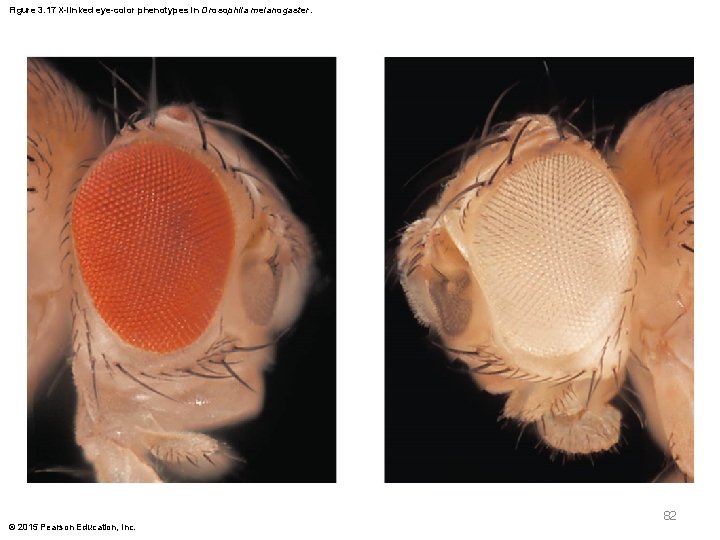
Figure 3. 17 X-linked eye-color phenotypes in Drosophila melanogaster. 82 © 2015 Pearson Education, Inc.
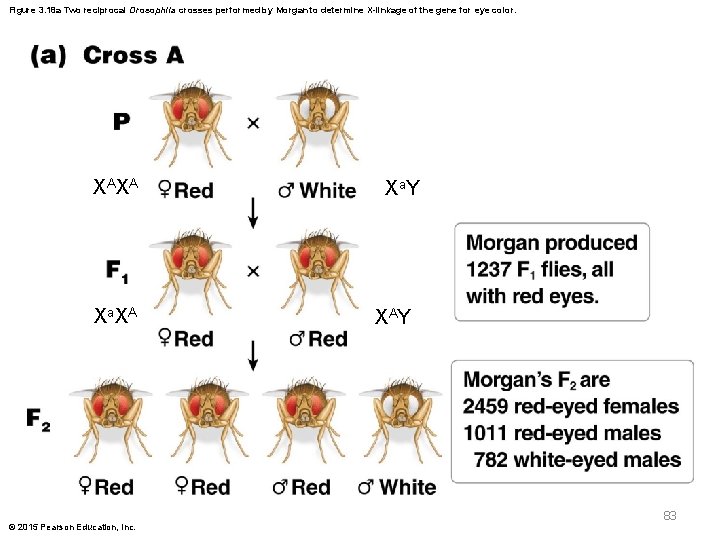
Figure 3. 18 a Two reciprocal Drosophila crosses performed by Morgan to determine X-linkage of the gene for eye color. XAXA Xa Y XAY 83 © 2015 Pearson Education, Inc.
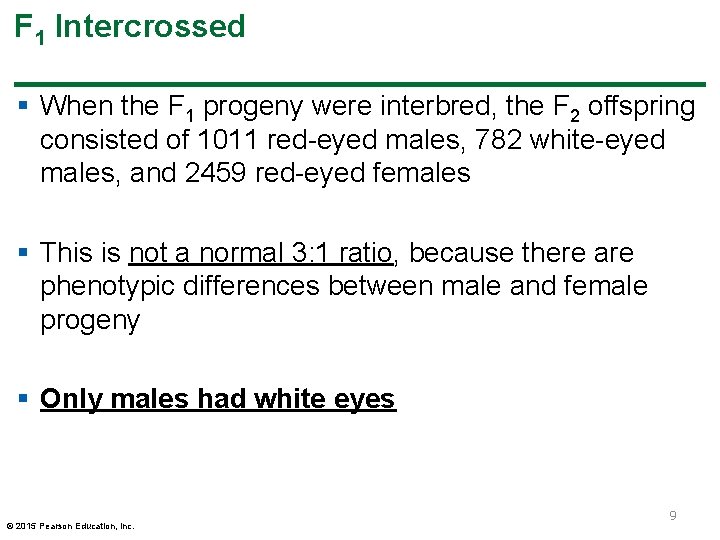
F 1 Intercrossed § When the F 1 progeny were interbred, the F 2 offspring consisted of 1011 red-eyed males, 782 white-eyed males, and 2459 red-eyed females § This is not a normal 3: 1 ratio, because there are phenotypic differences between male and female progeny § Only males had white eyes © 2015 Pearson Education, Inc. 9
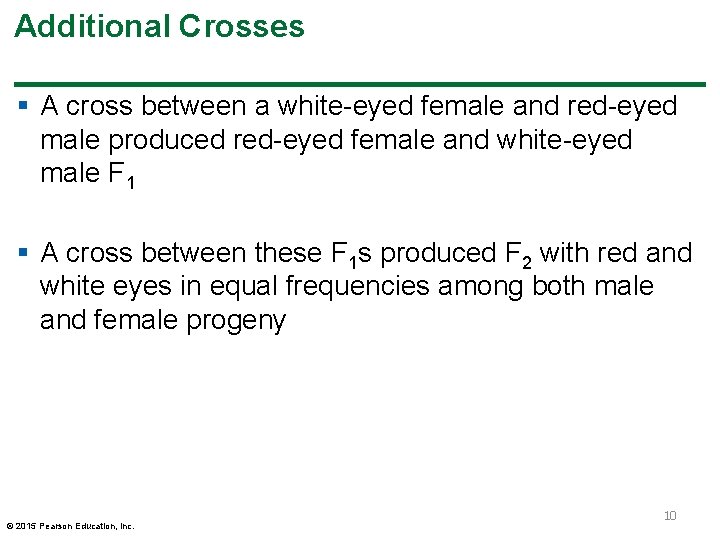
Additional Crosses § A cross between a white-eyed female and red-eyed male produced red-eyed female and white-eyed male F 1 § A cross between these F 1 s produced F 2 with red and white eyes in equal frequencies among both male and female progeny © 2015 Pearson Education, Inc. 10

Figure 3. 18 b Two reciprocal Drosophila crosses performed by Morgan to determine X-linkage of the gene for eye color. Xa Xa XAY 86 © 2015 Pearson Education, Inc.
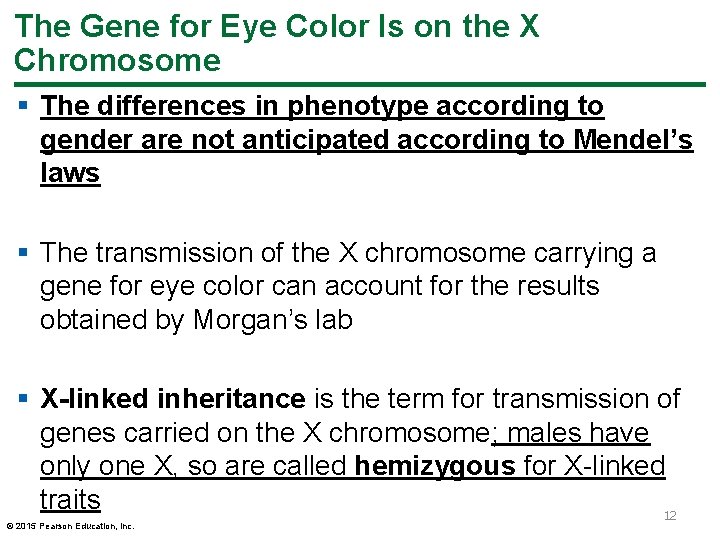
The Gene for Eye Color Is on the X Chromosome § The differences in phenotype according to gender are not anticipated according to Mendel’s laws § The transmission of the X chromosome carrying a gene for eye color can account for the results obtained by Morgan’s lab § X-linked inheritance is the term for transmission of genes carried on the X chromosome; males have only one X, so are called hemizygous for X-linked traits 12 © 2015 Pearson Education, Inc.
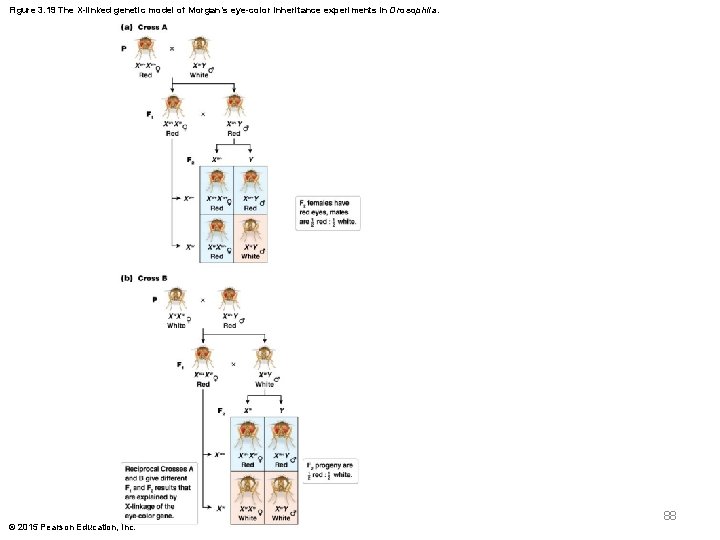
Figure 3. 19 The X-linked genetic model of Morgan’s eye-color inheritance experiments in Drosophila. 88 © 2015 Pearson Education, Inc.
ANIMATION: X-linked Inheritance © 2015 Pearson Education, Inc. 14
3. 4 Sex Determination Is Chromosomal and Genetic § Sex determination involves the genetic and biological processes that produce the male and female characteristics of a species § Chromosomal sex is the presence of chromosomes characteristic of each sex and is determined at the moment of fertilization § Phenotypic sex is the internal and external morphology of each sex, and results from differences in gene expression © 2015 Pearson Education, Inc. 15
Sex Determination in Drosophila and X/Autosome ratio § Females have two X chromosomes and males have one X chromosome § Thus in flies, males have XO, XYY, or XY (normal), whereas females are XXY or XX (normal) § The X/A ratio or X/autosome ratio determines gender based on the number of X chromosomes to sets of autosomes § Males have an X/A ratio of 0. 5 and females have a ratio of 1. 0 16 © 2015 Pearson Education, Inc.
Mammalian Sex Determination § Placental mammals have X and Y chromosomes too § In mammals sex determination depends on the presence or absence of a single gene, SRY, found on the Y chromosome § In mammals, males can be XY (normal), XXY, or XYY; females are XX (normal), XO, or XXX § SRY produces a transcription factor needed for male -specific gene expression © 2015 Pearson Education, Inc. 17
SRY § Early mammalian embryos have clusters of tissue called undifferentiated gonads, which can develop as ovaries or testes § Expression of SRY initiates testicular development of the undifferentiated gonads § The absence of SRY expression allows the default state, female, to develop © 2015 Pearson Education, Inc. 18
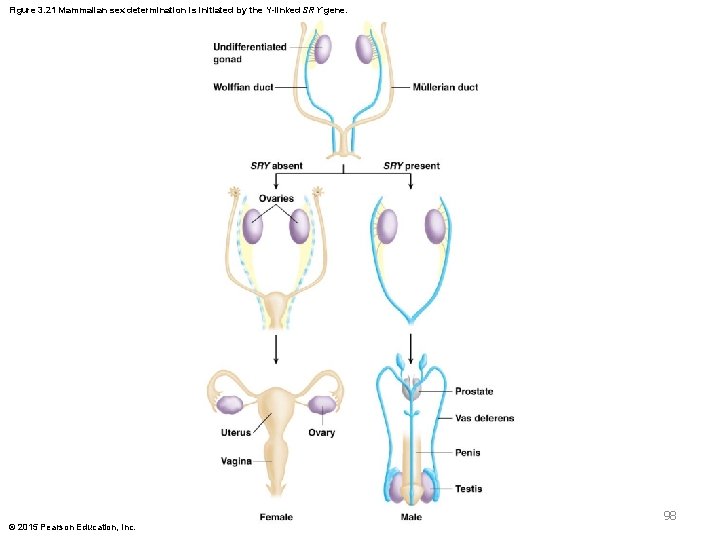
Figure 3. 21 Mammalian sex determination is initiated by the Y-linked SRY gene. 98 © 2015 Pearson Education, Inc.
Diversity of Sex Determination § A different system, the Z/W system, is used by birds, some reptiles, some fish, butterflies, and moths § In this system females have two different sex chromosomes (ZW), and males have two sex chromosomes that are the same (ZZ) © 2015 Pearson Education, Inc. 20
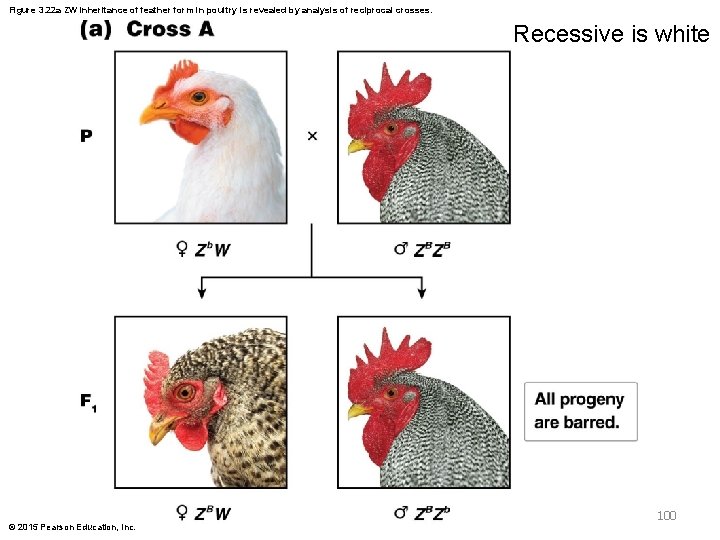
Figure 3. 22 a ZW inheritance of feather form in poultry is revealed by analysis of reciprocal crosses. Recessive is white 100 © 2015 Pearson Education, Inc.
Expression of X-Linked Recessive Traits § A hallmark of recessive X-linked inheritance in human is the expression of the trait much more often in males than in females. CAN YOU TELL MY WHY? § Humans have numerous X-linked recessive traits © 2015 Pearson Education, Inc. 22
3. 5 Human Sex-Linked Transmission Follows Distinct Patterns § In X-linked recessive inheritance, females homozygous for the recessive allele (Xa. Xa) or males hemizygous for it (Xa. Y) display the recessive phenotype § In X-linked dominant traits, females heterozygous (Xa. XA) and males hemizygous (XAY) for the dominant allele express the dominant phenotype § Hemizygous males display any allele on their single X whether the allele is recessive or dominant in females 23 © 2015 Pearson Education, Inc.
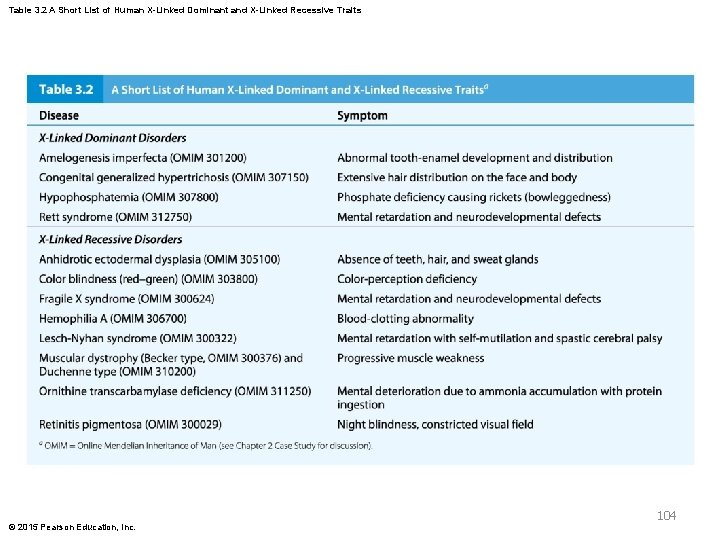
Table 3. 2 A Short List of Human X-Linked Dominant and X-Linked Recessive Traits 104 © 2015 Pearson Education, Inc.
Features of X-Linked Recessive Inheritance § Many more males than females express X-linked traits due to hemizygosity (XY) § A recessive male mated to a homozygous dominant female (Xa. Y / XAXA) produces all offspring with the dominant phenotype (XAY, XAXa), and all female offspring are carriers § Matings of recessive males with carrier females (heterozygous) (Xa. Y / XAXa) give half dominant and half recessive offspring of both sexes (Xa. Y, XAXa, Xa. Xa ) § Matings of homozygous recessive females with dominant males (XAY / Xa. Xa) produce all dominant (carrier) female offspring (XAXa) and all recessive male offspring (Xa. Y) © 2015 Pearson Education, Inc. 25
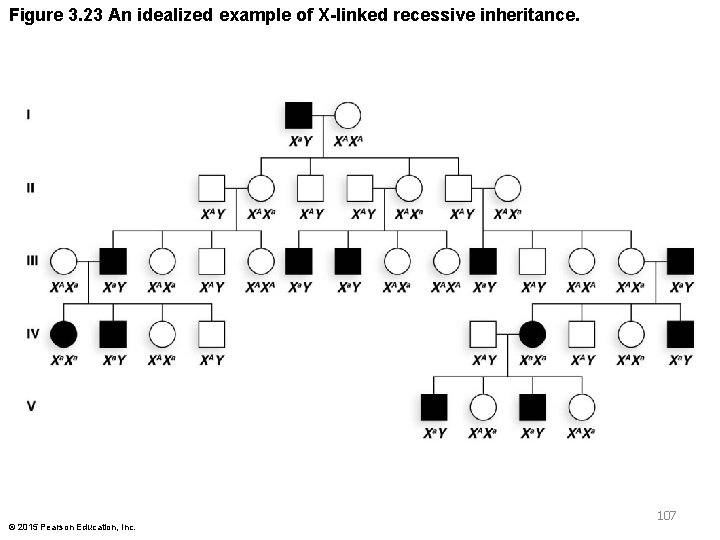
Figure 3. 23 An idealized example of X-linked recessive inheritance. 107 © 2015 Pearson Education, Inc.
Hemophilia A Is an X-Linked Recessive Trait § Hemophilia A is caused by a mutation in the factor VIII gene on the X chromosome § The mutant allele produces a nonfunctional bloodclotting protein § A de novo (newly occurring) mutation is thought to have been passed from Queen Victoria of England to some of her offspring © 2015 Pearson Education, Inc. 27
X-Linked Dominant Trait Transmission § The distinctive characteristics of X-linked dominant traits are 1. Heterozygous females mated to wild-type males (Xa. Y / XAXa) transmit the dominant allele to half their progeny of each sex (XAY, Xa. Y, XAXa, Xa. Xa) 2. Dominant males mated to homozygous recessive females (XAY / Xa. Xa) pass the trait to all their daughters and none of their sons (Xa. Y / XAXa) 3. The trait appears equally frequently in males and females © 2015 Pearson Education, Inc. 28
Congenital Hypertrichosis § Congenital hypertrichosis (CGH) is a rare X-linked dominant disorder in humans § It leads to a large increase in the number of hair follicles on the body, and males and females have more body hair than normal © 2015 Pearson Education, Inc. 29
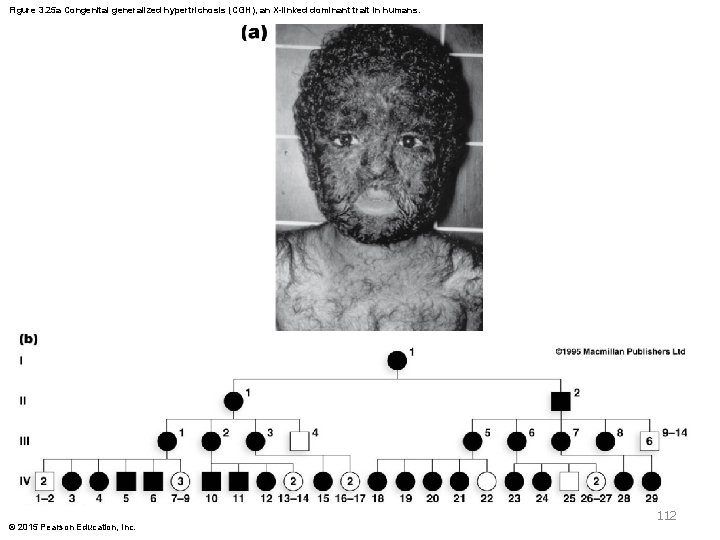
Figure 3. 25 a Congenital generalized hypertrichosis (CGH), an X-linked dominant trait in humans. 112 © 2015 Pearson Education, Inc.
Y-Linked Inheritance § Y-linked traits are transmitted in an exclusively maleto-male pattern § Mammals have fewer than 50 genes on the Y chromosome; those genes likely play roles in male sex determination or development § Many genes on the Y chromosome also have a copy on the X chromosome © 2015 Pearson Education, Inc. 31
3. 6 Dosage Compensation Equalizes the Expression of Sex-Linked Genes § In organisms with sex chromosomes, there is a gender imbalance between the copy number of genes on the sex chromosomes § Any mechanism that compensates for the difference in number of copies of genes between males and females is called dosage compensation § There are several mechanisms of dosage compensation © 2015 Pearson Education, Inc. 32
Random X-Chromosome Inactivation in Placental Mammals § Early in mammalian development, one of two X chromosomes in each female somatic cell is randomly inactivated § The random X inactivation hypothesis is also called the Lyon hypothesis, after Mary Lyon, who first proposed it (1961) § The inactive X chromosome is visible near the nuclear wall, as a condensed Barr body, first visualized by Murray Barr (1949) © 2015 Pearson Education, Inc. 33
Female Mammals Are Mosaics § Once X inactivation has occurred in a cell, it is permanent in all the descendants of that cell § Female mammals are mosaics of two populations of cells; one expresses the maternal X and the other the paternal X § Alleles of both chromosomes are expressed approximately equally over the whole organism © 2015 Pearson Education, Inc. 34
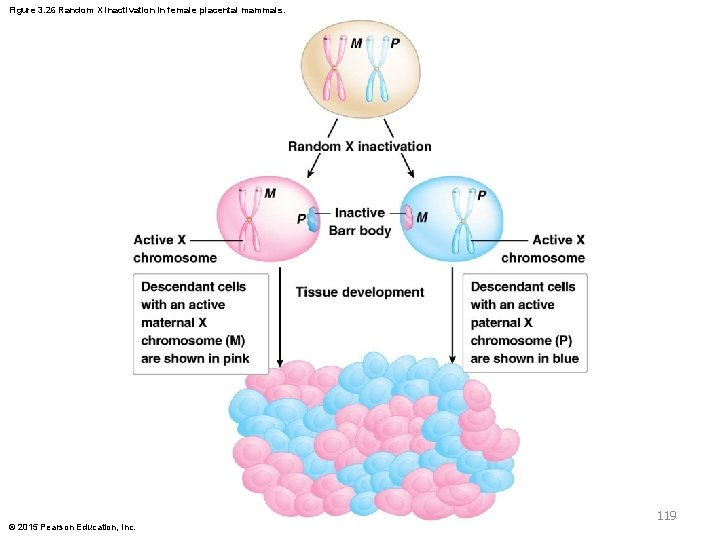
Figure 3. 26 Random X inactivation in female placental mammals. 119 © 2015 Pearson Education, Inc.
Calico and Tortoiseshell Cats Are Visibly Mosaic § In cats, the X chromosome carries a gene responsible for coat color § One allele specifies a black color; the other a yellow color § X inactivation in heterozygous females leads to a pattern of orange and black patches that is unique to each individual © 2015 Pearson Education, Inc. 36
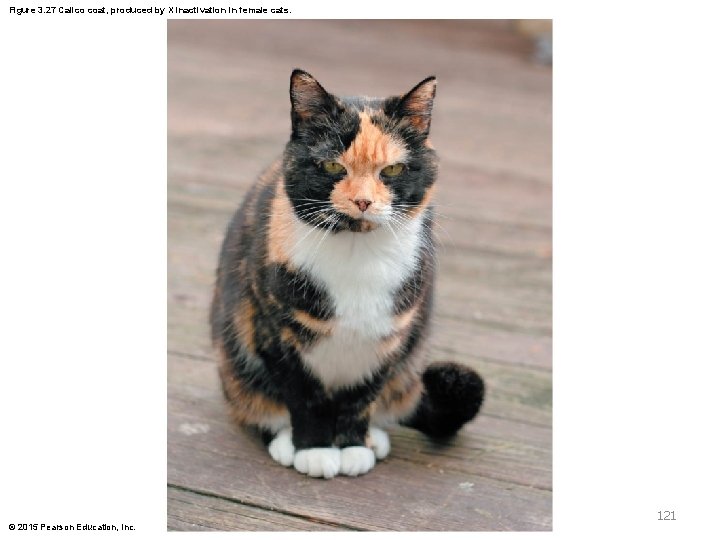
Figure 3. 27 Calico coat, produced by X inactivation in female cats. 121 © 2015 Pearson Education, Inc.
Mechanism of X Inactivation § Random X inactivation requires an X-linked gene called Xist (X-inactivation-specific-transcript) § The gene produces large RNA molecules that spread out and cover (or paint) the chromosome to be inactivated § Xist can only act on the chromosome from which it is being transcribed and not the homolog (i. e. , it acts in cis) © 2015 Pearson Education, Inc. 38
ANIMATION: Sex Determination and Dosage Compensation in Drosophila © 2015 Pearson Education, Inc. 39
- Slides: 39