
3 BCG GrowthShare Matrix BCG matrix is a

3. BCG Growth-Share Matrix BCG matrix is a framework created by Boston Consulting Group to evaluate the strategic position of the business brand portfolio and its potential. It classifies business portfolio into four categories based on industry and competitive position. High Stars Question Mark Invest Potentially profitable products Products with high market growth but low market share and rapidly growing market. uncertain growth rate. Cash Cows Slim Market Growth Rate with high market share in Product Life Cycle Divest Very profitable products w/ Products that should be taken Skim strong market growth and off market if not profitable. high and stable market share. Low High Relative Market Share Dogs Low
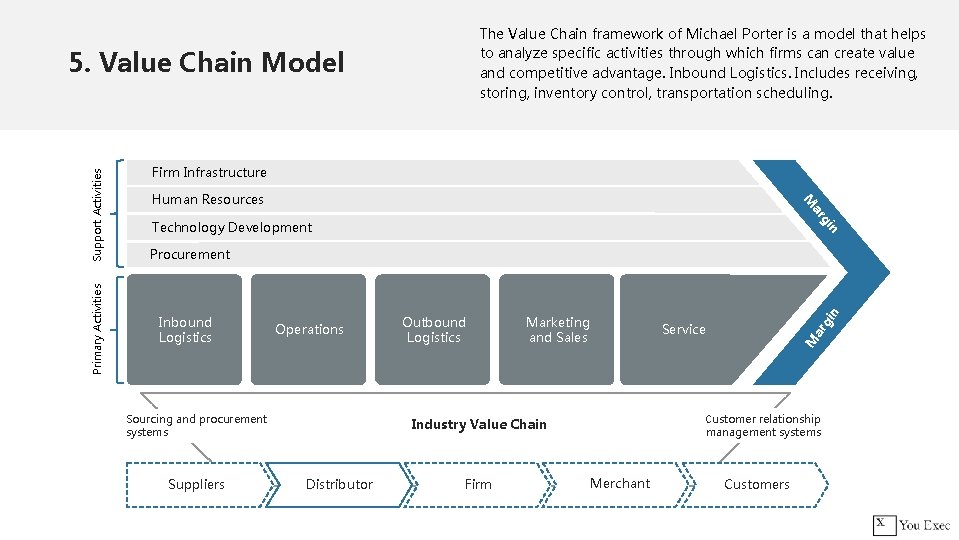
The Value Chain framework of Michael Porter is a model that helps to analyze specific activities through which firms can create value and competitive advantage. Inbound Logistics. Includes receiving, storing, inventory control, transportation scheduling. Human Resources ar Technology Development n gi Operations Sourcing and procurement systems Suppliers Outbound Logistics Marketing and Sales Service Customer relationship management systems Industry Value Chain Distributor Firm ar gi Inbound Logistics n Procurement M Primary Activities Firm Infrastructure M Support Activities 5. Value Chain Model Merchant Customers
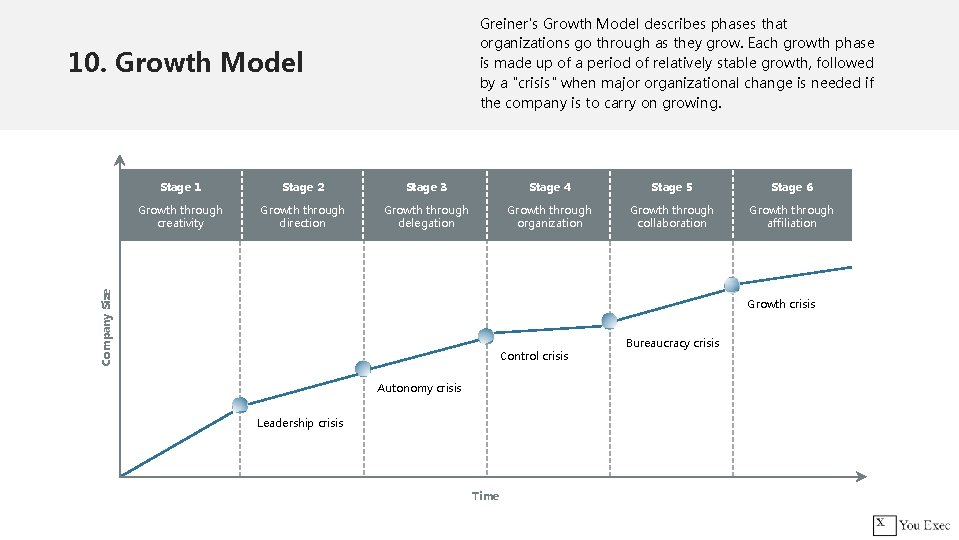
Greiner's Growth Model describes phases that organizations go through as they grow. Each growth phase is made up of a period of relatively stable growth, followed by a "crisis" when major organizational change is needed if the company is to carry on growing. 10. Growth Model Stage 2 Stage 3 Stage 4 Stage 5 Stage 6 Growth through creativity Growth through direction Growth through delegation Growth through organization Growth through collaboration Growth through affiliation Company Size Stage 1 Growth crisis Control crisis Autonomy crisis Leadership crisis Time Bureaucracy crisis
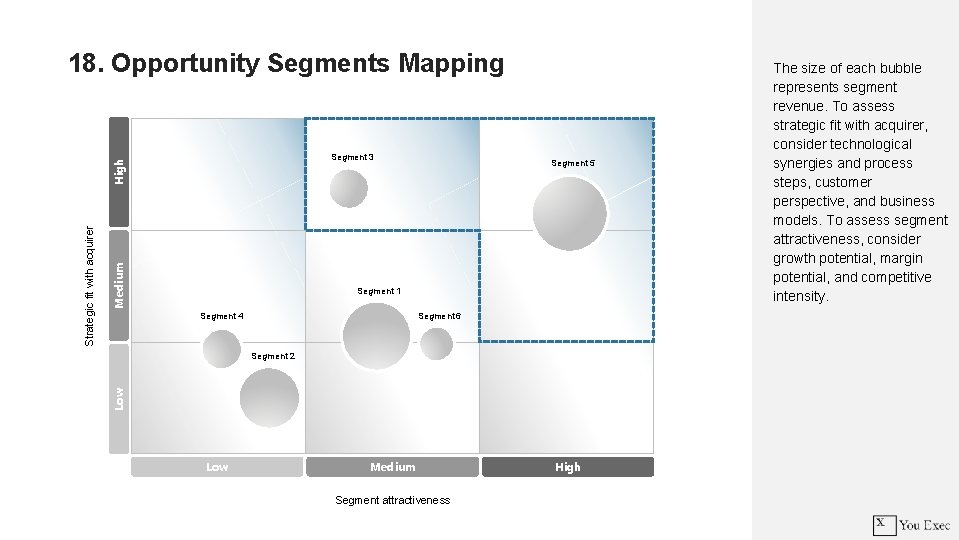
18. Opportunity Segments Mapping Medium Segment 5 Segment 1 Segment 6 Segment 4 Segment 2 Low Strategic fit with acquirer High Segment 3 Low Medium Segment attractiveness High The size of each bubble represents segment revenue. To assess strategic fit with acquirer, consider technological synergies and process steps, customer perspective, and business models. To assess segment attractiveness, consider growth potential, margin potential, and competitive intensity.
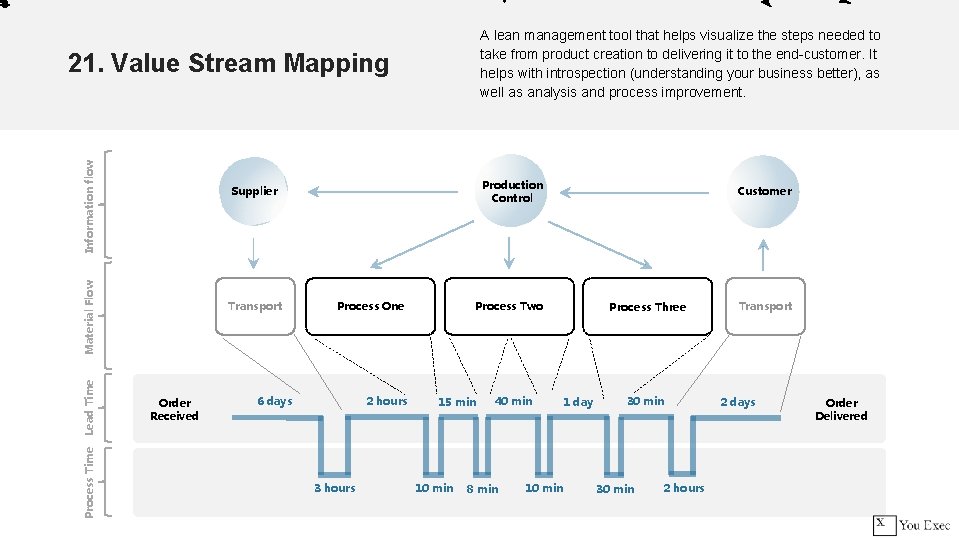
A lean management tool that helps visualize the steps needed to take from product creation to delivering it to the end-customer. It helps with introspection (understanding your business better), as well as analysis and process improvement. Information flow 21. Value Stream Mapping Material Flow Process Time Lead Time Production Control Supplier Transport Order Received Process Two Process One 6 days 2 hours 3 hours Customer 15 min 10 min 40 min 8 min Process Three 1 day 10 min 30 min 2 hours Transport 2 days Order Delivered
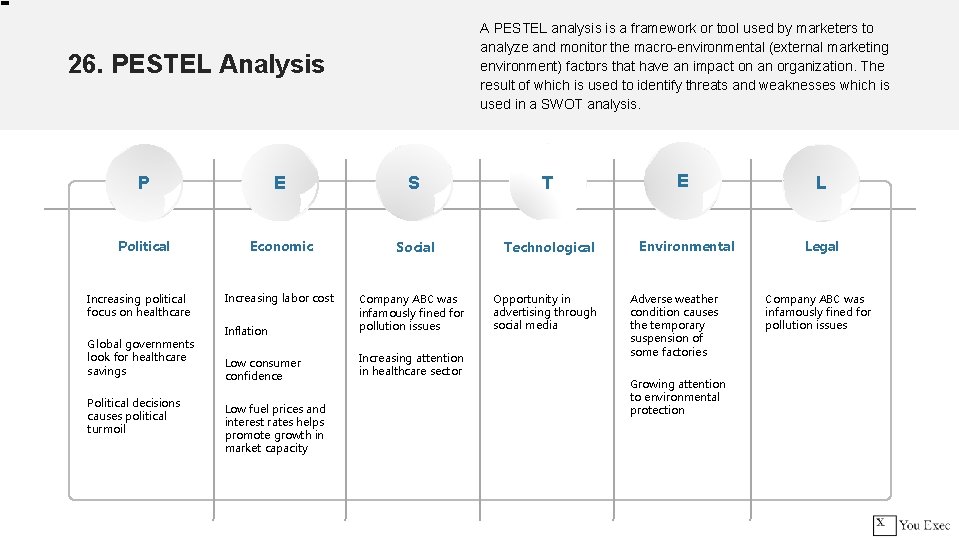
A PESTEL analysis is a framework or tool used by marketers to analyze and monitor the macro-environmental (external marketing environment) factors that have an impact on an organization. The result of which is used to identify threats and weaknesses which is used in a SWOT analysis. 26. PESTEL Analysis P E S T E L Political Economic Social Technological Environmental Legal Increasing political focus on healthcare Global governments look for healthcare savings Political decisions causes political turmoil Increasing labor cost Inflation Company ABC was infamously fined for pollution issues Low consumer confidence Increasing attention in healthcare sector Low fuel prices and interest rates helps promote growth in market capacity Opportunity in advertising through social media Adverse weather condition causes the temporary suspension of some factories Growing attention to environmental protection Company ABC was infamously fined for pollution issues
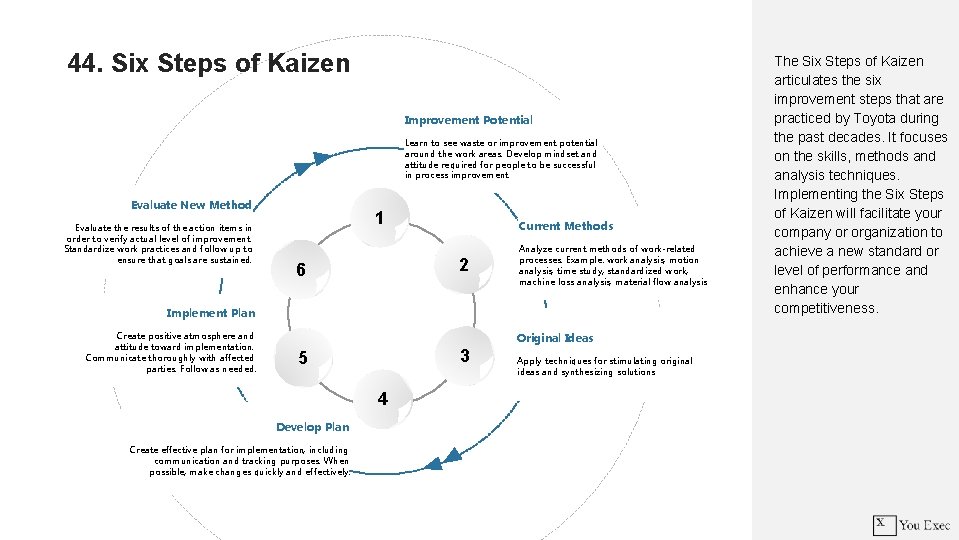
44. Six Steps of Kaizen Improvement Potential Learn to see waste or improvement potential around the work areas. Develop mindset and attitude required for people to be successful in process improvement. Evaluate New Method Evaluate the results of the action items in order to verify actual level of improvement. Standardize work practices and follow up to ensure that goals are sustained. 1 Current Methods 2 6 Analyze current methods of work-related processes. Example: work analysis, motion analysis, time study, standardized work, machine loss analysis, material flow analysis Implement Plan Create positive atmosphere and attitude toward implementation. Communicate thoroughly with affected parties. Follow as needed. Original Ideas 3 5 4 Develop Plan Create effective plan for implementation, including communication and tracking purposes. When possible, make changes quickly and effectively. Apply techniques for stimulating original ideas and synthesizing solutions The Six Steps of Kaizen articulates the six improvement steps that are practiced by Toyota during the past decades. It focuses on the skills, methods and analysis techniques. Implementing the Six Steps of Kaizen will facilitate your company or organization to achieve a new standard or level of performance and enhance your competitiveness.

Get the full version of this presentation and access our library of hundreds of corporate resources Join You Exec Plus today and take your career to new heights. Receive premium corporate resources in your inbox every week. Start today
- Slides: 8