
3 A 1 DNA and RNA Part III

- Slides: 20
3. A. 1 DNA and RNA Part III: Transcription
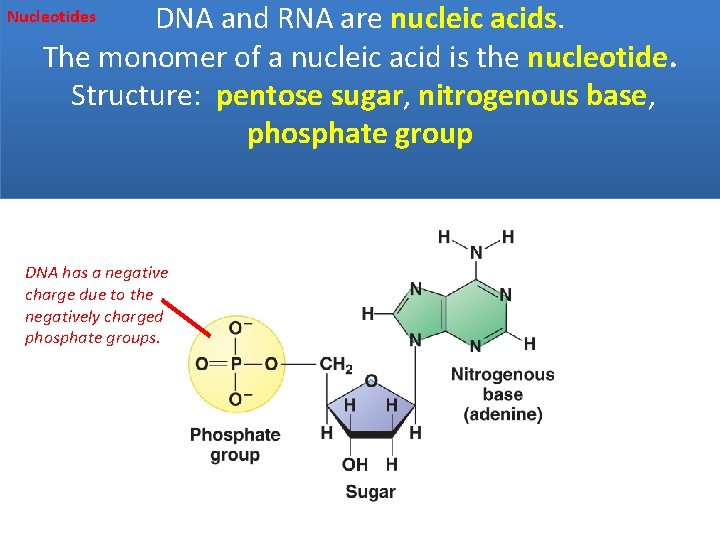
DNA and RNA are nucleic acids. The monomer of a nucleic acid is the nucleotide. Structure: pentose sugar, nitrogenous base, phosphate group Nucleotides DNA has a negative charge due to the negatively charged phosphate groups.
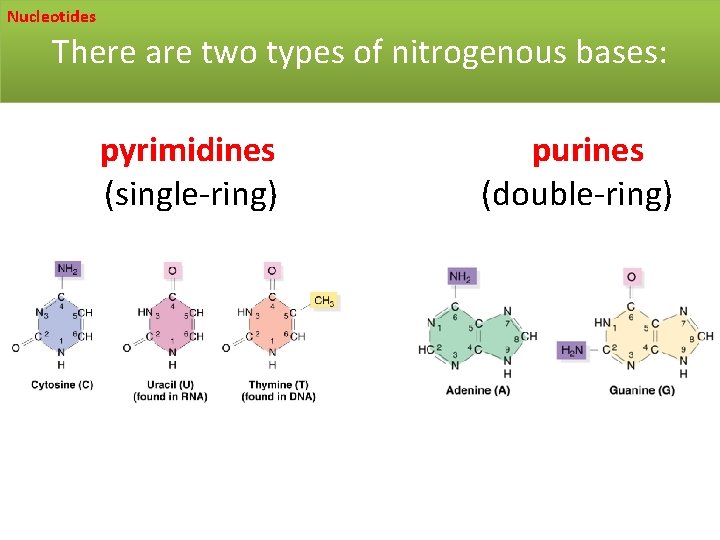
Nucleotides There are two types of nitrogenous bases: pyrimidines (single-ring) purines (double-ring)
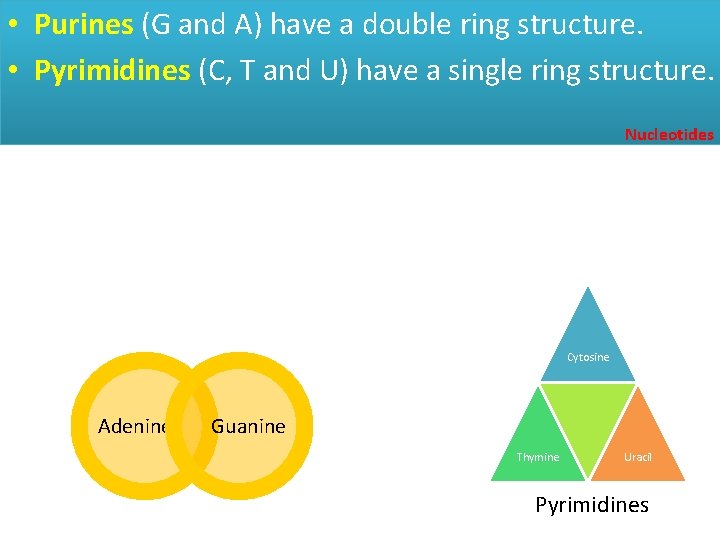
• Purines (G and A) have a double ring structure. • Pyrimidines (C, T and U) have a single ring structure. Nucleotides Cytosine Adenine Guanine Thymine Uracil Pyrimidines
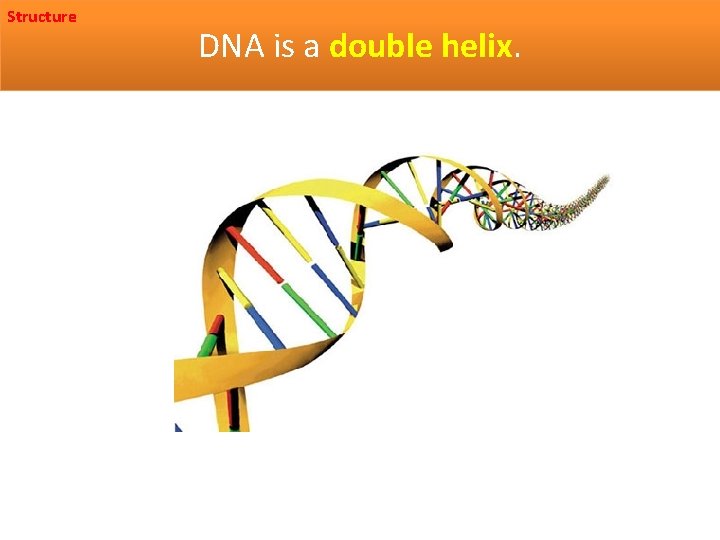
Structure DNA is a double helix.
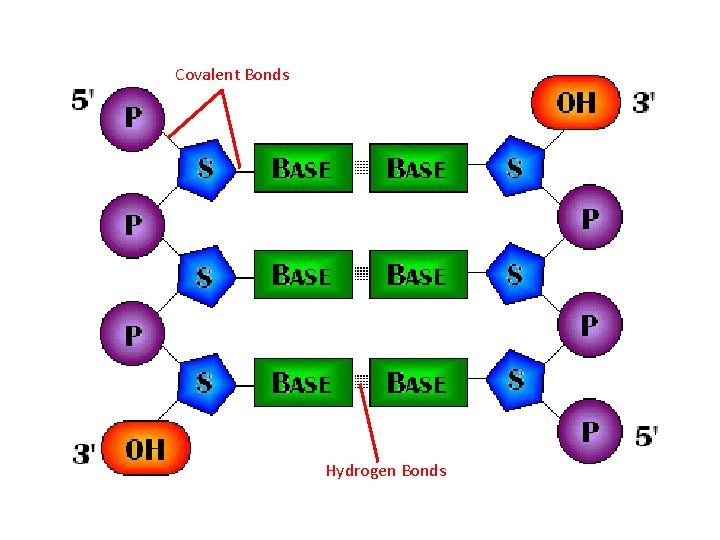
Covalent Bonds Hydrogen Bonds
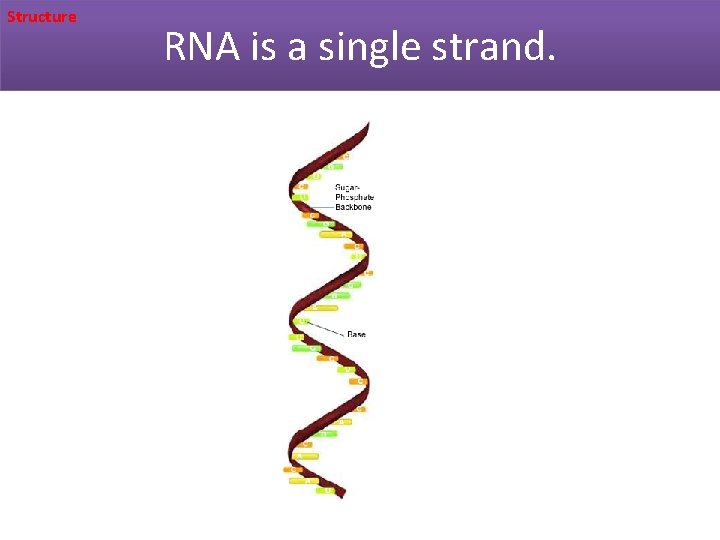
Structure RNA is a single strand.
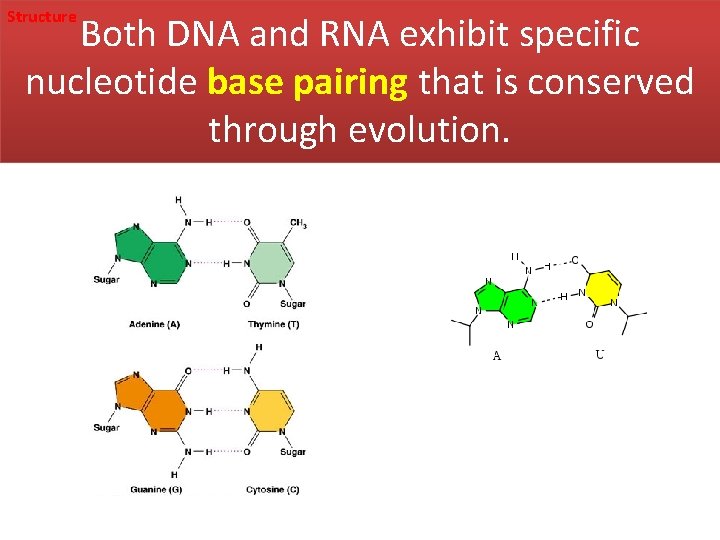
Structure Both DNA and RNA exhibit specific nucleotide base pairing that is conserved through evolution.
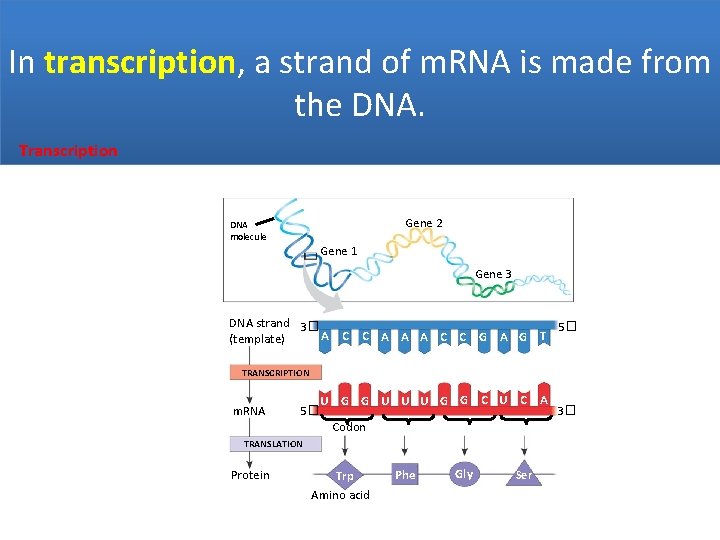
In transcription, a strand of m. RNA is made from the DNA. Transcription Gene 2 DNA molecule Gene 1 Gene 3 DNA strand 3� A C (template) C A A A C C G A G T 5� TRANSCRIPTION m. RNA 5� U G G U U U G G C U C A Codon TRANSLATION Protein Trp Amino acid Phe Gly Ser 3�
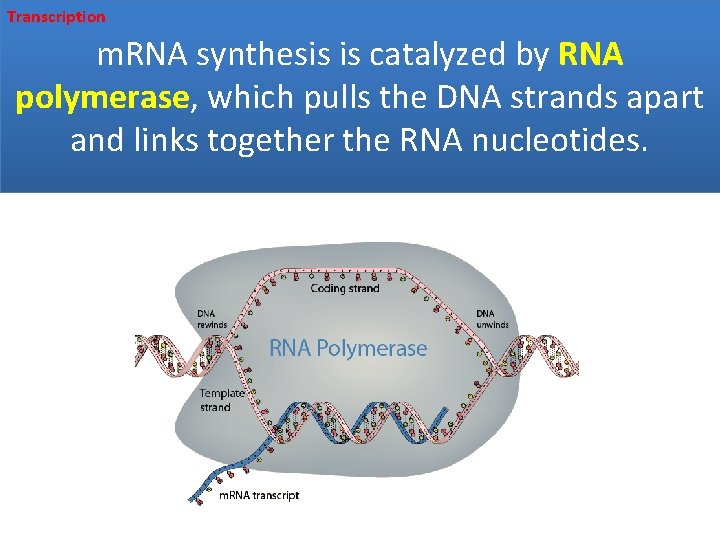
Transcription m. RNA synthesis is catalyzed by RNA polymerase, which pulls the DNA strands apart and links together the RNA nucleotides.
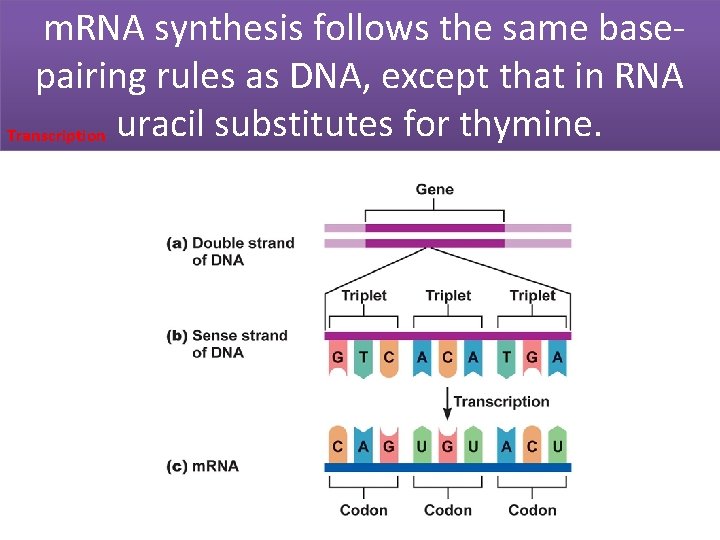
m. RNA synthesis follows the same basepairing rules as DNA, except that in RNA Transcription uracil substitutes for thymine.
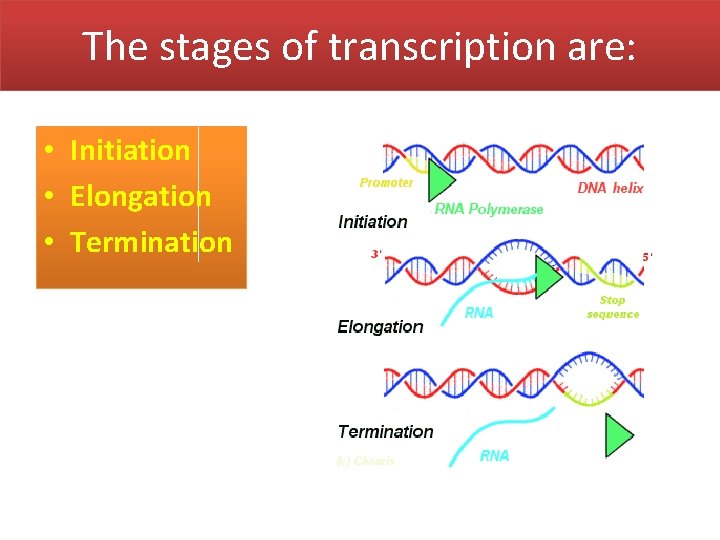
The stages of transcription are: • Initiation • Elongation • Termination
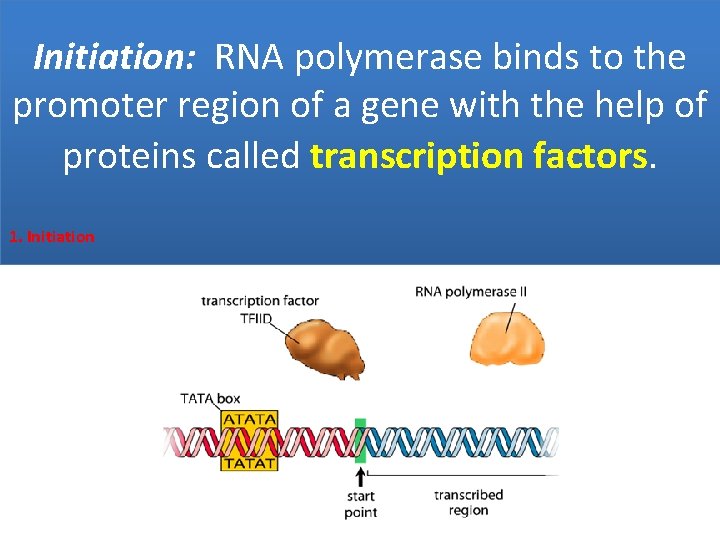
Initiation: RNA polymerase binds to the promoter region of a gene with the help of proteins called transcription factors. 1. Initiation
1. Initiation The transcription factors bind to a region within the promoter called the TATA box.
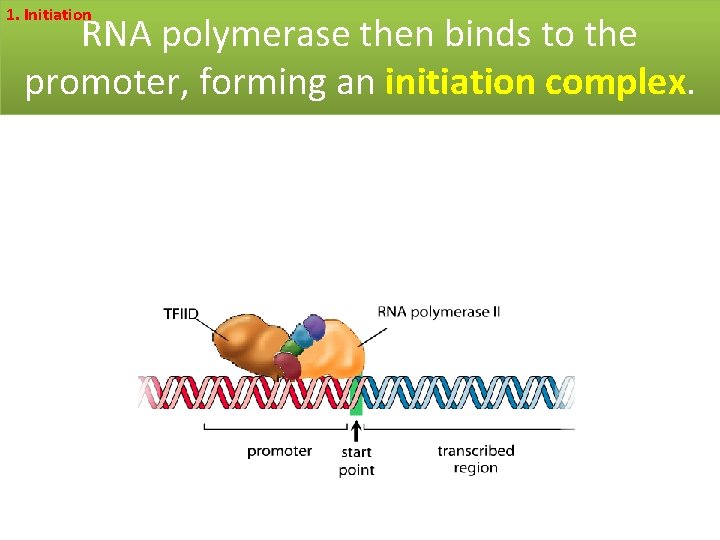
1. Initiation RNA polymerase then binds to the promoter, forming an initiation complex.
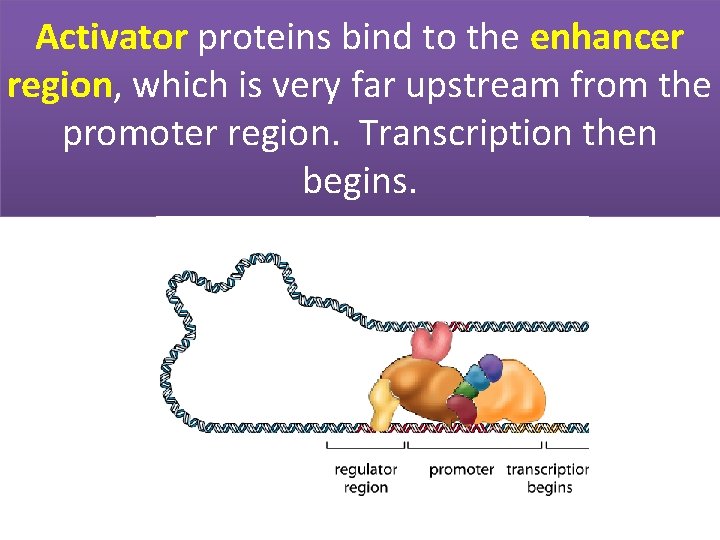
Activator proteins bind to the enhancer region, which is very far upstream from the promoter region. Transcription then begins.
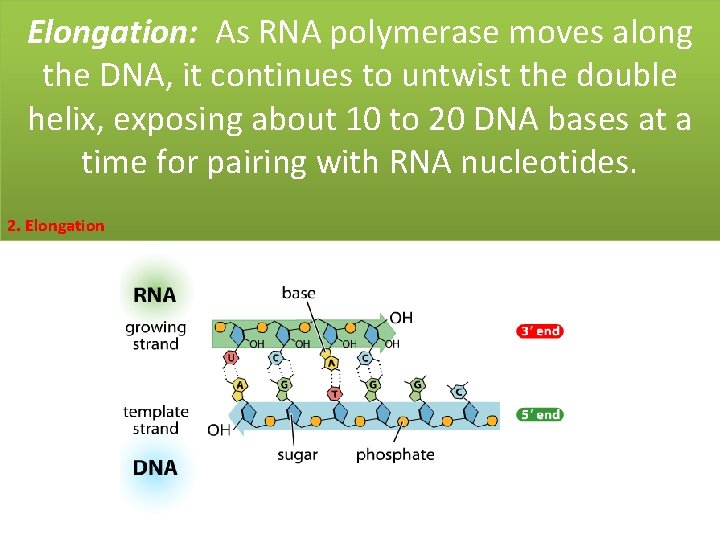
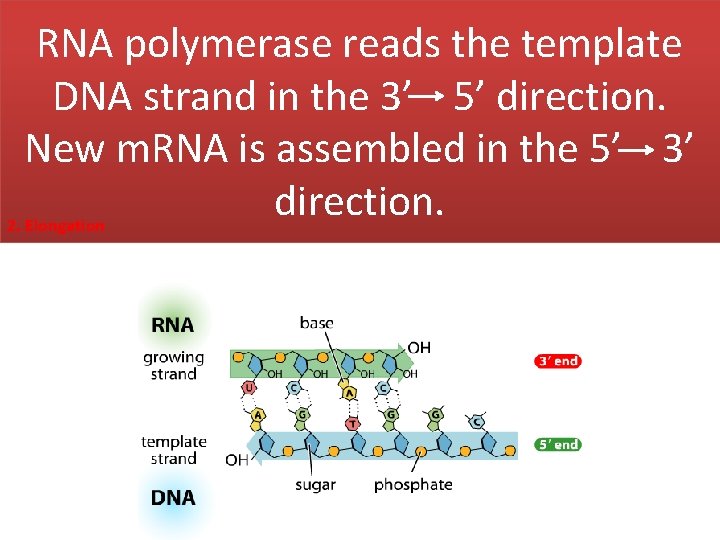
Elongation: As RNA polymerase moves along the DNA, it continues to untwist the double helix, exposing about 10 to 20 DNA bases at a time for pairing with RNA nucleotides. 2. Elongation
RNA polymerase reads the template DNA strand in the 3’ 5’ direction. New m. RNA is assembled in the 5’ 3’ direction. 2. Elongation
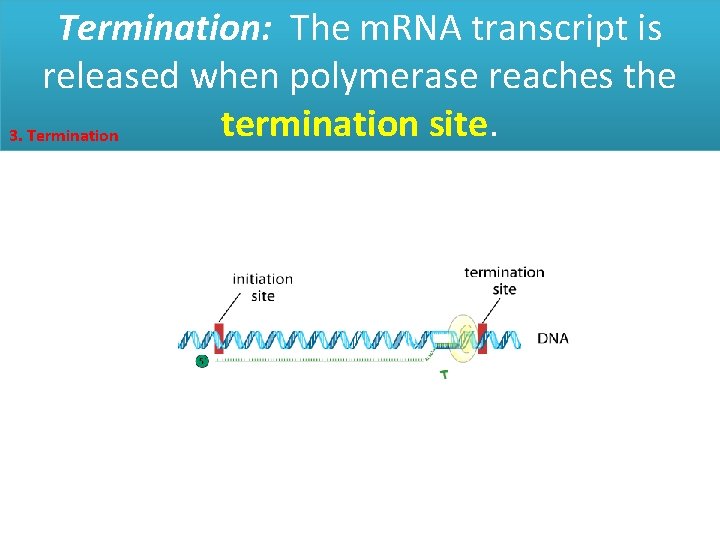
Termination: The m. RNA transcript is released when polymerase reaches the termination site. 3. Termination
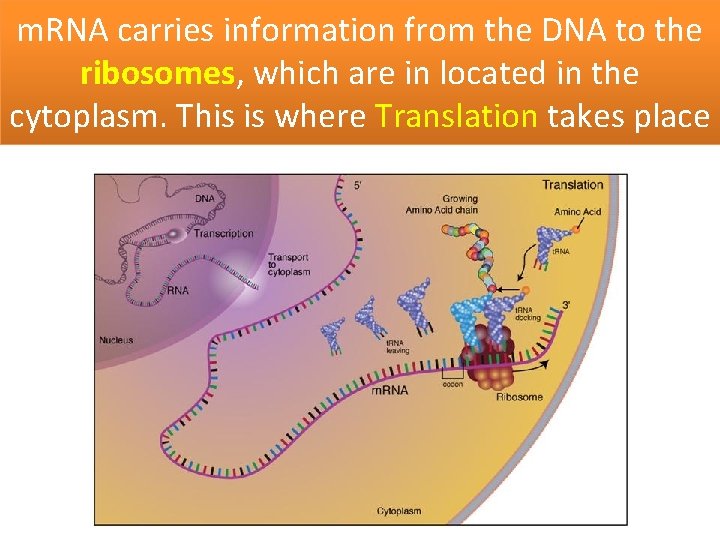
m. RNA carries information from the DNA to the ribosomes, which are in located in the cytoplasm. This is where Translation takes place