3 8 Evaluate one theory of how emotion
- Slides: 12
3. 8 Evaluate one theory of how emotion may affect one cognitive process. One theory: Flashbulb Memory One Cognitive Process: Memory
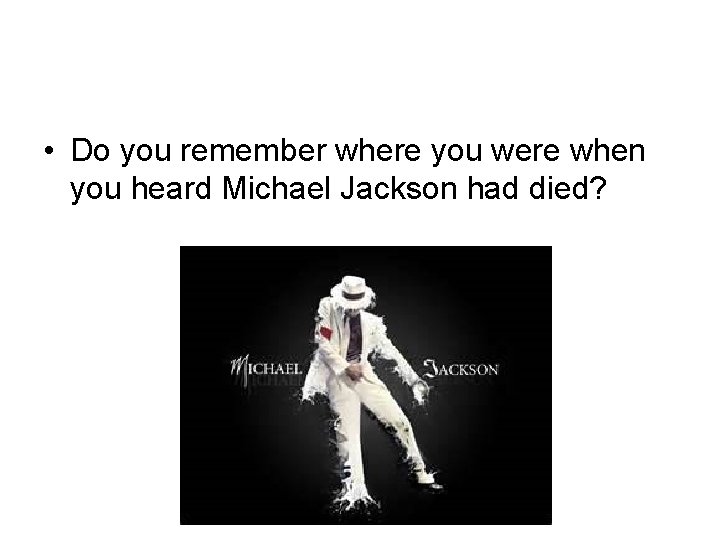
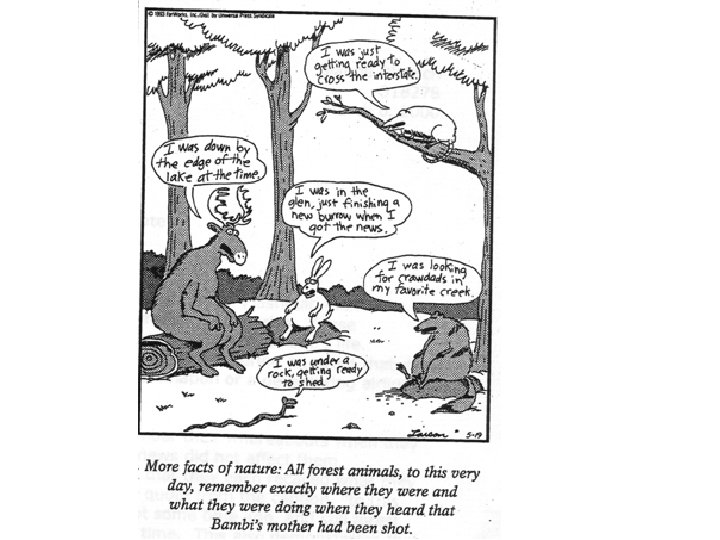
• Do you remember where you were when you heard Michael Jackson had died?
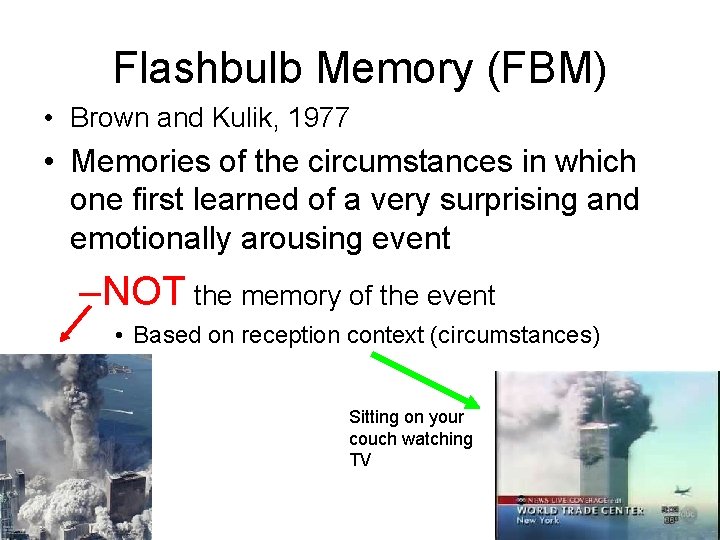
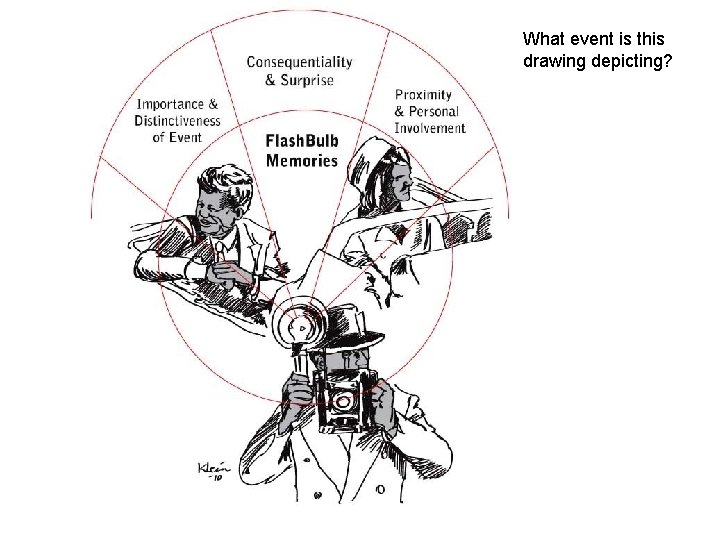
Flashbulb Memory (FBM) • Brown and Kulik, 1977 • Memories of the circumstances in which one first learned of a very surprising and emotionally arousing event –NOT the memory of the event • Based on reception context (circumstances) Sitting on your couch watching TV
Formation and Maintenance of FBMs • Form in situation where we encounter surprising or highly emotional information • Maintained based on rehearsal – Overt: talking about it – Covert: private thoughts • Different than other memories – More vivid – Last longer – More consistent and accurate • Specialized neural mechanism – Permanent storage in a unique way
What event is this drawing depicting?
Research Notes • Page 92 -93 – Keep track of… • • Researcher (s) Date Method Implications (how does it support/dispute the FBM Theory
Strengths of FBM theory • Explains why emotional memories are more vivid over time – Cannot explain why they are not more accurate than any other memory • Except central details • Many research studies – Theory has been modified • Emotional events are better remembered than non emotional events (supported) • Events should have specific personal relevance
Limitations of the FBM theory • The term “flashbulb” is not appropriate – Photo Everything in the scene is preserved • Not true for memories • FBM are reconstructed memories – Emotional state may influence accuracy • If it is discussed (confabulation) • Memory does not have personal interested
Current Status of Brown and Kulik’s theory? • Brown and Kulik overestimated the durability and consistency of FBM – Long lasting but not permanent – May not be longer lasting than important everyday memories – More vivid than most ordinary memories – Recalled with a greater level of confidence • Today’s research – Doesn’t support that it is a “different memory system”
What causes FBM? • High importance/consequence • Strong emotional feelings • SURPRISE! Shows mixed results – Not supported by relevant research • FBM is seen in expected events – Landing on the moon
In Conclusion… • Evidence doesn’t support that emotion greatly impacts the initial encoding of the event • Emotion effects memory at a later stage – Rehearsal – Social sharing • What memory model would you use to connect the statements above with FBM?