
3 5 Pressure in Fluids Pascals Law Pressure

- Slides: 11
3. 5 Pressure in Fluid’s Pascal’s Law
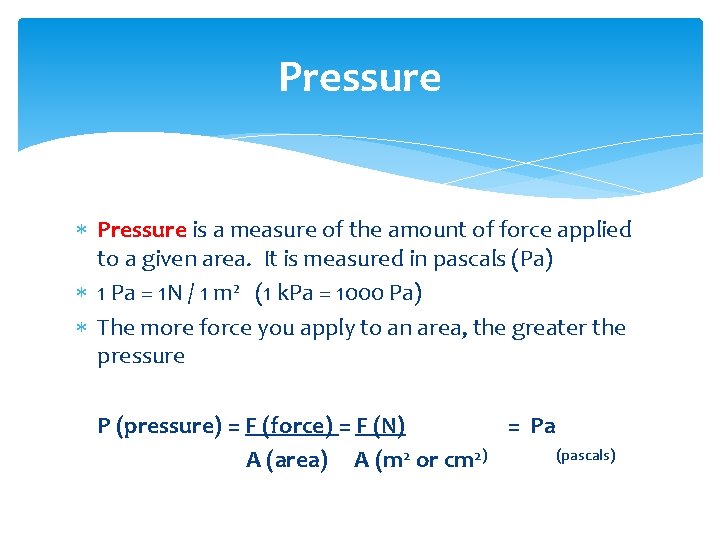
Pressure is a measure of the amount of force applied to a given area. It is measured in pascals (Pa) 1 Pa = 1 N / 1 m² (1 k. Pa = 1000 Pa) The more force you apply to an area, the greater the pressure P (pressure) = F (force) = F (N) = Pa (pascals) A (area) A (m 2 or cm 2)
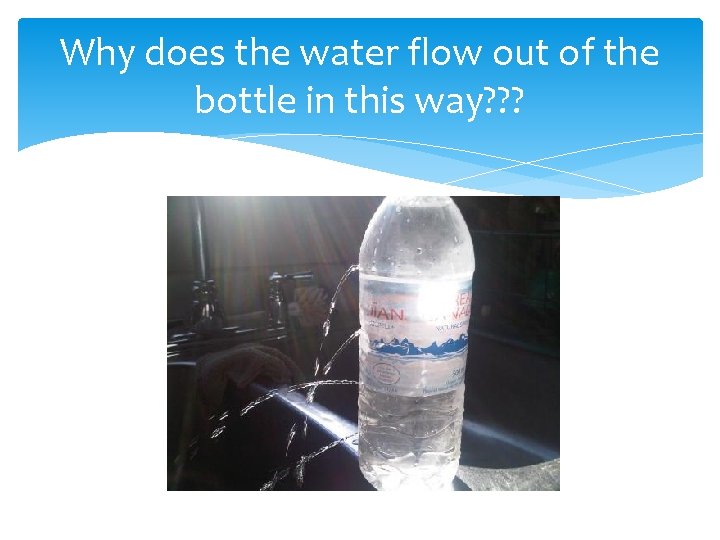
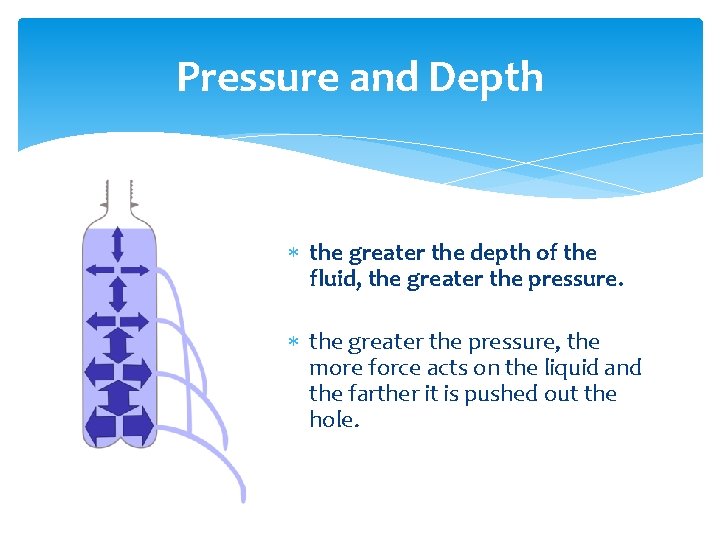
Why does the water flow out of the bottle in this way? ? ?
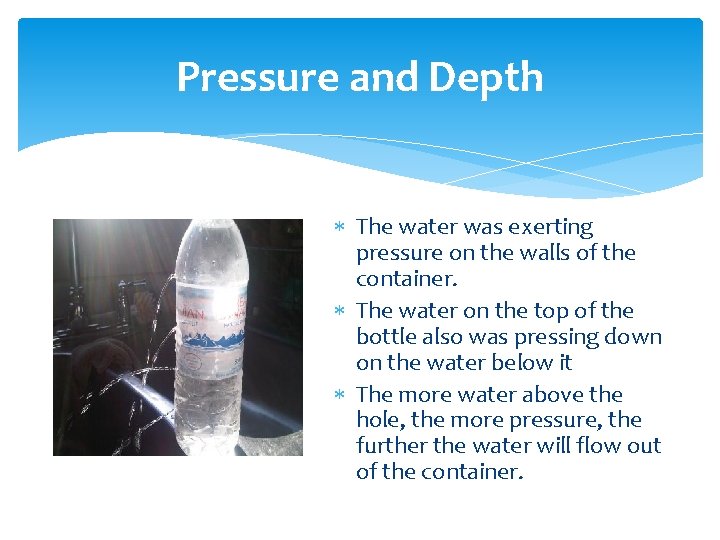
Pressure and Depth The water was exerting pressure on the walls of the container. The water on the top of the bottle also was pressing down on the water below it The more water above the hole, the more pressure, the further the water will flow out of the container.
Pressure and Depth the greater the depth of the fluid, the greater the pressure, the more force acts on the liquid and the farther it is pushed out the hole.
Pascal’s Law: an enclosed fluid transmits pressure equally in all directions.
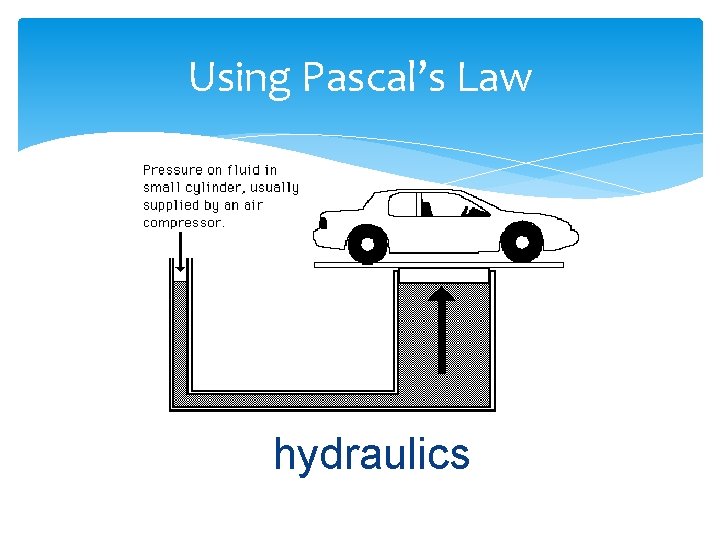
Using Pascal’s Law hydraulics
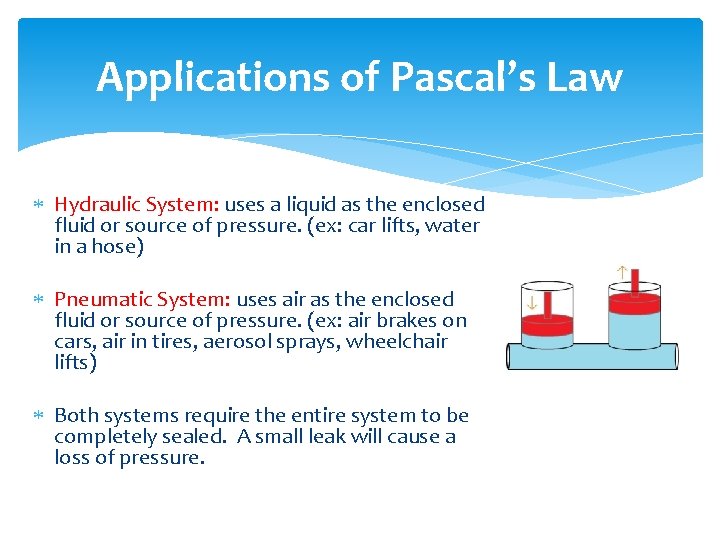
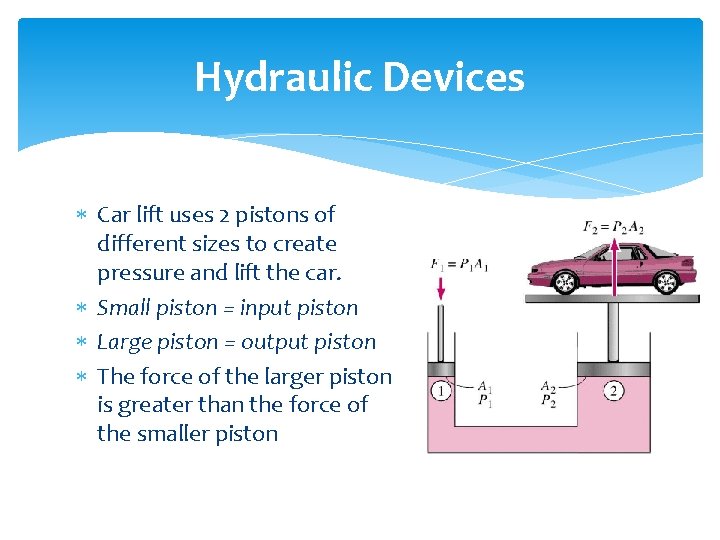
Applications of Pascal’s Law Hydraulic System: uses a liquid as the enclosed fluid or source of pressure. (ex: car lifts, water in a hose) Pneumatic System: uses air as the enclosed fluid or source of pressure. (ex: air brakes on cars, air in tires, aerosol sprays, wheelchair lifts) Both systems require the entire system to be completely sealed. A small leak will cause a loss of pressure.
Hydraulic Devices Car lift uses 2 pistons of different sizes to create pressure and lift the car. Small piston = input piston Large piston = output piston The force of the larger piston is greater than the force of the smaller piston
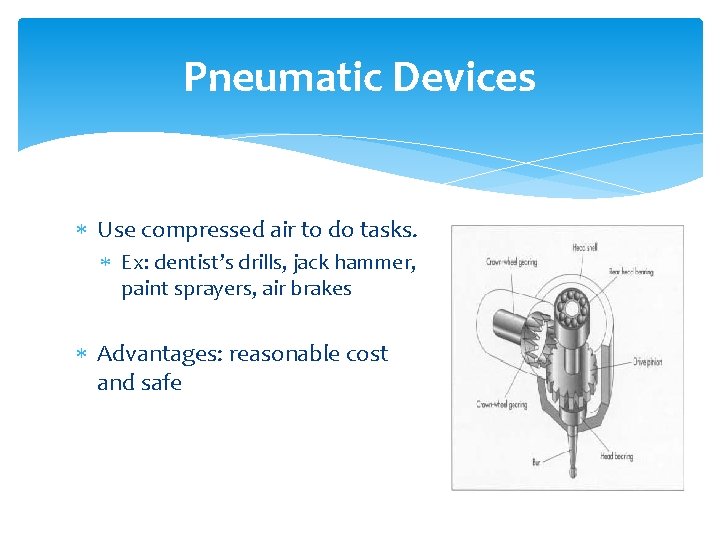
Pneumatic Devices Use compressed air to do tasks. Ex: dentist’s drills, jack hammer, paint sprayers, air brakes Advantages: reasonable cost and safe