
3 5 How does light behave when it
3. 5 How does light behave when it moves from one medium to another Name: _______ Date: _______ Block: ____
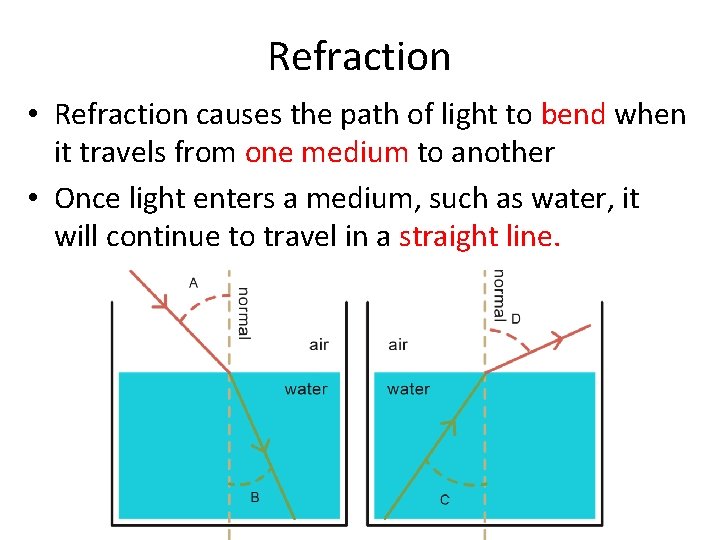
Refraction • Refraction causes the path of light to bend when it travels from one medium to another • Once light enters a medium, such as water, it will continue to travel in a straight line.

Refraction • Refraction occurs because light travels at different speeds in different media Incident Ray – Example: light travels at: • 2. 998 x 108 m/s in air • 2. 250 x 108 m/s in water • When light changes speed as it moves from one medium to another, the direction also changes Normal AIR WATER Refracted Ray
Refraction • Light travels slower in a more dense medium than in a less dense medium • From this, the following are true: – When light travels from less dense to more dense mediums, the ray will bend towards the normal – When light travels from more dense to less dense medium, the ray will bend away from the normal

Ray Model of Light Incident Ray Refracted Ray Incident Ray
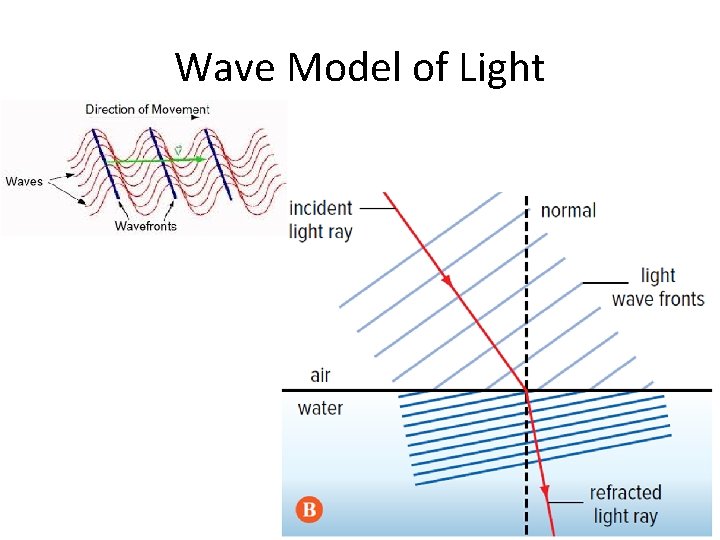
Wave Model of Light
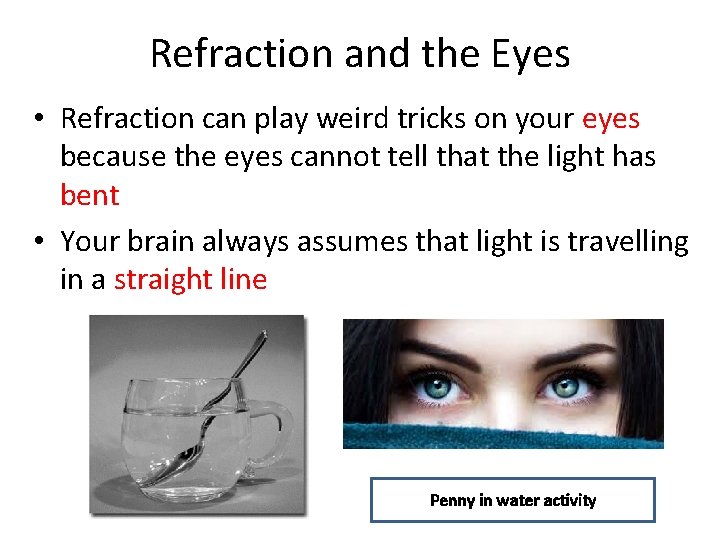
Refraction and the Eyes • Refraction can play weird tricks on your eyes because the eyes cannot tell that the light has bent • Your brain always assumes that light is travelling in a straight line Penny in water activity
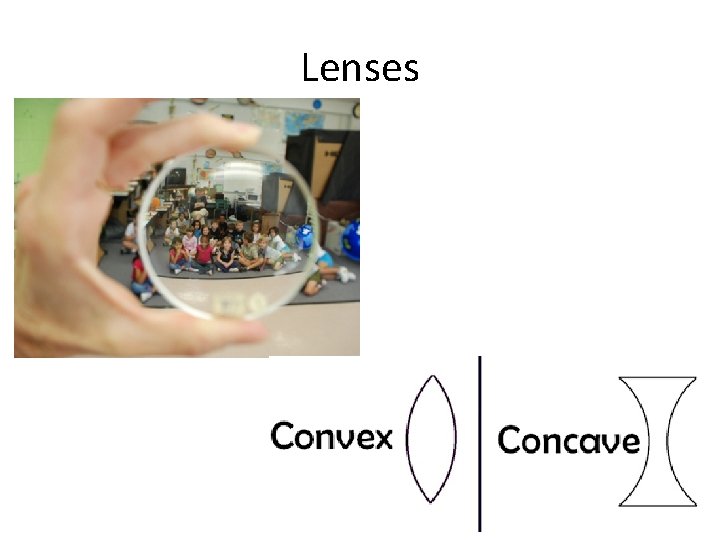
Lenses
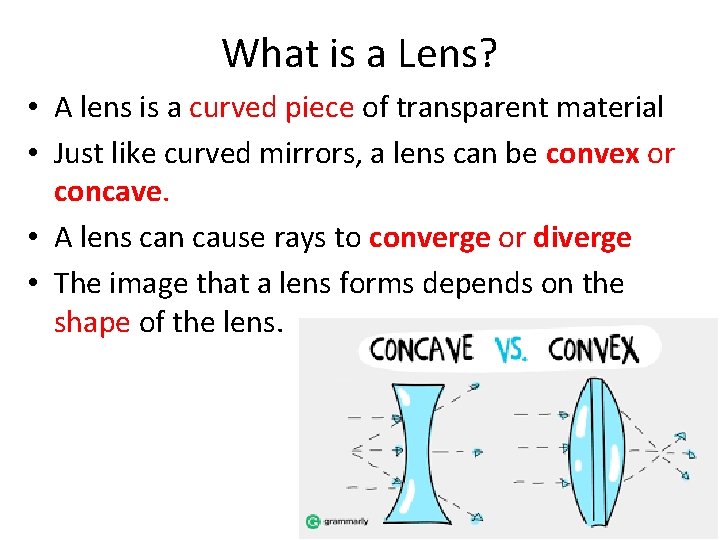
What is a Lens? • A lens is a curved piece of transparent material • Just like curved mirrors, a lens can be convex or concave. • A lens can cause rays to converge or diverge • The image that a lens forms depends on the shape of the lens.
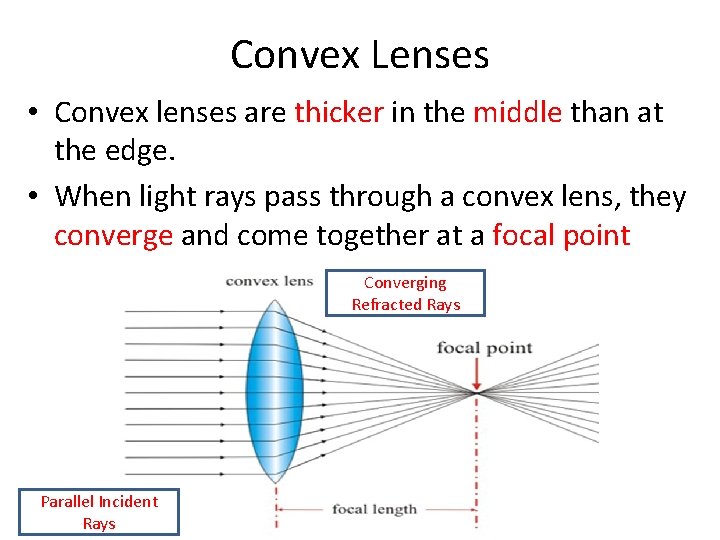
Convex Lenses • Convex lenses are thicker in the middle than at the edge. • When light rays pass through a convex lens, they converge and come together at a focal point Converging Refracted Rays Parallel Incident Rays
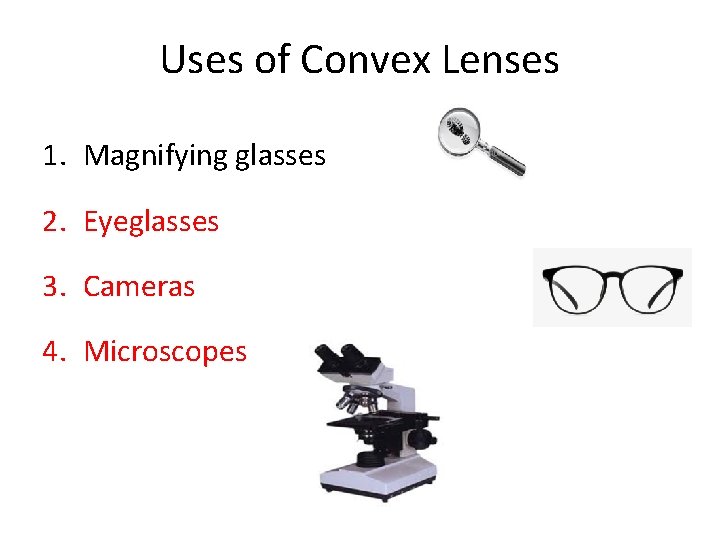
Uses of Convex Lenses 1. Magnifying glasses 2. Eyeglasses 3. Cameras 4. Microscopes
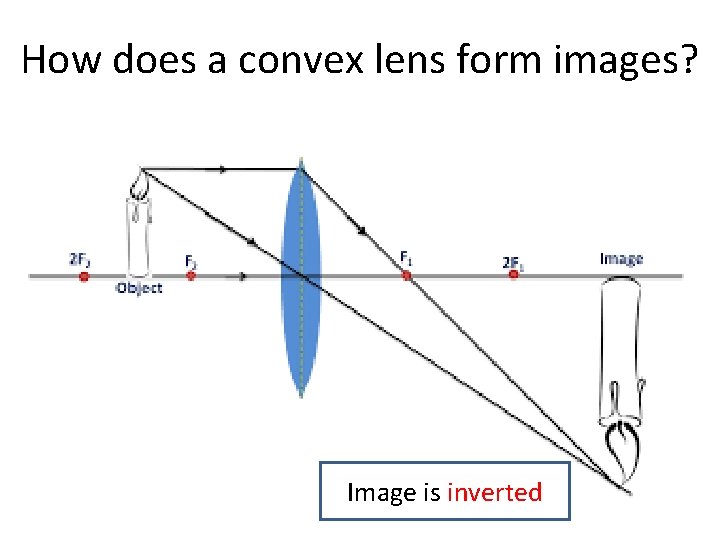
How does a convex lens form images? Image is inverted
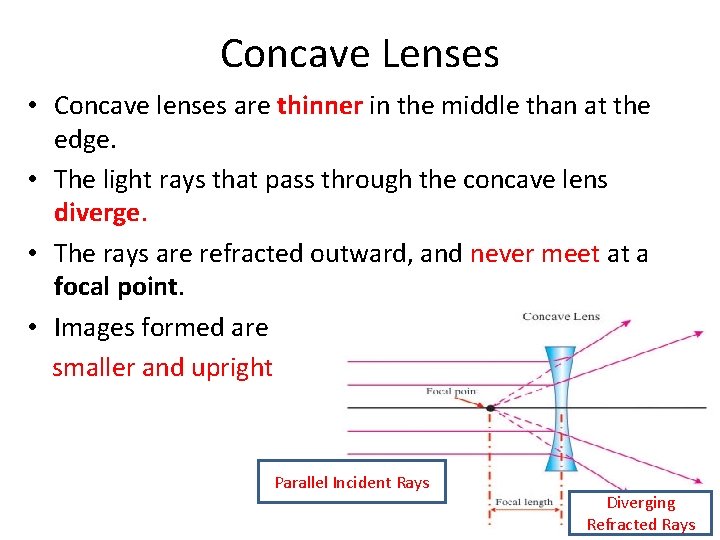
Concave Lenses • Concave lenses are thinner in the middle than at the edge. • The light rays that pass through the concave lens diverge. • The rays are refracted outward, and never meet at a focal point. • Images formed are smaller and upright Parallel Incident Rays Diverging Refracted Rays
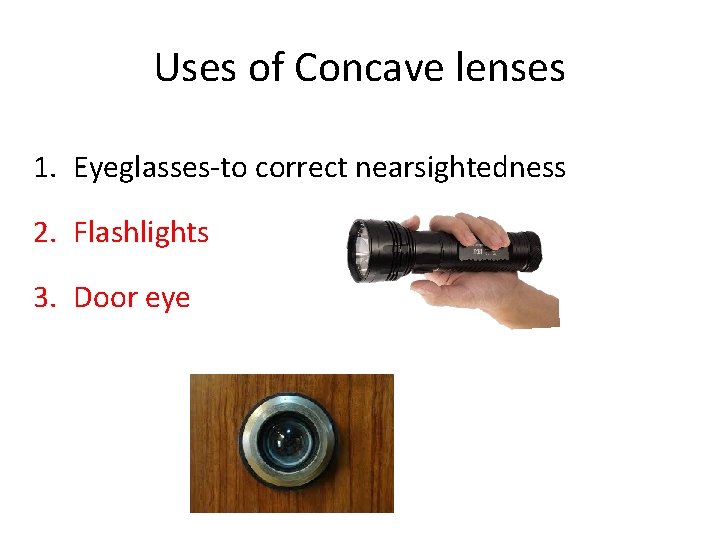
Uses of Concave lenses 1. Eyeglasses-to correct nearsightedness 2. Flashlights 3. Door eye
- Slides: 14