
3 3 Special layouts Diamond crossings including with

- Slides: 28
3. 3 Special layouts: Diamond crossings including with single and double slips. Scissors crossover, Definitions and description of components. Periods 8
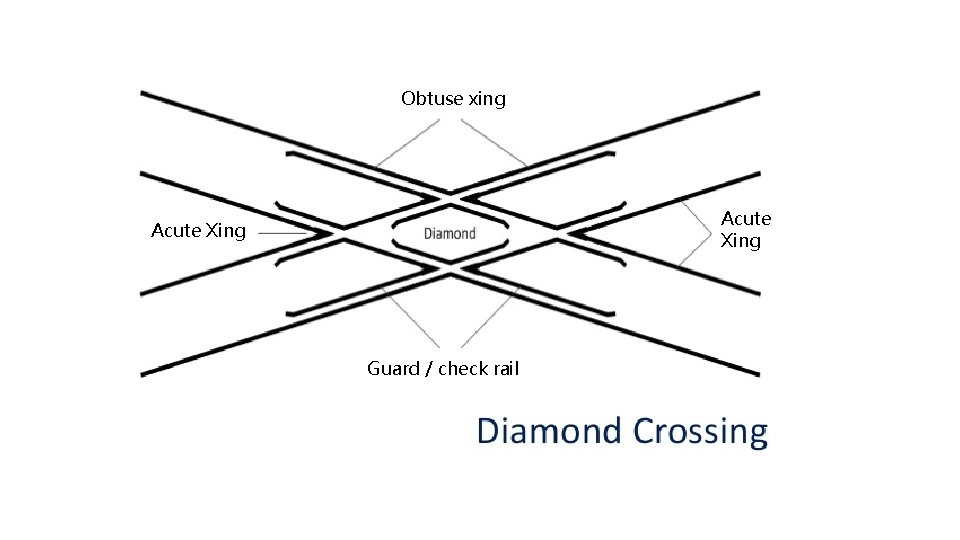
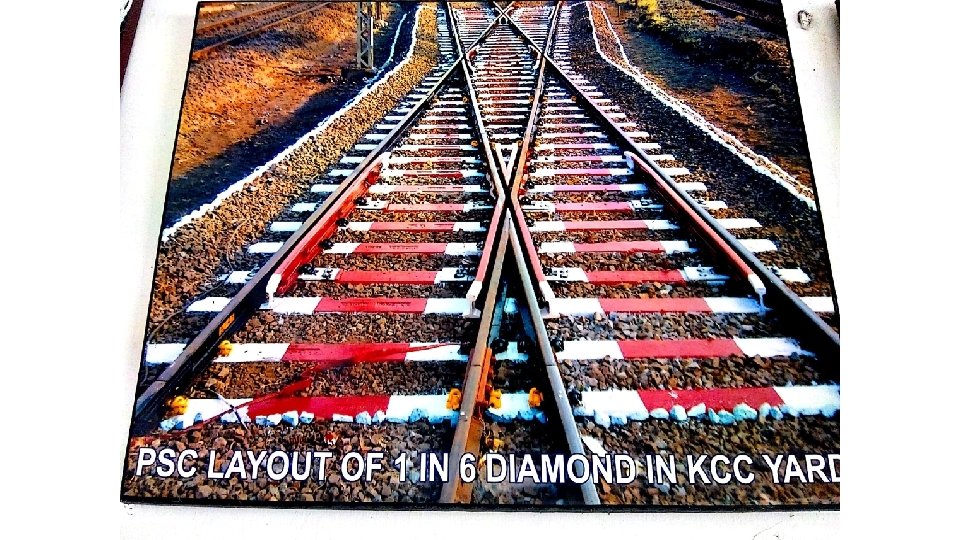
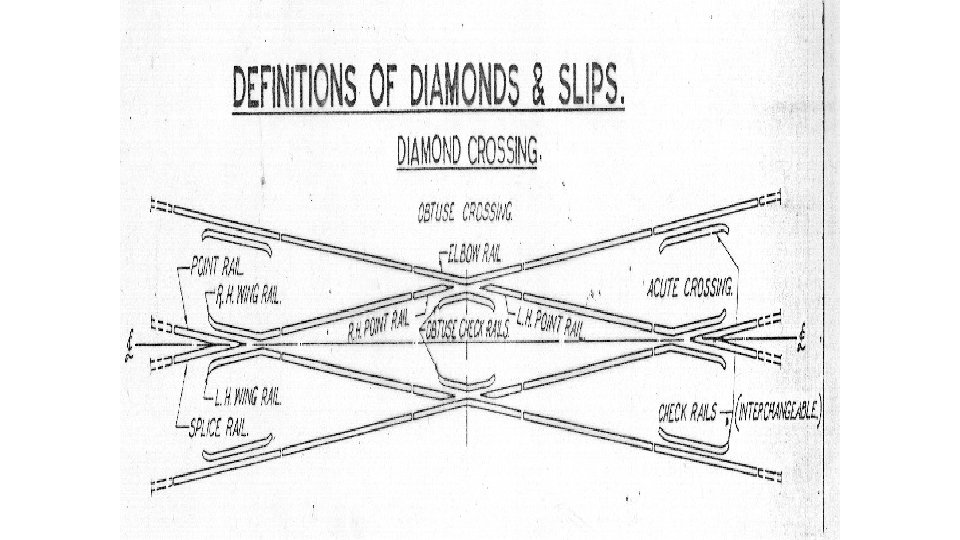
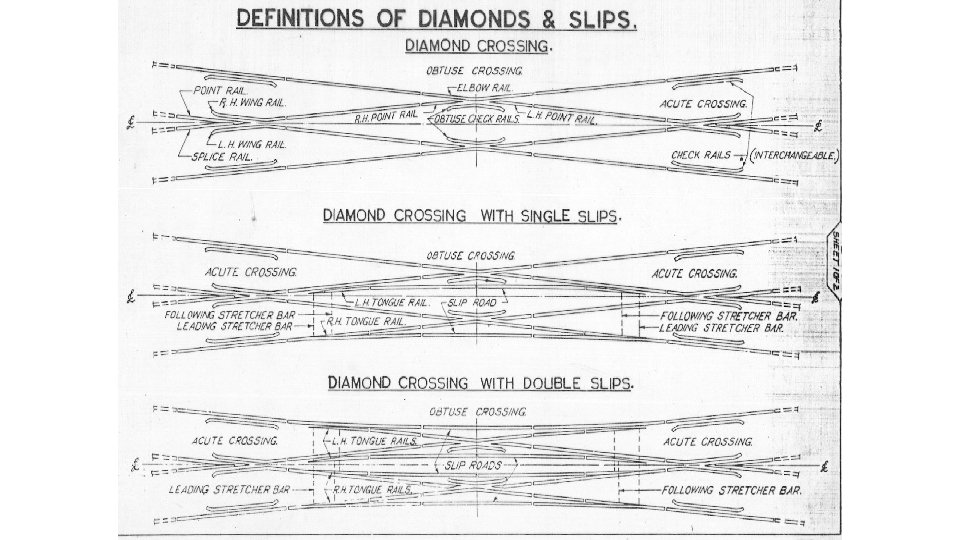
Diamond crossing • When two tracks cross each other without any connection permitting movement from one track to other, a Diamond crossing is said to be formed. • Formed when two tracks cross each other • If same gauge – rhombus • If different gauge – parallelogram • If at right angle – square diamond • Right angle diamond to be avoided • It consist of two acute crossing, two obtuse crossings and check tails • As per provisions of SOD diamond crossing shall not be laid flatter than 1 in 8. 5. • However, under special conditions 1 in 10 crossing can be permitted.
Obtuse xing Acute Xing Guard / check rail
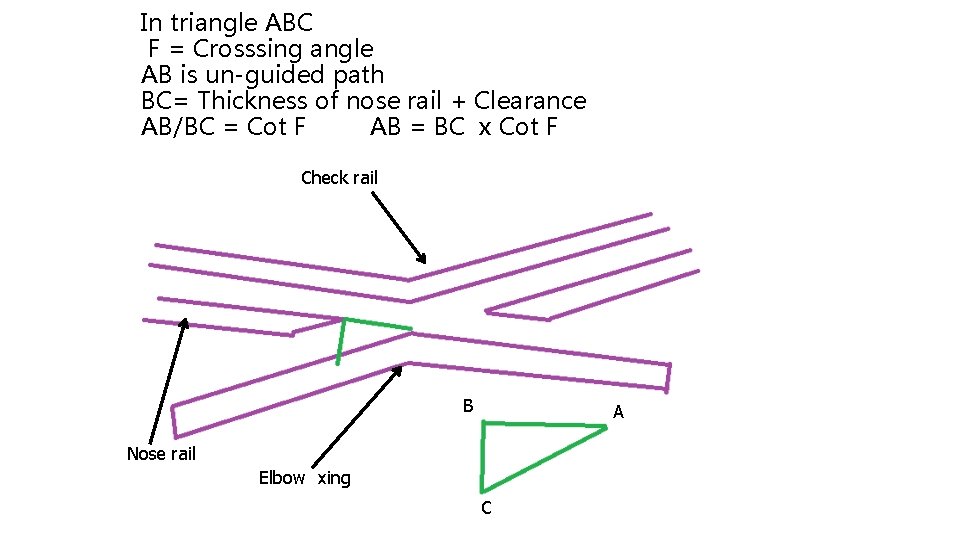
Diamond crossing • Why not to be flatter than 1 in 8. 5 ? • Reason 1. While approaching the nose of the obtuse crossing the wheel being not guided by the check rail. This guidance is necessary to ensure that the wheel moves in right channel while approaching the gap. • This gap is • 480. 25 mm for 1 in 8. 5 and 678 mm for 1 in 12.
In triangle ABC F = Crosssing angle AB is un-guided path BC= Thickness of nose rail + Clearance AB/BC = Cot F AB = BC x Cot F Check rail B A Nose rail Elbow xing C
Diamond crossing • Reason 2. The two obtuse crossings lie opposite to each otherefore the gap also falls against each other except the obliquity or skew. • This skew helps the wheel to pass the unprotected gap to travel more distance safely in sharper crossing i. e it is more in 1 in 8. 5 compared to 1 in 12 • Skew CH = G tan F/2 which is 98 mm for 1 in 8. 5 and 70 mm for 1 in 12
Diamond crossing • Due to this gap at the approach of nose rail the movement of wheel is cannot be guided which is against the fundamental principles of safety. • Even as per fundamental principles of safety 1 in 8. 5 should not be allowed. • The unprotected gap all does not remain unguided a part of the wheel is controlled into proper path and the guidance in gap is as follows. 1. When the wheel is passing in the unprotected gap from A to B when the wheel is at E the opposite wheel at A already passed a distance of H wheels being right angle to track i. e; the distance AH of the gap is passed and the wheel is in correct path due to check rail effect at E.
Diamond crossing 2. Flange Depth of new wheel is 28. 5 mm Max Flange Depth of wheel is 35 mm When wheel is passing at EF throat the rear bottom of flange is still in contact with throat till it has further moved to a distance of C 1 3. Thus the wheel at C is guided till it has covered a gap by a length equal to C 1+AH and once the wheel has entered the channel at the nose and its direction is fixed and this happens when the wheel is at a distance less than C 2 from nose and this C 2 is also covered and balance gap is to be travelled by wheel which is 131 mm for 1 in 8. 5 and 362 mm for 1 in 12.
Diamond crossing • At this gap of 131 mm the wheel can take a wrong path if it receives lurch changing its direction. • If the train stops at this location or very close to this point when the train starts with a jerk it has tendency to take wrong path. • To overcome this RB has ordered to provide a metal strip of 25 mm thick be welded on the check rail heads opposite to obtuse crossing. • This increases versine at C 1 and reduces the gap and this gap is 58 mm which is so small that wheel passing over it covers in a fraction of second and its inertia does not permit to change the direction.
Maintenance of Diamond crossing Ensure the following 1. Exact and uniform gauge. 2. Perfect alignment and kinks to be elimnated 3. Tight and complete fittings. 4. Good quality sleeper. 5. Proper check rail clearance of 41 mm in obtuse crossing.
Maintenance of Diamond crossing Ensure the following 5. Ensure welding of 25 mm MS flat on check rail. 6. Wear on flat shall not be more than 4 mm and recondition if exceeds. 7. Creep should be arrested on approaches and adjusted. 8. Cross levels must be maintained. 9. Modified gauge to be used for maintenance.
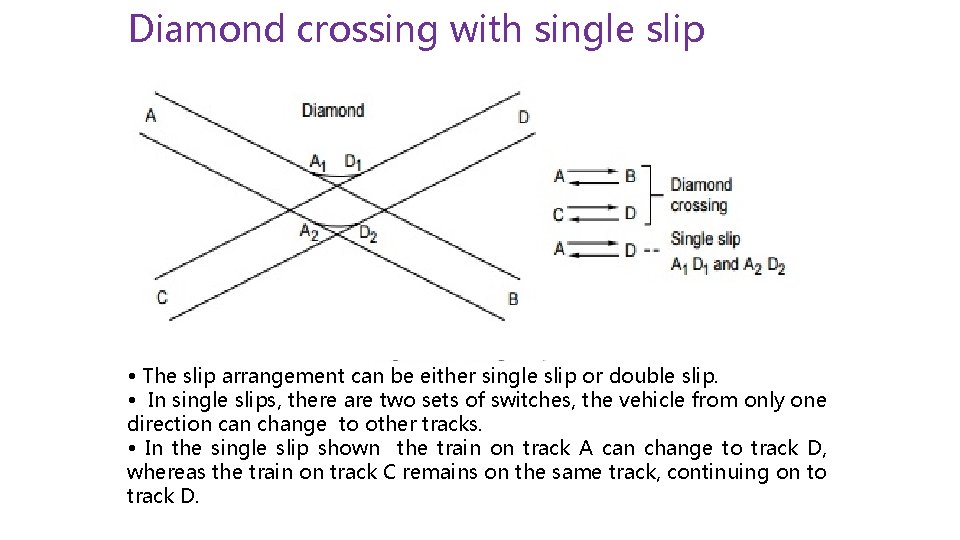
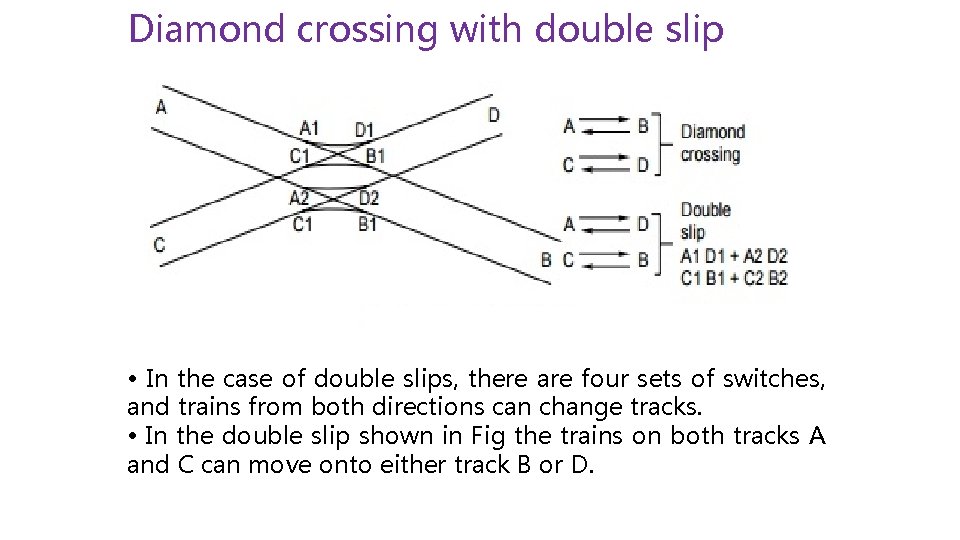
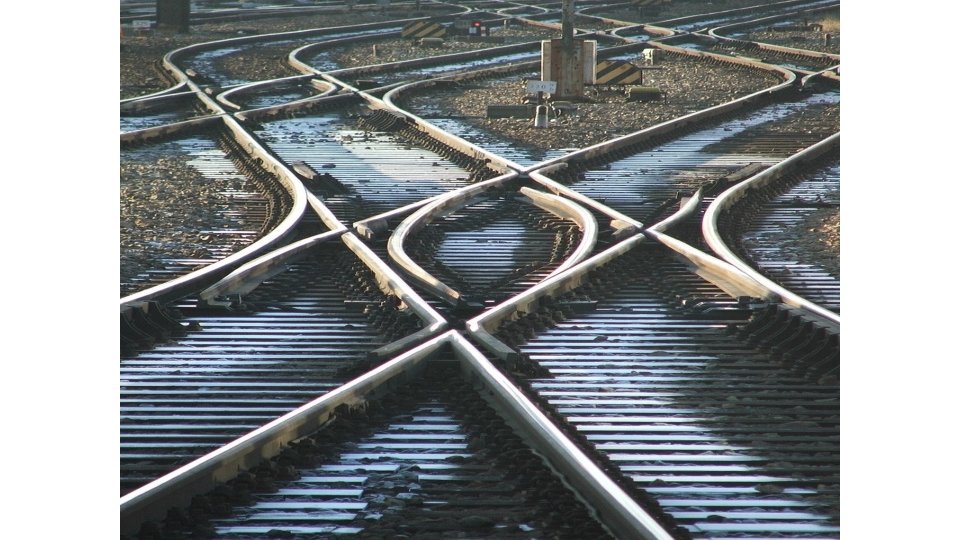
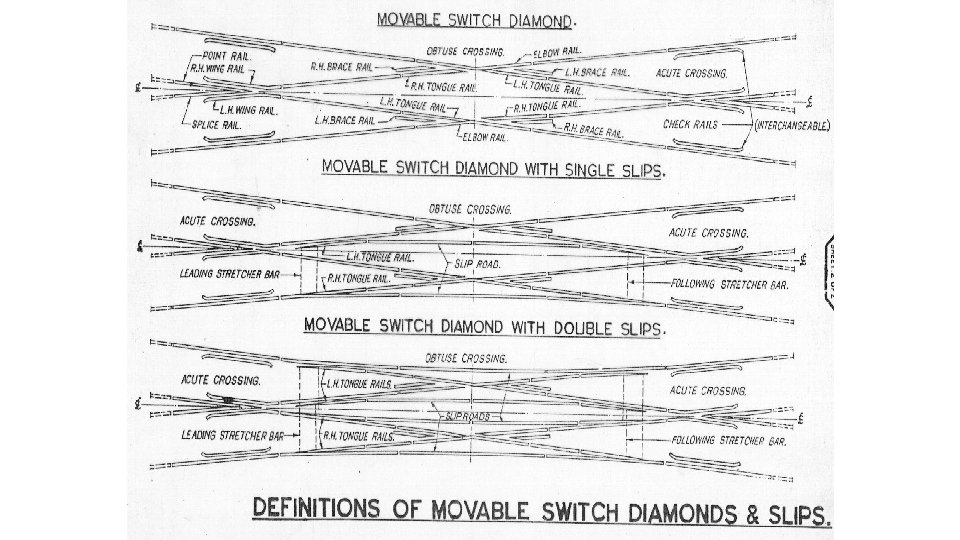
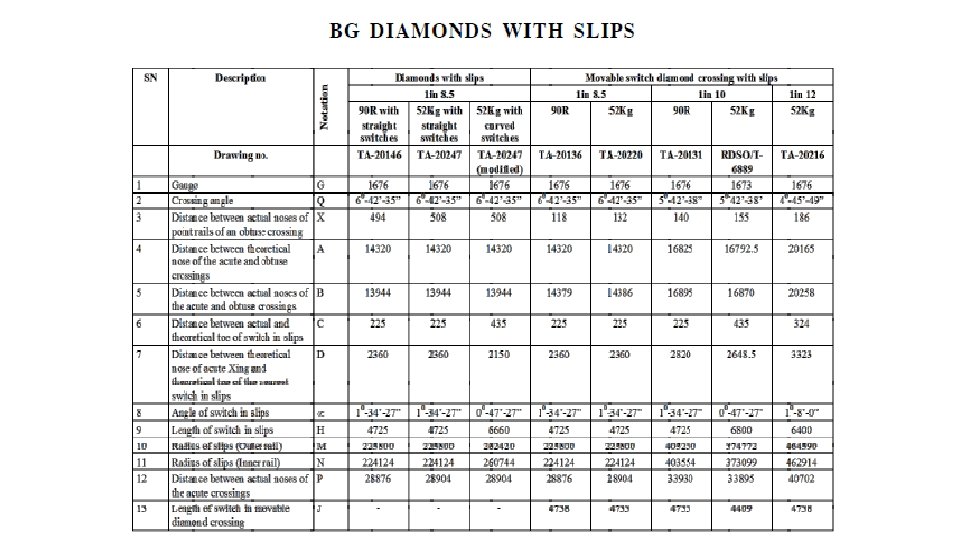
Diamond crossing with Single and Double slips • A Diamond crossing does not have the facility of diverting , movement from one track to another track. • When slips are provided on diamond crossing movement from one track to another can be permitted with sets of switches. • In single slip two sets of switches are provided and movement from one track to another track is permitted only in one direction. • In Double slip four sets of switches are provided and movement from one track to another track is permitted only in both direction.
Diamond crossing with single slip • The slip arrangement can be either single slip or double slip. • In single slips, there are two sets of switches, the vehicle from only one direction can change to other tracks. • In the single slip shown the train on track A can change to track D, whereas the train on track C remains on the same track, continuing on to track D.
Diamond crossing with double slip • In the case of double slips, there are four sets of switches, and trains from both directions can change tracks. • In the double slip shown in Fig the trains on both tracks A and C can move onto either track B or D.
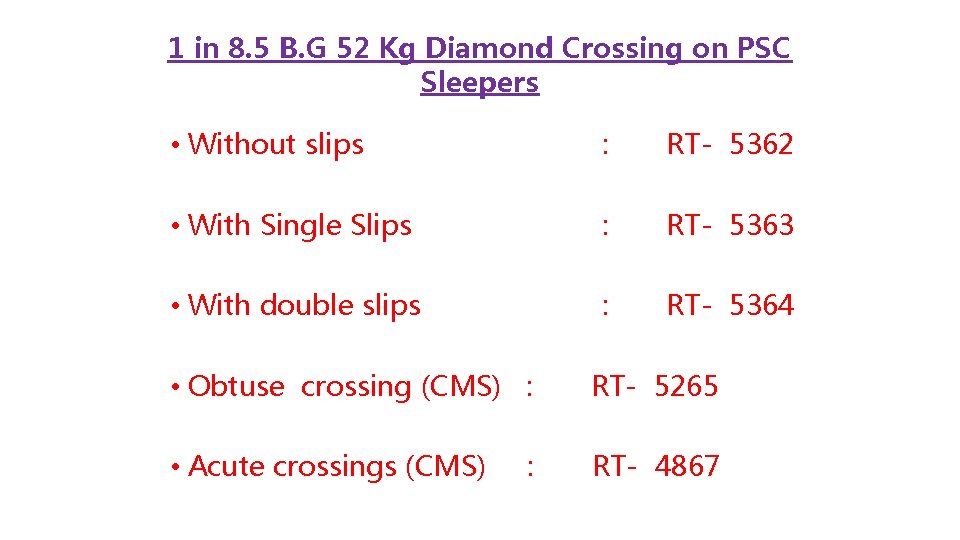
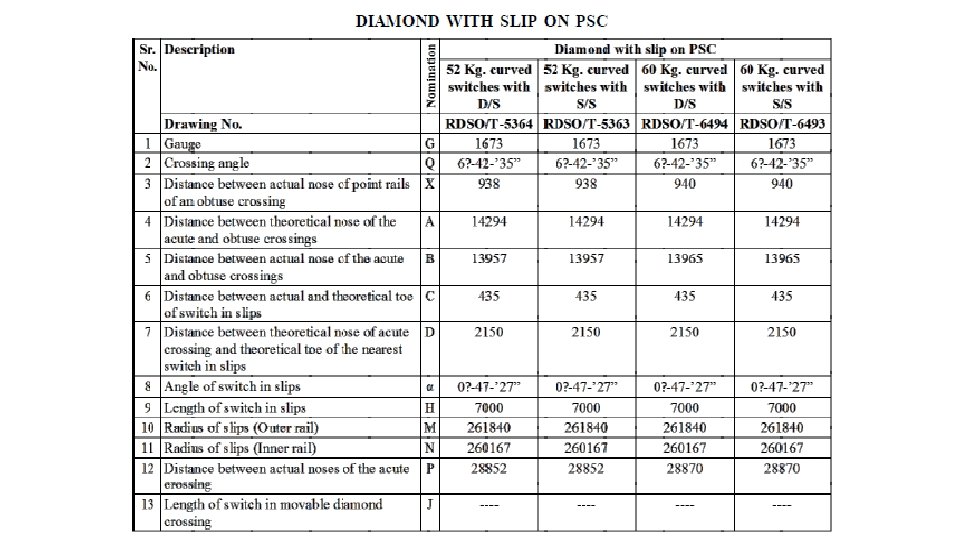
1 in 8. 5 B. G 52 Kg Diamond Crossing on PSC Sleepers • Without slips : RT- 5362 • With Single Slips : RT- 5363 • With double slips : RT- 5364 • Obtuse crossing (CMS) : RT- 5265 • Acute crossings (CMS) : RT- 4867
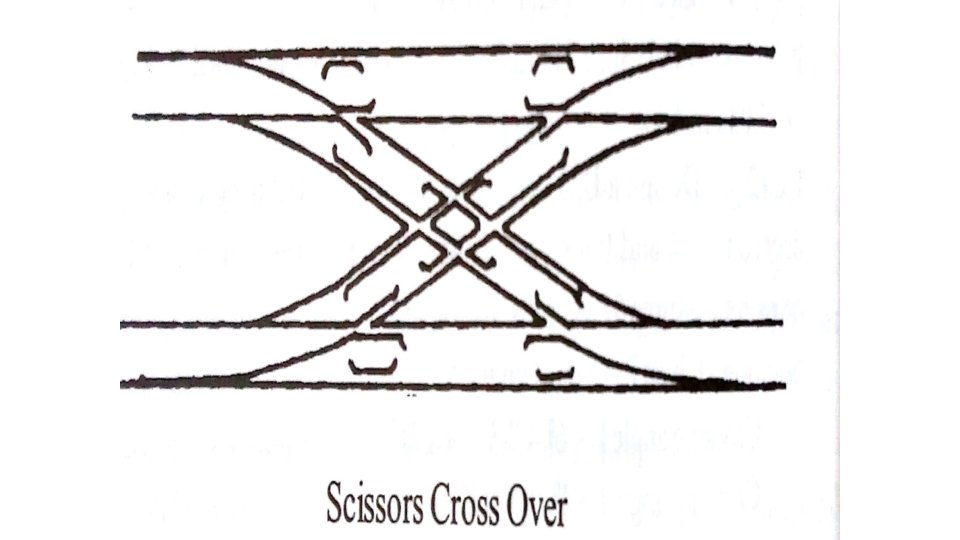
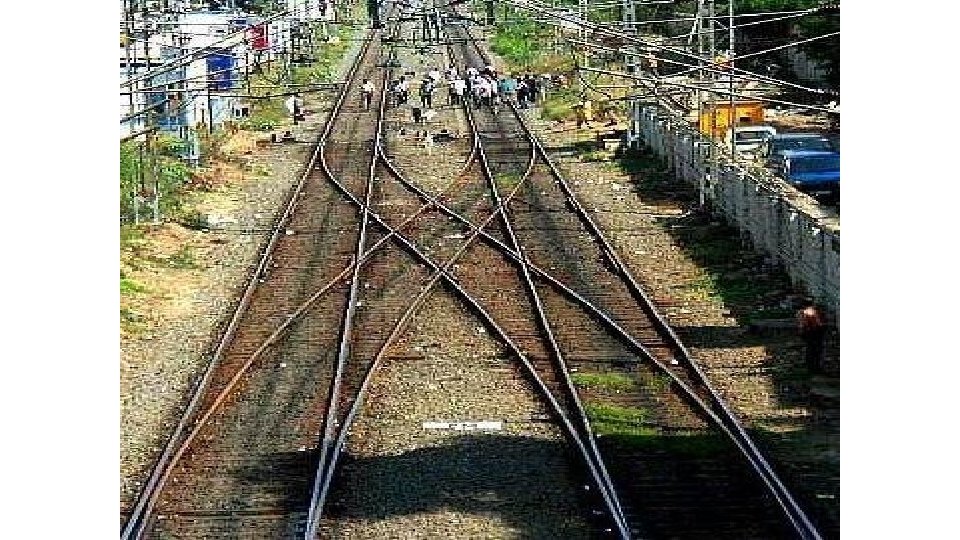
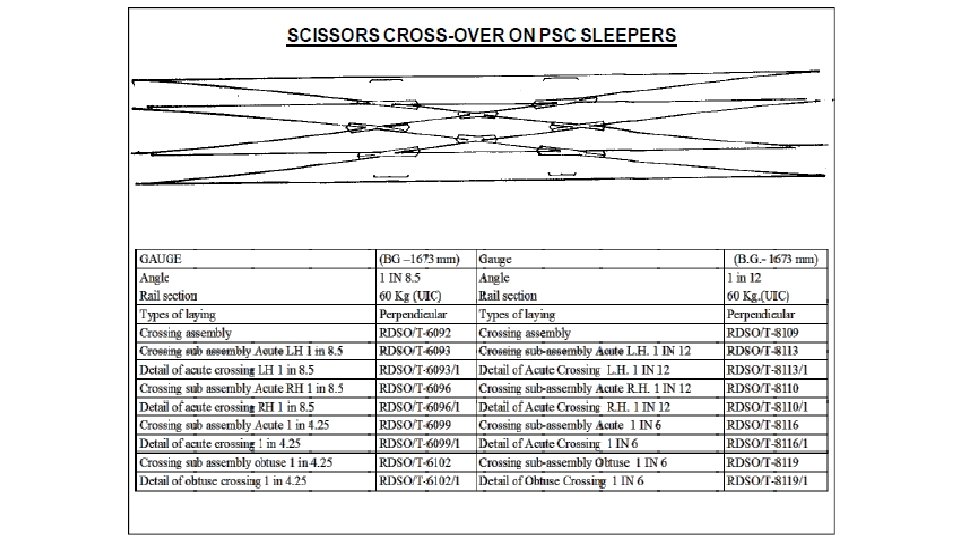
SCISSORS CROSSOVER • When two x-over cross each other a scissors crossover is formed. • A diamond is formed in addition to four turnouts or it may be said as six acute crossing and two obtuse crossing is formed. • Advantage of scissors crossover is the saving of space in congested yard. • Since two crossovers are placed exactly to each other the TNC of acute crossing also fall opposite to each other.
Explanation of layout and its components • Instructor to take the trainees to actual site and explain special layout to trainees. • ( 4 periods)
• Thanks