
3 3 Sedimentary rocks form from earlier rocks
- Slides: 14
3. 3 Sedimentary rocks form from earlier rocks
Classifying Rocks � 3 rock types �Sedimentary �Igneous �Metamorphic
Sediment � Rock fragments, minerals, or plant and animal remains that settle out of water or air
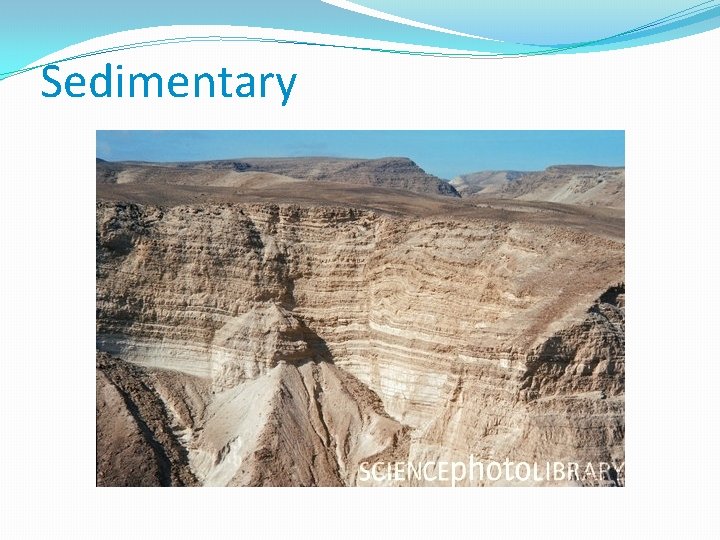
Sedimentary Rocks �“that which has settled” �Formed from sediments �Sediments=rocks exposed to weather that have been broken down into very small pieces � Formation depends on weathering/erosion �Sediments packed into layers �Cement together over time
Sedimentary
Sediments change into Rock by ØPressure ØCemented together by new minerals to form rock
Coal �Sedimentary rock formed from remains of plants, bark roots, and other plant material that is buried and under pressure �Contains NO minerals
Conglomerate �Sedimentary rock with pieces of shells, rocks, minerals or other products that are larger than 2 mm cemented together with minerals.
Limestone � Sedimentary rock made of shells and skeletons of ocean organisms. � Over time the individual shells are no longer visible and become limestone
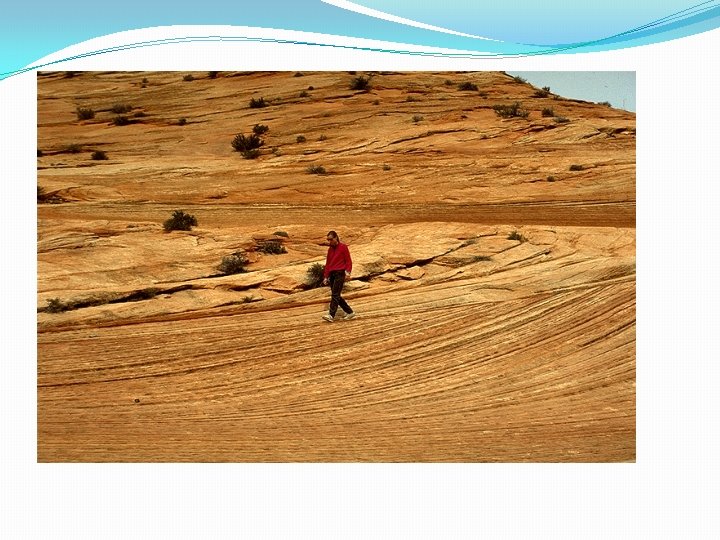
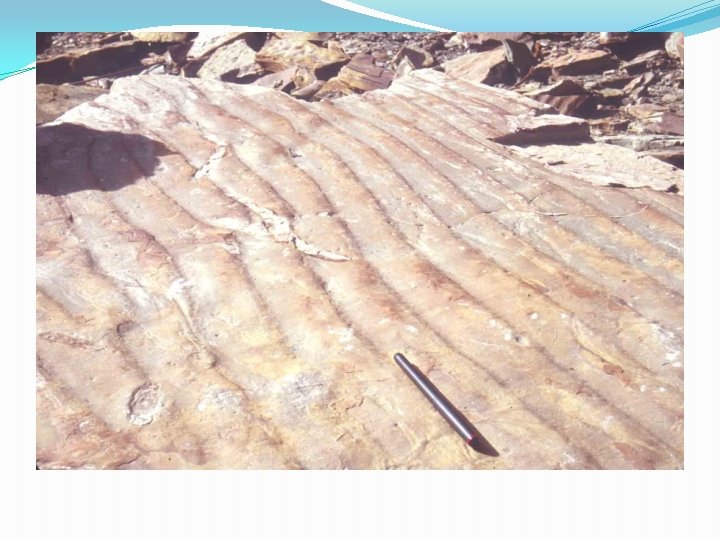
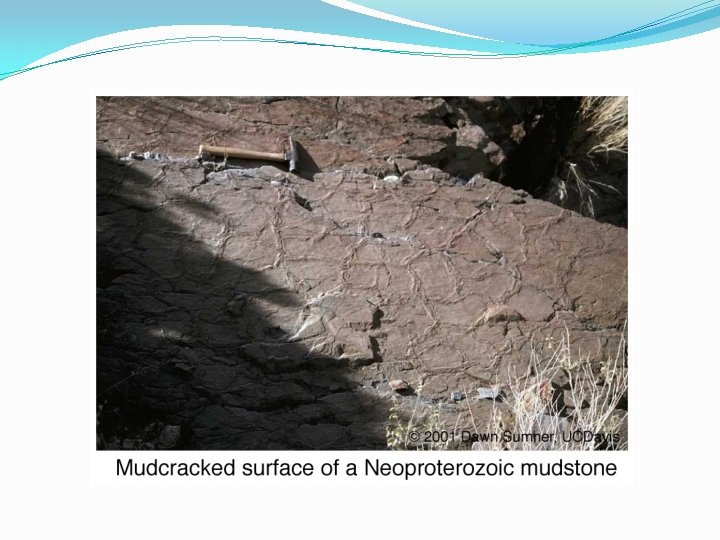
Sedimentary Rock and Wind � Water movement: Larger sediment drops before smaller sediment � Wind Direction : Crossbeds, Ripples, Mud Cracks
Challenge �Refer to book… �What is the difference between compaction and cementation? �Compaction occurs when sediment is squeezed together by the weight of other sediment above it, and cementation occurs when sediment is cemented together by dissolved minerals. �How do chemical and biochemical sedimentary rocks form? �Chemical sedimentary rocks form when minerals crystallize out of solution in water, and biochemical sedimentary rocks form from the action of organisms in water.