
3 3 CYCLES OF MATTER Matter is RECYCLED

- Slides: 23
3. 3 CYCLES OF MATTER Matter is RECYCLED within or between ecosystems Why is it Recycled? Biological systems do not use up matter they transform it.
I. Biogeochemical Cycles A. The paths (cycles) where Elements, compounds, and other forms of matter are passed from one organism to another and from one part of the biosphere to another. – Bio: – Geo: –Life – Chemical: –Earth (biosphere) -elements or compounds • Did you ever wonder if the oxygen molecules that we breathe may have been inhaled by the dinosaurs?
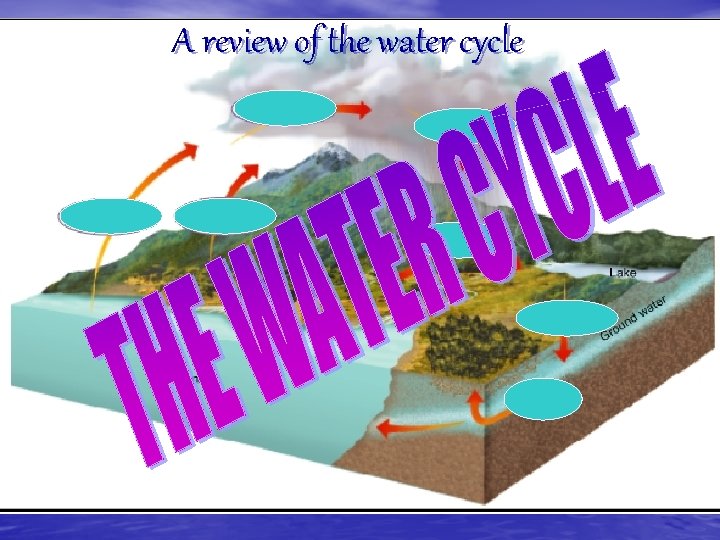
A review of the water cycle
• It's all about Carbon-NPR
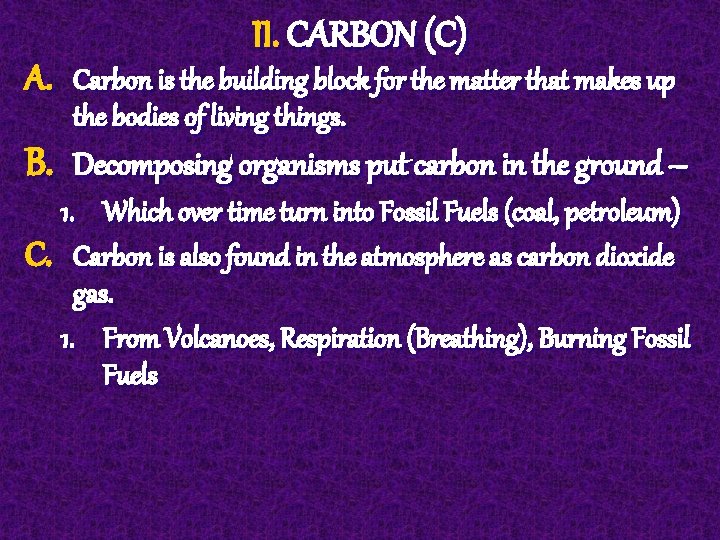
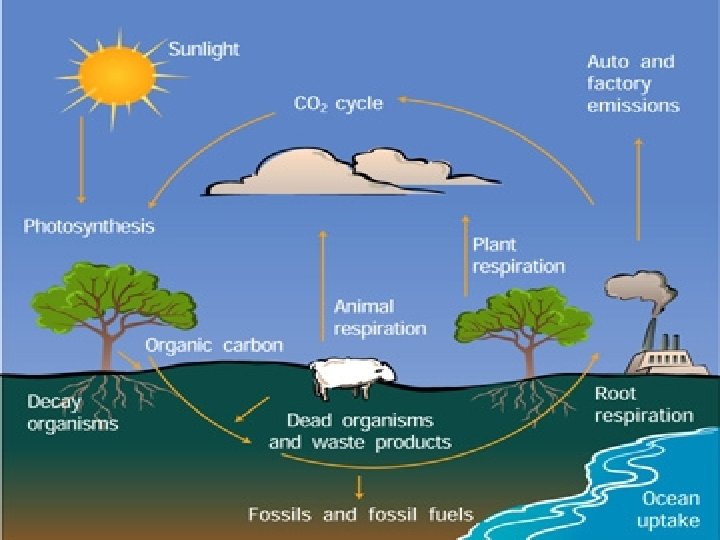
II. CARBON (C) A. Carbon is the building block for the matter that makes up the bodies of living things. B. Decomposing organisms put carbon in the ground – 1. Which over time turn into Fossil Fuels (coal, petroleum) C. Carbon is also found in the atmosphere as carbon dioxide gas. 1. From Volcanoes, Respiration (Breathing), Burning Fossil Fuels
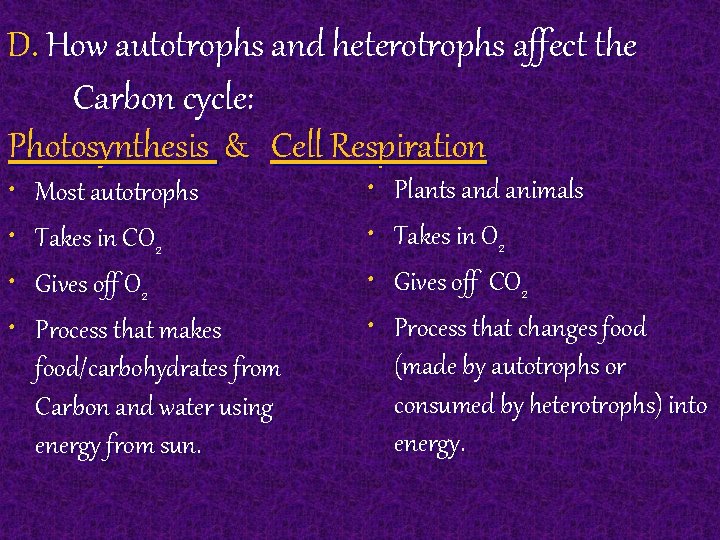
D. How autotrophs and heterotrophs affect the Carbon cycle: Photosynthesis & Cell Respiration • • Most autotrophs Takes in CO 2 Gives off O 2 Process that makes food/carbohydrates from Carbon and water using energy from sun. • • Plants and animals Takes in O 2 Gives off CO 2 Process that changes food (made by autotrophs or consumed by heterotrophs) into energy.
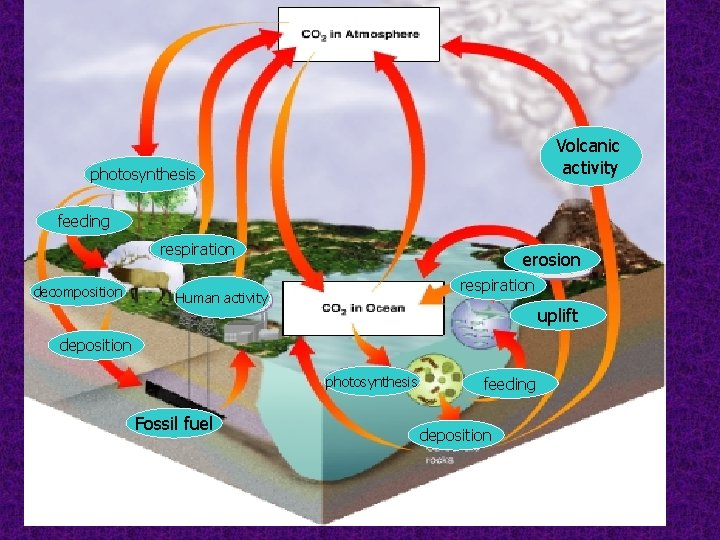
Volcanic activity photosynthesis feeding respiration decomposition erosion respiration Human activity uplift deposition photosynthesis Fossil fuel feeding deposition
• Carbon Cycle and Global Warming You. Tube
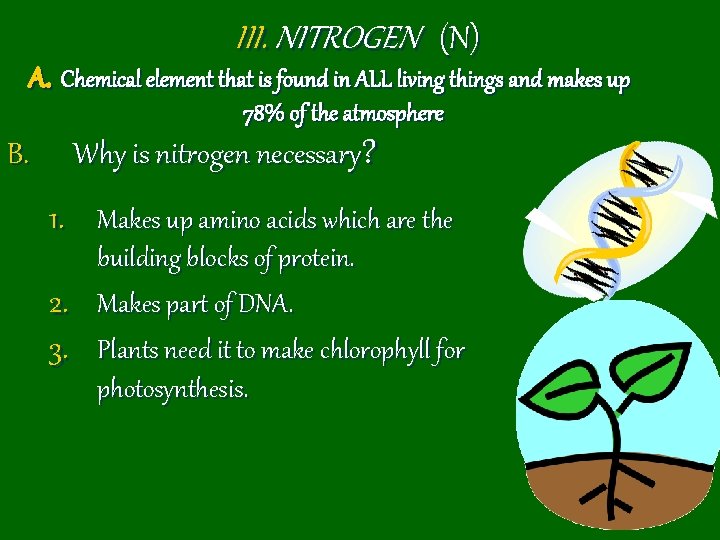
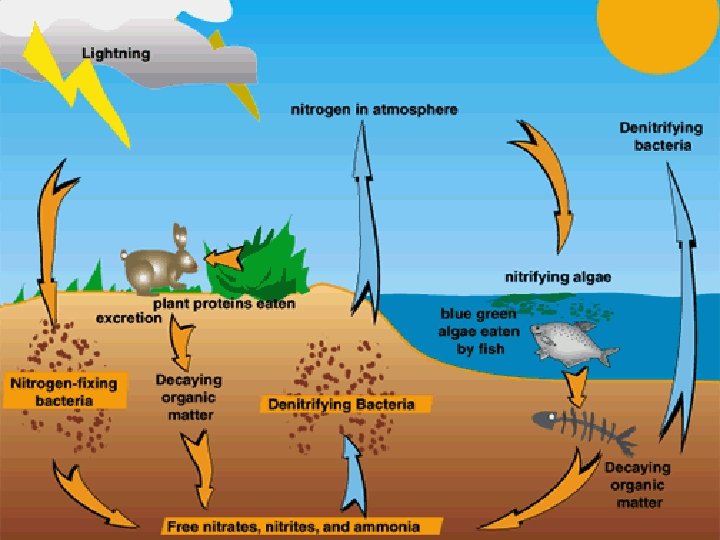
III. NITROGEN (N) A. Chemical element that is found in ALL living things and makes up 78% of the atmosphere Why is nitrogen necessary? B. 1. Makes up amino acids which are the 2. 3. building blocks of protein. Makes part of DNA. Plants need it to make chlorophyll for photosynthesis.
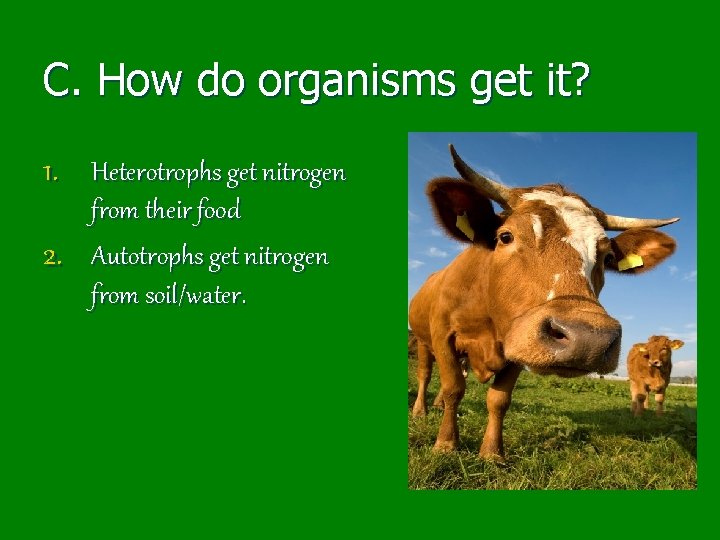
C. How do organisms get it? 1. Heterotrophs get nitrogen 2. from their food Autotrophs get nitrogen from soil/water.
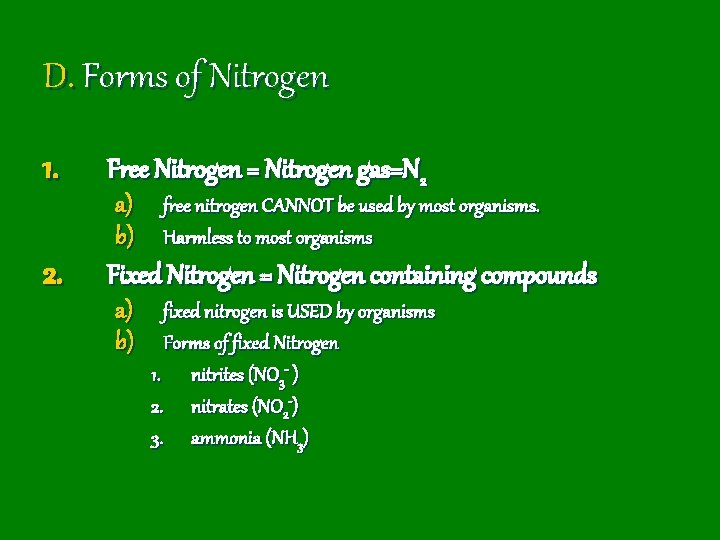
D. Forms of Nitrogen 1. 2. Free Nitrogen = Nitrogen gas=N 2 a) b) free nitrogen CANNOT be used by most organisms. Harmless to most organisms Fixed Nitrogen = Nitrogen containing compounds a) fixed nitrogen is USED by organisms b) Forms of fixed Nitrogen 1. 2. 3. nitrites (NO 3 - ) nitrates (NO 2 -) ammonia (NH 3)
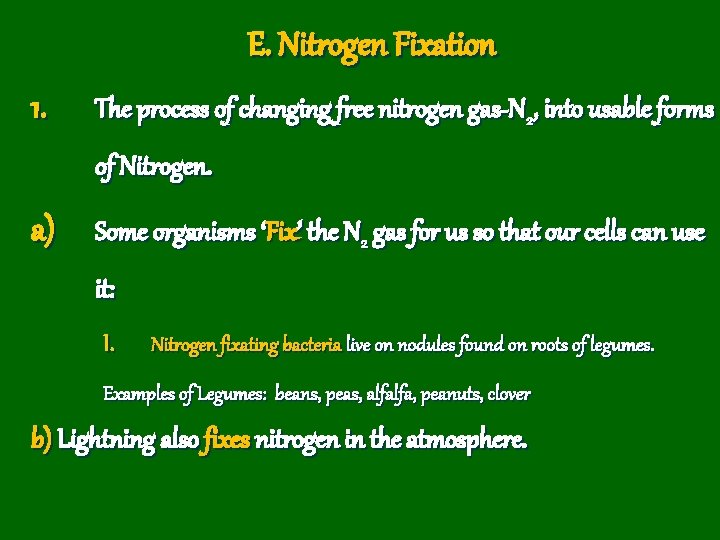
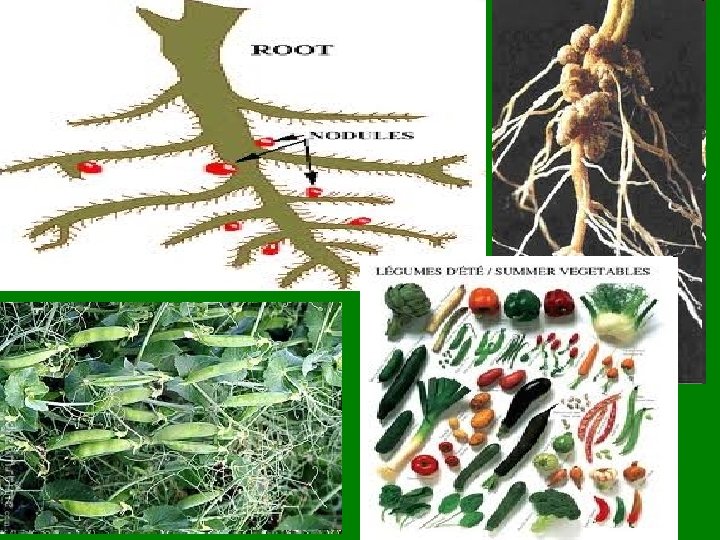
E. Nitrogen Fixation 1. The process of changing free nitrogen gas-N 2, into usable forms of Nitrogen. a) Some organisms ‘Fix’ the N 2 gas for us so that our cells can use it: I. Nitrogen fixating bacteria live on nodules found on roots of legumes. Examples of Legumes: beans, peas, alfalfa, peanuts, clover b) Lightning also fixes nitrogen in the atmosphere.
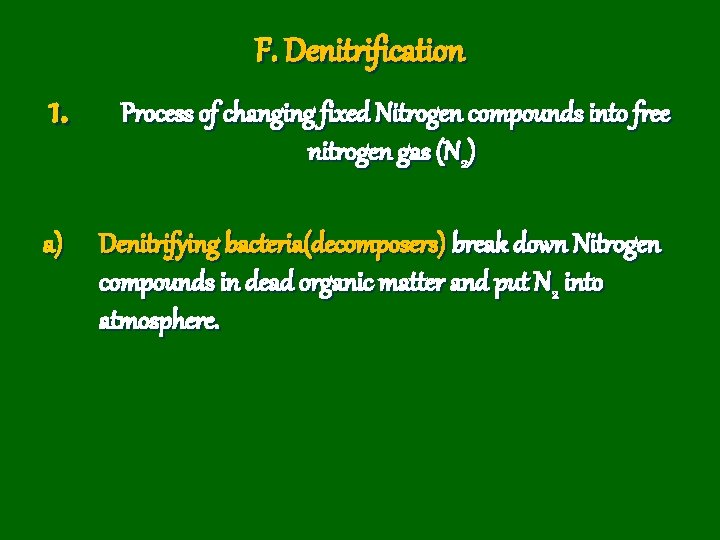
F. Denitrification 1. Process of changing fixed Nitrogen compounds into free nitrogen gas (N 2) a) Denitrifying bacteria(decomposers) break down Nitrogen compounds in dead organic matter and put N 2 into atmosphere.
• Nitrogen Cycle , Nitrogen Fixation - Explanation in animation – You. Tube
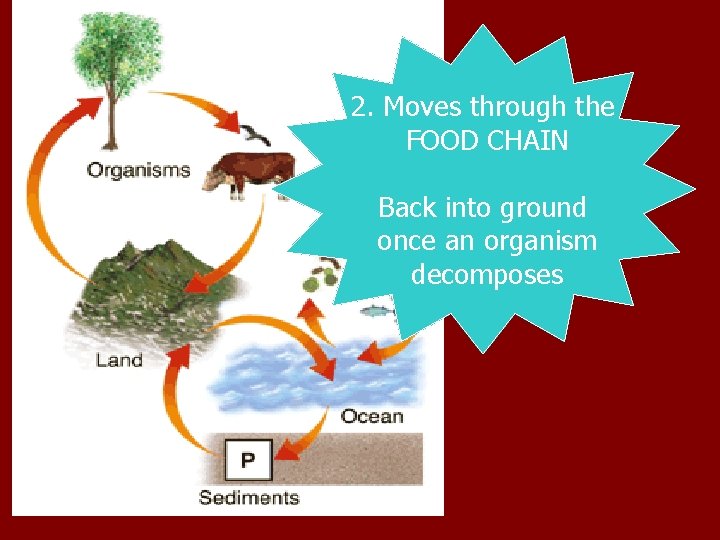
IV. Phosphorus (P) Cycle A. B. C. Phosphorus is in DNA and RNA Comes from rocks & fertilizers Not Common in Biosphere 1. Does NOT enter Atmosphere
2. Moves through the FOOD CHAIN Back into ground once an organism decomposes
V. Limiting Nutrient A. When an ecosystem is limited by a single nutrient that is scarce or cycles very slowly B. Farmers often add fertilizer containing 3 important nutrients; N, P and Potassium (K), because of possible limits in the availability of each in the soil.
C. Examples of Limiting Nutrients: 1. Nitrogen is often the limiting nutrient in some ocean communities because it contains only 0. 00005% of the N that is available on land. 2. Phosphorus is often the limiting nutrient in some streams, lakes and freshwater.