
3 3 Cell Membrane KEY CONCEPT The cell
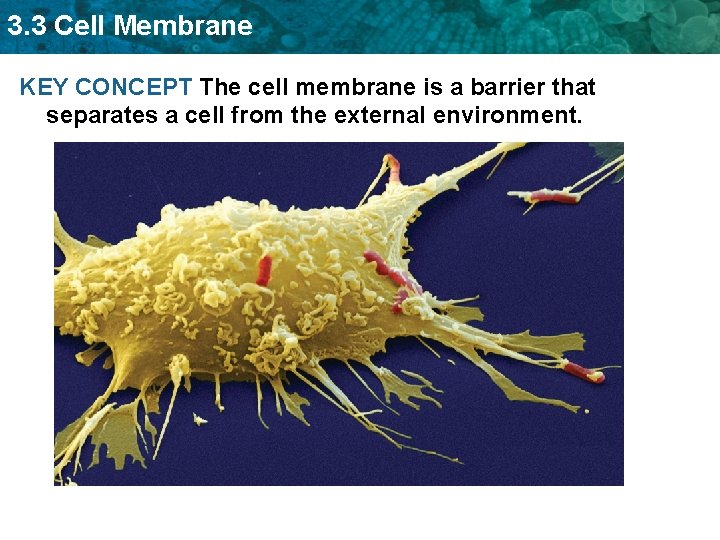
3. 3 Cell Membrane KEY CONCEPT The cell membrane is a barrier that separates a cell from the external environment.
3. 3 Cell Membrane Cell membranes are composed of two phospholipid layers.
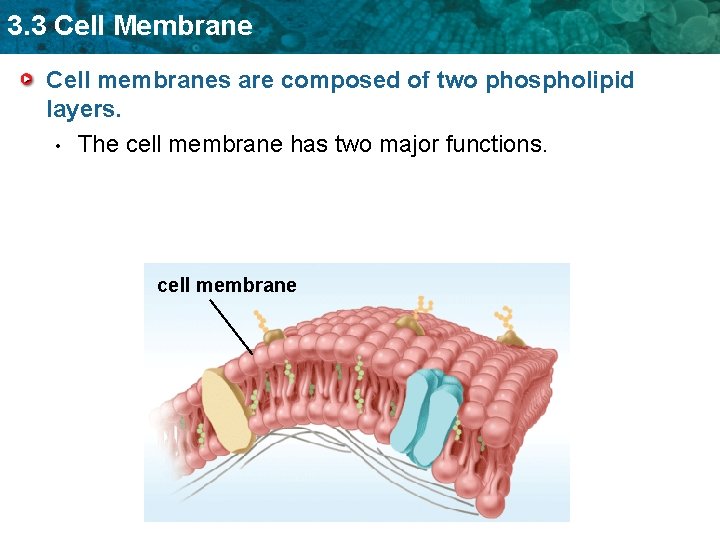
3. 3 Cell Membrane Cell membranes are composed of two phospholipid layers. • The cell membrane has two major functions. cell membrane
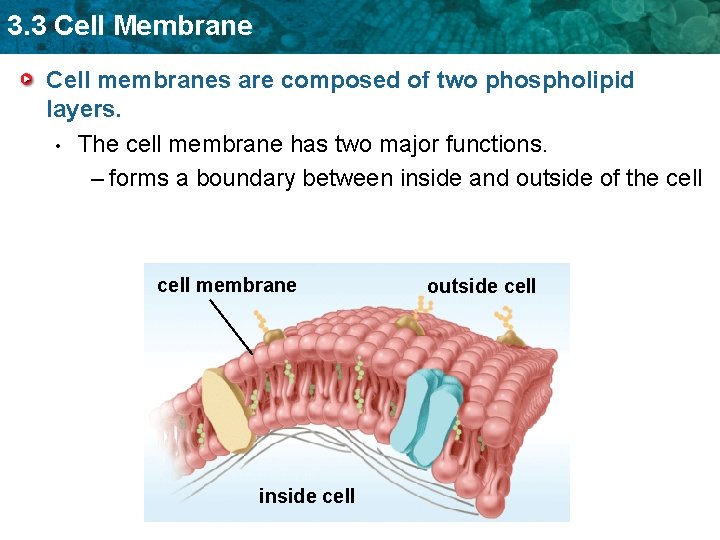
3. 3 Cell Membrane Cell membranes are composed of two phospholipid layers. • The cell membrane has two major functions. – forms a boundary between inside and outside of the cell membrane inside cell outside cell
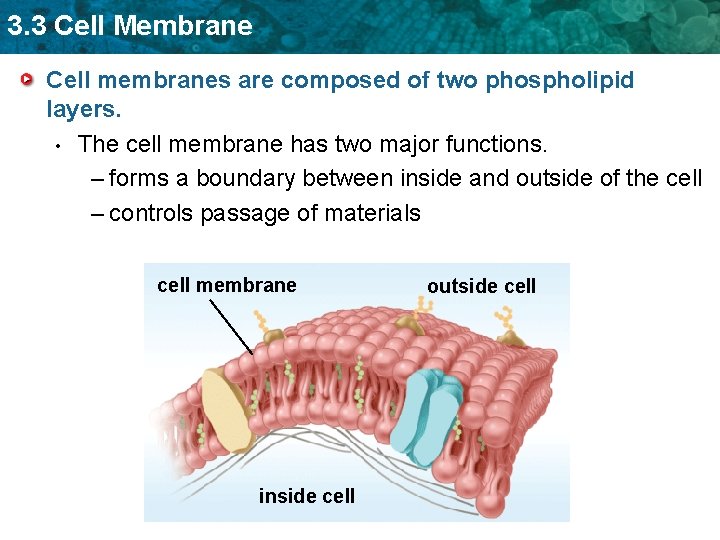
3. 3 Cell Membrane Cell membranes are composed of two phospholipid layers. • The cell membrane has two major functions. – forms a boundary between inside and outside of the cell – controls passage of materials cell membrane inside cell outside cell
3. 3 Cell Membrane Cell membranes are composed of two phospholipid layers.
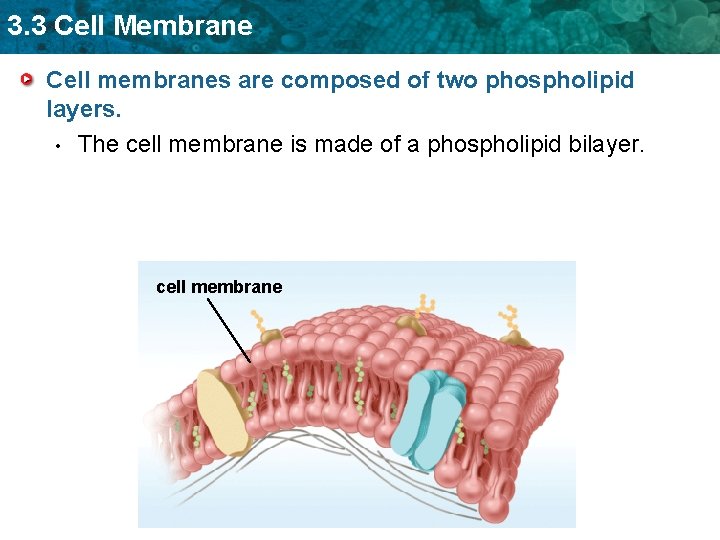
3. 3 Cell Membrane Cell membranes are composed of two phospholipid layers. • The cell membrane is made of a phospholipid bilayer. cell membrane
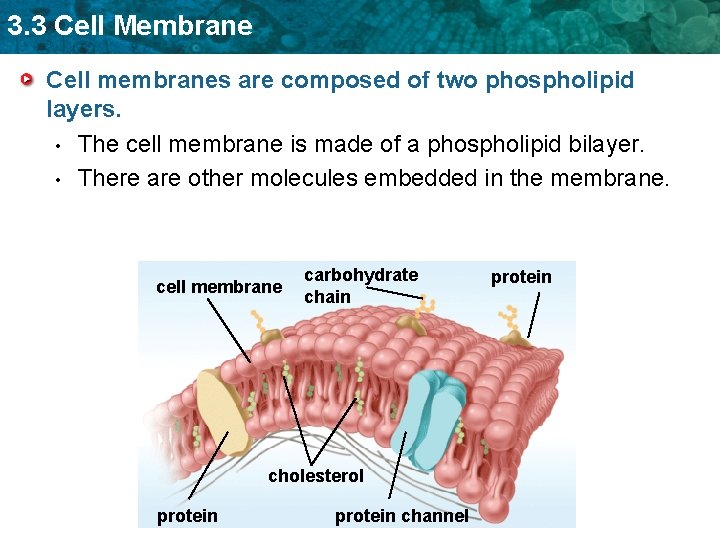
3. 3 Cell Membrane Cell membranes are composed of two phospholipid layers. • The cell membrane is made of a phospholipid bilayer. • There are other molecules embedded in the membrane. cell membrane carbohydrate chain cholesterol protein channel protein
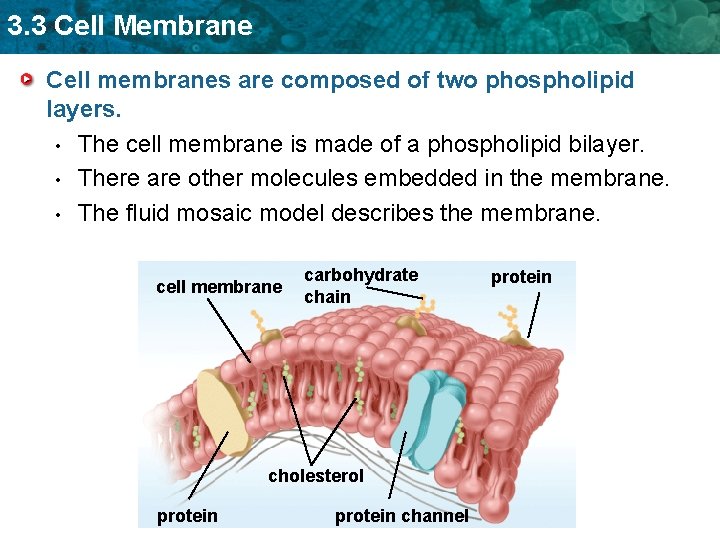
3. 3 Cell Membrane Cell membranes are composed of two phospholipid layers. • The cell membrane is made of a phospholipid bilayer. • There are other molecules embedded in the membrane. • The fluid mosaic model describes the membrane. cell membrane carbohydrate chain cholesterol protein channel protein
3. 3 Cell Membrane Cell membranes are composed of two phospholipid layers.
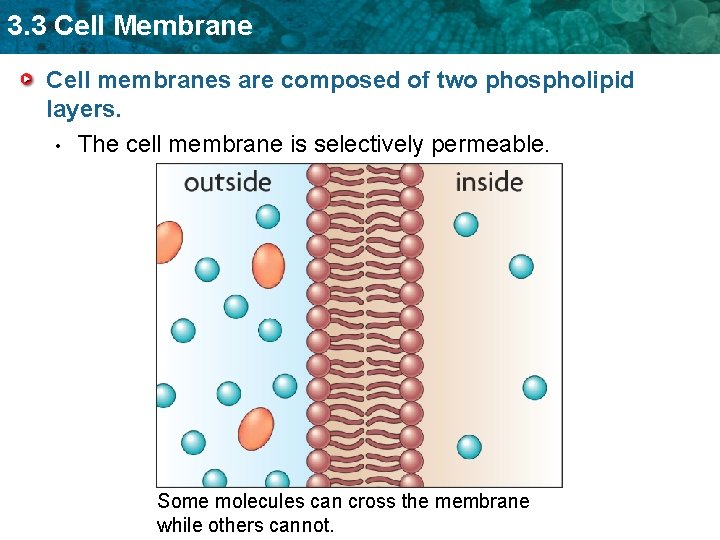
3. 3 Cell Membrane Cell membranes are composed of two phospholipid layers. • The cell membrane is selectively permeable. Some molecules can cross the membrane while others cannot.
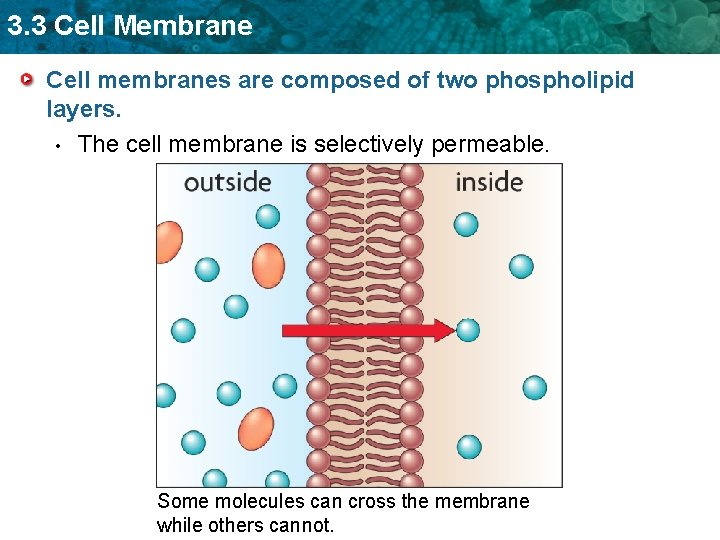
3. 3 Cell Membrane Cell membranes are composed of two phospholipid layers. • The cell membrane is selectively permeable. Some molecules can cross the membrane while others cannot.
3. 3 Cell Membrane Chemical signals are transmitted across the cell membrane. • Receptors bind with ligands and change shape. • There are two types of receptors.
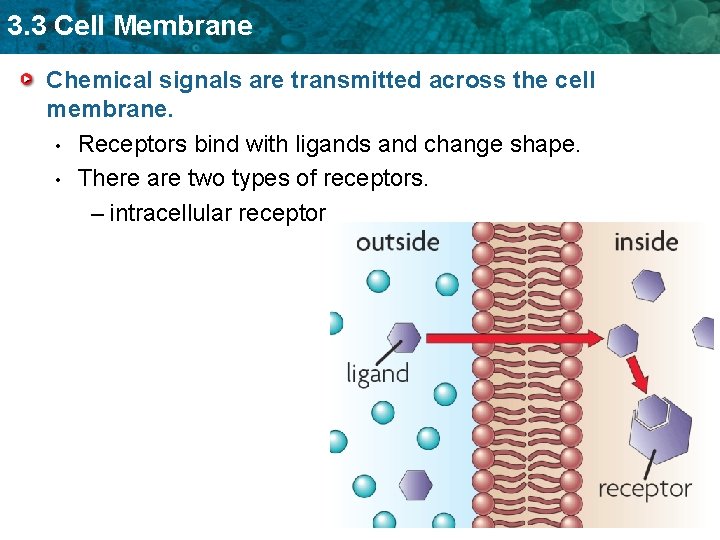
3. 3 Cell Membrane Chemical signals are transmitted across the cell membrane. • Receptors bind with ligands and change shape. • There are two types of receptors. – intracellular receptor
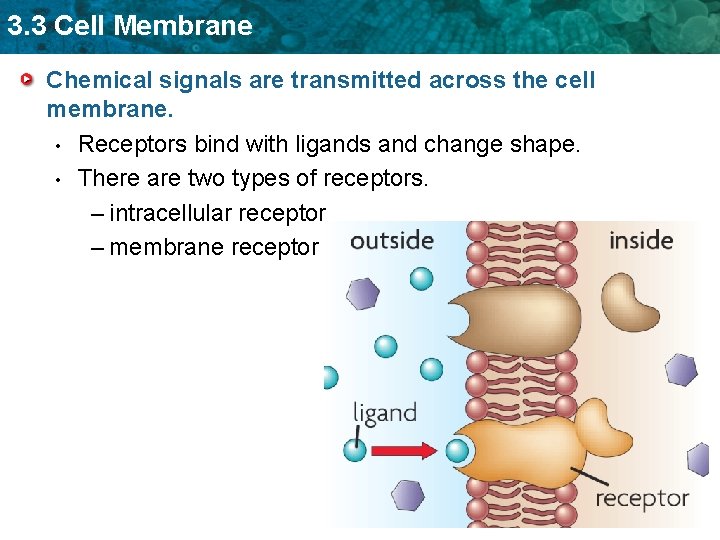
3. 3 Cell Membrane Chemical signals are transmitted across the cell membrane. • Receptors bind with ligands and change shape. • There are two types of receptors. – intracellular receptor – membrane receptor
- Slides: 15