
3 2 Using the Minimum Standards in Shelter
- Slides: 35
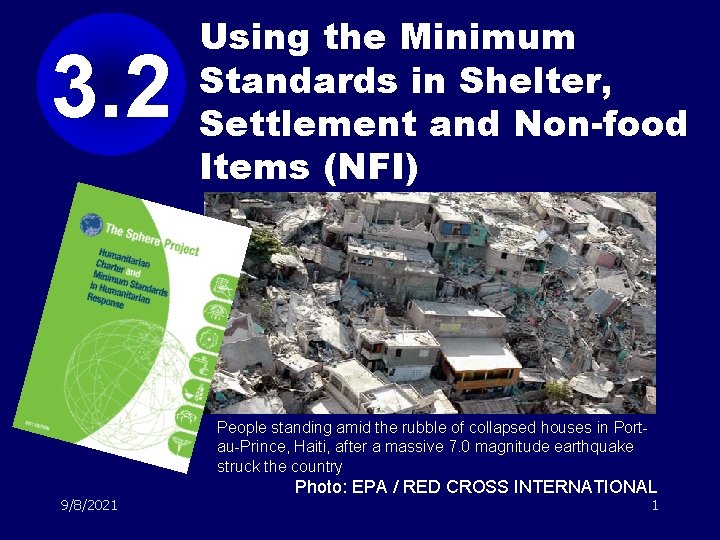
3. 2 Using the Minimum Standards in Shelter, Settlement and Non-food Items (NFI) People standing amid the rubble of collapsed houses in Portau-Prince, Haiti, after a massive 7. 0 magnitude earthquake struck the country 9/8/2021 Photo: EPA / RED CROSS INTERNATIONAL 1
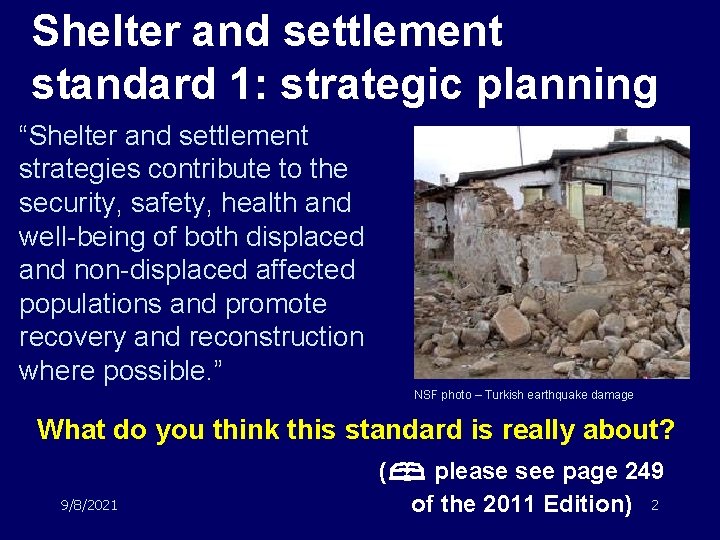
Shelter and settlement standard 1: strategic planning “Shelter and settlement strategies contribute to the security, safety, health and well-being of both displaced and non-displaced affected populations and promote recovery and reconstruction where possible. ” NSF photo – Turkish earthquake damage What do you think this standard is really about? ( 9/8/2021 please see page 249 of the 2011 Edition) 2
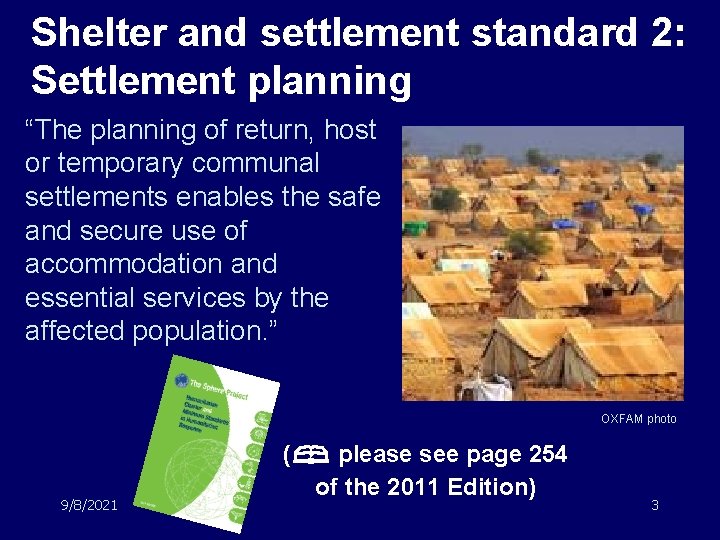
Shelter and settlement standard 2: Settlement planning “The planning of return, host or temporary communal settlements enables the safe and secure use of accommodation and essential services by the affected population. ” OXFAM photo ( 9/8/2021 please see page 254 of the 2011 Edition) 3
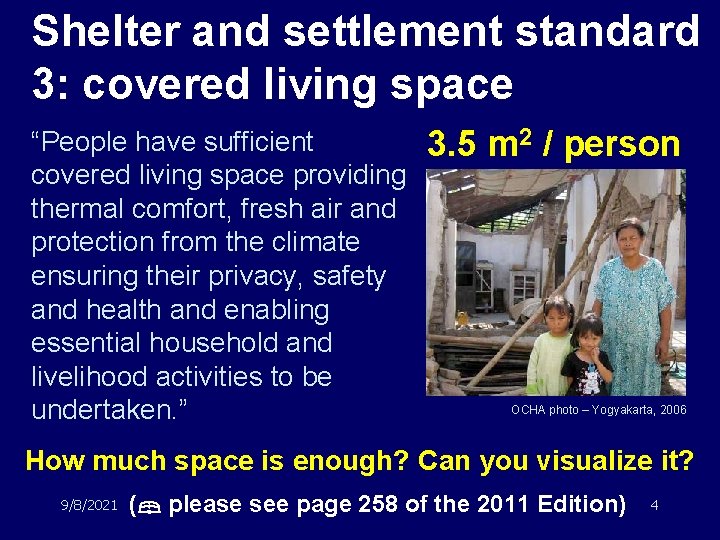
Shelter and settlement standard 3: covered living space “People have sufficient covered living space providing thermal comfort, fresh air and protection from the climate ensuring their privacy, safety and health and enabling essential household and livelihood activities to be undertaken. ” 3. 5 m 2 / person OCHA photo – Yogyakarta, 2006 How much space is enough? Can you visualize it? 9/8/2021 ( please see page 258 of the 2011 Edition) 4
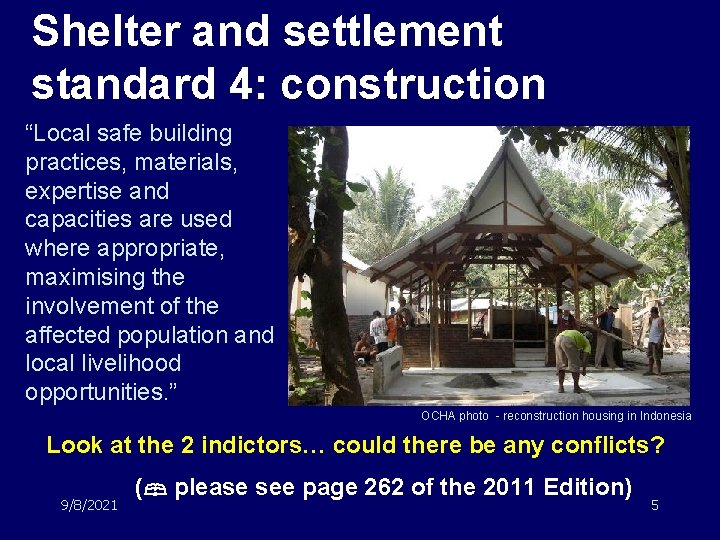
Shelter and settlement standard 4: construction “Local safe building practices, materials, expertise and capacities are used where appropriate, maximising the involvement of the affected population and local livelihood opportunities. ” OCHA photo - reconstruction housing in Indonesia Look at the 2 indictors… could there be any conflicts? 9/8/2021 ( please see page 262 of the 2011 Edition) 5
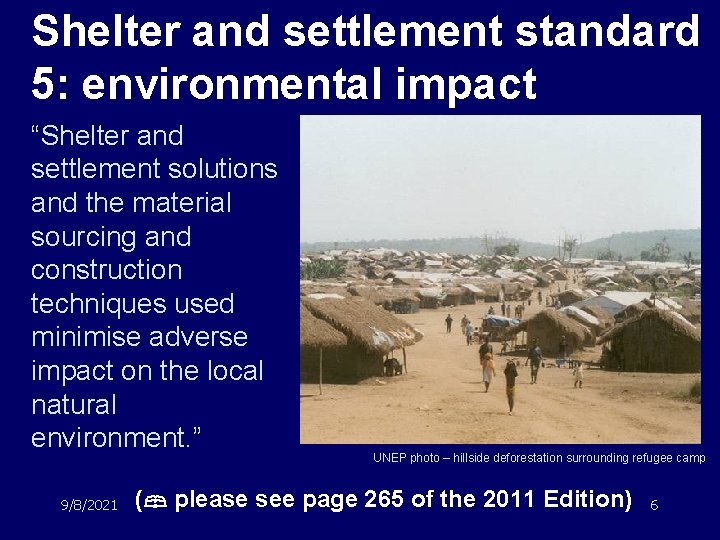
Shelter and settlement standard 5: environmental impact “Shelter and settlement solutions and the material sourcing and construction techniques used minimise adverse impact on the local natural environment. ” 9/8/2021 UNEP photo – hillside deforestation surrounding refugee camp ( please see page 265 of the 2011 Edition) 6
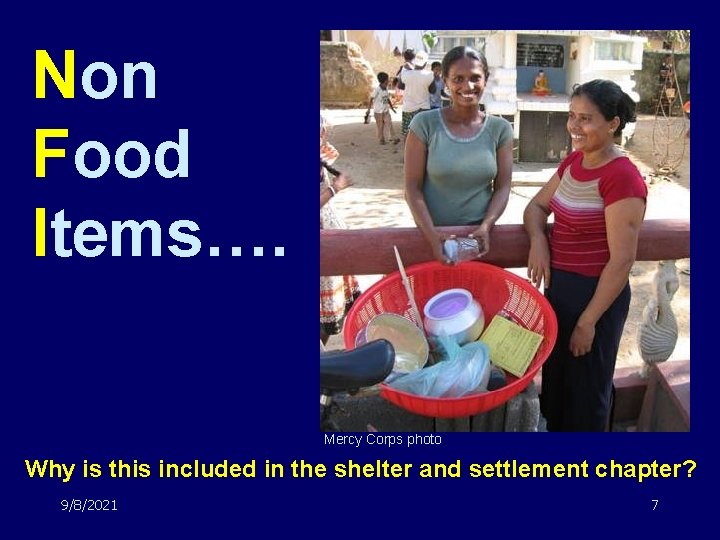
Non Food Items…. Mercy Corps photo Why is this included in the shelter and settlement chapter? 9/8/2021 7
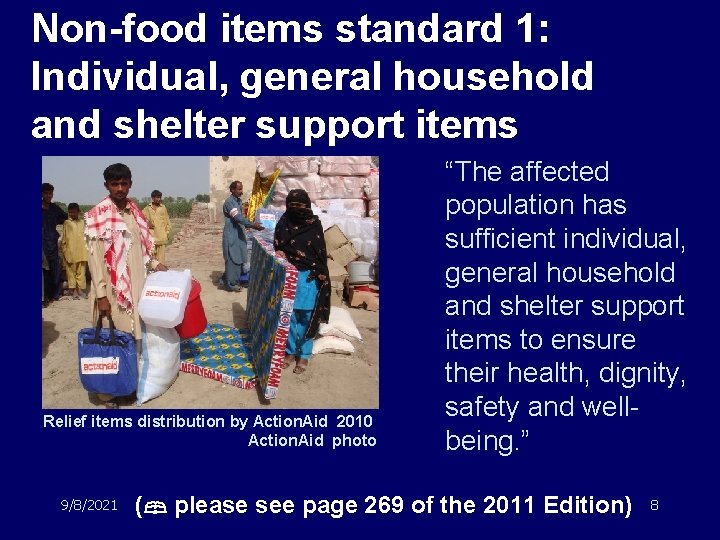
Non-food items standard 1: Individual, general household and shelter support items Relief items distribution by Action. Aid 2010 Action. Aid photo 9/8/2021 “The affected population has sufficient individual, general household and shelter support items to ensure their health, dignity, safety and wellbeing. ” ( please see page 269 of the 2011 Edition) 8
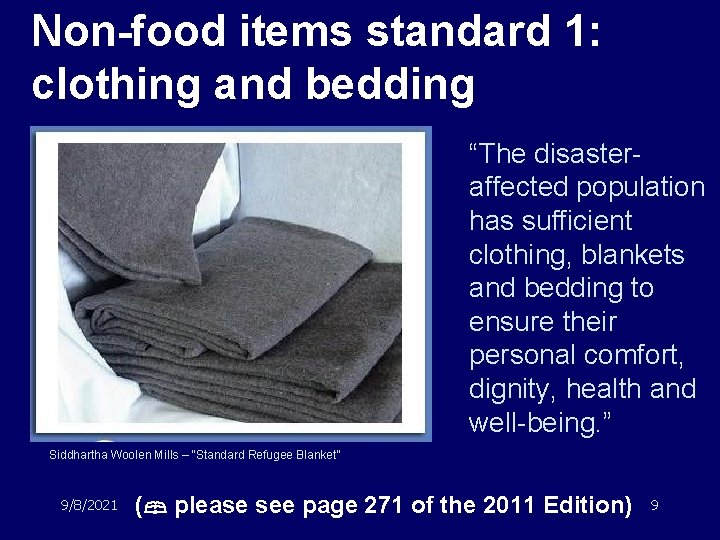
Non-food items standard 1: clothing and bedding “The disasteraffected population has sufficient clothing, blankets and bedding to ensure their personal comfort, dignity, health and well-being. ” Siddhartha Woolen Mills – “Standard Refugee Blanket” 9/8/2021 ( please see page 271 of the 2011 Edition) 9
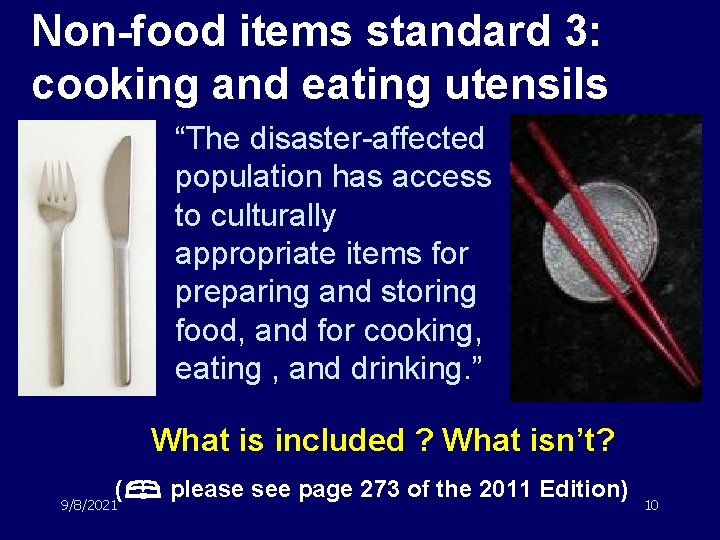
Non-food items standard 3: cooking and eating utensils “The disaster-affected population has access to culturally appropriate items for preparing and storing food, and for cooking, eating , and drinking. ” What is included ? What isn’t? ( 9/8/2021 please see page 273 of the 2011 Edition) 10
Non-food items standard 4: stoves, fuel and lighting “The disaster-affected population has access to a safe, fuel-efficient stove and an accessible supply of fuel or domestic energy, or to communal cooking facilities. Each household also has access to appropriate means of providing sustainable artificial lighting to ensure personal security. ” 9/8/2021 ( What other standards are affected by meeting this one? CHF International photo please see page 274 of the 2011 Edition) 11
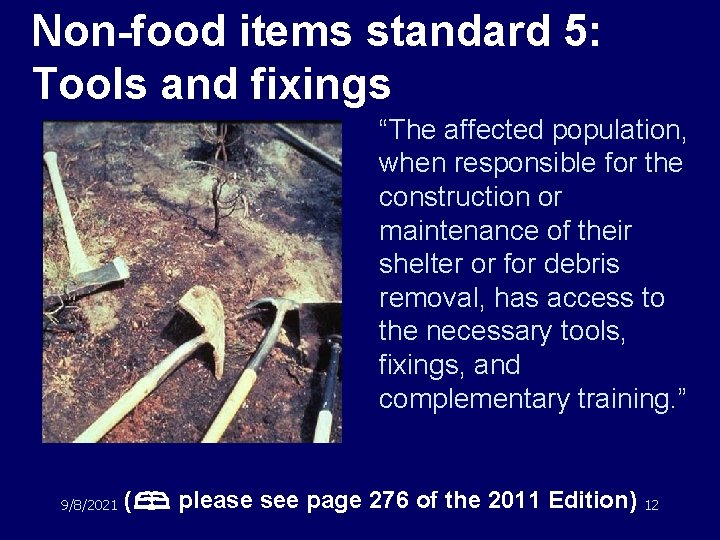
Non-food items standard 5: Tools and fixings “The affected population, when responsible for the construction or maintenance of their shelter or for debris removal, has access to the necessary tools, fixings, and complementary training. ” 9/8/2021 ( please see page 276 of the 2011 Edition) 12
Visualizing some of the indicators and guidance notes…… Now you know them. Can you see them? 9/8/2021 13
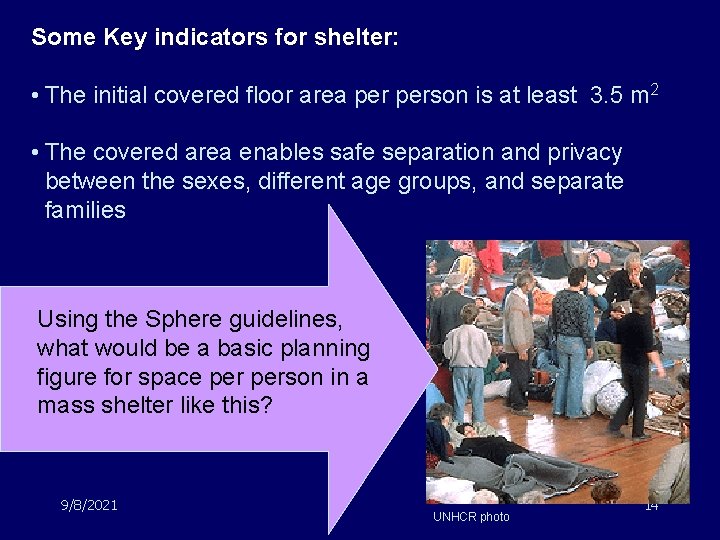
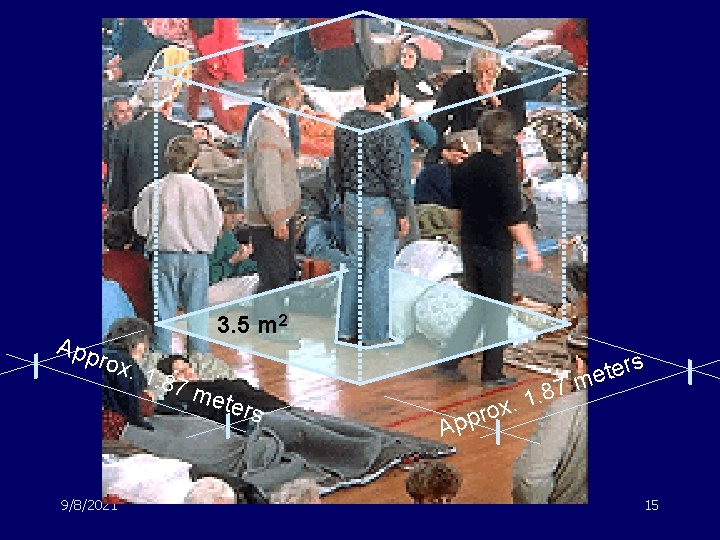
Some Key indicators for shelter: • The initial covered floor area person is at least 3. 5 m 2 • The covered area enables safe separation and privacy between the sexes, different age groups, and separate families Using the Sphere guidelines, what would be a basic planning figure for space person in a mass shelter like this? 9/8/2021 UNHCR photo 14
3. 5 m 2 App rox. 9/8/2021 1. 87 met ers 7 8. 1 x. s r e t me ro p p A 15
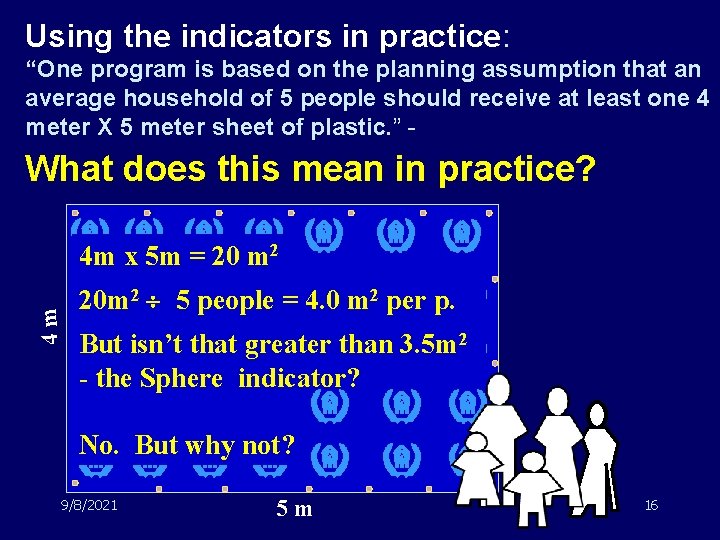
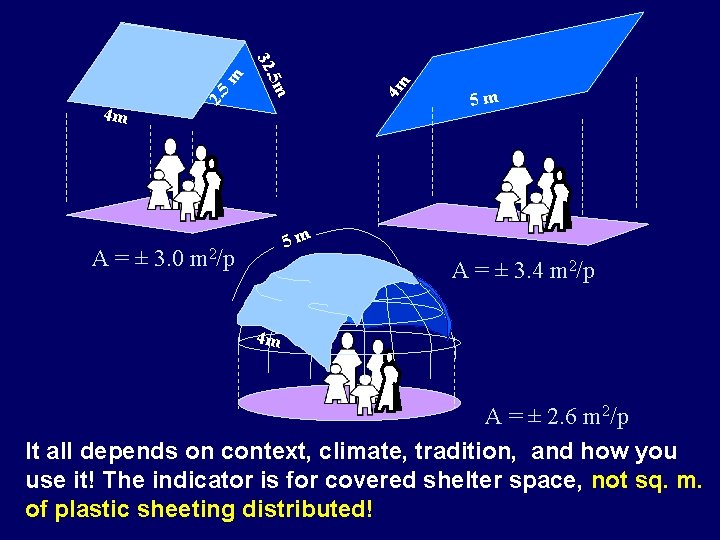
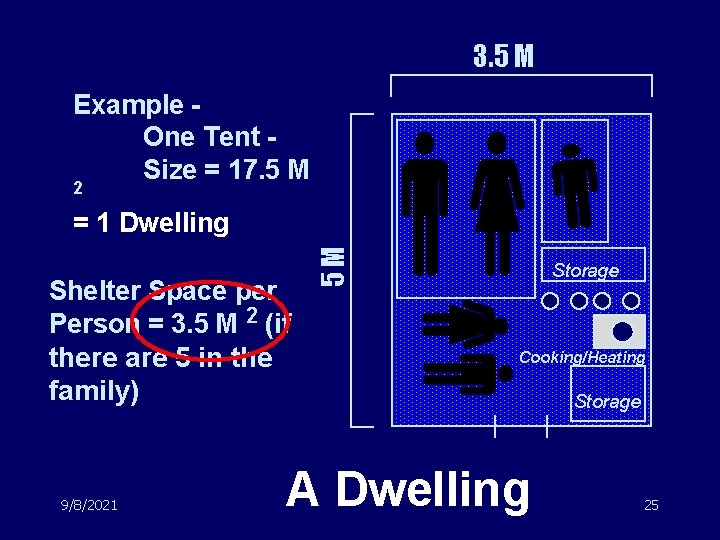
Using the indicators in practice: “One program is based on the planning assumption that an average household of 5 people should receive at least one 4 meter X 5 meter sheet of plastic. ” - What does this mean in practice? 4 m 4 m x 5 m = 20 m 2 20 m 2 5 people = 4. 0 m 2 per p. But isn’t that greater than 3. 5 m 2 - the Sphere indicator? No. But why not? 9/8/2021 5 m 16
4 m m 2. 5 5 m 32. 4 m 5 m 5 m A = ± 3. 0 m 2/p A = ± 3. 4 m 2/p 4 m A = ± 2. 6 m 2/p It all depends on context, climate, tradition, and how you use it! The indicator is for covered shelter space, not sq. m. 9/8/2021 17 of plastic sheeting distributed!
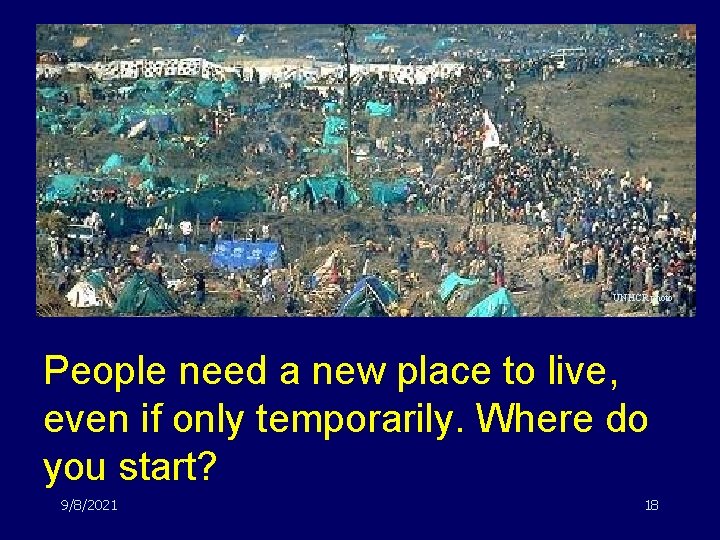
UNHCR photo People need a new place to live, even if only temporarily. Where do you start? 9/8/2021 18
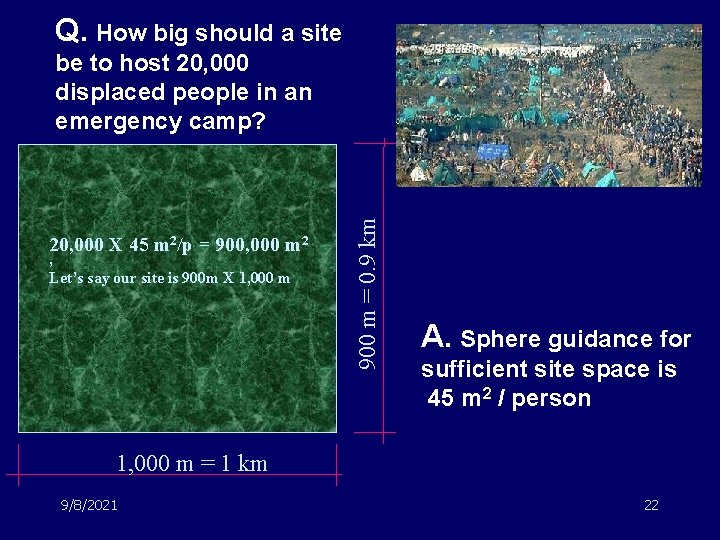
Site Selection and Planning Some Guidance Notes…. “For camp-type settlements, a minimum usable area of 45 m 2 for each person including household plots should be provided. ” 9/8/2021 ( ? What exactly does this mean, and where or when does it apply? Can it be less? please see page 257 of the 2011 Edition) 19
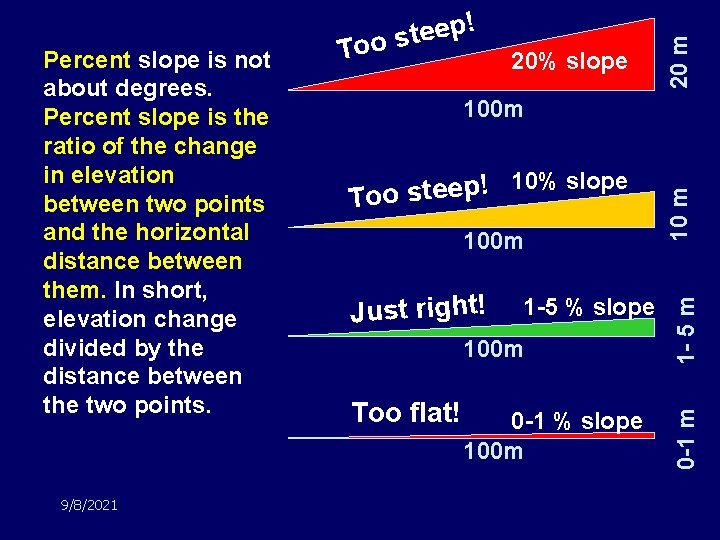
Site Selection and Planning Some Guidance Notes…. “The site gradient should not exceed 5 percent, unless extensive drainage and erosion control measures are taken, or less than 1 percent to provide for adequate drainage. . ” 9/8/2021 ( ? What exactly does this mean, and where or when does it apply? Can you visualize it? please see page 256 of the 2011 Edition) 20
9/8/2021 20 m 20% slope 10% slope ! p e e t s Too 100 m Too flat! 1 -5 % slope 100 m 1 - 5 m Just right! 10 m 100 m 0 -1 % slope 100 m 0 -1 m Percent slope is not about degrees. Percent slope is the ratio of the change in elevation between two points and the horizontal distance between them. In short, elevation change divided by the distance between the two points. p! e e t s Too
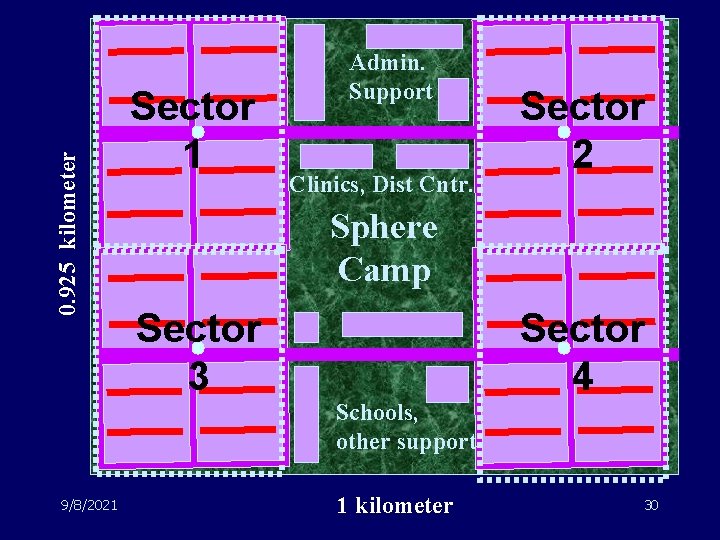
Q. How big should a site 20, 000 X 45 m 2/p = 900, 000 m 2 , Let’s say our site is 900 m X 1, 000 m 900 m = 0. 9 km be to host 20, 000 displaced people in an emergency camp? A. Sphere guidance for sufficient site space is 45 m 2 / person 1, 000 m = 1 km 9/8/2021 22
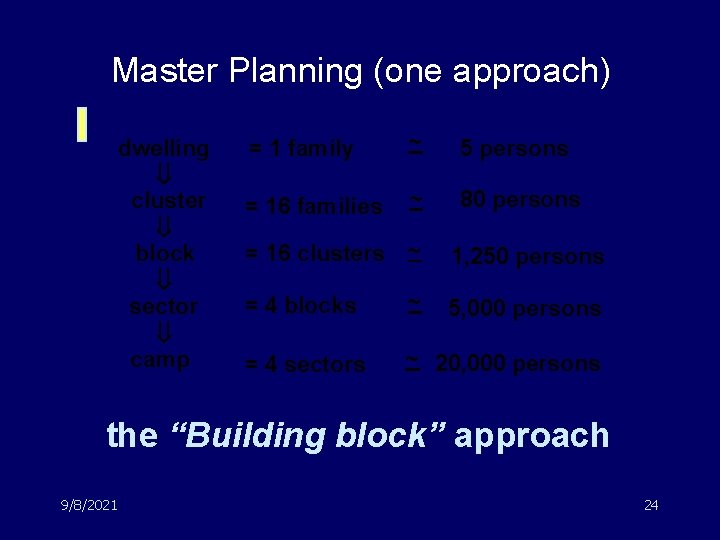
What about those firebreaks, distances between dwellings, etc. listed in the indicators? These indicators are based on something called the “building block” approach to site layout design. In general, it works like this. . . 9/8/2021 23
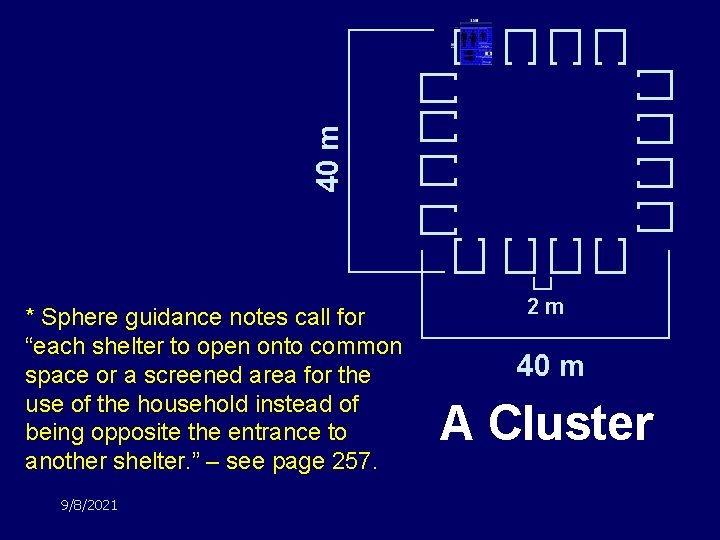
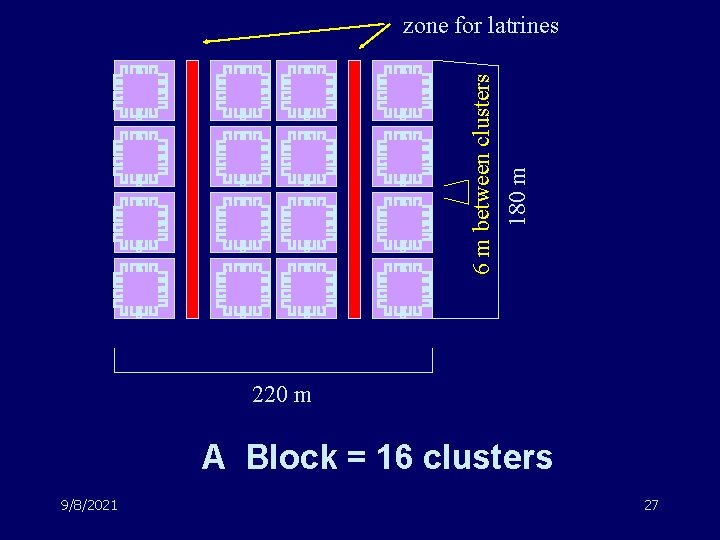
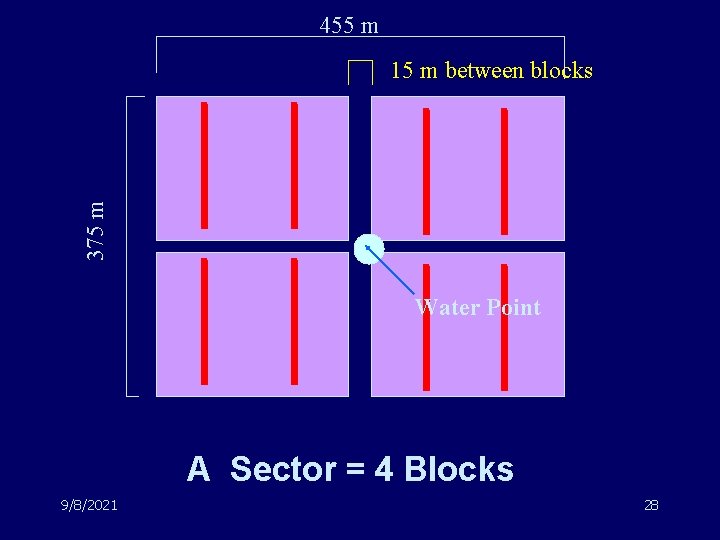
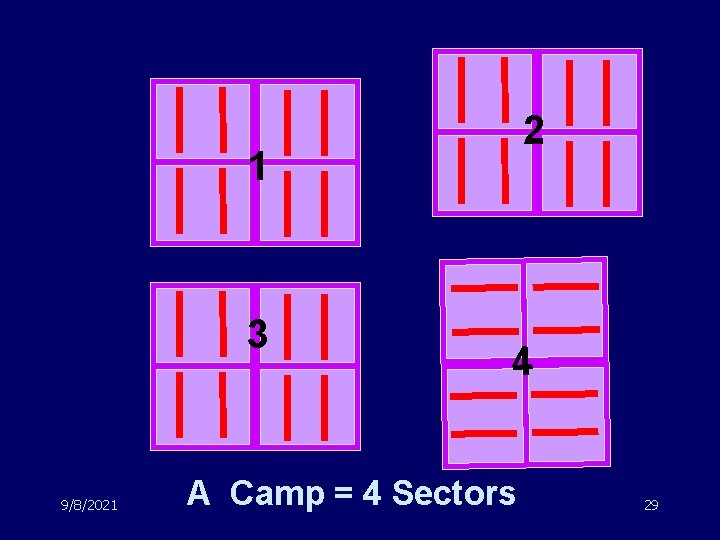
Master Planning (one approach) dwelling ß cluster ß block ß sector ß camp = 1 family ~ 5 persons = 16 families ~ 80 persons = 16 clusters ~ 1, 250 persons = 4 blocks ~ 5, 000 persons = 4 sectors ~ 20, 000 persons the “Building block” approach 9/8/2021 24
3. 5 M Example One Tent Size = 17. 5 M 2 Shelter Space per Person = 3. 5 M 2 (if there are 5 in the family) 9/8/2021 5 M = 1 Dwelling Storage Cooking/Heating A Dwelling Storage 25
40 m * Sphere guidance notes call for “each shelter to open onto common space or a screened area for the use of the household instead of being opposite the entrance to another shelter. ” – see page 257. 9/8/2021 2 m 40 m A Cluster
6 m between clusters 180 m zone for latrines 220 m A Block = 16 clusters 9/8/2021 27
455 m 375 m 15 m between blocks Water Point A Sector = 4 Blocks 9/8/2021 28
2 1 3 9/8/2021 4 A Camp = 4 Sectors 29
0. 925 kilometer 9/8/2021 Sector 1 Admin. Support Clinics, Dist Cntr. Sector 2 Sphere Camp Sector 3 Schools, other support 1 kilometer Sector 4 30
What does this mean for planning and programming? If our study emergency population of 20, 000 displaced has the demographic makeup described below, what programmatic impact does the information have on the provision of shelter materials to these people? You have 3, 750 pre-cut plastic sheets (4 m. X 5 m)with metal eyelets at the edges for fastening with cord, people have access to light wooden poles. Heavy rain is possible within the next 2 weeks. Assume plenty of usable site area - no restriction. • 15, 000 are in complete families, avg. fam. size = 6 • 4, 000 are minority population, avg. fam. size = 8 • 1, 000 are ex-fighters and child soldiers, all male, aged from 10 -22 yrs. They claim no family attachment within the larger group What Sphere guidance will help you design your distribution 9/8/2021 program for these plastic sheets? What is your basic plan? 31
What Sphere guidance will help you design your distribution program for these plastic sheets? What is your basic plan? 9/8/2021 32
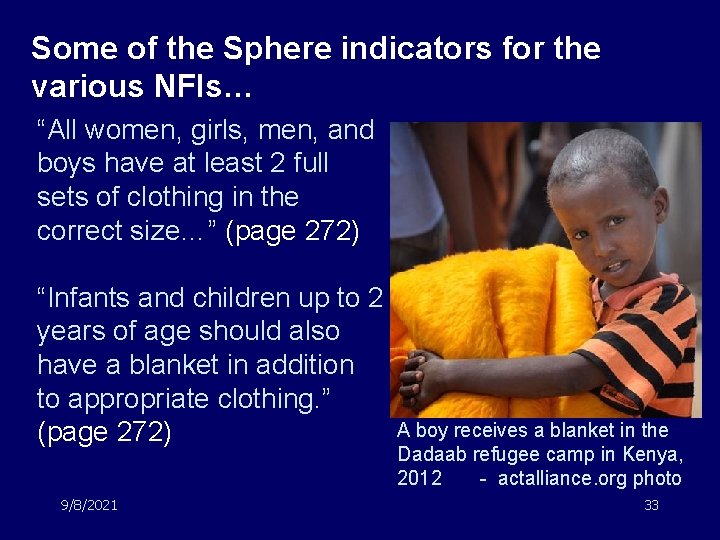
Some of the Sphere indicators for the various NFIs… “All women, girls, men, and boys have at least 2 full sets of clothing in the correct size…” (page 272) “Infants and children up to 2 years of age should also have a blanket in addition to appropriate clothing. ” (page 272) 9/8/2021 A boy receives a blanket in the Dadaab refugee camp in Kenya, 2012 - actalliance. org photo 33
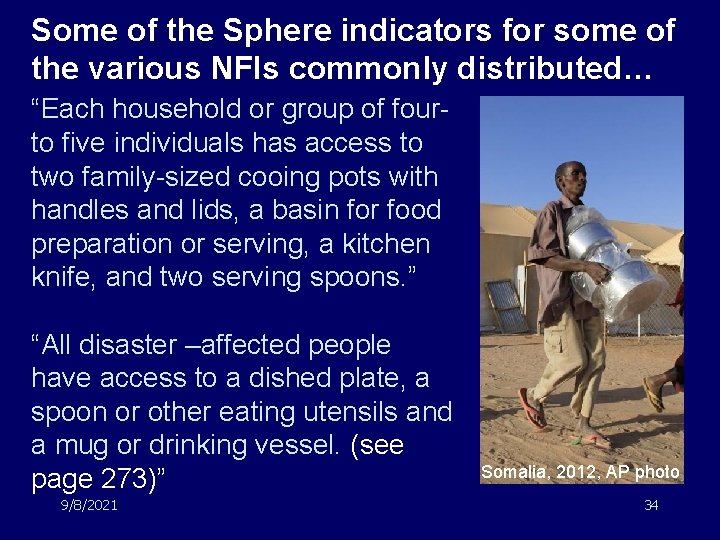
Some of the Sphere indicators for some of the various NFIs commonly distributed… “Each household or group of fourto five individuals has access to two family-sized cooing pots with handles and lids, a basin for food preparation or serving, a kitchen knife, and two serving spoons. ” “All disaster –affected people have access to a dished plate, a spoon or other eating utensils and a mug or drinking vessel. (see page 273)” 9/8/2021 Somalia, 2012, AP photo 34
CONCLUSION: Site, shelter and NFI requirements are highly site, climate-, and culture- specific. The Core Standards, actions, and indicators relating to analysis and community involvement are therefore key in this chapter. The other more directly quantifiable indicators relating to site and shelter space relate primarily to disaster response camps, although this does not imply that this the only or best option. These actions, indicators, and guidance notes provide a very useful starting point and measure for evaluating adequacy of response in the shelter sector. 35 9/8/2021