
3 2 Crossing the Plasma Membrane A Introduction
3. 2 Crossing the Plasma Membrane
A. Introduction • The plasma membrane is selectively (semi) permeable – only certain ions and molecules can cross through • Passive processes – does NOT require cellular energy (ATP) • Active processes – DOES require cellular energy
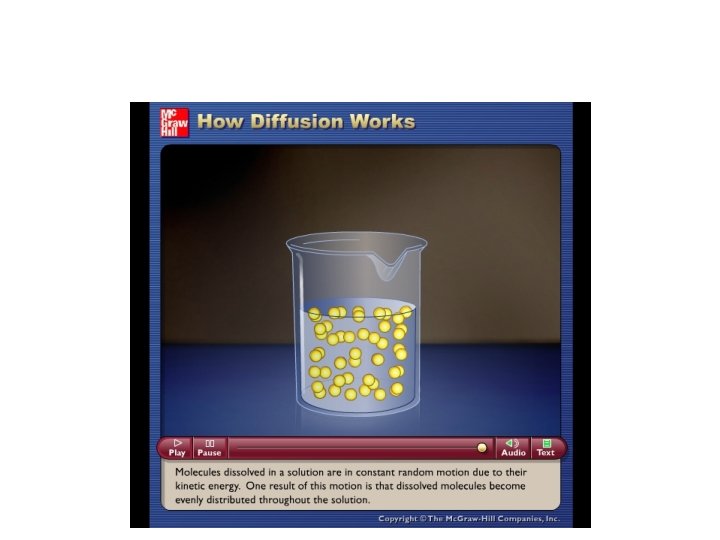
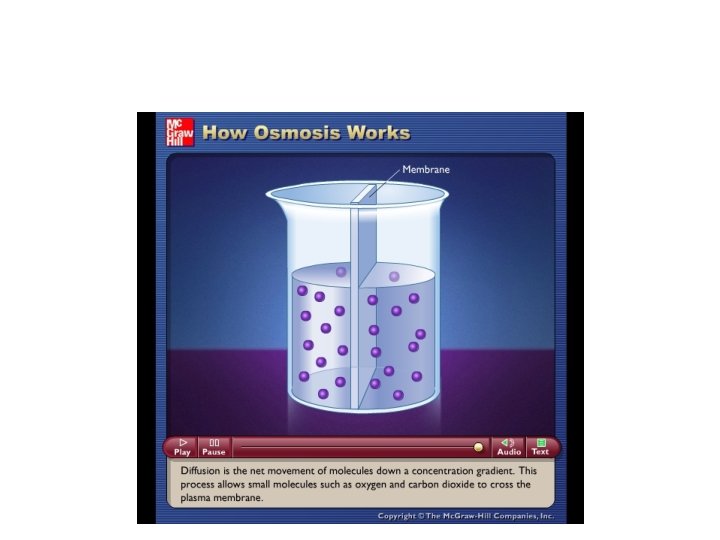
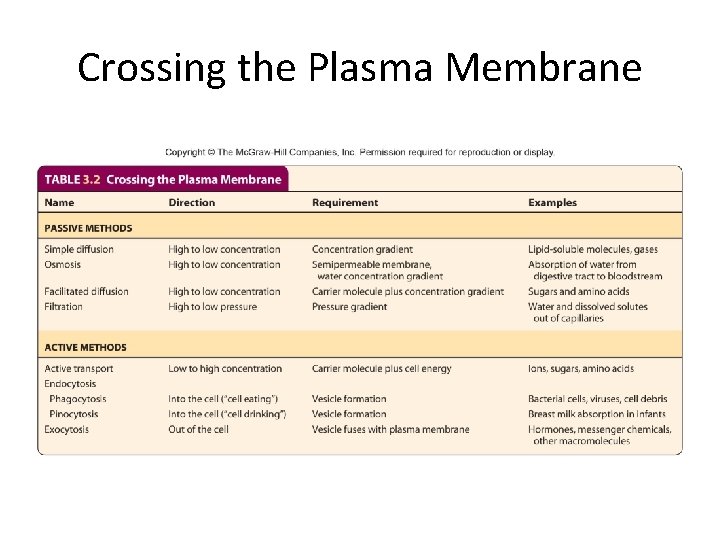
B. Simple Diffusion • Movement of atoms or molecules from an area of higher concentration to an area of lower concentration (down a concentration gradient) • Movement of atoms or molecules occur until they are equally distributed • No cellular energy is required (passive) • Small lipid-soluble molecules will diffuse through the lipid portion of the membrane; includes blood gases
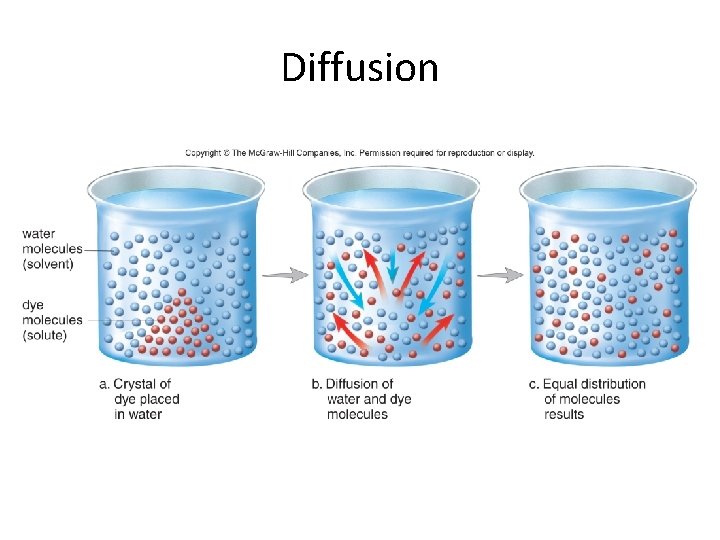
Diffusion
Please note that due to differing operating systems, some animations will not appear until the presentation is viewed in Presentation Mode (Slide Show view). You may see blank slides in the “Normal” or “Slide Sorter” views. All animations will appear after viewing in Presentation Mode and playing each animation. Most animations will require the latest version of the Flash Player, which is available at http: //get. adobe. com/flashplayer.
C. Osmosis • Diffusion of water across a plasma membrane • Occurs when there is an unequal distribution of water on either side of a selectively permeable membrane; water passes freely but solutes do not • Osmotic pressure – force exerted on a selectively permeable membrane
Osmosis, cont 4. Tonicity – concentration of solute versus the concentration of water a. Isotonic – equal concentration of solutes (dissolved substances) and solvent (water) inside and outside cell; cell shape is maintained b. Hypotonic – higher concentration of water (lower concentration of solutes) outside cell; water moves into cell causing it to swell and eventually lyse c. Hypertonic – lower concentration of water (higher concentration of solutes) outside cell; water moves out of cell causing it to shrink or crenate
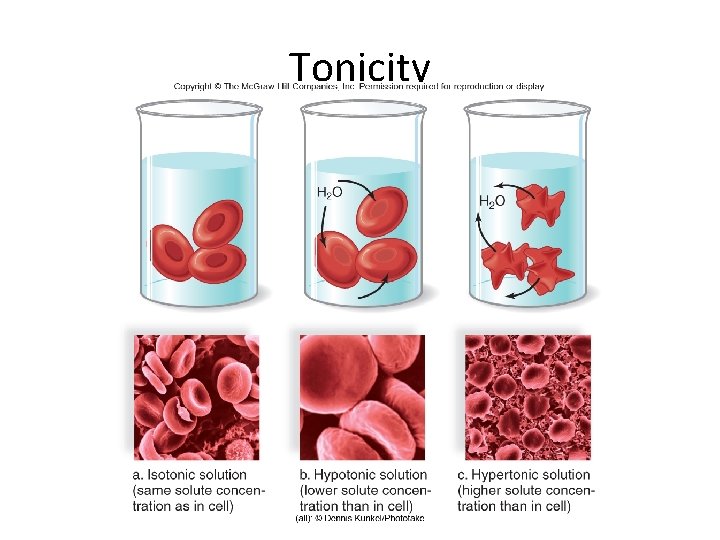
Tonicity
Please note that due to differing operating systems, some animations will not appear until the presentation is viewed in Presentation Mode (Slide Show view). You may see blank slides in the “Normal” or “Slide Sorter” views. All animations will appear after viewing in Presentation Mode and playing each animation. Most animations will require the latest version of the Flash Player, which is available at http: //get. adobe. com/flashplayer.
D. Filtration • Filtration is the movement of liquid from high pressure to low pressure • Blood pressure creates the hydrostatic pressure in capillaries where filtration occurs
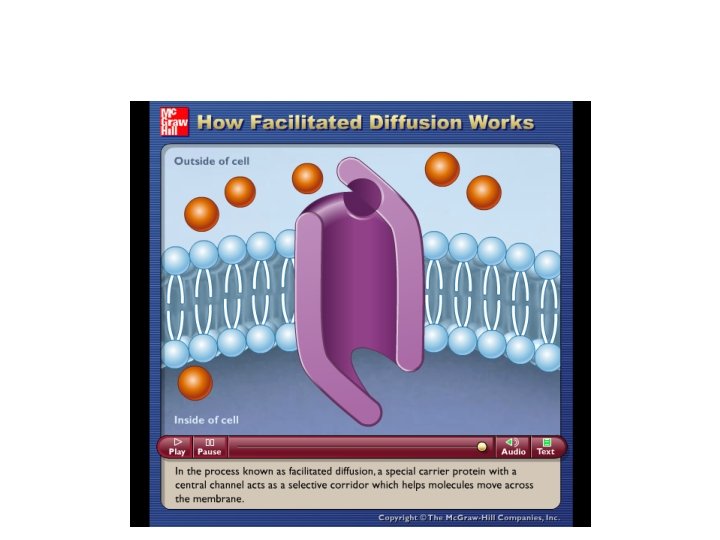
E. Transport by carriers • Facilitated diffusion a. Solutes are transported by means of a protein carrier b. Movement from area of higher concentration to area of lower concentration c. No energy required - passive
Please note that due to differing operating systems, some animations will not appear until the presentation is viewed in Presentation Mode (Slide Show view). You may see blank slides in the “Normal” or “Slide Sorter” views. All animations will appear after viewing in Presentation Mode and playing each animation. Most animations will require the latest version of the Flash Player, which is available at http: //get. adobe. com/flashplayer.
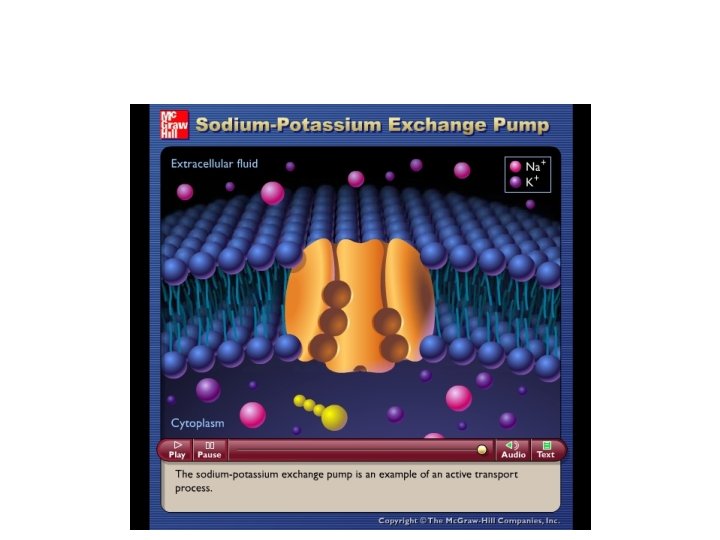
Transport by carriers, cont 2. Active transport a. Solutes move up their concentration gradient (low concentration area to high concentration area) b. Requires a protein carrier (often called pumps) c. Requires the use of cellular energy d. The sodium/potassium pump (Na+/K+ pump) is an important pump that all cells have
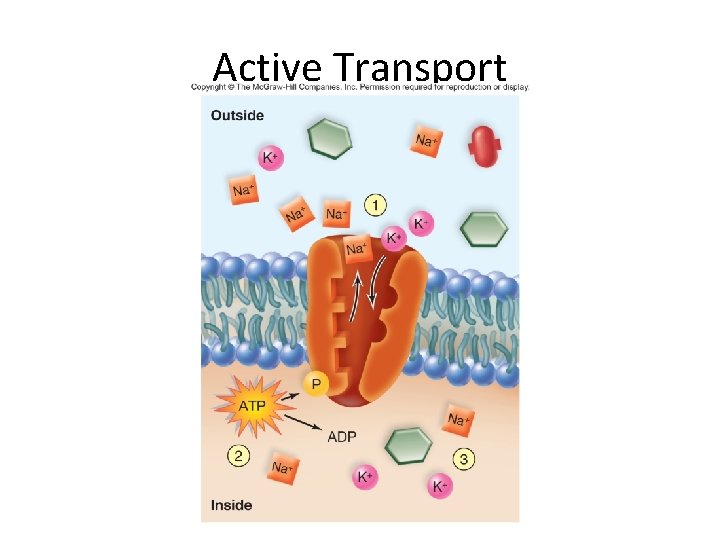
Active Transport
Please note that due to differing operating systems, some animations will not appear until the presentation is viewed in Presentation Mode (Slide Show view). You may see blank slides in the “Normal” or “Slide Sorter” views. All animations will appear after viewing in Presentation Mode and playing each animation. Most animations will require the latest version of the Flash Player, which is available at http: //get. adobe. com/flashplayer.
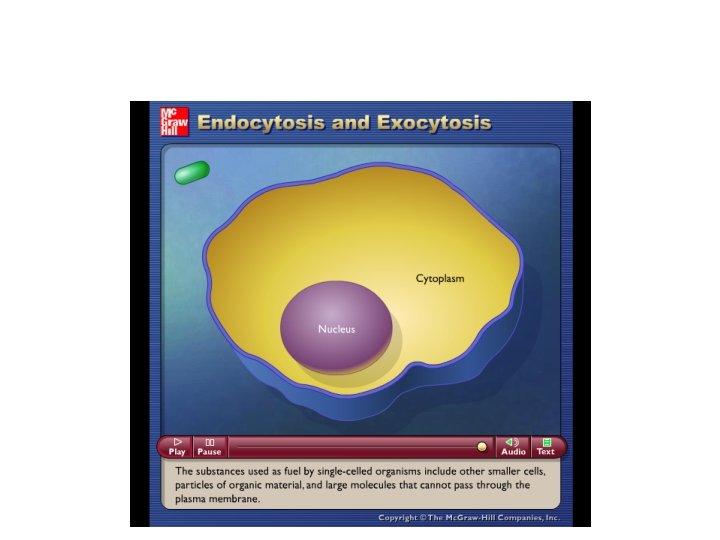
F. Endocytosis and Exocytosis • In endocytosis (bring into the cell) the plasma membrane envelopes a substance and forms an intracellular vesicle a. Phagocytosis (“cell eating”) – cell ingests solid particles b. Pinocytosis (“cell drinking”) – cell consumes solutions • In exocytosis (takes out of the cell) a vesicle fuses with the plasma membrane as secretion occurs
Please note that due to differing operating systems, some animations will not appear until the presentation is viewed in Presentation Mode (Slide Show view). You may see blank slides in the “Normal” or “Slide Sorter” views. All animations will appear after viewing in Presentation Mode and playing each animation. Most animations will require the latest version of the Flash Player, which is available at http: //get. adobe. com/flashplayer.
Crossing the Plasma Membrane
- Slides: 18