
3 1 Temperature Correction for Air Density 3


- Slides: 13
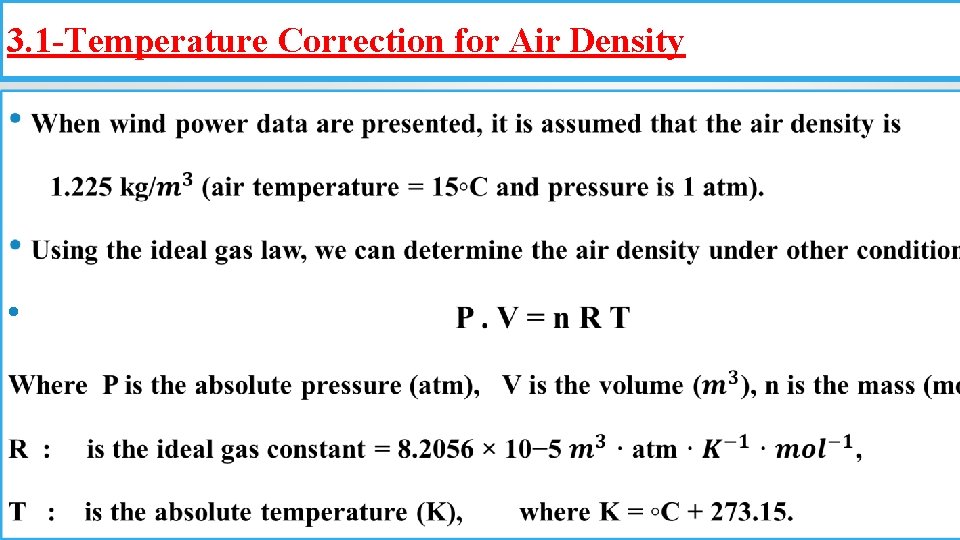
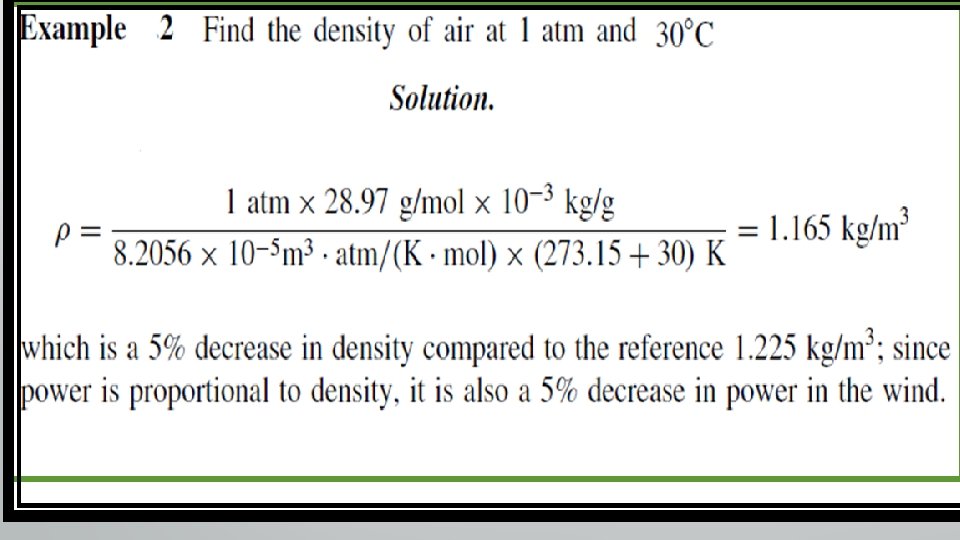
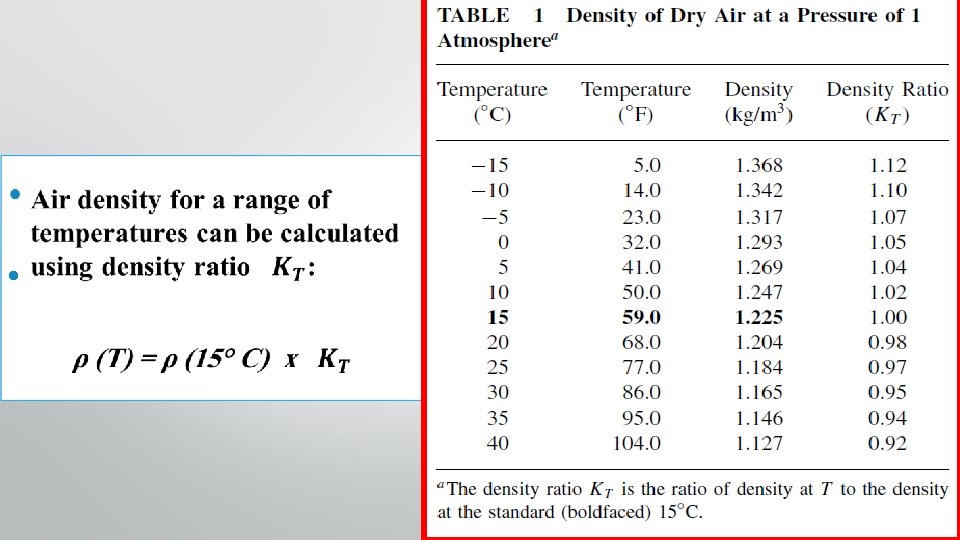
3. 1 -Temperature Correction for Air Density •
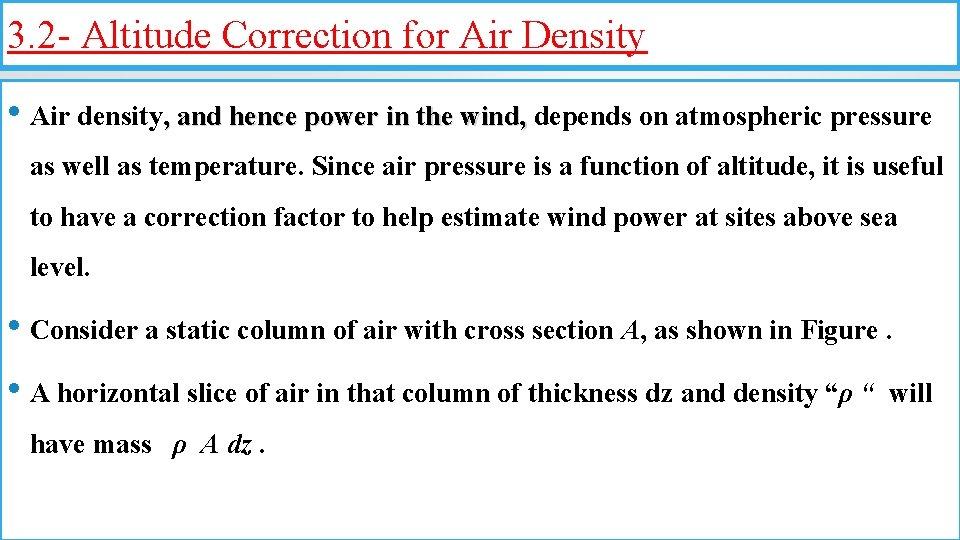
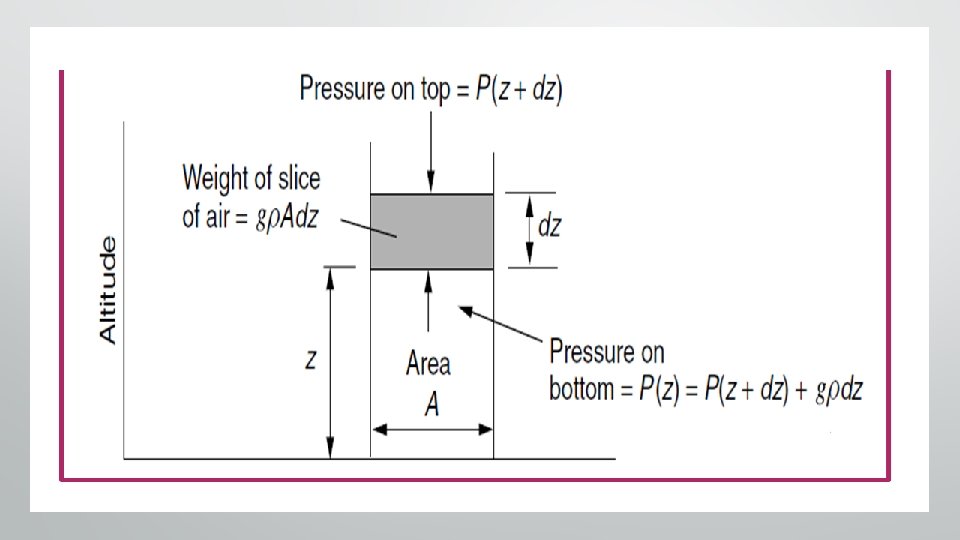
3. 2 - Altitude Correction for Air Density • Air density, and hence power in the wind, depends on atmospheric pressure as well as temperature. Since air pressure is a function of altitude, it is useful to have a correction factor to help estimate wind power at sites above sea level. • Consider a static column of air with cross section A, as shown in Figure. • A horizontal slice of air in that column of thickness dz and density “ρ “ have mass ρ A dz. will
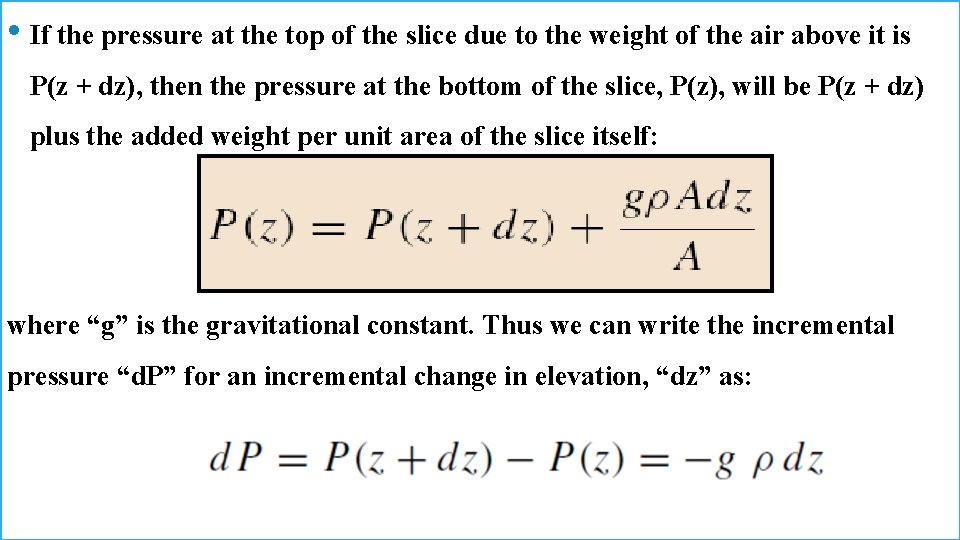
• If the pressure at the top of the slice due to the weight of the air above it is P(z + dz), then the pressure at the bottom of the slice, P(z), will be P(z + dz) plus the added weight per unit area of the slice itself: where “g” is the gravitational constant. Thus we can write the incremental pressure “d. P” for an incremental change in elevation, “dz” as:
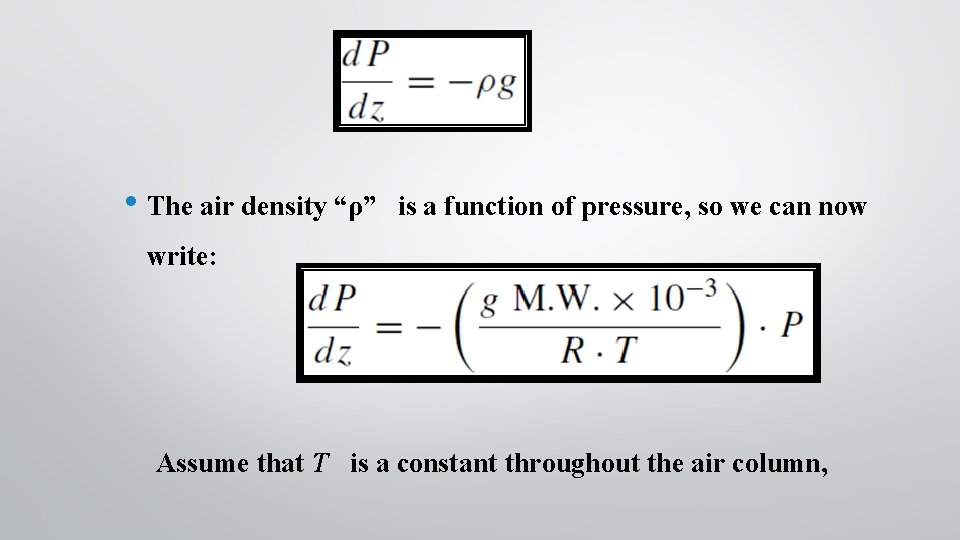
• The air density “ρ” is a function of pressure, so we can now write: Assume that T is a constant throughout the air column,
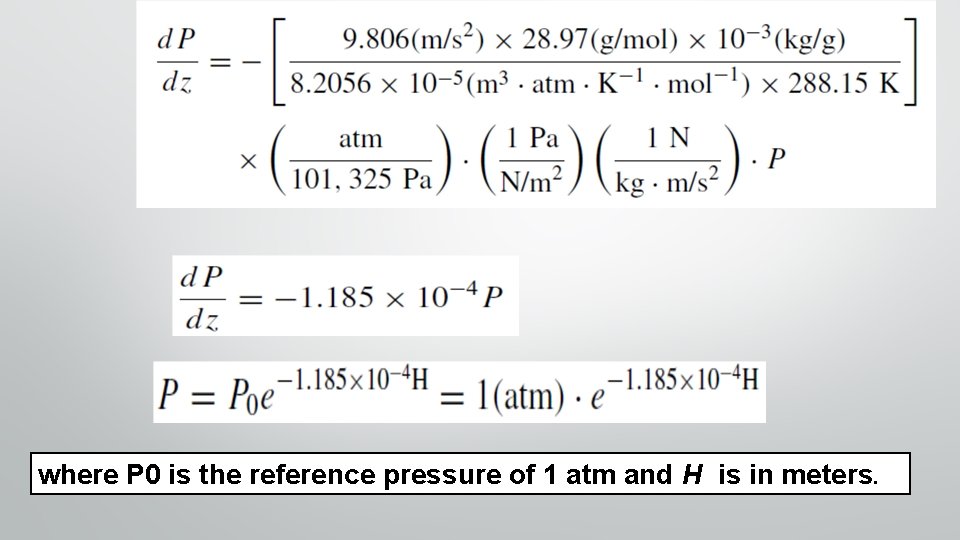
where P 0 is the reference pressure of 1 atm and H is in meters.
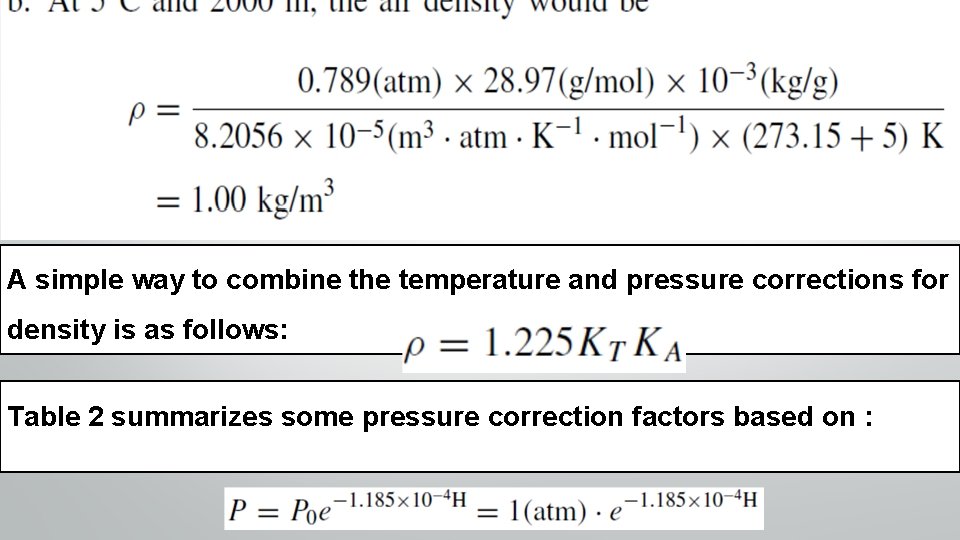
Example 3 : (a) Find the air density at 15◦C at an elevation of 2000 m. (b) Find the air density at air temperature of 5◦C at 2000 m. Solution
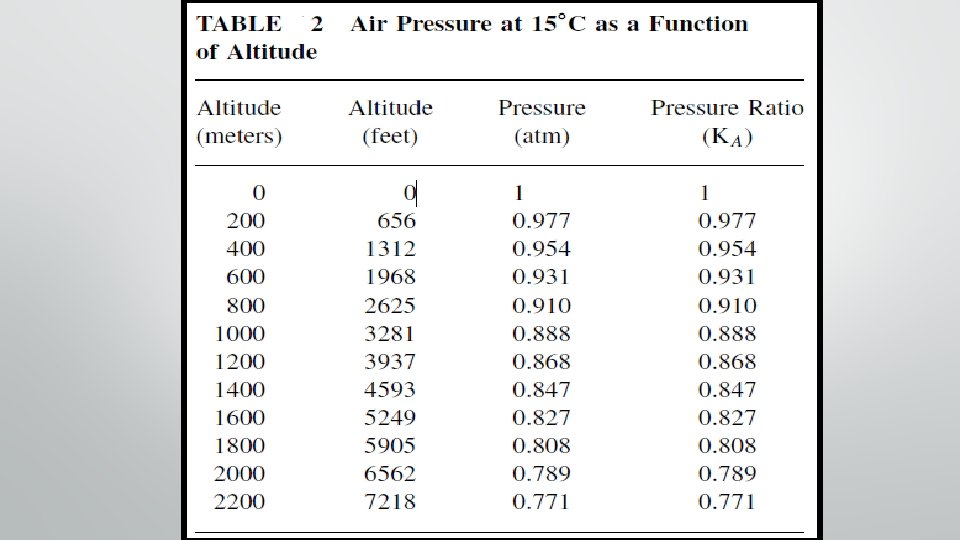
A simple way to combine the temperature and pressure corrections for density is as follows: Table 2 summarizes some pressure correction factors based on :
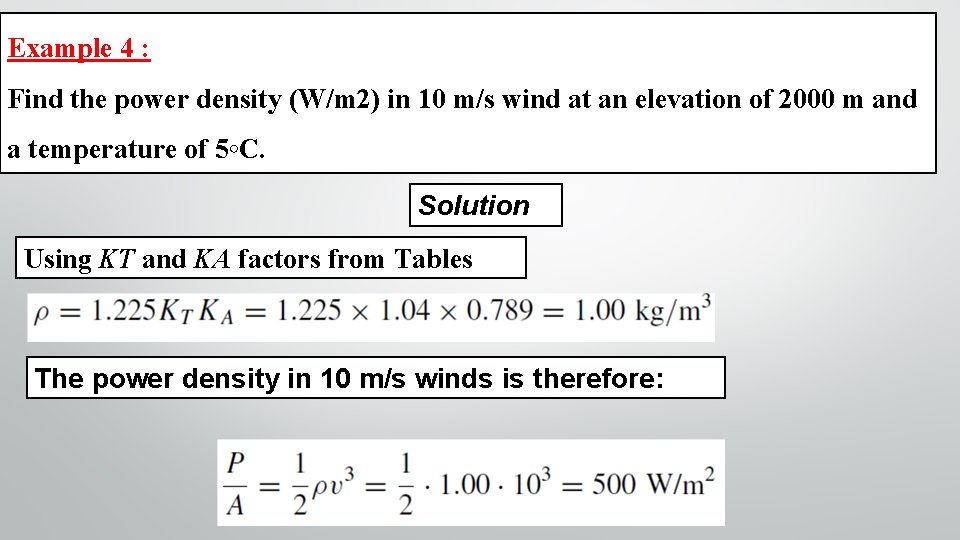
Example 4 : Find the power density (W/m 2) in 10 m/s wind at an elevation of 2000 m and a temperature of 5◦C. Solution Using KT and KA factors from Tables The power density in 10 m/s winds is therefore: