
3 1 ESTABLISHING LIFE GOALS Goal settings theory
3. 1 ESTABLISHING LIFE GOALS

Goal settings theory
Added by BRIAN FRANCIS REDMOND, last edited by LINDSAY A UNGER on Jul 19, 2012 (view change) Locke and Latham (2002) found a direct linear relationship between goal difficulty, level of performance, and effort involved. This relationship will stay positive, as long as the person is committed to the goal, has the requisite ability to attain it, and doesn't have conflicting goals (Locke & Latham, 2006).
Goals should be: • Conceivable ---> One should conceptualize the goal so that it is understandable clearly. • Believable---> One should believe that the goal can be reached and that other people believe in it. • Achievable---> One should ask themselves if given their strengths and weaknesses can they reach their desired goal (Locke, E. A, 2002)
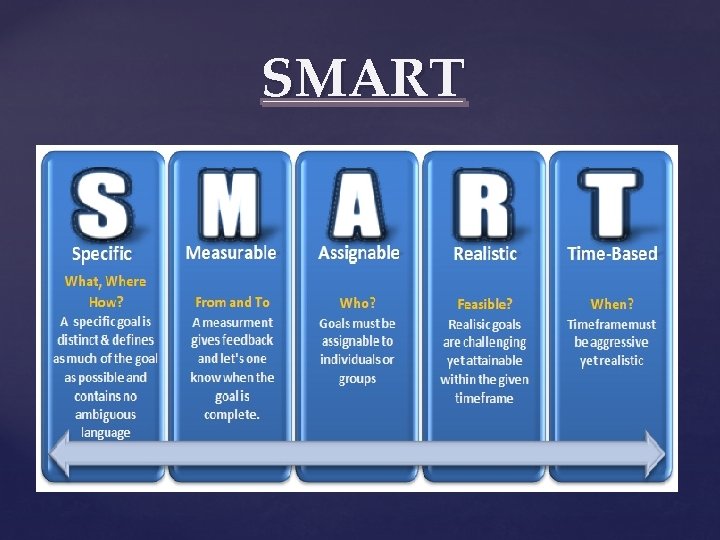
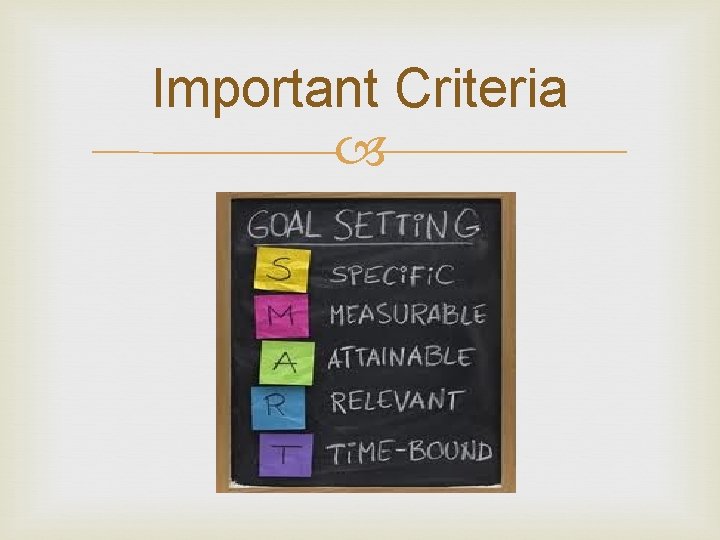
SMART
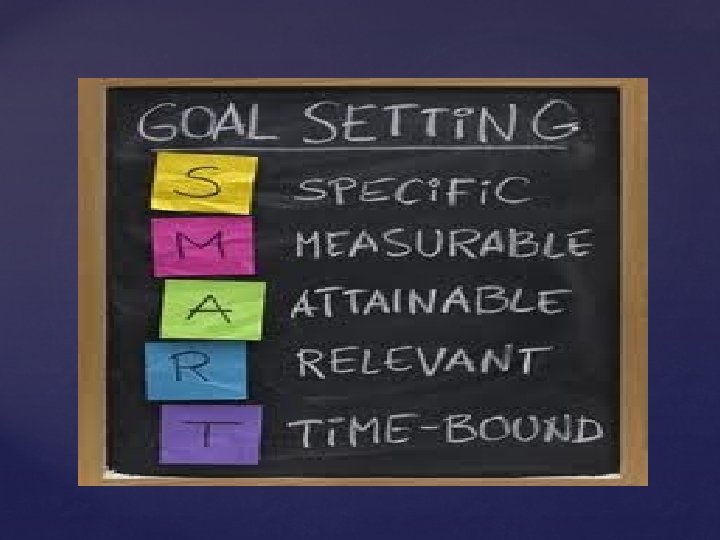
SMART. Kenneth Blanchard and Spencer Johnson first developed the SMART goal system when branching the concept of goal theory beyond academia into the area of management and leadership (Blanchard, Zigarmi, & Zigarmi, 1985) When originally introduced by Blanchard, SMART goals were denoted as: Specific and Measurable, Motivating, Attainable Relevant and Track-able (Blanchard, Zigarmi, & Zigarmi, 1985, p. 89 -90). Over time, the SMART acronym for goals has evolved into what they, are today: Specific, Measurable, Assignable, Realistic, and Time-Related. BY PENNSTATE U.

GOAL!
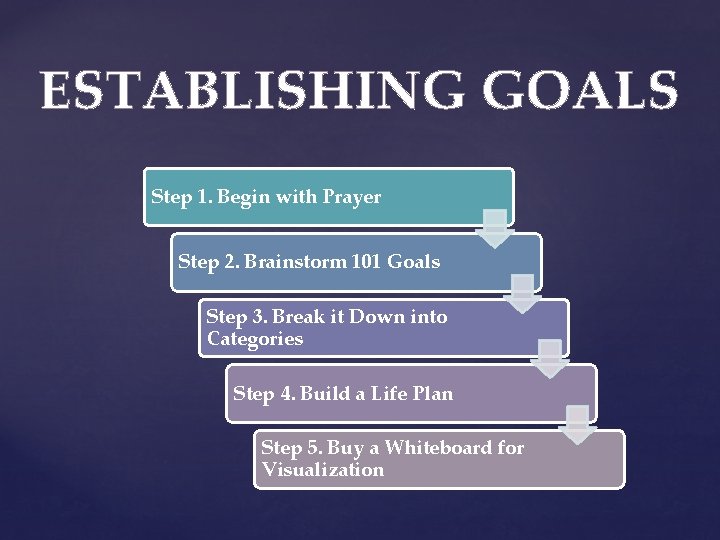
ESTABLISHING GOALS Step 1. Begin with Prayer Step 2. Brainstorm 101 Goals Step 3. Break it Down into Categories Step 4. Build a Life Plan Step 5. Buy a Whiteboard for Visualization

GOALS.

AUTHOR • Added by BRIAN FRANCIS REDMOND, last edited by LINDSAY A UNGER on Jul 19, 2012 (view change) • PENNSTATE UNIVERSITY • PERRY LAI • JONATHAN

ORGANIZING LIFE TO SUCCESS Areas for Organization
• It means : • paving the journey to your success • Aspects to be considered : • in the areas of climbing the corporate ladder • by team building • by finding your own entrepreneurial spirit • decide to be your own boss and carve your own niche in your business CAREER
• It means : • examining and realizing, • public speaking skills • styles • personal influences • Those work together in building one's charisma CHARISMA

• It means : • your hobbies, home, travel and gadgets are all coordinated • utilize your abilities to arrange your day to day activities in all these aspects • spend your time wisely LIFESTYLE
• Consists of : • time management • controlling your mind • In shorts : • consists of using all your skills and time productively • to attain and enjoy the greatest productivity in a person's life PERSONAL PRODUCTIVITY
IF YOU ARE ORGANIZED, YOUR SUCCESSES ACCELERATE, YOUR TRIUMPHS MULTIPLY, AND YOUR HAPPINESS BECOMES MORE PROFOUND.
THE AUTHOR : • Amy Twain • A Self Improvement Coach • Success in coaching and guiding clients for many years • Article’s source : Amazon's Kindle Edition

BUILDING STUDY PLAN
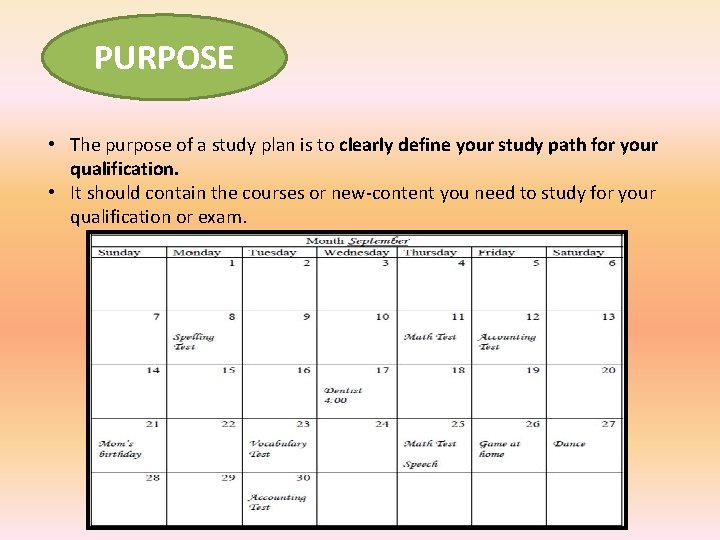
PURPOSE • The purpose of a study plan is to clearly define your study path for your qualification. • It should contain the courses or new-content you need to study for your qualification or exam.
BENEFITS A study plan helps to: v. Establish a regular study routine v. Develop time management skills and goals v. Save time v. To know your learning style
§ Study Plane enables you to structure your work in a particular session. § By building study plan you will cover all the important activities in an appropriate manner and leave plenty of time for revision and question practice. § Here are some hints to make the plan most useful: • Make the study plan realistic • Build in time for relaxation • Be determined to stick to the plan § The study plans contain details of useful dates, including assignment deadlines and tutorial finalisation dates.
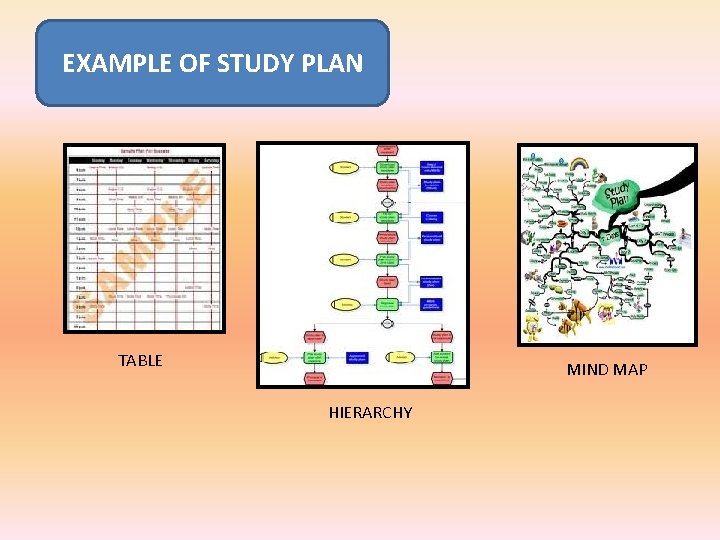
EXAMPLE OF STUDY PLAN TABLE MIND MAP HIERARCHY
AUTHOR • The actuarial education company on behalf of the actuarial profession • Meaghan Montrose(Tutor. Fi) Study tips and learning strategies for the new school year.

DISCUSSIONS
Am I Too Busy? ? ?
"People worry about losing money, but don't worry about losing time. Yet money can't save you, and time can't be recaptured. “ Achieved a balance between getting things done and taking time for yourself. Tailor your activities to meet your life goals.
Do I Know How To Reach Goals?
Important Criteria
Do I Know What Is Coming? v. Always prepare. v. Know the schedule for every event. v. Can manage time properly. v. Build study plan v. Reach one’s goal.

Examples of academic calendar

- Slides: 33