
3 1 Cell Theory Structure vs Function Whats
- Slides: 17
3. 1 Cell Theory
Structure vs. Function • What’s the difference between structure and function? – Structure – parts put together to form a whole. Eg. Your skeleton – Function – the action. Eg. Your bones allow you to move and protect your ograns • What would be the structure and function of cells? – Structure – atoms, molecules, organelles. – Function – what these parts do. Eg. Vacuoles store materials in the cell.
Cell Theory • Much research accumulated from 1665 onward using a microscope and discovering cells. The research on the cell is summarized as the Cell theory. • Major principles of the cell theory: – All organisms are made of cells – All existing cells are produced by other living cells. – The cell is the most basic unit of life.
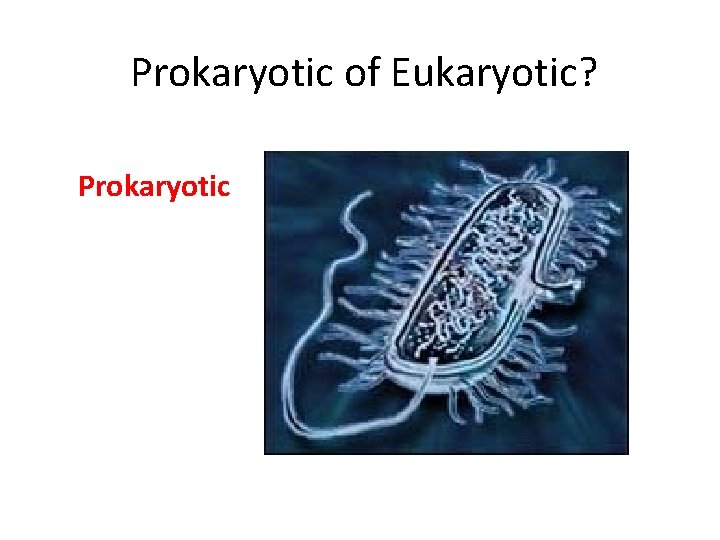
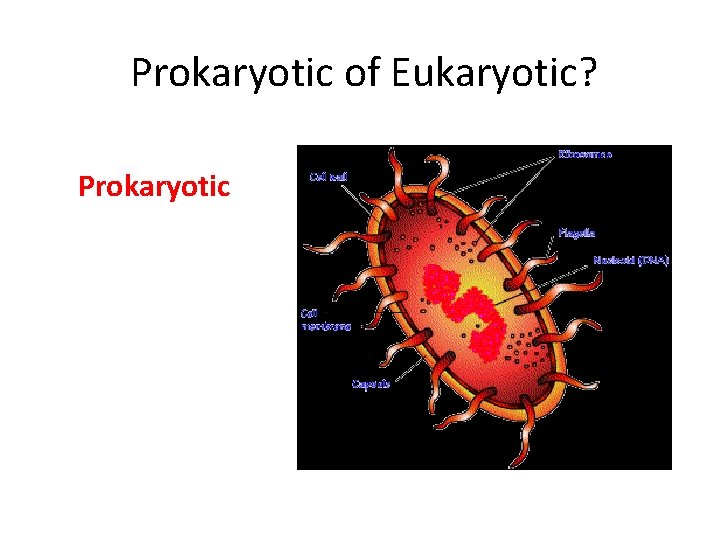
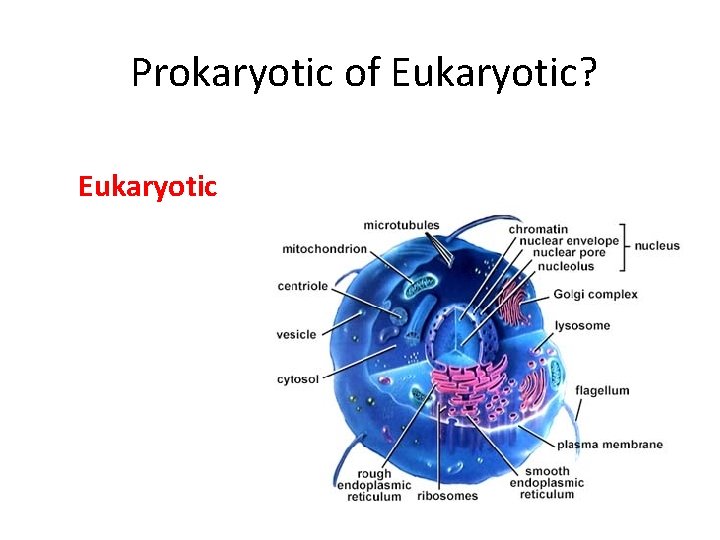
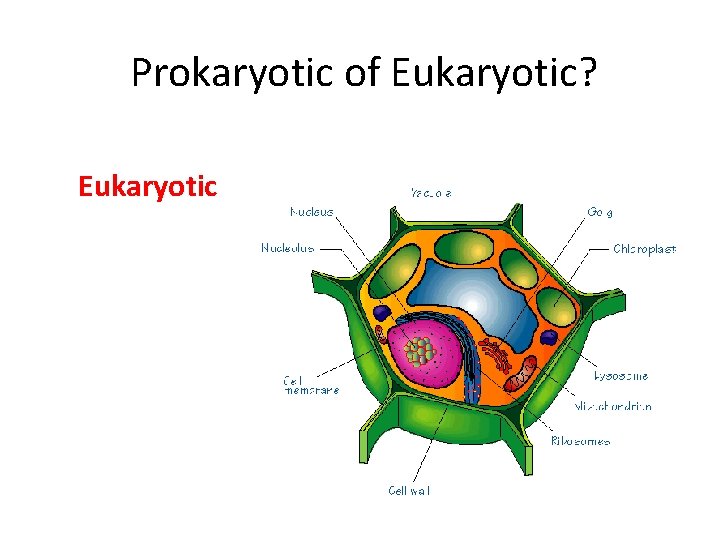
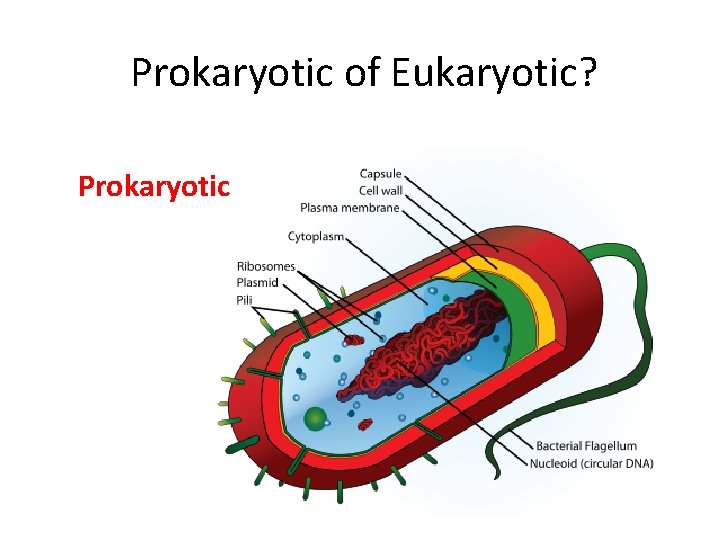
Cells • Cytoplasm – A jelly-like substance that cells are filled with. • Organelles – Structures specialized to perform processes within the cell. • 2 main types of cells: – Prokaryotic – no nucleus, or membranebound organelles. Cell’s DNA is suspended in the cytoplasm – Eukaryotic – have a nucleus and other membrane-bound organelles. Nucleus has the genetic information in it.
Prokaryotic of Eukaryotic? Prokaryotic
Prokaryotic of Eukaryotic? Prokaryotic
Prokaryotic of Eukaryotic? Eukaryotic
Prokaryotic of Eukaryotic? Eukaryotic
Prokaryotic of Eukaryotic? Prokaryotic
3. 2 Cell Organelles
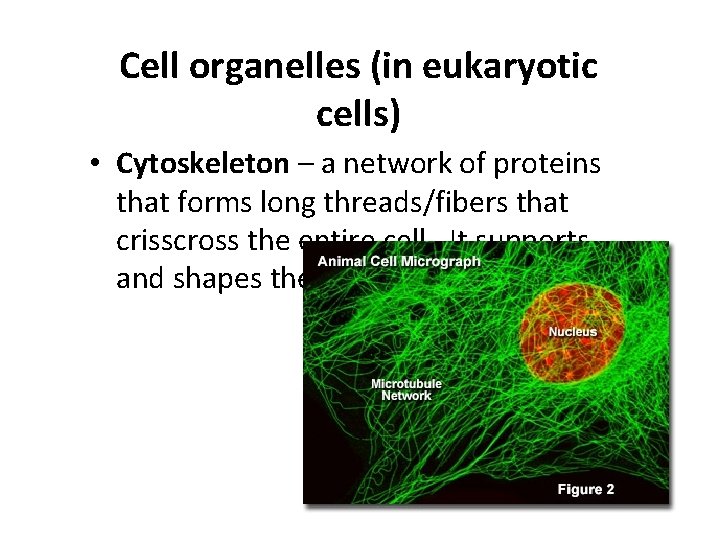
Cell organelles (in eukaryotic cells) • Cytoskeleton – a network of proteins that forms long threads/fibers that crisscross the entire cell. It supports and shapes the cell.
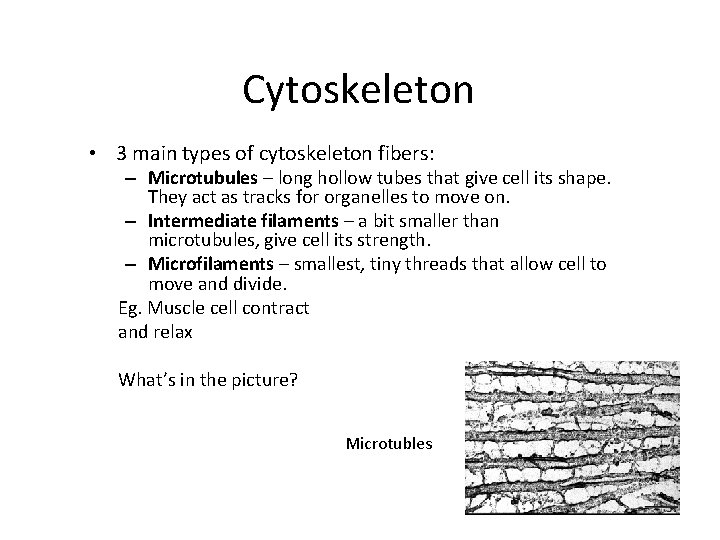
Cytoskeleton • 3 main types of cytoskeleton fibers: – Microtubules – long hollow tubes that give cell its shape. They act as tracks for organelles to move on. – Intermediate filaments – a bit smaller than microtubules, give cell its strength. – Microfilaments – smallest, tiny threads that allow cell to move and divide. Eg. Muscle cell contract and relax What’s in the picture? Microtubles
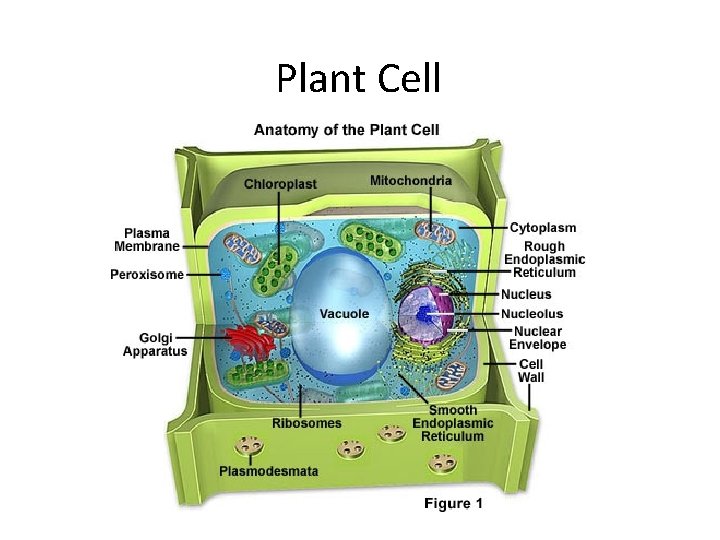
Plant Cell
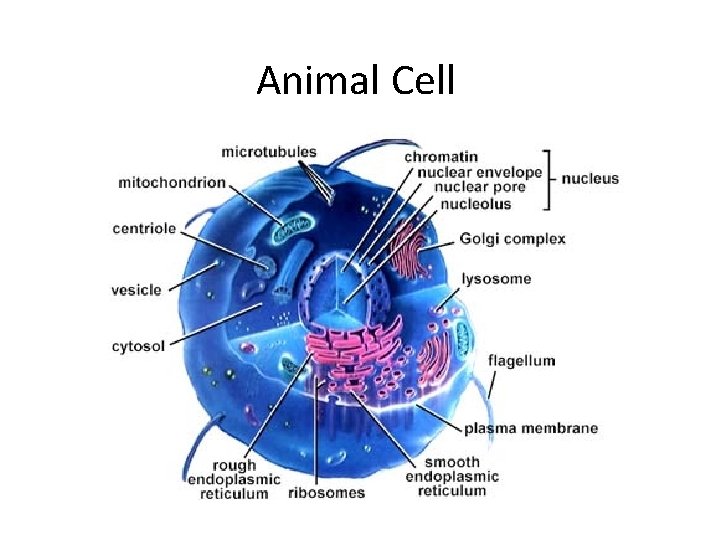
Animal Cell
Cell organelles • Q: What is the difference between a plant and an animal cell? – Plant cell – chloroplasts, central vacuole and cell wall – Animal cell – centrioles and lysosomes
Cell organelle structure and function • Read and write notes on the following organelles: – Group 1 – Nucleus, Endoplasmic Reticulum (ER), Ribosomes, Golgi Apparatus, Vesicles, and Mitochondria. – Group 2 – Vacuoles, Lysosomes, Centrosome and Centrioles, Cell Walls, Chloroplasts. • Once finished, find a partner from the opposite group and share your answers to complete your worksheet
Extra time/HW • Go onto Classzone and complete the interactive Cell structure activity • Tomorrow – team challenge based on the organelles