
3 0 Compounds form according to a set
- Slides: 11
3. 0 Compounds form according to a set of rules. 3. 1 Naming Compounds 1
n As you learned in the last section ( The Periodic Table ), each element has a chemical name. The combination of elements to form compounds has a chemical name and a chemical formula. The formula identifies which elements and how many of each are in the compound. 2
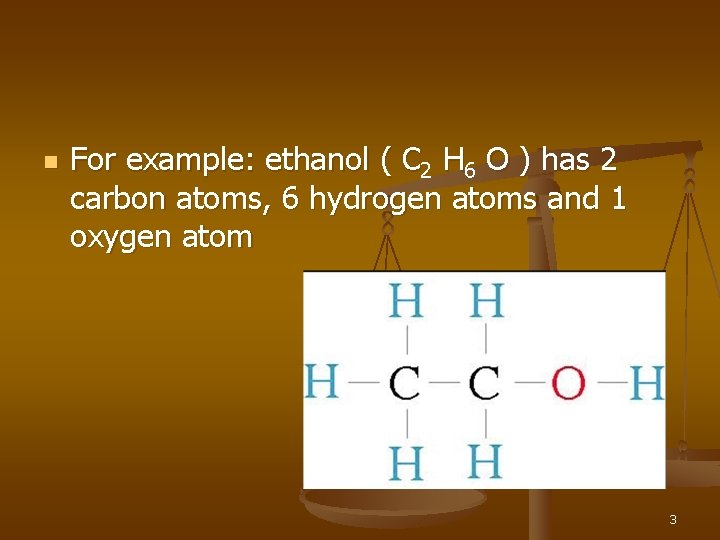
n For example: ethanol ( C 2 H 6 O ) has 2 carbon atoms, 6 hydrogen atoms and 1 oxygen atom 3
n To determine the name, a standardized chemical naming system, or nomenclature, is used. Guyton de Morveau in France developed it in 1787. The metal name is always first. Since 1920, the IUPAC ( International Union of Pure and Applied Chemistry ) is responsible for determining the appropriate name for each compound. 4
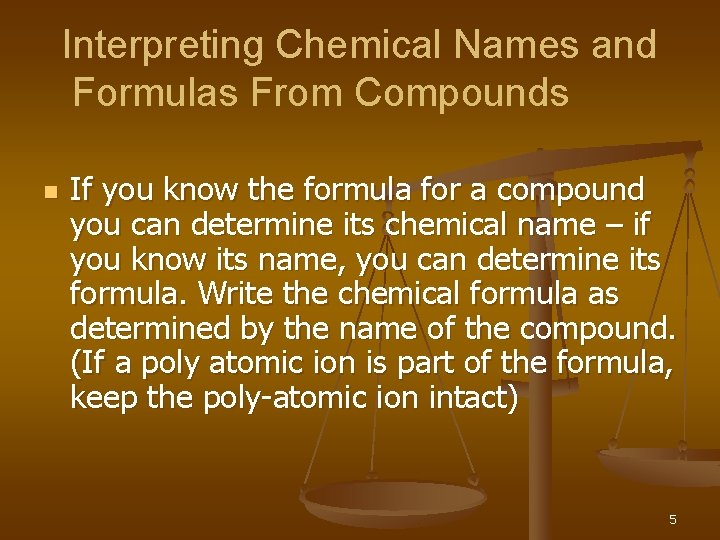
Interpreting Chemical Names and Formulas From Compounds n If you know the formula for a compound you can determine its chemical name – if you know its name, you can determine its formula. Write the chemical formula as determined by the name of the compound. (If a poly atomic ion is part of the formula, keep the poly-atomic ion intact) 5
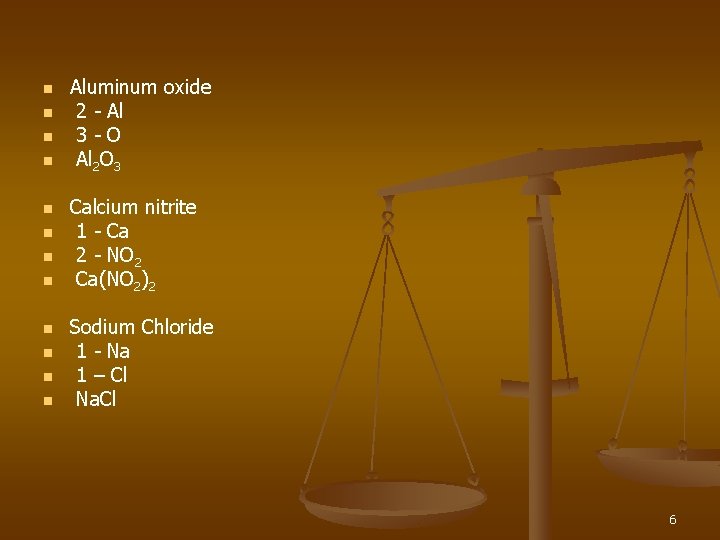
n n n Aluminum oxide 2 - Al 3 -O Al 2 O 3 Calcium nitrite 1 - Ca 2 - NO 2 Ca(NO 2)2 Sodium Chloride 1 - Na 1 – Cl Na. Cl 6
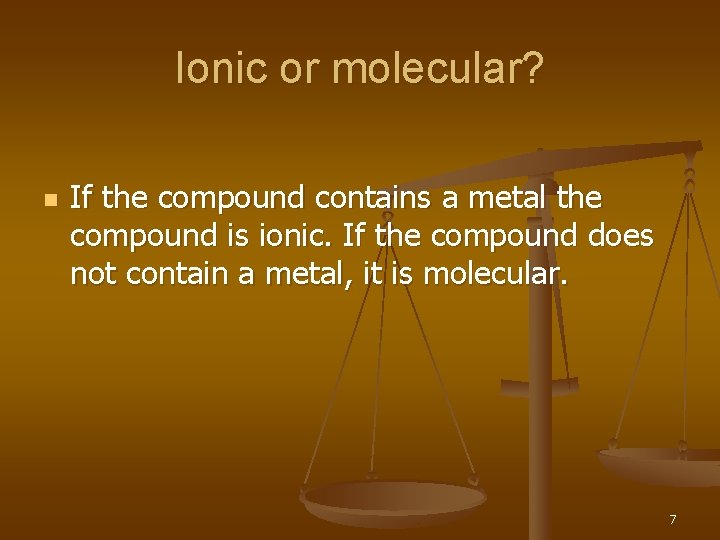
Ionic or molecular? n If the compound contains a metal the compound is ionic. If the compound does not contain a metal, it is molecular. 7
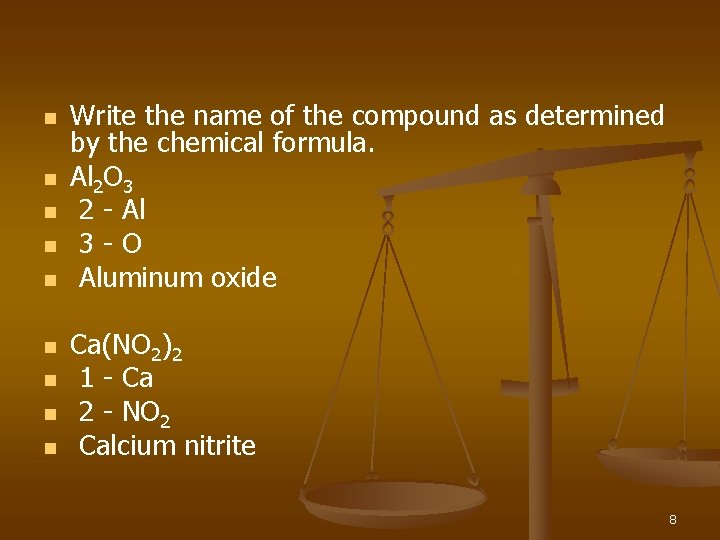
n n n n n Write the name of the compound as determined by the chemical formula. Al 2 O 3 2 - Al 3 -O Aluminum oxide Ca(NO 2)2 1 - Ca 2 - NO 2 Calcium nitrite 8
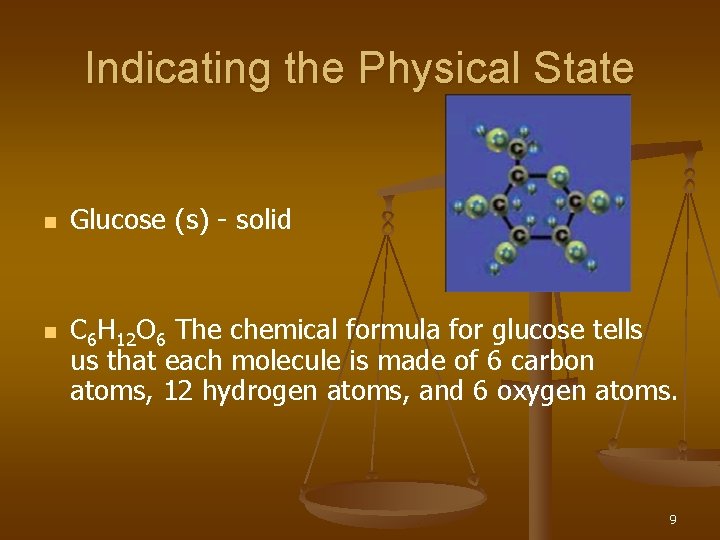
Indicating the Physical State n n Glucose (s) - solid C 6 H 12 O 6 The chemical formula for glucose tells us that each molecule is made of 6 carbon atoms, 12 hydrogen atoms, and 6 oxygen atoms. 9
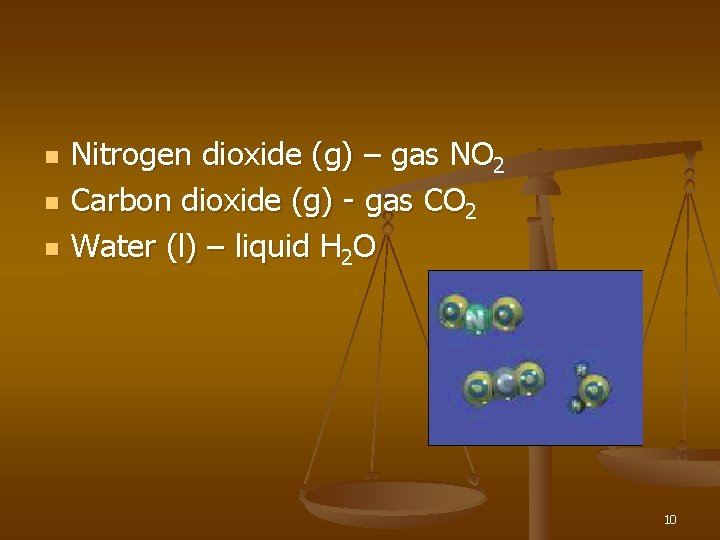
n n n Nitrogen dioxide (g) – gas NO 2 Carbon dioxide (g) - gas CO 2 Water (l) – liquid H 2 O 10
aqueous n n (aq) – aqueous solution This is used when substances are dissolved in water. A saltwater solution would be Na. Cl (aq) 11