
29 CFR 1917 Subpart B Marine Terminal Operations
29 CFR 1917 - Subpart B Marine Terminal Operations
29 CFR 1917 - Subpart B • 1917. 13 - Slinging • 1917. 12 - Slippery conditions • 1917. 11 - Housekeeping • 1917. 14 - Stacking of cargo pallets • 1917. 15 - Coopering • 1917. 16 - Line handling • 1917. 17 - Railroad facilities
29 CFR 1917 - Subpart B • 1917. 18 - Log handling • 1917. 19 - Movement of barges and railcars • 1917. 20 - Interference with communications • 1917. 21 - Open fires • 1917. 22 - Hazardous cargo • 1917. 23 - Hazardous atmospheres and substances
29 CFR 1917 - Subpart B • 1917. 24 - Carbon monoxide • 1917. 25 - Fumigants, pesticides, insecticides and hazardous preservations • 1917. 26 - First aid and lifesaving facilities • 1917. 27 - Personnel • 1917. 28 - Hazard communication
29 CFR 1917 - Subpart B • 1917. 29 - Retention of DOT markings, placards and labels • 1917. 30 - Emergency action plans
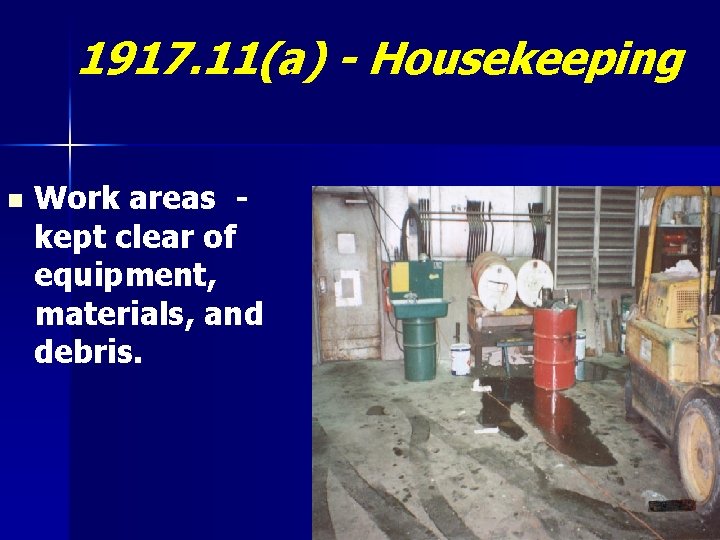
1917. 11(a) - Housekeeping n Work areas kept clear of equipment, materials, and debris.
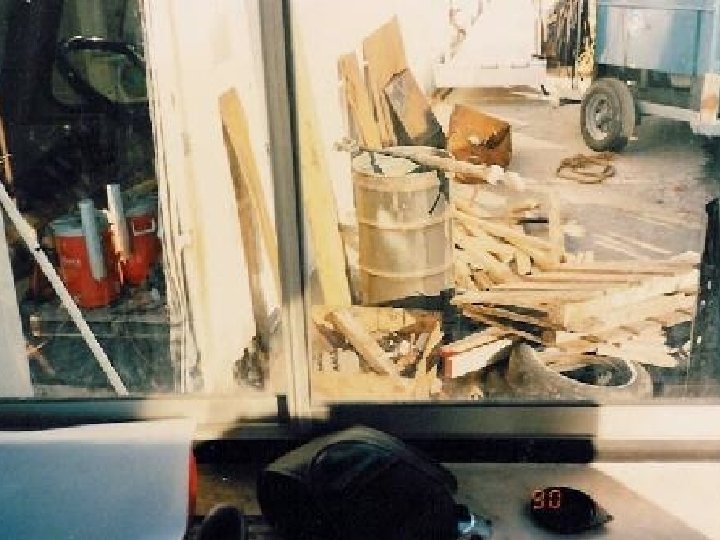
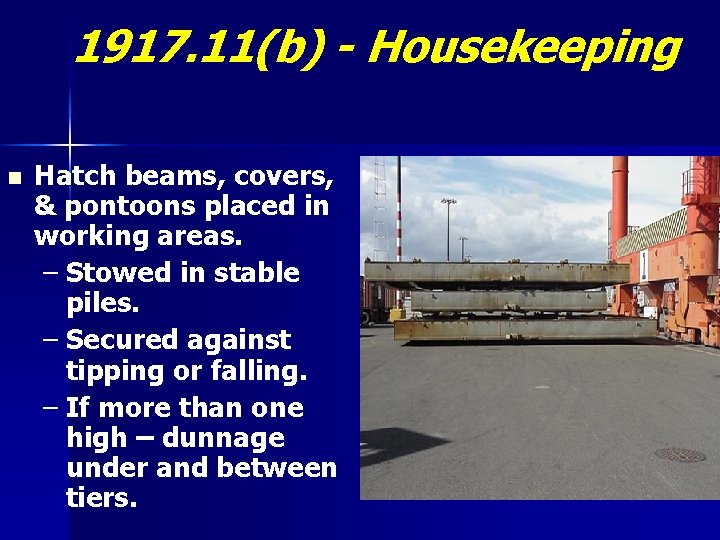
1917. 11(b) - Housekeeping n Hatch beams, covers, & pontoons placed in working areas. – Stowed in stable piles. – Secured against tipping or falling. – If more than one high – dunnage under and between tiers.
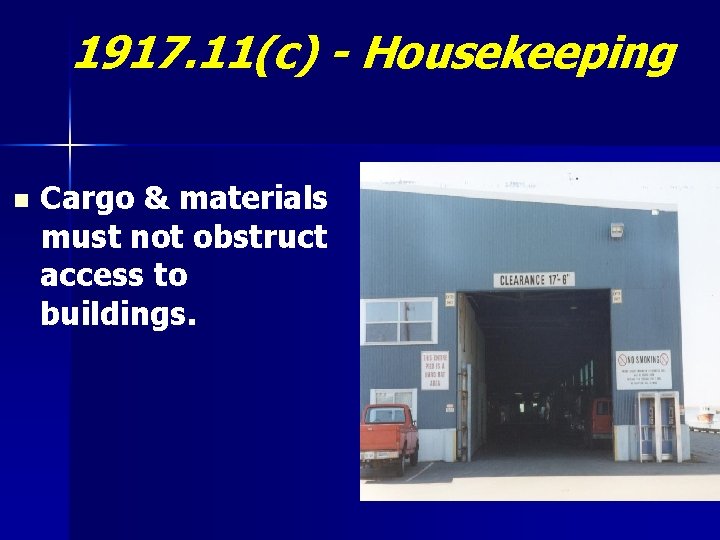
1917. 11(c) - Housekeeping n Cargo & materials must not obstruct access to buildings.

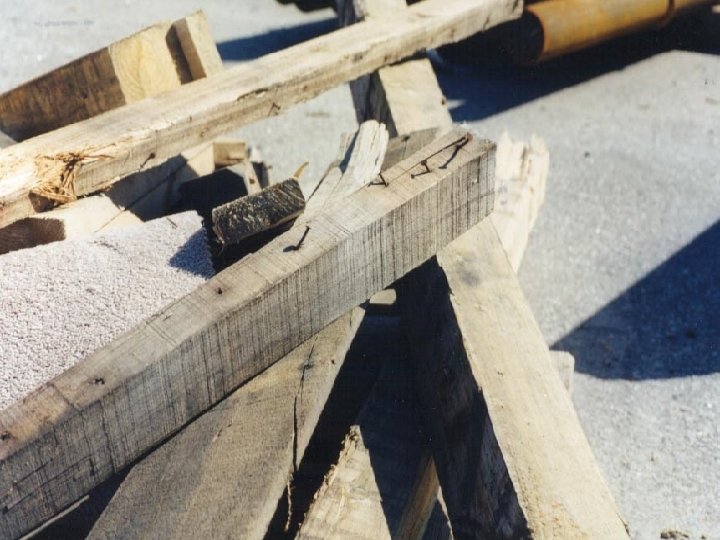
1917. 11(d) - Housekeeping n Protruding nails must be removed or flattened from dunnage, lumber, and shoring material.

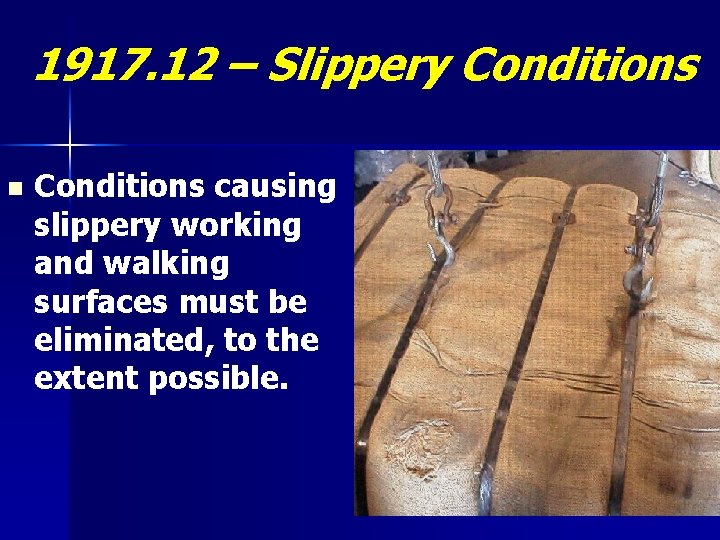
1917. 12 – Slippery Conditions n Conditions causing slippery working and walking surfaces must be eliminated, to the extent possible.
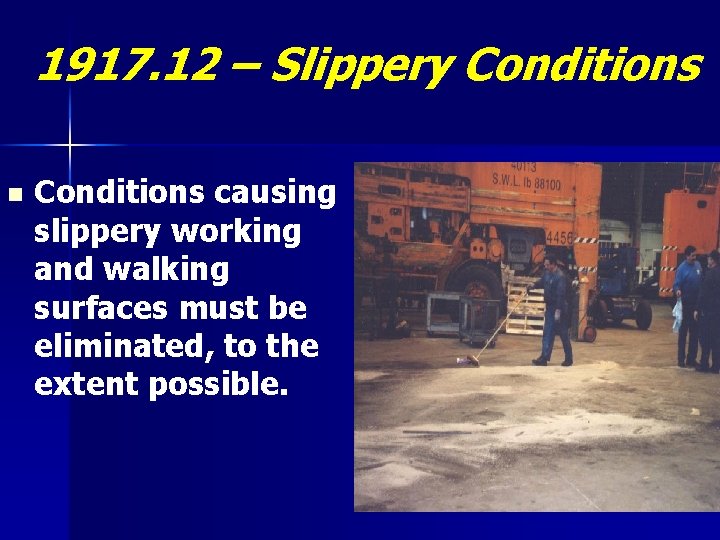
1917. 12 – Slippery Conditions n Conditions causing slippery working and walking surfaces must be eliminated, to the extent possible.
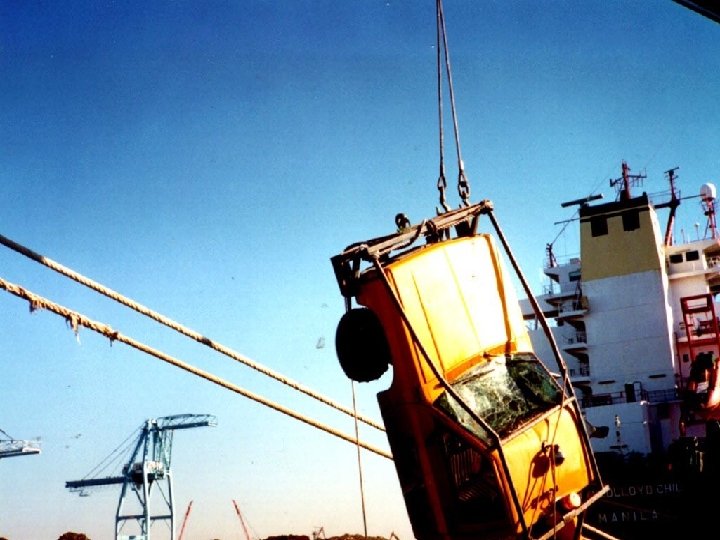
1917. 13(a) - Slinging Drafts must be safely slung before being hoisted. n Dunnage must be removed. n
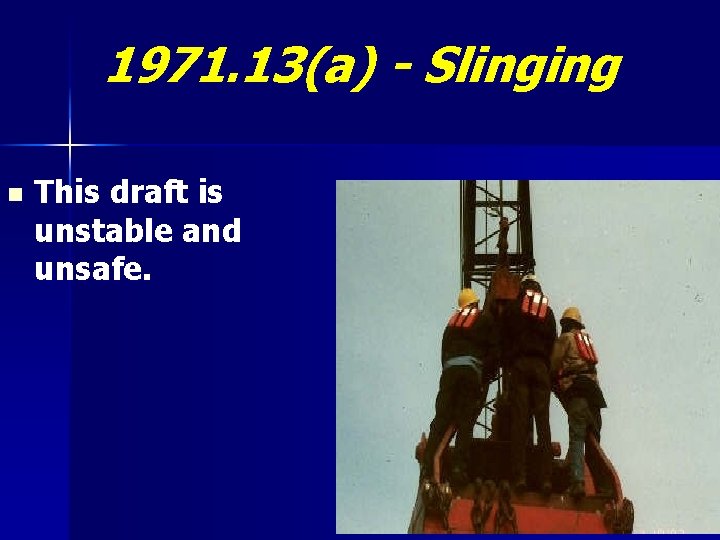
1971. 13(a) - Slinging n This draft is unstable and unsafe.
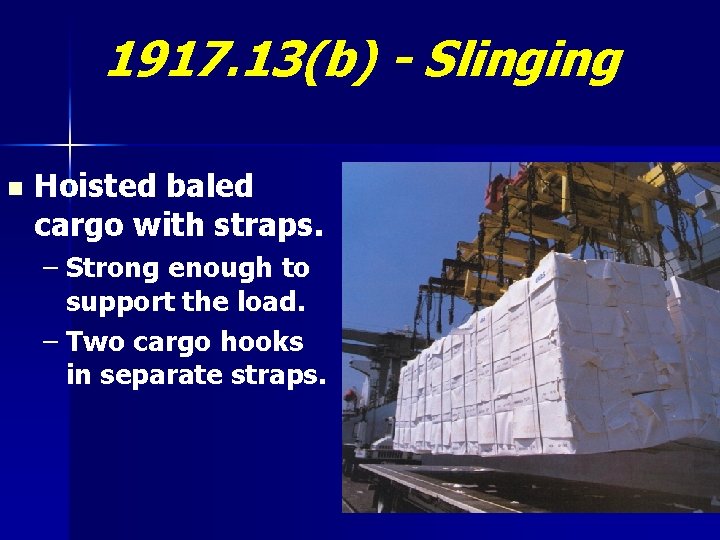
1917. 13(b) - Slinging n Hoisted baled cargo with straps. – Strong enough to support the load. – Two cargo hooks in separate straps.
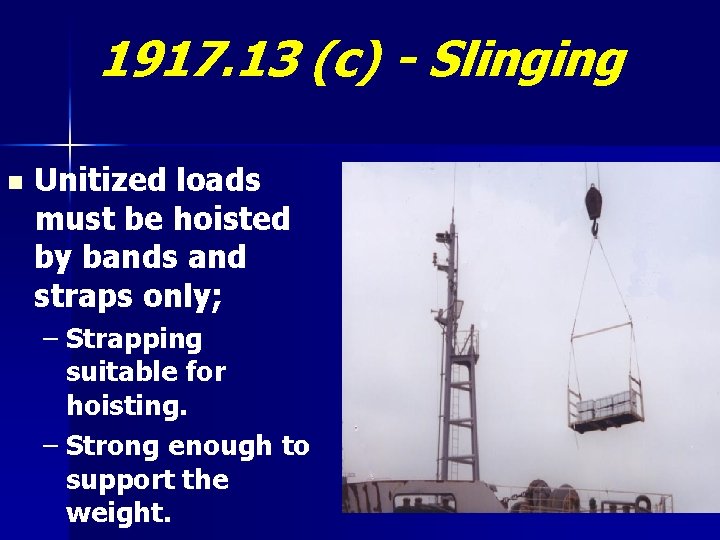
1917. 13 (c) - Slinging n Unitized loads must be hoisted by bands and straps only; – Strapping suitable for hoisting. – Strong enough to support the weight.
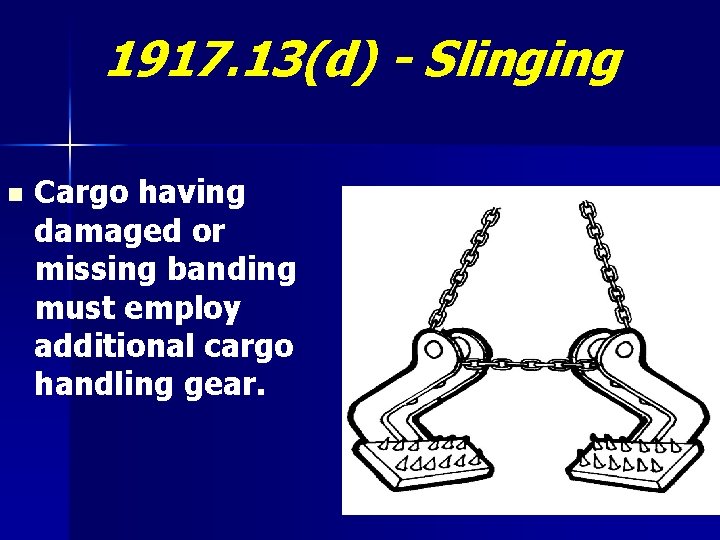
1917. 13(d) - Slinging n Cargo having damaged or missing banding must employ additional cargo handling gear.
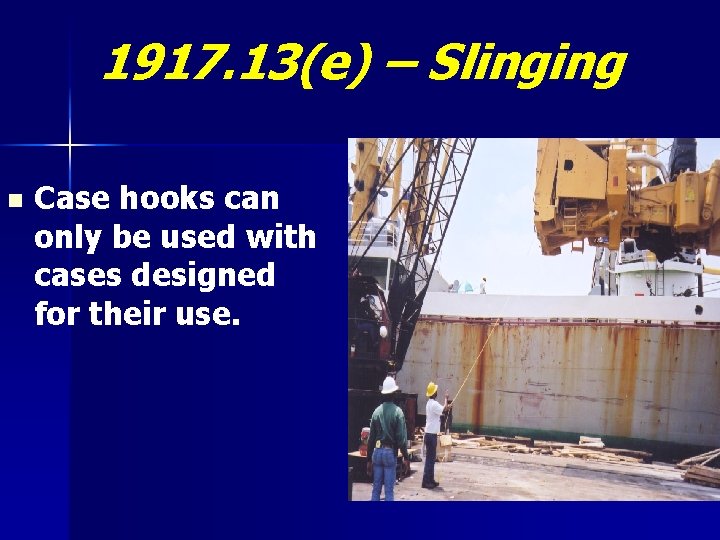
1917. 13(e) – Slinging n Case hooks can only be used with cases designed for their use.
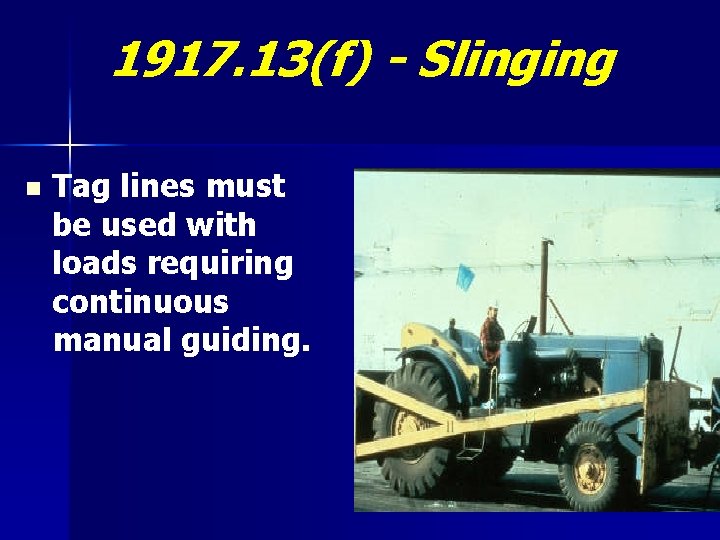
1917. 13(f) - Slinging n Tag lines must be used with loads requiring continuous manual guiding.
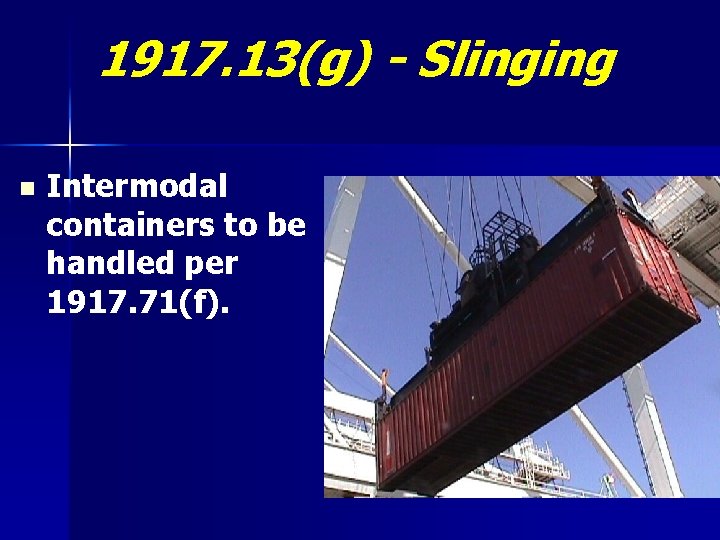
1917. 13(g) - Slinging n Intermodal containers to be handled per 1917. 71(f).
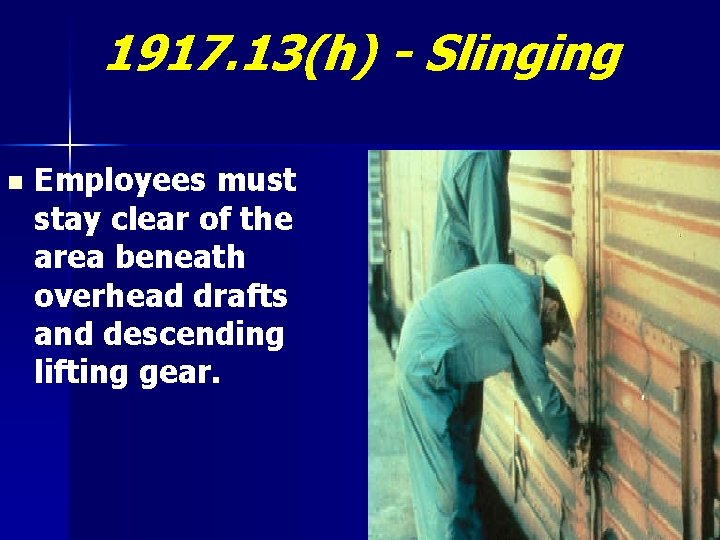
1917. 13(h) - Slinging n Employees must stay clear of the area beneath overhead drafts and descending lifting gear.
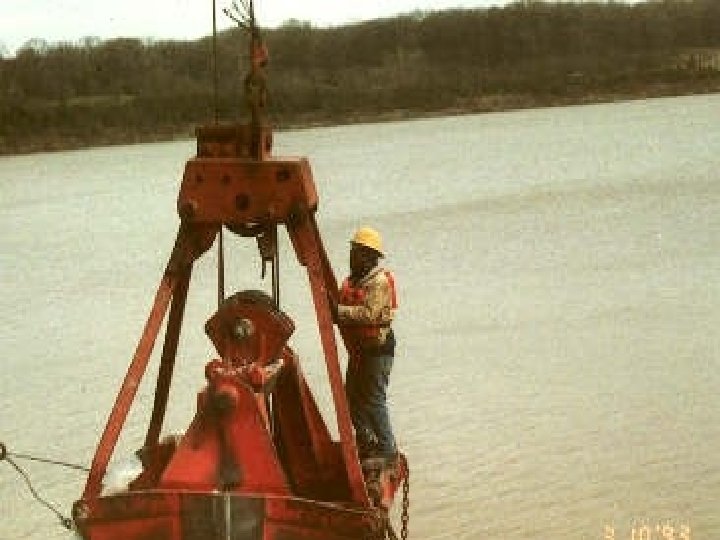
1917. 13(i) - Slinging n Employees not allowed to ride the hook or load.

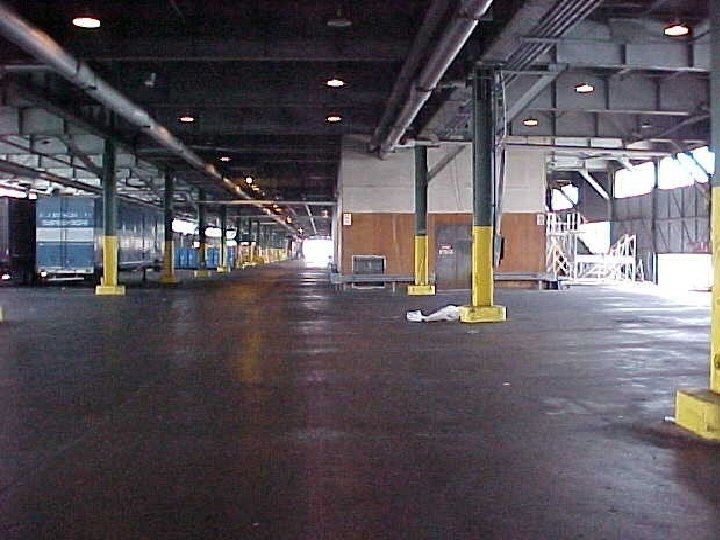
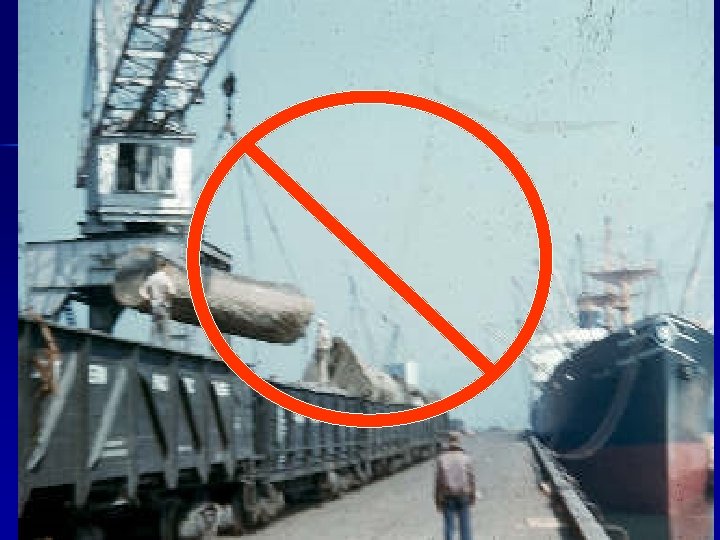
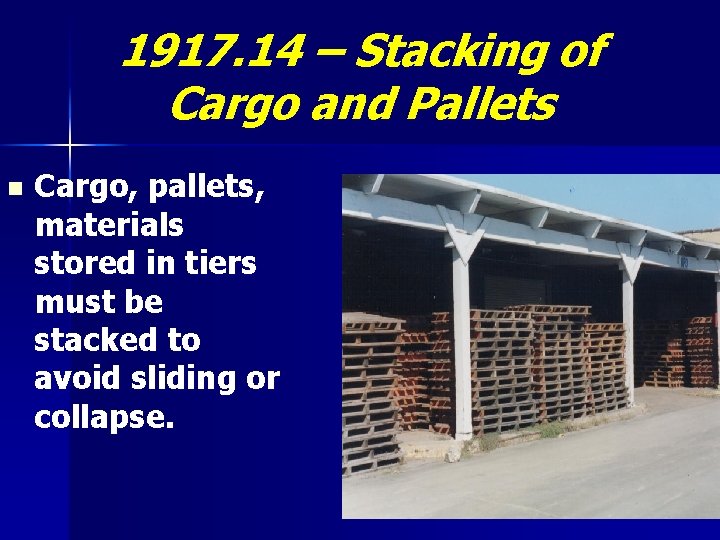
1917. 14 – Stacking of Cargo and Pallets n Cargo, pallets, materials stored in tiers must be stacked to avoid sliding or collapse.
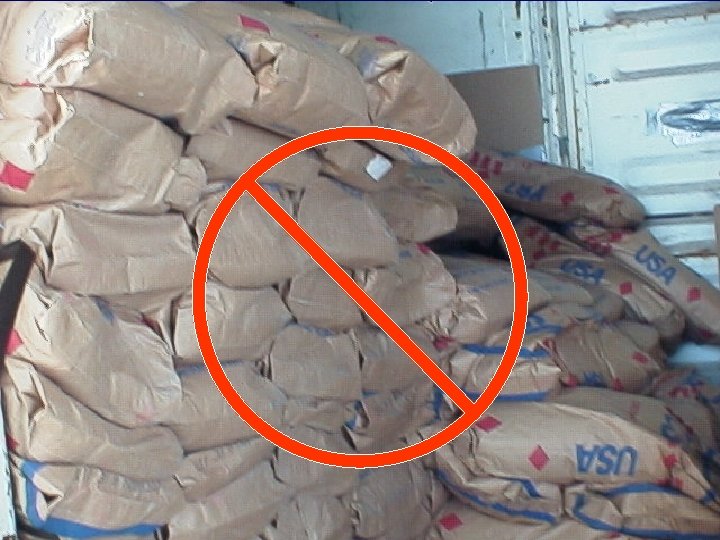

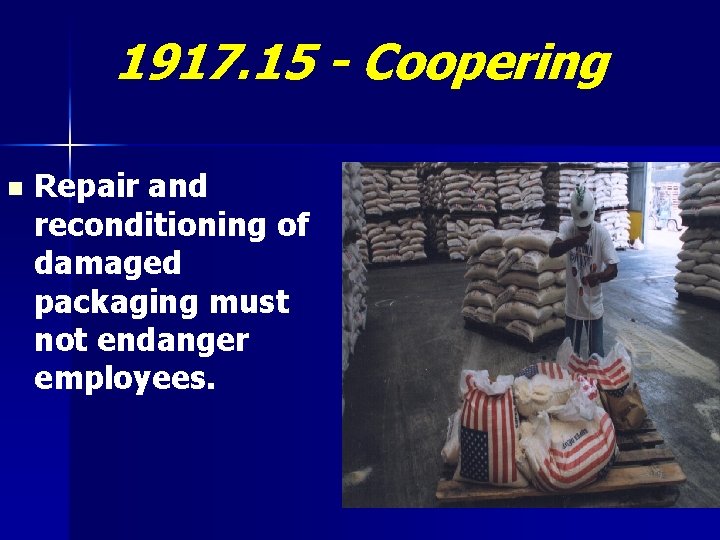
1917. 15 - Coopering n Repair and reconditioning of damaged packaging must not endanger employees.
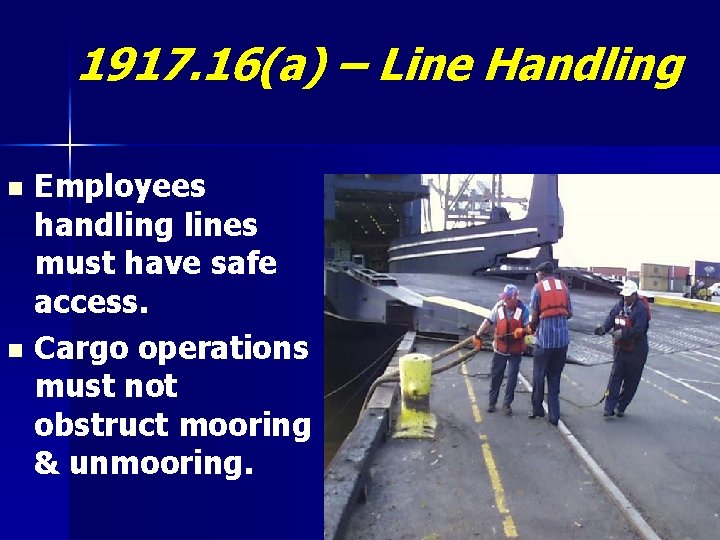
1917. 16(a) – Line Handling Employees handling lines must have safe access. n Cargo operations must not obstruct mooring & unmooring. n
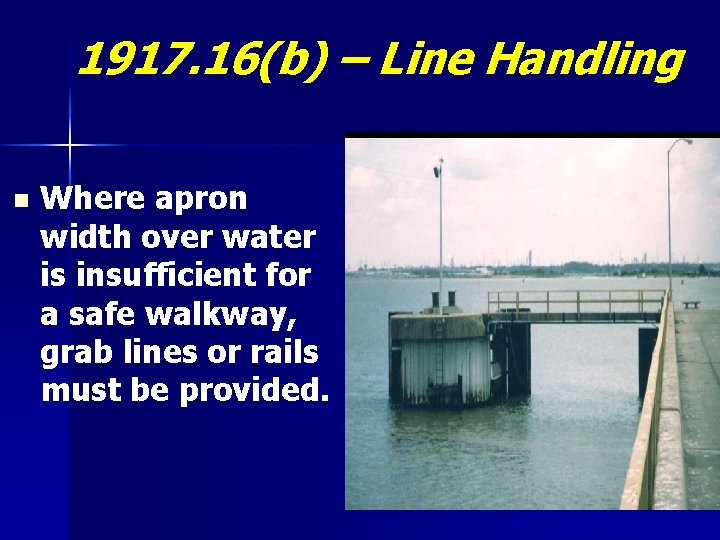
1917. 16(b) – Line Handling n Where apron width over water is insufficient for a safe walkway, grab lines or rails must be provided.
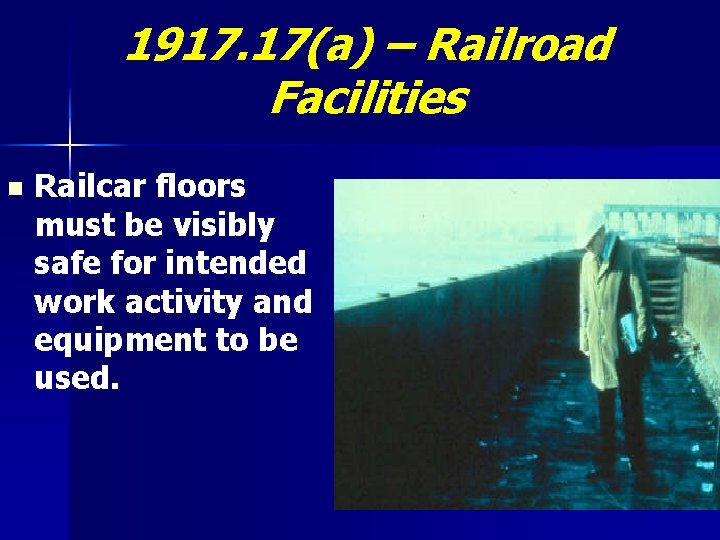
1917. 17(a) – Railroad Facilities n Railcar floors must be visibly safe for intended work activity and equipment to be used.
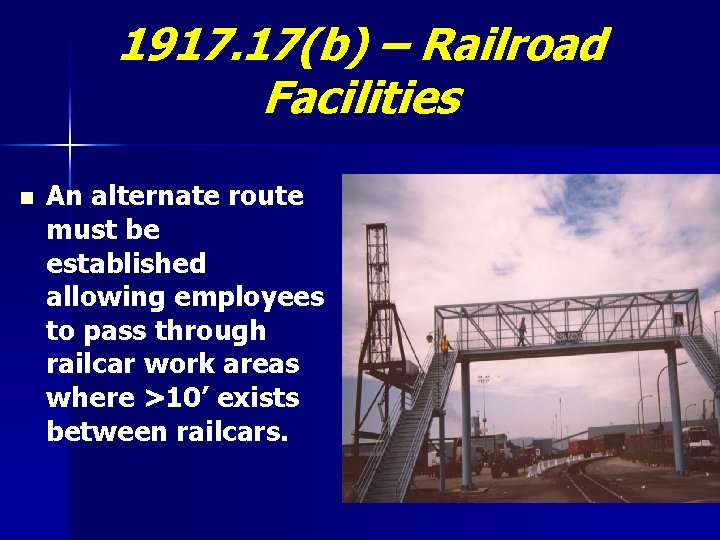
1917. 17(b) – Railroad Facilities n An alternate route must be established allowing employees to pass through railcar work areas where >10’ exists between railcars.
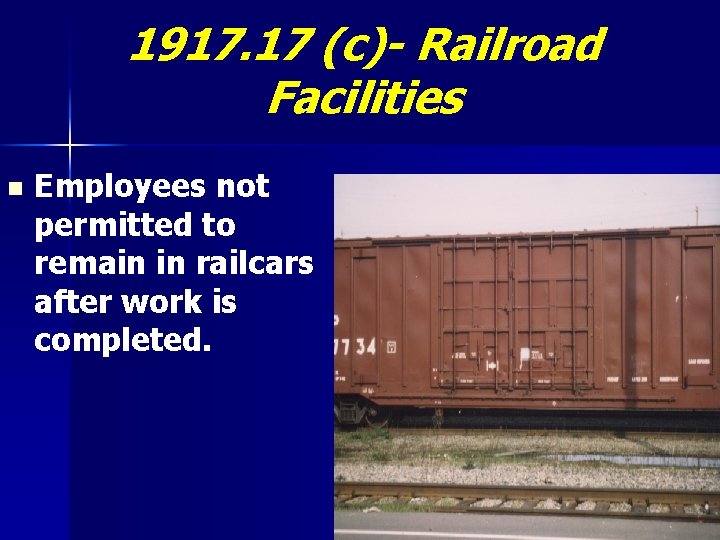
1917. 17 (c)- Railroad Facilities n Employees not permitted to remain in railcars after work is completed.
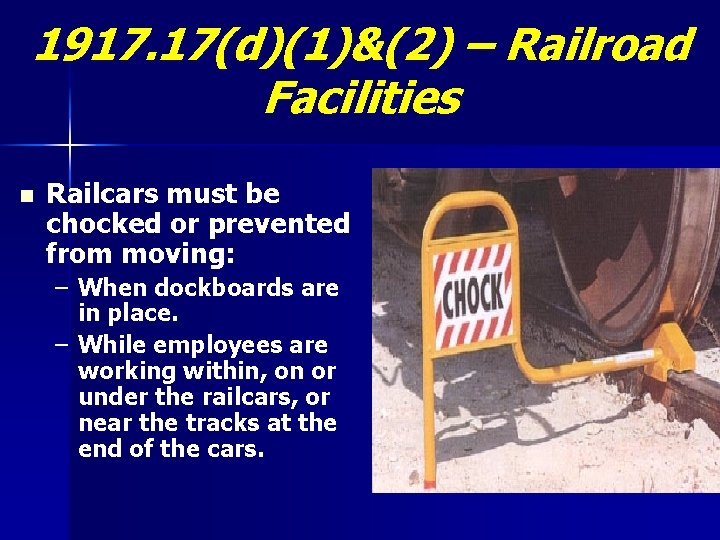
1917. 17(d)(1)&(2) – Railroad Facilities n Railcars must be chocked or prevented from moving: – When dockboards are in place. – While employees are working within, on or under the railcars, or near the tracks at the end of the cars.
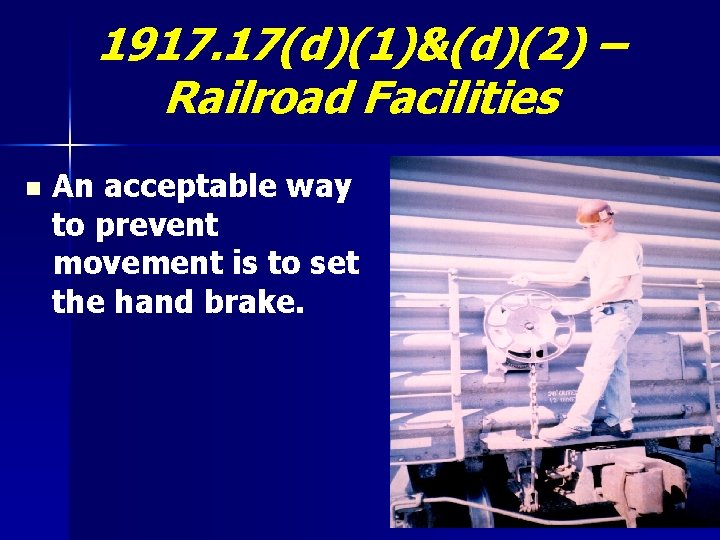
1917. 17(d)(1)&(d)(2) – Railroad Facilities n An acceptable way to prevent movement is to set the hand brake.
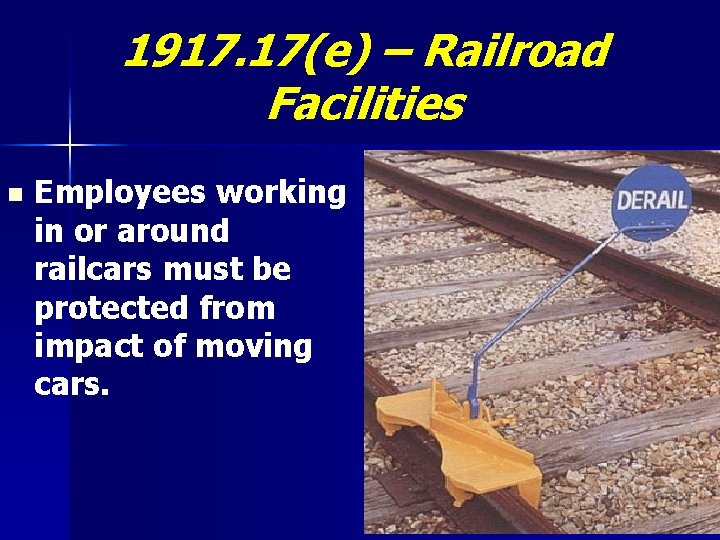
1917. 17(e) – Railroad Facilities n Employees working in or around railcars must be protected from impact of moving cars.
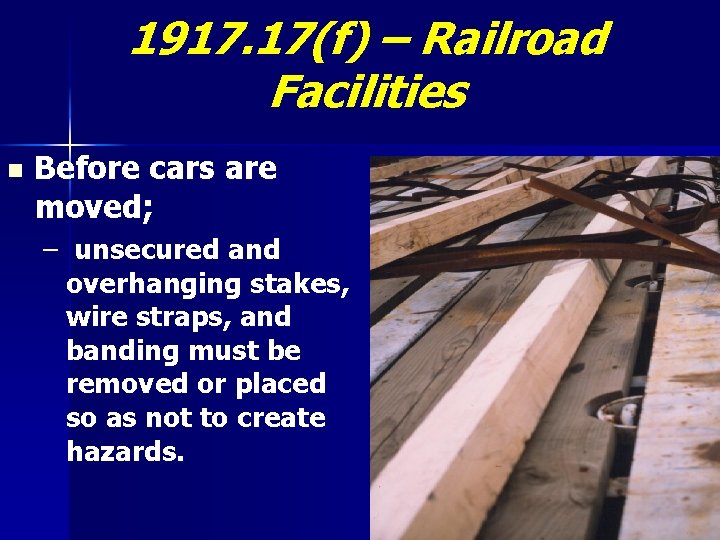
1917. 17(f) – Railroad Facilities n Before cars are moved; – unsecured and overhanging stakes, wire straps, and banding must be removed or placed so as not to create hazards.
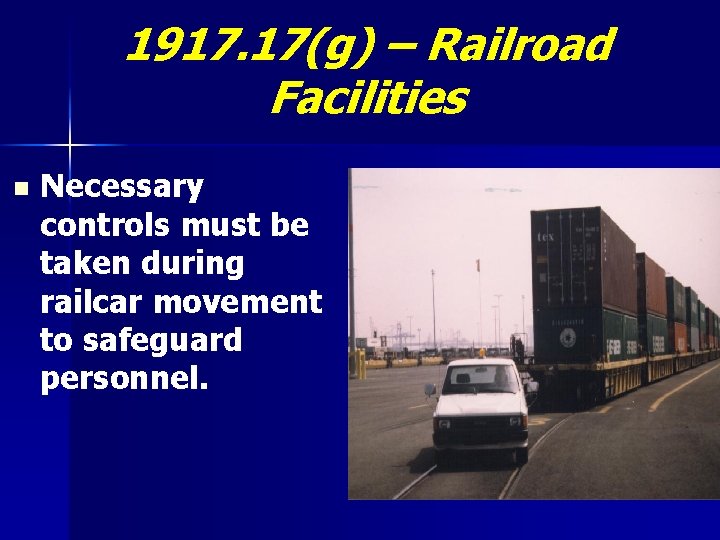
1917. 17(g) – Railroad Facilities n Necessary controls must be taken during railcar movement to safeguard personnel.

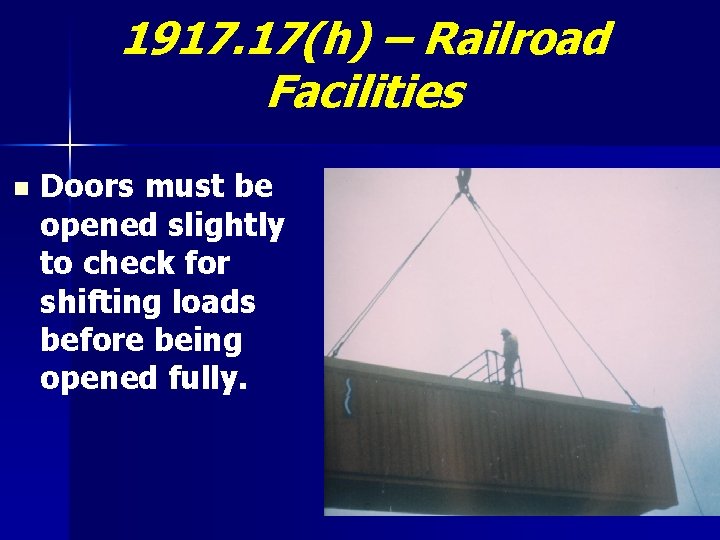
1917. 17(h) – Railroad Facilities n Doors must be opened slightly to check for shifting loads before being opened fully.
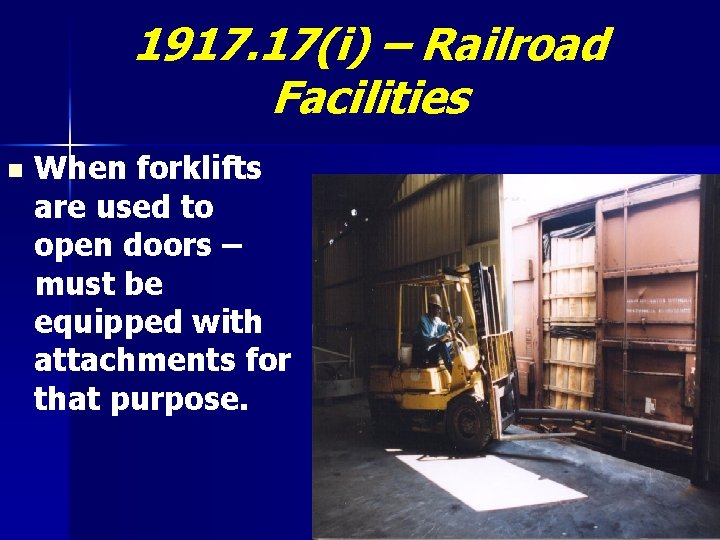
1917. 17(i) – Railroad Facilities n When forklifts are used to open doors – must be equipped with attachments for that purpose.
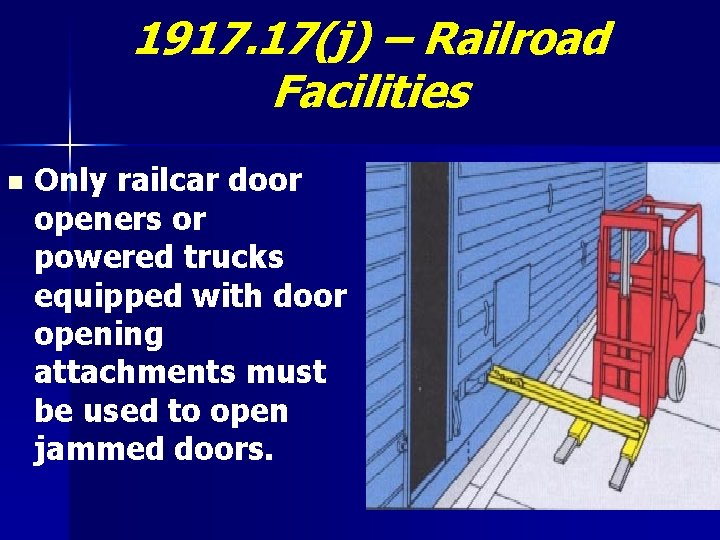
1917. 17(j) – Railroad Facilities n Only railcar door openers or powered trucks equipped with door opening attachments must be used to open jammed doors.
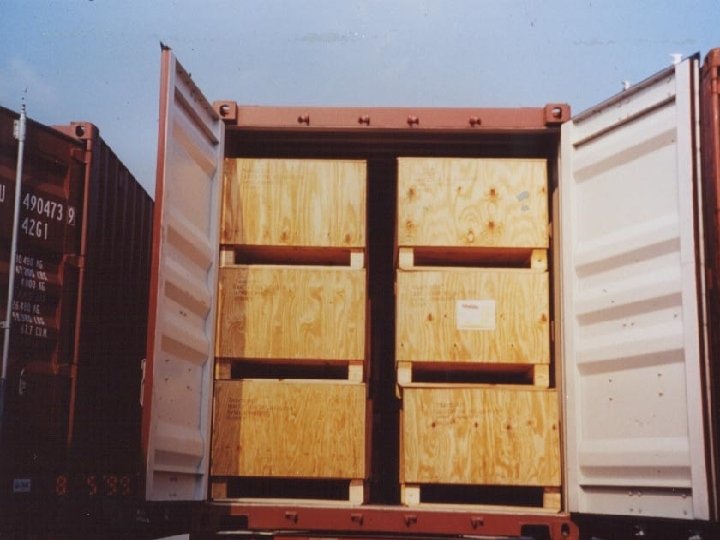
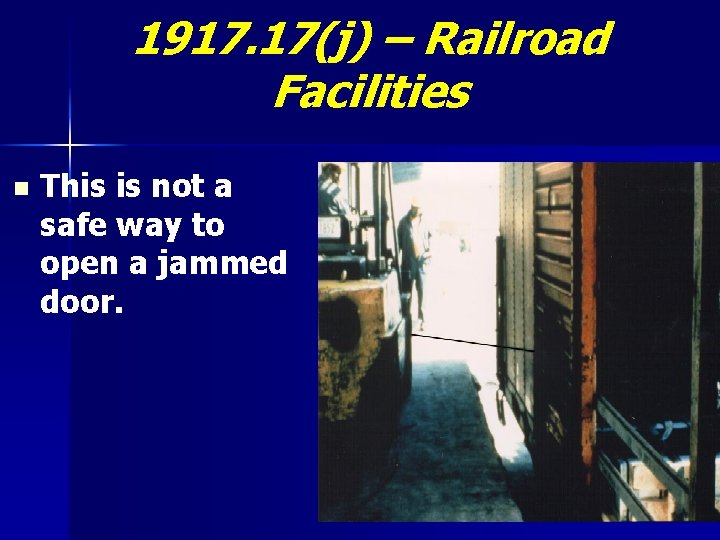
1917. 17(j) – Railroad Facilities n This is not a safe way to open a jammed door.
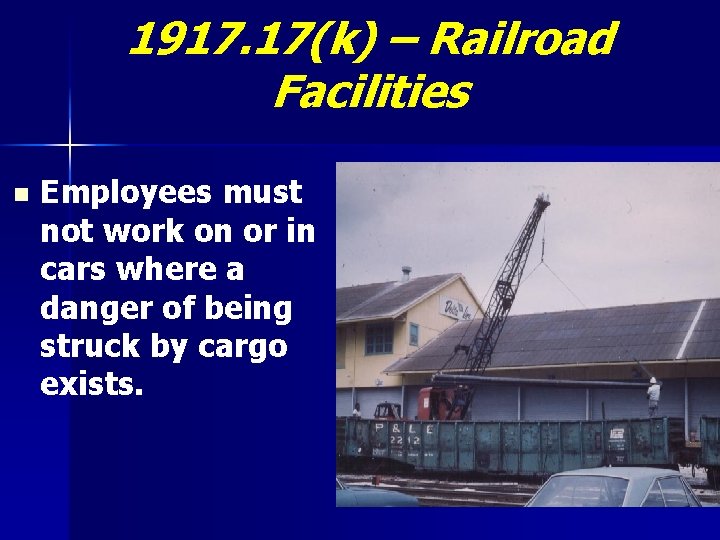
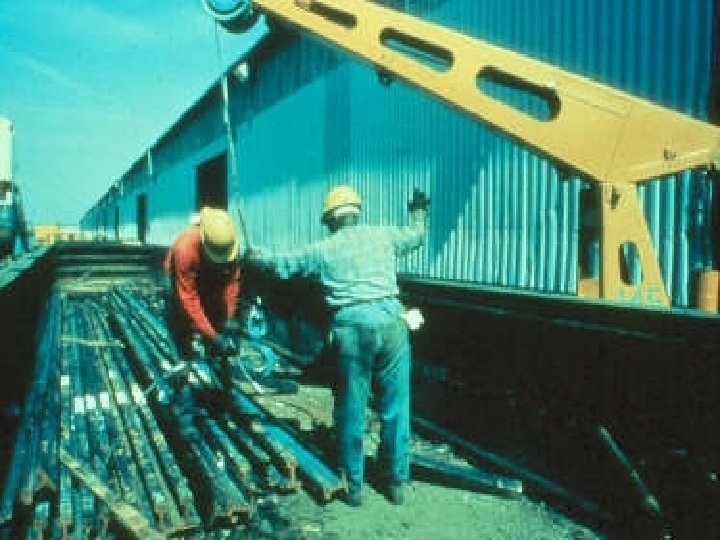
1917. 17(k) – Railroad Facilities n Employees must not work on or in cars where a danger of being struck by cargo exists.
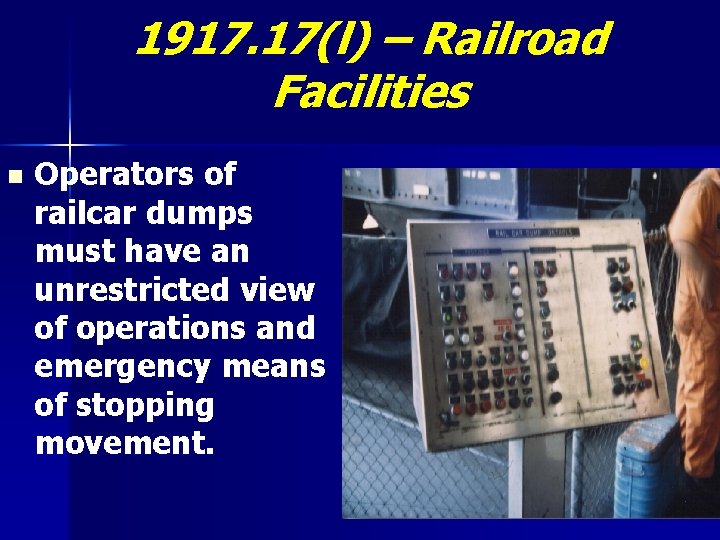
1917. 17(l) – Railroad Facilities n Operators of railcar dumps must have an unrestricted view of operations and emergency means of stopping movement.
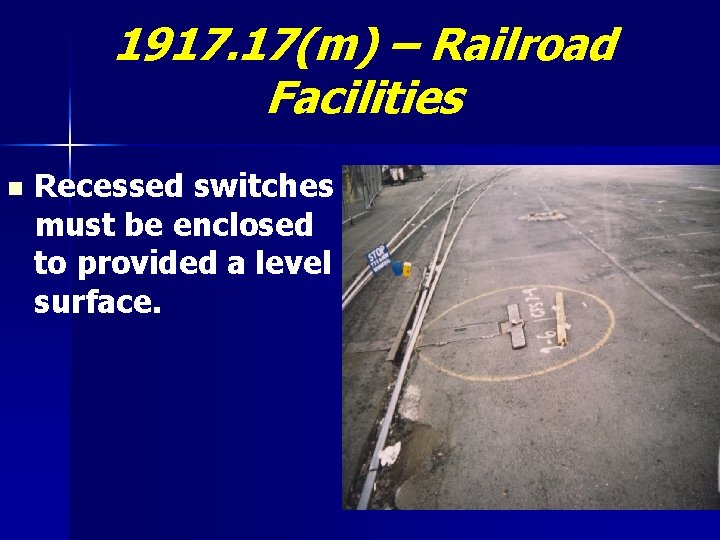
1917. 17(m) – Railroad Facilities n Recessed switches must be enclosed to provided a level surface.
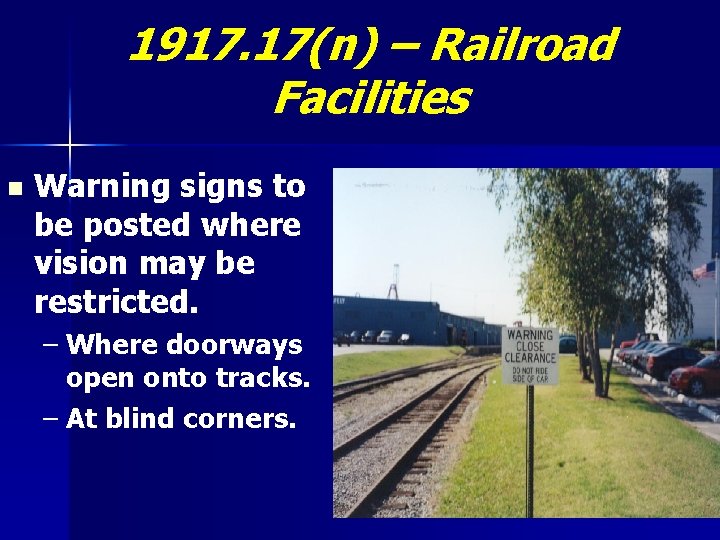
1917. 17(n) – Railroad Facilities n Warning signs to be posted where vision may be restricted. – Where doorways open onto tracks. – At blind corners.
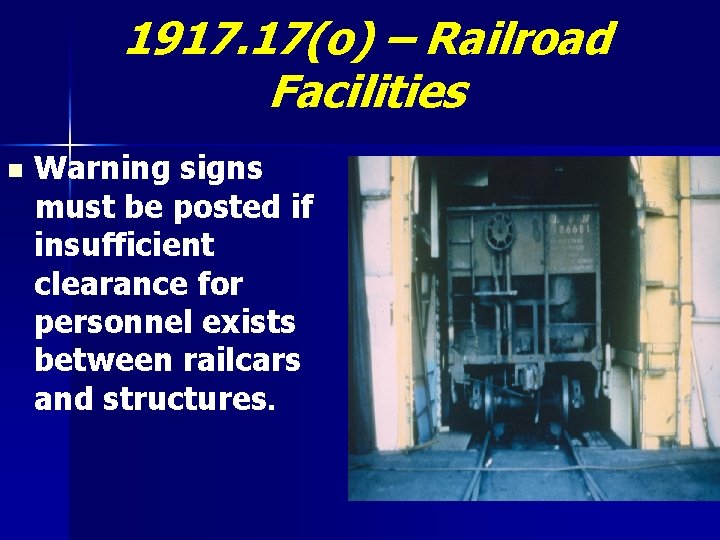
1917. 17(o) – Railroad Facilities n Warning signs must be posted if insufficient clearance for personnel exists between railcars and structures.
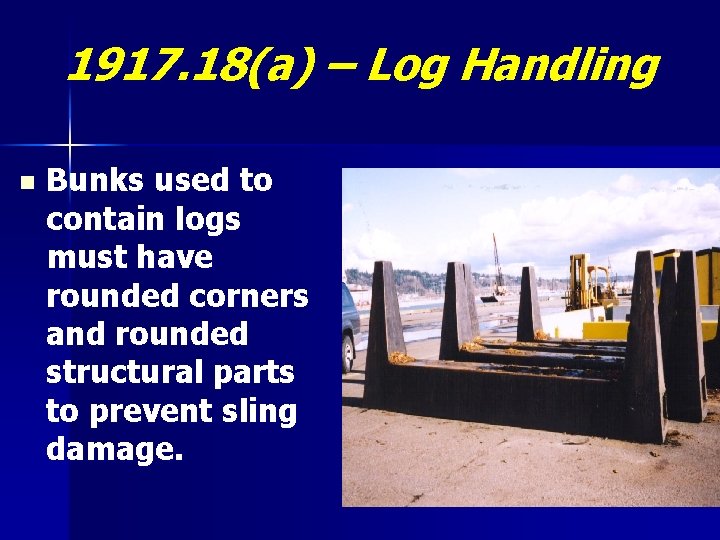
1917. 18(a) – Log Handling n Bunks used to contain logs must have rounded corners and rounded structural parts to prevent sling damage.
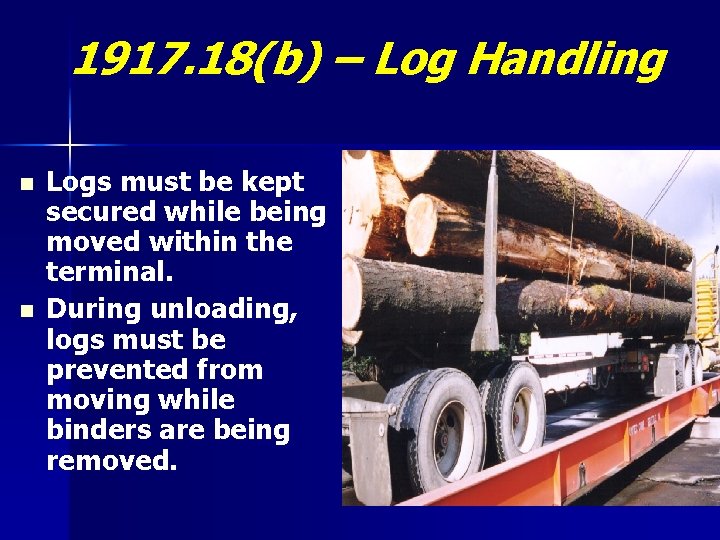
1917. 18(b) – Log Handling n n Logs must be kept secured while being moved within the terminal. During unloading, logs must be prevented from moving while binders are being removed.
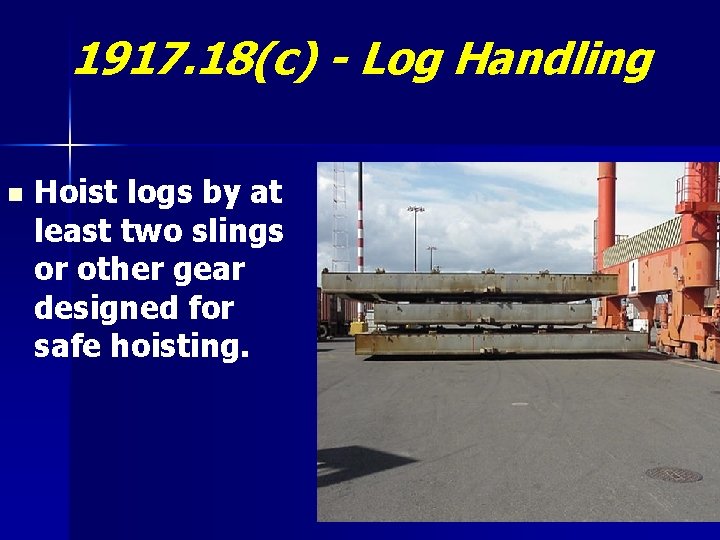
1917. 18(c) - Log Handling n Hoist logs by at least two slings or other gear designed for safe hoisting.
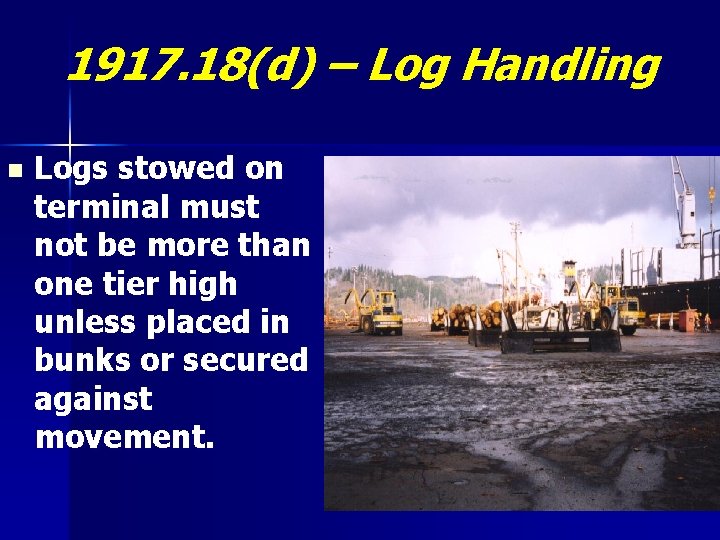
1917. 18(d) – Log Handling n Logs stowed on terminal must not be more than one tier high unless placed in bunks or secured against movement.
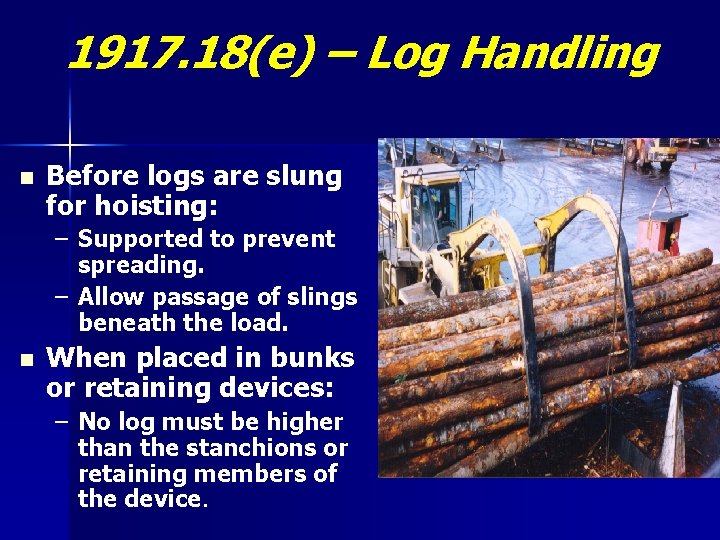
1917. 18(e) – Log Handling n Before logs are slung for hoisting: – Supported to prevent spreading. – Allow passage of slings beneath the load. n When placed in bunks or retaining devices: – No log must be higher than the stanchions or retaining members of the device.
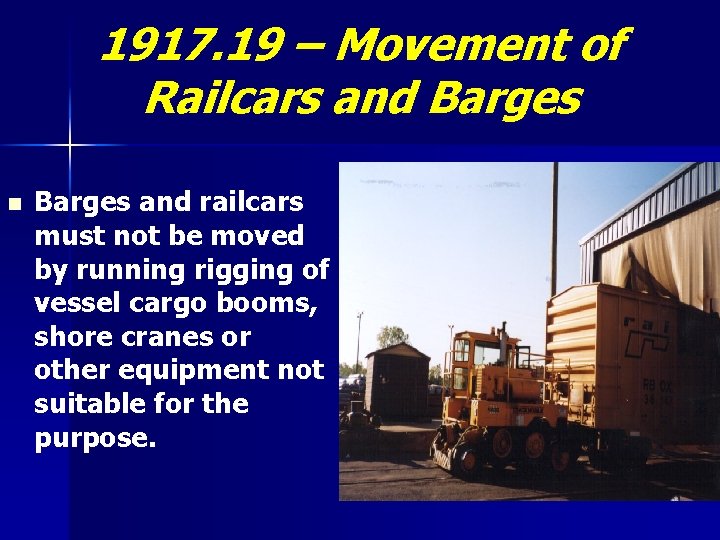
1917. 19 – Movement of Railcars and Barges n Barges and railcars must not be moved by running rigging of vessel cargo booms, shore cranes or other equipment not suitable for the purpose.
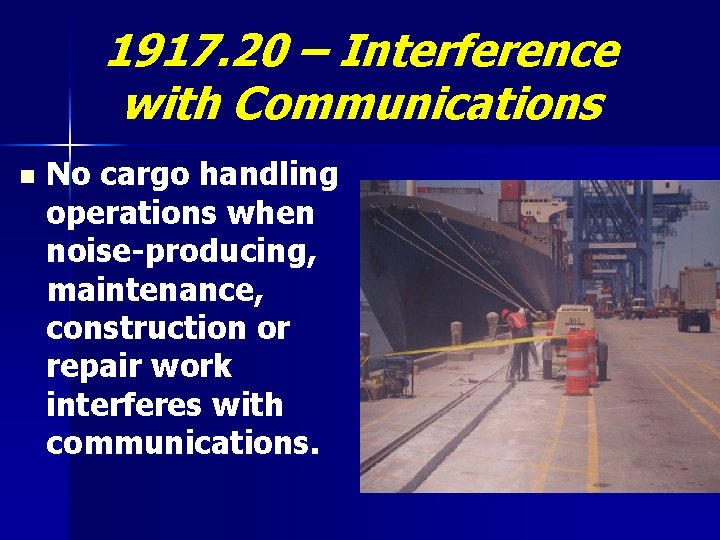
1917. 20 – Interference with Communications n No cargo handling operations when noise-producing, maintenance, construction or repair work interferes with communications.
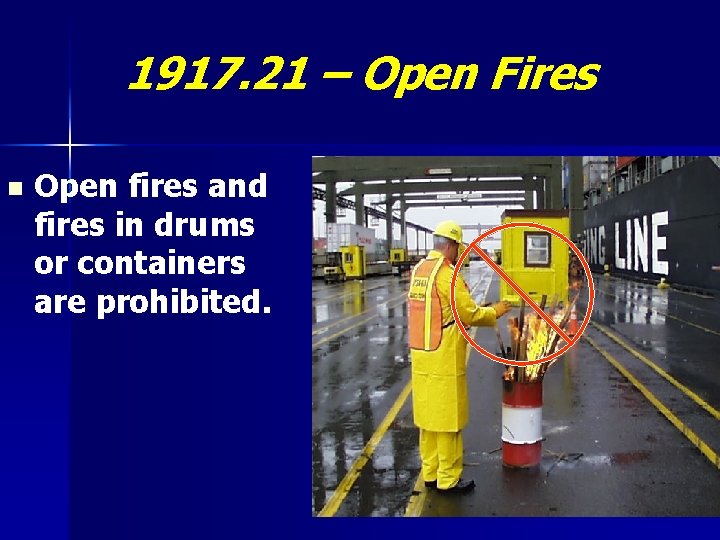
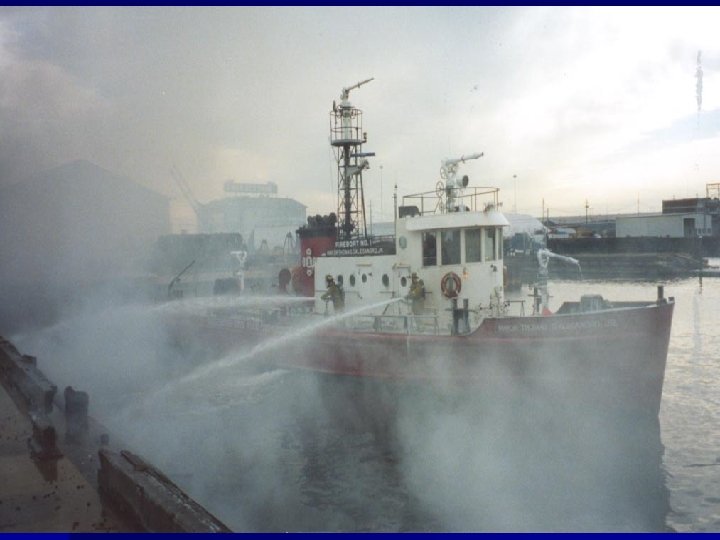
1917. 21 – Open Fires n Open fires and fires in drums or containers are prohibited.
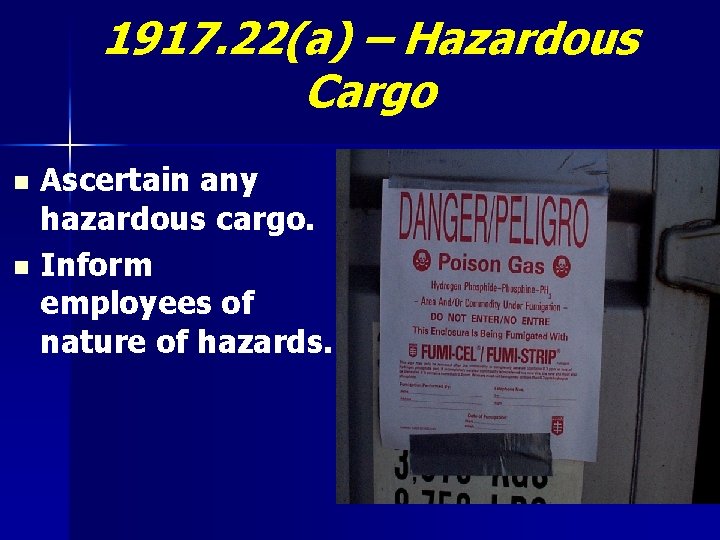
1917. 22(a) – Hazardous Cargo Ascertain any hazardous cargo. n Inform employees of nature of hazards. n
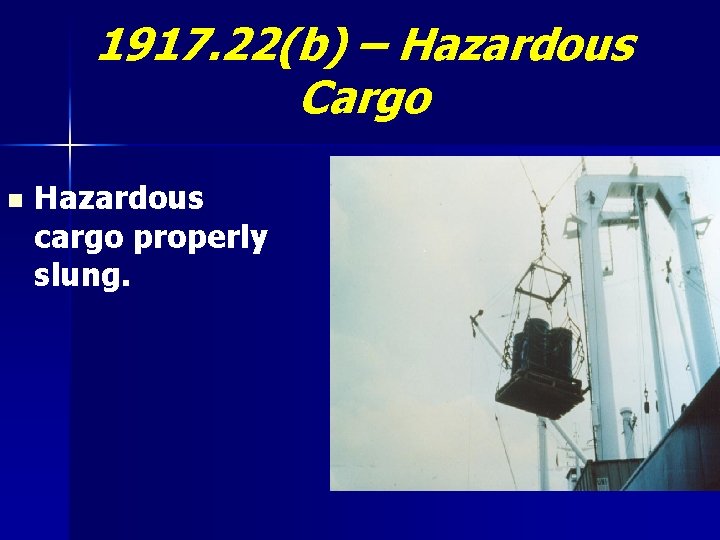
1917. 22(b) – Hazardous Cargo n Hazardous cargo properly slung.
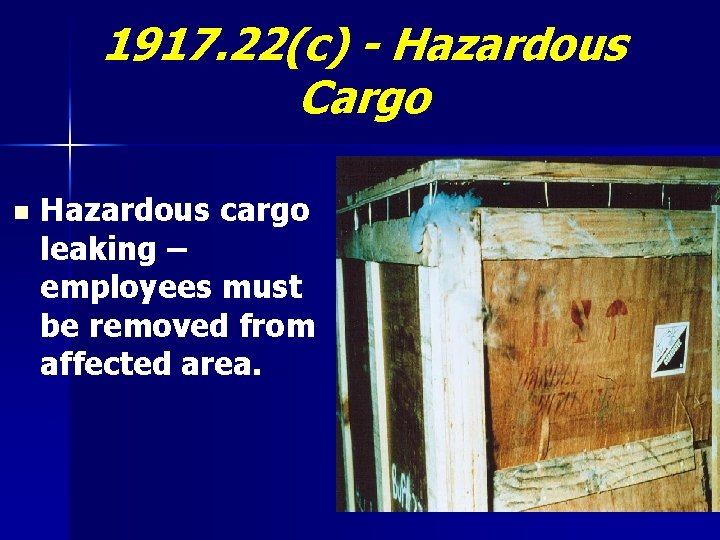
1917. 22(c) - Hazardous Cargo n Hazardous cargo leaking – employees must be removed from affected area.
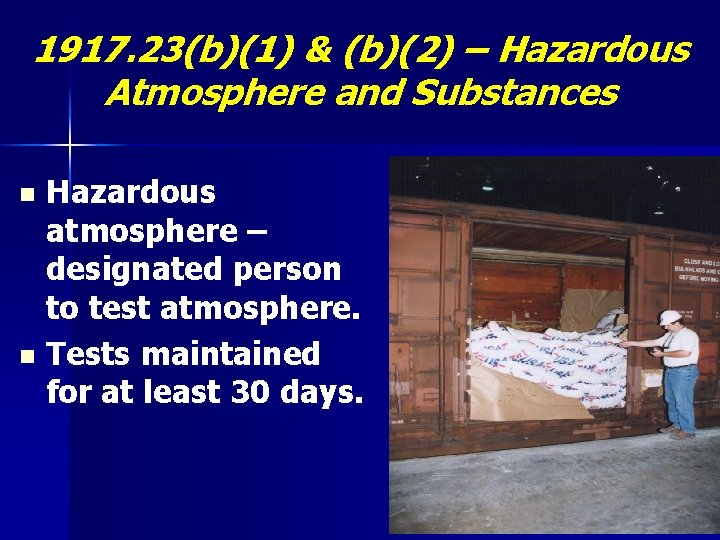
1917. 23(b)(1) & (b)(2) – Hazardous Atmosphere and Substances Hazardous atmosphere – designated person to test atmosphere. n Tests maintained for at least 30 days. n
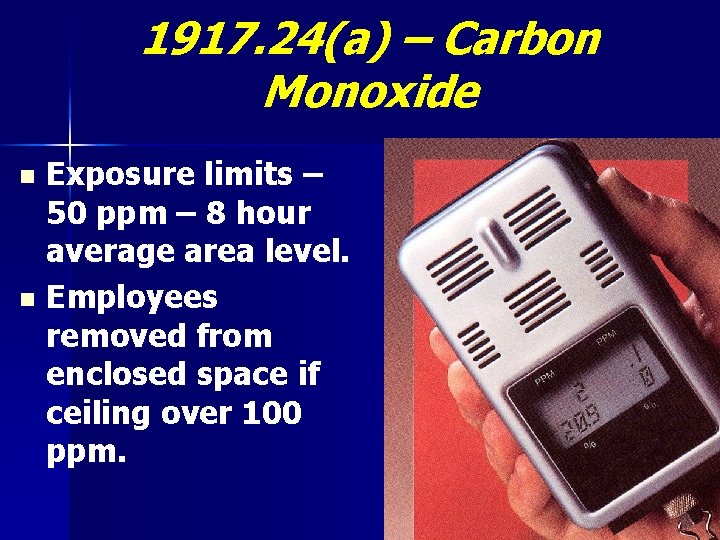
1917. 24(a) – Carbon Monoxide Exposure limits – 50 ppm – 8 hour average area level. n Employees removed from enclosed space if ceiling over 100 ppm. n
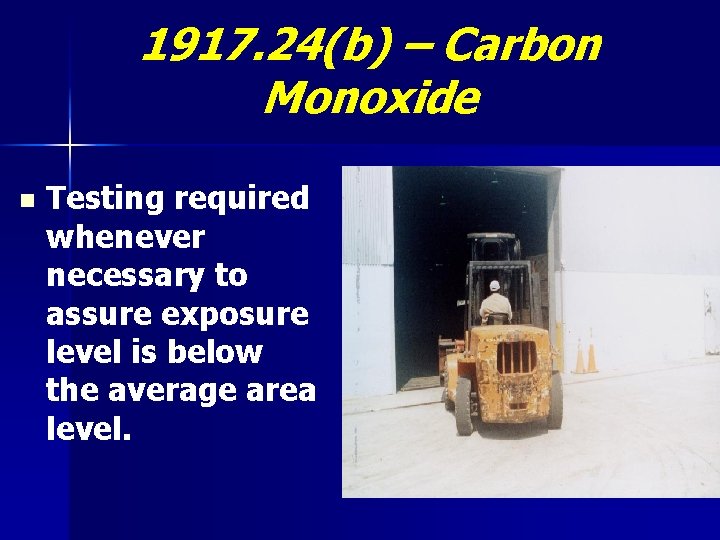
1917. 24(b) – Carbon Monoxide n Testing required whenever necessary to assure exposure level is below the average area level.
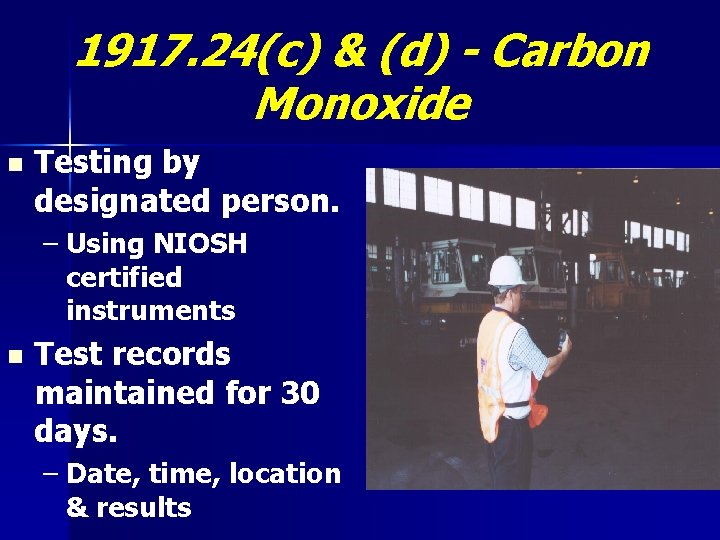
1917. 24(c) & (d) - Carbon Monoxide n Testing by designated person. – Using NIOSH certified instruments n Test records maintained for 30 days. – Date, time, location & results
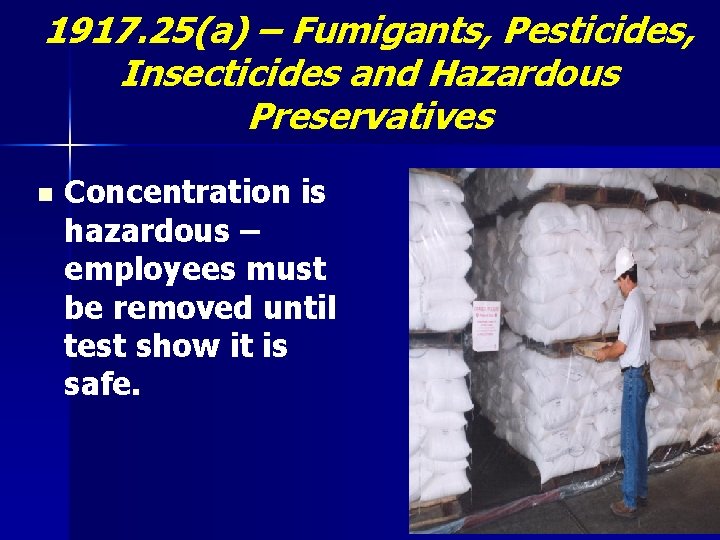
1917. 25(a) – Fumigants, Pesticides, Insecticides and Hazardous Preservatives n Concentration is hazardous – employees must be removed until test show it is safe.
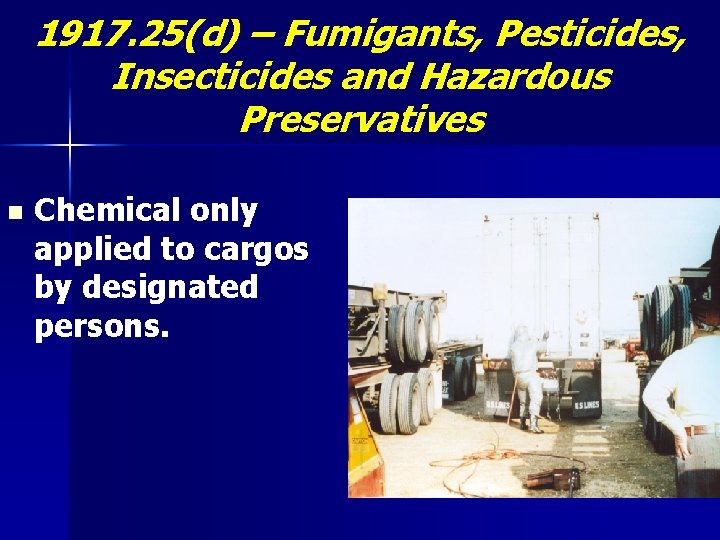
1917. 25(d) – Fumigants, Pesticides, Insecticides and Hazardous Preservatives n Chemical only applied to cargos by designated persons.
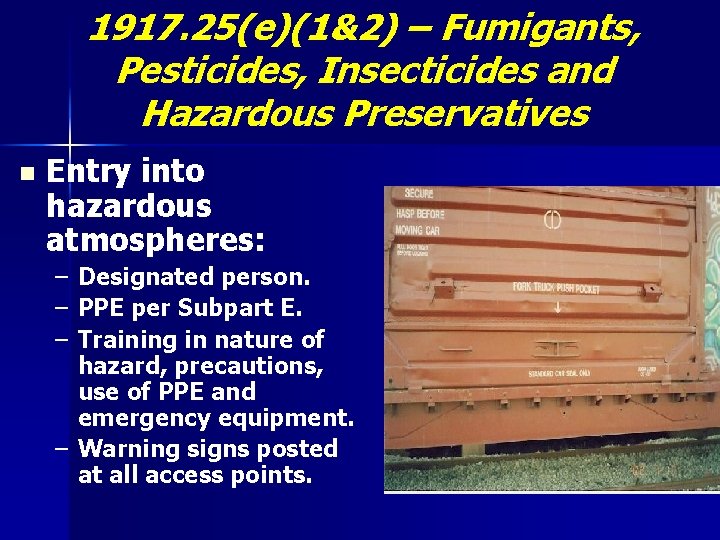
1917. 25(e)(1&2) – Fumigants, Pesticides, Insecticides and Hazardous Preservatives n Entry into hazardous atmospheres: – – – Designated person. PPE per Subpart E. Training in nature of hazard, precautions, use of PPE and emergency equipment. – Warning signs posted at all access points.
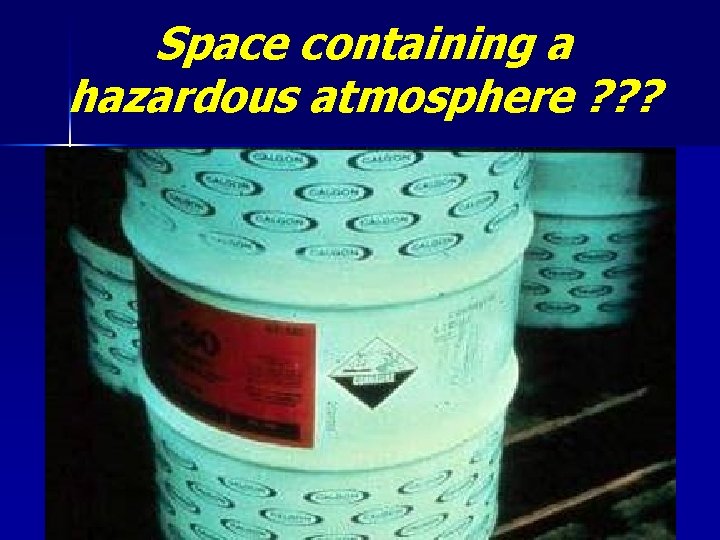
Space containing a hazardous atmosphere ? ? ?
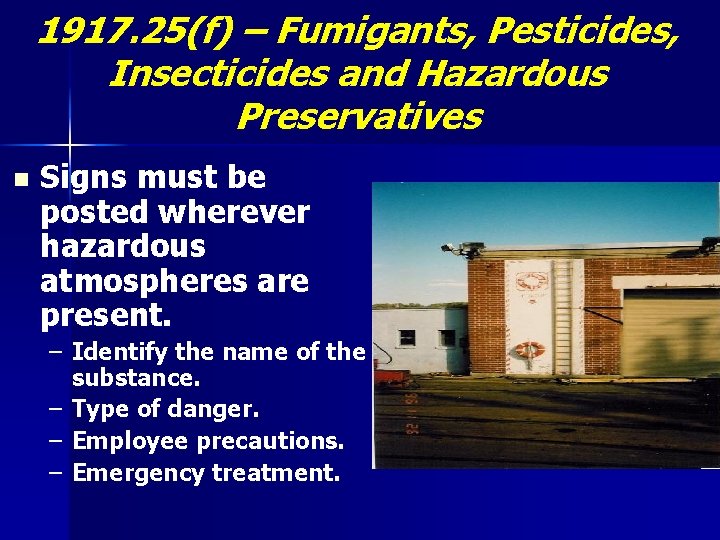
1917. 25(f) – Fumigants, Pesticides, Insecticides and Hazardous Preservatives n Signs must be posted wherever hazardous atmospheres are present. – Identify the name of the substance. – Type of danger. – Employee precautions. – Emergency treatment.
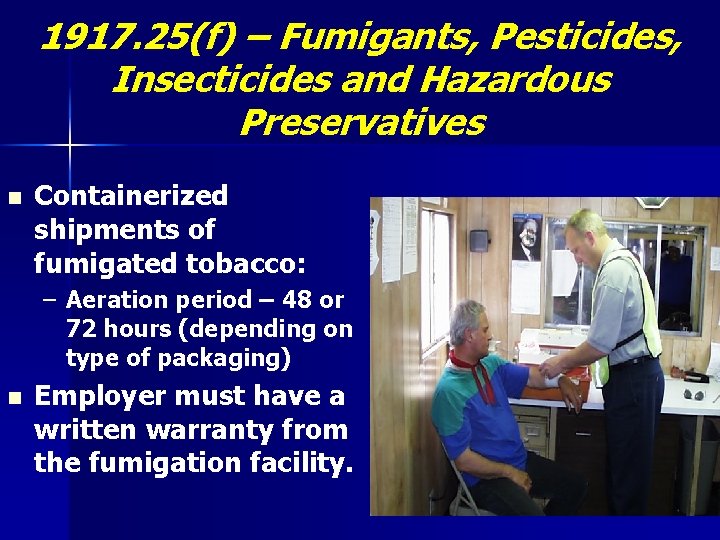
1917. 25(f) – Fumigants, Pesticides, Insecticides and Hazardous Preservatives n Containerized shipments of fumigated tobacco: – Aeration period – 48 or 72 hours (depending on type of packaging) n Employer must have a written warranty from the fumigation facility.
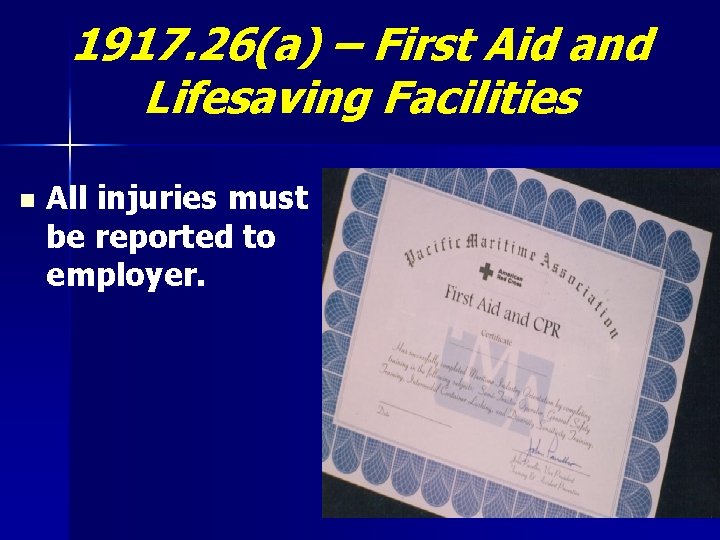
1917. 26(a) – First Aid and Lifesaving Facilities n All injuries must be reported to employer.
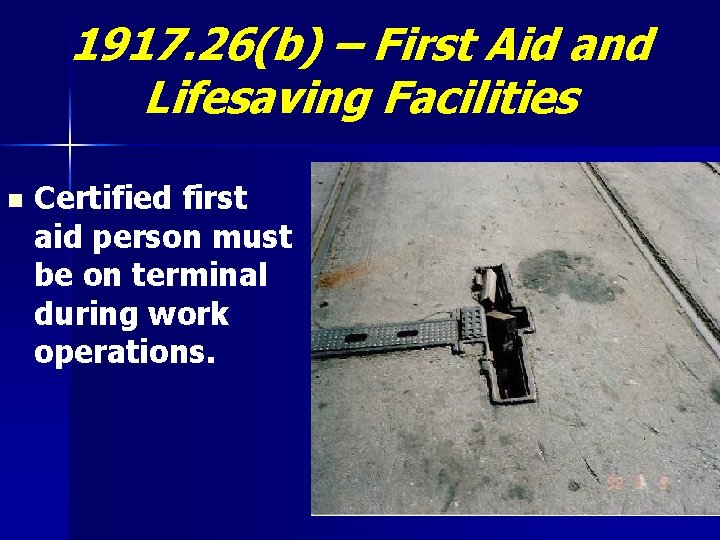
1917. 26(b) – First Aid and Lifesaving Facilities n Certified first aid person must be on terminal during work operations.
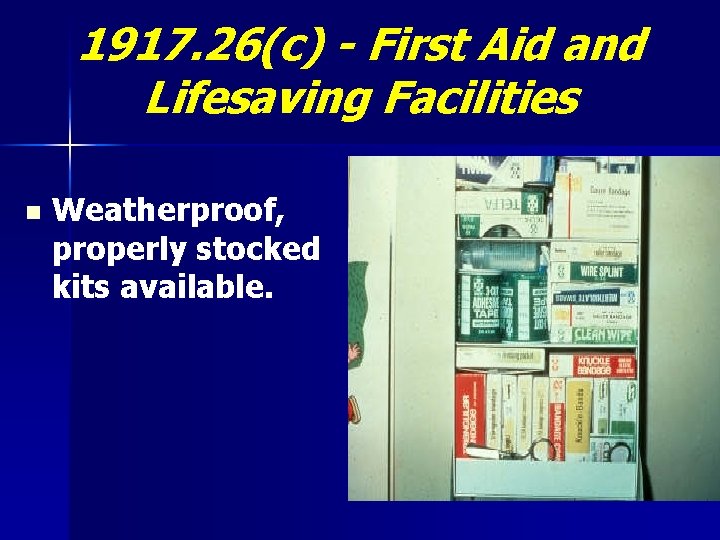
1917. 26(c) - First Aid and Lifesaving Facilities n Weatherproof, properly stocked kits available.
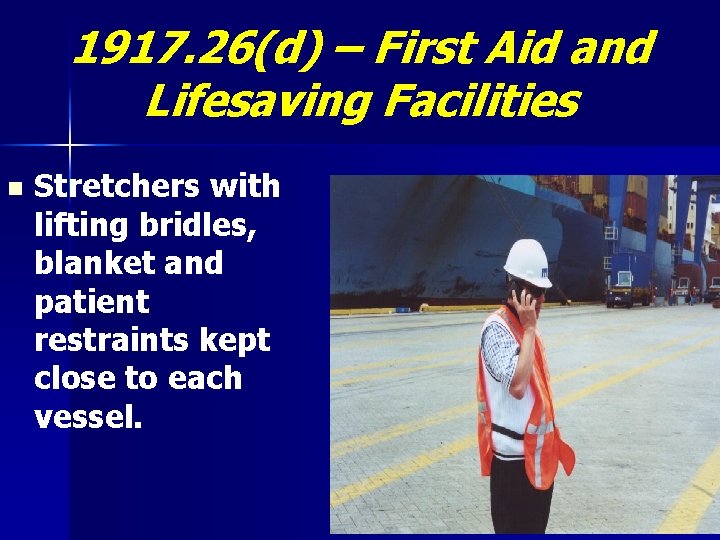
1917. 26(d) – First Aid and Lifesaving Facilities n Stretchers with lifting bridles, blanket and patient restraints kept close to each vessel.
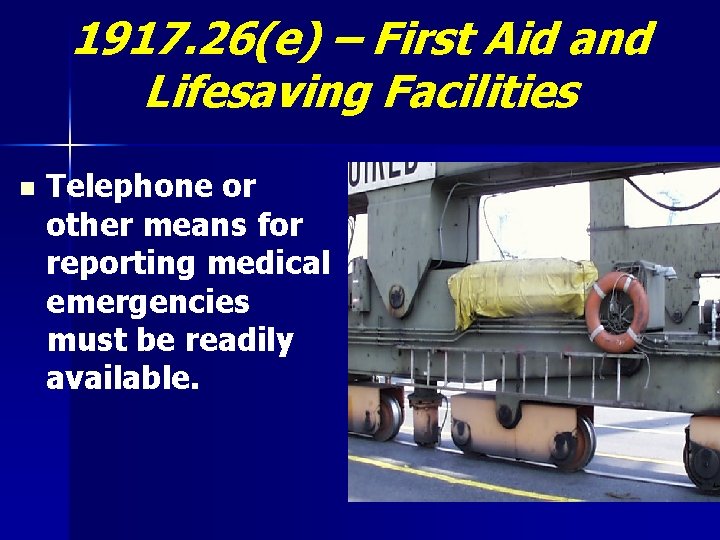
1917. 26(e) – First Aid and Lifesaving Facilities n Telephone or other means for reporting medical emergencies must be readily available.
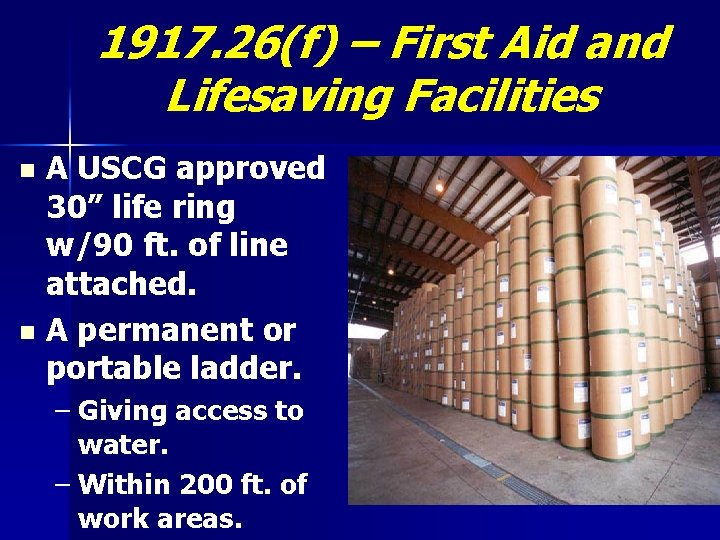
1917. 26(f) – First Aid and Lifesaving Facilities A USCG approved 30” life ring w/90 ft. of line attached. n A permanent or portable ladder. n – Giving access to water. – Within 200 ft. of work areas.
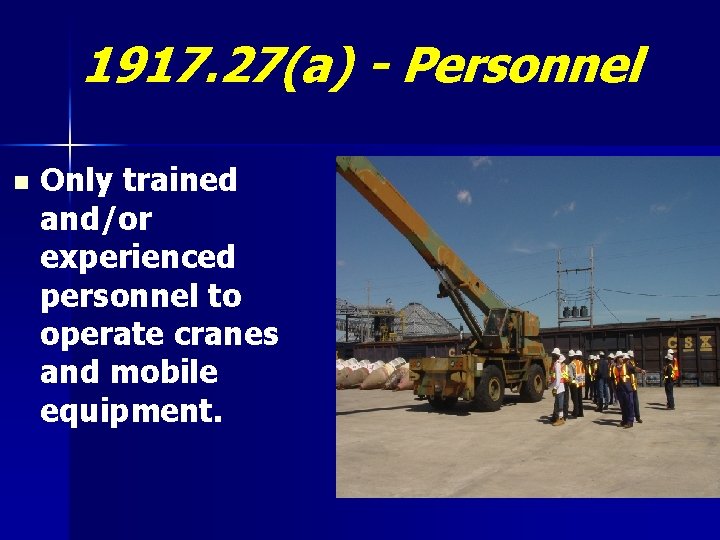
1917. 27(a) - Personnel n Only trained and/or experienced personnel to operate cranes and mobile equipment.
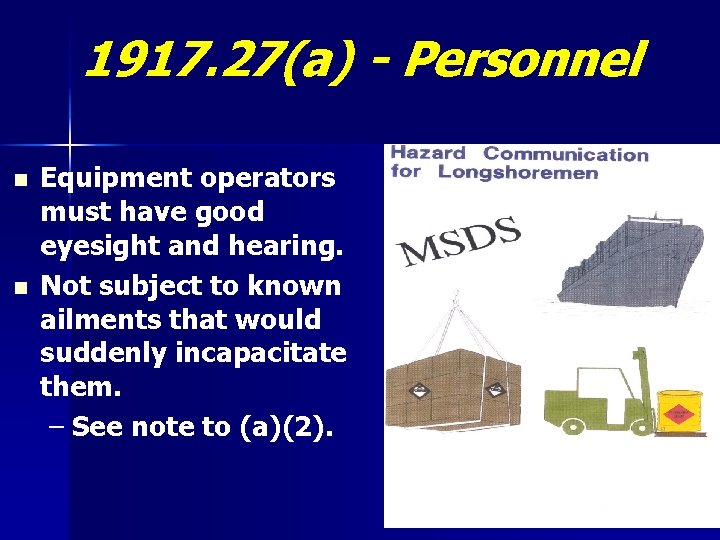
1917. 27(a) - Personnel n n Equipment operators must have good eyesight and hearing. Not subject to known ailments that would suddenly incapacitate them. – See note to (a)(2).
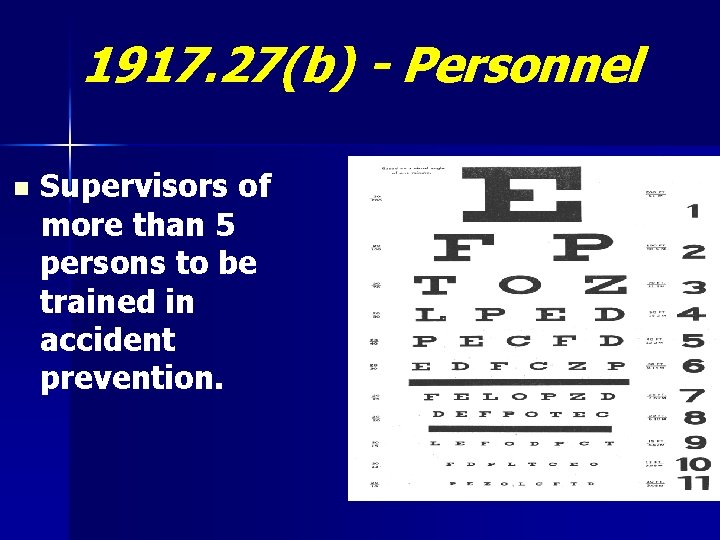
1917. 27(b) - Personnel n Supervisors of more than 5 persons to be trained in accident prevention.
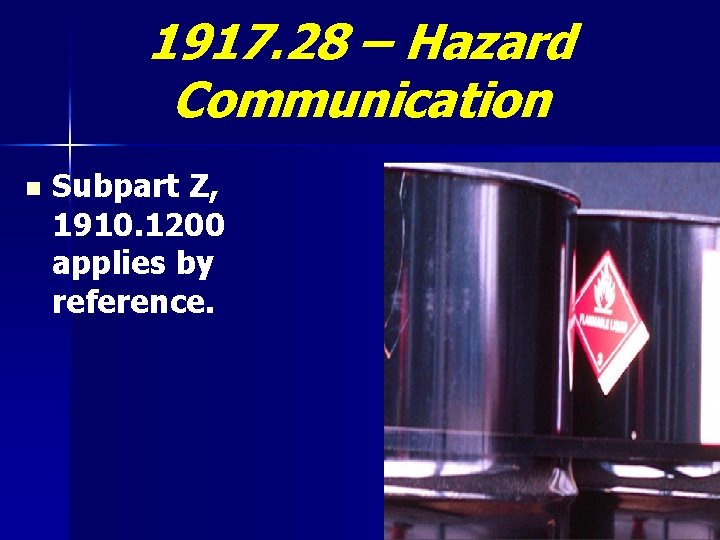
1917. 28 – Hazard Communication n Subpart Z, 1910. 1200 applies by reference.
1917. 29 – Retention of DOT Markings, Placards and Labels n Hazmat markings must be kept on packages and containers until cleaned of residues and purged of vapors.
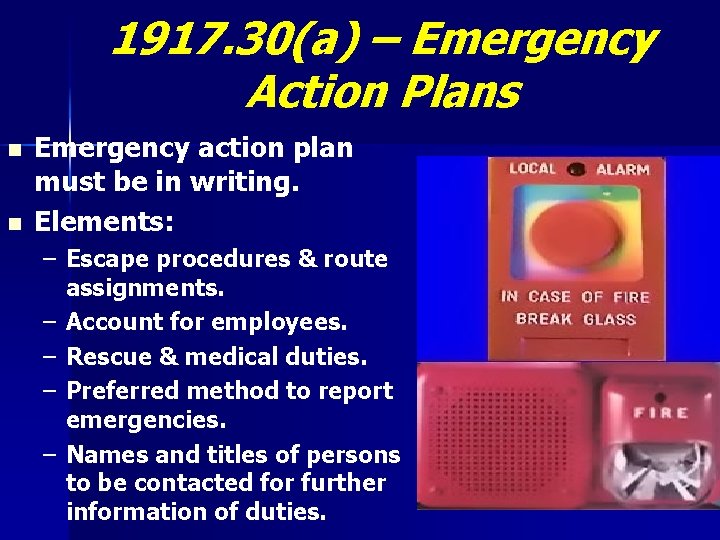
1917. 30(a) – Emergency Action Plans n n Emergency action plan must be in writing. Elements: – Escape procedures & route assignments. – Account for employees. – Rescue & medical duties. – Preferred method to report emergencies. – Names and titles of persons to be contacted for further information of duties.
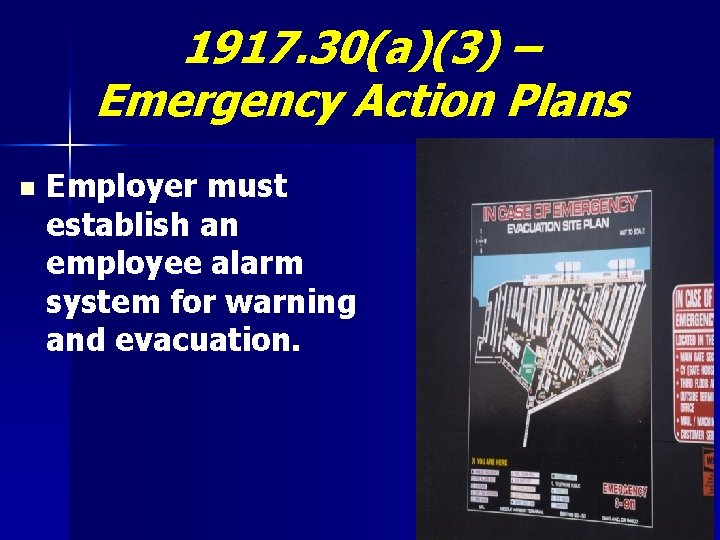
1917. 30(a)(3) – Emergency Action Plans n Employer must establish an employee alarm system for warning and evacuation.
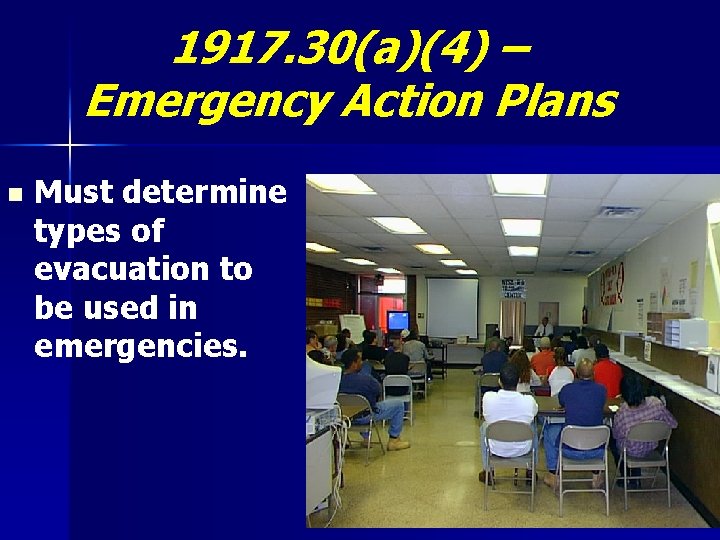
1917. 30(a)(4) – Emergency Action Plans n Must determine types of evacuation to be used in emergencies.
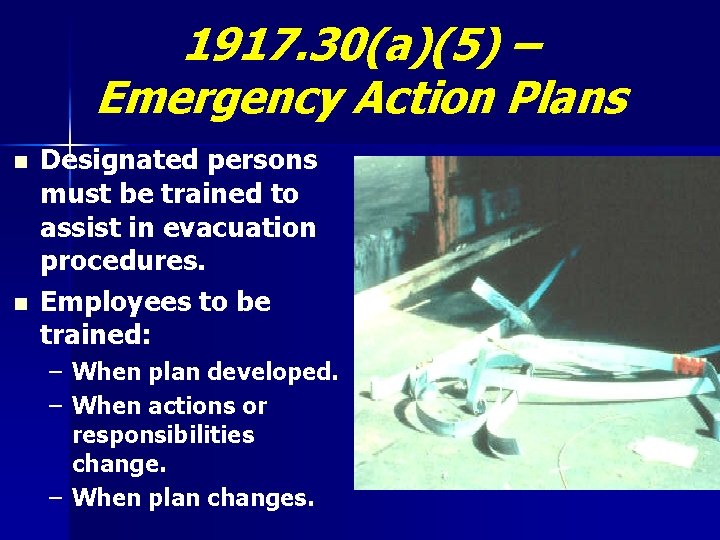
1917. 30(a)(5) – Emergency Action Plans n n Designated persons must be trained to assist in evacuation procedures. Employees to be trained: – When plan developed. – When actions or responsibilities change. – When plan changes.
- Slides: 98