
29 6 The Endocrine System and Hormones The

- Slides: 19
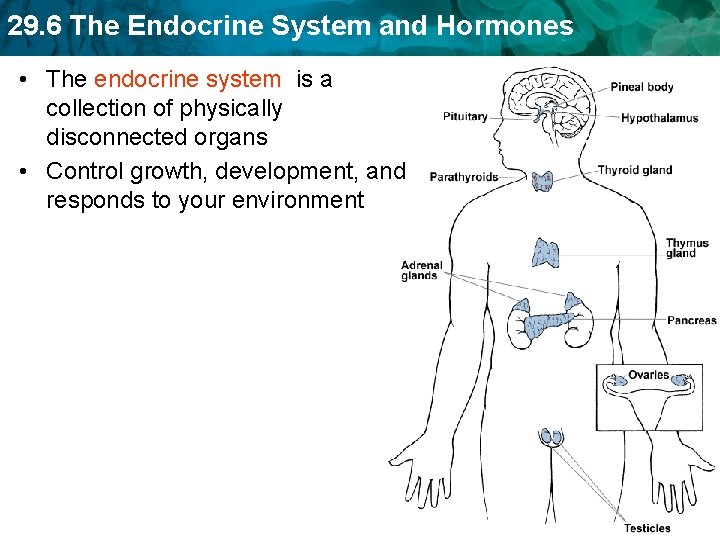
29. 6 The Endocrine System and Hormones • The endocrine system is a collection of physically disconnected organs • Control growth, development, and responds to your environment
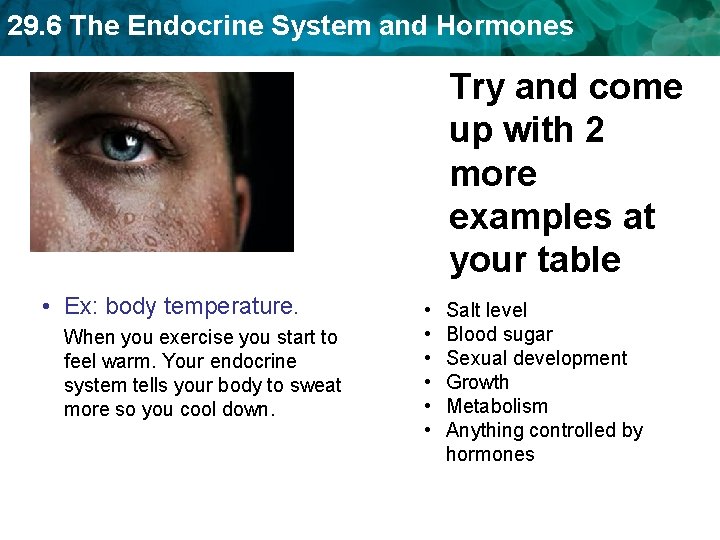
29. 6 The Endocrine System and Hormones Try and come up with 2 more examples at your table • Ex: body temperature. When you exercise you start to feel warm. Your endocrine system tells your body to sweat more so you cool down. • • • Salt level Blood sugar Sexual development Growth Metabolism Anything controlled by hormones
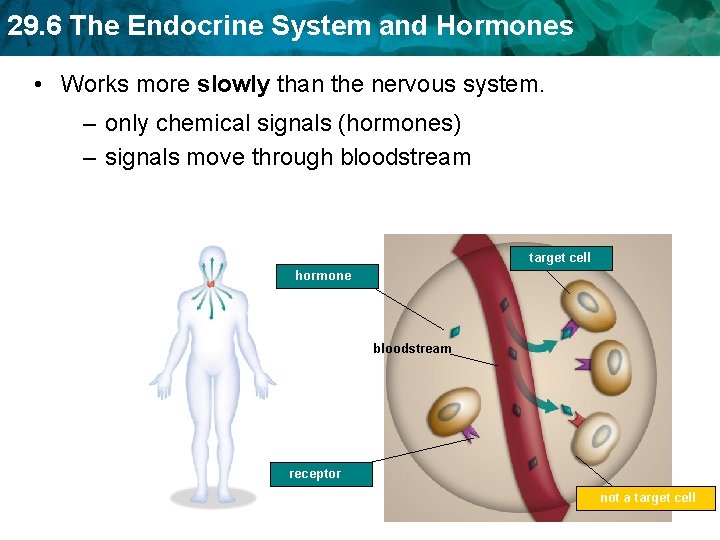
29. 6 The Endocrine System and Hormones • Works more slowly than the nervous system. – only chemical signals (hormones) – signals move through bloodstream target cell hormone bloodstream receptor not a target cell
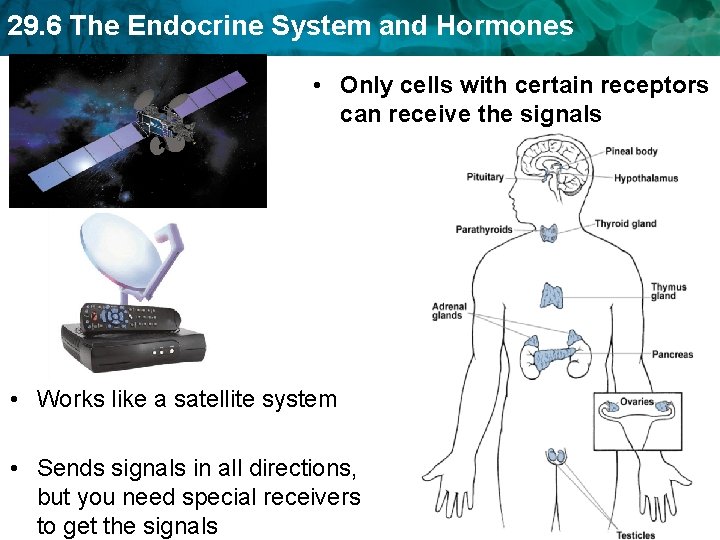
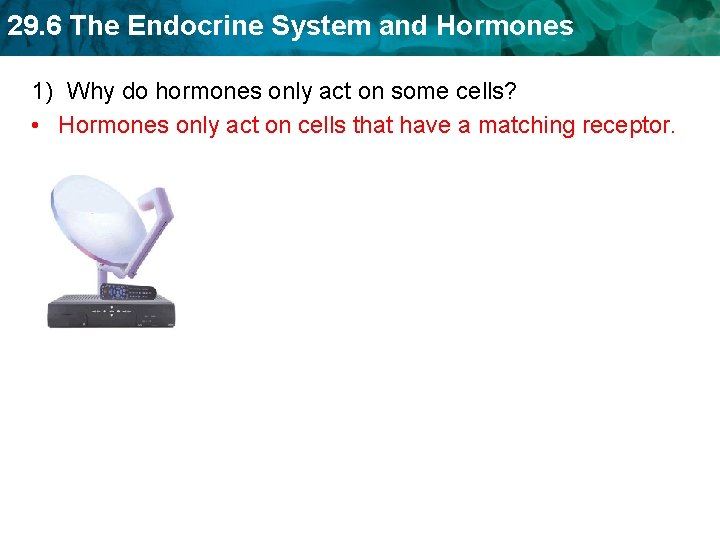
29. 6 The Endocrine System and Hormones • Only cells with certain receptors can receive the signals • Works like a satellite system • Sends signals in all directions, but you need special receivers to get the signals
29. 6 The Endocrine System and Hormones Endocrine System Video • Add at least 2 bubbles to your bubble map
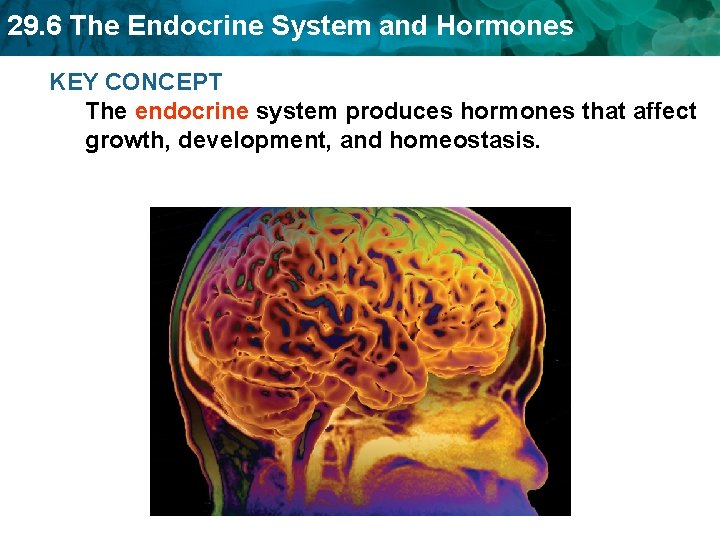
29. 6 The Endocrine System and Hormones KEY CONCEPT The endocrine system produces hormones that affect growth, development, and homeostasis.
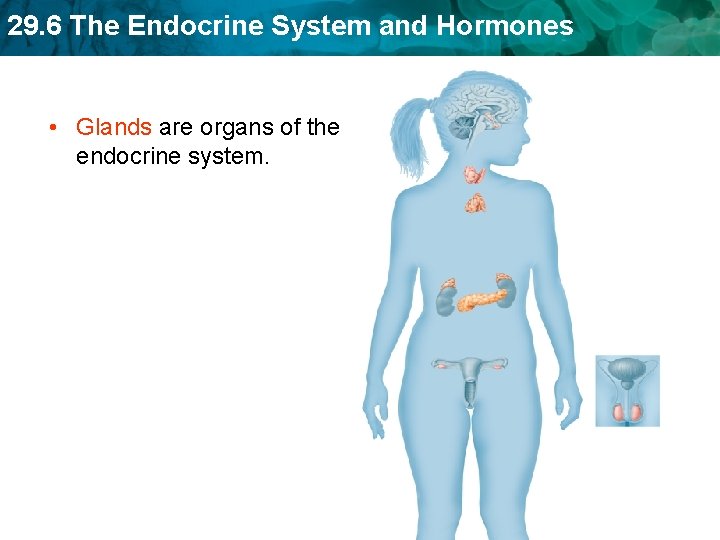
29. 6 The Endocrine System and Hormones • Glands are organs of the endocrine system.
29. 6 The Endocrine System and Hormones • Hormones are chemical signals or messengers that influence cell’s activities. – produced by glands – travel through the circulatory system (blood stream) – affects cells with matching receptors target cell hormone bloodstream receptor not a target cell
29. 6 The Endocrine System and Hormones 1) Why do hormones only act on some cells? • Hormones only act on cells that have a matching receptor.
29. 6 The Endocrine System and Hormones Sponge #8 1)Explain how glands and hormones are related. 2) Explain what reflexes are. Do they involve your brain? Give an example of a reflex.
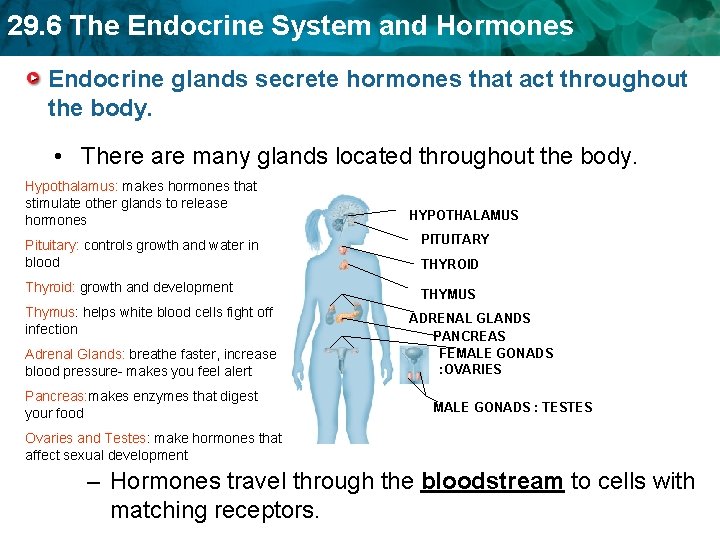
29. 6 The Endocrine System and Hormones Endocrine glands secrete hormones that act throughout the body. • There are many glands located throughout the body. Hypothalamus: makes hormones that stimulate other glands to release hormones Pituitary: controls growth and water in blood Thyroid: growth and development Thymus: helps white blood cells fight off infection Adrenal Glands: breathe faster, increase blood pressure- makes you feel alert Pancreas: makes enzymes that digest your food HYPOTHALAMUS PITUITARY THYROID THYMUS ADRENAL GLANDS PANCREAS FEMALE GONADS : OVARIES MALE GONADS : TESTES Ovaries and Testes: make hormones that affect sexual development – Hormones travel through the bloodstream to cells with matching receptors.
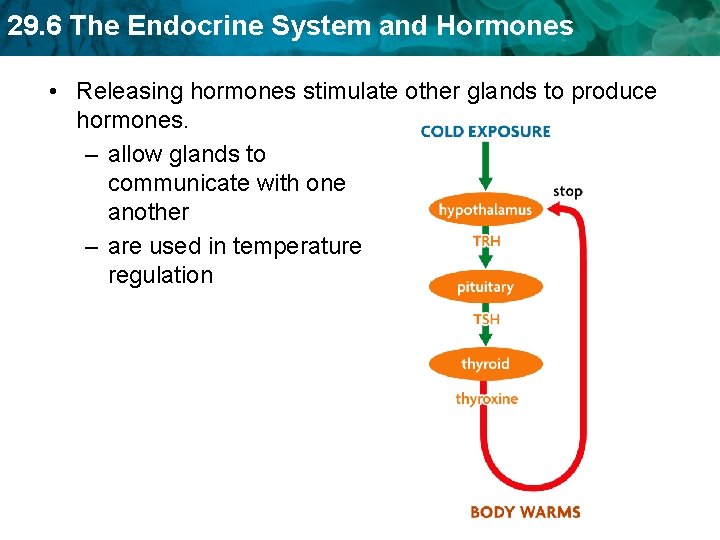
29. 6 The Endocrine System and Hormones • Releasing hormones stimulate other glands to produce hormones. – allow glands to communicate with one another – are used in temperature regulation
29. 6 The Endocrine System and Hormones 2)How does releasing hormones help glands to communicate with one another? • The glands are not connected. Releasing hormones stimulate other glands to produce and release their hormones.
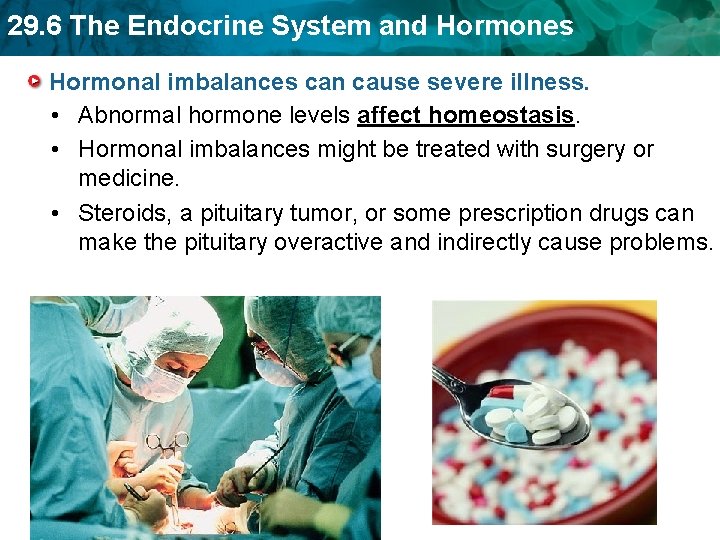
29. 6 The Endocrine System and Hormones Hormonal imbalances can cause severe illness. • Abnormal hormone levels affect homeostasis. • Hormonal imbalances might be treated with surgery or medicine. • Steroids, a pituitary tumor, or some prescription drugs can make the pituitary overactive and indirectly cause problems.
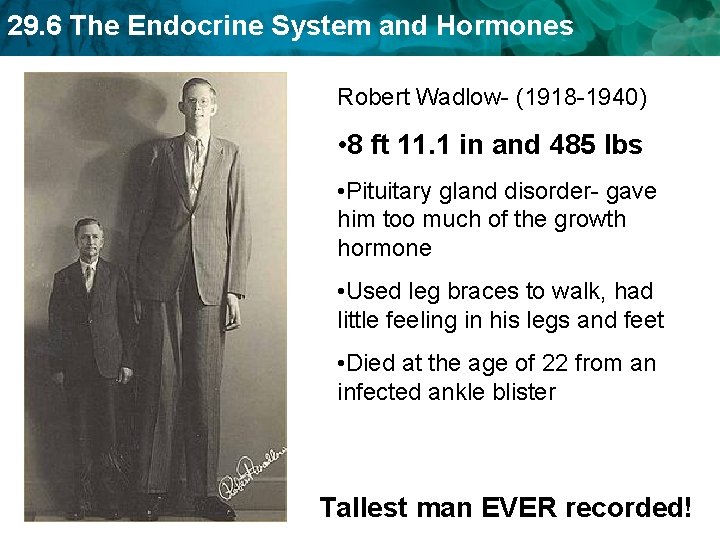
29. 6 The Endocrine System and Hormones Robert Wadlow- (1918 -1940) • 8 ft 11. 1 in and 485 lbs • Pituitary gland disorder- gave him too much of the growth hormone • Used leg braces to walk, had little feeling in his legs and feet • Died at the age of 22 from an infected ankle blister Tallest man EVER recorded!
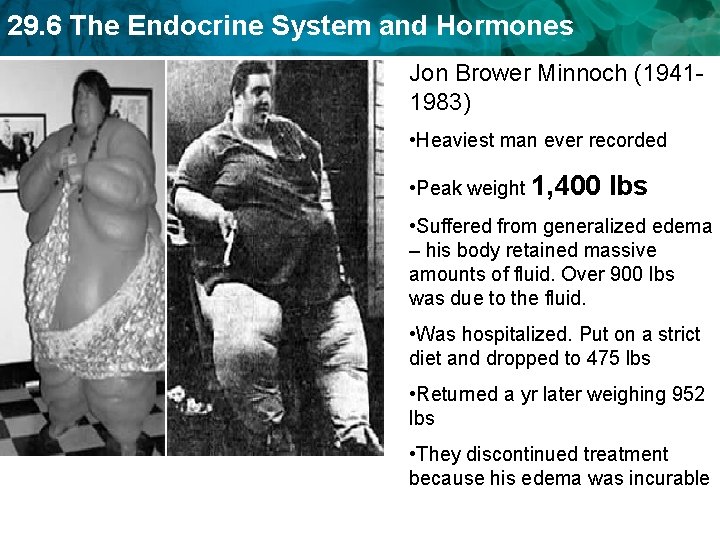
29. 6 The Endocrine System and Hormones Jon Brower Minnoch (19411983) • Heaviest man ever recorded • Peak weight 1, 400 lbs • Suffered from generalized edema – his body retained massive amounts of fluid. Over 900 lbs was due to the fluid. • Was hospitalized. Put on a strict diet and dropped to 475 lbs • Returned a yr later weighing 952 lbs • They discontinued treatment because his edema was incurable
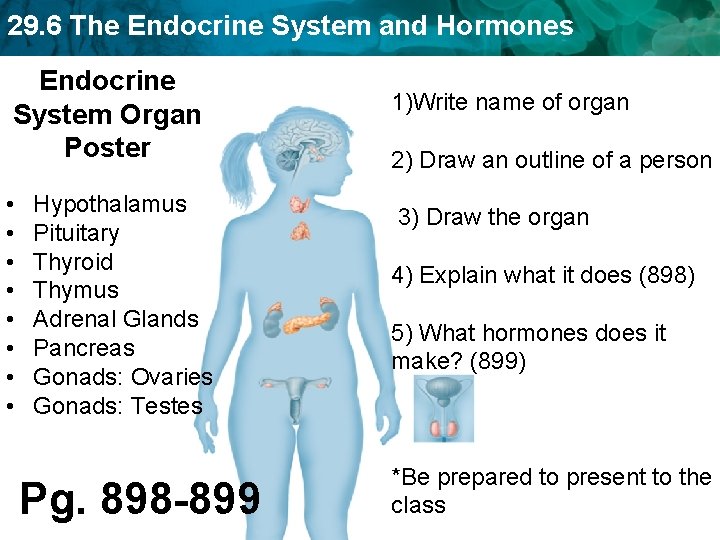
29. 6 The Endocrine System and Hormones Endocrine System Organ Poster • • Hypothalamus Pituitary Thyroid Thymus Adrenal Glands Pancreas Gonads: Ovaries Gonads: Testes Pg. 898 -899 1)Write name of organ 2) Draw an outline of a person 3) Draw the organ 4) Explain what it does (898) 5) What hormones does it make? (899) *Be prepared to present to the class
29. 6 The Endocrine System and Hormones Homework • Create a double-bubble map comparing and contrasting the nervous system and the endocrine system. • Must have at least two pictures per system
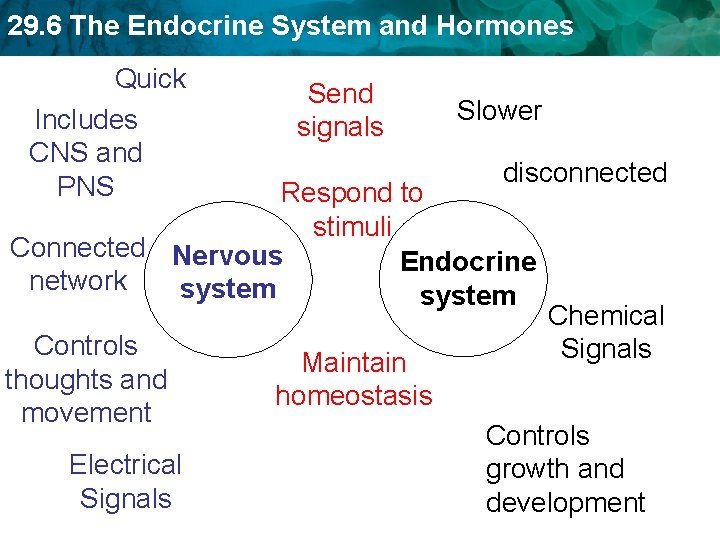
29. 6 The Endocrine System and Hormones Quick Includes CNS and PNS Send signals Slower disconnected Respond to stimuli Connected Nervous Endocrine network system Controls thoughts and movement Electrical Signals Maintain homeostasis Chemical Signals Controls growth and development