
29 5 Brain Function and Chemistry KEY CONCEPT
29. 5 Brain Function and Chemistry KEY CONCEPT Scientists study the functions and chemistry of the brain.
29. 5 Brain Function and Chemistry New techniques improve our understanding of the brain. • Today, scientists study the brain without surgery.
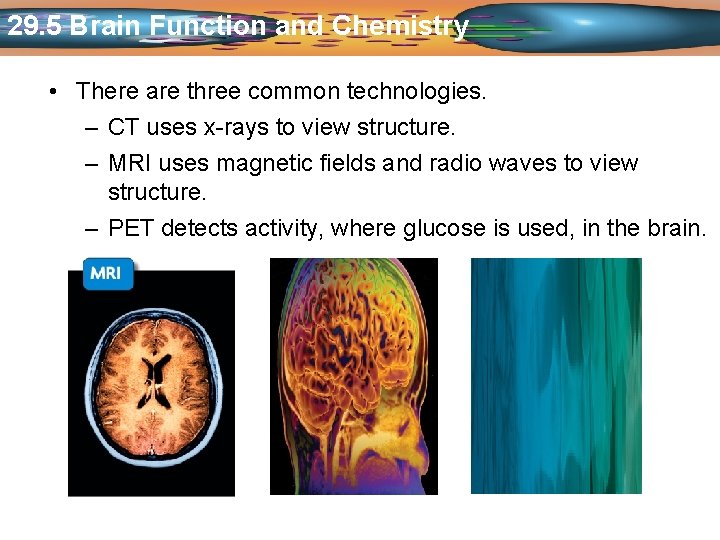
29. 5 Brain Function and Chemistry • There are three common technologies. – CT uses x-rays to view structure. – MRI uses magnetic fields and radio waves to view structure. – PET detects activity, where glucose is used, in the brain.
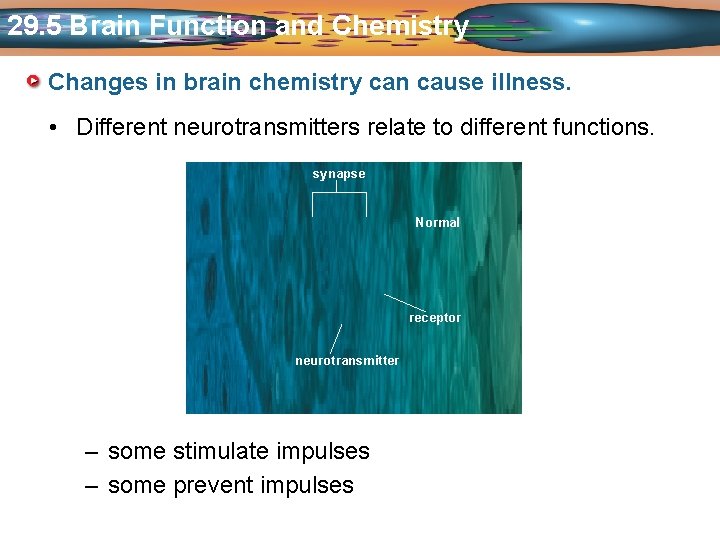
29. 5 Brain Function and Chemistry Changes in brain chemistry can cause illness. • Different neurotransmitters relate to different functions. synapse Normal receptor neurotransmitter – some stimulate impulses – some prevent impulses
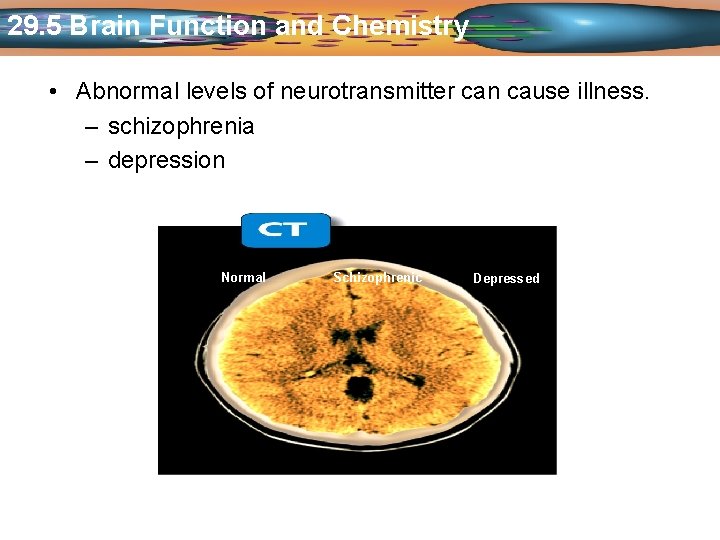
29. 5 Brain Function and Chemistry • Abnormal levels of neurotransmitter can cause illness. – schizophrenia – depression Normal Schizophrenic Depressed

29. 5 Brain Function and Chemistry Drugs alter brain chemistry. • Addiction is the physiological need for a substance. • Tolerance occurs when more drug is needed to produce an effect. • Drugs might cause desensitization or sensitization. – desensitization: more neurotransmitter leads to fewer receptors – sensitization: less neurotransmitter leads to more receptors. When the amount of neurotransmitter becomes abnormal, the adjacent neuron adapts.
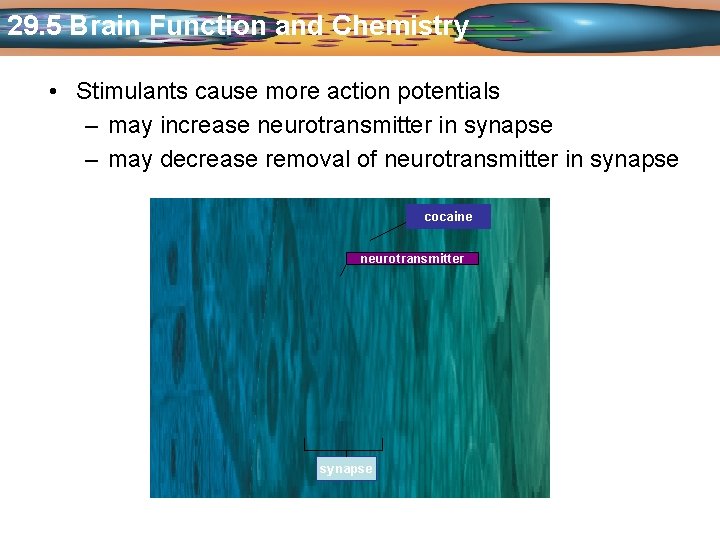
29. 5 Brain Function and Chemistry • Stimulants cause more action potentials – may increase neurotransmitter in synapse – may decrease removal of neurotransmitter in synapse cocaine neurotransmitter synapse
29. 5 Brain Function and Chemistry • Depressants cause fewer action potentials. – may produce neurotransmitter that prevent impulses – may slow release of neurotransmitter that generates impulses
- Slides: 8