
29 1 How Organ Systems Communicate KEY CONCEPT
- Slides: 47
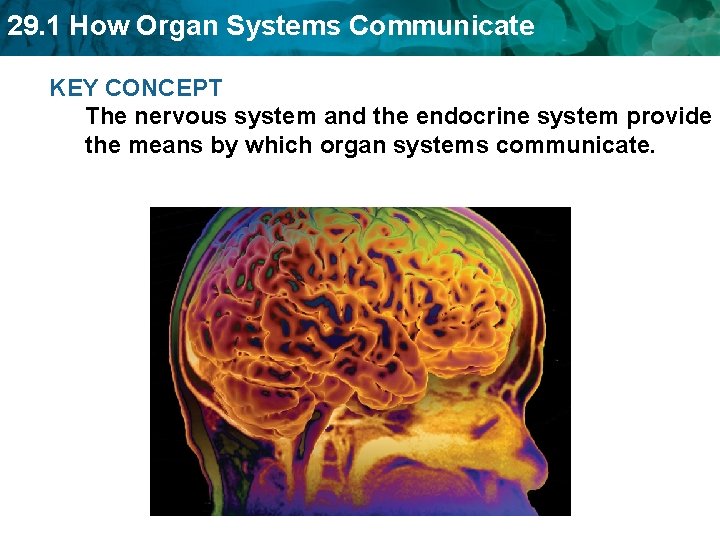
29. 1 How Organ Systems Communicate KEY CONCEPT The nervous system and the endocrine system provide the means by which organ systems communicate.
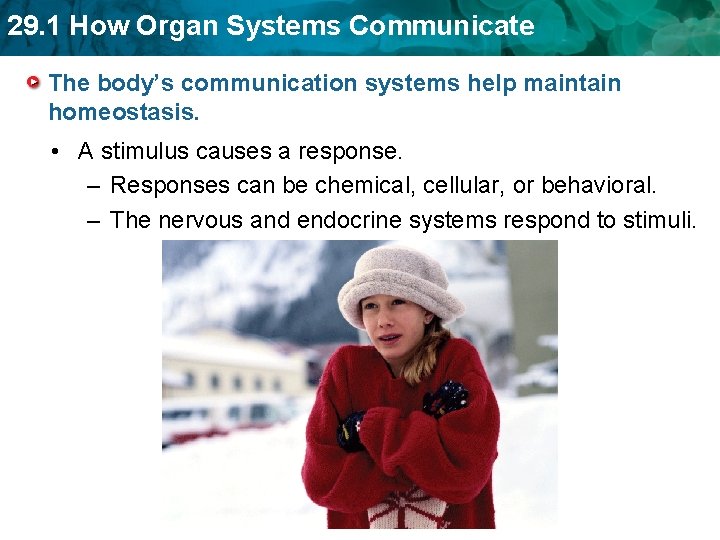
29. 1 How Organ Systems Communicate The body’s communication systems help maintain homeostasis. • A stimulus causes a response. – Responses can be chemical, cellular, or behavioral. – The nervous and endocrine systems respond to stimuli.
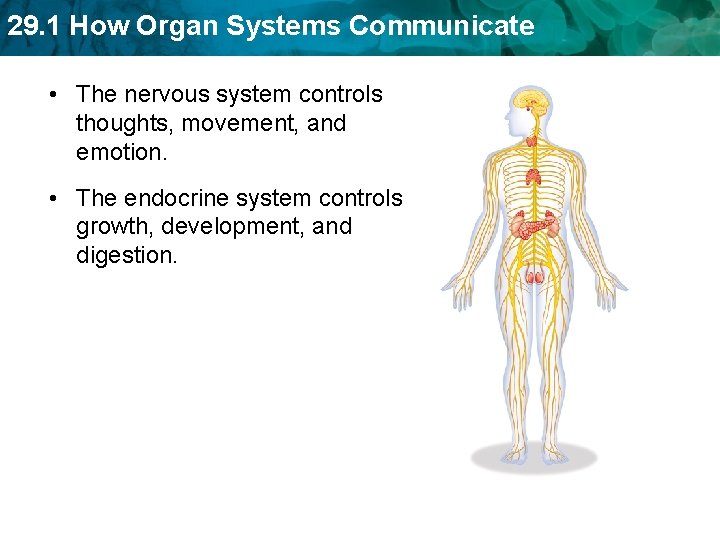
29. 1 How Organ Systems Communicate • The nervous system controls thoughts, movement, and emotion. • The endocrine system controls growth, development, and digestion.
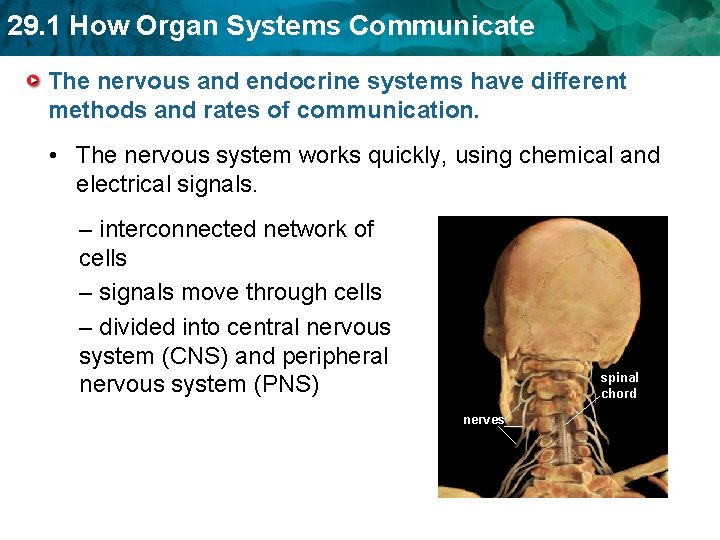
29. 1 How Organ Systems Communicate The nervous and endocrine systems have different methods and rates of communication. • The nervous system works quickly, using chemical and electrical signals. – interconnected network of cells – signals move through cells – divided into central nervous system (CNS) and peripheral nervous system (PNS) spinal chord nerves
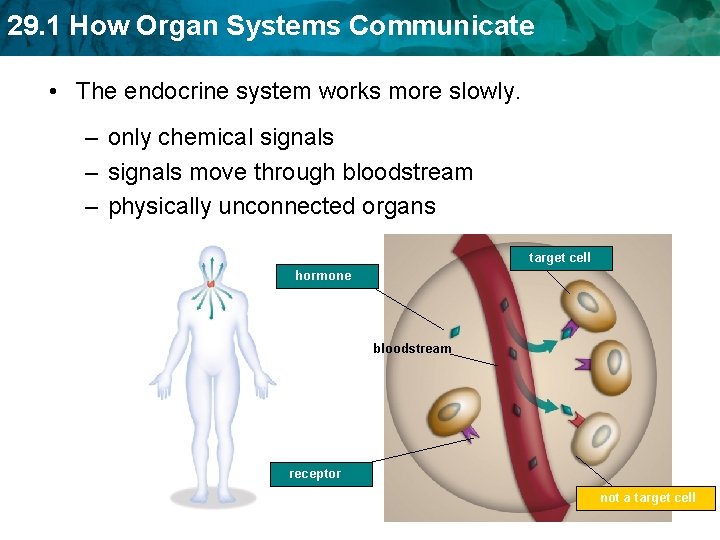
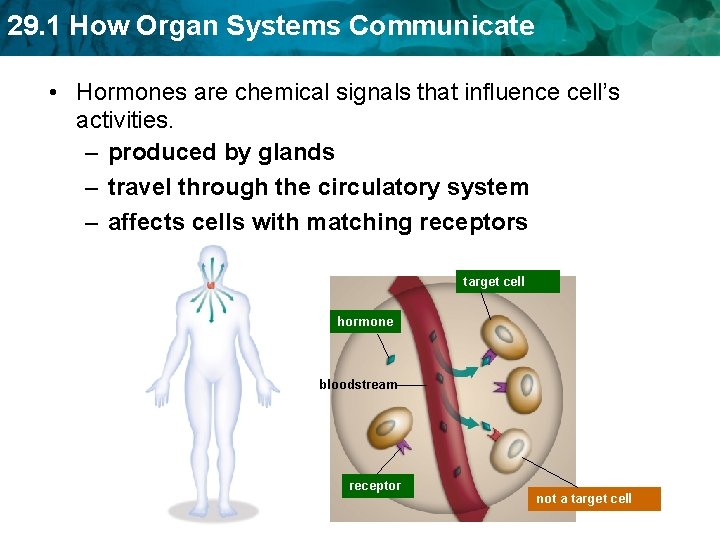
29. 1 How Organ Systems Communicate • The endocrine system works more slowly. – only chemical signals – signals move through bloodstream – physically unconnected organs target cell hormone bloodstream receptor not a target cell
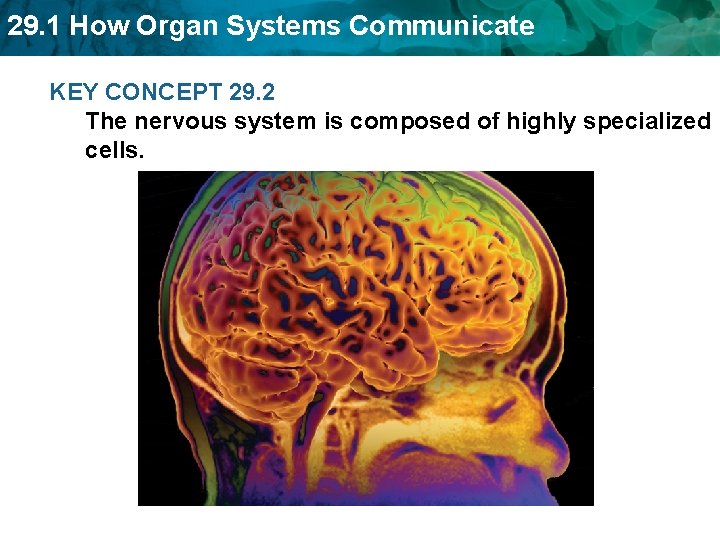
29. 1 How Organ Systems Communicate KEY CONCEPT 29. 2 The nervous system is composed of highly specialized cells.
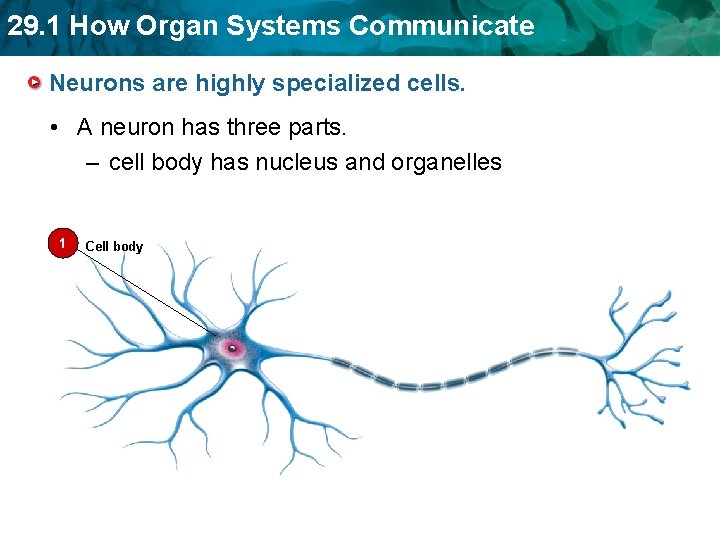
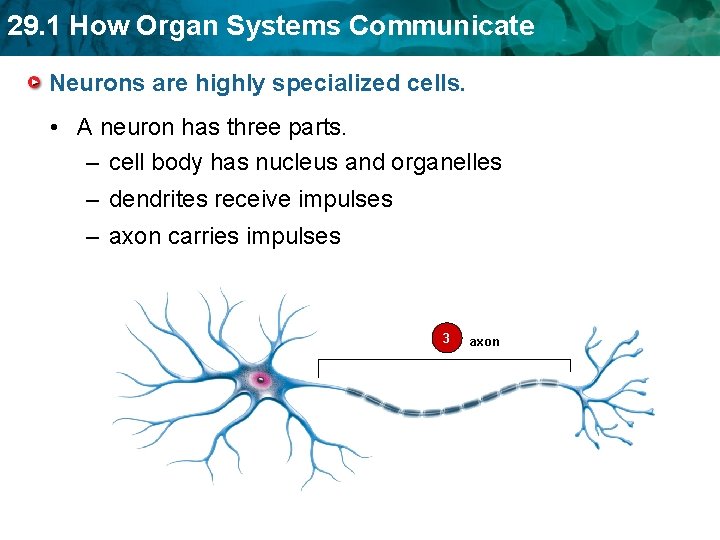
29. 1 How Organ Systems Communicate Neurons are highly specialized cells. • A neuron has three parts. – cell body has nucleus and organelles 1 Cell body
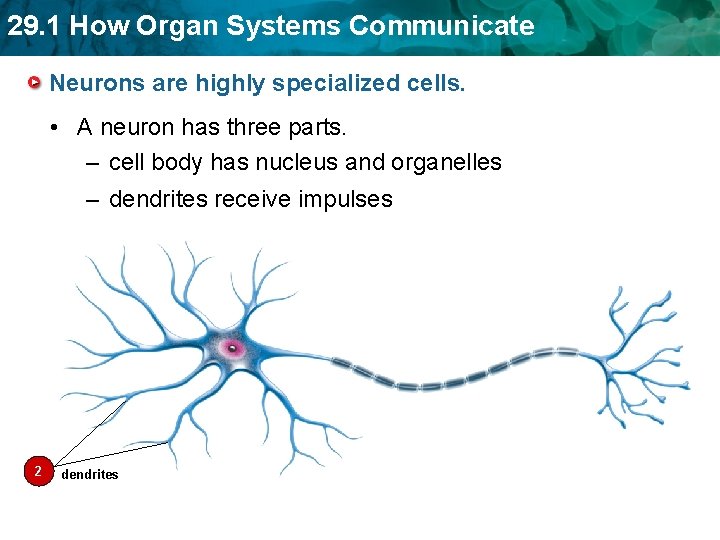
29. 1 How Organ Systems Communicate Neurons are highly specialized cells. • A neuron has three parts. – cell body has nucleus and organelles – dendrites receive impulses 2 dendrites
29. 1 How Organ Systems Communicate Neurons are highly specialized cells. • A neuron has three parts. – cell body has nucleus and organelles – dendrites receive impulses – axon carries impulses 3 axon
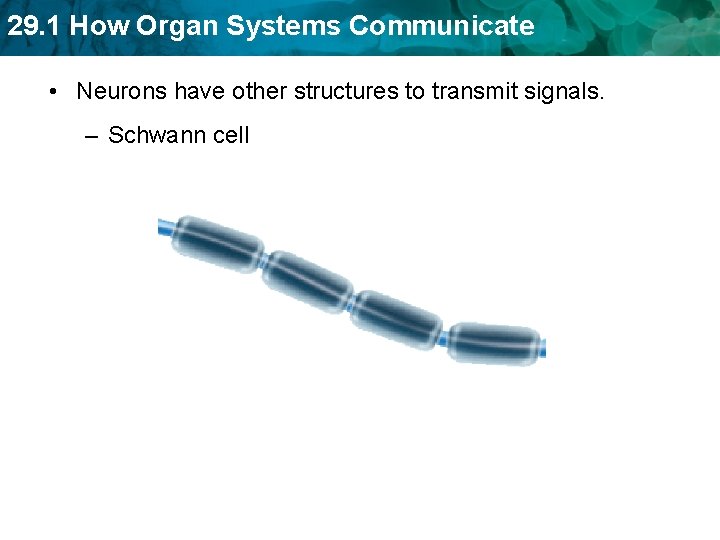
29. 1 How Organ Systems Communicate • Neurons have other structures to transmit signals. – Schwann cell
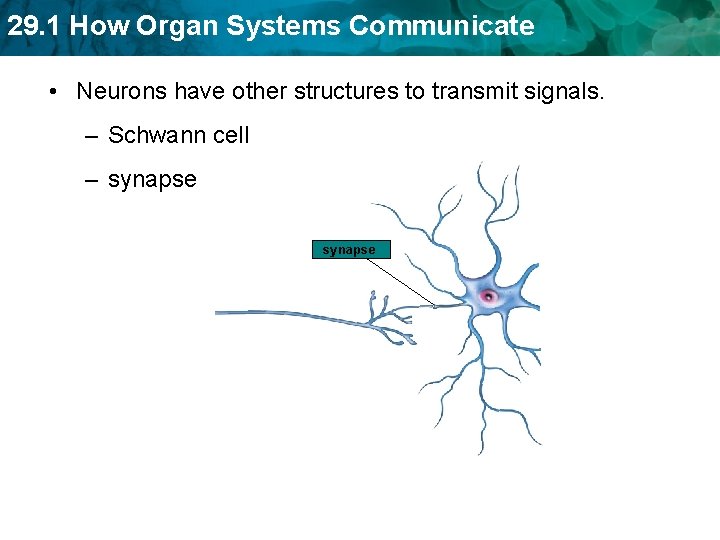
29. 1 How Organ Systems Communicate • Neurons have other structures to transmit signals. – Schwann cell – synapse
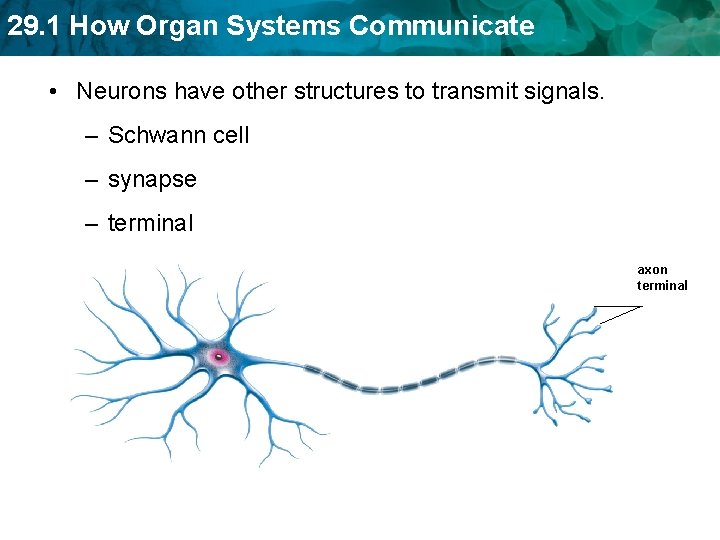
29. 1 How Organ Systems Communicate • Neurons have other structures to transmit signals. – Schwann cell – synapse – terminal axon terminal
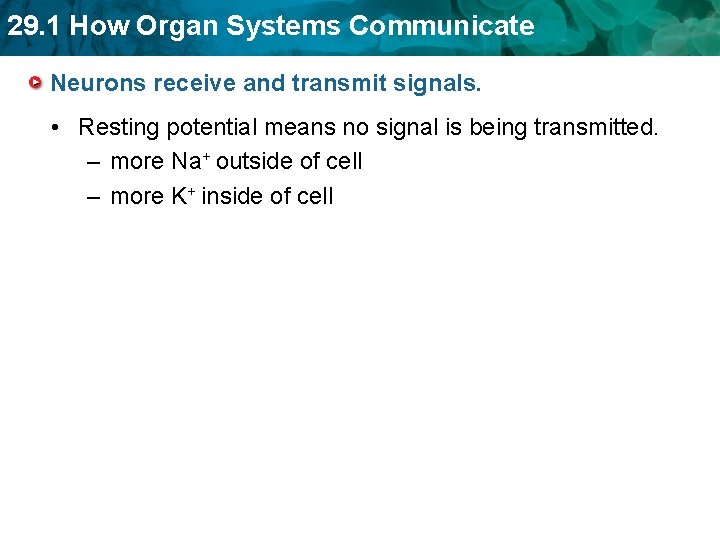
29. 1 How Organ Systems Communicate Neurons receive and transmit signals. • Resting potential means no signal is being transmitted. – more Na+ outside of cell – more K+ inside of cell
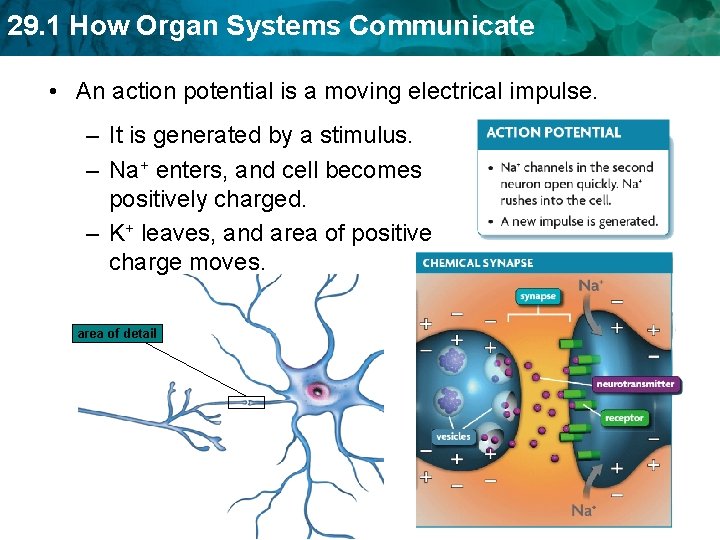
29. 1 How Organ Systems Communicate • An action potential is a moving electrical impulse. – It is generated by a stimulus. – Na+ enters, and cell becomes positively charged. – K+ leaves, and area of positive charge moves. area of detail
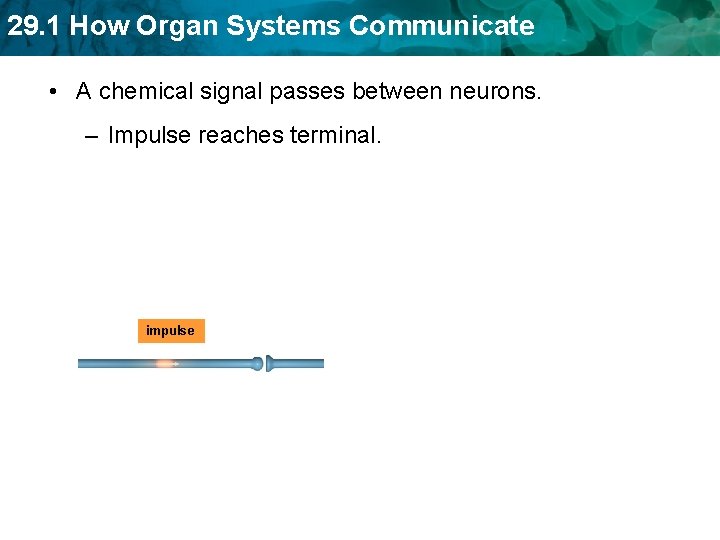
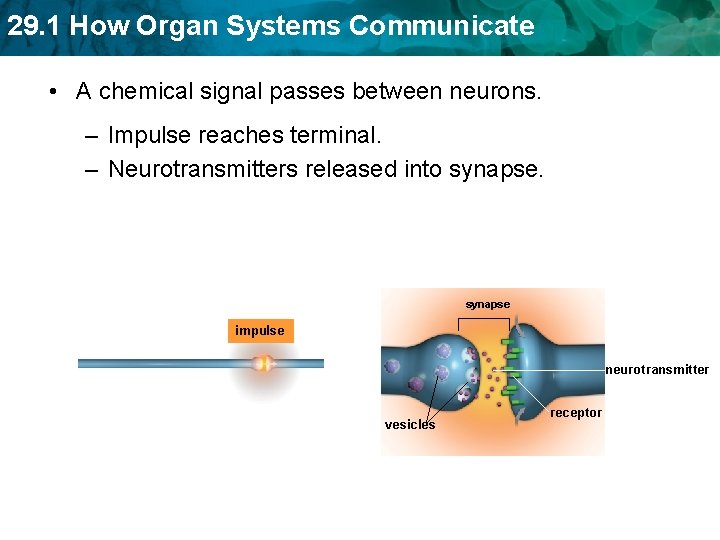
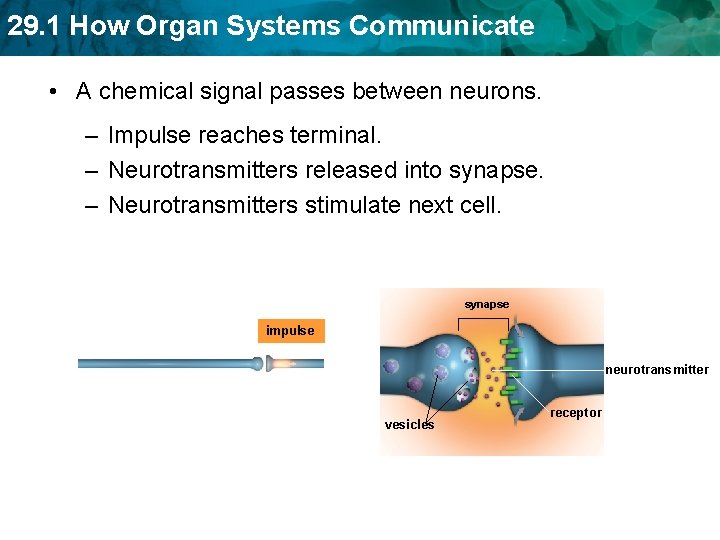
29. 1 How Organ Systems Communicate • A chemical signal passes between neurons. – Impulse reaches terminal. impulse
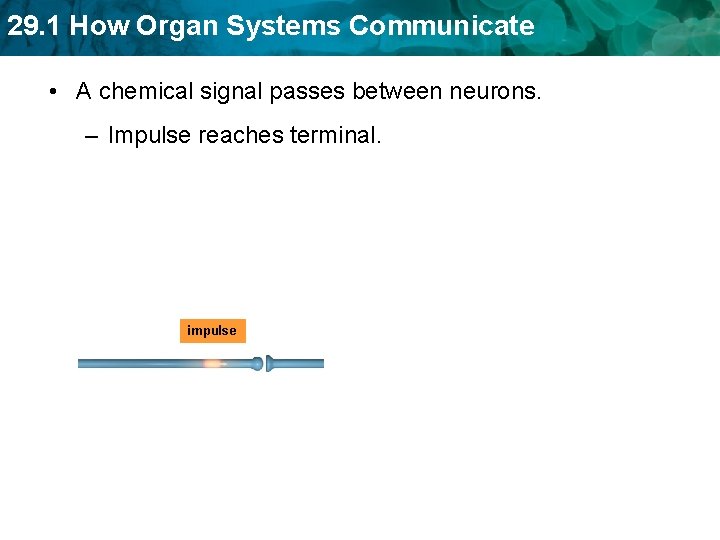
29. 1 How Organ Systems Communicate • A chemical signal passes between neurons. – Impulse reaches terminal. impulse
29. 1 How Organ Systems Communicate • A chemical signal passes between neurons. – Impulse reaches terminal. – Neurotransmitters released into synapse impulse neurotransmitter vesicles receptor
29. 1 How Organ Systems Communicate • A chemical signal passes between neurons. – Impulse reaches terminal. – Neurotransmitters released into synapse. – Neurotransmitters stimulate next cell. synapse impulse neurotransmitter vesicles receptor
29. 1 How Organ Systems Communicate KEY CONCEPT 29. 3 The senses detect the internal and external environments.
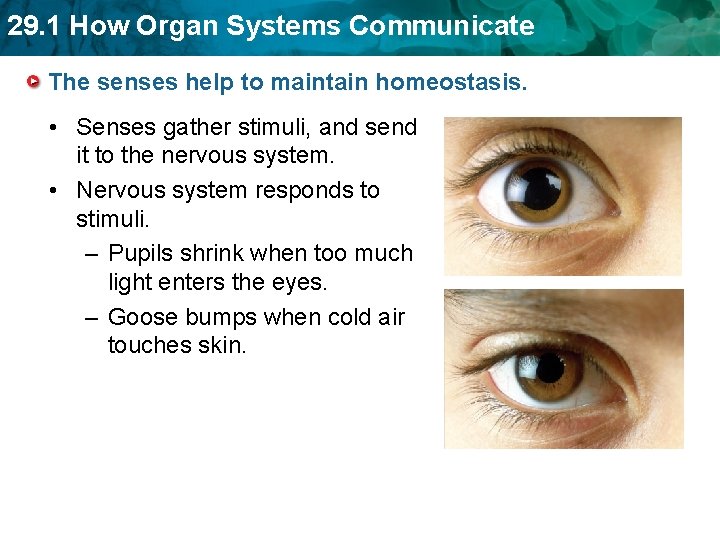
29. 1 How Organ Systems Communicate The senses help to maintain homeostasis. • Senses gather stimuli, and send it to the nervous system. • Nervous system responds to stimuli. – Pupils shrink when too much light enters the eyes. – Goose bumps when cold air touches skin.
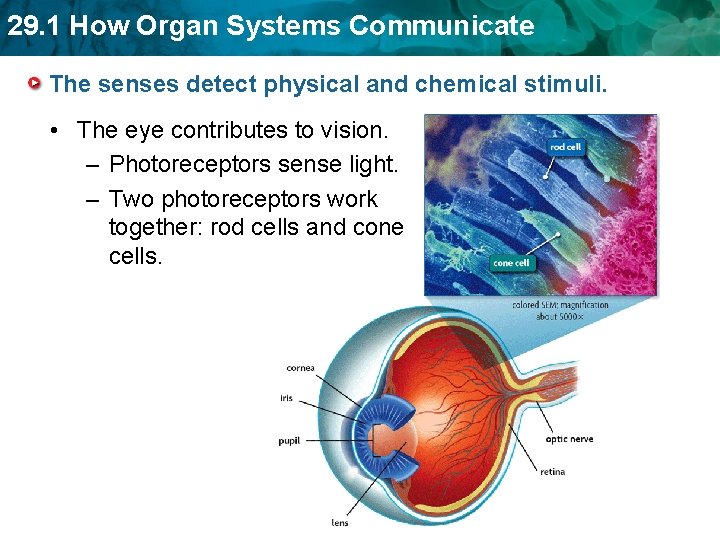
29. 1 How Organ Systems Communicate The senses detect physical and chemical stimuli. • The eye contributes to vision. – Photoreceptors sense light. – Two photoreceptors work together: rod cells and cone cells.
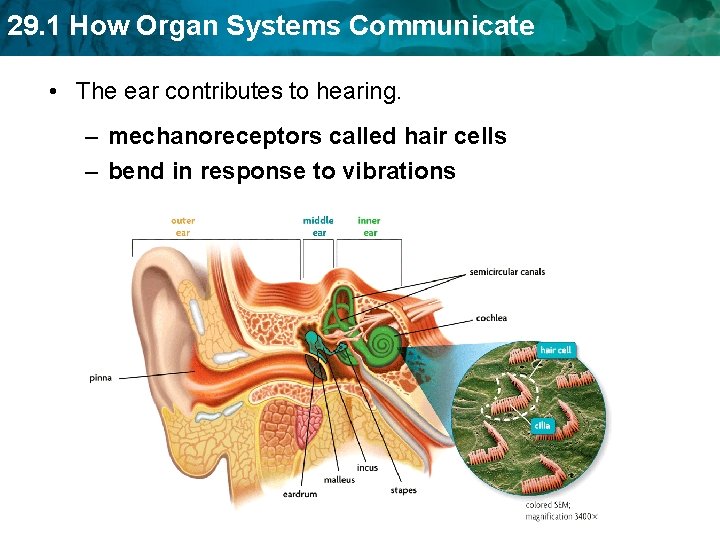
29. 1 How Organ Systems Communicate • The ear contributes to hearing. – mechanoreceptors called hair cells – bend in response to vibrations
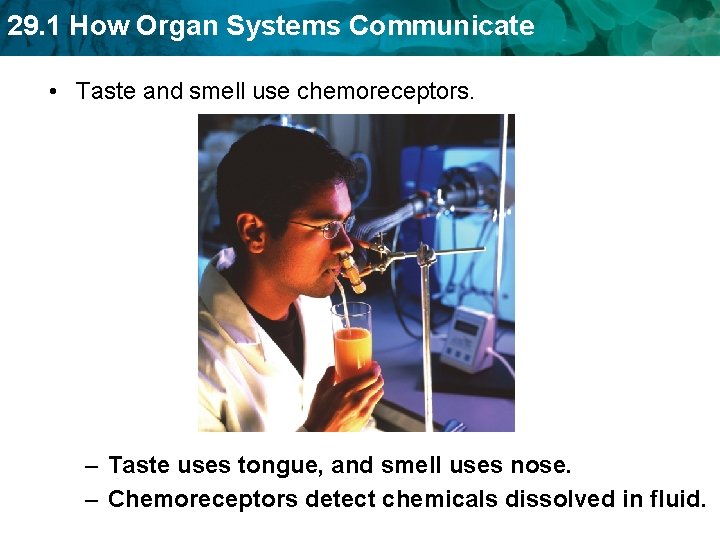
29. 1 How Organ Systems Communicate • Taste and smell use chemoreceptors. – Taste uses tongue, and smell uses nose. – Chemoreceptors detect chemicals dissolved in fluid.
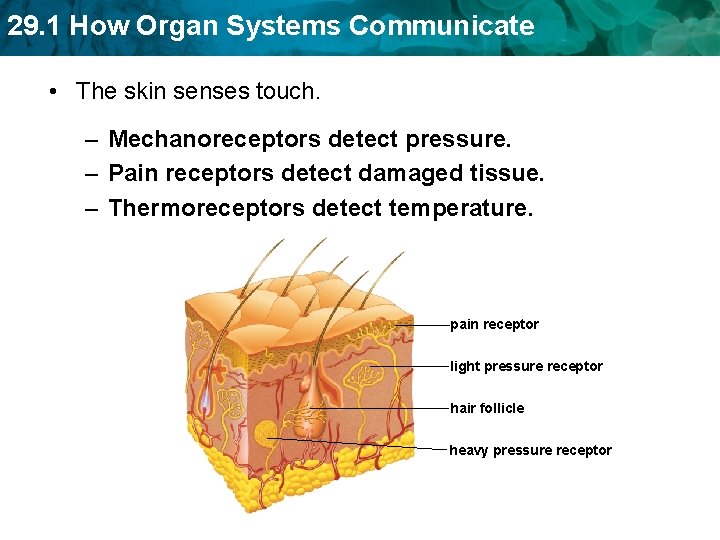
29. 1 How Organ Systems Communicate • The skin senses touch. – Mechanoreceptors detect pressure. – Pain receptors detect damaged tissue. – Thermoreceptors detect temperature. pain receptor light pressure receptor hair follicle heavy pressure receptor
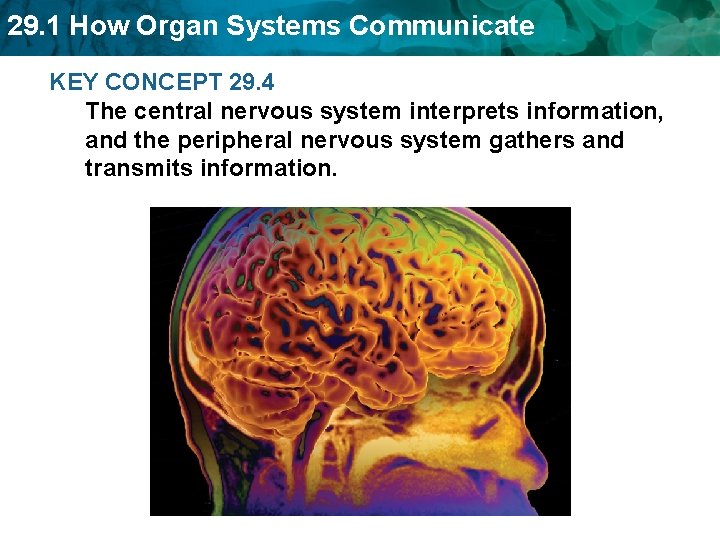
29. 1 How Organ Systems Communicate KEY CONCEPT 29. 4 The central nervous system interprets information, and the peripheral nervous system gathers and transmits information.
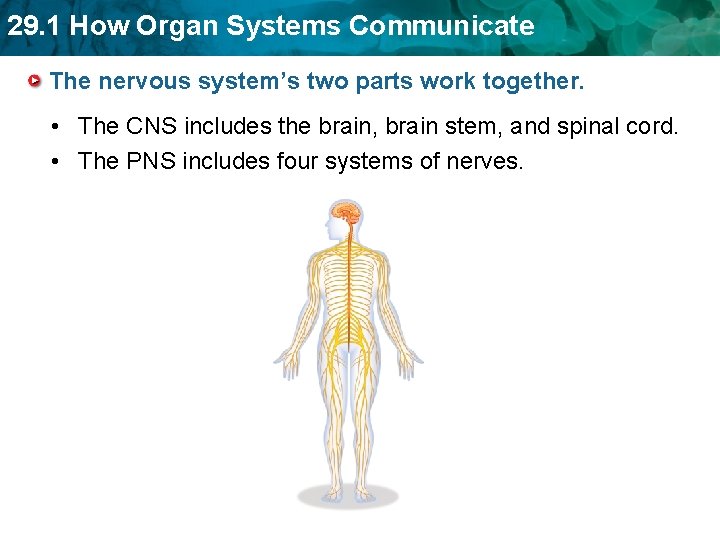
29. 1 How Organ Systems Communicate The nervous system’s two parts work together. • The CNS includes the brain, brain stem, and spinal cord. • The PNS includes four systems of nerves.
29. 1 How Organ Systems Communicate • The CNS and PNS pass signals between one another. – Sensory receptor generates impulse. – PNS passes impulse to CNS. – CNS interprets impulse. – CNS passes impulse to PNS. – PNS stimulates a response.
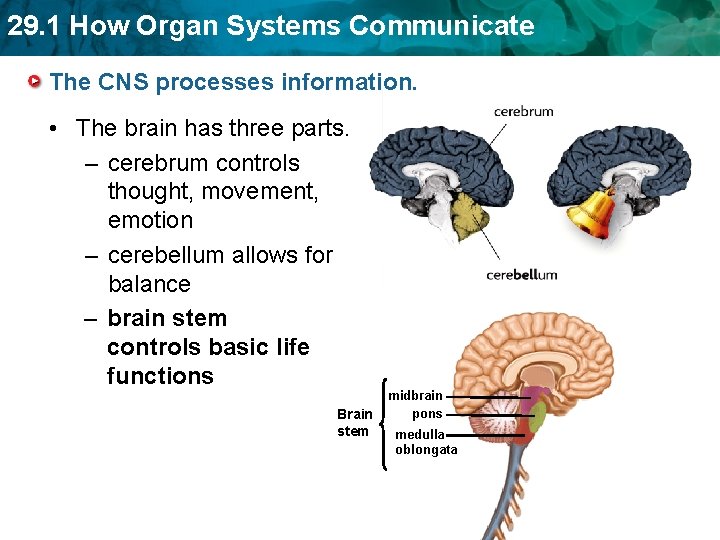
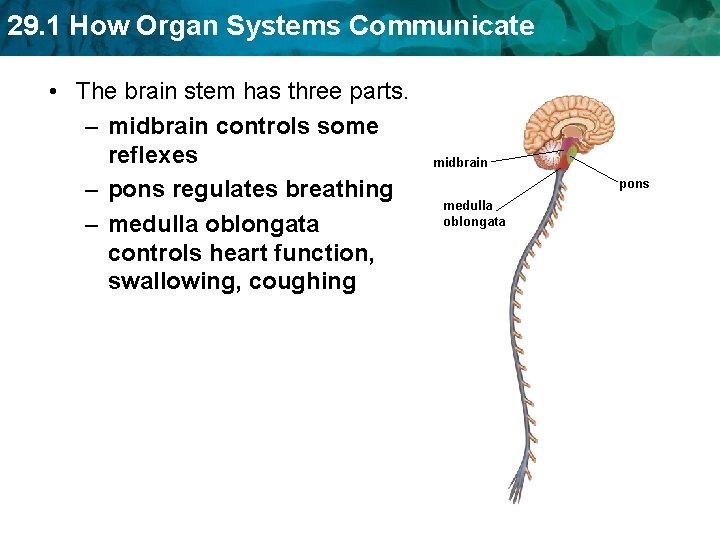
29. 1 How Organ Systems Communicate The CNS processes information. • The brain has three parts. – cerebrum controls thought, movement, emotion – cerebellum allows for balance – brain stem controls basic life functions Brain stem midbrain pons medulla oblongata
29. 1 How Organ Systems Communicate • The brain stem has three parts. – midbrain controls some reflexes – pons regulates breathing – medulla oblongata controls heart function, swallowing, coughing midbrain pons medulla oblongata
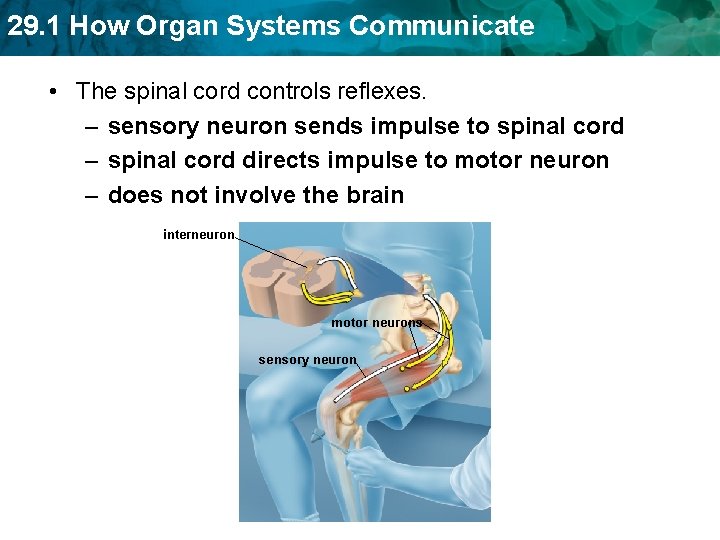
29. 1 How Organ Systems Communicate • The spinal cord controls reflexes. – sensory neuron sends impulse to spinal cord – spinal cord directs impulse to motor neuron – does not involve the brain interneuron motor neurons sensory neuron
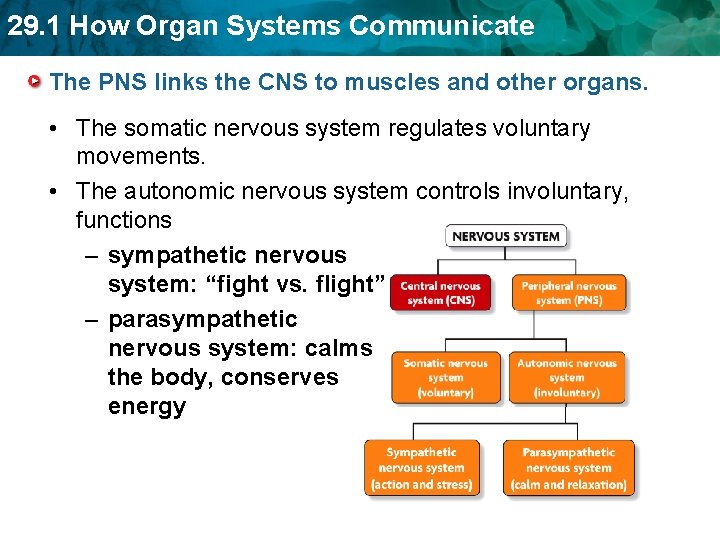
29. 1 How Organ Systems Communicate The PNS links the CNS to muscles and other organs. • The somatic nervous system regulates voluntary movements. • The autonomic nervous system controls involuntary, functions – sympathetic nervous system: “fight vs. flight” – parasympathetic nervous system: calms the body, conserves energy
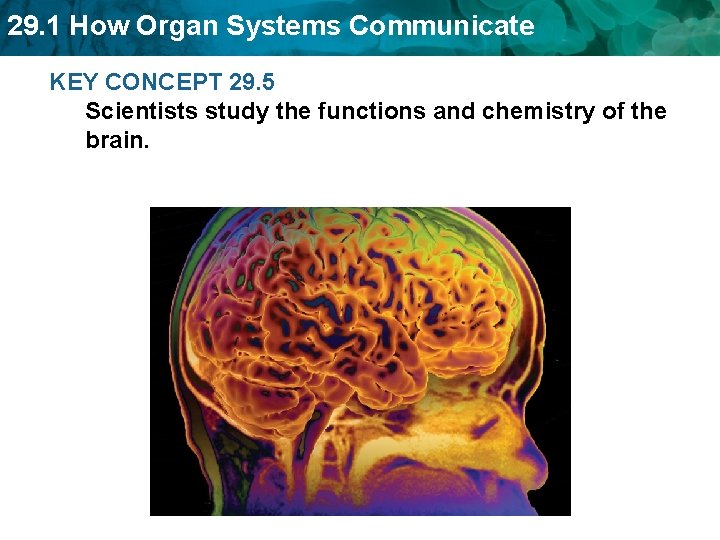
29. 1 How Organ Systems Communicate KEY CONCEPT 29. 5 Scientists study the functions and chemistry of the brain.
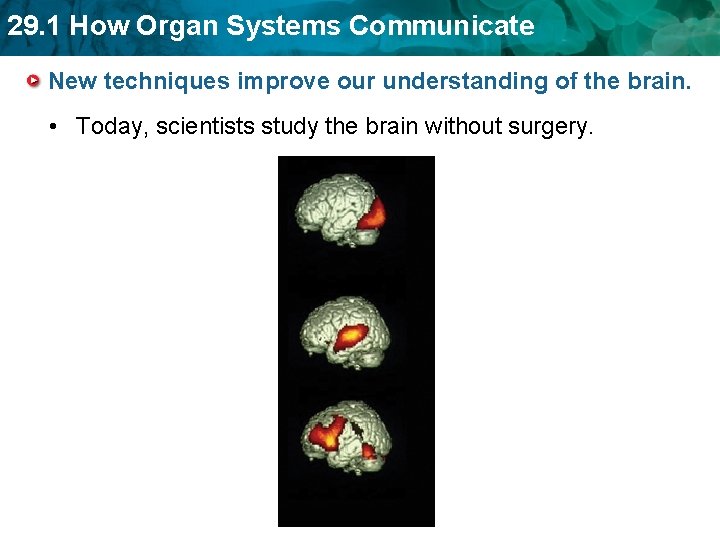
29. 1 How Organ Systems Communicate New techniques improve our understanding of the brain. • Today, scientists study the brain without surgery.
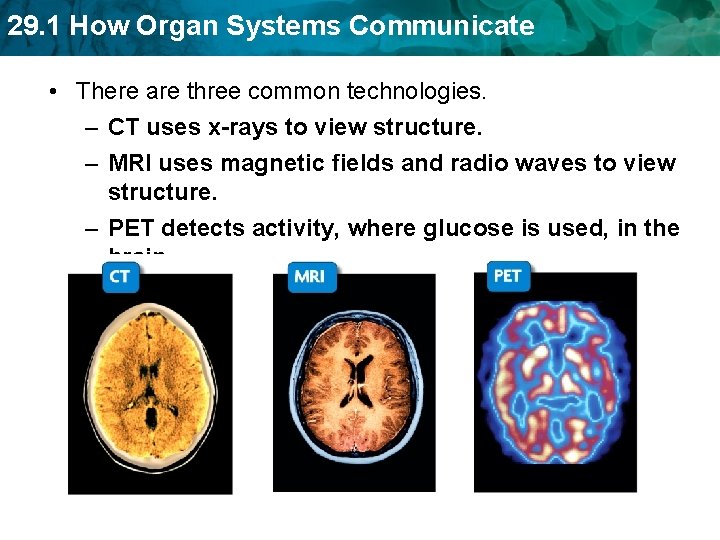
29. 1 How Organ Systems Communicate • There are three common technologies. – CT uses x-rays to view structure. – MRI uses magnetic fields and radio waves to view structure. – PET detects activity, where glucose is used, in the brain.
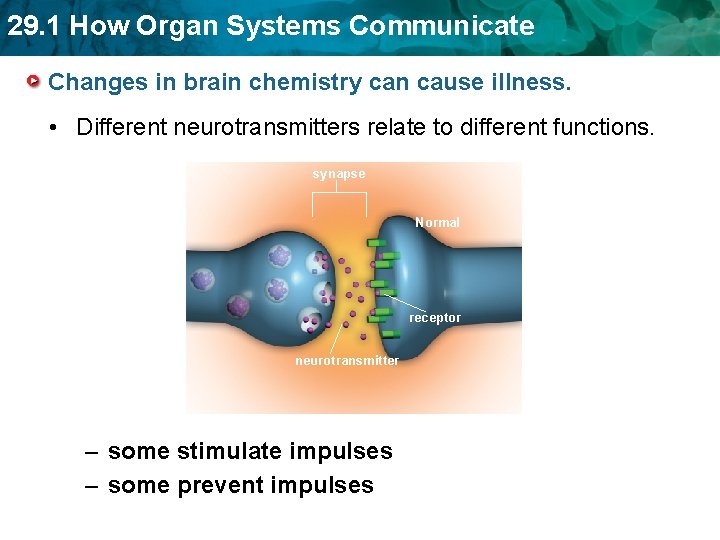
29. 1 How Organ Systems Communicate Changes in brain chemistry can cause illness. • Different neurotransmitters relate to different functions. synapse Normal receptor neurotransmitter – some stimulate impulses – some prevent impulses
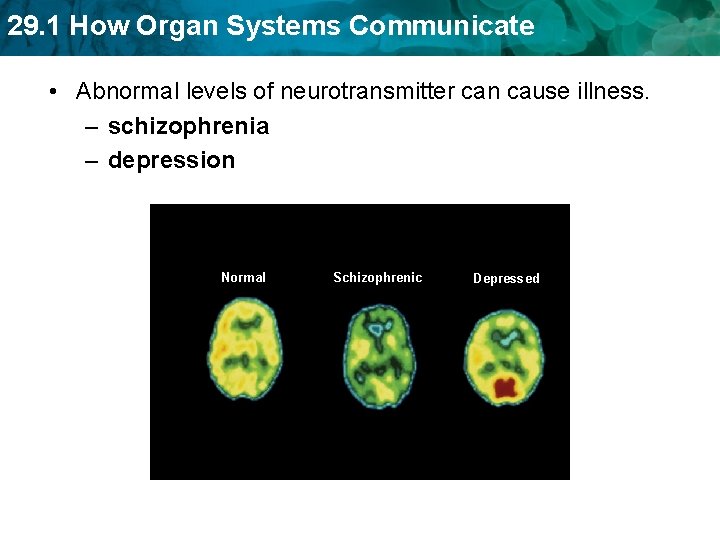
29. 1 How Organ Systems Communicate • Abnormal levels of neurotransmitter can cause illness. – schizophrenia – depression Normal Schizophrenic Depressed
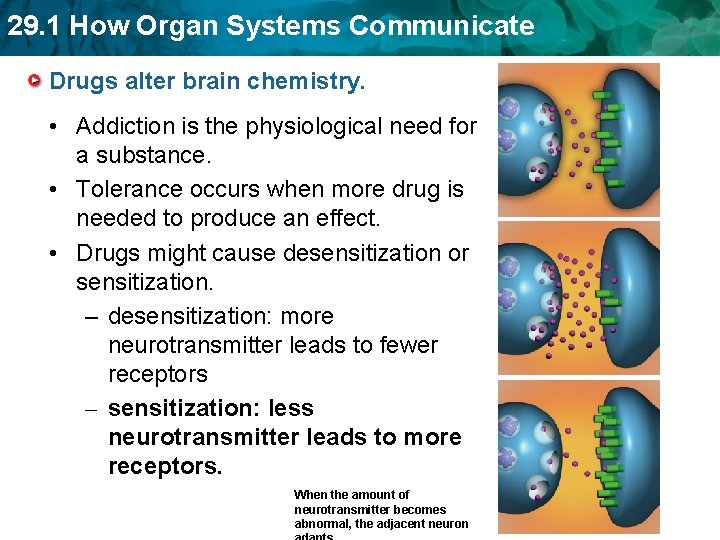
29. 1 How Organ Systems Communicate Drugs alter brain chemistry. • Addiction is the physiological need for a substance. • Tolerance occurs when more drug is needed to produce an effect. • Drugs might cause desensitization or sensitization. – desensitization: more neurotransmitter leads to fewer receptors – sensitization: less neurotransmitter leads to more receptors. When the amount of neurotransmitter becomes abnormal, the adjacent neuron
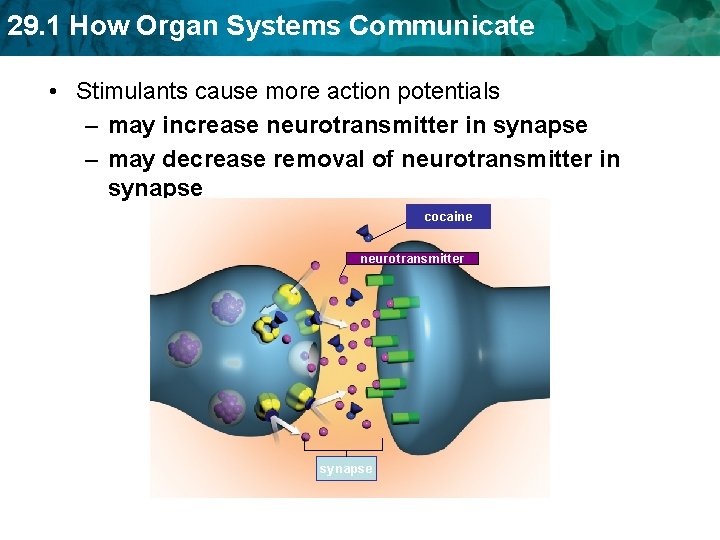
29. 1 How Organ Systems Communicate • Stimulants cause more action potentials – may increase neurotransmitter in synapse – may decrease removal of neurotransmitter in synapse cocaine neurotransmitter synapse
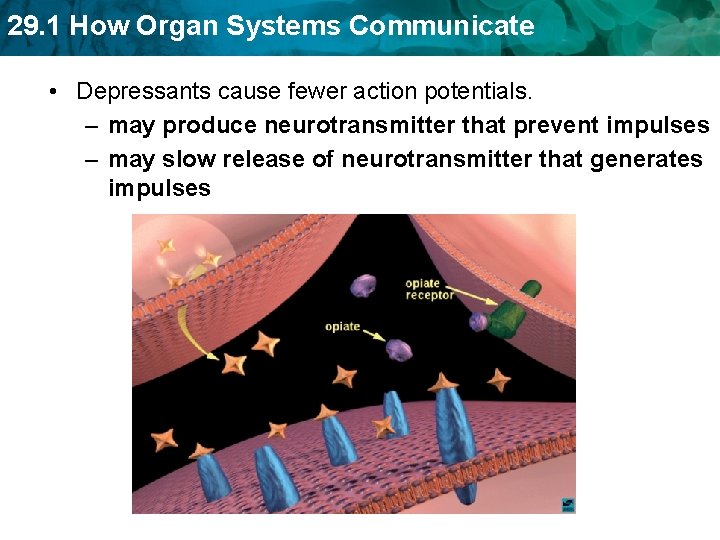
29. 1 How Organ Systems Communicate • Depressants cause fewer action potentials. – may produce neurotransmitter that prevent impulses – may slow release of neurotransmitter that generates impulses
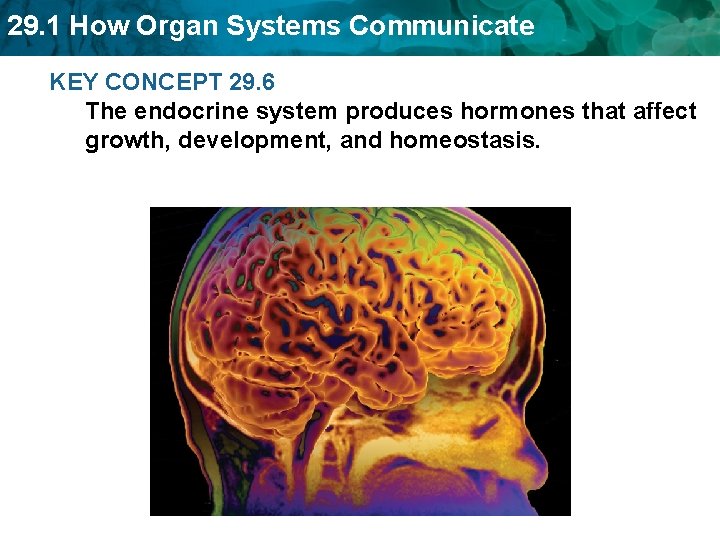
29. 1 How Organ Systems Communicate KEY CONCEPT 29. 6 The endocrine system produces hormones that affect growth, development, and homeostasis.
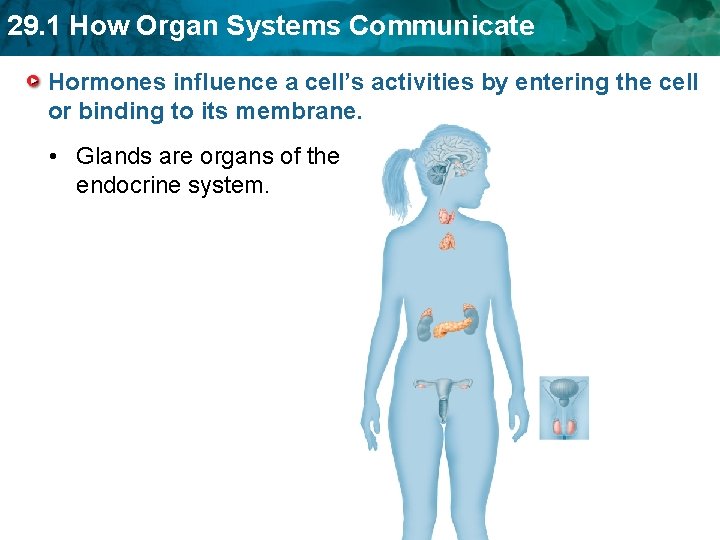
29. 1 How Organ Systems Communicate Hormones influence a cell’s activities by entering the cell or binding to its membrane. • Glands are organs of the endocrine system.
29. 1 How Organ Systems Communicate • Hormones are chemical signals that influence cell’s activities. – produced by glands – travel through the circulatory system – affects cells with matching receptors target cell hormone bloodstream receptor not a target cell
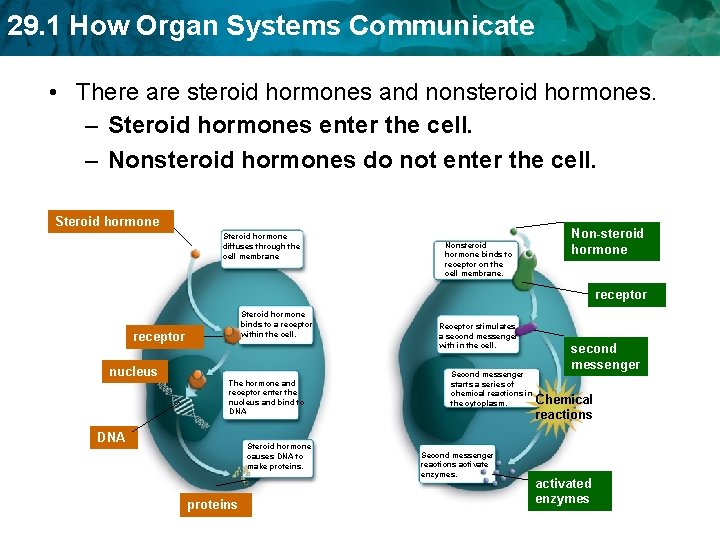
29. 1 How Organ Systems Communicate • There are steroid hormones and nonsteroid hormones. – Steroid hormones enter the cell. – Nonsteroid hormones do not enter the cell. Steroid hormone diffuses through the cell membrane Nonsteroid hormone binds to receptor on the cell membrane. Non-steroid hormone receptor Steroid hormone binds to a receptor within the cell. receptor nucleus The hormone and receptor enter the nucleus and bind to DNA Steroid hormone causes DNA to make proteins Receptor stimulates a second messenger with in the cell. Second messenger starts a series of chemical reactions in the cytoplasm. Second messenger reactions activate enzymes. second messenger Chemical reactions activated enzymes
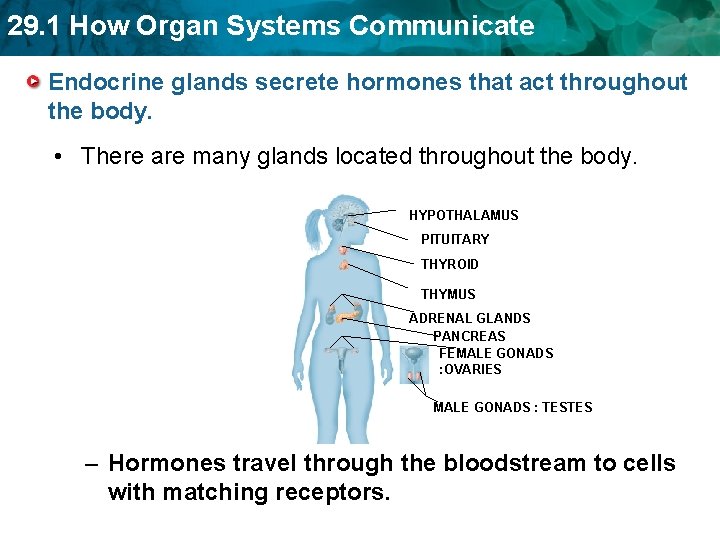
29. 1 How Organ Systems Communicate Endocrine glands secrete hormones that act throughout the body. • There are many glands located throughout the body. HYPOTHALAMUS PITUITARY THYROID THYMUS ADRENAL GLANDS PANCREAS FEMALE GONADS : OVARIES MALE GONADS : TESTES – Hormones travel through the bloodstream to cells with matching receptors.
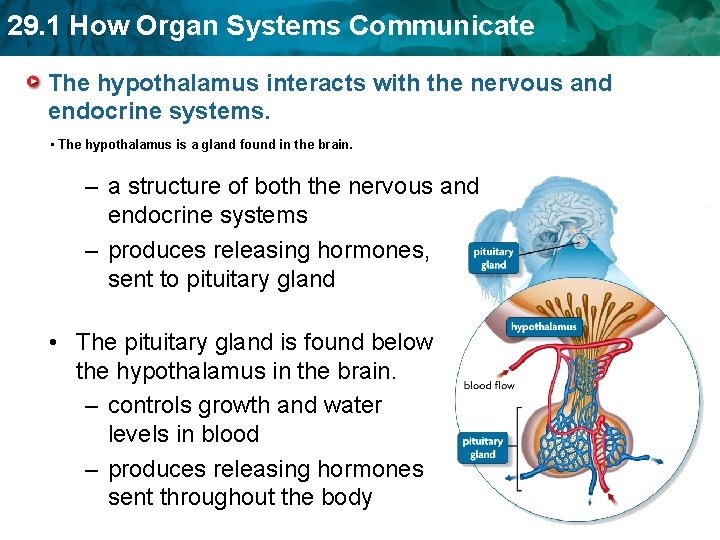
29. 1 How Organ Systems Communicate The hypothalamus interacts with the nervous and endocrine systems. • The hypothalamus is a gland found in the brain. – a structure of both the nervous and endocrine systems – produces releasing hormones, sent to pituitary gland • The pituitary gland is found below the hypothalamus in the brain. – controls growth and water levels in blood – produces releasing hormones sent throughout the body
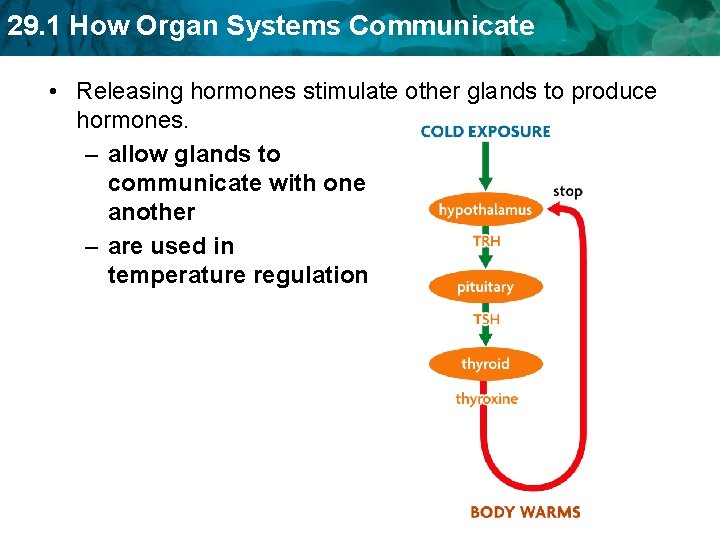
29. 1 How Organ Systems Communicate • Releasing hormones stimulate other glands to produce hormones. – allow glands to communicate with one another – are used in temperature regulation
29. 1 How Organ Systems Communicate Hormonal imbalances can cause severe illness. • Abnormal hormone levels affect homeostasis. • Hormonal imbalances might be treated with surgery or medicine. • Steroids, a pituitary tumor, or some prescription drugs can make the pituitary overactive and indirectly cause problems.