
270 TO WIN CALCULATIONS TO WIN ELECTORAL VOTES
- Slides: 18
270 TO WIN CALCULATIONS TO WIN ELECTORAL VOTES.
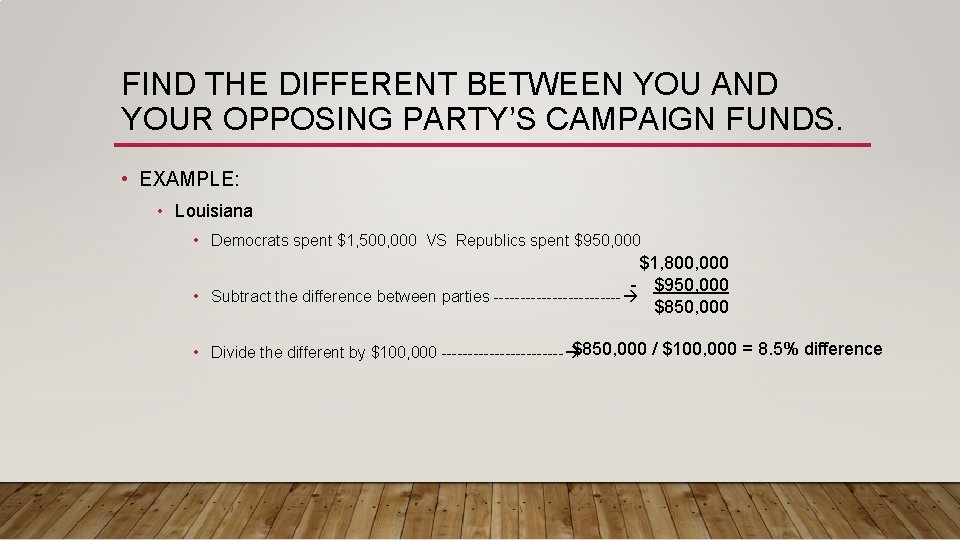
FIND THE DIFFERENT BETWEEN YOU AND YOUR OPPOSING PARTY’S CAMPAIGN FUNDS. • EXAMPLE: • Louisiana • Democrats spent $1, 500, 000 VS Republics spent $950, 000 $1, 800, 000 - $950, 000 • Subtract the difference between parties ------------ $850, 000 • Divide the different by $100, 000 ------------ $850, 000 / $100, 000 = 8. 5% difference
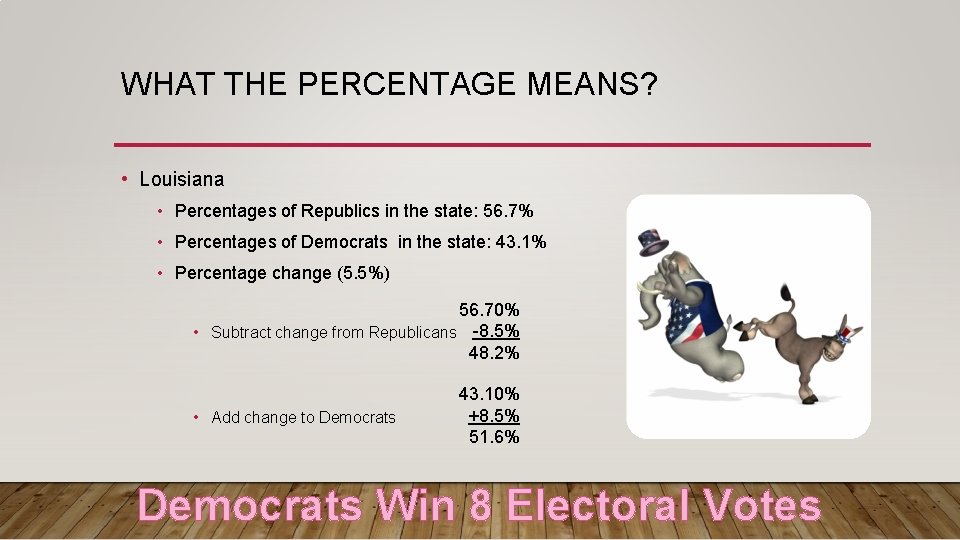
WHAT THE PERCENTAGE MEANS? • Louisiana • Percentages of Republics in the state: 56. 7% • Percentages of Democrats in the state: 43. 1% • Percentage change (5. 5%) 56. 70% • Subtract change from Republicans -8. 5% 48. 2% • Add change to Democrats 43. 10% +8. 5% 51. 6% Democrats Win 8 Electoral Votes
COUNT UP THE NUMBER OF ELECTORAL VOTES • After calculating percentage changes color in states according to political party • Democrat = blue • Republican = red • Add up the number of electoral votes • Determine which party WON the election
MONEY IN CAMPAIGNS • Donors • PAC’s • Personal Wealth
DONORS • Individual donors- Can donate money via mail or online • To a particular candidate: maximum of $2700/year • To a particular PAC: $5000/year • To State/local party: $10, 000 combined limit/year • PAC (Political Action Committee) • Multicandidate donations to particular candidate: $5000/year • Multicandidate donations to local/state party: $5000 combined limit/year • Multicandidate donations to nation party: $15, 000/year
DONORS • State/Local/National Party Committee: • Donations to Individual: $5000/year • To local/state/national party: No limit • SUPER PAC’s
SUPER PAC’S • Basically a larger PAC • Can accept donation from corporations, unions, individuals, and associations • NO LIMIT to amount of donations accept • NO LIMIT on individual contributions • Barred from coordinating activities with candidates and/or campaigns • Business partners, former aides, etc. are not considered “coordinated activites” • Usually they campaign against the opposition
LOBBYIST • Person or persons who take part in an organized attempt to influence legislators • Must “petition” elected officials to take up their cause • Usually represent corporations, nonprofit organizations, professional associations • Can offer PAC or Super. PAC money for support from legislators on their particular issue • Detractors: • Say it is a legal form of bribery • Claim it makes legislation “elitist” • Takes the common good out of politics
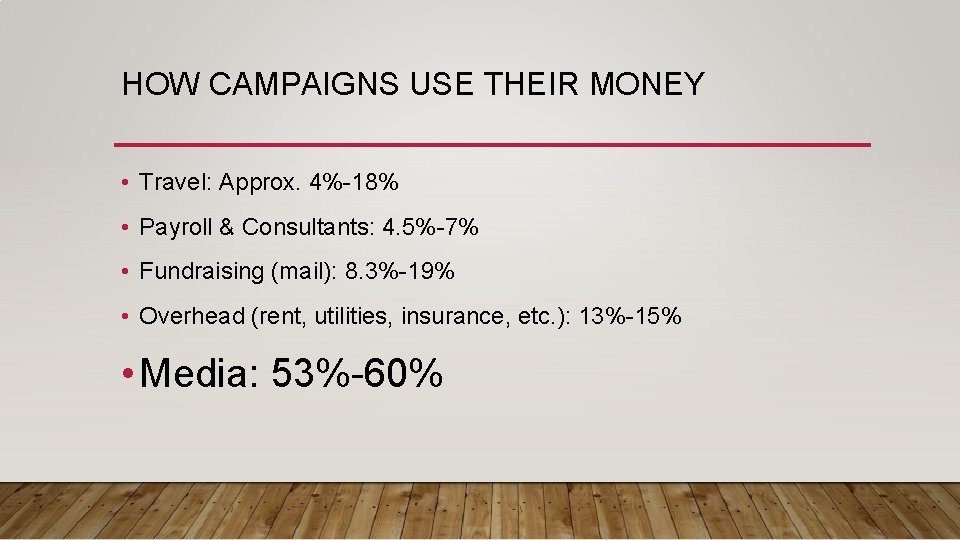
HOW CAMPAIGNS USE THEIR MONEY • Travel: Approx. 4%-18% • Payroll & Consultants: 4. 5%-7% • Fundraising (mail): 8. 3%-19% • Overhead (rent, utilities, insurance, etc. ): 13%-15% • Media: 53%-60%
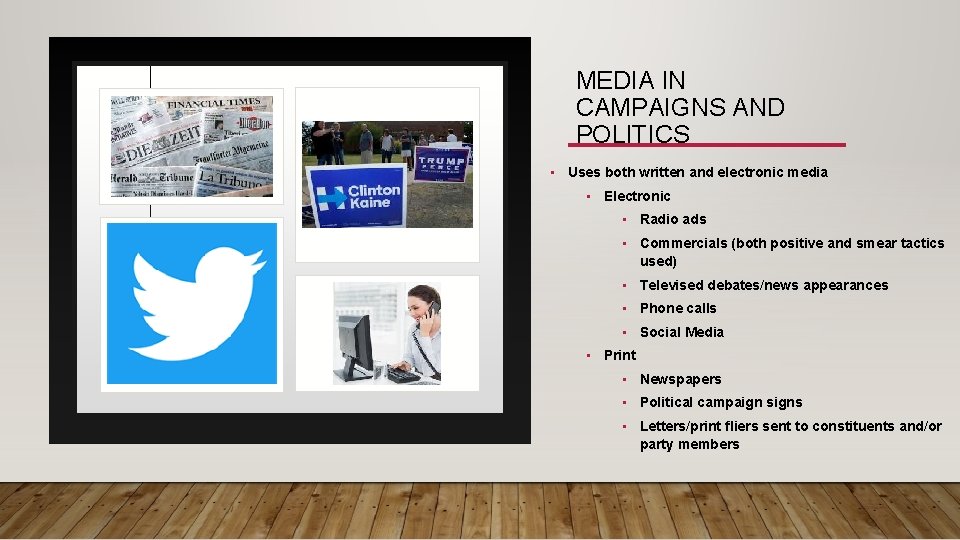
MEDIA IN CAMPAIGNS AND POLITICS • Uses both written and electronic media • Electronic • Radio ads • Commercials (both positive and smear tactics used) • Televised debates/news appearances • Phone calls • Social Media • Print • Newspapers • Political campaign signs • Letters/print fliers sent to constituents and/or party members
ROLES OF MEDIA IN POLITICS • Informant- Provides information to the public on political issues and policies. Tells the public what is happening in the world and in the government. • Do people trust the media now? What about fake news? ?
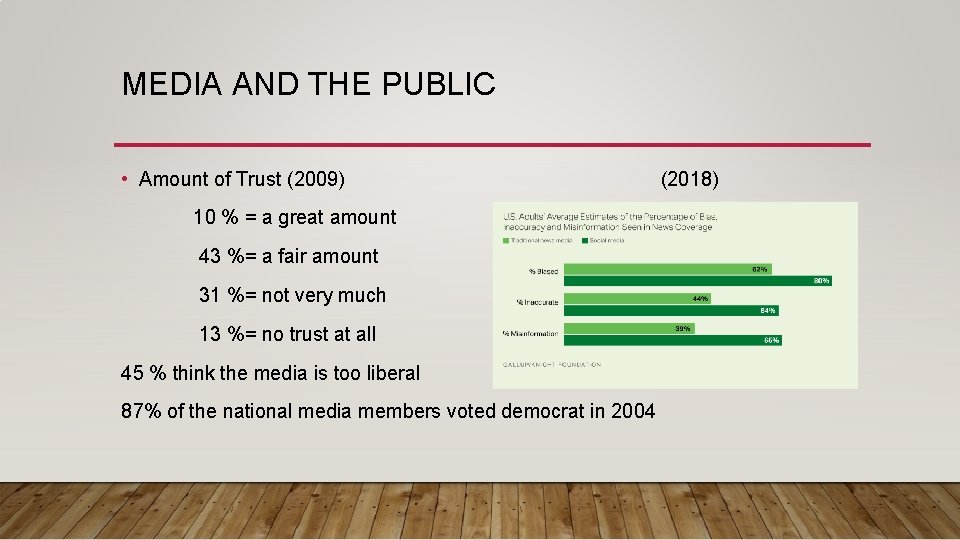
MEDIA AND THE PUBLIC • Amount of Trust (2009) 10 % = a great amount 43 %= a fair amount 31 %= not very much 13 %= no trust at all 45 % think the media is too liberal 87% of the national media members voted democrat in 2004 (2018)
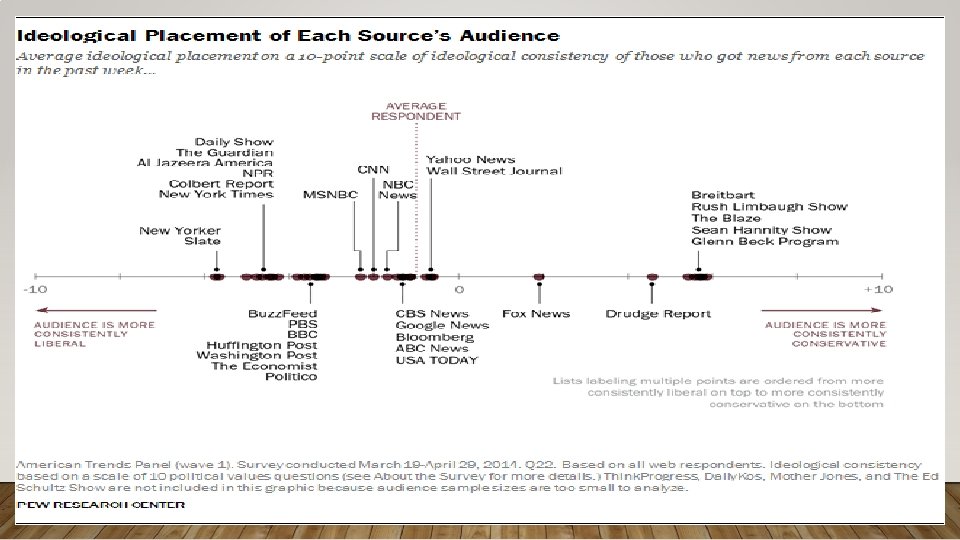
ROLES OF MEDIA IN POLITICS • Agenda Setter: News outlets as well as websites have biases. They use their media platform as a way to encourage a particular agenda by reporting and/or commenting on a particular topic or presenting a particular view on a topic.
ROLES OF MEDIA IN POLITICS • Platform and Voice: Media can be a great way for political groups or individuals to gain or create a voice in the current political climate. This can be a great way to create support for your topics or your “brand” of politics. Social media is becoming more and more prominent in todays political climate because of how quickly it can facilitate the spread of ideas all over the country.
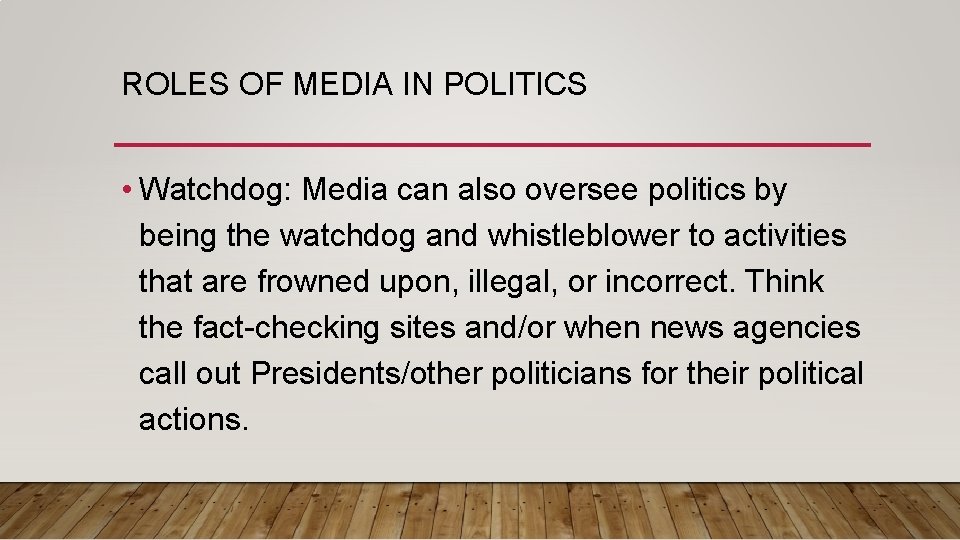
ROLES OF MEDIA IN POLITICS • Watchdog: Media can also oversee politics by being the watchdog and whistleblower to activities that are frowned upon, illegal, or incorrect. Think the fact-checking sites and/or when news agencies call out Presidents/other politicians for their political actions.