
27 Europe and the Western Hemisphere Since 1945
![From West Germany to Germany Ô Konrad Adenauer (1876 -1967), 1949 -1963 ] Ludwig](https://slidetodoc.com/presentation_image/43ea34b4fcfd17c9cdc6d2091ba62478/image-5.jpg "From West Germany to Germany Ô Konrad Adenauer (1876 -1967), 1949 -1963 ] Ludwig")
![Decline of Great Britain Ô Ô Ô Clement Attlee (1883 -1967) succeeded Churchill ]](https://slidetodoc.com/presentation_image/43ea34b4fcfd17c9cdc6d2091ba62478/image-6.jpg "Decline of Great Britain Ô Ô Ô Clement Attlee (1883 -1967) succeeded Churchill ]")


![The Development of Canada Ô Ô Lester Pearson (1897 -1972) ] Welfare state created](https://slidetodoc.com/presentation_image/43ea34b4fcfd17c9cdc6d2091ba62478/image-15.jpg "The Development of Canada Ô Ô Lester Pearson (1897 -1972) ] Welfare state created")
![The Threat of Marxist Revolutions: Cuba, Chile, Nicaragua Ô Ô Ô Cuba ] Fidel](https://slidetodoc.com/presentation_image/43ea34b4fcfd17c9cdc6d2091ba62478/image-18.jpg "The Threat of Marxist Revolutions: Cuba, Chile, Nicaragua Ô Ô Ô Cuba ] Fidel")

![The Growth of Terrorism Ô Ô Munich Olympic games, 1972 Motivations: ] Militant nationalism](https://slidetodoc.com/presentation_image/43ea34b4fcfd17c9cdc6d2091ba62478/image-26.jpg "The Growth of Terrorism Ô Ô Munich Olympic games, 1972 Motivations: ] Militant nationalism")
![Western Culture Since 1945 Ô Literature ] ] Ô Ô “Theater of the Absurd”](https://slidetodoc.com/presentation_image/43ea34b4fcfd17c9cdc6d2091ba62478/image-30.jpg "Western Culture Since 1945 Ô Literature ] ] Ô Ô “Theater of the Absurd”")
![The World of Science and Technology Ô Government and military sponsorship of science ]](https://slidetodoc.com/presentation_image/43ea34b4fcfd17c9cdc6d2091ba62478/image-31.jpg "The World of Science and Technology Ô Government and military sponsorship of science ]")
![Varieties of Religious Life Ô Catholic revival ] John XXIII and John Paul II](https://slidetodoc.com/presentation_image/43ea34b4fcfd17c9cdc6d2091ba62478/image-32.jpg "Varieties of Religious Life Ô Catholic revival ] John XXIII and John Paul II")
- Slides: 34
27 Europe and the Western Hemisphere Since 1945
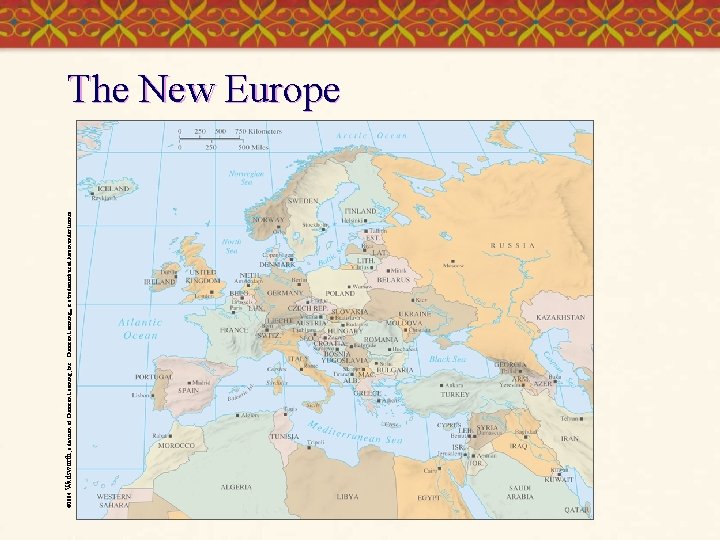
© 2004 Wadsworth, a division of Thomson Learning, Inc. Thomson Learning™ is a trademark used herein under license. The New Europe
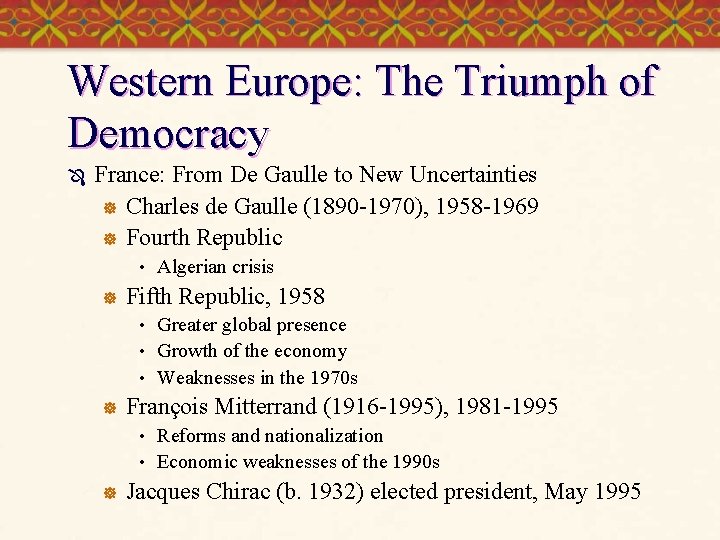
Western Europe: The Triumph of Democracy Ô France: From De Gaulle to New Uncertainties ] Charles de Gaulle (1890 -1970), 1958 -1969 ] Fourth Republic • Algerian crisis ] Fifth Republic, 1958 • Greater global presence • Growth of the economy • Weaknesses in the 1970 s ] François Mitterrand (1916 -1995), 1981 -1995 • Reforms and nationalization • Economic weaknesses of the 1990 s ] Jacques Chirac (b. 1932) elected president, May 1995
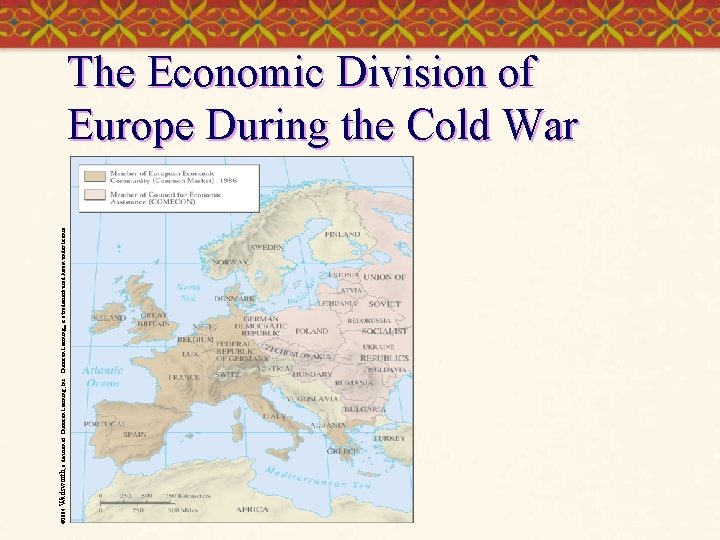
© 2004 Wadsworth, a division of Thomson Learning, Inc. Thomson Learning™ is a trademark used herein under license. The Economic Division of Europe During the Cold War
From West Germany to Germany Ô Konrad Adenauer (1876 -1967), 1949 -1963 ] Ludwig Erhard and economic recovery Ô Willy Brandt (1913 -1992), 1969 -1974 ] Ostpolitik (“opening toward the east”) Ô Helmut Kohl (b. 1930), 1982 ] Reunification ] Problems with reunification
Decline of Great Britain Ô Ô Ô Clement Attlee (1883 -1967) succeeded Churchill ] Creation of the modern welfare state Margaret Thatcher (b. 1925), 1979 -1990 ] Thatcherism ] Problems over flat-rate tax ] Thatcher resigned, November 1990 Thatcher succeeded by John Major and then Tony Blair
Eastern Europe after Communism Ô Little or no experience in democracy Ô Rapid conversion to a market economy ] Poland Czechoslovakia successful Ô Desire to join NATO and the European Union
Disintegration of Yugoslavia Ô Ô Marshall Tito holds together six republics and two autonomous provinces Slovenia and Croatia declare independence in June 1991 ] ] ] Ô Slobodan Miloševíc’s government sent the Yugoslav army into Slovenia Captured one-third of Croatia’s territory “Ethnic cleansing” in Bosnia European nations and the United States intervene in 1995 Cease-fire agreement, fall of 1995 Kosovo, 1999 ] ] ] Milosevic ended Kosovo’s autonomous status Kosovo Liberation Army Serbs begin massacring ethnic Albanians NATO begins bombing campaign to force Yugoslavia into stopping the attacks Miloševíc ousted in elections of 2000 and put on trial for war crimes against humanity
European Union, 2004
Western Europe: The Move Toward Unity Ô Ô NATO, 1949 European Economic Community, 1957 Britain, Ireland, and Denmark join the EEU (now called European Community) in 1973 ] Spain, Portugal, and Greece added in 1986 ] Since then Austria, Finland, and Sweden have become members Treaty on European Union went into effect January 1, 1994 ] An economic and monetary union
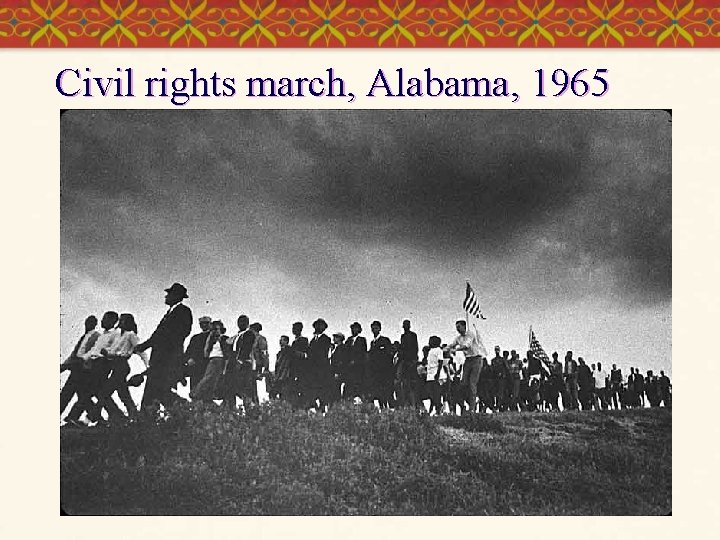
Emergence of the Superpower: The United States Ô American Politics and Society Through the Vietnam Era ] ] Economic boom after World War II John F. Kennedy (1917 -1963), 1961 -1963 Lyndon Johnson (1908 -1973), 1963 -1969 Martin Luther King (1929 -1968) • Desegregation, Civil Rights Act, 1964 • Voting Rights Act, 1965 • Race riots 1965 -1967 • Vietnam War, Anti-war protests • Richard Nixon (1913 -1994) elected in 1968
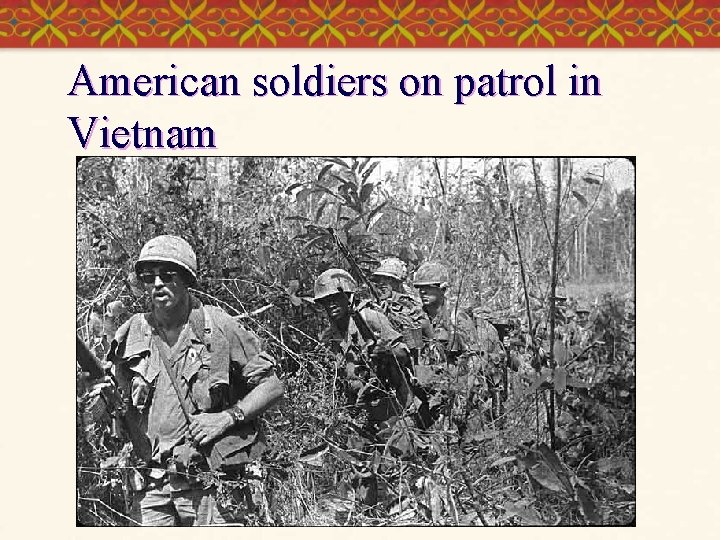
American soldiers on patrol in Vietnam
Civil rights march, Alabama, 1965
Shift Rightward after 1973 Ô Ô Ô Nixon’s presidency Watergate Jimmy Carter (b. 1924), 1976 -1980 ] ] Ô Ronald Reagan (b. 1911), 1981 -1989 ] ] ] Ô Ô Reverses the welfare state Military buildup Deficit spending problems George H. W. Bush (b. 1924) Bill Clinton elected in 1992 ] ] ] Ô Stagflation – high inflation and decline in earnings 53 hostages held by Iran Supported many Republican issues Period of economic growth Charges of misconduct and impeachment George W. Bush elected in 2000 ] Terrorism
The Development of Canada Ô Ô Lester Pearson (1897 -1972) ] Welfare state created Pierre Trudeau (1919 -2000) ] Industrialization and inflation Brian Mulroney (b. 1939) ] Sought greater privatization of state-run corporations ] Free trade agreement with the United States Quebec ] Parti Québécois headed by Rene Levesque
Latin America since 1945 Ô Ô Ô Ô Ô Great Depression led to political instability Great Depression moved Latin America to modern economic structure Latin America began to develop its own industries By the 1960’s still economically dependent Led to more political instability Debt crisis from borrowing from abroad Movement toward democracy American style of investing ] Growing nationalist feelings Organization of American States Concern about communism
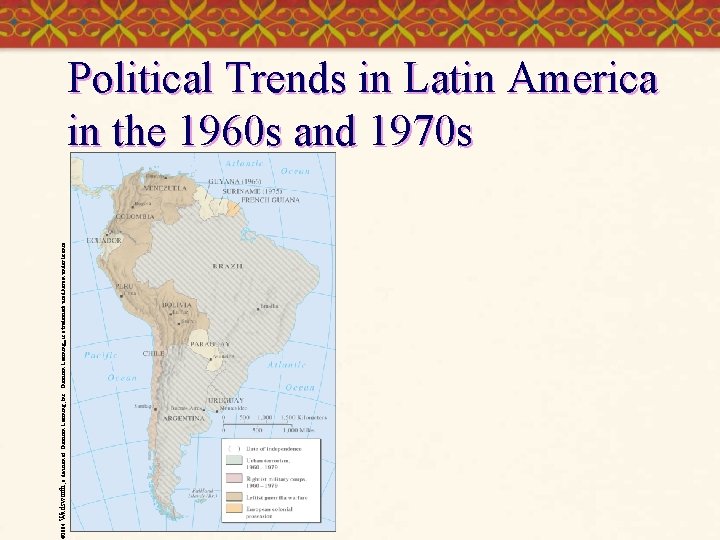
© 2004 Wadsworth, a division of Thomson Learning, Inc. Thomson Learning™ is a trademark used herein under license. Political Trends in Latin America in the 1960 s and 1970 s
The Threat of Marxist Revolutions: Cuba, Chile, Nicaragua Ô Ô Ô Cuba ] Fidel Castro (b. 1926) overthrows Fulgencio Batista and enters Havana January 1, 1959 ] Ernesto Che Guevara (1928 -1967) ] October 1960 U. S. trade embargo on Cuba ] U. S. breaks diplomatic relations with Cuba, January 3, 1961 ] Failed Bay of Pigs invasion, April 17, 1961 ] Castro’s social revolution had mixed results • Gains in health care and education • Agricultural diversification but still reliant upon sugar ] Collapse of the Soviet Union meant the end of subsidies Chile ] Salvador Allende (1908 – 1973) ] The CIA and Augusto Pinochet (b. 1915) Nicaragua ] Anastasio Somoza ] The Sandinistas and the Contras
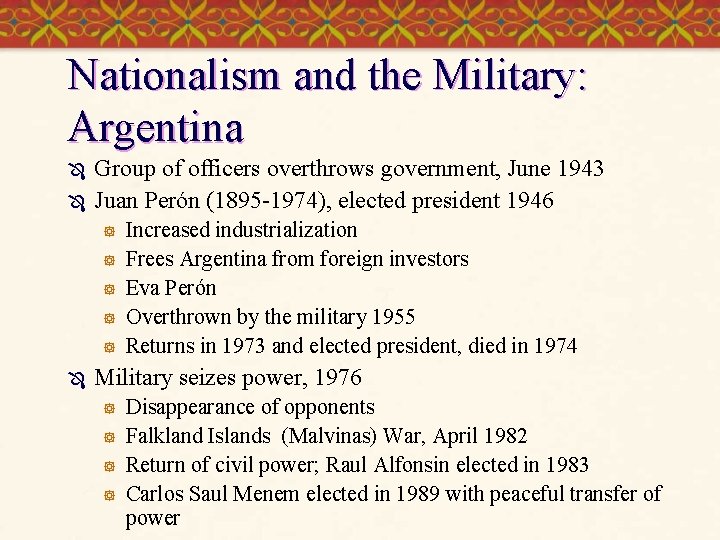
Nationalism and the Military: Argentina Ô Ô Group of officers overthrows government, June 1943 Juan Perón (1895 -1974), elected president 1946 ] ] ] Ô Increased industrialization Frees Argentina from foreign investors Eva Perón Overthrown by the military 1955 Returns in 1973 and elected president, died in 1974 Military seizes power, 1976 ] ] Disappearance of opponents Falkland Islands (Malvinas) War, April 1982 Return of civil power; Raul Alfonsin elected in 1983 Carlos Saul Menem elected in 1989 with peaceful transfer of power
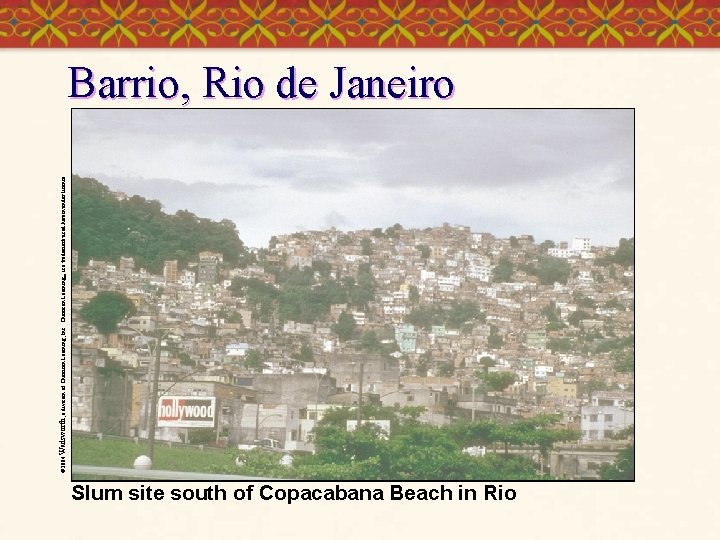
© 2004 Wadsworth, a division of Thomson Learning, Inc. Thomson Learning™ is a trademark used herein under license. Barrio, Rio de Janeiro Slum site south of Copacabana Beach in Rio
Nationalism and the Military: Brazil Ô Getúlio Vargas Ô 1964 – 1984: Military in direct control of Brazil Ô Challenges of emergent democracy
Mexican Way Ô Ô Ô Institutional Revolutionary Party (PRI) controls Mexican politics Industrial growth in 1950 s and 1960 s Student protests, 1968 Ô One party system protested ] Protest in Tlatelolco Square Political reform: Luis Echeverria and Jose Portillo in 1970 s ] Registering political parties ] Freedom of debate in press and at universities Ô Foreign debt ] ] ] Ô Oil reserves discovered making Mexico dependent of these revenues Mid-1980 s oil prices drop and Mexico could no longer service its debts Vicente Fox defeats the PRI to be elected president, 2000
Society and Culture in the Western World Ô Ô The Emergence of a New Society ] The technocratic society ] Changes in the middle class; managers and technicians ] Changes among the traditional lower class ] Leisure activity ] Education ] Student protests of the ’ 60 s and ’ 70 s ] Student radicalism The Permissive Society ] Sexual revolution ] Breakdown of the traditional family ] Drug culture
Women in the Postwar Western World Ô Ô Ô The return to traditional roles and the baby boom Smaller families due to birth control More women enter the work force Working women at lower wages The Feminist Movement: The Search for Liberation ] More women gain the right to vote after World War II ] By the 1960’s women began to assert their rights ] Simone de Beauvoir (1908 -1986), The Second Sex • Argues that living in a male-dominated society, women have been defined by their differences from men and consequently receive second-class status
Transformation in Women’s Lives Ô Ô Ô Ô Women need to average 2. 1 children in order to ensure a natural replacement of a country’s population Increasing number of women in the workforce Women’s liberation movement Control over their own bodies Political activism Ecological activity Women reach out to other women
The Growth of Terrorism Ô Ô Munich Olympic games, 1972 Motivations: ] Militant nationalism seeking separate states ] Attacks against the ruling government; the IRA ] Palestinian terrorists: ] Angry over the loss of land ] Rome and Vienna, 1985 ] State sponsored terrorism: ] Pan American flight 103, December 21, 1988
Terrorist Attack on the United States Ô Attack on the World Trade Center and the Pentagon, September 11, 2001 Ô Al-Qaeda and Osama bin Laden Ô U. S. and NATO attack on Taliban-controlled centers in Afghanistan ] New government in November Ô The West and Islam
Guest Workers and Immigrants Ô Labor shortages in the 1950 s and 1960 s in Western Europe forced reliance on foreign workers Ô Refugees Ô New restrictions on immigration
The Environment and the Green Movements Ô Ecological problems Ô Major political parties in Europe to advocate new regulations to protect the environment ] Chernobyl, Ukraine, 1986 Ô Green Parties ] Germany, Sweden, Austria, Switzerland
Western Culture Since 1945 Ô Literature ] ] Ô Ô “Theater of the Absurd” Samuel Beckett (1906 -1990), Waiting for Godot Post-war disillusionment Albert Camus (1913 -1960); Jean-Paul Sartre (1905 -1980) Postmodernism Art ] ] ] Center of Western art at New York City after World War II Abstract Expressionism Jackson Pollock (1912 -1956)
The World of Science and Technology Ô Government and military sponsorship of science ] Radar, rockets, jets, computers, atomic bomb Ô Computers Ô Questioning of science and technology
Varieties of Religious Life Ô Catholic revival ] John XXIII and John Paul II Ô Fundamentalism Ô The Growth of Islam
The Explosion of Popular Culture Ô Popular culture and the Americanization of the world Ô Motion pictures Ô Popular music Ô Sports ] Television
Discussion Questions Ô Ô What steps have European nations taken to overcome their common problems since World War II? How well have Eastern European states fared since the collapse of the Soviet Union? How did U. S. involvement in Vietnam change American society and politics? What factors contributed to a religious revival at the end of the twentieth century? What were the political consequences of this trend?