
27 2 Instinct and Learning KEY CONCEPT Both
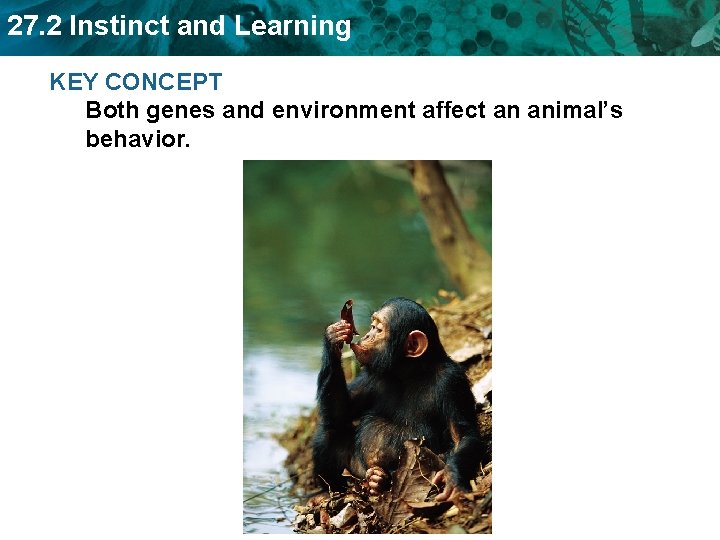
27. 2 Instinct and Learning KEY CONCEPT Both genes and environment affect an animal’s behavior.
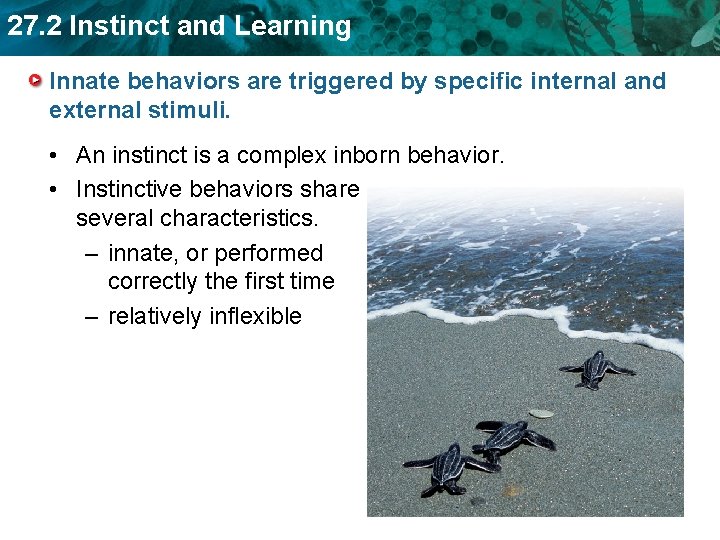
27. 2 Instinct and Learning Innate behaviors are triggered by specific internal and external stimuli. • An instinct is a complex inborn behavior. • Instinctive behaviors share several characteristics. – innate, or performed correctly the first time – relatively inflexible
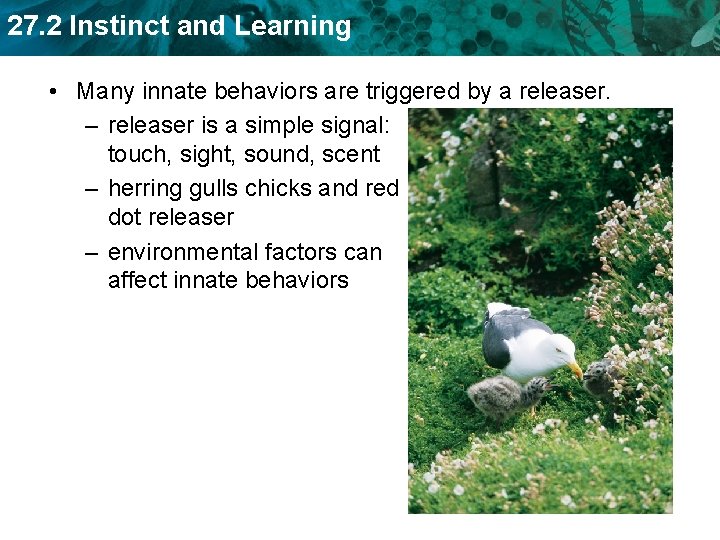
27. 2 Instinct and Learning • Many innate behaviors are triggered by a releaser. – releaser is a simple signal: touch, sight, sound, scent – herring gulls chicks and red dot releaser – environmental factors can affect innate behaviors
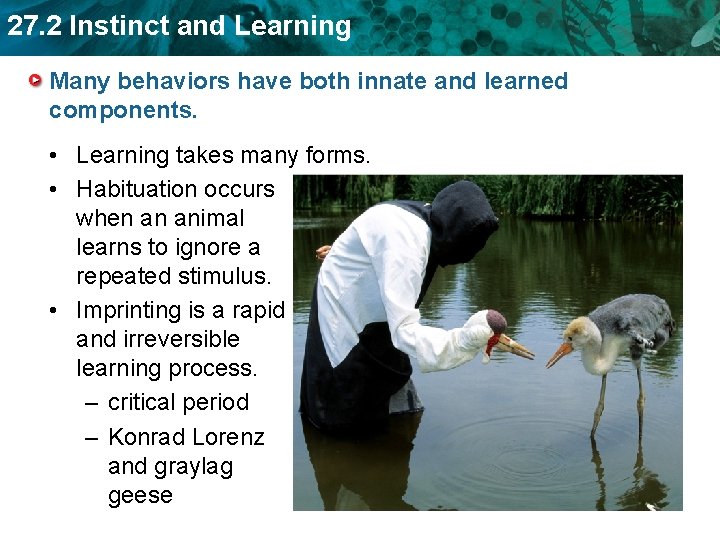
27. 2 Instinct and Learning Many behaviors have both innate and learned components. • Learning takes many forms. • Habituation occurs when an animal learns to ignore a repeated stimulus. • Imprinting is a rapid and irreversible learning process. – critical period – Konrad Lorenz and graylag geese
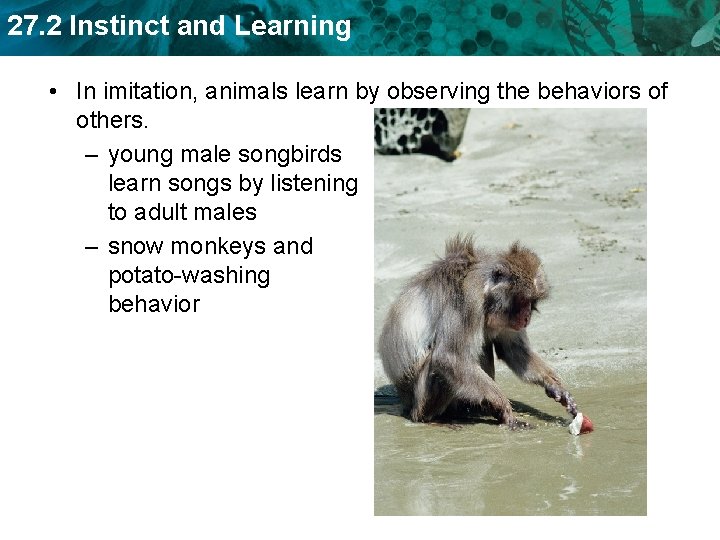
27. 2 Instinct and Learning • In imitation, animals learn by observing the behaviors of others. – young male songbirds learn songs by listening to adult males – snow monkeys and potato-washing behavior
27. 2 Instinct and Learning is adaptive. • Animals that can learn can better adapt to new situations. • In associative learning, a specific action is associated with its consequences. • Conditioning is one type of associative learning.
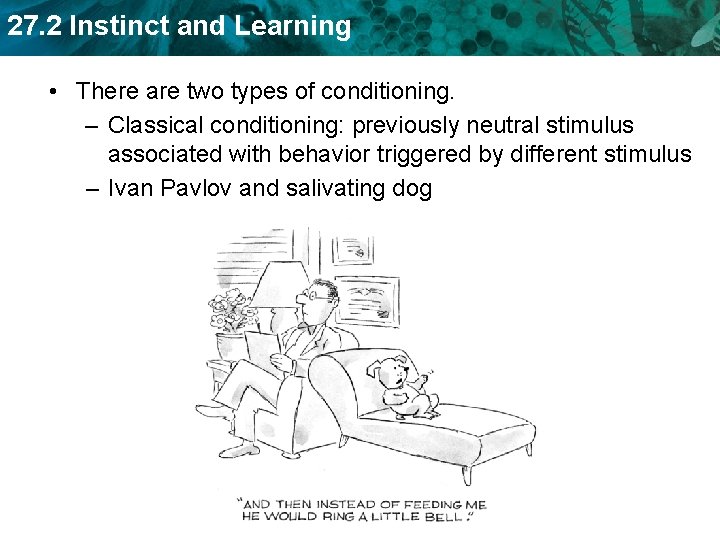
27. 2 Instinct and Learning • There are two types of conditioning. – Classical conditioning: previously neutral stimulus associated with behavior triggered by different stimulus – Ivan Pavlov and salivating dog
27. 2 Instinct and Learning • There are two types of conditioning. – Operant conditioning: behavior increased or decreased by positive or negative reinforcement – B. F. Skinner and “Skinner boxes”
- Slides: 8