
26 3 Birds KEY CONCEPT Birds have many
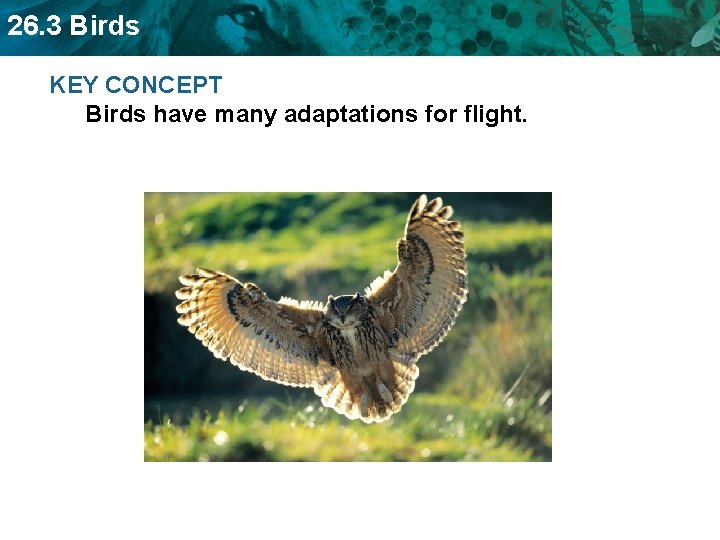
26. 3 Birds KEY CONCEPT Birds have many adaptations for flight.
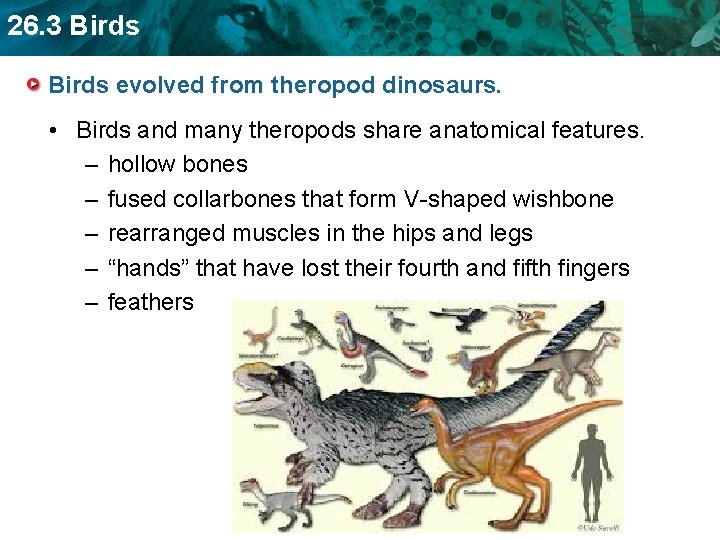
26. 3 Birds evolved from theropod dinosaurs. • Birds and many theropods share anatomical features. – hollow bones – fused collarbones that form V-shaped wishbone – rearranged muscles in the hips and legs – “hands” that have lost their fourth and fifth fingers – feathers
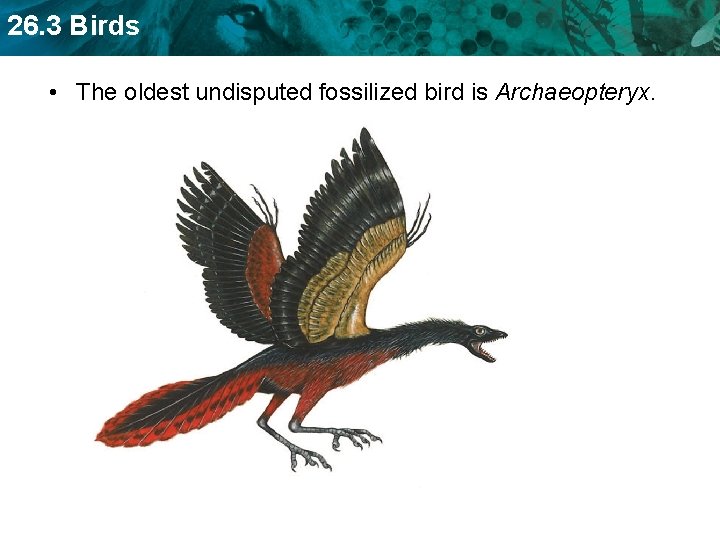
26. 3 Birds • The oldest undisputed fossilized bird is Archaeopteryx.
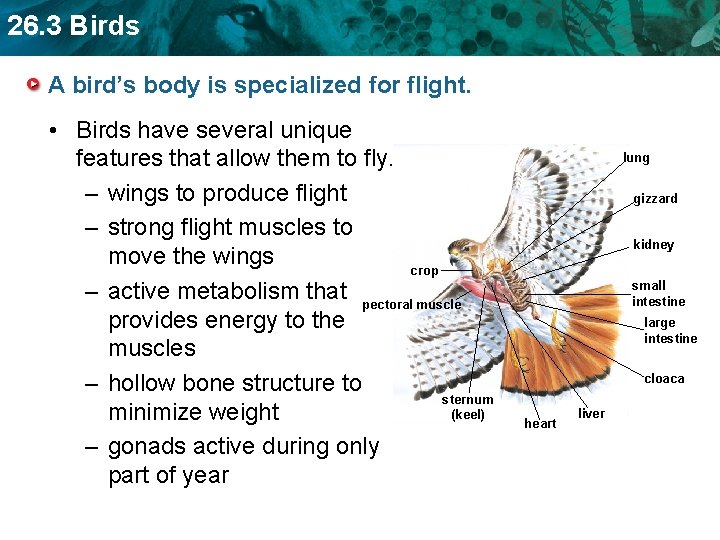
26. 3 Birds A bird’s body is specialized for flight. • Birds have several unique features that allow them to fly. – wings to produce flight – strong flight muscles to move the wings crop – active metabolism that pectoral muscle provides energy to the muscles – hollow bone structure to sternum (keel) minimize weight – gonads active during only part of year lung gizzard kidney small intestine large intestine cloaca heart liver
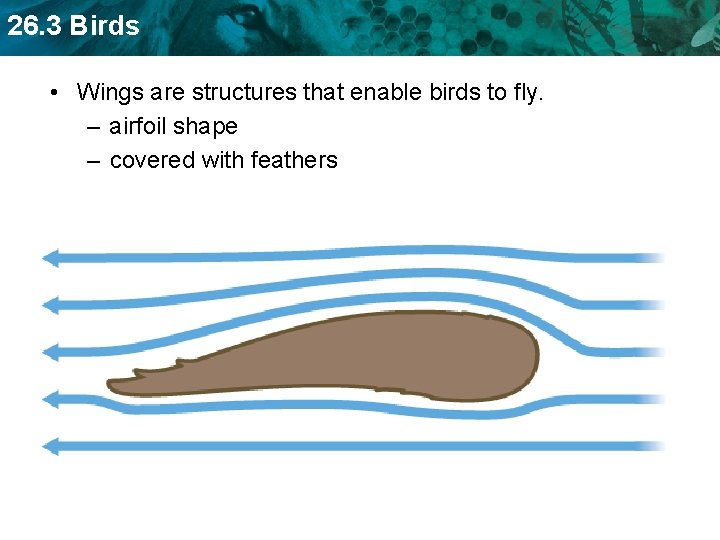
26. 3 Birds • Wings are structures that enable birds to fly. – airfoil shape – covered with feathers
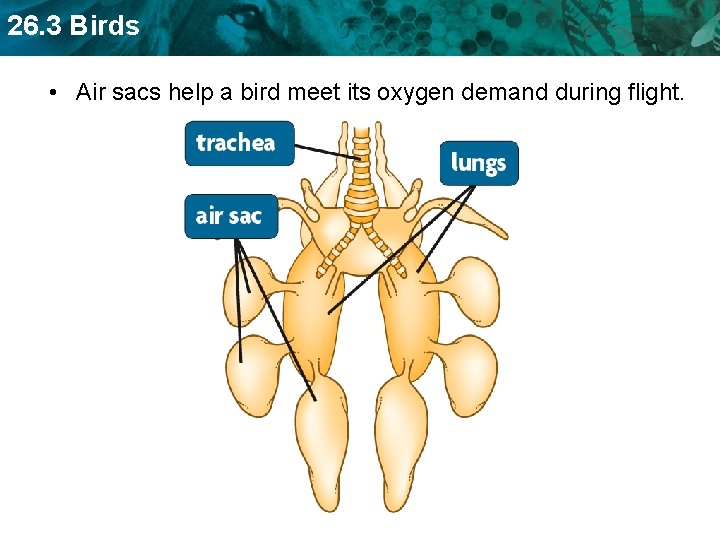
26. 3 Birds • Air sacs help a bird meet its oxygen demand during flight.
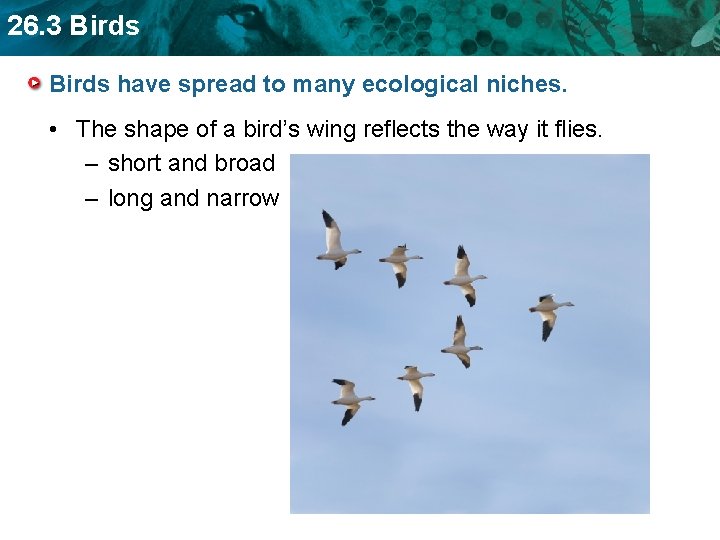
26. 3 Birds have spread to many ecological niches. • The shape of a bird’s wing reflects the way it flies. – short and broad – long and narrow
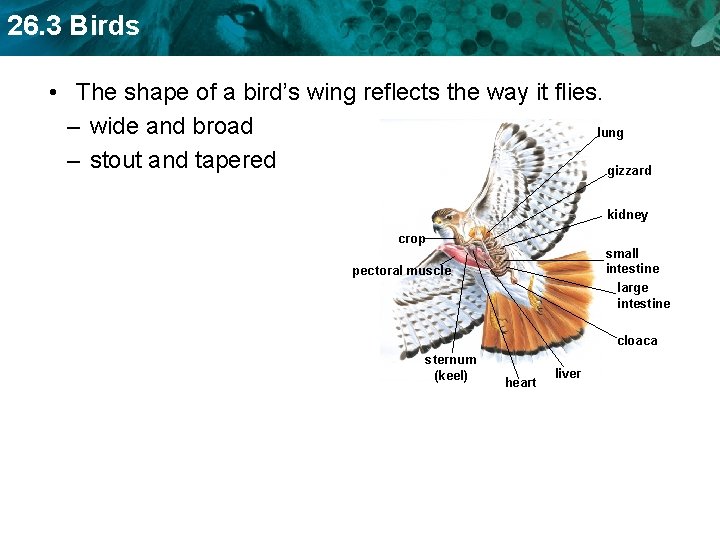
26. 3 Birds • The shape of a bird’s wing reflects the way it flies. – wide and broad lung – stout and tapered gizzard kidney crop small intestine large intestine pectoral muscle cloaca sternum (keel) heart liver
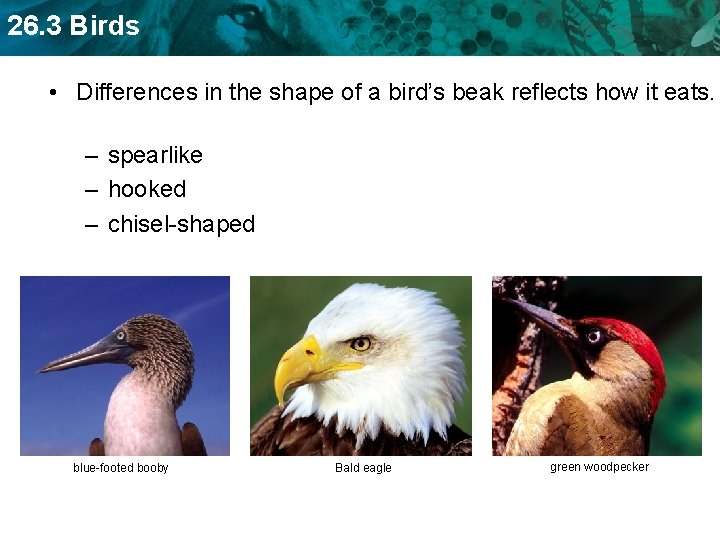
26. 3 Birds • Differences in the shape of a bird’s beak reflects how it eats. – spearlike – hooked – chisel-shaped blue-footed booby Bald eagle green woodpecker
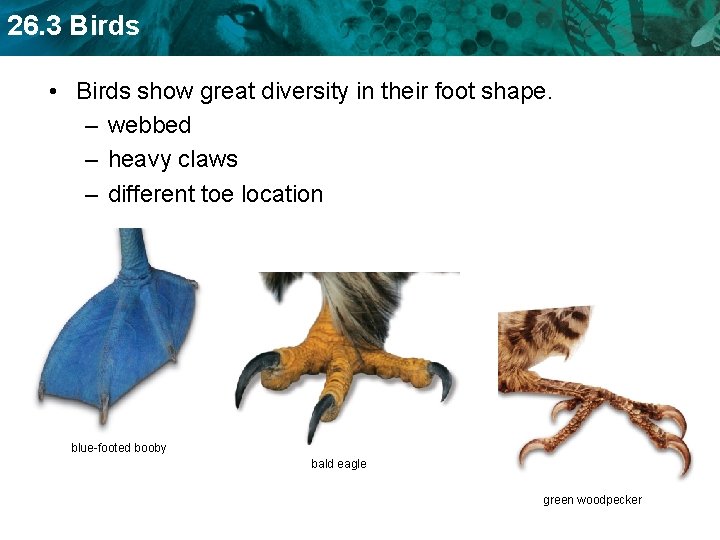
26. 3 Birds • Birds show great diversity in their foot shape. – webbed – heavy claws – different toe location blue-footed booby bald eagle green woodpecker
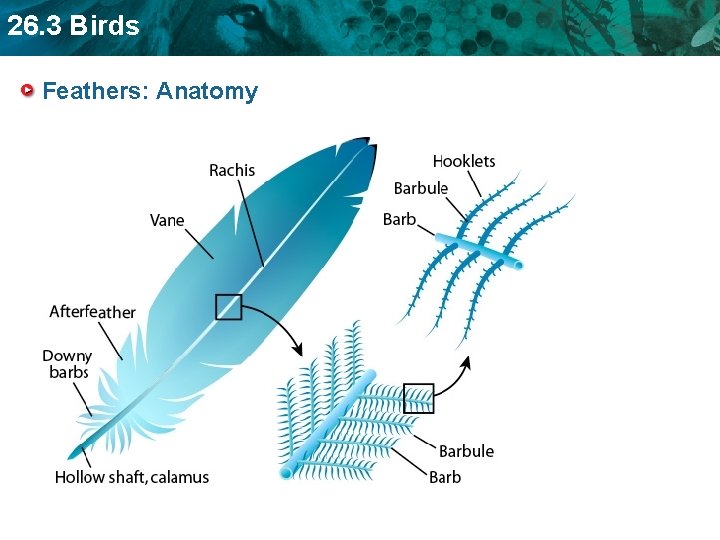
26. 3 Birds Feathers: Anatomy
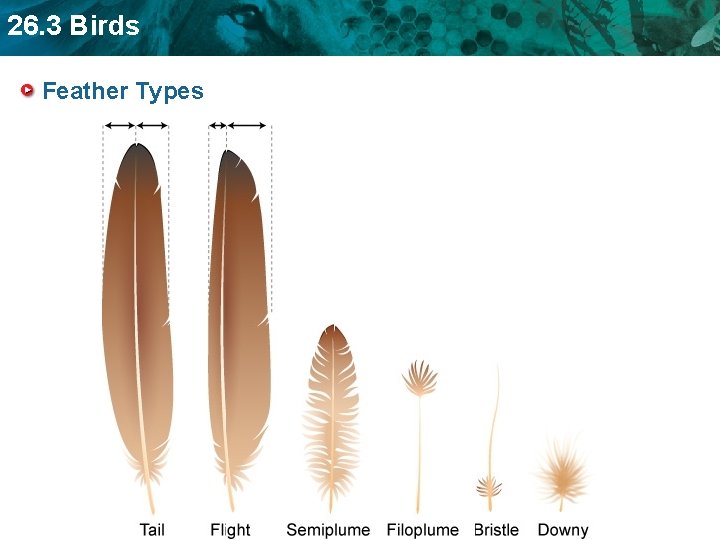
26. 3 Birds Feather Types
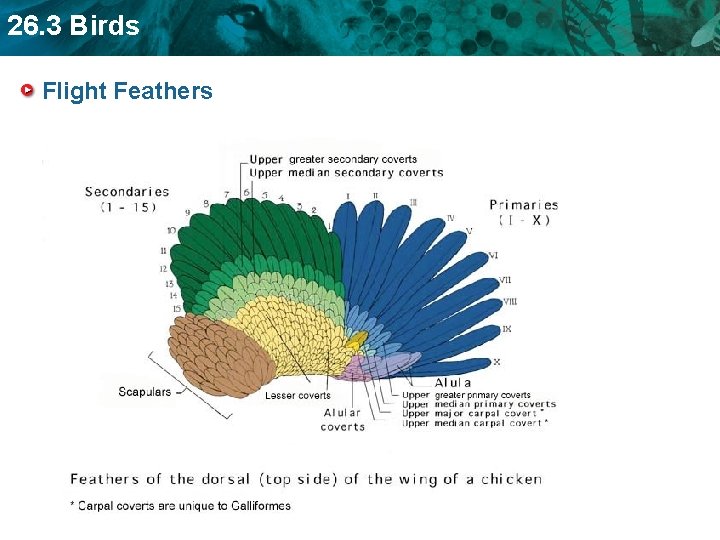
26. 3 Birds Flight Feathers
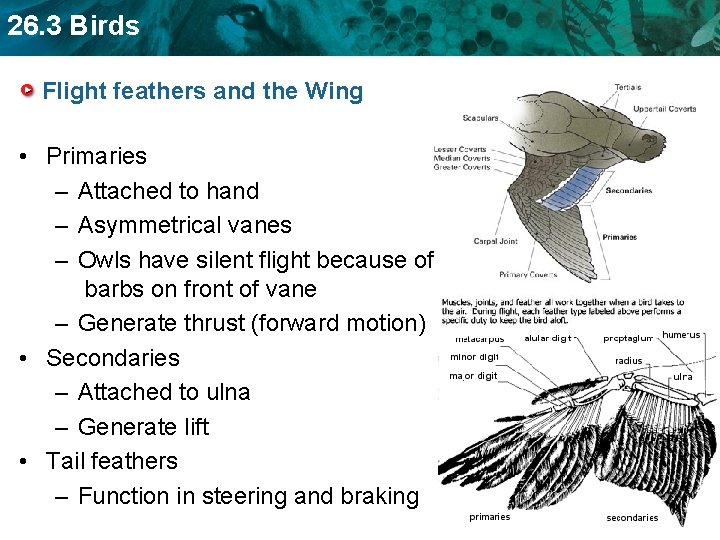
26. 3 Birds Flight feathers and the Wing • Primaries – Attached to hand – Asymmetrical vanes – Owls have silent flight because of barbs on front of vane – Generate thrust (forward motion) • Secondaries – Attached to ulna – Generate lift • Tail feathers – Function in steering and braking
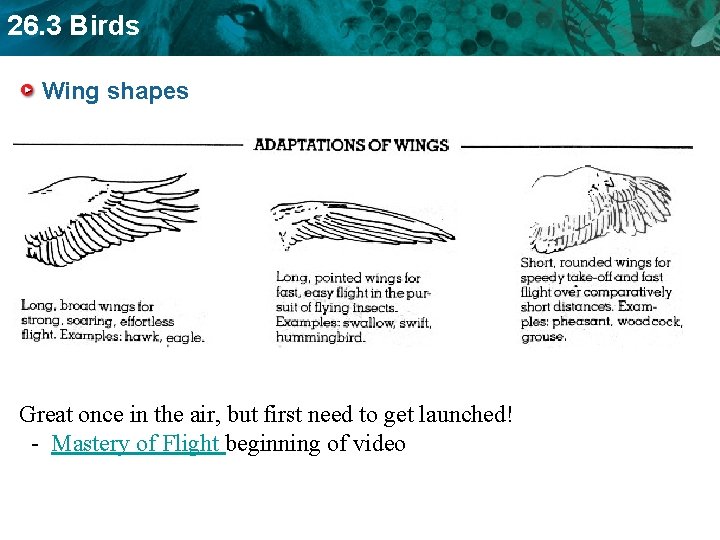
26. 3 Birds Wing shapes Great once in the air, but first need to get launched! - Mastery of Flight beginning of video
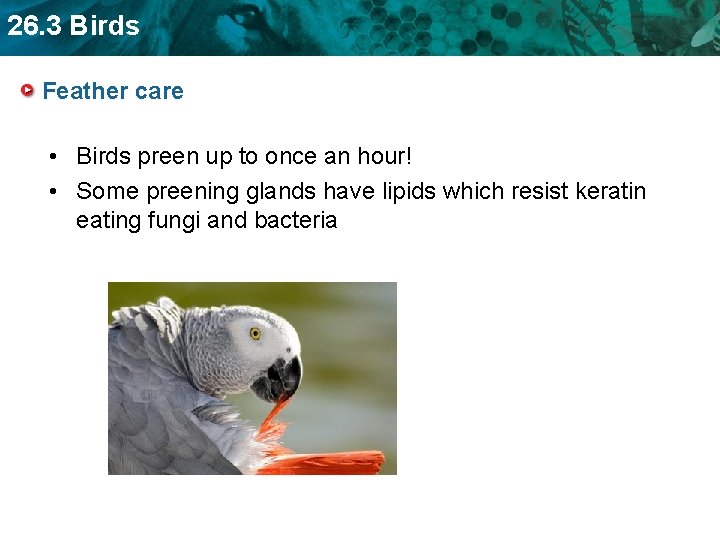
26. 3 Birds Feather care • Birds preen up to once an hour! • Some preening glands have lipids which resist keratin eating fungi and bacteria

26. 3 Birds Adaptations for flight: Anatomical • • Feathers Wing Reproduction (internal, eggs) Bones
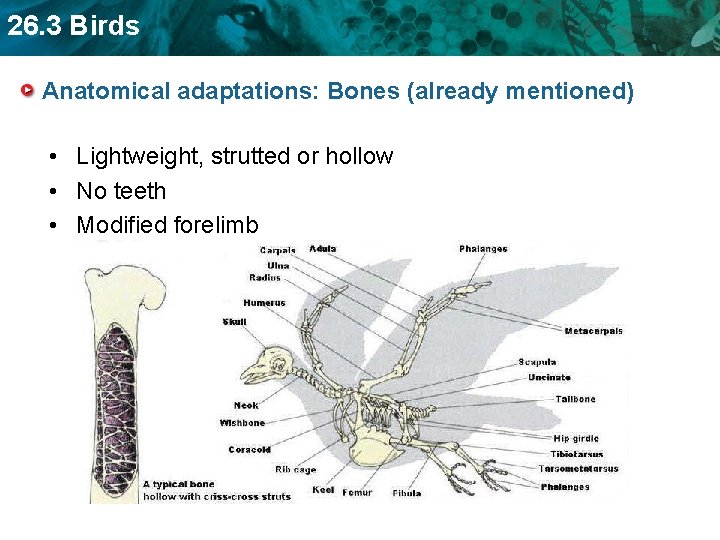
26. 3 Birds Anatomical adaptations: Bones (already mentioned) • Lightweight, strutted or hollow • No teeth • Modified forelimb
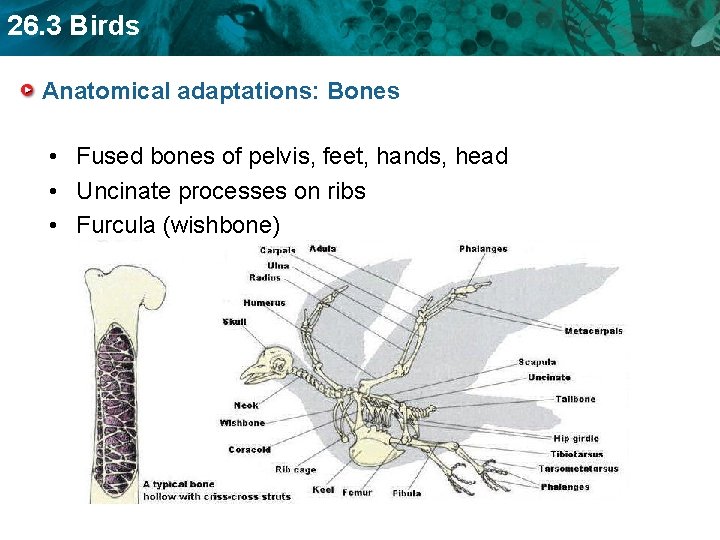
26. 3 Birds Anatomical adaptations: Bones • Fused bones of pelvis, feet, hands, head • Uncinate processes on ribs • Furcula (wishbone)
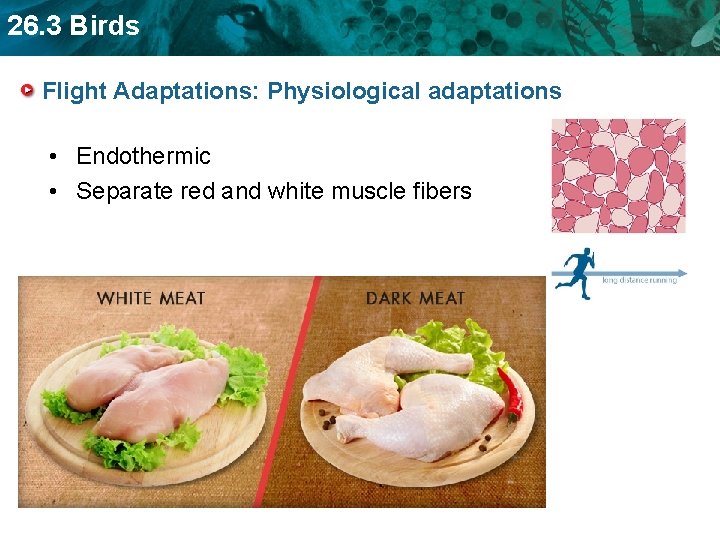
26. 3 Birds Flight Adaptations: Physiological adaptations • Endothermic • Separate red and white muscle fibers
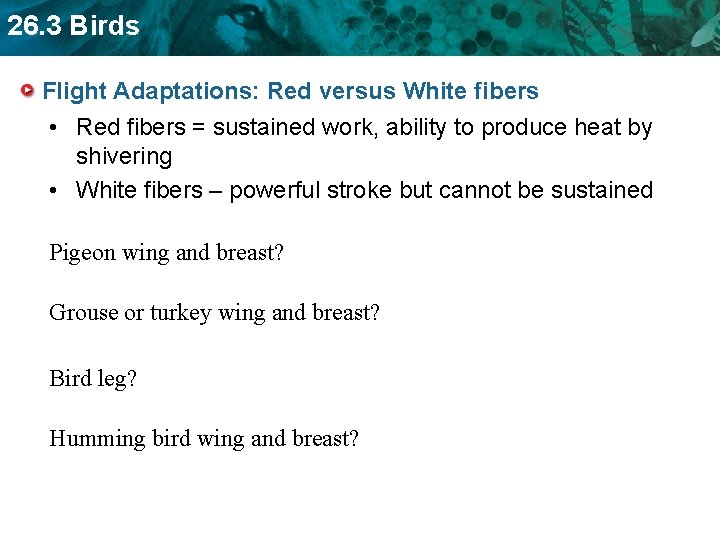
26. 3 Birds Flight Adaptations: Red versus White fibers • Red fibers = sustained work, ability to produce heat by shivering • White fibers – powerful stroke but cannot be sustained Pigeon wing and breast? Grouse or turkey wing and breast? Bird leg? Humming bird wing and breast?

26. 3 Birds Flight Adaptations: Circulatory System • High metabolic demands require rapid circulation of high volumes of blood. – Four chambered heart • Double circulatory system (pulmonary and systemic) – Large heart -50 -100% larger and more powerful than mammals of the same size.
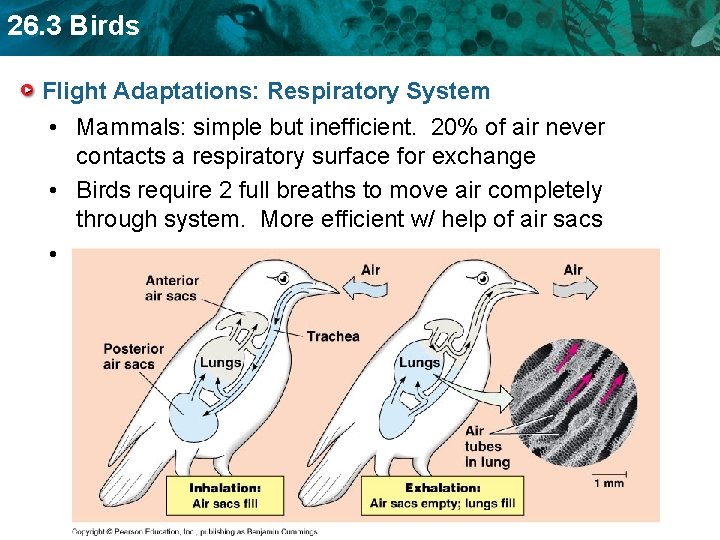
26. 3 Birds Flight Adaptations: Respiratory System • Mammals: simple but inefficient. 20% of air never contacts a respiratory surface for exchange • Birds require 2 full breaths to move air completely through system. More efficient w/ help of air sacs • In addition to lungs, th ey have ~9 air sacks extending into abdomen, land toward wings
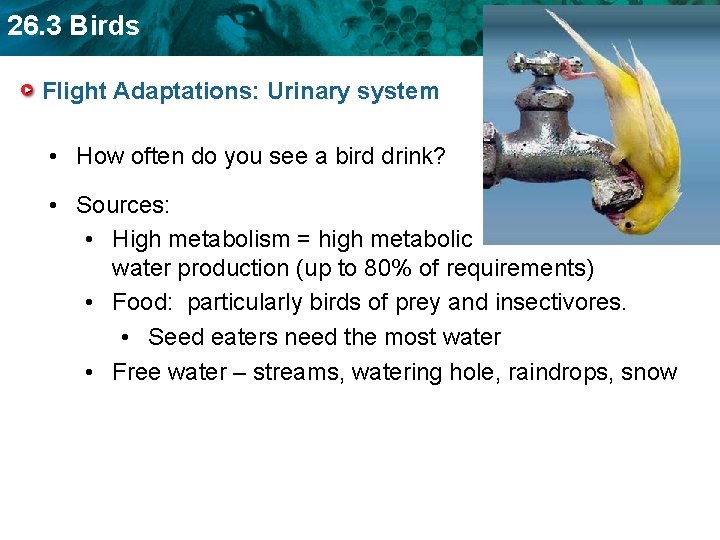
26. 3 Birds Flight Adaptations: Urinary system • How often do you see a bird drink? • Sources: • High metabolism = high metabolic water production (up to 80% of requirements) • Food: particularly birds of prey and insectivores. • Seed eaters need the most water • Free water – streams, watering hole, raindrops, snow
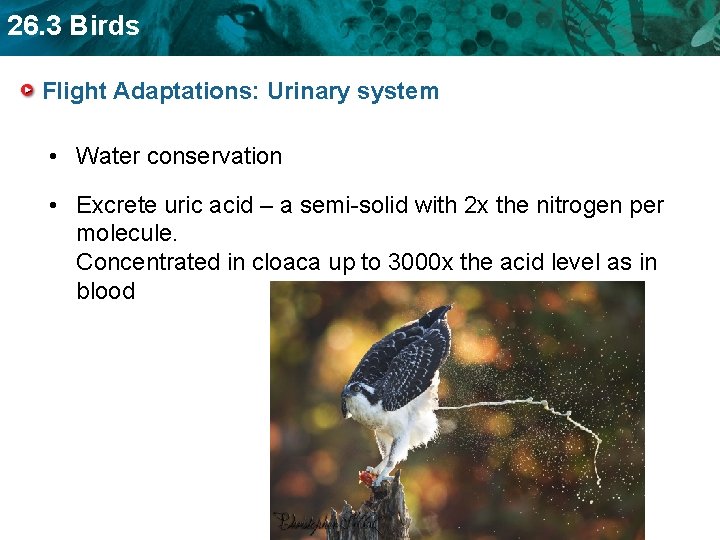
26. 3 Birds Flight Adaptations: Urinary system • Water conservation • Excrete uric acid – a semi-solid with 2 x the nitrogen per molecule. Concentrated in cloaca up to 3000 x the acid level as in blood
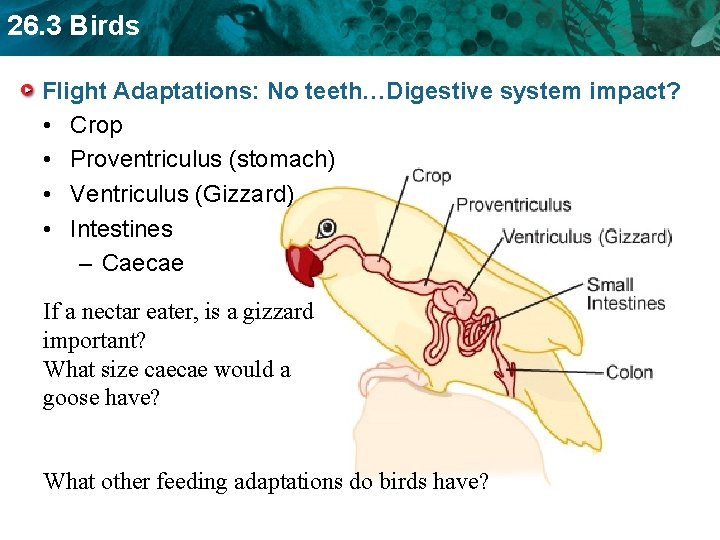
26. 3 Birds Flight Adaptations: No teeth…Digestive system impact? • Crop • Proventriculus (stomach) • Ventriculus (Gizzard) • Intestines – Caecae If a nectar eater, is a gizzard important? What size caecae would a goose have? What other feeding adaptations do birds have?
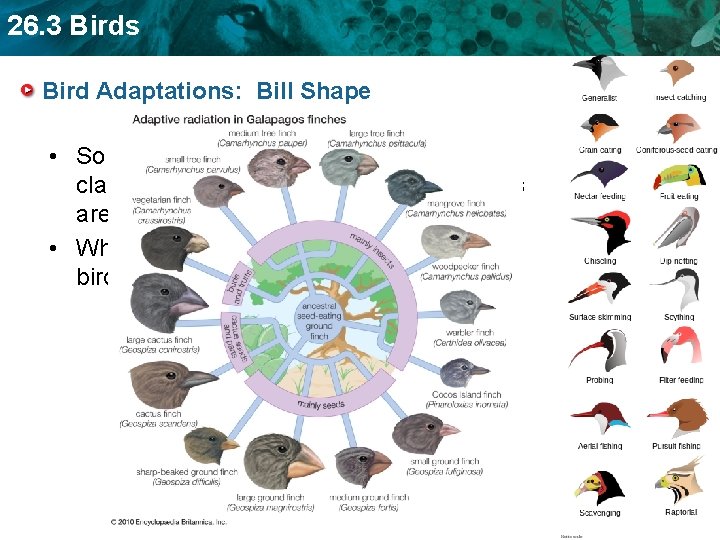
26. 3 Birds Bird Adaptations: Bill Shape • So important that this is one way birds are classified. Twenty different orders of birds are recognized • Why are there so many different types of birds?
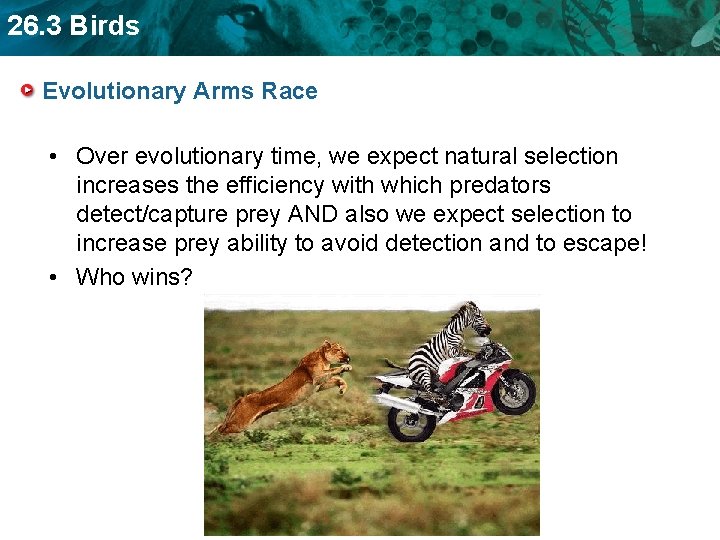
26. 3 Birds Evolutionary Arms Race • Over evolutionary time, we expect natural selection increases the efficiency with which predators detect/capture prey AND also we expect selection to increase prey ability to avoid detection and to escape! • Who wins?
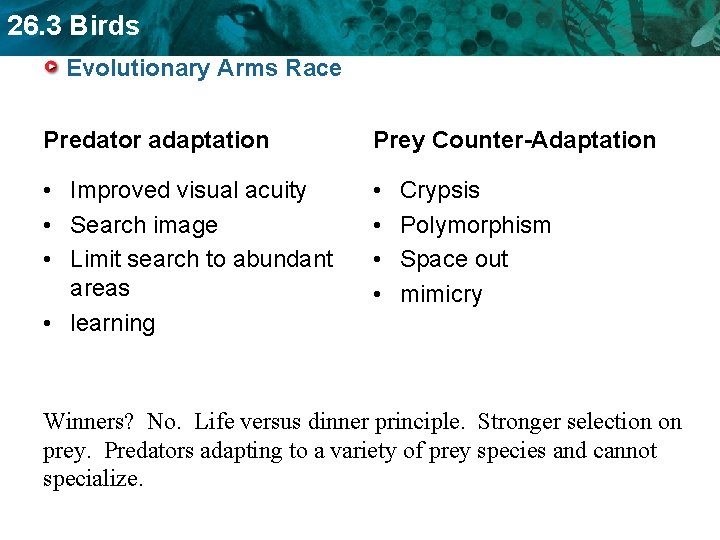
26. 3 Birds Evolutionary Arms Race Predator adaptation Prey Counter-Adaptation • Improved visual acuity • Search image • Limit search to abundant areas • learning • • Crypsis Polymorphism Space out mimicry Winners? No. Life versus dinner principle. Stronger selection on prey. Predators adapting to a variety of prey species and cannot specialize.
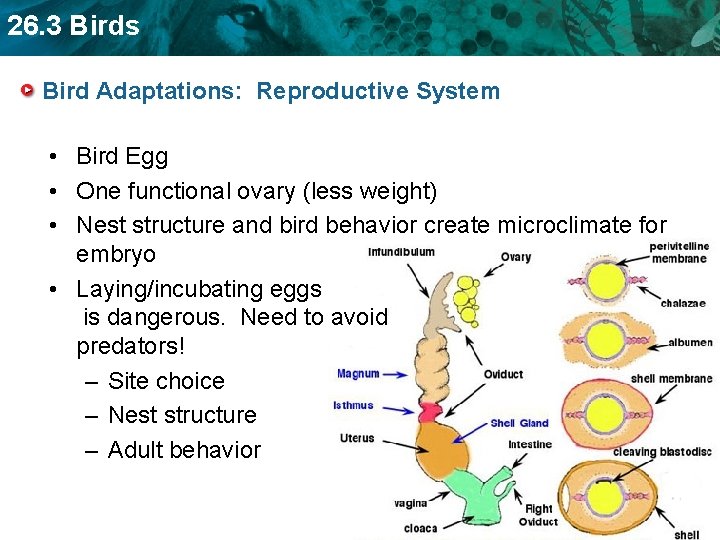
26. 3 Birds Bird Adaptations: Reproductive System • Bird Egg • One functional ovary (less weight) • Nest structure and bird behavior create microclimate for embryo • Laying/incubating eggs is dangerous. Need to avoid predators! – Site choice – Nest structure – Adult behavior
- Slides: 30