
26 1 Invertebrate Evolution and Diversity Miss Grant
26. 1 Invertebrate Evolution and Diversity Miss Grant Kaimuki Christian School
Origins of Invertebrates � About 3 billion years after the first prokaryotic cells evolved, organisms remained single-celled � Scientists think multicellular eukaryotes evolved from choanoflagellates (single-celled eukaryotes that typically live in colonies) � Oldest evidence of multicellular life: 600 million year old fossils (eggs, embryos, trace fossils) � Evidence shows the first animals began evolving long before the Cambrian Explosion
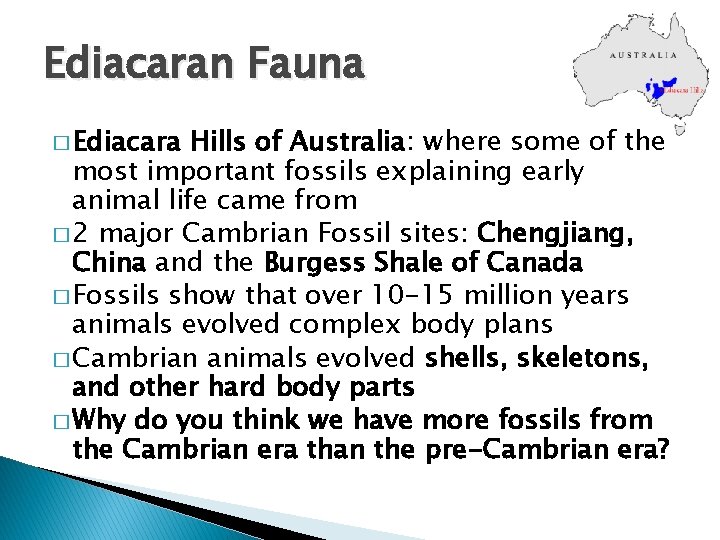
Ediacaran Fauna � Ediacara Hills of Australia: where some of the most important fossils explaining early animal life came from � 2 major Cambrian Fossil sites: Chengjiang, China and the Burgess Shale of Canada � Fossils show that over 10 -15 million years animals evolved complex body plans � Cambrian animals evolved shells, skeletons, and other hard body parts � Why do you think we have more fossils from the Cambrian era than the pre-Cambrian era?
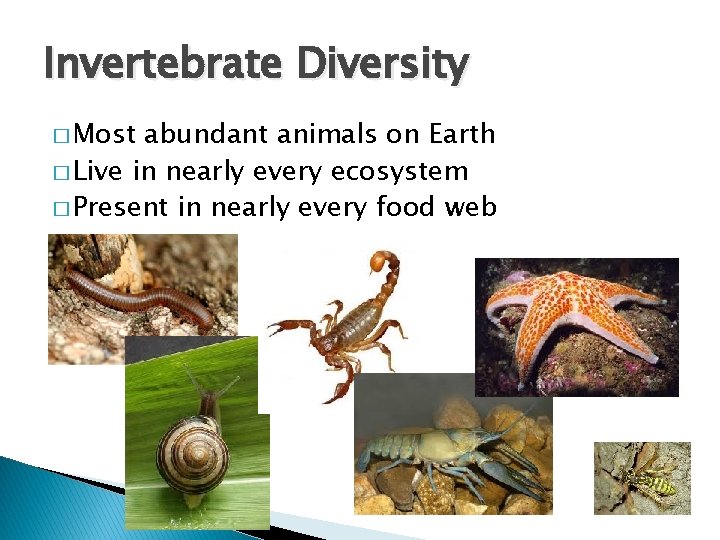
Invertebrate Diversity � Most abundant animals on Earth � Live in nearly every ecosystem � Present in nearly every food web
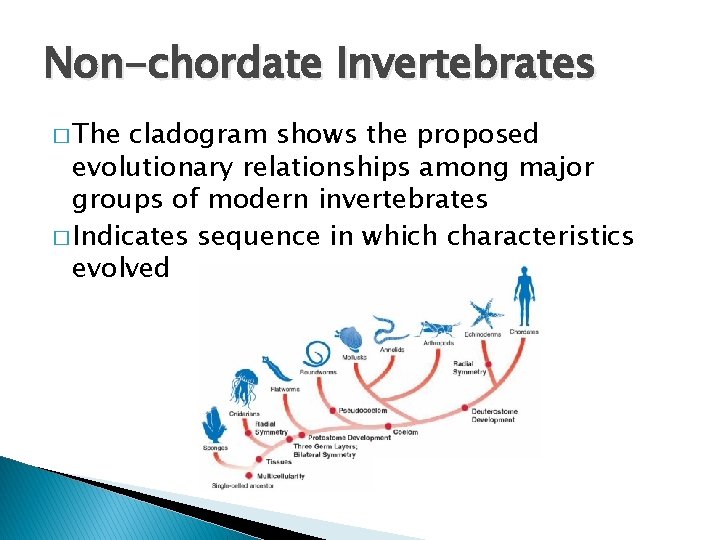
Non-chordate Invertebrates � The cladogram shows the proposed evolutionary relationships among major groups of modern invertebrates � Indicates sequence in which characteristics evolved
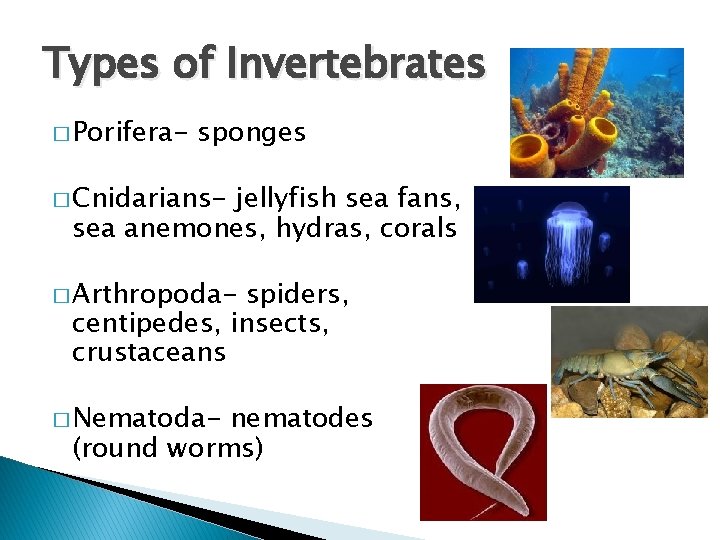
Types of Invertebrates � Porifera- sponges � Cnidarians- jellyfish sea fans, sea anemones, hydras, corals � Arthropoda- spiders, centipedes, insects, crustaceans � Nematoda- nematodes (round worms)
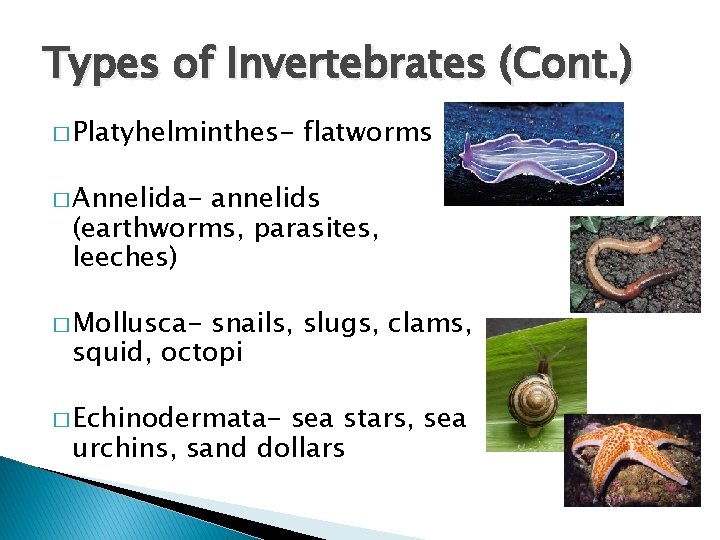
Types of Invertebrates (Cont. ) � Platyhelminthes- flatworms � Annelida- annelids (earthworms, parasites, leeches) � Mollusca- snails, slugs, clams, squid, octopi � Echinodermata- sea stars, sea urchins, sand dollars
- Slides: 7