
250 325 AD Plagues Persecutions Triumph Session 3
- Slides: 23
250 – 325 AD Plagues, Persecutions, Triumph (? ) Session 3
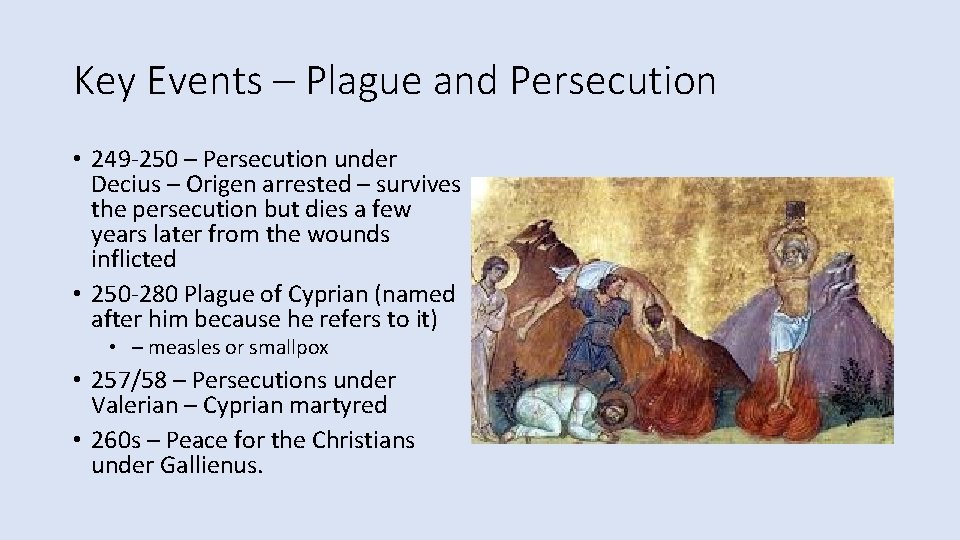
Key Events – Plague and Persecution • 249 -250 – Persecution under Decius – Origen arrested – survives the persecution but dies a few years later from the wounds inflicted • 250 -280 Plague of Cyprian (named after him because he refers to it) • – measles or smallpox • 257/58 – Persecutions under Valerian – Cyprian martyred • 260 s – Peace for the Christians under Gallienus.
Decree of Gallienus -Toleration for Christians • “The Emperor Caesar Publius Licinius Gallienus Pius Felix Augustus to Dionysius, Pinnas, Demetrius, and the other bishops. The benefit of my bounty I have ordered to be proclaimed throughout the world. All places of worship shall be restored to their owners; you bishops, therefore, may avail yourselves of the provisions of this decree to protect you from any interference. The complete liberty of action which you now possess has long been granted by me; accordingly Aurelius Quirinius, my chief minister, will enforce the ordinance given by me. ” • FYI – Christians always wanted the decrees in writing. Some officials chose to deliver the decrees orally and left room for “interpretation. ”
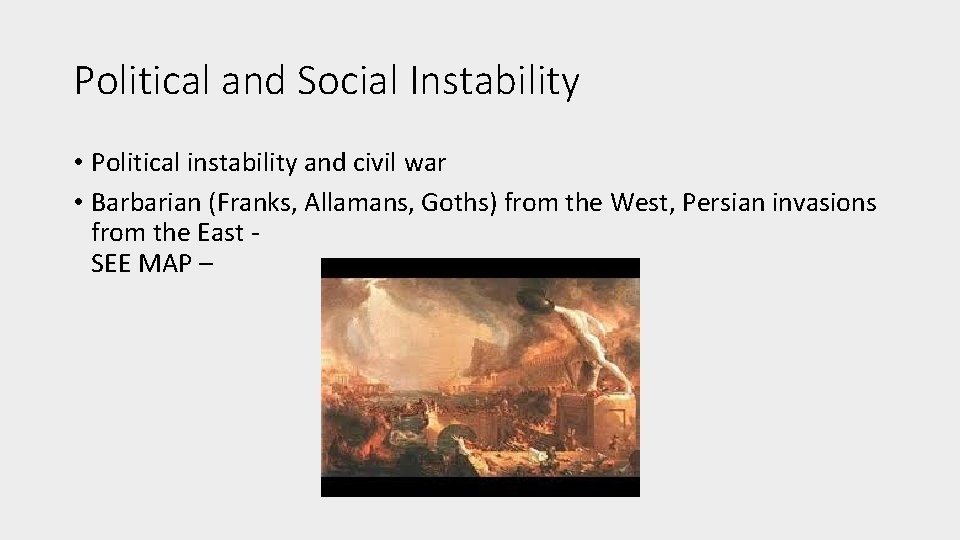
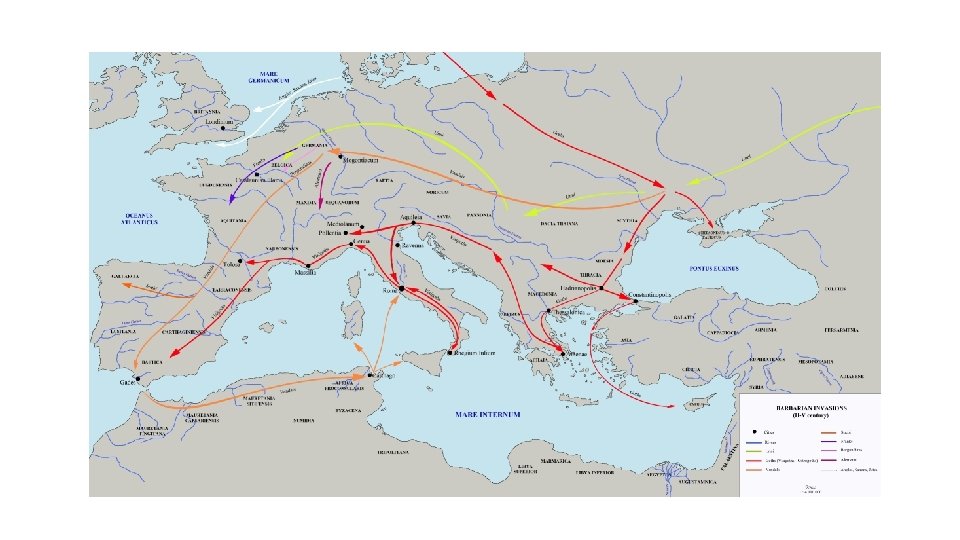
Political and Social Instability • Political instability and civil war • Barbarian (Franks, Allamans, Goths) from the West, Persian invasions from the East SEE MAP –
Political and Social Instability • Army and civil servants morale low - fleece the public – requisitioning crops and cattle, famine • A shrinking population/society turned upside down, aristocracy fading along with allegiance to the state among the middle class who are being taken advantage of by everyone • Money devalued – inflation on the rise
Decius, Valerian and Diocletian • [Decian persecution in 250 -251 – first systematic • Began as a loyalty oath to emperor and Rome to unite empire in the face of fragmentation. Christians were blamed for all that went wrong • Sacrifice to Roman gods and the genius of the emperor • (issued libelli as proof of sacrificing to the gods)] • Jews exempt because they were a religio licita • Origen was arrested during this persecution • Valerian persecution (257 – Christian senators/Bishops focus of arrests and persecution) – Cyprian died under this persecution
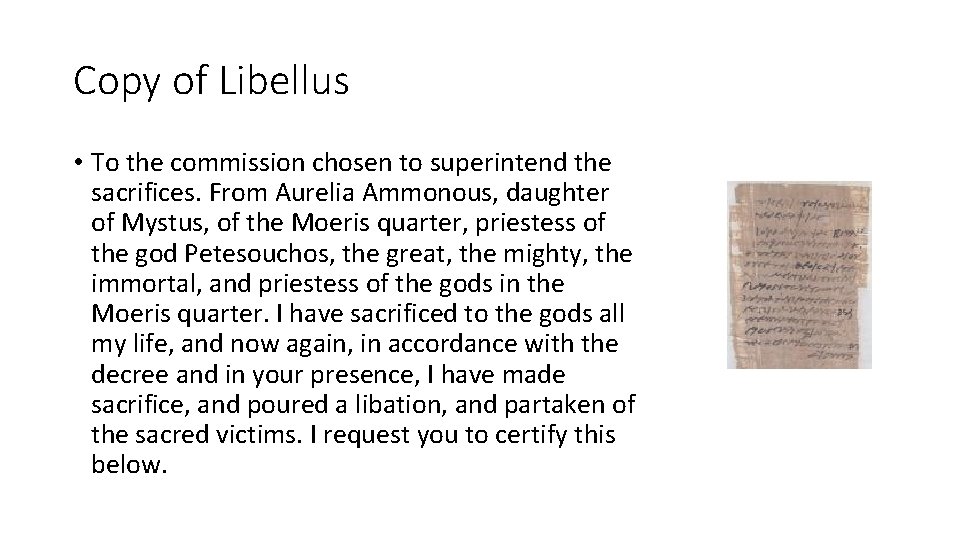
Copy of Libellus • To the commission chosen to superintend the sacrifices. From Aurelia Ammonous, daughter of Mystus, of the Moeris quarter, priestess of the god Petesouchos, the great, the mighty, the immortal, and priestess of the gods in the Moeris quarter. I have sacrificed to the gods all my life, and now again, in accordance with the decree and in your presence, I have made sacrifice, and poured a libation, and partaken of the sacred victims. I request you to certify this below.
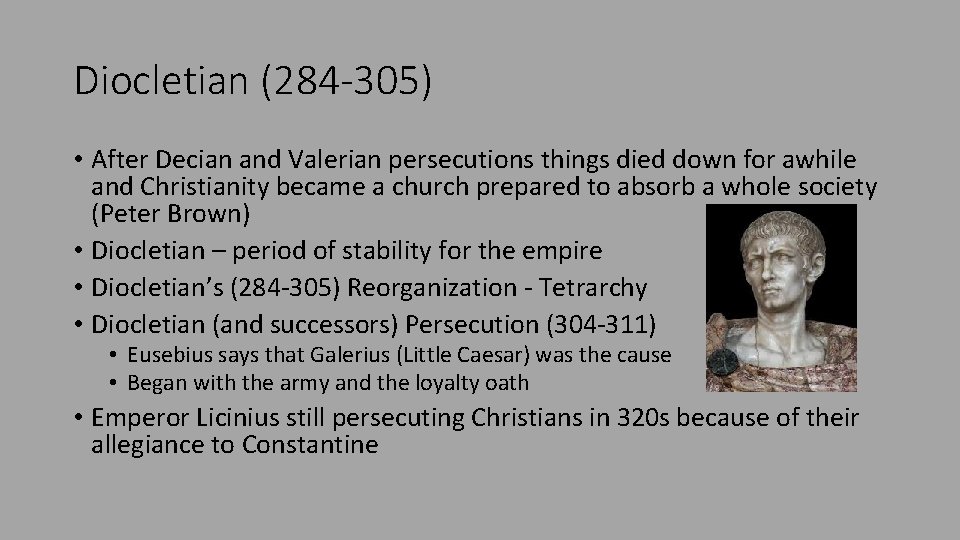
Diocletian (284 -305) • After Decian and Valerian persecutions things died down for awhile and Christianity became a church prepared to absorb a whole society (Peter Brown) • Diocletian – period of stability for the empire • Diocletian’s (284 -305) Reorganization - Tetrarchy • Diocletian (and successors) Persecution (304 -311) • Eusebius says that Galerius (Little Caesar) was the cause • Began with the army and the loyalty oath • Emperor Licinius still persecuting Christians in 320 s because of their allegiance to Constantine
After Diocletian • 305 Diocletian and Maximian retire • East: Galerius becomes Augustus with Maximin Daia as little caesar • West: Constantius Chlorus becomes Augustus with Severus as little Caesar • When Constantius Chlorus is killed at York in 306 Constantine takes over (Constantine had been “going to school” in the East – more like house arrest to keep Constantius Chlorus in line) • Constantine defeats Maxentius at the Milvian Bridge (sees a vision) in 312 & Licinius defeats Maximain Daia in the East in 313
Triumph of Constantine • Toleration after Diocletian – kind of • Galerius (who had been fiercely persecuting the Christians) issues an edict of toleration in 311 (after he grew deathly ill) • Constantine and Licinius issue edict (letter) of Milan 313 that agrees to tolerate Christians and treat them benevolently • Constantine defeats Licinius in 323 and becomes sole emperor
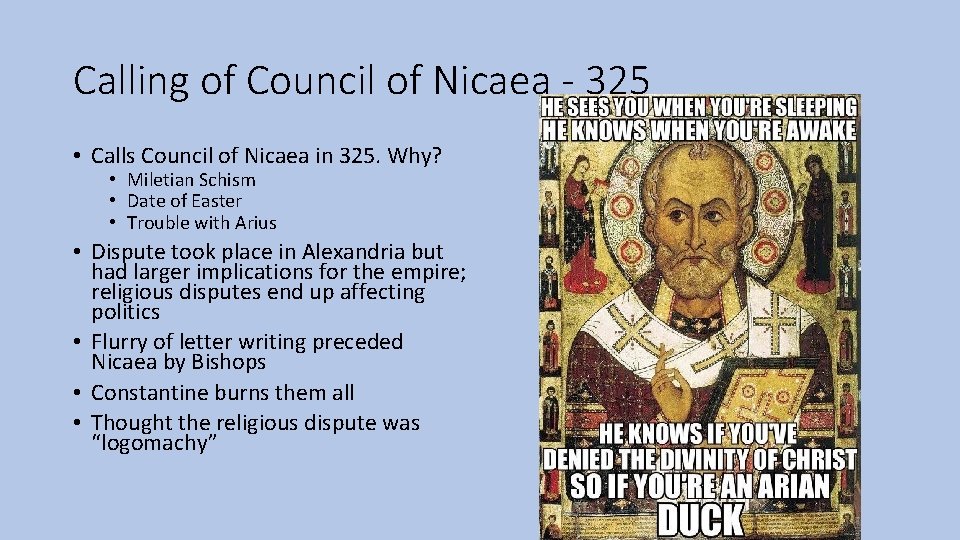
Calling of Council of Nicaea - 325 • Calls Council of Nicaea in 325. Why? • Miletian Schism • Date of Easter • Trouble with Arius • Dispute took place in Alexandria but had larger implications for the empire; religious disputes end up affecting politics • Flurry of letter writing preceded Nicaea by Bishops • Constantine burns them all • Thought the religious dispute was “logomachy”
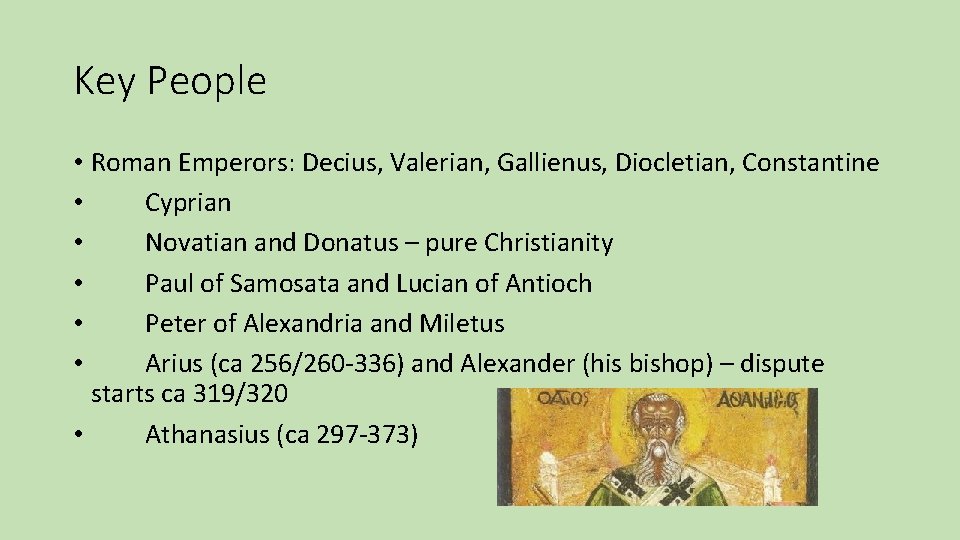
Key People • Roman Emperors: Decius, Valerian, Gallienus, Diocletian, Constantine • Cyprian • Novatian and Donatus – pure Christianity • Paul of Samosata and Lucian of Antioch • Peter of Alexandria and Miletus • Arius (ca 256/260 -336) and Alexander (his bishop) – dispute starts ca 319/320 • Athanasius (ca 297 -373)
Key Issues - Paganism • Christianity and Paganism (Synod of Elvira 305/6 Grenada, Spain passed 81 canons) • Besides Rome’s old gods there were “an army of more exotic deities” • Egyptians had gods depicted as animals, cult of Isis • Syria and N. Africa had the fertility gods which promoted church growth • Asia Minor had the Great Mother – whose devotees castrated themselves • Religious people who wanted to placate the gods and looking for answers • Christianity stood out from these religions, but also appealed to a similar constituency • Even before Constantine, Christianity was well established in the culture and society
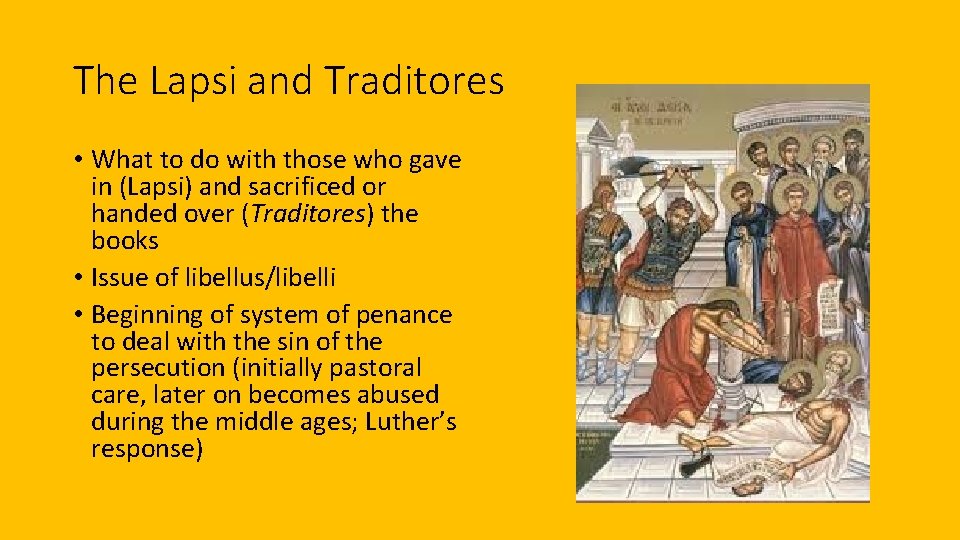
The Lapsi and Traditores • What to do with those who gave in (Lapsi) and sacrificed or handed over (Traditores) the books • Issue of libellus/libelli • Beginning of system of penance to deal with the sin of the persecution (initially pastoral care, later on becomes abused during the middle ages; Luther’s response)
The Lapsed (cont’d) and Purification of Church • Novatianism (250 s) • Donatism (300 s – lasts for a couple of centuries) – • Council of Carthage (312) and Rome (313) deal with Donatist controversy, as did Council of Arles (southern France) – key council • Donatists appealed twice to Constantine (they lost). Donatists come out in favor of separation of church and state • Can sacred acts done by clergy who apostatized be considered valid and certain?
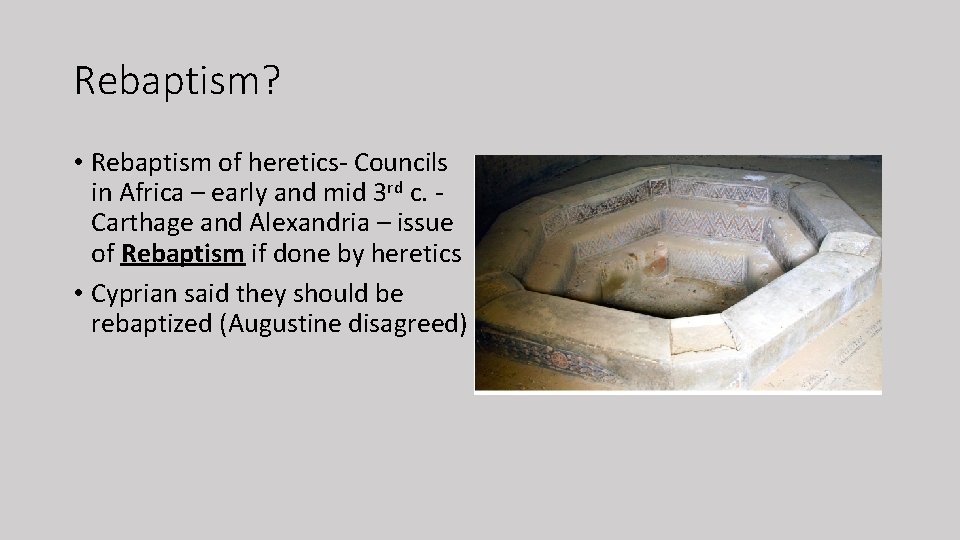
Rebaptism? • Rebaptism of heretics- Councils in Africa – early and mid 3 rd c. Carthage and Alexandria – issue of Rebaptism if done by heretics • Cyprian said they should be rebaptized (Augustine disagreed)
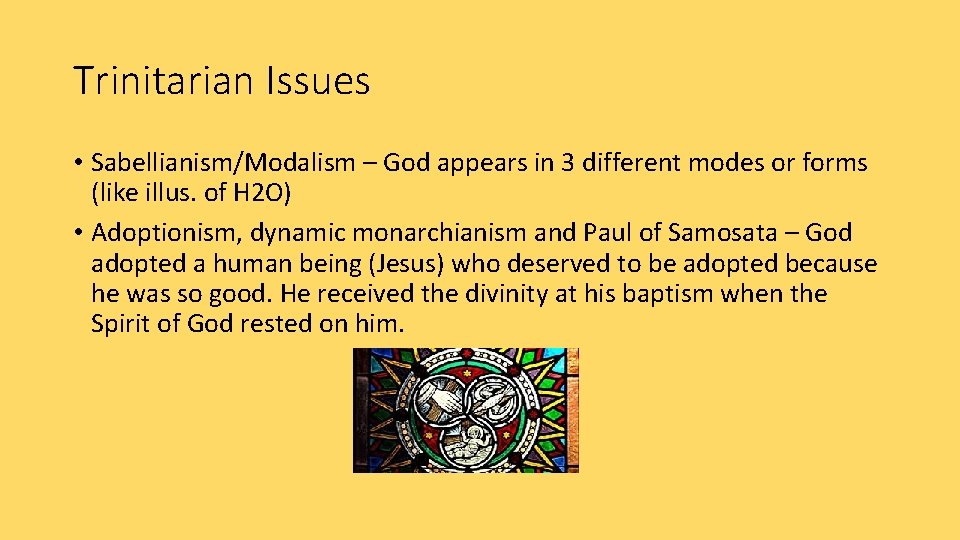
Trinitarian Issues • Sabellianism/Modalism – God appears in 3 different modes or forms (like illus. of H 2 O) • Adoptionism, dynamic monarchianism and Paul of Samosata – God adopted a human being (Jesus) who deserved to be adopted because he was so good. He received the divinity at his baptism when the Spirit of God rested on him.
Moral Issues • Clergy misconduct (Council at Narbonne (255 -60 AD) – dealt with alleged clergy misconduct of Bishop Paul (he proves himself innocent by calling a synod) • Synod of Elvira (305/6, Grenada, Spain) passed 81 canons Against pagan immoralities Church discipline, strict morality enforced Could lapsed be given communion on deathbed Pictures on walls prohibited (becomes an issue again in the 7 th /8 th c – 7 th ecumenical council (787) – question of icons perhaps also because of Islam? • Christians prohibited from marrying Jews (Judaism becomes attractive to some Christians) • •
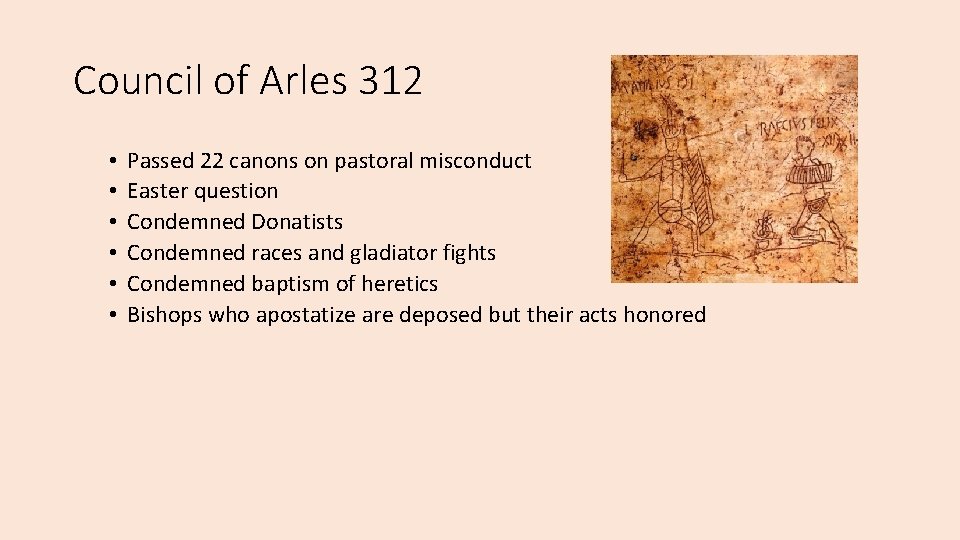
Council of Arles 312 • • • Passed 22 canons on pastoral misconduct Easter question Condemned Donatists Condemned races and gladiator fights Condemned baptism of heretics Bishops who apostatize are deposed but their acts honored
Council at Ancyra – 314 (Galatia) • Sought to heal wounds of Diocletian persecution • 25 canons that deal with apostasy resulting from persecution (see esp. 1 -8) • Priests who had apostatized could remain among clergy but not perform sacerdotal functions • If one sacrificed to the gods before Baptism he could still be admitted to the rank of clergy • Prescribed penance of 7 years for adultery and lifelong penance for murderers • Forbade chorepiscopoi from ordaining • Allowed deacons to marry who had declared their intentions before ordination
Council in Neocaesarea (between 314 -325) • Questions about clergy misconduct • Canon I. Presbyters who marry are removed from clergy roster • Presbyters who fornicate are excommunicated • Questions about sexual misconduct in general – especially/even lust, expecting the clergy to come clean on these issues • Questions about plural marriages • Second marriages opposed • No one is to be ordained prior to 30 years of age • Canon 15 – 7 deacons per city – later effects. . . • 319 -325 Bunch of Councils in Alexandria in Egypt to deal with Arius
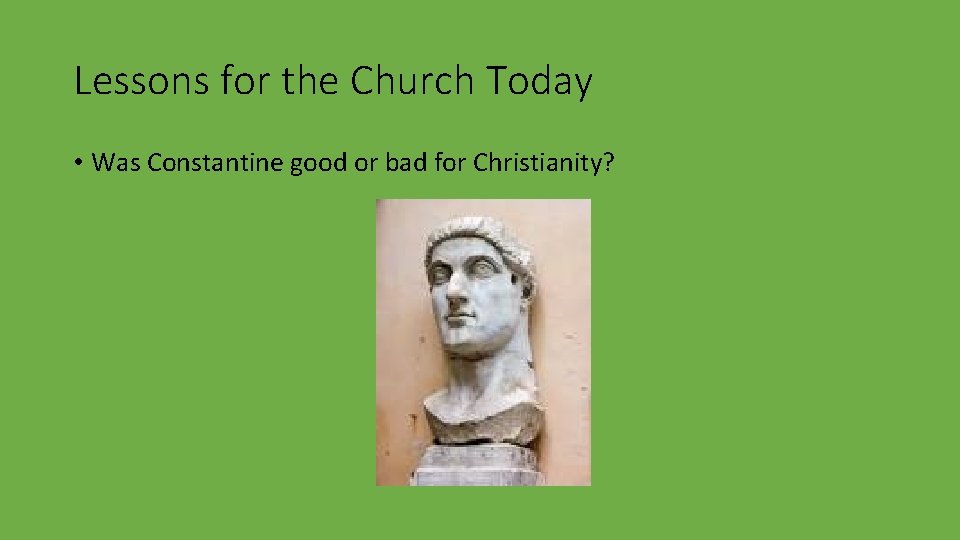
Lessons for the Church Today • Was Constantine good or bad for Christianity?