
25 Techniques of Situational Crime Prevention Ronald V
- Slides: 18
25 Techniques of Situational Crime Prevention Ronald V. Clarke Rutgers, the State University of New Jersey Problem-Oriented Policing Conference Charlotte, October 28 -30, 2004
This presentation • • Explain Situational Prevention (SCP) Compare POP and SCP Development of 25 techniques Show 25 techniques on Popcenter website
Crime Prevention Intervening in the causal chain to prevent crime occurring
Two ways to prevent crime 1. Change people’s criminal motivations 2. Reduce opportunities for crime
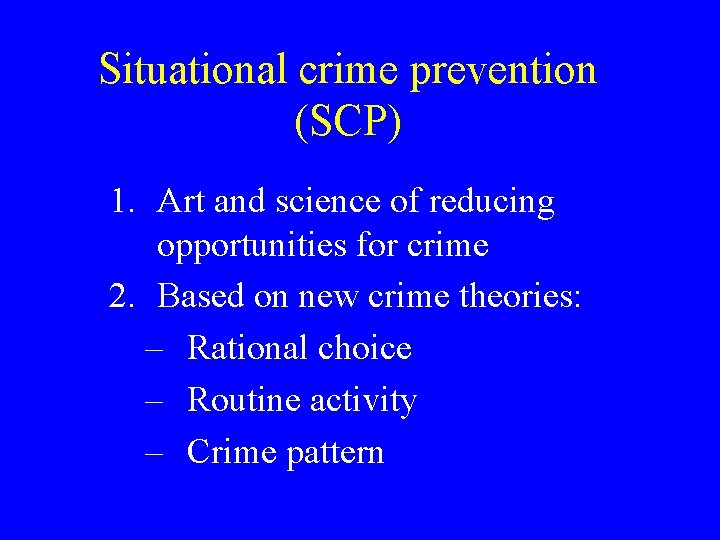
Situational crime prevention (SCP) 1. Art and science of reducing opportunities for crime 2. Based on new crime theories: – Rational choice – Routine activity – Crime pattern
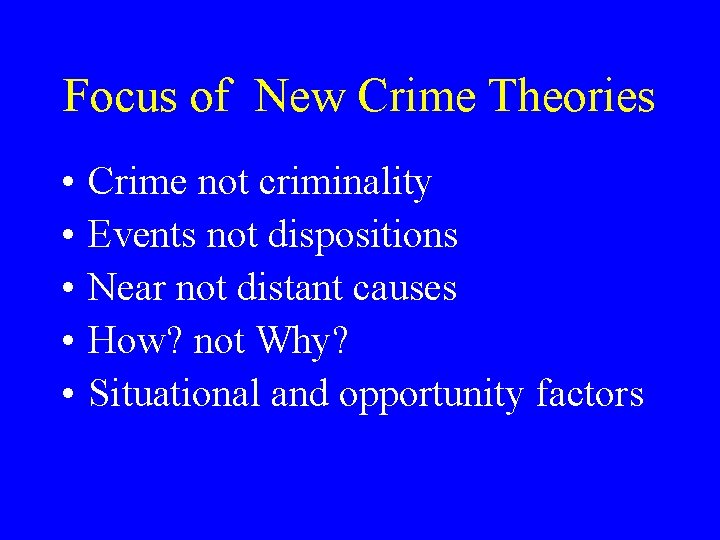
Focus of New Crime Theories • • • Crime not criminality Events not dispositions Near not distant causes How? not Why? Situational and opportunity factors
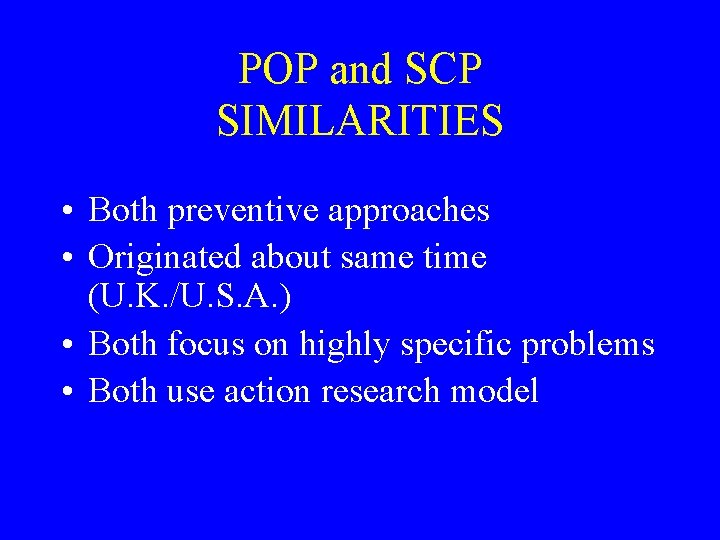
POP and SCP SIMILARITIES • Both preventive approaches • Originated about same time (U. K. /U. S. A. ) • Both focus on highly specific problems • Both use action research model
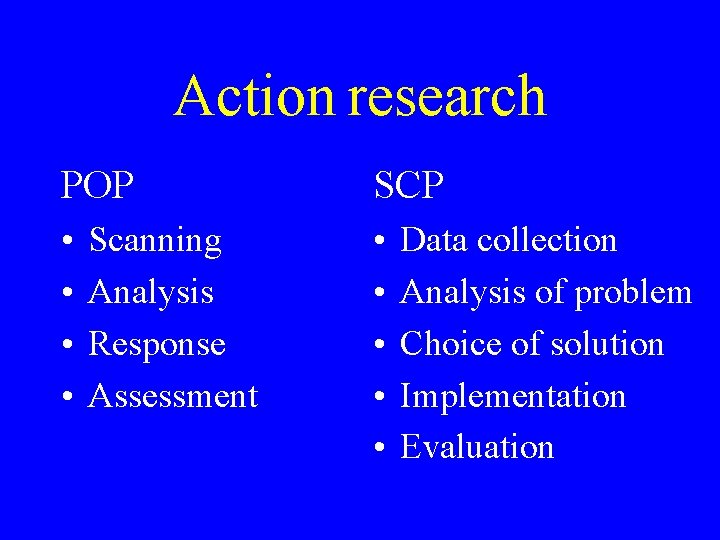
Action research POP SCP • • • Scanning Analysis Response Assessment Data collection Analysis of problem Choice of solution Implementation Evaluation
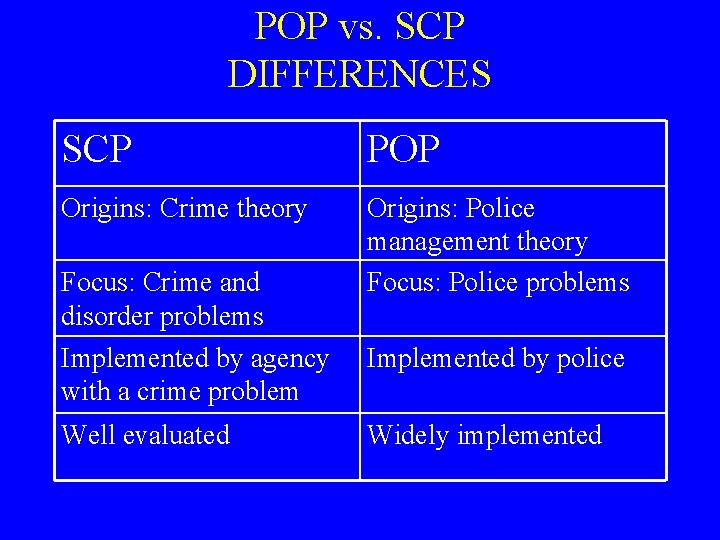
POP vs. SCP DIFFERENCES SCP POP Origins: Crime theory Origins: Police management theory Focus: Police problems Focus: Crime and disorder problems Implemented by agency with a crime problem Implemented by police Well evaluated Widely implemented
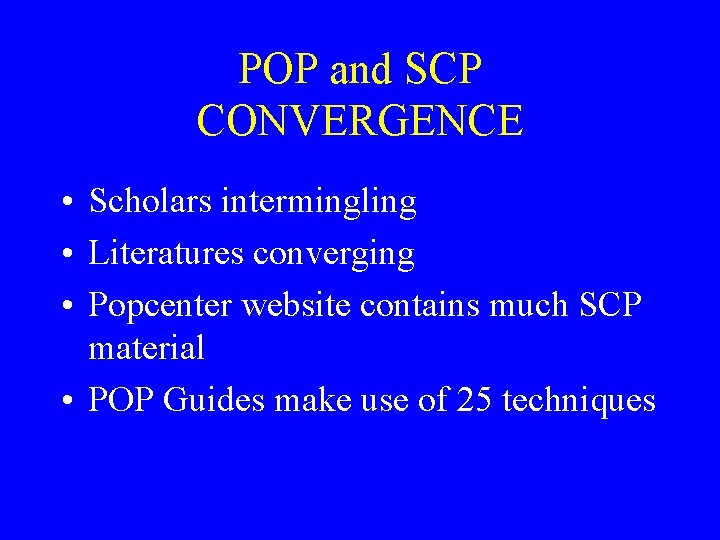
POP and SCP CONVERGENCE • Scholars intermingling • Literatures converging • Popcenter website contains much SCP material • POP Guides make use of 25 techniques
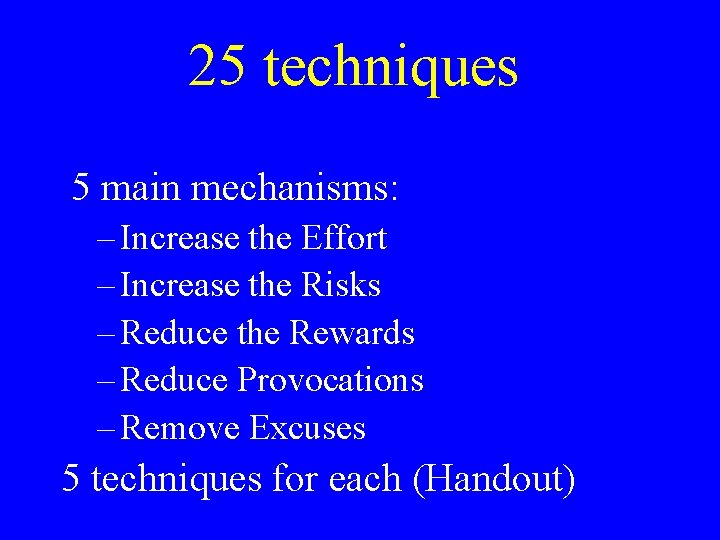
25 techniques 5 main mechanisms: – Increase the Effort – Increase the Risks – Reduce the Rewards – Reduce Provocations – Remove Excuses 5 techniques for each (Handout)
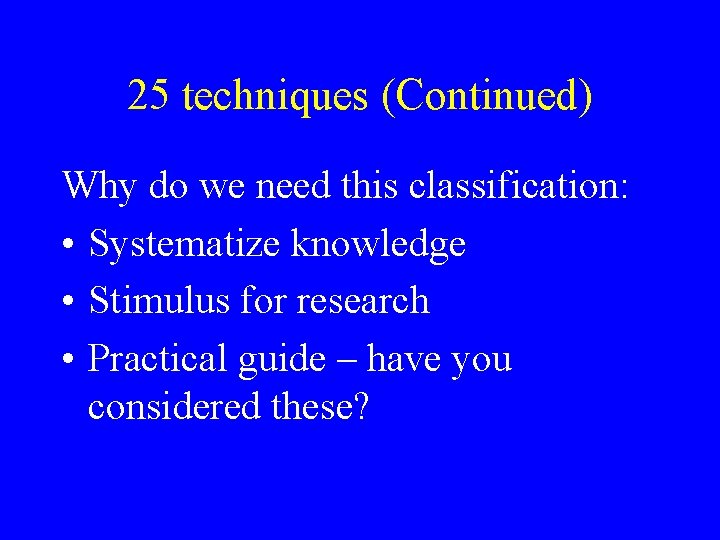
25 techniques (Continued) Why do we need this classification: • Systematize knowledge • Stimulus for research • Practical guide – have you considered these?
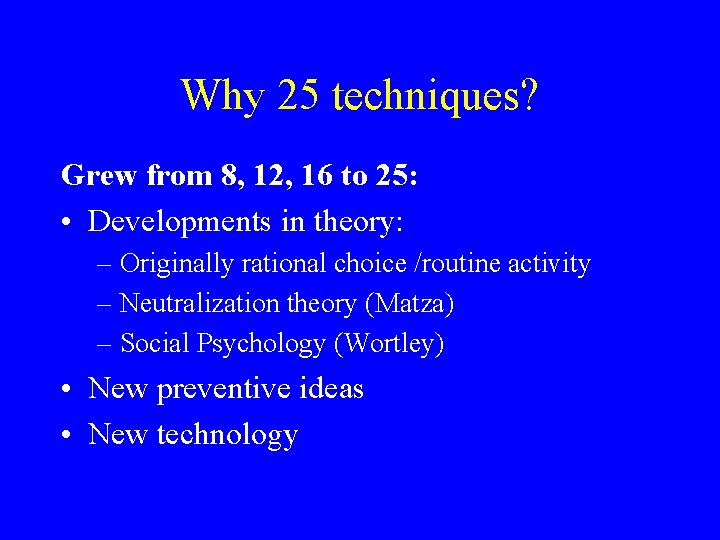
Why 25 techniques? Grew from 8, 12, 16 to 25: • Developments in theory: – Originally rational choice /routine activity – Neutralization theory (Matza) – Social Psychology (Wortley) • New preventive ideas • New technology
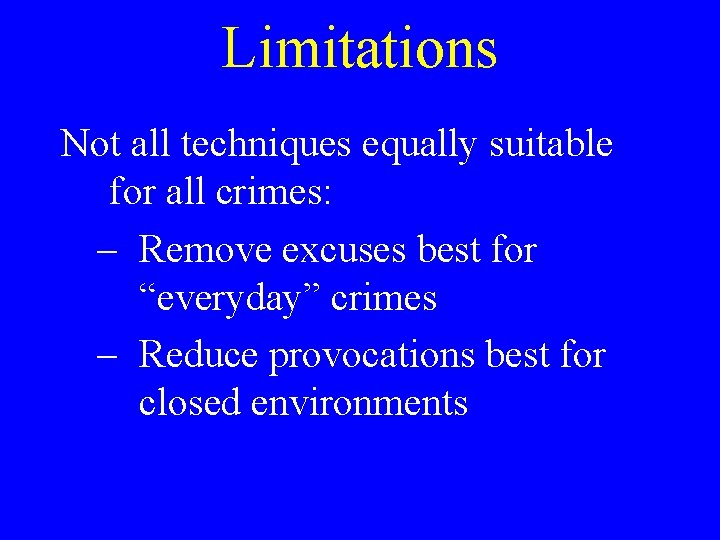
Limitations Not all techniques equally suitable for all crimes: – Remove excuses best for “everyday” crimes – Reduce provocations best for closed environments
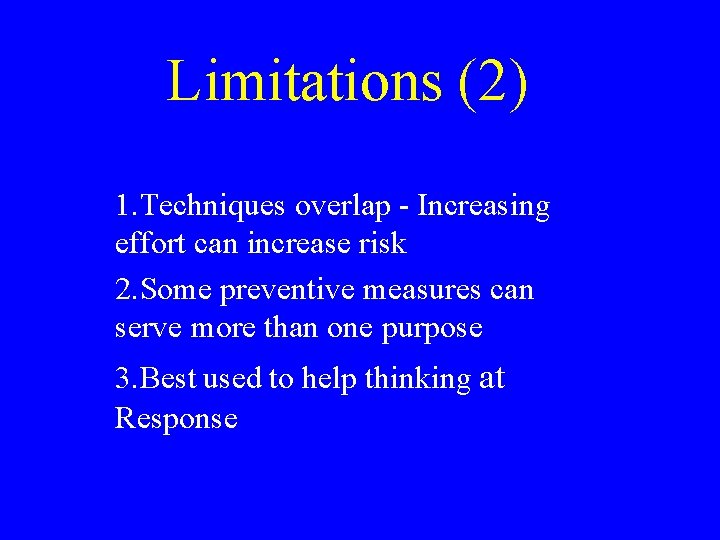
Limitations (2) 1. Techniques overlap - Increasing effort can increase risk 2. Some preventive measures can serve more than one purpose 3. Best used to help thinking at Response
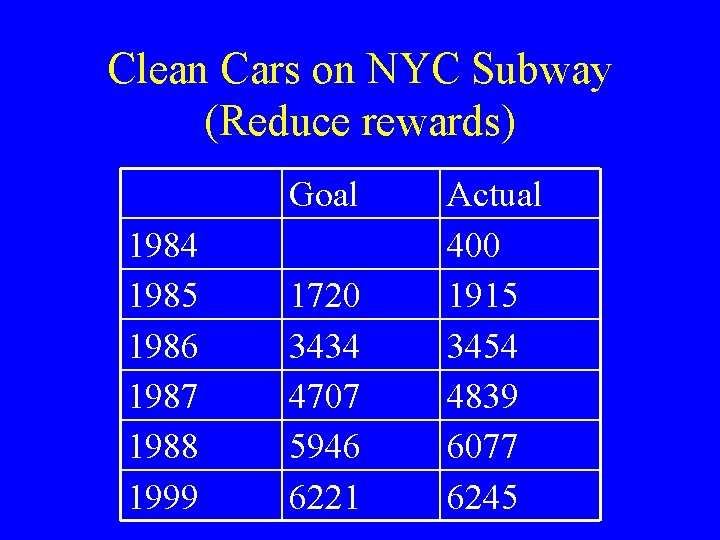
Clean Cars on NYC Subway (Reduce rewards) Goal 1984 1985 1986 1987 1988 1999 1720 3434 4707 5946 6221 Actual 400 1915 3454 4839 6077 6245
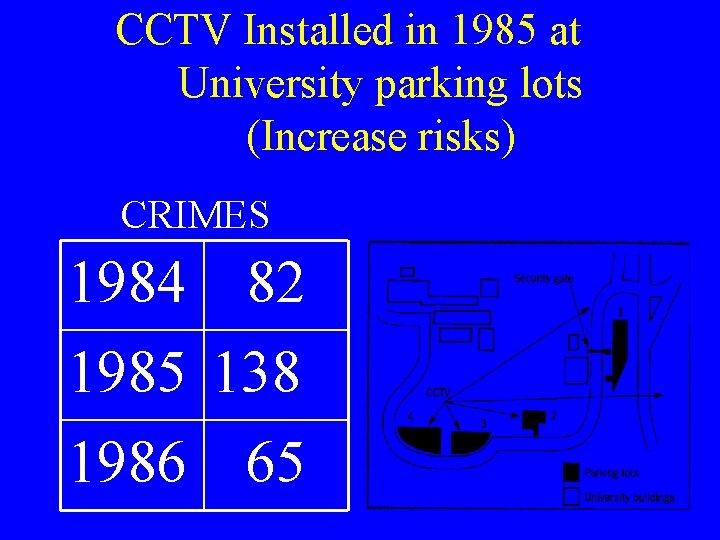
CCTV Installed in 1985 at University parking lots (Increase risks) CRIMES 1984 82 1985 138 1986 65