
25 5 Vertebrates on Land 25 5 Vertebrates
25. 5 Vertebrates on Land
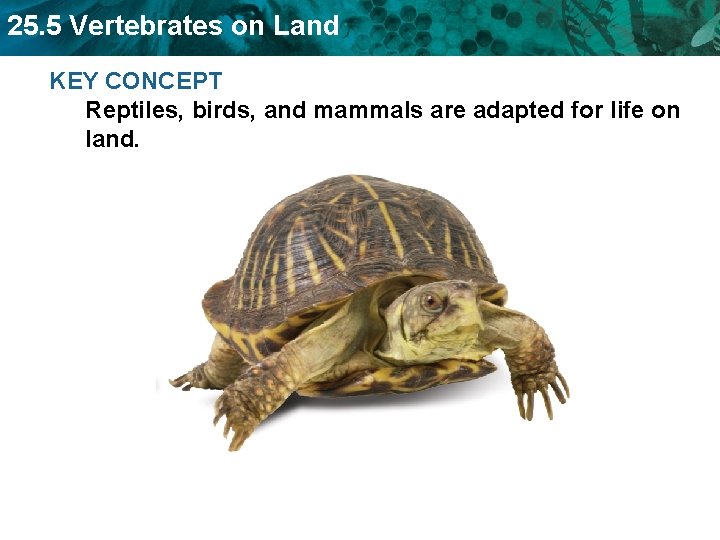
25. 5 Vertebrates on Land KEY CONCEPT Reptiles, birds, and mammals are adapted for life on land.
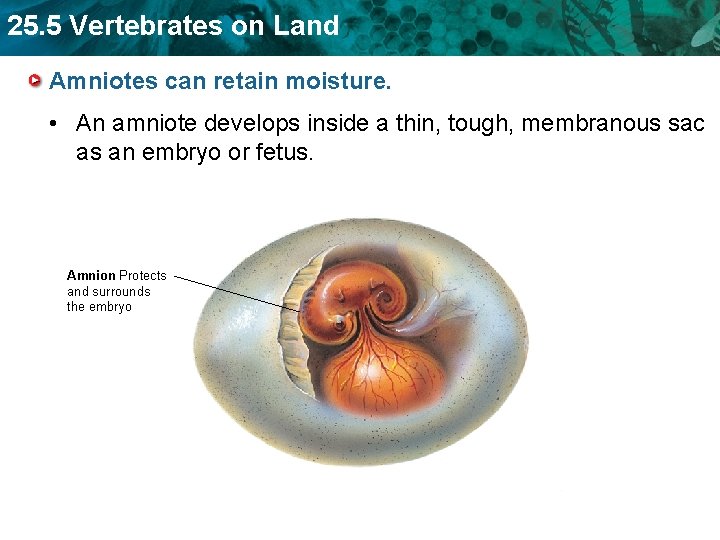
25. 5 Vertebrates on Land Amniotes can retain moisture. • An amniote develops inside a thin, tough, membranous sac as an embryo or fetus. Amnion Protects and surrounds the embryo
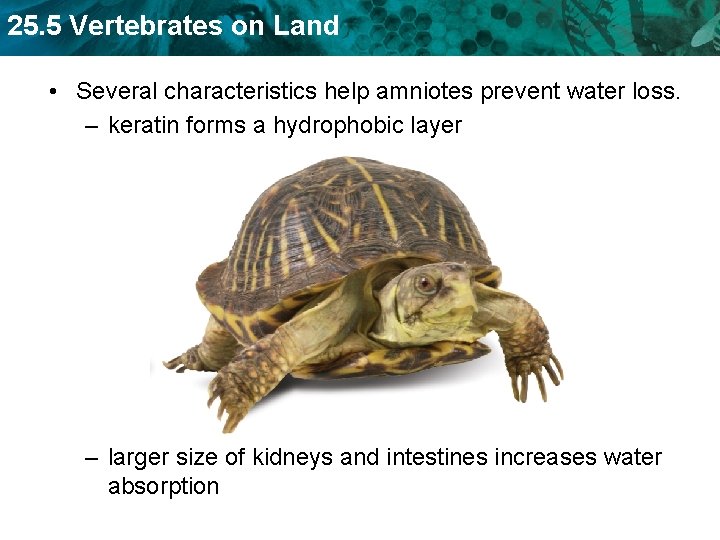
25. 5 Vertebrates on Land • Several characteristics help amniotes prevent water loss. – keratin forms a hydrophobic layer – larger size of kidneys and intestines increases water absorption
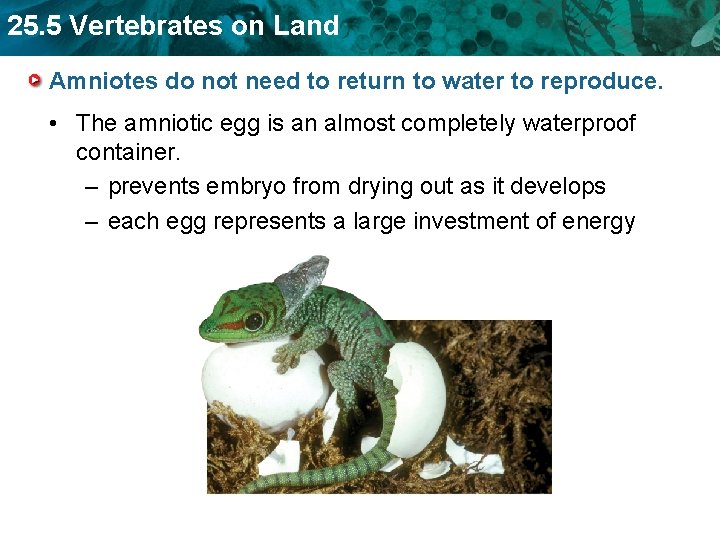
25. 5 Vertebrates on Land Amniotes do not need to return to water to reproduce. • The amniotic egg is an almost completely waterproof container. – prevents embryo from drying out as it develops – each egg represents a large investment of energy
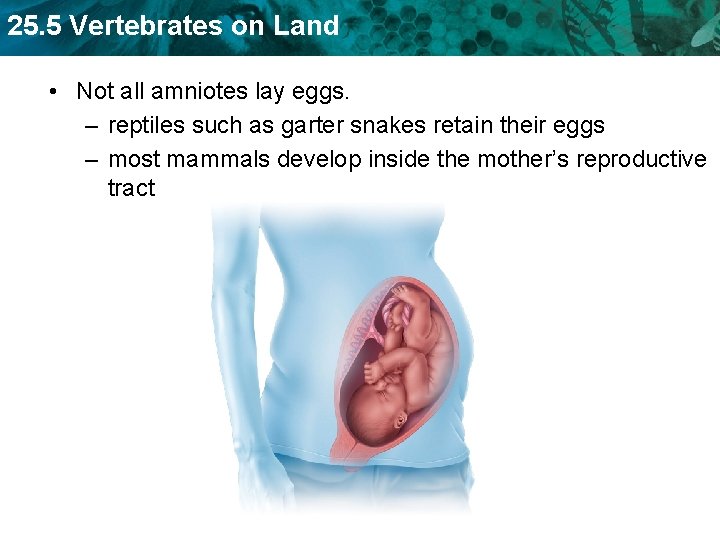
25. 5 Vertebrates on Land • Not all amniotes lay eggs. – reptiles such as garter snakes retain their eggs – most mammals develop inside the mother’s reproductive tract
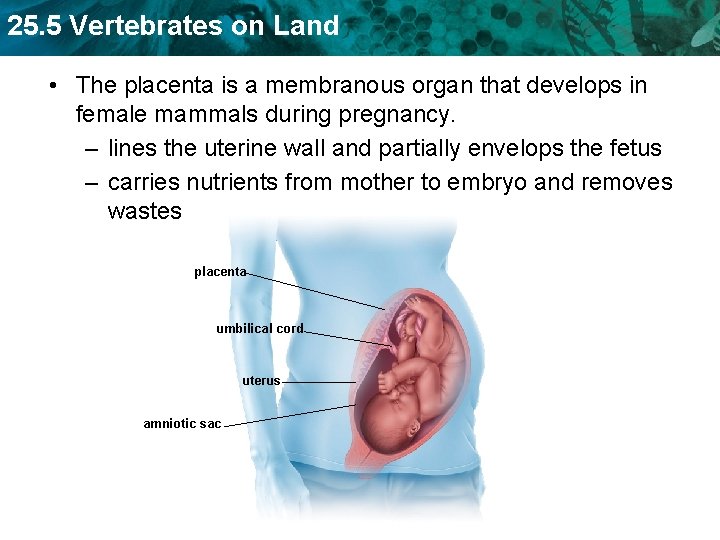
25. 5 Vertebrates on Land • The placenta is a membranous organ that develops in female mammals during pregnancy. – lines the uterine wall and partially envelops the fetus – carries nutrients from mother to embryo and removes wastes placenta umbilical cord uterus amniotic sac
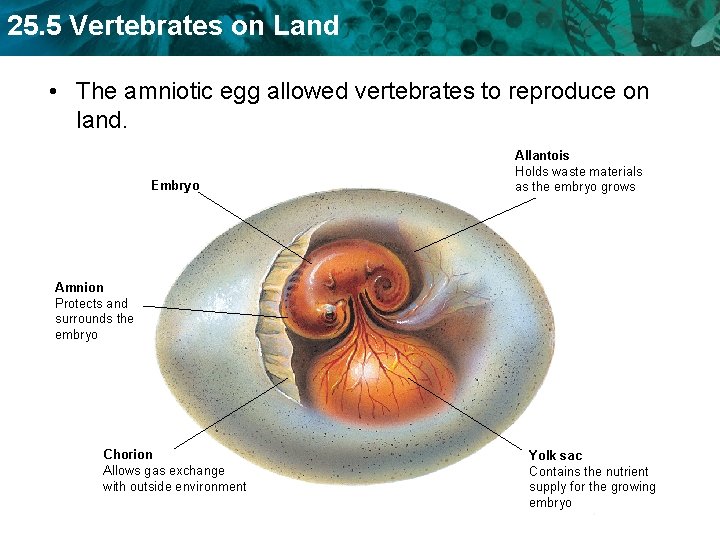
25. 5 Vertebrates on Land • The amniotic egg allowed vertebrates to reproduce on land. Embryo Allantois Holds waste materials as the embryo grows Amnion Protects and surrounds the embryo Chorion Allows gas exchange with outside environment Yolk sac Contains the nutrient supply for the growing embryo

25. 5 Vertebrates on Land Anatomy and circulation differ among amniotes. • The first animals walked in a sprawl. • Other amniotes, including dinosaurs, evolved a more upright stance.
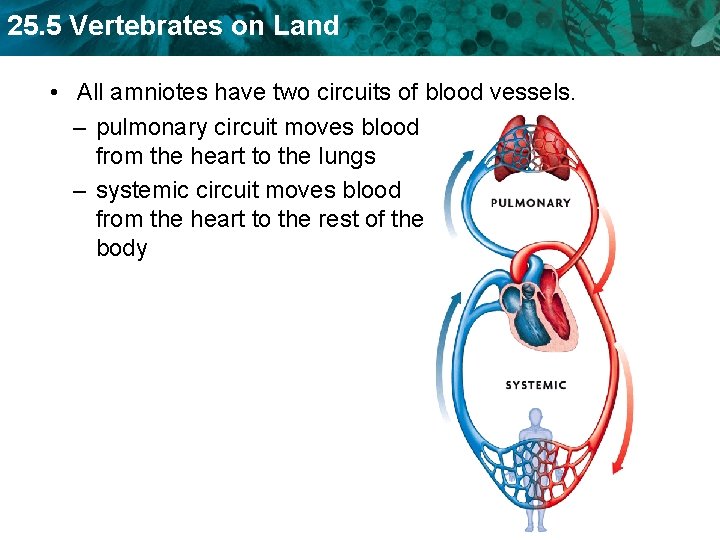
25. 5 Vertebrates on Land • All amniotes have two circuits of blood vessels. – pulmonary circuit moves blood from the heart to the lungs – systemic circuit moves blood from the heart to the rest of the body
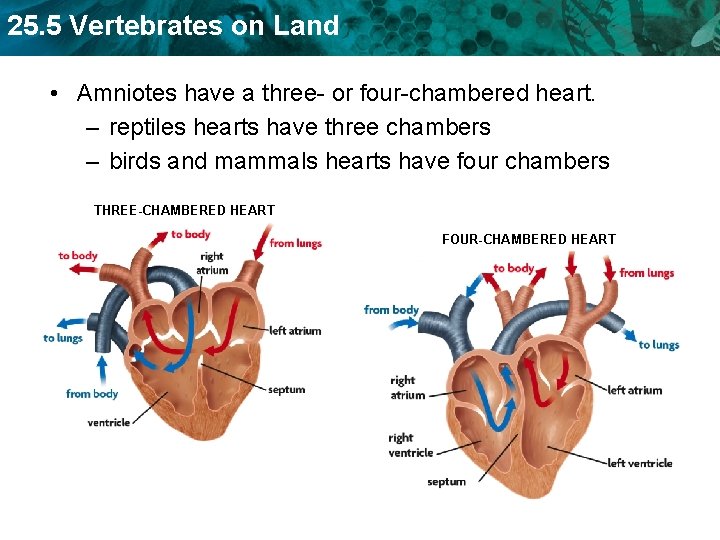
25. 5 Vertebrates on Land • Amniotes have a three- or four-chambered heart. – reptiles hearts have three chambers – birds and mammals hearts have four chambers THREE-CHAMBERED HEART FOUR-CHAMBERED HEART
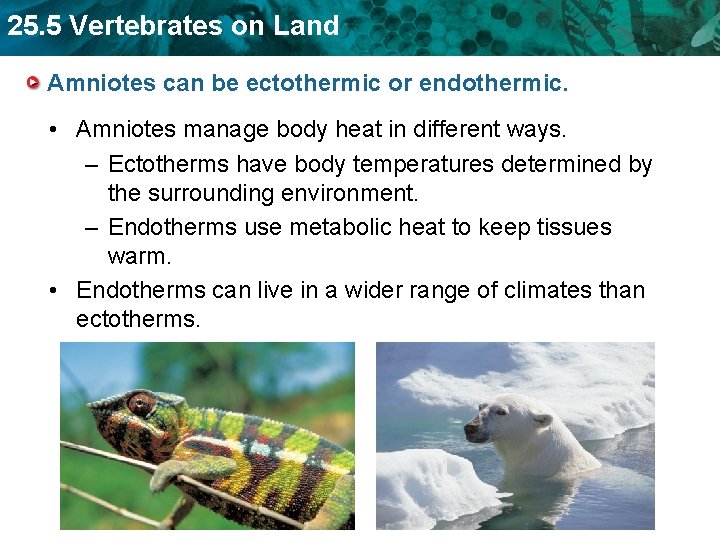
25. 5 Vertebrates on Land Amniotes can be ectothermic or endothermic. • Amniotes manage body heat in different ways. – Ectotherms have body temperatures determined by the surrounding environment. – Endotherms use metabolic heat to keep tissues warm. • Endotherms can live in a wider range of climates than ectotherms.
- Slides: 12