
22 2 Reproduction in Flowering Plants KEY CONCEPT


- Slides: 13
22. 2 Reproduction in Flowering Plants KEY CONCEPT Reproduction of flowering plants takes place within flowers.
22. 2 Reproduction in Flowering Plants Flowers contain reproductive organs protected by specialized leaves. • Sepals and petals are modified leaves. – Sepals are outermost layer that protects developing flower sepal
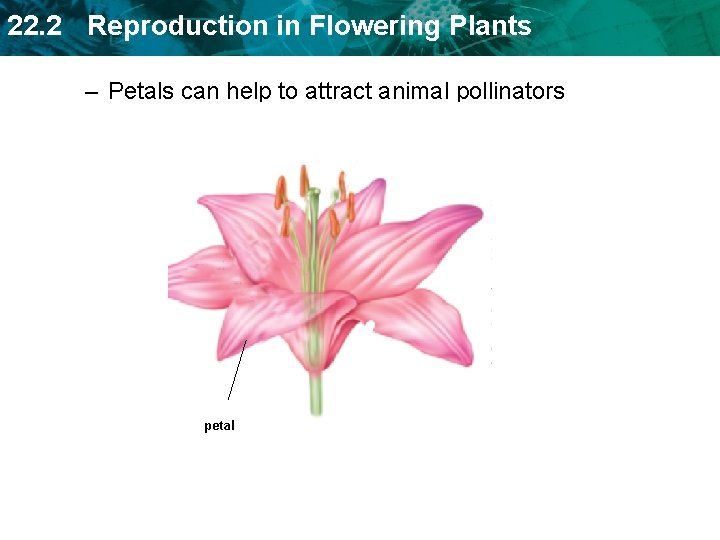
22. 2 Reproduction in Flowering Plants – Petals can help to attract animal pollinators petal
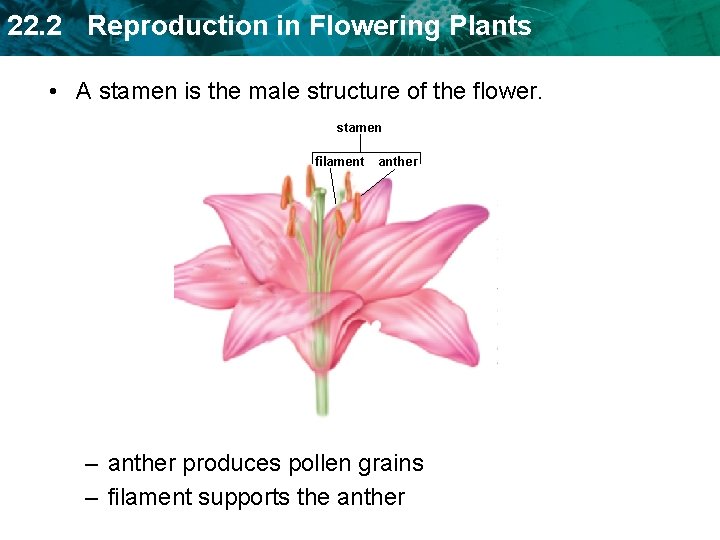
22. 2 Reproduction in Flowering Plants • A stamen is the male structure of the flower. stamen filament anther – anther produces pollen grains – filament supports the anther
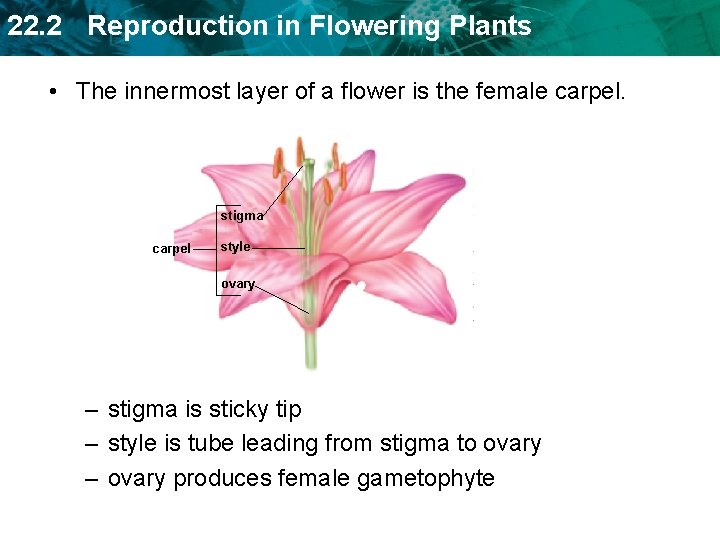
22. 2 Reproduction in Flowering Plants • The innermost layer of a flower is the female carpel. stigma carpel style ovary – stigma is sticky tip – style is tube leading from stigma to ovary – ovary produces female gametophyte
22. 2 Reproduction in Flowering Plants Flowering plants can be pollinated by wind or animals. • Flowering plants pollinated when pollen grains land on stigma. • Wind pollinated flowers have small flowers and large amounts of pollen.
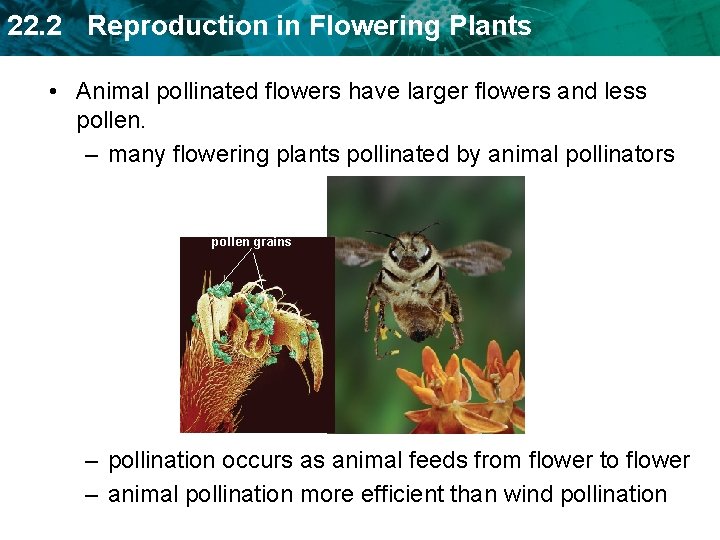
22. 2 Reproduction in Flowering Plants • Animal pollinated flowers have larger flowers and less pollen. – many flowering plants pollinated by animal pollinators pollen grains – pollination occurs as animal feeds from flower to flower – animal pollination more efficient than wind pollination
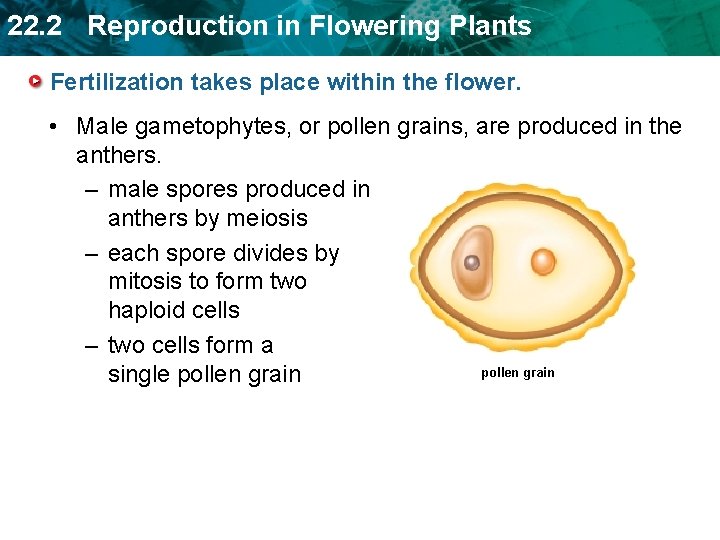
22. 2 Reproduction in Flowering Plants Fertilization takes place within the flower. • Male gametophytes, or pollen grains, are produced in the anthers. – male spores produced in anthers by meiosis – each spore divides by mitosis to form two haploid cells – two cells form a pollen grain single pollen grain
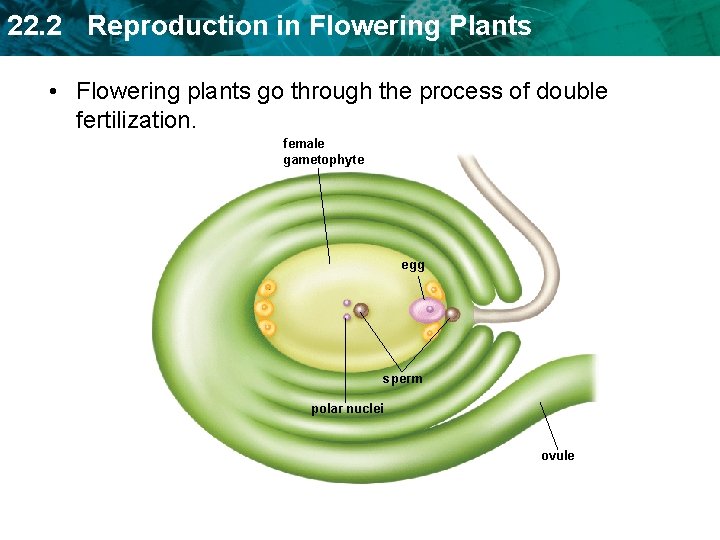
22. 2 Reproduction in Flowering Plants • One female gametophyte can form in each ovule of a flower’s ovary. – four female spores produced in ovule by meiosis – one spore develops into female gametophyte – female gametophyte contains seven cells – one cell has two nuclei, or polar nuclei – one cell will develop into an egg
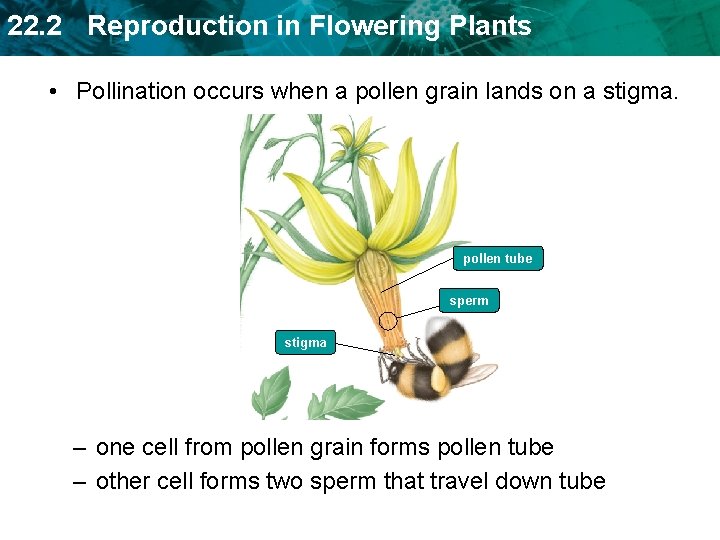
22. 2 Reproduction in Flowering Plants • Pollination occurs when a pollen grain lands on a stigma. pollen tube sperm stigma – one cell from pollen grain forms pollen tube – other cell forms two sperm that travel down tube
22. 2 Reproduction in Flowering Plants • Flowering plants go through the process of double fertilization. female gametophyte egg sperm polar nuclei ovule
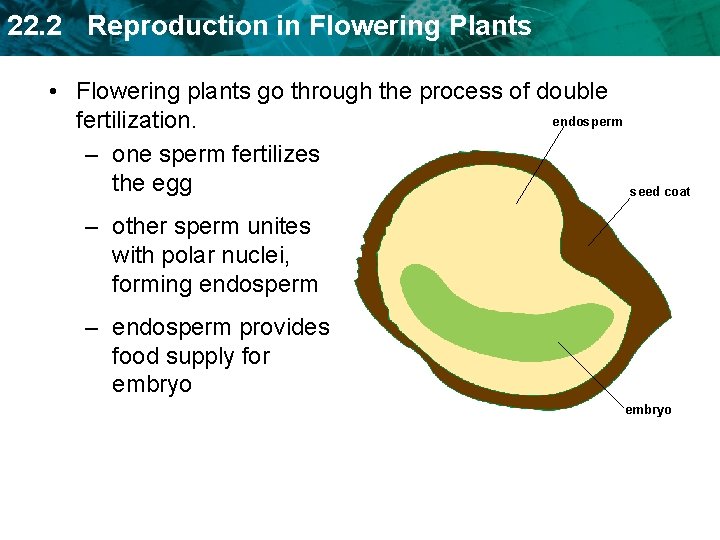
22. 2 Reproduction in Flowering Plants • Flowering plants go through the process of double endosperm fertilization. – one sperm fertilizes the egg seed coat – other sperm unites with polar nuclei, forming endosperm – endosperm provides food supply for embryo
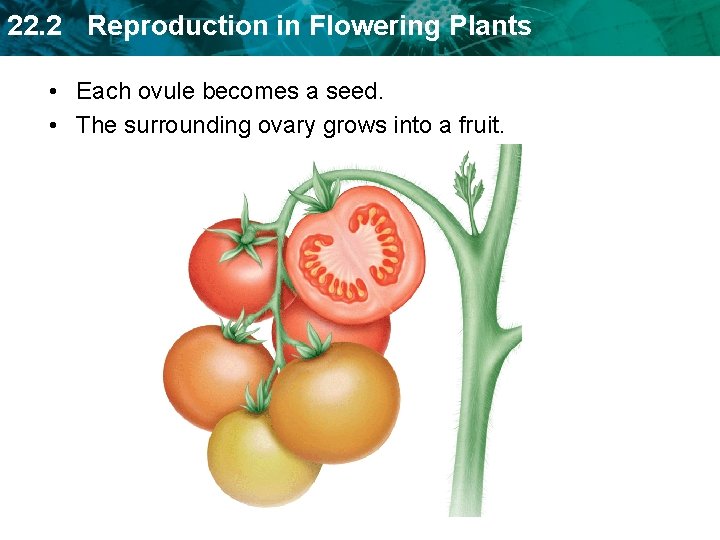
22. 2 Reproduction in Flowering Plants • Each ovule becomes a seed. • The surrounding ovary grows into a fruit.