
22 1 Earths Structure The Science of Geology
- Slides: 12
22. 1 Earth’s Structure The Science of Geology Geologists are scientists who study Earth and the processes that shape Earth over time. Geologists study two types of forces that change Earth’s surface. • Constructive forces shape the surface by building up mountains and other land areas. • Destructive forces slowly wear away mountains and, eventually, every other feature on Earth’s surface.
22. 1 Earth’s Structure The Science of Geology James Hutton developed the principle of uniformitarianism. Uniformitarianism is the idea that geologic processes that operate today also operated in the past. • Ancient rocks can be understood by observing present-day geologic processes. • Features such as mountains and canyons result from geologic processes that work very slowly over long periods of time.
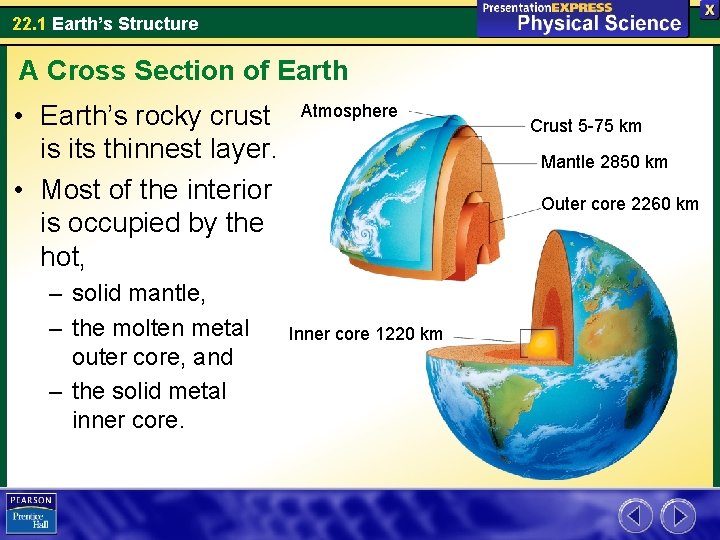
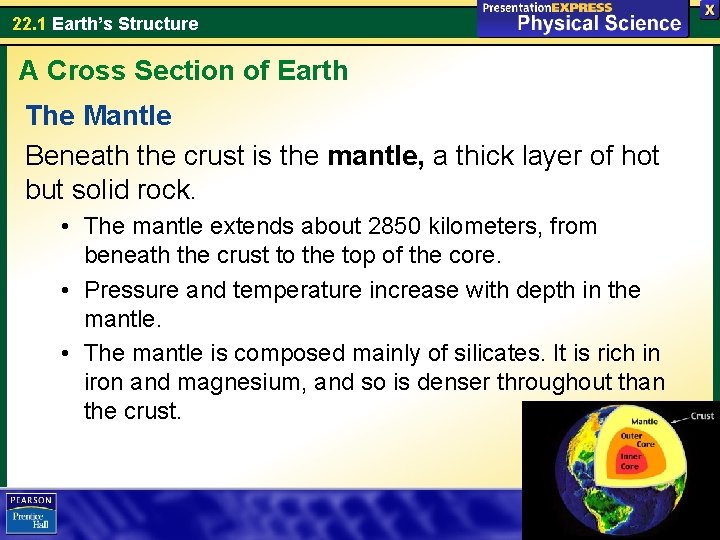
22. 1 Earth’s Structure A Cross Section of Earth • Earth’s rocky crust is its thinnest layer. • Most of the interior is occupied by the hot, – solid mantle, – the molten metal outer core, and – the solid metal inner core. Atmosphere Crust 5 -75 km Mantle 2850 km Outer core 2260 km Inner core 1220 km
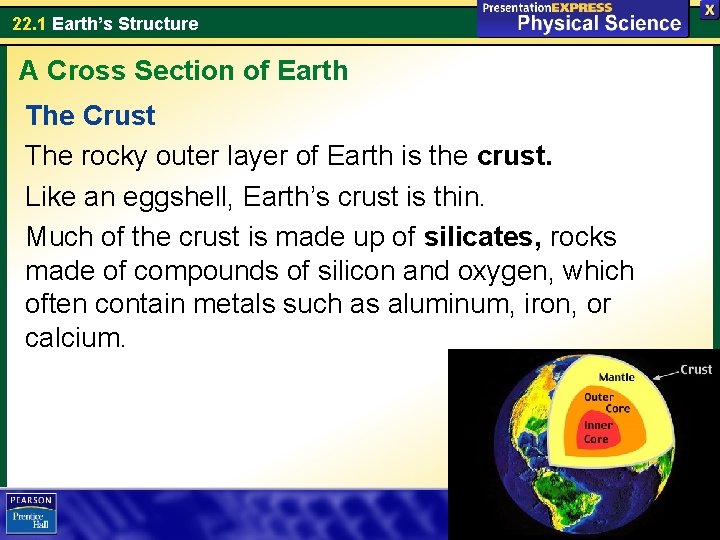
22. 1 Earth’s Structure A Cross Section of Earth The Crust The rocky outer layer of Earth is the crust. Like an eggshell, Earth’s crust is thin. Much of the crust is made up of silicates, rocks made of compounds of silicon and oxygen, which often contain metals such as aluminum, iron, or calcium.
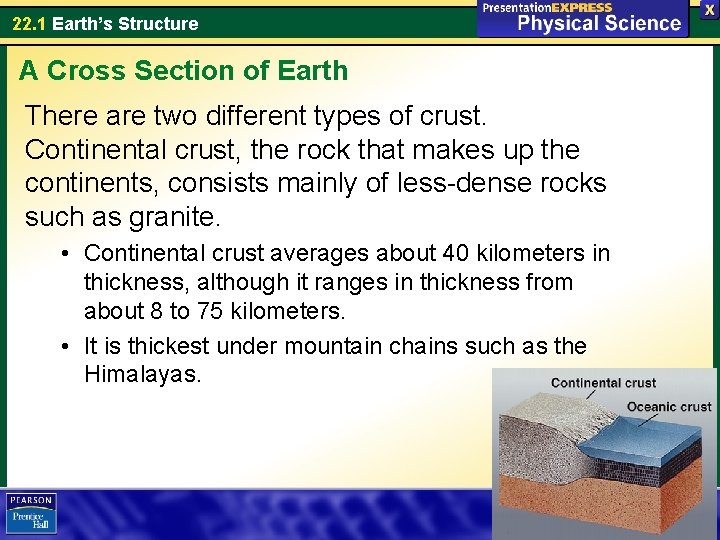
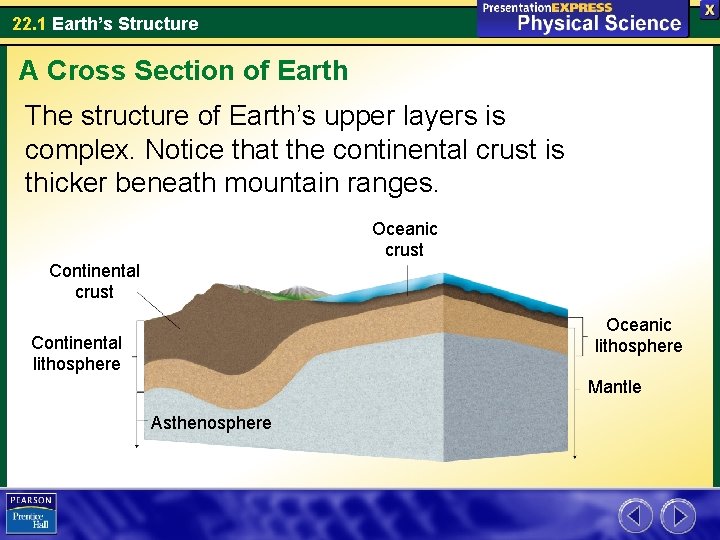
22. 1 Earth’s Structure A Cross Section of Earth There are two different types of crust. Continental crust, the rock that makes up the continents, consists mainly of less-dense rocks such as granite. • Continental crust averages about 40 kilometers in thickness, although it ranges in thickness from about 8 to 75 kilometers. • It is thickest under mountain chains such as the Himalayas.
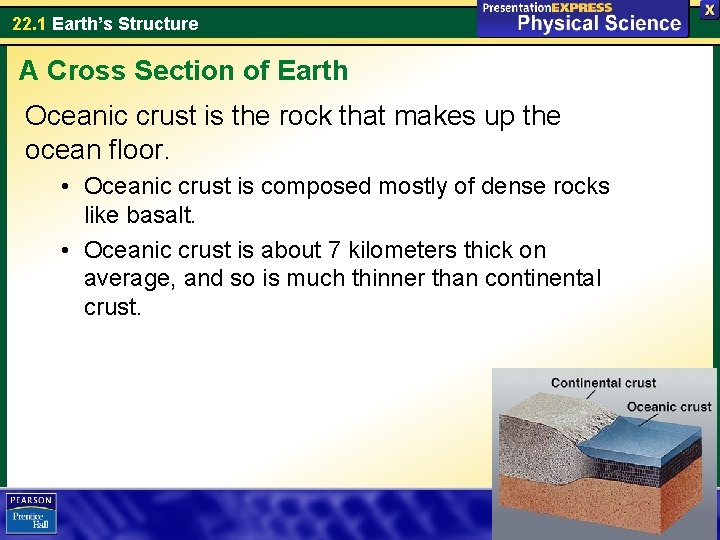
22. 1 Earth’s Structure A Cross Section of Earth Oceanic crust is the rock that makes up the ocean floor. • Oceanic crust is composed mostly of dense rocks like basalt. • Oceanic crust is about 7 kilometers thick on average, and so is much thinner than continental crust.
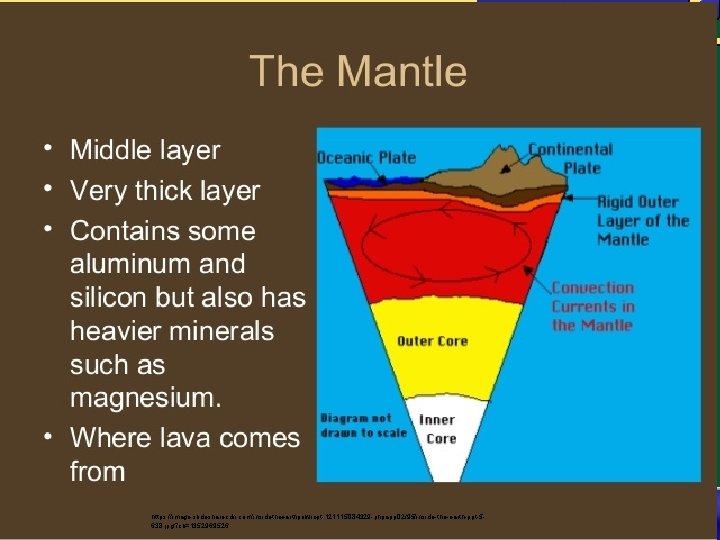
22. 1 Earth’s Structure A Cross Section of Earth The Mantle Beneath the crust is the mantle, a thick layer of hot but solid rock. • The mantle extends about 2850 kilometers, from beneath the crust to the top of the core. • Pressure and temperature increase with depth in the mantle. • The mantle is composed mainly of silicates. It is rich in iron and magnesium, and so is denser throughout than the crust.
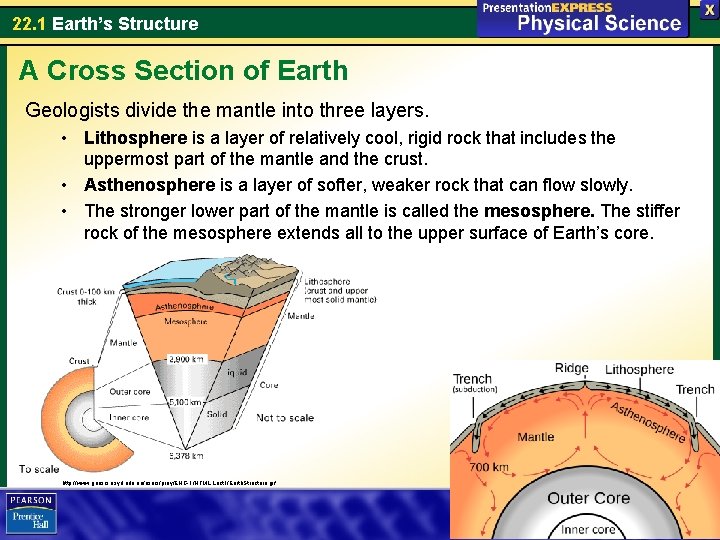
22. 1 Earth’s Structure A Cross Section of Earth Geologists divide the mantle into three layers. • Lithosphere is a layer of relatively cool, rigid rock that includes the uppermost part of the mantle and the crust. • Asthenosphere is a layer of softer, weaker rock that can flow slowly. • The stronger lower part of the mantle is called the mesosphere. The stiffer rock of the mesosphere extends all to the upper surface of Earth’s core. http: //www. geosci. usyd. edu. au/users/prey/ENG-1/HTML. Lect 1/Earth. Structure. gif
22. 1 Earth’s Structure https: //image. slidesharecdn. com/insidetheearthpowrept-121115084329 -phpapp 02/95/inside-the-earth-ppt-5638. jpg? cb=1352969526
22. 1 Earth’s Structure A Cross Section of Earth The structure of Earth’s upper layers is complex. Notice that the continental crust is thicker beneath mountain ranges. Oceanic crust Continental crust Oceanic lithosphere Continental lithosphere Mantle Asthenosphere
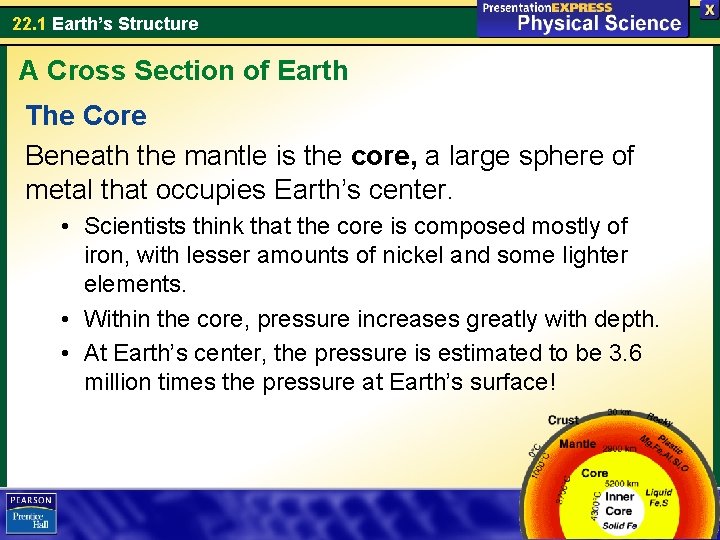
22. 1 Earth’s Structure A Cross Section of Earth The Core Beneath the mantle is the core, a large sphere of metal that occupies Earth’s center. • Scientists think that the core is composed mostly of iron, with lesser amounts of nickel and some lighter elements. • Within the core, pressure increases greatly with depth. • At Earth’s center, the pressure is estimated to be 3. 6 million times the pressure at Earth’s surface!
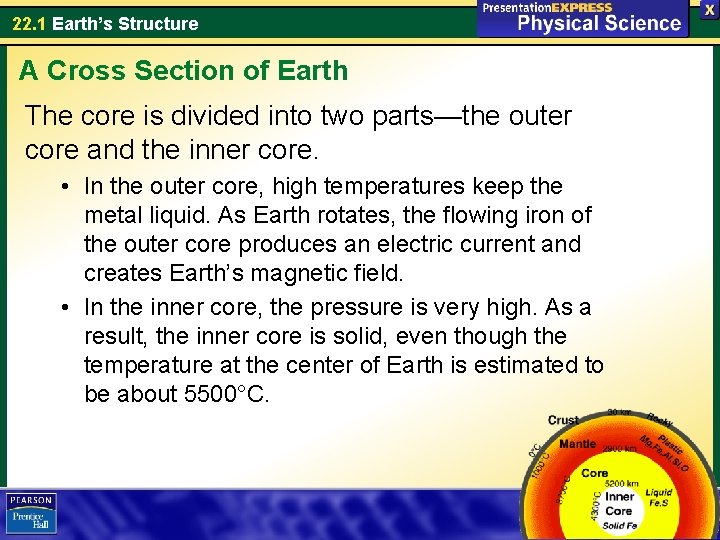
22. 1 Earth’s Structure A Cross Section of Earth The core is divided into two parts—the outer core and the inner core. • In the outer core, high temperatures keep the metal liquid. As Earth rotates, the flowing iron of the outer core produces an electric current and creates Earth’s magnetic field. • In the inner core, the pressure is very high. As a result, the inner core is solid, even though the temperature at the center of Earth is estimated to be about 5500°C.