
21 ST CENTURY SKILLS 2020 CRITICAL THINKING MODEL





- Slides: 38
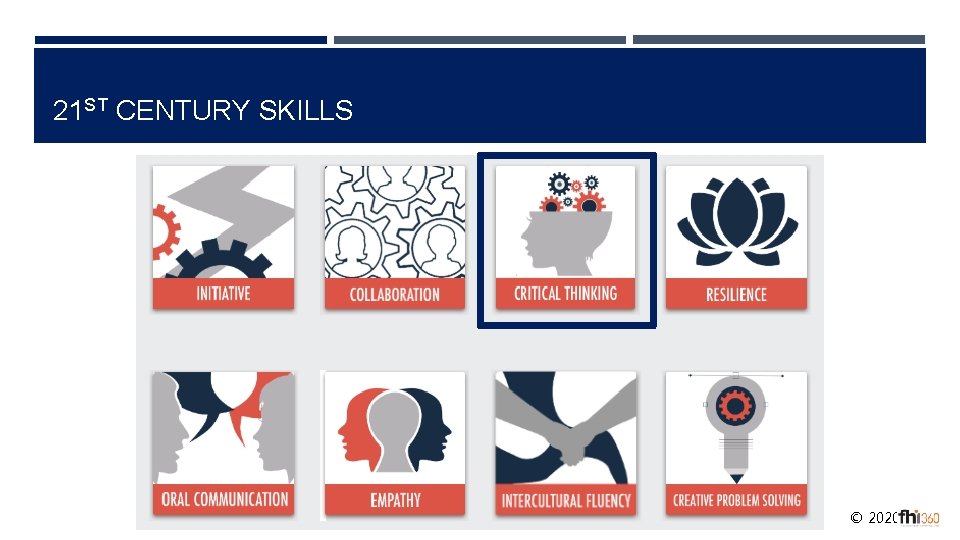
21 ST CENTURY SKILLS © 2020
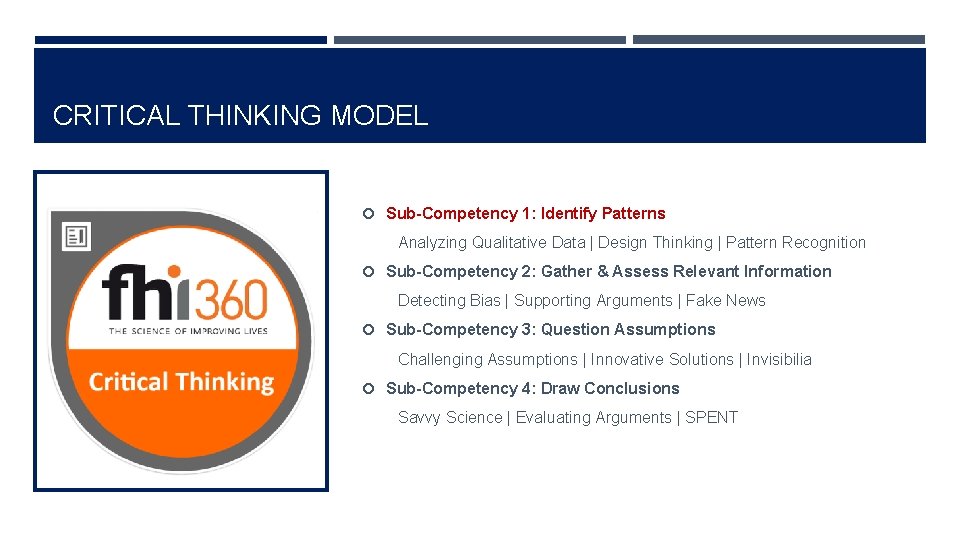
CRITICAL THINKING MODEL Sub-Competency 1: Identify Patterns Analyzing Qualitative Data | Design Thinking | Pattern Recognition Sub-Competency 2: Gather & Assess Relevant Information Detecting Bias | Supporting Arguments | Fake News Sub-Competency 3: Question Assumptions Challenging Assumptions | Innovative Solutions | Invisibilia Sub-Competency 4: Draw Conclusions Savvy Science | Evaluating Arguments | SPENT
CRITICAL THINKING WHAT EXACTLY IS IT?
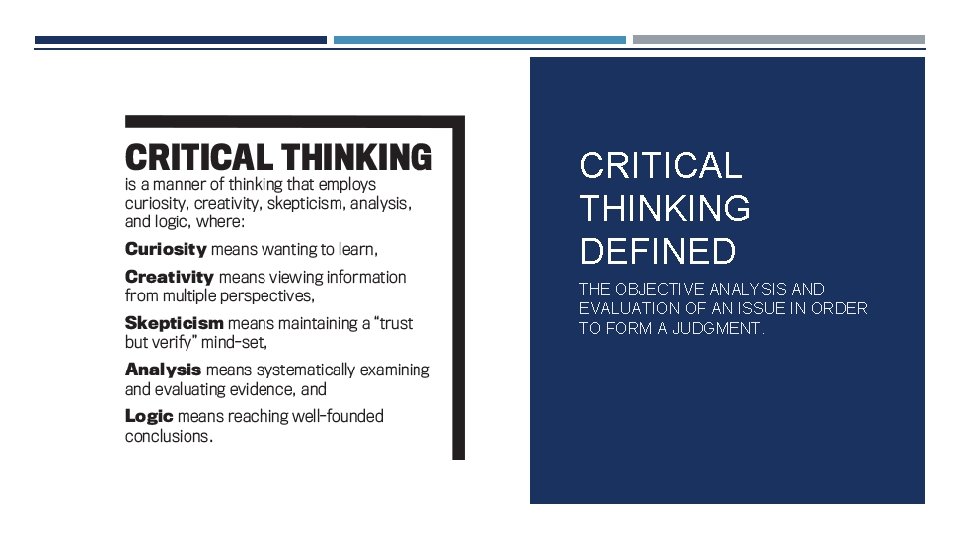
CRITICAL THINKING DEFINED THE OBJECTIVE ANALYSIS AND EVALUATION OF AN ISSUE IN ORDER TO FORM A JUDGMENT.
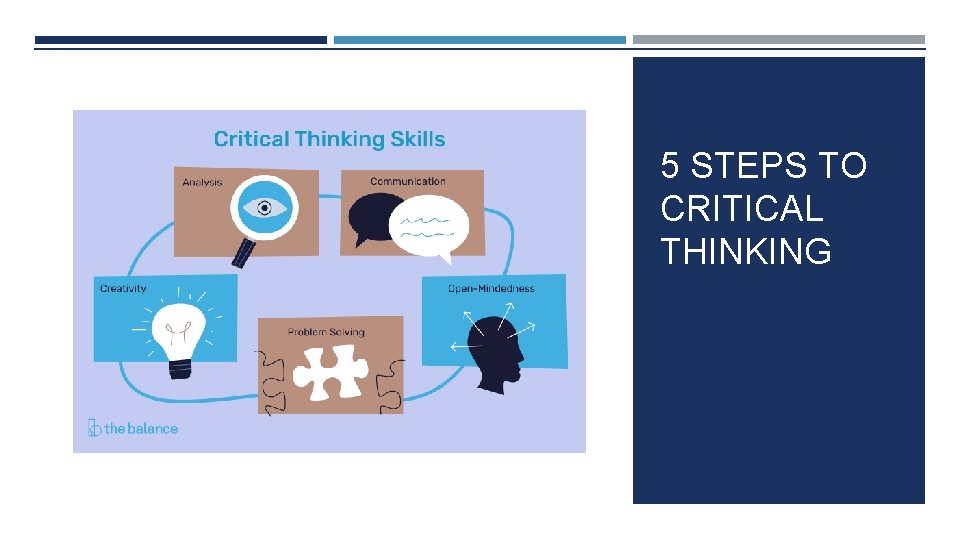
5 STEPS TO CRITICAL THINKING
ANALYZING QUALITATIVE DATA Sub-Competency I: Identify Patterns
QUALITATIVE VS. QUANTITATIVE DATA EXPLORING THE DIFFERENCES
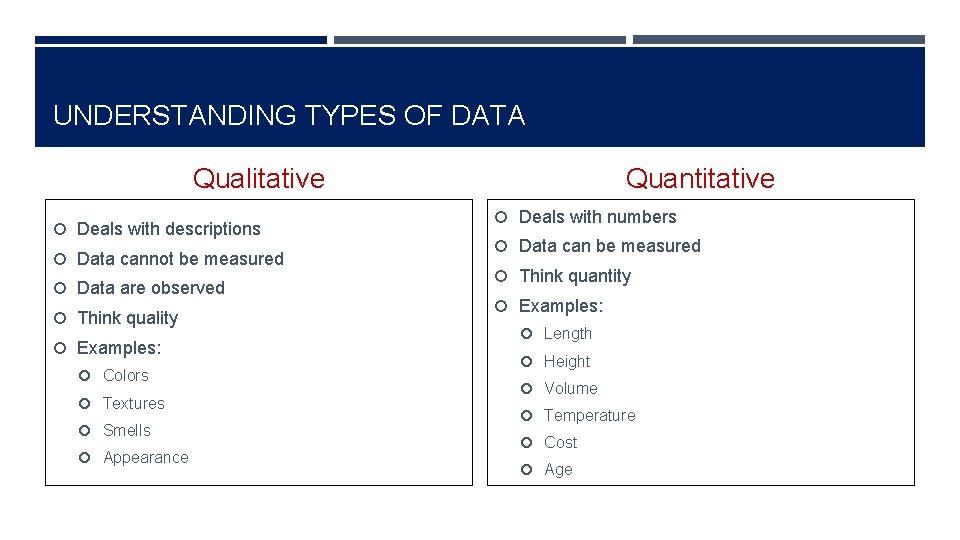
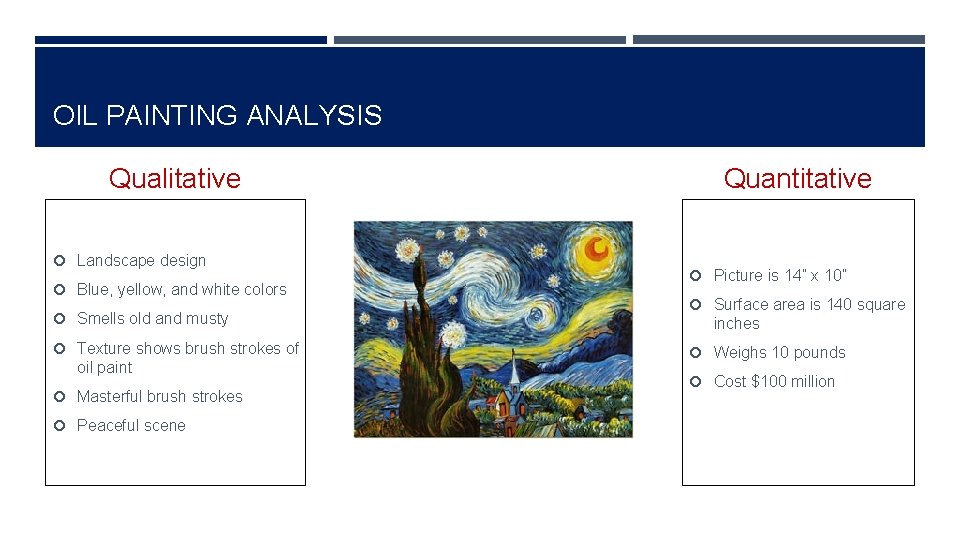
UNDERSTANDING TYPES OF DATA Qualitative Deals with descriptions Data cannot be measured Data are observed Think quality Examples: Colors Textures Smells Appearance Quantitative Deals with numbers Data can be measured Think quantity Examples: Length Height Volume Temperature Cost Age
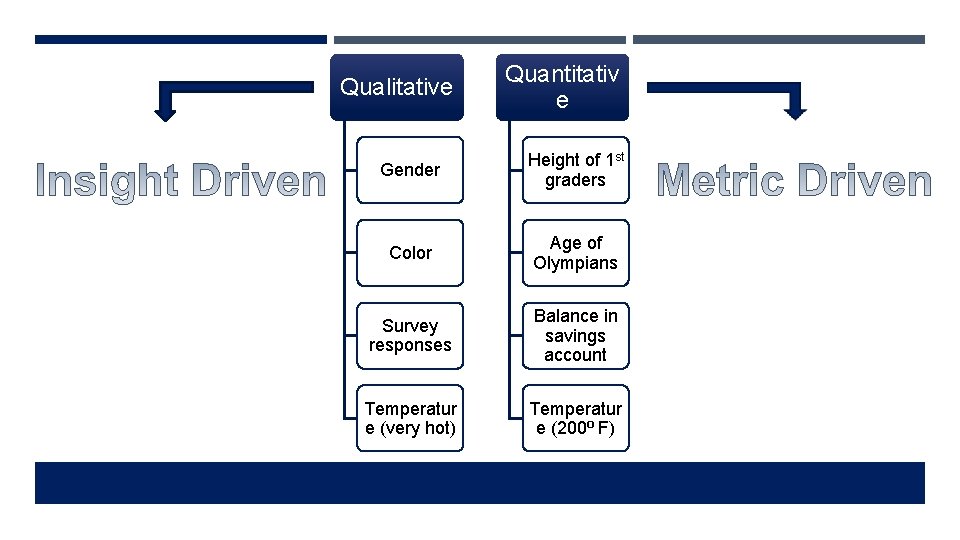
Qualitative Quantitativ e Gender Height of 1 st graders Color Age of Olympians Survey responses Balance in savings account Temperatur e (very hot) Temperatur e (200⁰ F)
OIL PAINTING ANALYSIS Qualitative Landscape design Blue, yellow, and white colors Smells old and musty Texture shows brush strokes of oil paint Masterful brush strokes Peaceful scene Quantitative Picture is 14” x 10” Surface area is 140 square inches Weighs 10 pounds Cost $100 million
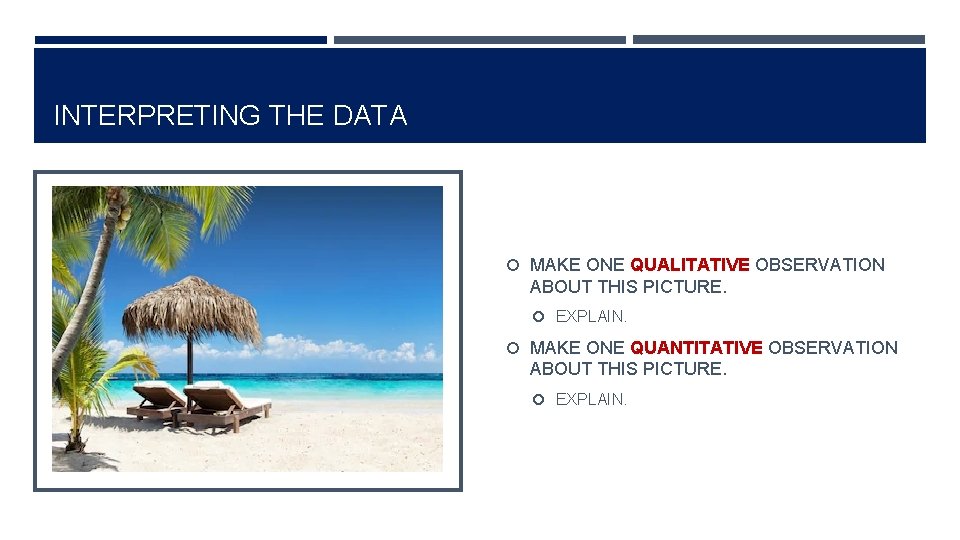
INTERPRETING THE DATA MAKE ONE QUALITATIVE OBSERVATION ABOUT THIS PICTURE. EXPLAIN. MAKE ONE QUANTITATIVE OBSERVATION ABOUT THIS PICTURE. EXPLAIN.
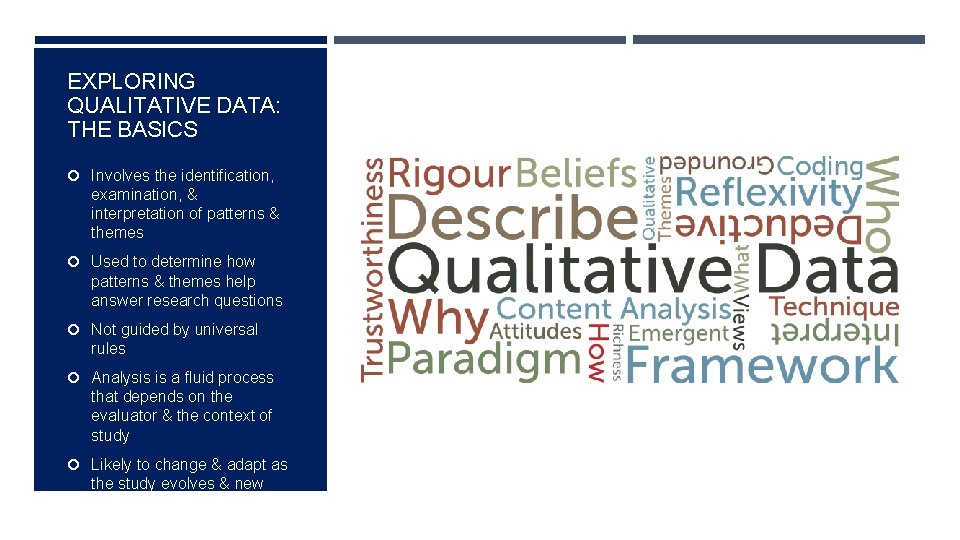
EXPLORING QUALITATIVE DATA: THE BASICS Involves the identification, examination, & interpretation of patterns & themes Used to determine how patterns & themes help answer research questions Not guided by universal rules Analysis is a fluid process that depends on the evaluator & the context of study Likely to change & adapt as the study evolves & new data emerge
QUESTIONS TO ASK YOURSELF WHEN ANALYZING QUALITATIVE DATA What patterns or common themes do you notice in the data? How do these patterns (or lack thereof) help provide information or insights? Are there any deviations from these patterns? If, yes, what factors could explain these? What interesting stories emerge from the data? How can these stories help to shed light on the broader picture? Do any of the patterns or themes suggest that additional data need to be collected? Do any of the study questions need to be revised? Do the patterns that emerge support other corresponding qualitative findings?
6 STEPS TO ANALYZE QUALITATIVE DATA A GUIDE TO SUCCESSFUL DATA COLLECTION
STEP 1: PROCESSING & RECORDING DATA As soon as data are collected, they must be processed immediately. This allows for thoroughness and accurateness. Always record detailed notes. Consider making a reflection sheet template to help standardize data collection. Include: Things that stuck out to you Time & date Observations Highlights from interactions
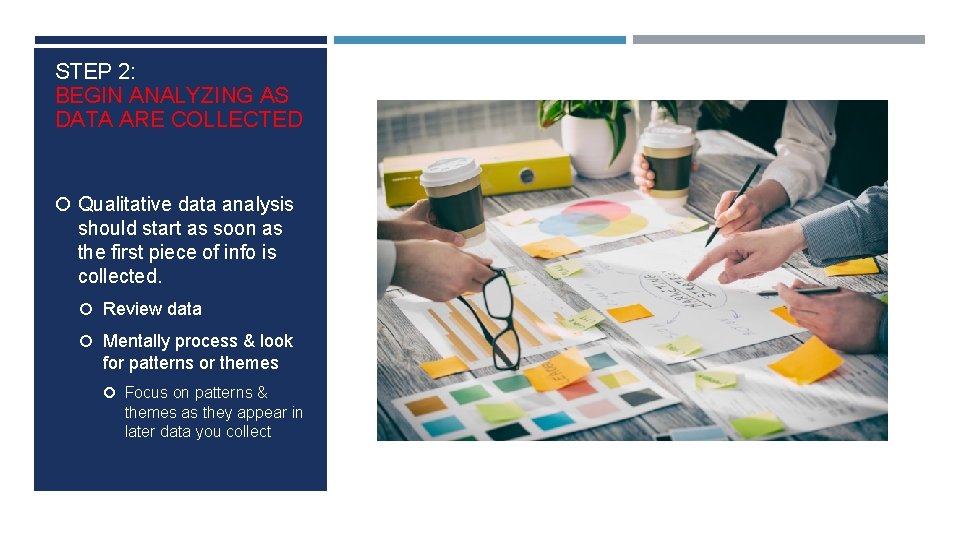
STEP 2: BEGIN ANALYZING AS DATA ARE COLLECTED Qualitative data analysis should start as soon as the first piece of info is collected. Review data Mentally process & look for patterns or themes Focus on patterns & themes as they appear in later data you collect
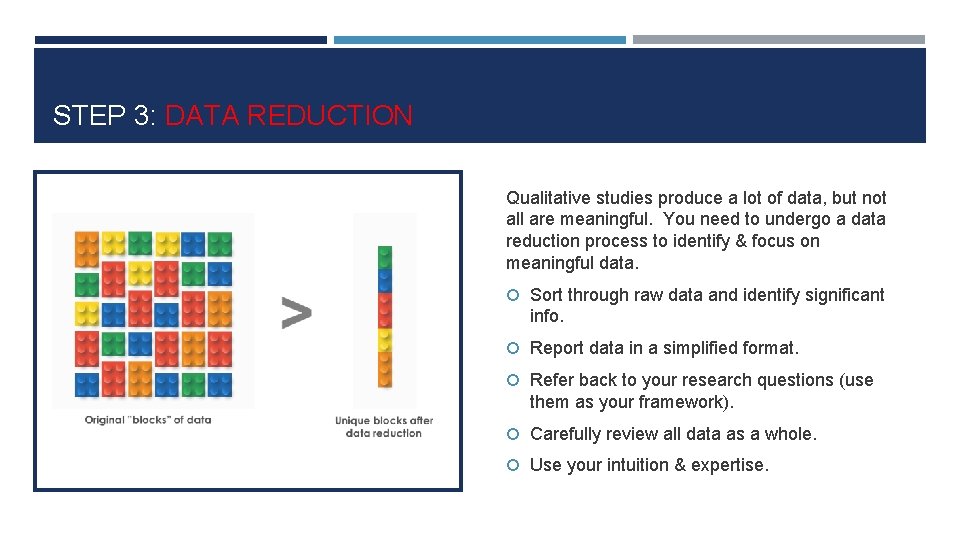
STEP 3: DATA REDUCTION Qualitative studies produce a lot of data, but not all are meaningful. You need to undergo a data reduction process to identify & focus on meaningful data. Sort through raw data and identify significant info. Report data in a simplified format. Refer back to your research questions (use them as your framework). Carefully review all data as a whole. Use your intuition & expertise.
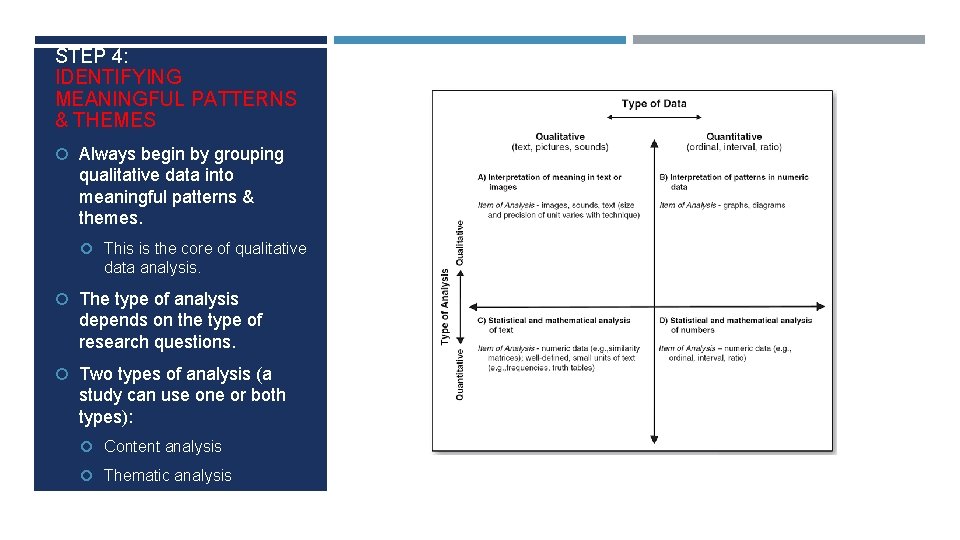
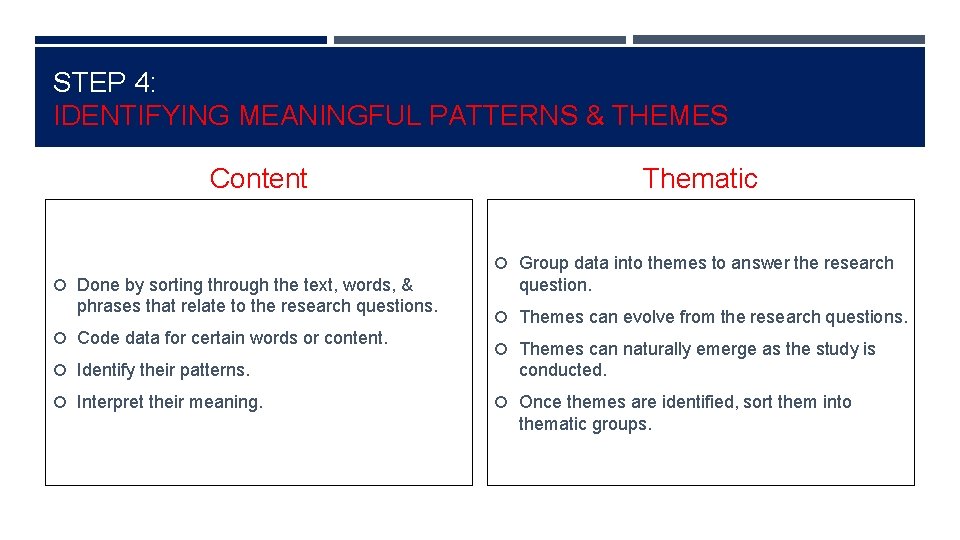
STEP 4: IDENTIFYING MEANINGFUL PATTERNS & THEMES Always begin by grouping qualitative data into meaningful patterns & themes. This is the core of qualitative data analysis. The type of analysis depends on the type of research questions. Two types of analysis (a study can use one or both types): Content analysis Thematic analysis
STEP 4: IDENTIFYING MEANINGFUL PATTERNS & THEMES Content Thematic Group data into themes to answer the research Done by sorting through the text, words, & phrases that relate to the research questions. Code data for certain words or content. Identify their patterns. Interpret their meaning. question. Themes can evolve from the research questions. Themes can naturally emerge as the study is conducted. Once themes are identified, sort them into thematic groups.
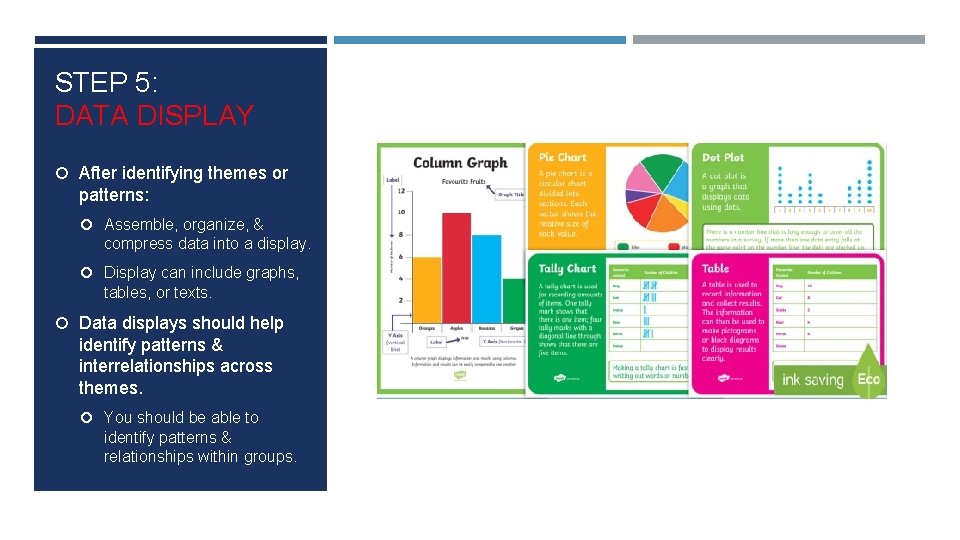
STEP 5: DATA DISPLAY After identifying themes or patterns: Assemble, organize, & compress data into a display. Display can include graphs, tables, or texts. Data displays should help identify patterns & interrelationships across themes. You should be able to identify patterns & relationships within groups.
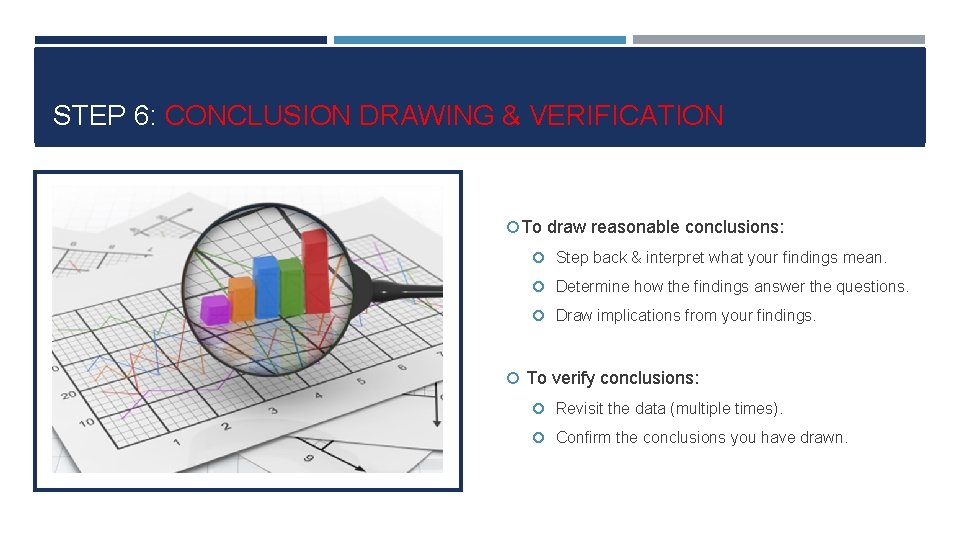
STEP 6: CONCLUSION DRAWING & VERIFICATION To draw reasonable conclusions: Step back & interpret what your findings mean. Determine how the findings answer the questions. Draw implications from your findings. To verify conclusions: Revisit the data (multiple times). Confirm the conclusions you have drawn.
DESIGN THINKING Sub-Competency I: Identify Patterns
WHAT IS DESIGN THINKING?
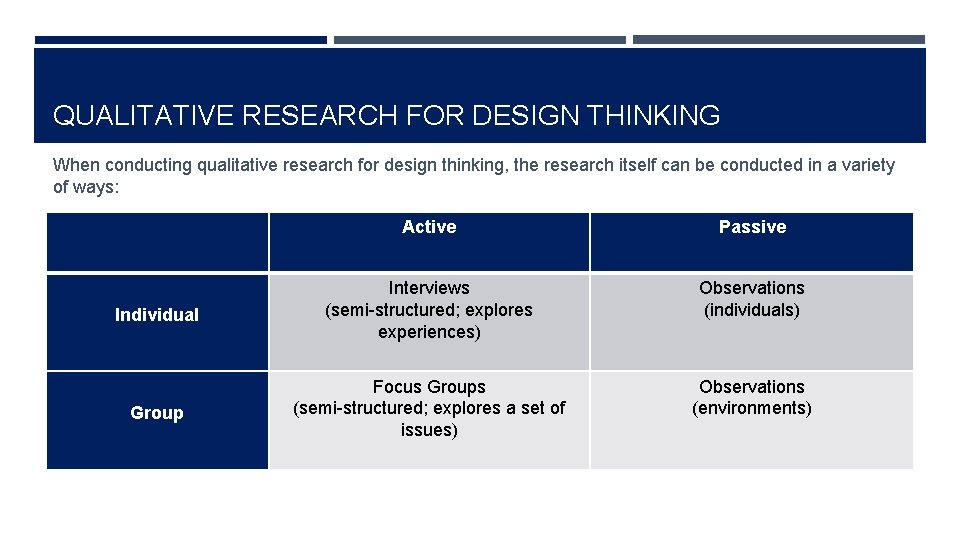
QUALITATIVE RESEARCH FOR DESIGN THINKING When conducting qualitative research for design thinking, the research itself can be conducted in a variety of ways: Active Passive Individual Interviews (semi-structured; explores experiences) Observations (individuals) Group Focus Groups (semi-structured; explores a set of issues) Observations (environments)
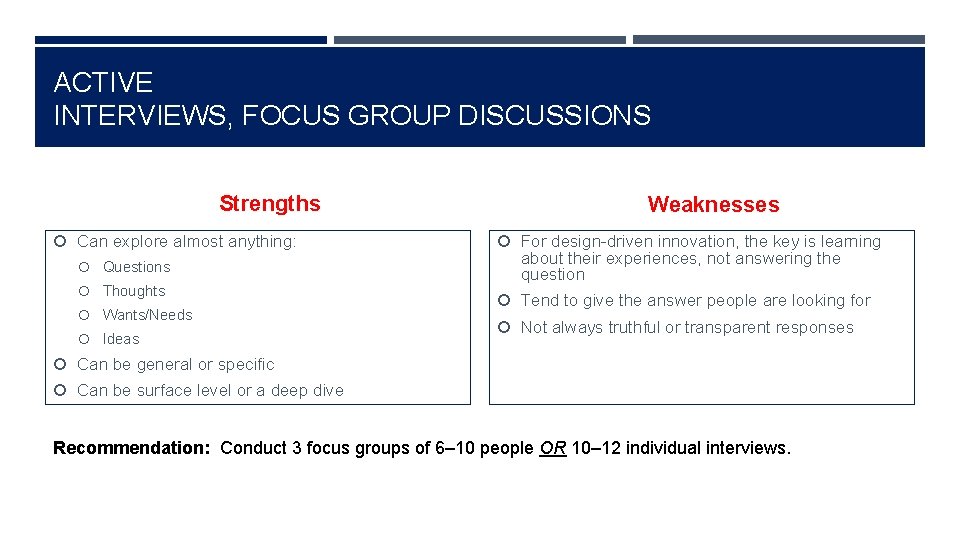
ACTIVE INTERVIEWS, FOCUS GROUP DISCUSSIONS Strengths Can explore almost anything: Questions Thoughts Wants/Needs Ideas Weaknesses For design-driven innovation, the key is learning about their experiences, not answering the question Tend to give the answer people are looking for Not always truthful or transparent responses Can be general or specific Can be surface level or a deep dive Recommendation: Conduct 3 focus groups of 6– 10 people OR 10– 12 individual interviews.
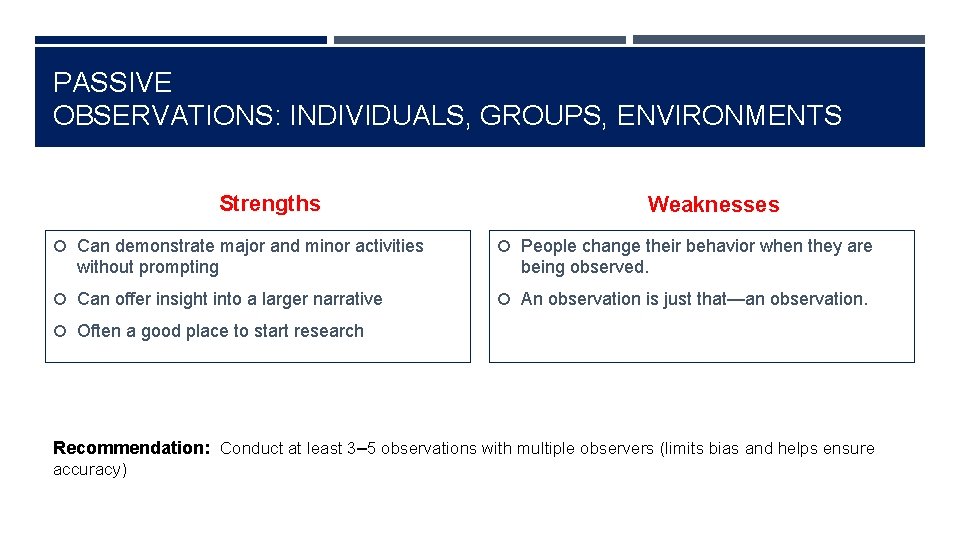
PASSIVE OBSERVATIONS: INDIVIDUALS, GROUPS, ENVIRONMENTS Strengths Can demonstrate major and minor activities without prompting Can offer insight into a larger narrative Weaknesses People change their behavior when they are being observed. An observation is just that—an observation. Often a good place to start research Recommendation: Conduct at least 3– 5 observations with multiple observers (limits bias and helps ensure accuracy)
PATTERN RECOGNITION Sub-Competency I: Identify Patterns
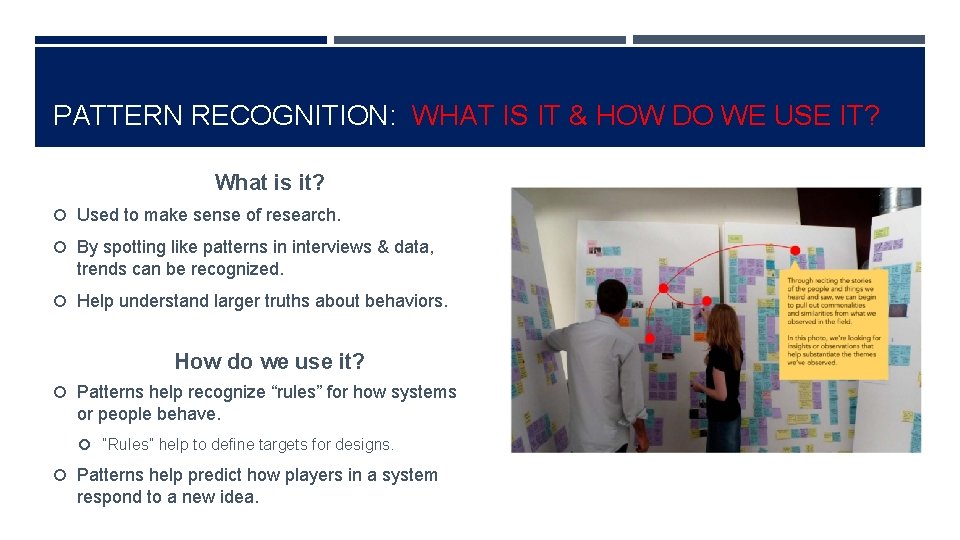
PATTERN RECOGNITION: WHAT IS IT & HOW DO WE USE IT? What is it? Used to make sense of research. By spotting like patterns in interviews & data, trends can be recognized. Help understand larger truths about behaviors. How do we use it? Patterns help recognize “rules” for how systems or people behave. “Rules” help to define targets for designs. Patterns help predict how players in a system respond to a new idea.
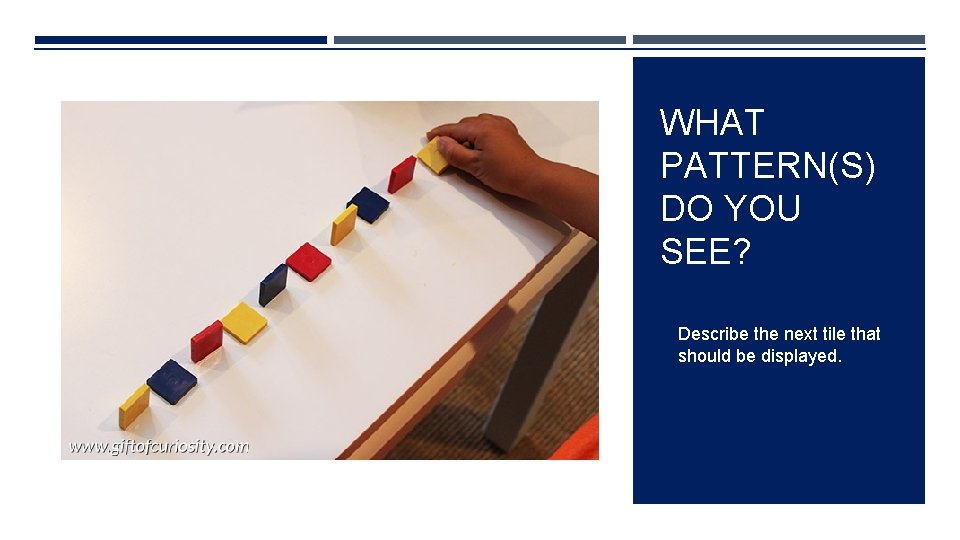
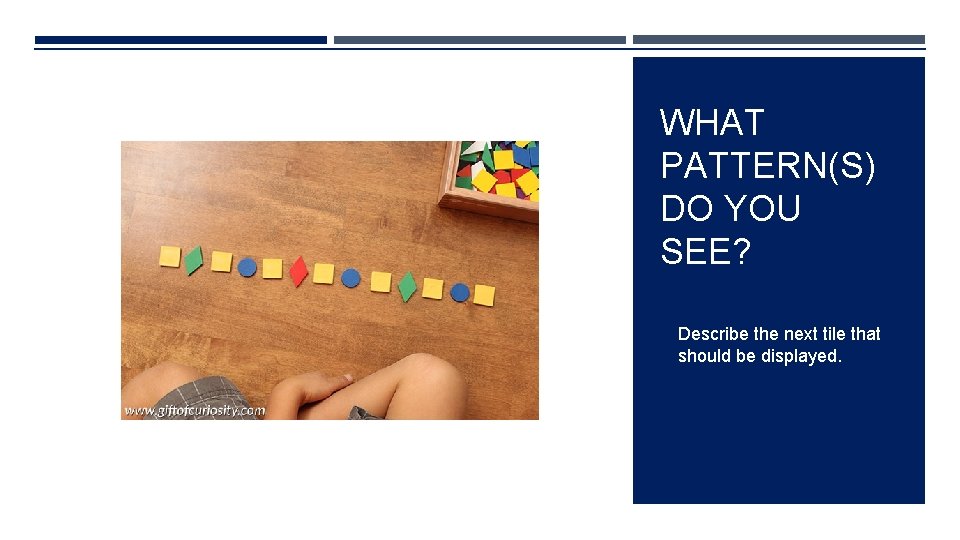
WHAT PATTERN(S) DO YOU SEE? Describe the next tile that should be displayed.
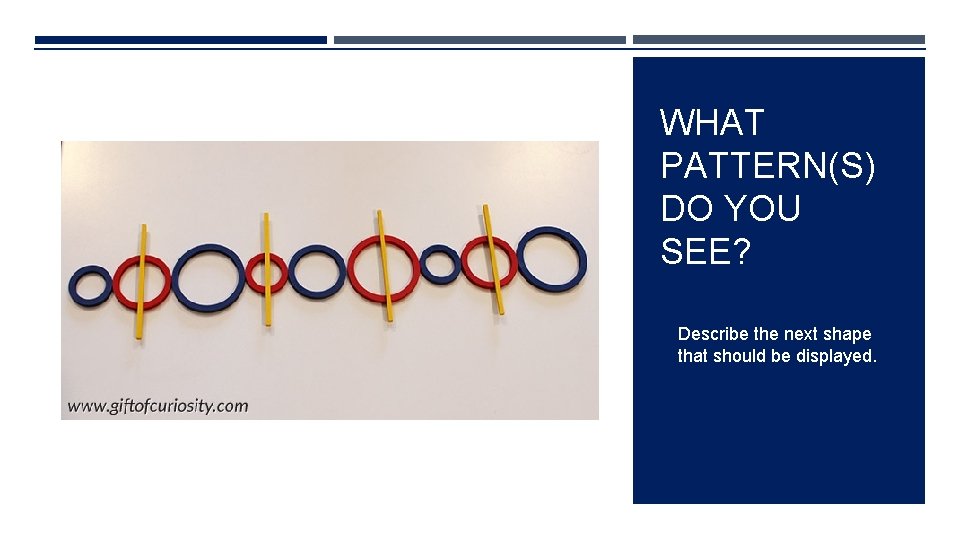
WHAT PATTERN(S) DO YOU SEE? Describe the next shape that should be displayed.
WHAT PATTERN(S) DO YOU SEE? Describe the next tile that should be displayed.
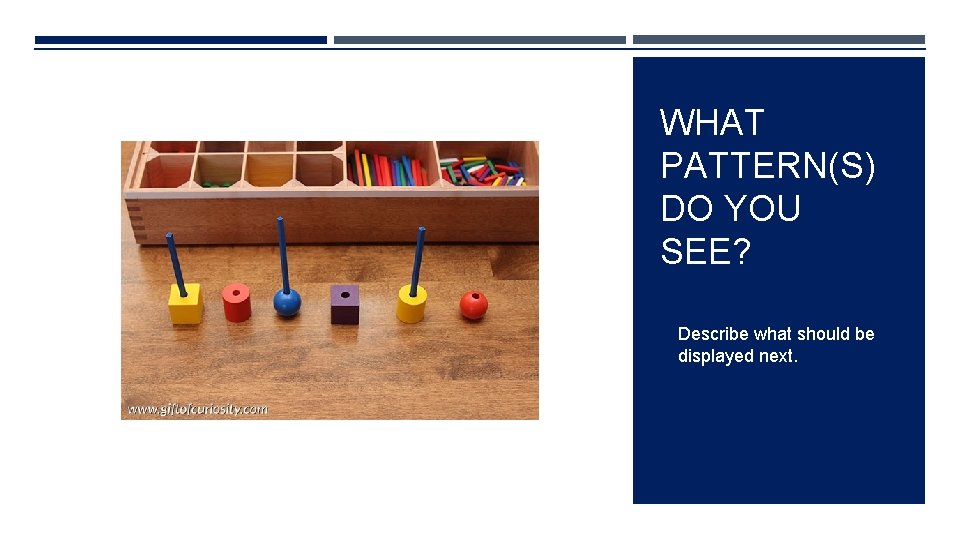
WHAT PATTERN(S) DO YOU SEE? Describe what should be displayed next.
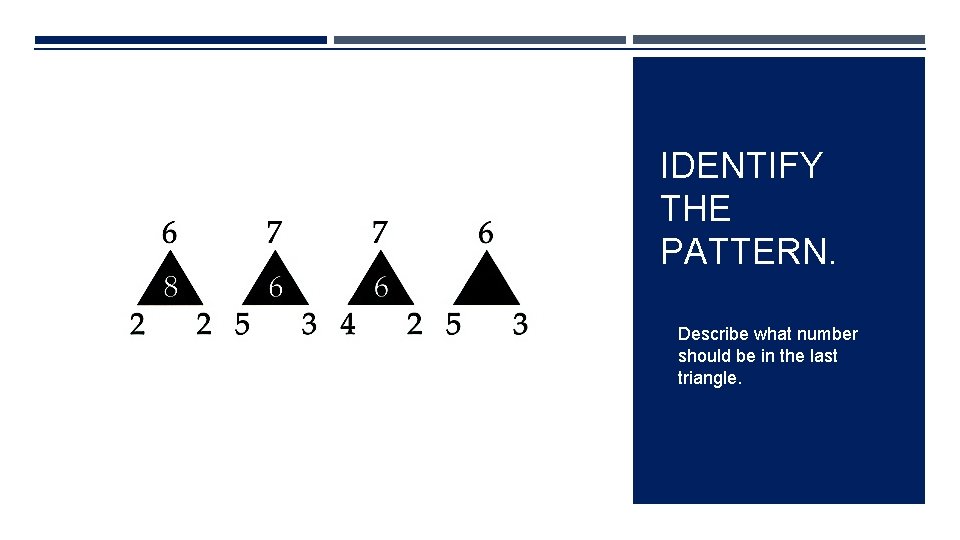
IDENTIFY THE PATTERN. Describe what number should be in the last triangle.
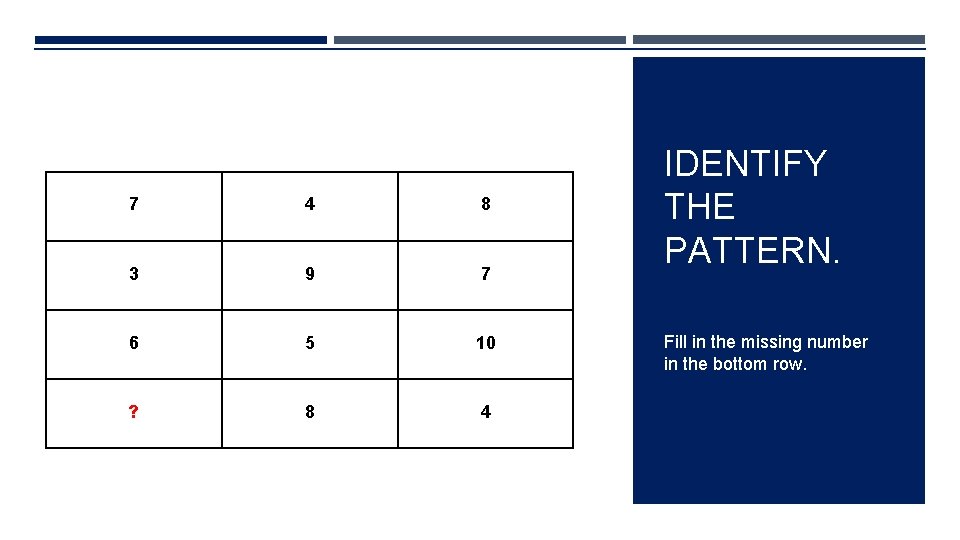
7 4 8 3 9 7 6 5 10 ? 8 4 IDENTIFY THE PATTERN. Fill in the missing number in the bottom row.
30 CIRCLES
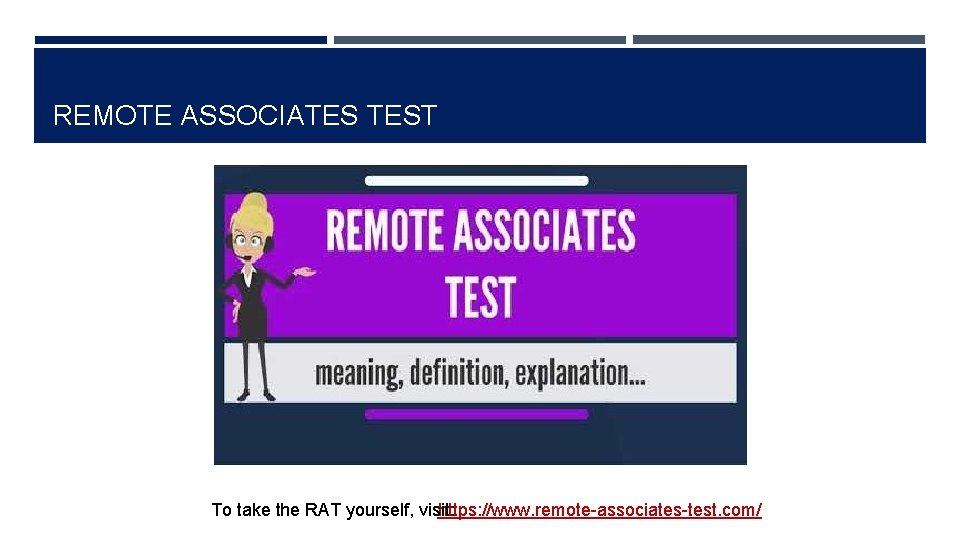
REMOTE ASSOCIATES TEST To take the RAT yourself, visit: https: //www. remote-associates-test. com/
FINDING YOUR PATTERN
THOUGHTS AND REFLECTIONS?