
21 ST CENTURY SKILLS 2020 CREATIVE PROBLEM SOLVING
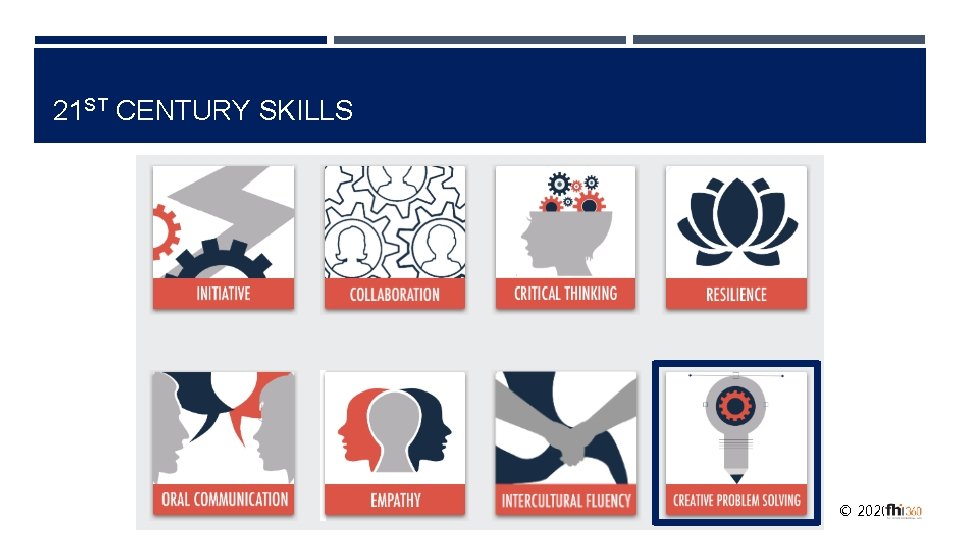
21 ST CENTURY SKILLS © 2020

CREATIVE PROBLEM SOLVING MODEL Sub-Competency 1: Convergent & Divergent Thinking Divergent & Convergent Thinking | Divergent & Convergent Questions | Creative Problem Solving Process Sub-Competency 2: Manage Ambiguity IDEO| Improv Exercises | Microsoft Ambiguity Sub-Competency 3: Apply An Iterative Process Design Thinking | Iterative Design | Sparring Sub-Competency 4: Identify Patterns Pattern Recognition | Affinity Diagrams | Remote Associates Test
DESIGN THINKING Sub-Competency 3: Apply An Iterative Process
WHAT IS DESIGN THINKING?
“The mission of design thinking is to translate observation into insights and insights into products and services that will improve lives. ” - Tim Brown, IDEO President & CEO HOW TO SOLVE PROBLEMS LIKE A DESIGNER
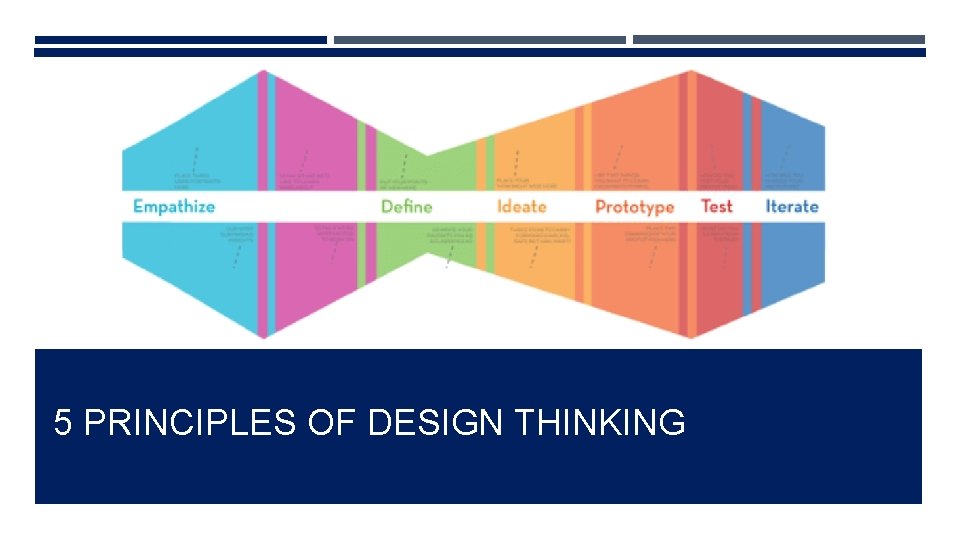
5 PRINCIPLES OF DESIGN THINKING
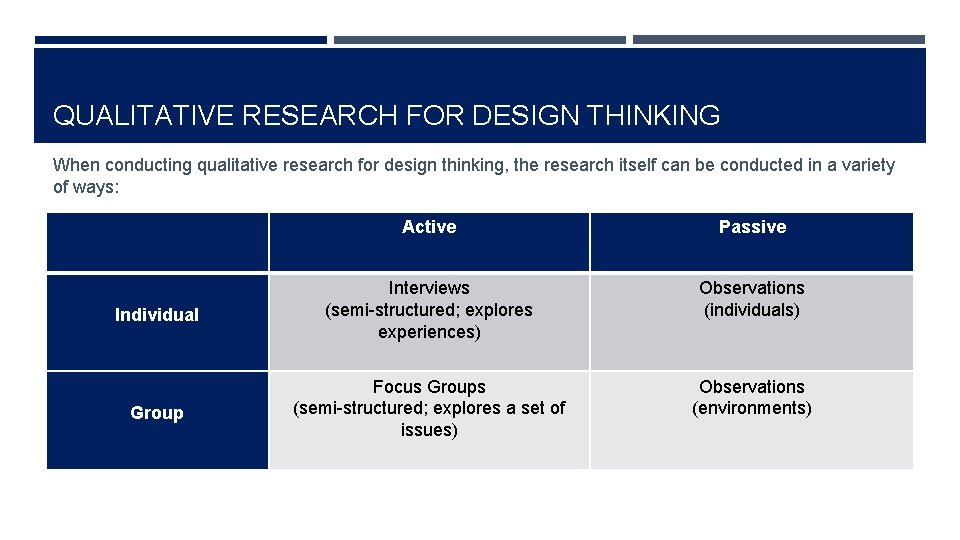
QUALITATIVE RESEARCH FOR DESIGN THINKING When conducting qualitative research for design thinking, the research itself can be conducted in a variety of ways: Active Passive Individual Interviews (semi-structured; explores experiences) Observations (individuals) Group Focus Groups (semi-structured; explores a set of issues) Observations (environments)
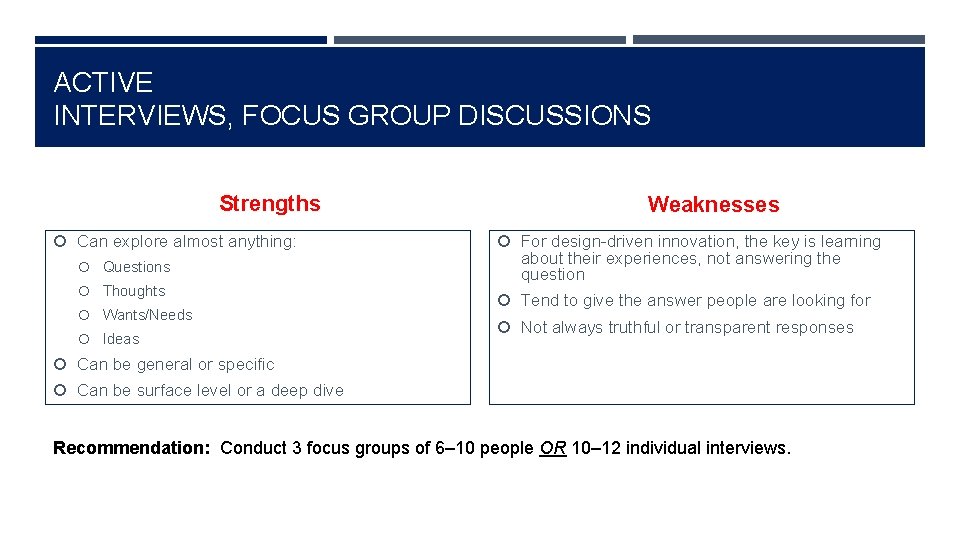
ACTIVE INTERVIEWS, FOCUS GROUP DISCUSSIONS Strengths Can explore almost anything: Questions Thoughts Wants/Needs Ideas Weaknesses For design-driven innovation, the key is learning about their experiences, not answering the question Tend to give the answer people are looking for Not always truthful or transparent responses Can be general or specific Can be surface level or a deep dive Recommendation: Conduct 3 focus groups of 6– 10 people OR 10– 12 individual interviews.
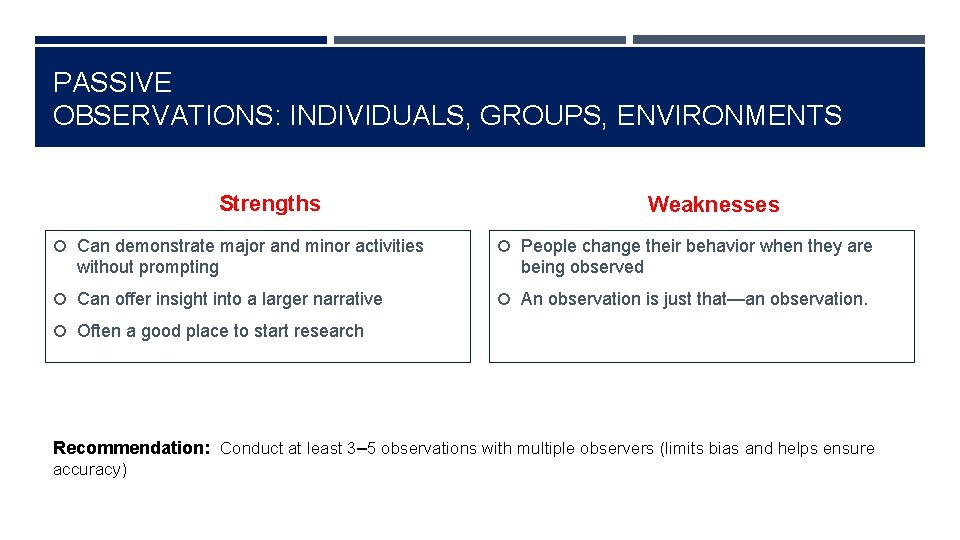
PASSIVE OBSERVATIONS: INDIVIDUALS, GROUPS, ENVIRONMENTS Strengths Can demonstrate major and minor activities without prompting Can offer insight into a larger narrative Weaknesses People change their behavior when they are being observed An observation is just that—an observation. Often a good place to start research Recommendation: Conduct at least 3– 5 observations with multiple observers (limits bias and helps ensure accuracy)
ITERATIVE DESIGN Sub-Competency 3: Apply An Iterative Process
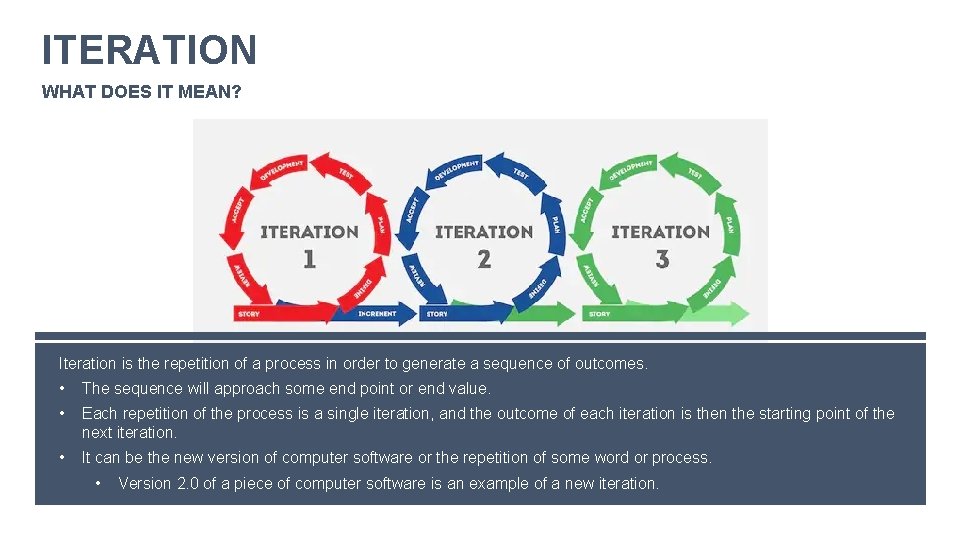
ITERATION WHAT DOES IT MEAN? Iteration is the repetition of a process in order to generate a sequence of outcomes. • The sequence will approach some end point or end value. • Each repetition of the process is a single iteration, and the outcome of each iteration is then the starting point of the next iteration. • It can be the new version of computer software or the repetition of some word or process. • Version 2. 0 of a piece of computer software is an example of a new iteration.

ITERATIVE DESIGN IN ACTION
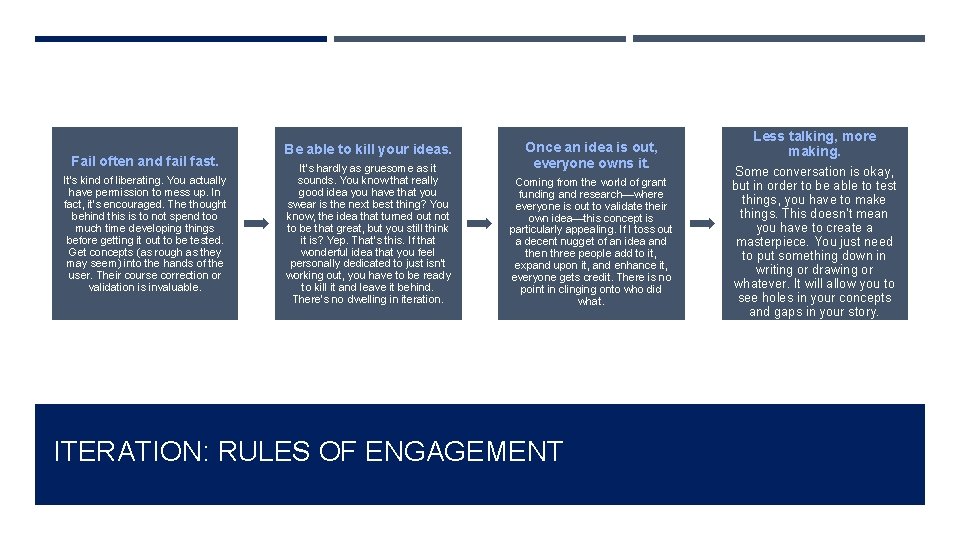
Fail often and fail fast. It’s kind of liberating. You actually have permission to mess up. In fact, it’s encouraged. The thought behind this is to not spend too much time developing things before getting it out to be tested. Get concepts (as rough as they may seem) into the hands of the user. Their course correction or validation is invaluable. Be able to kill your ideas. It’s hardly as gruesome as it sounds. You know that really good idea you have that you swear is the next best thing? You know, the idea that turned out not to be that great, but you still think it is? Yep. That’s this. If that wonderful idea that you feel personally dedicated to just isn’t working out, you have to be ready to kill it and leave it behind. There’s no dwelling in iteration. Once an idea is out, everyone owns it. Coming from the world of grant funding and research—where everyone is out to validate their own idea—this concept is particularly appealing. If I toss out a decent nugget of an idea and then three people add to it, expand upon it, and enhance it, everyone gets credit. There is no point in clinging onto who did what. ITERATION: RULES OF ENGAGEMENT Less talking, more making. Some conversation is okay, but in order to be able to test things, you have to make things. This doesn’t mean you have to create a masterpiece. You just need to put something down in writing or drawing or whatever. It will allow you to see holes in your concepts and gaps in your story.
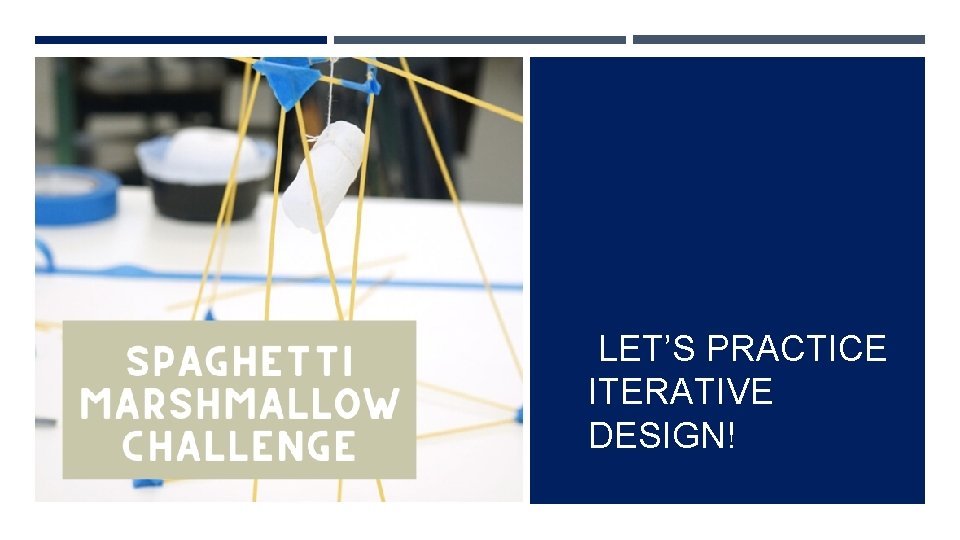
LET’S PRACTICE ITERATIVE DESIGN!
SPARRING Sub-Competency 3: Apply An Iterative Process
Sparring is a structured way to get peer feedback from teammates and stakeholders. SPARRING A fruitful sparring session can also help you reach specific decisions that will take the project forward.
Let peers challenge your own ideas and inspire new ones. USES OF SPARRING Take advantage of others' knowledge and experience from outside your own discipline. If you're struggling with velocity or team cohesiveness, sparring might help.
SPARRING ASSESSMENT

THOUGHTS AND REFLECTIONS?
- Slides: 19