
21 st Century Business Model Design Points Whole
21 st Century Business Model Design Points • Whole system / nested interdependencies / integrated thinking view: Show that business is nested in society ‒ and optionally the economy ‒ which is nested in the finite environment on a finite planet, and show the touch points where the business impacts its nests. • Stocks and flows: Show the overall input‒process‒output flow among the environmental and societal stocks and the business. • Business model elements: Include the main internal elements of the business, to show the business creates value for its customers and other stakeholders. • Connects the dots: Represent how reputation, savings, etc. from the business’s impacts on the environment and society come back to impact business financials and need to be taken into account in the 21 st century. • Circular economy: Show a 21 st century circular economy protects the environment from more harm and keeps natural resources in circulation in society. • New risks: Show new global environmental, social, and technological risks can threaten businesses and deserve inclusion in Enterprise Risk Management (ERM) processes and long-term strategic planning in the 21 st
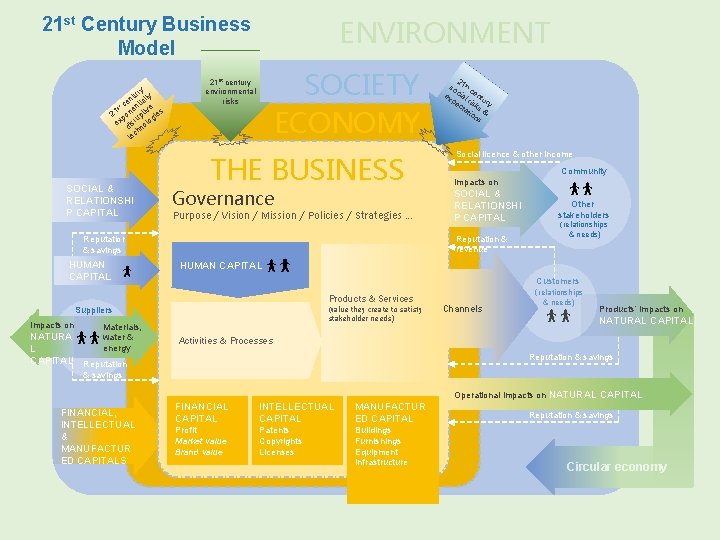
ENVIRONMENT 21 st Century Business Model ry tu ly en tial c t s en ve 21 pon upti gies x e disr olo n ch te SOCIAL & RELATIONSHI P CAPITAL SOCIETY ECONOMY 21 st century environmental risks THE BUSINESS Governance Purpose / Vision / Mission / Policies / Strategies … Products & Services Materials, water & energy NATURA L CAPITAL Reputation Community Impacts on SOCIAL & RELATIONSHI P CAPITAL Other stakeholders (relationships & needs) HUMAN CAPITAL Suppliers Impacts on Social licence & other income Reputation & revenue Reputation & savings HUMAN CAPITAL 2 so 1 st c c ex ial entu pe ris ry cta ks tio & ns (value they create to satisfy stakeholder needs) Customers (relationships Channels & needs) Products’ impacts on NATURAL CAPITAL Activities & Processes Reputation & savings Operational impacts on NATURAL CAPITAL FINANCIAL, INTELLECTUAL & MANUFACTUR ED CAPITALS FINANCIAL CAPITAL INTELLECTUAL CAPITAL MANUFACTUR ED CAPITAL Profit Market value Brand value Patents Copyrights Licenses Buildings Furnishings Equipment Infrastructure Reputation & savings Circular economy
Example Use of the 21 st Century Business Model in the Sustainability Advantage 2017 Integrated Report <IR>
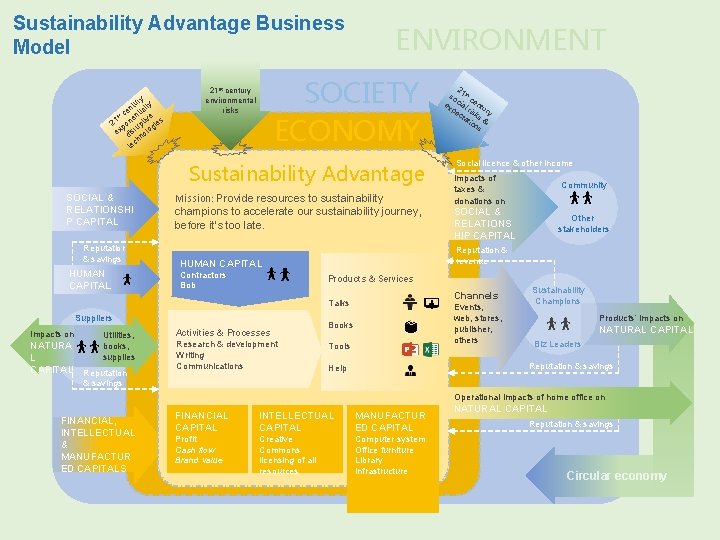
Sustainability Advantage Business Model y ur nt ially e t st c en ve 21 pon upti gies r ex dis olo n ch te ENVIRONMENT SOCIETY ECONOMY 21 st century environmental risks Sustainability Advantage SOCIAL & RELATIONSHI P CAPITAL Reputation & savings HUMAN CAPITAL Mission: Provide resources to sustainability champions to accelerate our sustainability journey, before it’s too late. Suppliers Utilities, books, supplies NATURA L CAPITAL Reputation Impacts of taxes & donations on Community SOCIAL & RELATIONS HIP CAPITAL Other stakeholders Products & Services Channels Talks Impacts on Social licence & other income Reputation & revenue HUMAN CAPITAL Contractors Bob 2 so 1 st c c ex ial entu pe ris ry cta ks tio & ns Activities & Processes Research & development Activities & Processes Writing Communications Events, web, stores, publisher, others Books Tools Sustainability Champions Products’ impacts on NATURAL CAPITAL Biz Leaders Reputation & savings Help & savings Operational impacts of home office on FINANCIAL, INTELLECTUAL & MANUFACTUR ED CAPITALS FINANCIAL CAPITAL INTELLECTUAL CAPITAL MANUFACTUR ED CAPITAL Profit Cash flow Brand value Creative Commons licensing of all resources Computer system Office furniture Library Infrastructure NATURAL CAPITAL Reputation & savings Circular economy

Sustainability Advantage business model frames performance on the six <IR> capitals 98% 100% 89% 99% 100% Note: Percentage scores indicate success protecting the value of the indicated capital, assessed using relevant Future -Fit Business Benchmark cause-no-harm goals. Infographic from Integrated Report 2017 for Sustainability Advantage sole proprietorship
The 21 st Century Business Model is based on the following business model frameworks
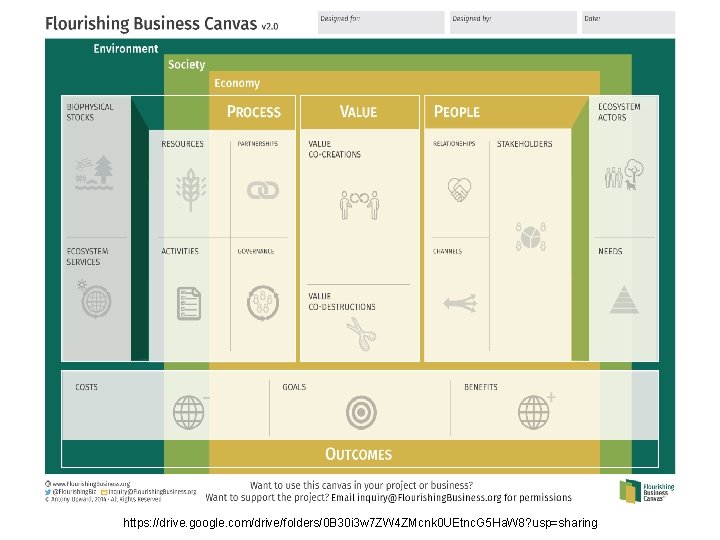
https: //drive. google. com/drive/folders/0 B 30 i 3 w 7 ZW 4 ZMcnk 0 UEtnc. G 5 Ha. W 8? usp=sharing
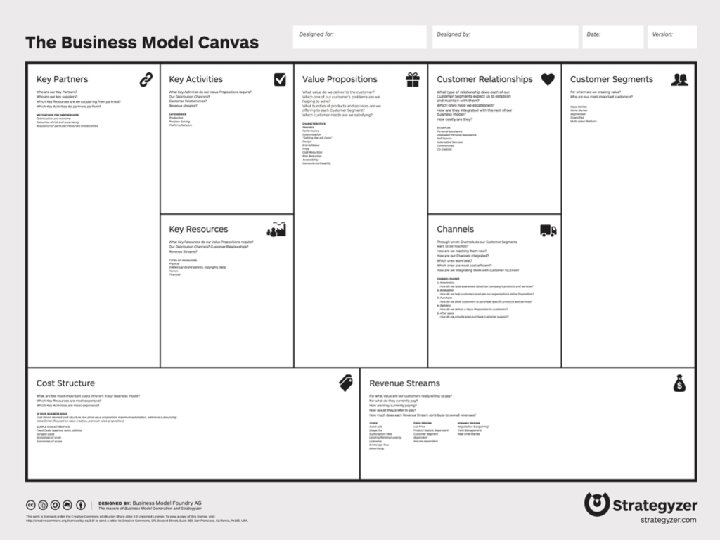

<IR> “Octopus” Business Model http: //integratedreporting. org/what-the-tool-for-better-reporting/get-to-grips-with-the-six-capitals/

Future-Fit Business Benchmark - Core Business Model Graphic http: //futurefitbusiness. org/wp-content/uploads/2017/11/F 2 B 2 -Methodology-Guide-R 2. 0. 4. pdf
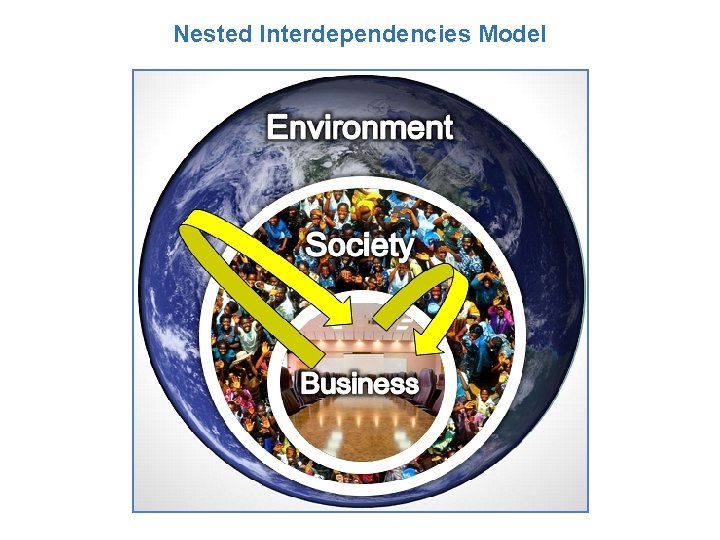
Nested Interdependencies Model

Life Cycle Business Model http: //www. greenspec. co. uk/life-cycle-assessment-lca/
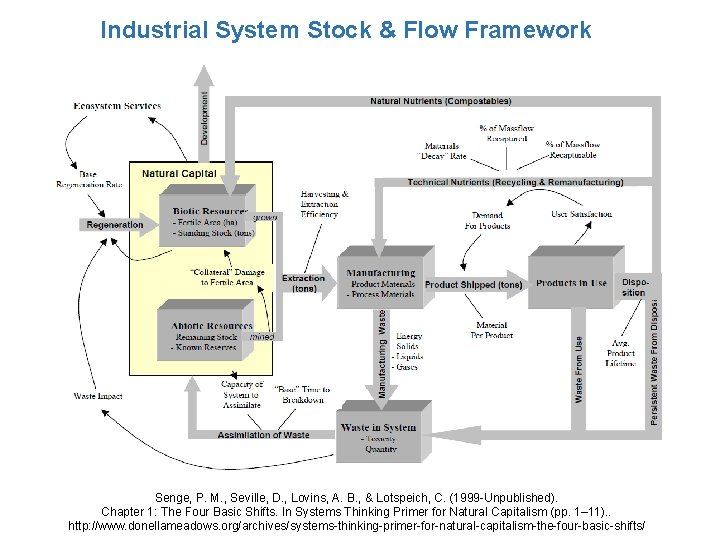
Industrial System Stock & Flow Framework Senge, P. M. , Seville, D. , Lovins, A. B. , & Lotspeich, C. (1999 -Unpublished). Chapter 1: The Four Basic Shifts. In Systems Thinking Primer for Natural Capitalism (pp. 1– 11). . http: //www. donellameadows. org/archives/systems-thinking-primer-for-natural-capitalism-the-four-basic-shifts/
Backup for the new 21 st century Technological, Environmental and Social Risks shown at the top of the business model
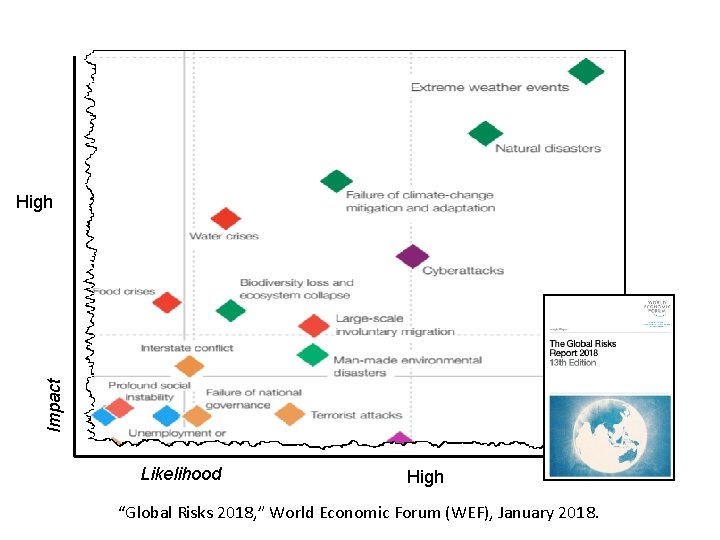
Impact High Likelihood High “Global Risks 2018, ” World Economic Forum (WEF), January 2018.
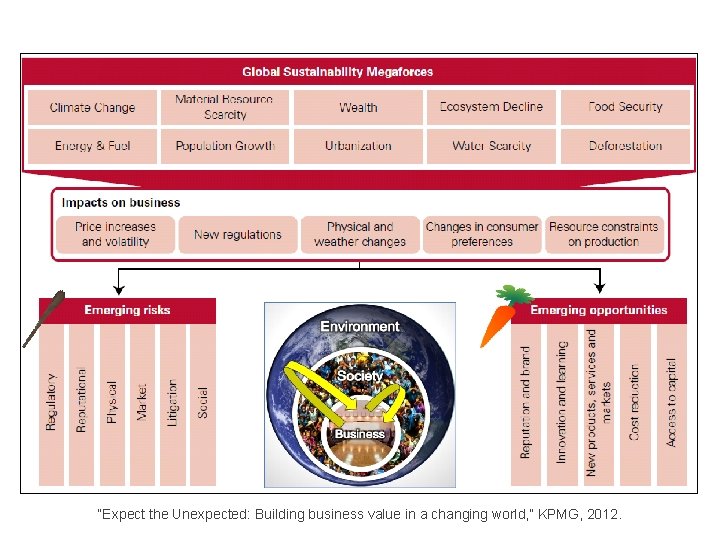
“Expect the Unexpected: Building business value in a changing world, ” KPMG, 2012.
- Slides: 16