
21 1 OCEAN CURRENTS Ocean Currents giant streams
- Slides: 17
21 -1 OCEAN CURRENTS
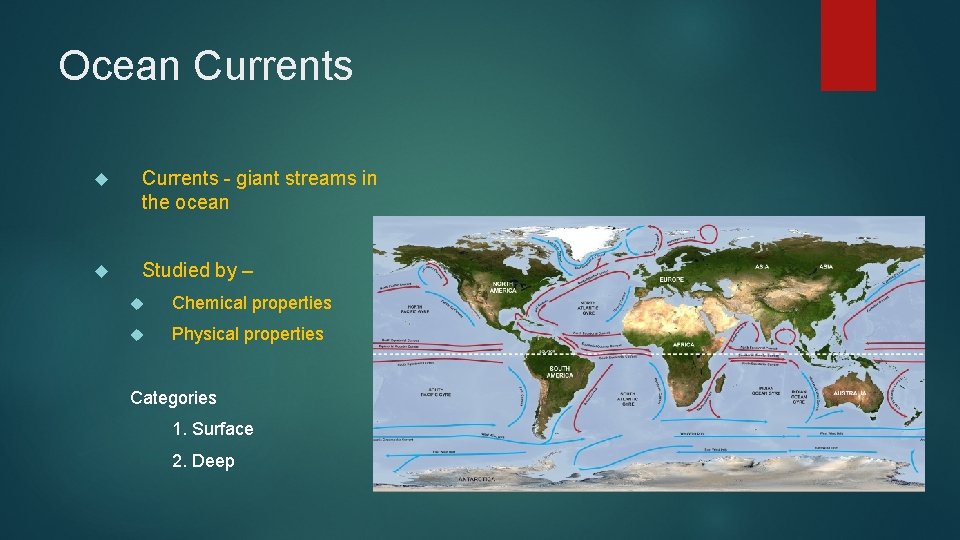
Ocean Currents - giant streams in the ocean Studied by – Chemical properties Physical properties Categories 1. Surface 2. Deep
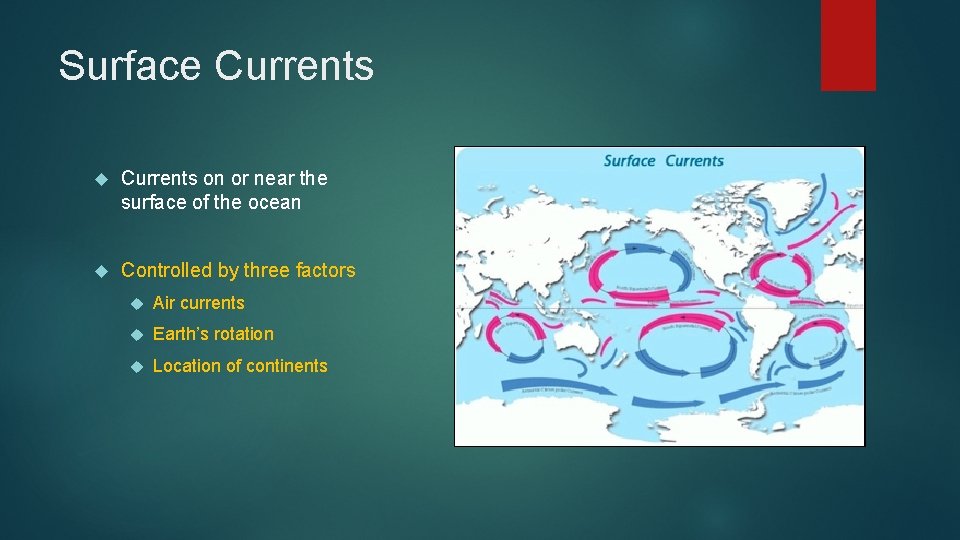
Surface Currents on or near the surface of the ocean Controlled by three factors Air currents Earth’s rotation Location of continents
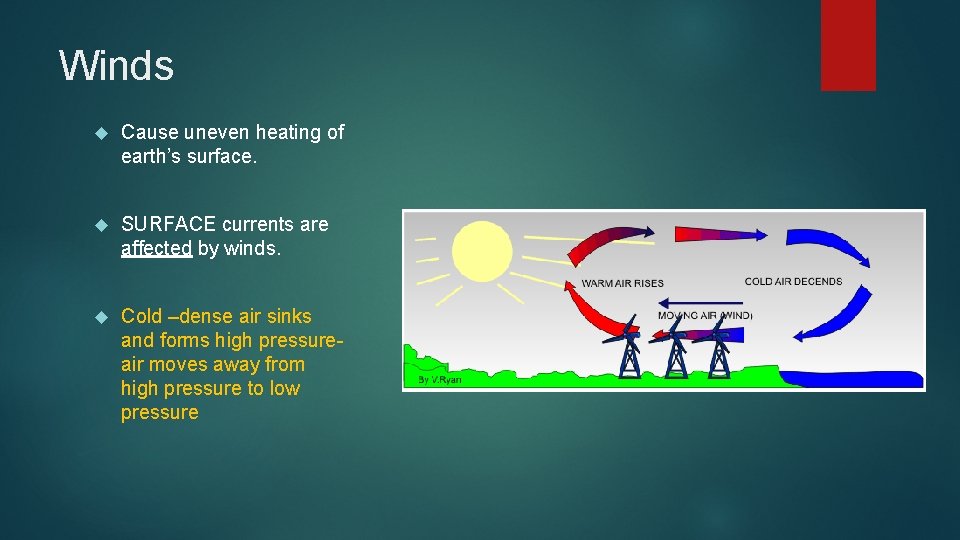
Winds Cause uneven heating of earth’s surface. SURFACE currents are affected by winds. Cold –dense air sinks and forms high pressureair moves away from high pressure to low pressure
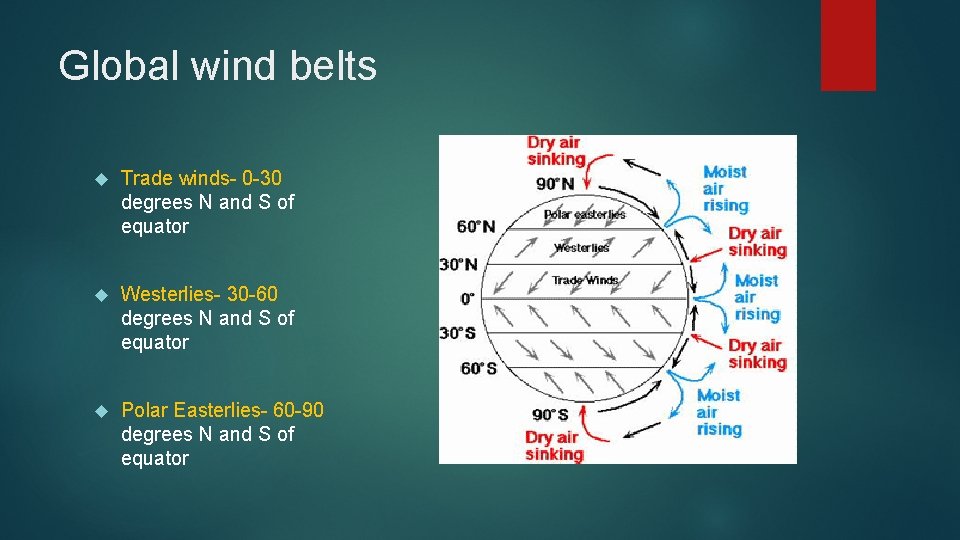
Global wind belts Trade winds- 0 -30 degrees N and S of equator Westerlies- 30 -60 degrees N and S of equator Polar Easterlies- 60 -90 degrees N and S of equator
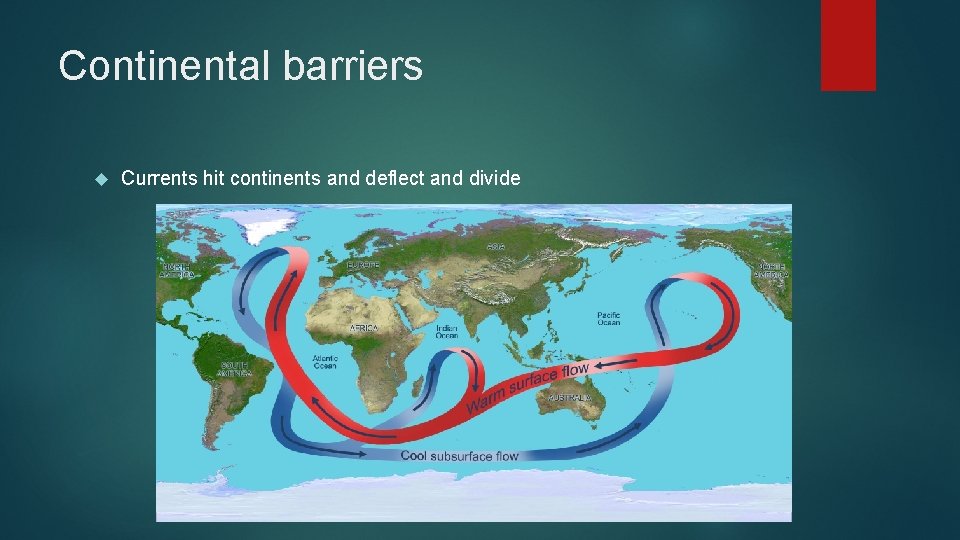
Continental barriers Currents hit continents and deflect and divide
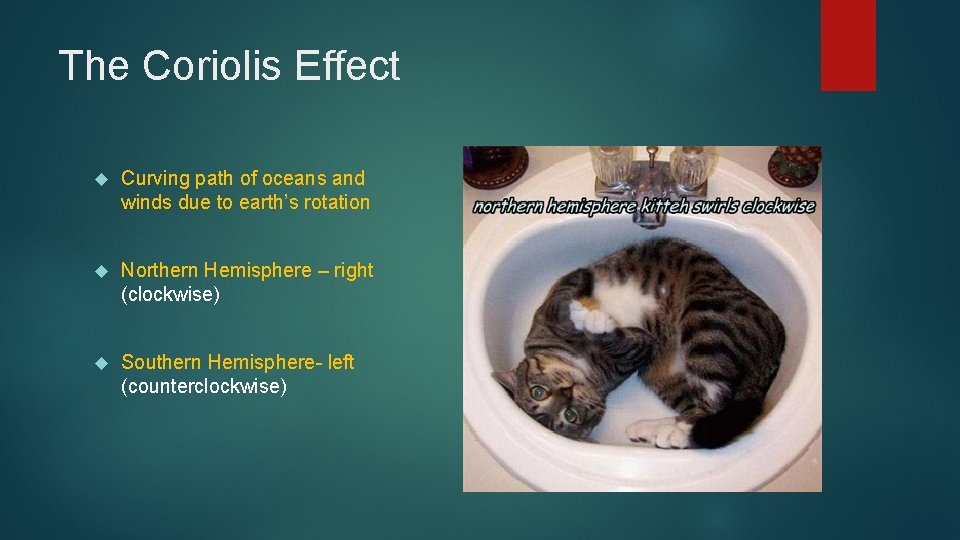
The Coriolis Effect Curving path of oceans and winds due to earth’s rotation Northern Hemisphere – right (clockwise) Southern Hemisphere- left (counterclockwise)
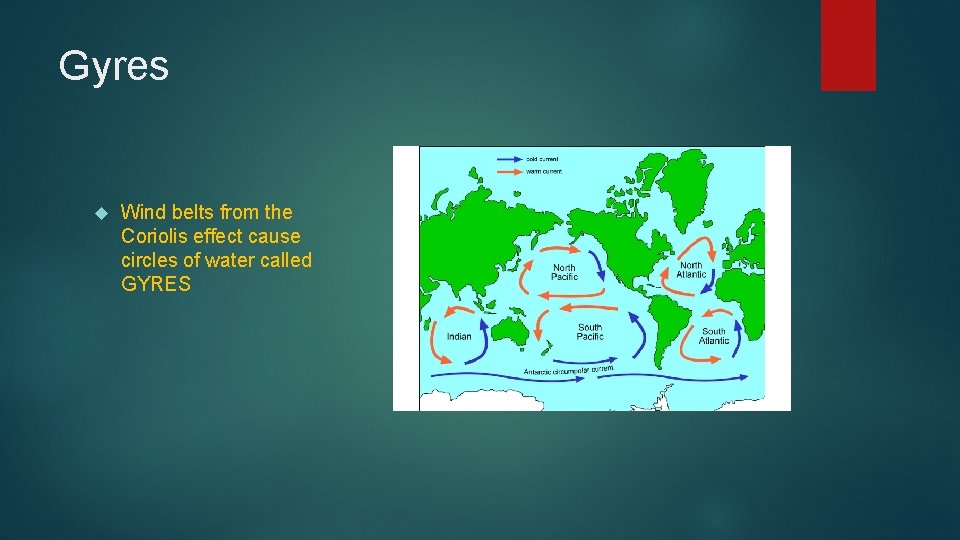
Gyres Wind belts from the Coriolis effect cause circles of water called GYRES
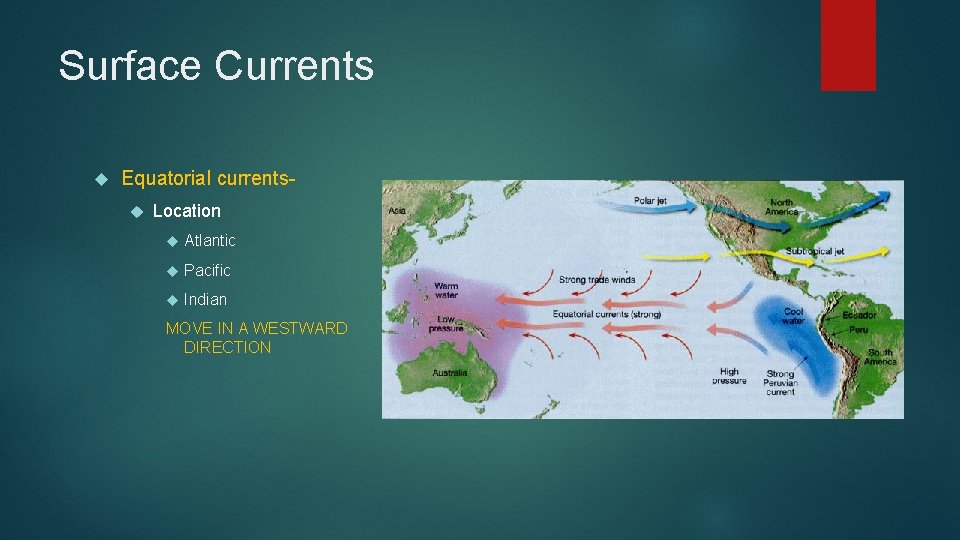
Surface Currents Equatorial currents Location Atlantic Pacific Indian MOVE IN A WESTWARD DIRECTION
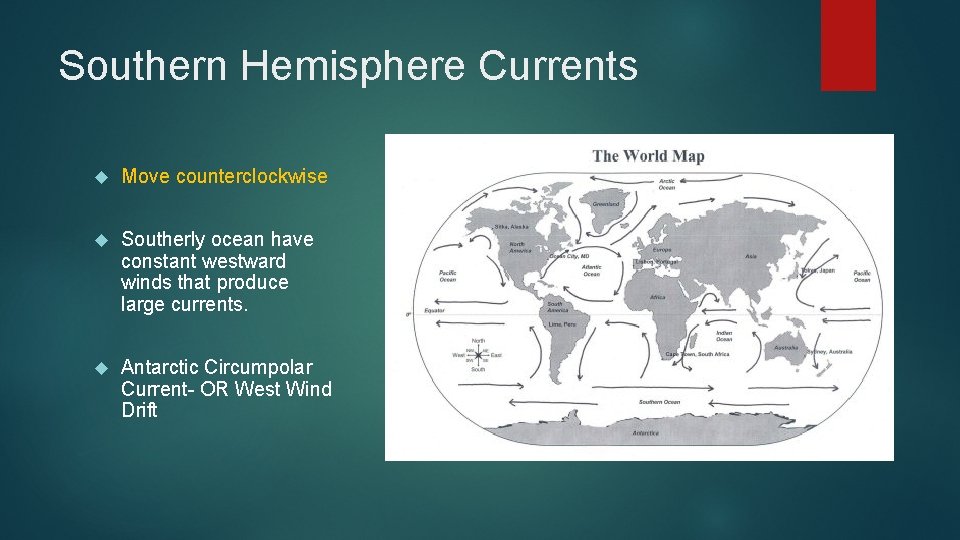
Southern Hemisphere Currents Move counterclockwise Southerly ocean have constant westward winds that produce large currents. Antarctic Circumpolar Current- OR West Wind Drift
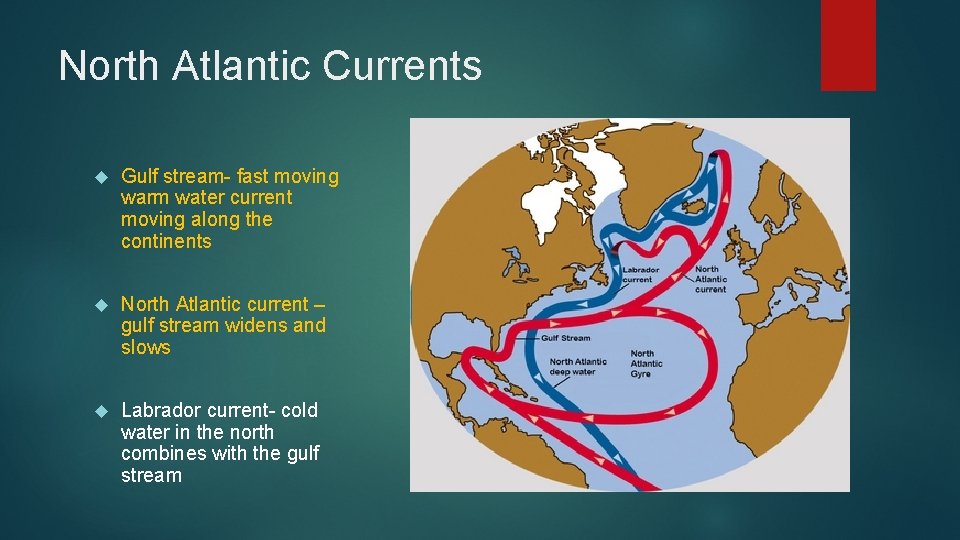
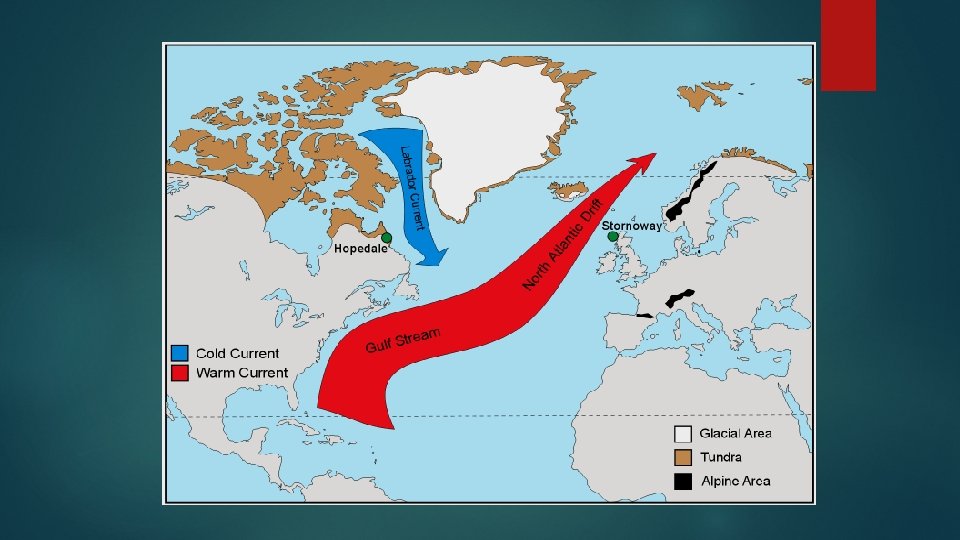
North Atlantic Currents Gulf stream- fast moving warm water current moving along the continents North Atlantic current – gulf stream widens and slows Labrador current- cold water in the north combines with the gulf stream
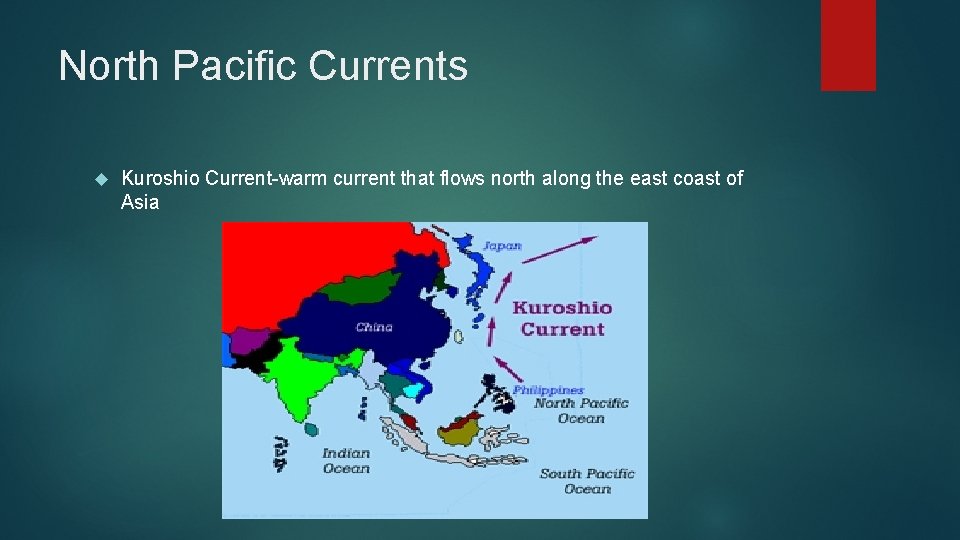
North Pacific Currents Kuroshio Current-warm current that flows north along the east coast of Asia
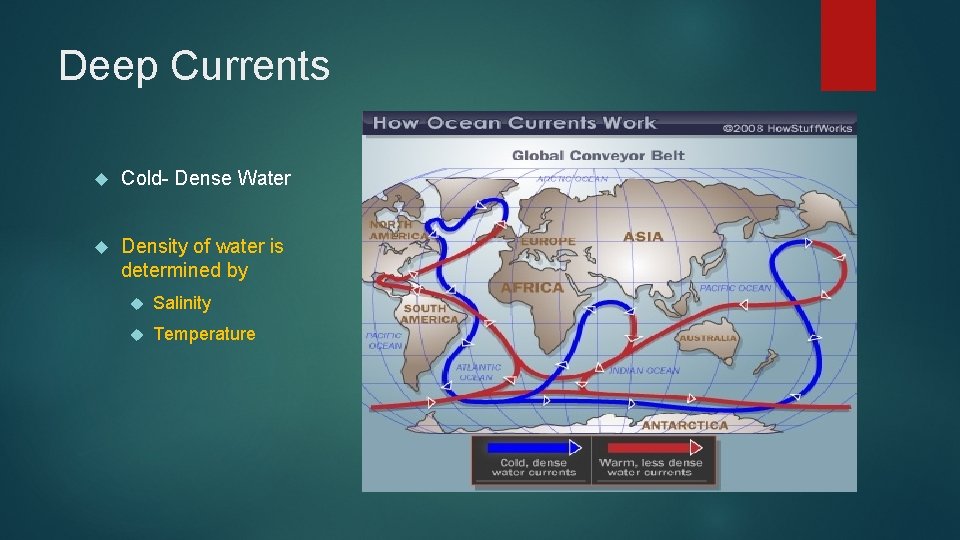
Deep Currents Cold- Dense Water Density of water is determined by Salinity Temperature
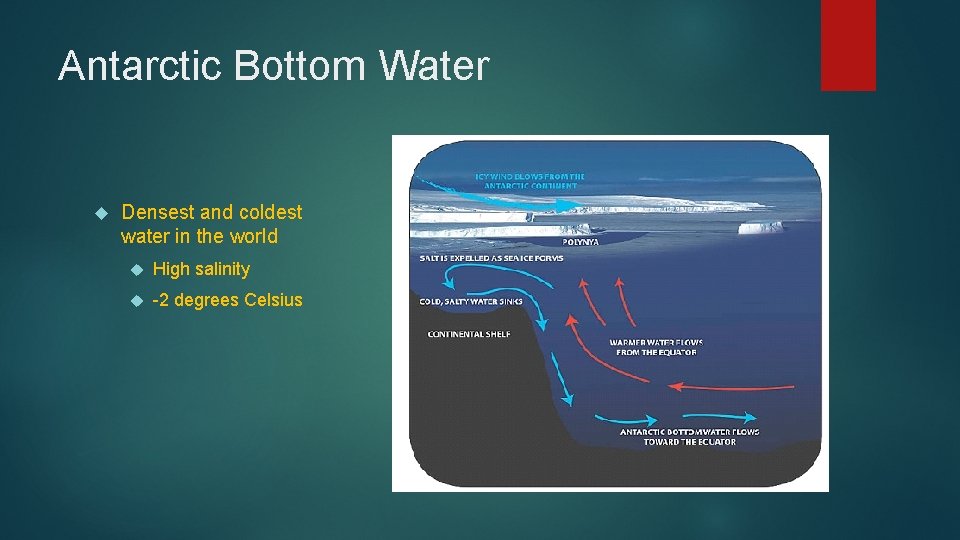
Antarctic Bottom Water Densest and coldest water in the world High salinity -2 degrees Celsius
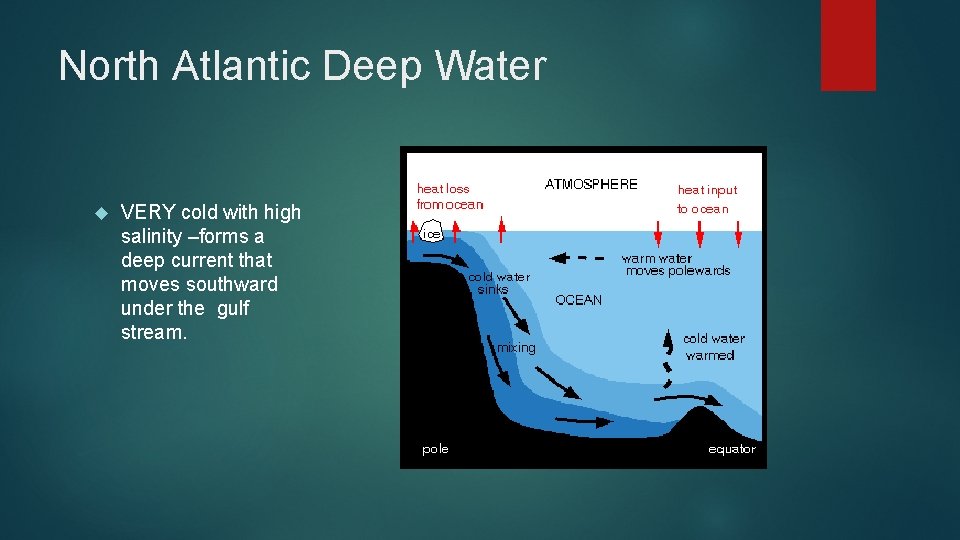
North Atlantic Deep Water VERY cold with high salinity –forms a deep current that moves southward under the gulf stream.
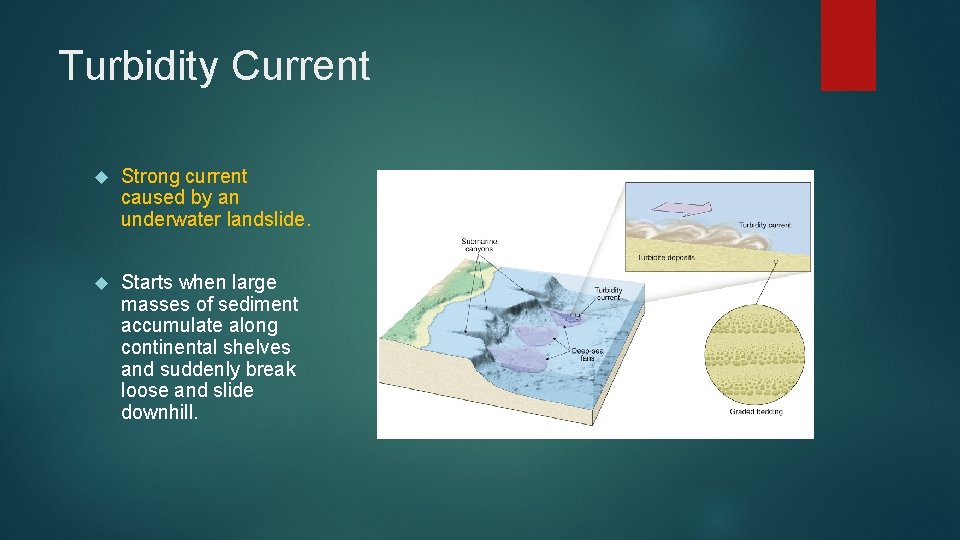
Turbidity Current Strong current caused by an underwater landslide. Starts when large masses of sediment accumulate along continental shelves and suddenly break loose and slide downhill.