
2030 Framework for Climate and Energy Emanuel Kovai
- Slides: 6
2030 Framework for Climate and Energy Emanuel Kovačić INA - Industrija nafte, d. d.
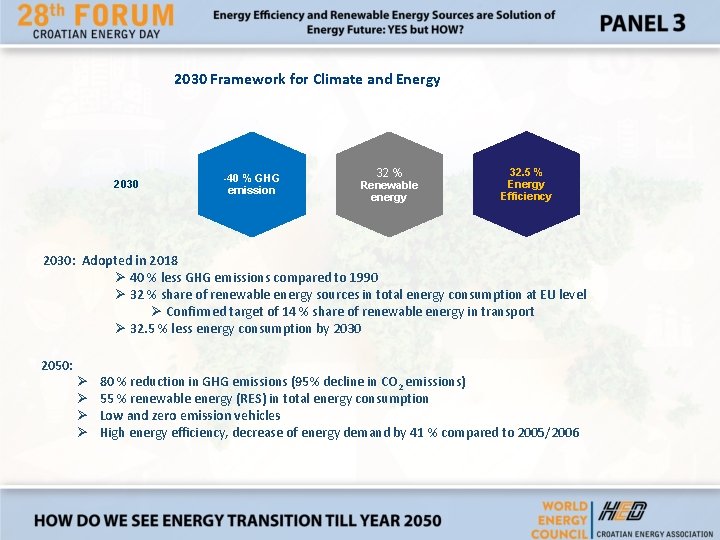
2030 Framework for Climate and Energy 2030 -40 % GHG emission 32 % Renewable energy 32. 5 % Energy Efficiency 2030: Adopted in 2018 Ø 40 % less GHG emissions compared to 1990 Ø 32 % share of renewable energy sources in total energy consumption at EU level Ø Confirmed target of 14 % share of renewable energy in transport Ø 32. 5 % less energy consumption by 2030 2050: Ø Ø 80 % reduction in GHG emissions (95% decline in CO 2 emissions) 55 % renewable energy (RES) in total energy consumption Low and zero emission vehicles High energy efficiency, decrease of energy demand by 41 % compared to 2005/2006
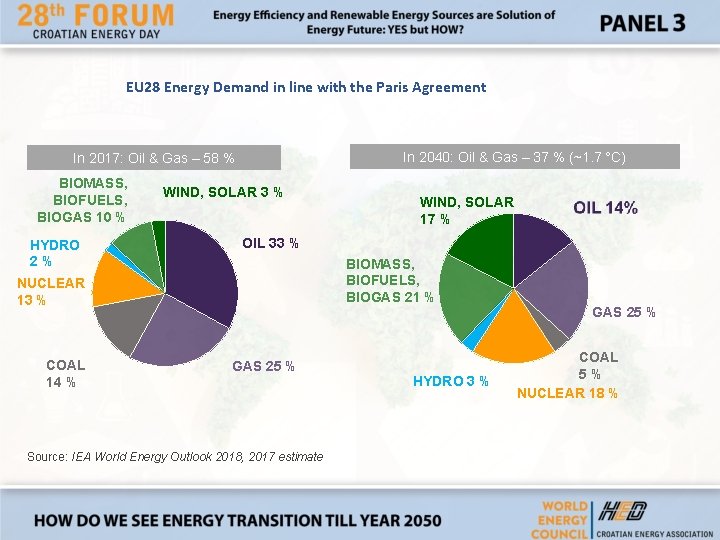
EU 28 Energy Demand in line with the Paris Agreement In 2040: Oil & Gas – 37 % (~1. 7 °C) In 2017: Oil & Gas – 58 % BIOMASS, BIOFUELS, BIOGAS 10 % HYDRO 2% WIND, SOLAR 3 % OIL 33 % BIOMASS, BIOFUELS, BIOGAS 21 % NUCLEAR 13 % COAL 14 % WIND, SOLAR 17 % GAS 25 % Source: IEA World Energy Outlook 2018, 2017 estimate HYDRO 3 % GAS 25 % COAL 5% NUCLEAR 18 %
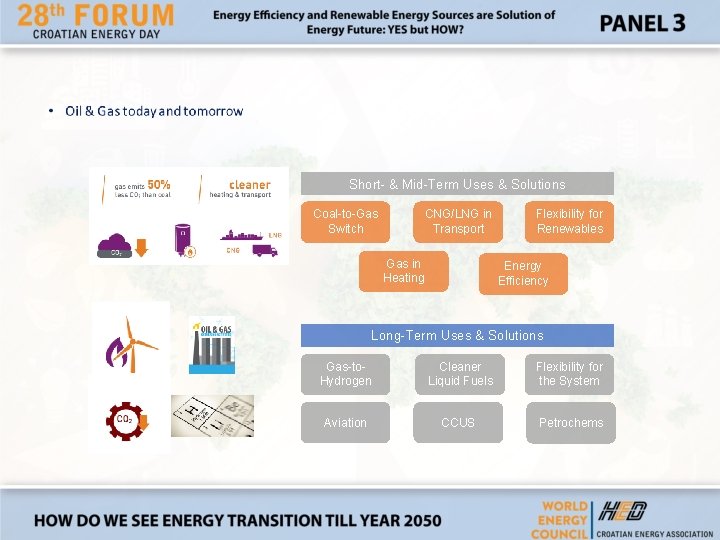
Short- & Mid-Term Uses & Solutions Coal-to-Gas Switch CNG/LNG in Transport Gas in Heating Flexibility for Renewables Energy Efficiency Long-Term Uses & Solutions Gas-to. Hydrogen Cleaner Liquid Fuels Flexibility for the System Aviation CCUS Petrochems
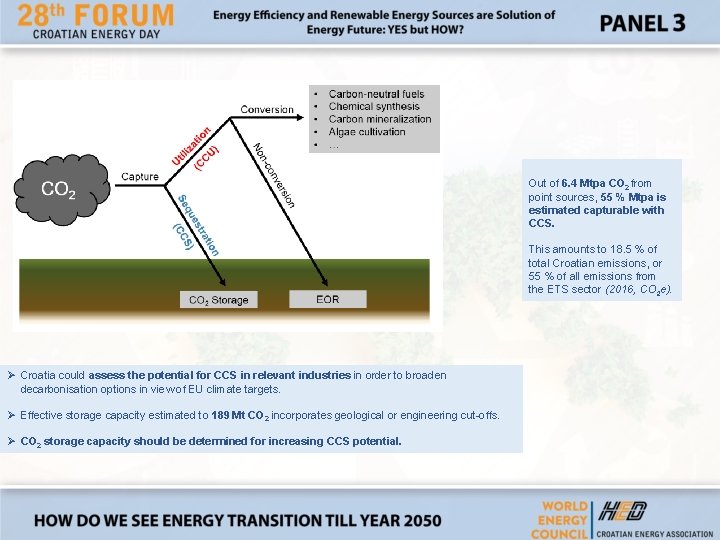
Out of 6. 4 Mtpa CO 2 from point sources, 55 % Mtpa is estimated capturable with CCS. This amounts to 18. 5 % of total Croatian emissions, or 55 % of all emissions from the ETS sector (2016, CO 2 e). Ø Croatia could assess the potential for CCS in relevant industries in order to broaden decarbonisation options in view of EU climate targets. Ø Effective storage capacity estimated to 189 Mt CO 2 incorporates geological or engineering cut-offs. Ø CO 2 storage capacity should be determined for increasing CCS potential.
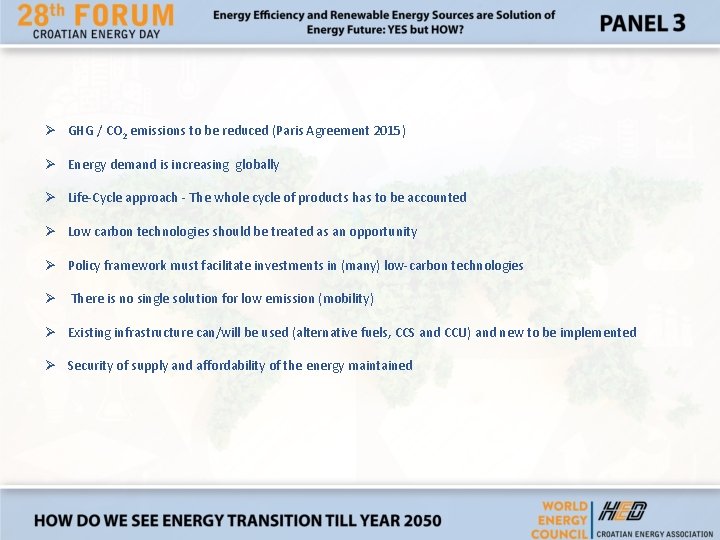
Ø GHG / CO 2 emissions to be reduced (Paris Agreement 2015) Ø Energy demand is increasing globally Ø Life-Cycle approach - The whole cycle of products has to be accounted Ø Low carbon technologies should be treated as an opportunity Ø Policy framework must facilitate investments in (many) low-carbon technologies Ø There is no single solution for low emission (mobility) Ø Existing infrastructure can/will be used (alternative fuels, CCS and CCU) and new to be implemented Ø Security of supply and affordability of the energy maintained