
2021 Special Needs Plan SNP Model of Care


- Slides: 23
2021 Special Needs Plan (SNP) Model of Care (MOC) PROVIDER TRAINING In partnership with: Provided by Arkansas Superior Select, Inc.
Training Regulatory Requirements § The Centers for Medicare and Medicaid Services (CMS) requires that all SNP plans develop and implement a Model of Care (MOC) that describes how the Plan will coordinate care and design tailored services for the Plan’s target population. § 422. 101 (f) § As part of the MOC, CMS mandates that all SNP plans provide training on the MOC to all staff and contractors who directly or indirectly support the Plan’s SNP membership. § 422. 101 (f) This material is Proprietary and Confidential. Do not release without permission of the creator.
Goals of Training Provide an overview of SNPs and how they differ from other types of Medicare Advantage (MA) plans Show you how to identify Tribute SNP members Demonstrate how Tribute’s MOC benefits you and your patients Help you understand your role in the SNP MOC – see slide 16! This material is Proprietary and Confidential. Do not release without permission of the creator.
What are SNPs? § CMS defines a SNP as “a MA coordinated care plan (CCP) specifically designed to provide targeted care and limit enrollment to special needs individuals. ” Enrollment is limited to individuals with special healthcare needs due to: Dual eligible status Certain CMS-specified chronic or disabling conditions Long-term residence in an institutionalized setting or equivalent § Established to improve quality of care for high risk/need beneficiaries § Must meet all Medicare Part C and D requirements § Enhanced care coordination and quality improvement program requirements via the MOC Source: https: //www. cms. gov/Medicare/Health-Plans/Special. Needs. Plans/index. html This material is Proprietary and Confidential. Do not release without permission of the creator.
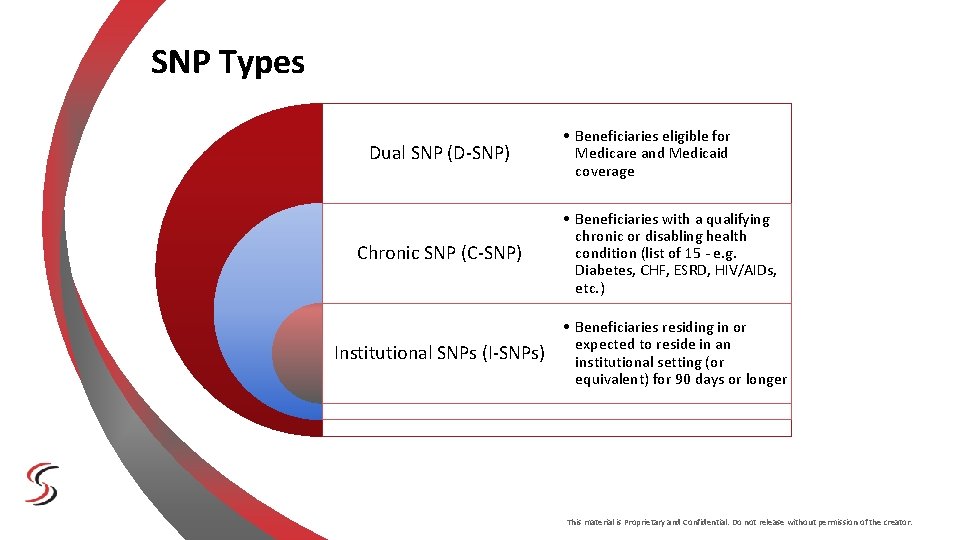
SNP Types Dual SNP (D-SNP) • Beneficiaries eligible for Medicare and Medicaid coverage Chronic SNP (C-SNP) • Beneficiaries with a qualifying chronic or disabling health condition (list of 15 - e. g. Diabetes, CHF, ESRD, HIV/AIDs, etc. ) Institutional SNPs (I-SNPs) • Beneficiaries residing in or expected to reside in an institutional setting (or equivalent) for 90 days or longer This material is Proprietary and Confidential. Do not release without permission of the creator.
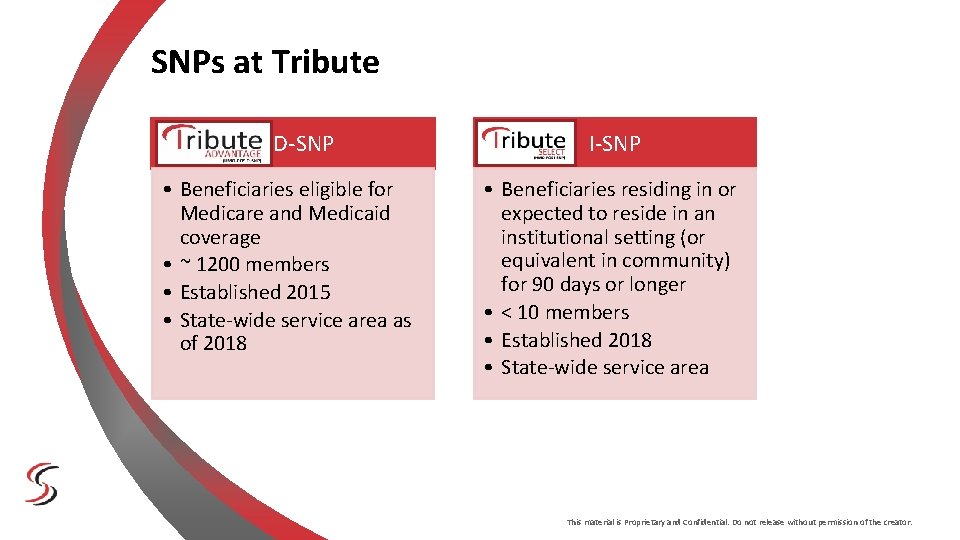
SNPs at Tribute D-SNP • Beneficiaries eligible for Medicare and Medicaid coverage • ~ 1200 members • Established 2015 • State-wide service area as of 2018 I-SNP • Beneficiaries residing in or expected to reside in an institutional setting (or equivalent in community) for 90 days or longer • < 10 members • Established 2018 • State-wide service area This material is Proprietary and Confidential. Do not release without permission of the creator.
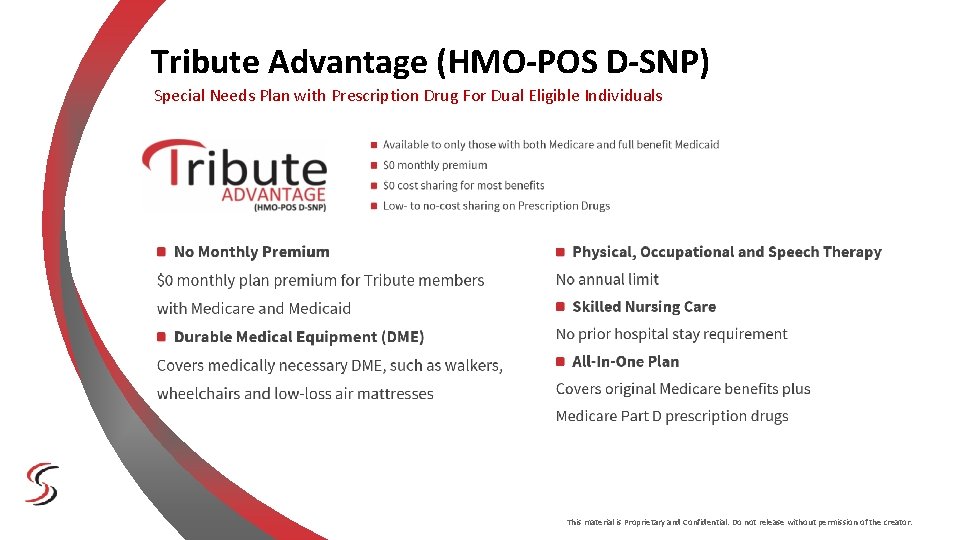
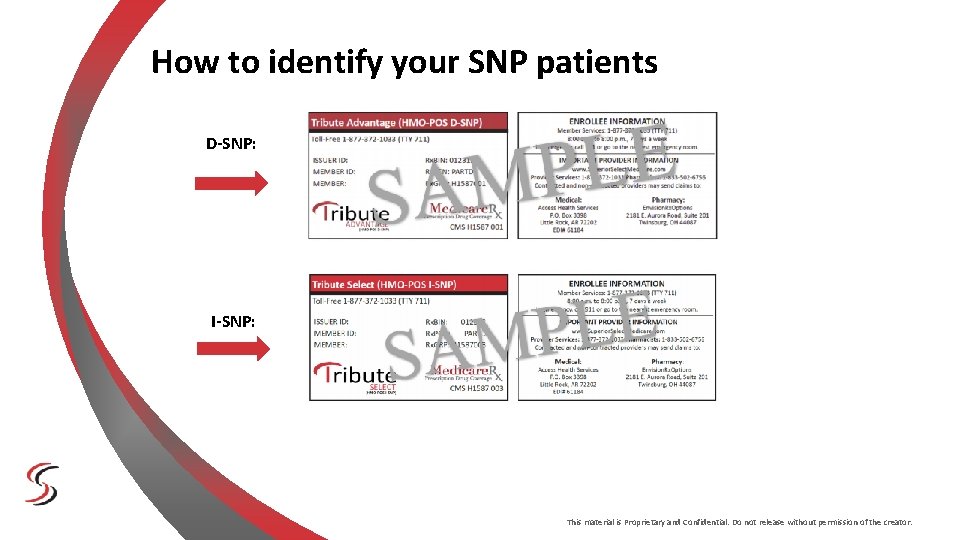
Tribute Advantage (HMO-POS D-SNP) Special Needs Plan with Prescription Drug For Dual Eligible Individuals This material is Proprietary and Confidential. Do not release without permission of the creator.
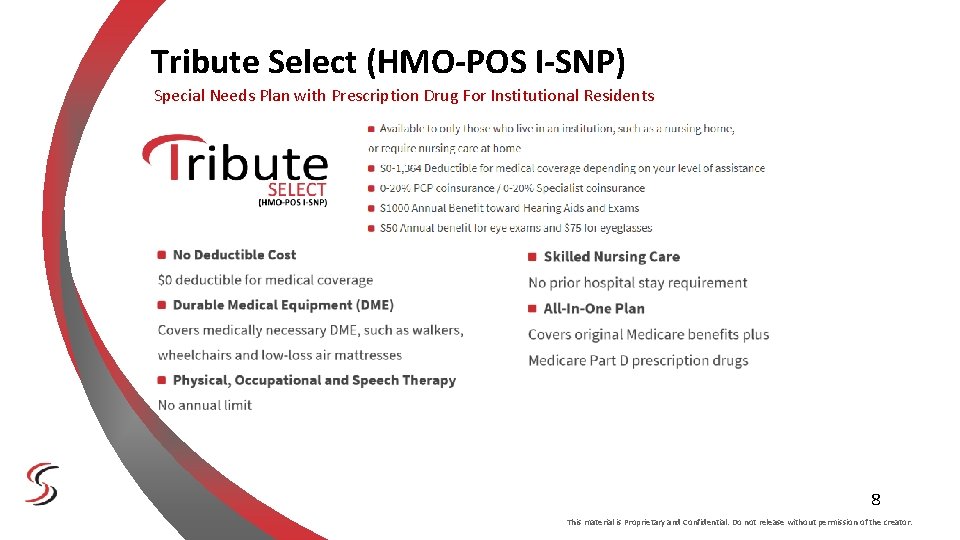
Tribute Select (HMO-POS I-SNP) Special Needs Plan with Prescription Drug For Institutional Residents 8 This material is Proprietary and Confidential. Do not release without permission of the creator.
How to identify your SNP patients D-SNP: I-SNP: This material is Proprietary and Confidential. Do not release without permission of the creator.
SNP Model of Care (MOC) “As provided under section 1859(f)(7) of the Social Security Act, every SNP must have a Model of Care (MOC) approved by the National Committee for Quality Assurance (NCQA). The MOC provides the basic framework under which the SNP will meet the needs of each of its enrollees. The MOC is a vital quality improvement tool and integral component for ensuring that the unique needs of each enrollee are identified by the SNP and addressed through the plan's care management practices. ” - CMS § Narrative filed with CMS AND process to be implemented § Plans audited against narrative = Tribute’s “Promise” to CMS Source: https: //www. cms. gov/Medicare/Health-Plans/Special. Needs. Plans/SNP-MOC. html This material is Proprietary and Confidential. Do not release without permission of the creator.
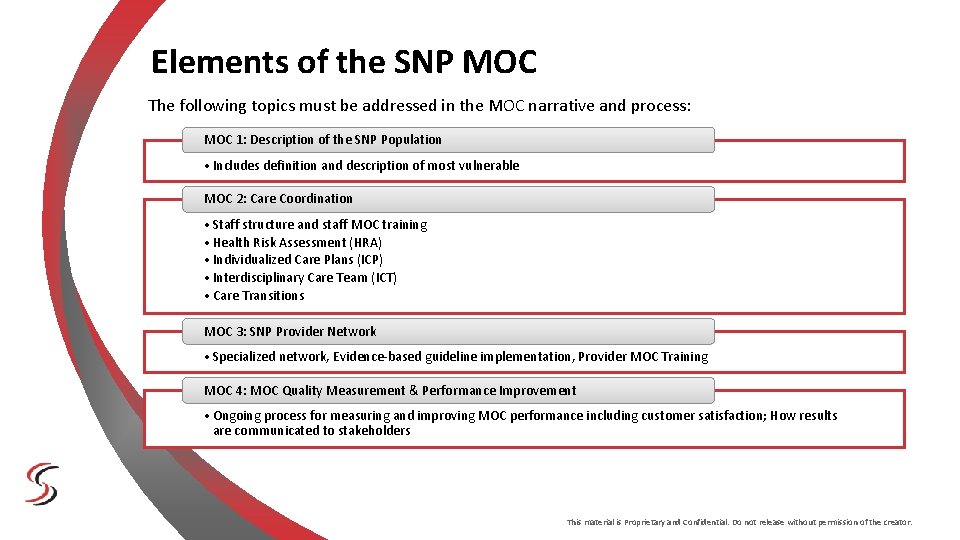
Elements of the SNP MOC The following topics must be addressed in the MOC narrative and process: MOC 1: Description of the SNP Population • Includes definition and description of most vulnerable MOC 2: Care Coordination • Staff structure and staff MOC training • Health Risk Assessment (HRA) • Individualized Care Plans (ICP) • Interdisciplinary Care Team (ICT) • Care Transitions MOC 3: SNP Provider Network • Specialized network, Evidence-based guideline implementation, Provider MOC Training MOC 4: MOC Quality Measurement & Performance Improvement • Ongoing process for measuring and improving MOC performance including customer satisfaction; How results are communicated to stakeholders This material is Proprietary and Confidential. Do not release without permission of the creator.
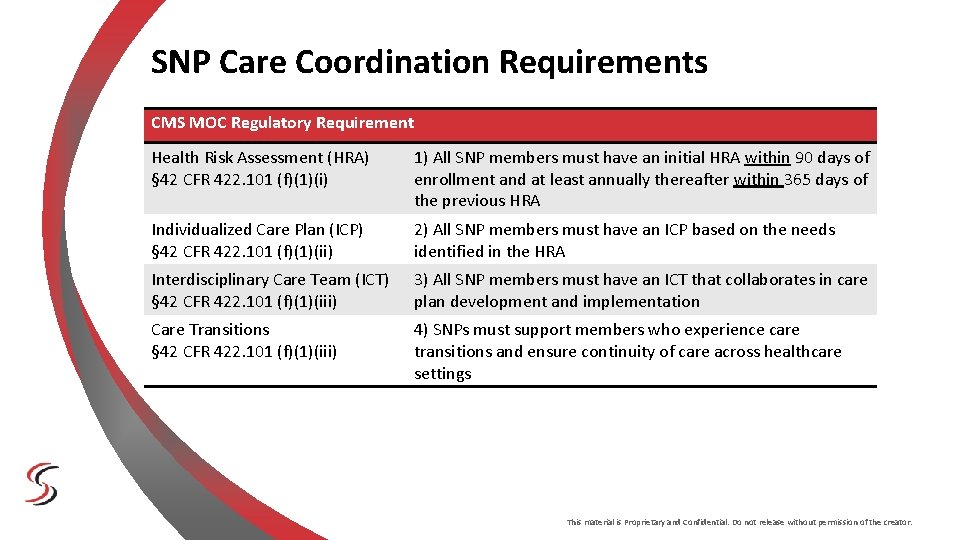
SNP Care Coordination Requirements CMS MOC Regulatory Requirement Health Risk Assessment (HRA) § 42 CFR 422. 101 (f)(1)(i) 1) All SNP members must have an initial HRA within 90 days of enrollment and at least annually thereafter within 365 days of the previous HRA Individualized Care Plan (ICP) § 42 CFR 422. 101 (f)(1)(ii) 2) All SNP members must have an ICP based on the needs identified in the HRA Interdisciplinary Care Team (ICT) § 42 CFR 422. 101 (f)(1)(iii) 3) All SNP members must have an ICT that collaborates in care plan development and implementation Care Transitions § 42 CFR 422. 101 (f)(1)(iii) 4) SNPs must support members who experience care transitions and ensure continuity of care across healthcare settings This material is Proprietary and Confidential. Do not release without permission of the creator.
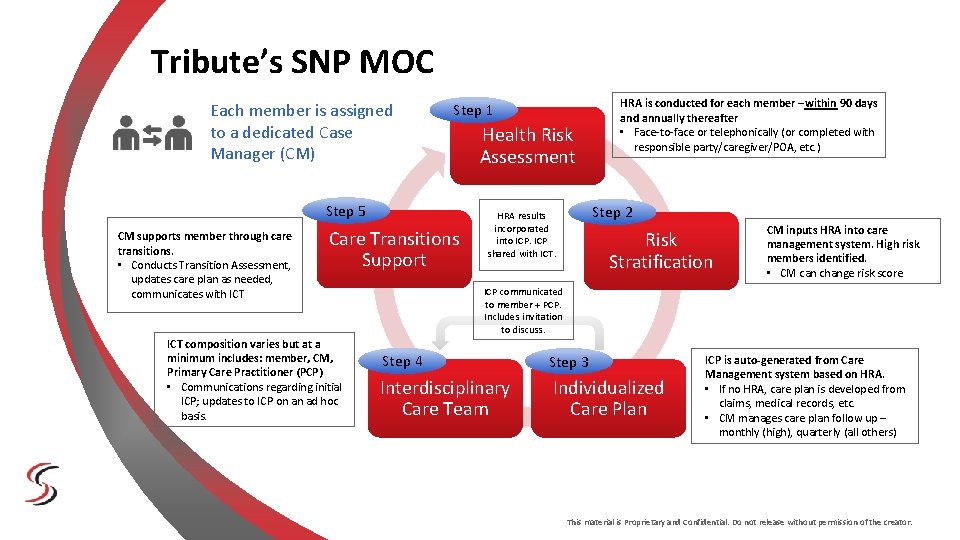
Tribute’s SNP MOC Each member is assigned to a dedicated Case Manager (CM) Step 1 Step 5 CM supports member through care transitions. • Conducts Transition Assessment, updates care plan as needed, communicates with ICT Care Transitions Support ICT composition varies but at a minimum includes: member, CM, Primary Care Practitioner (PCP) • Communications regarding initial ICP; updates to ICP on an ad hoc basis. Health Risk Assessment HRA is conducted for each member –within 90 days and annually thereafter • Face-to-face or telephonically (or completed with responsible party/caregiver/POA, etc. ) Step 2 HRA results incorporated into ICP shared with ICT. Risk Stratification CM inputs HRA into care management system. High risk members identified. • CM can change risk score ICP communicated to member + PCP. Includes invitation to discuss. Step 4 Step 3 Interdisciplinary Care Team Individualized Care Plan ICP is auto-generated from Care Management system based on HRA. • If no HRA, care plan is developed from claims, medical records, etc. • CM manages care plan follow up – monthly (high), quarterly (all others) This material is Proprietary and Confidential. Do not release without permission of the creator.
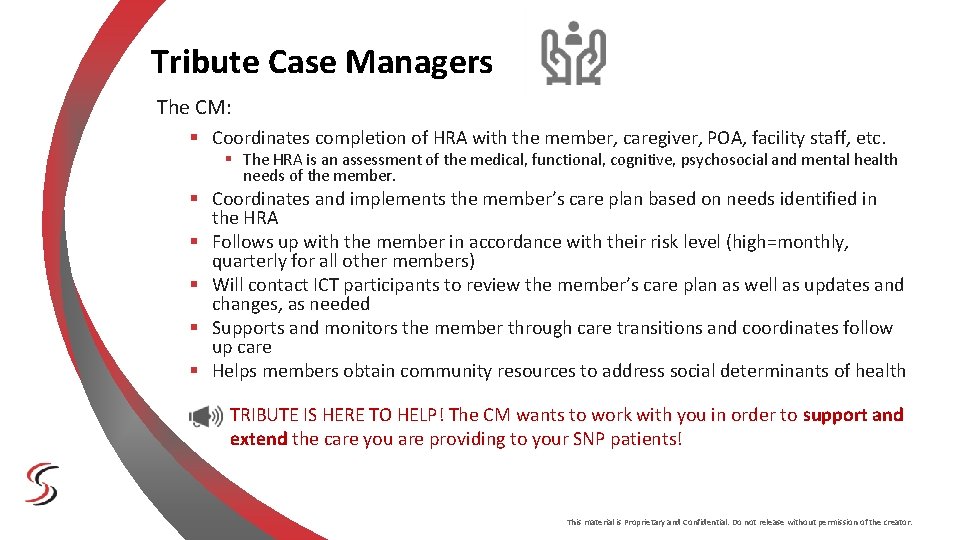
Tribute Case Managers The CM: § Coordinates completion of HRA with the member, caregiver, POA, facility staff, etc. § The HRA is an assessment of the medical, functional, cognitive, psychosocial and mental health needs of the member. § Coordinates and implements the member’s care plan based on needs identified in the HRA § Follows up with the member in accordance with their risk level (high=monthly, quarterly for all other members) § Will contact ICT participants to review the member’s care plan as well as updates and changes, as needed § Supports and monitors the member through care transitions and coordinates follow up care § Helps members obtain community resources to address social determinants of health – TRIBUTE IS HERE TO HELP! The CM wants to work with you in order to support and extend the care you are providing to your SNP patients! This material is Proprietary and Confidential. Do not release without permission of the creator.
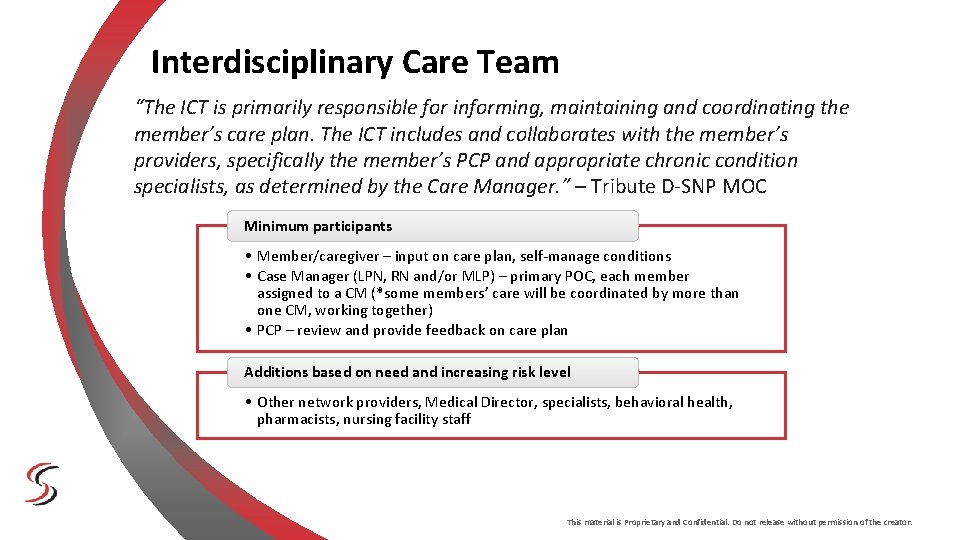
Interdisciplinary Care Team “The ICT is primarily responsible for informing, maintaining and coordinating the member’s care plan. The ICT includes and collaborates with the member’s providers, specifically the member’s PCP and appropriate chronic condition specialists, as determined by the Care Manager. ” – Tribute D-SNP MOC Minimum participants • Member/caregiver – input on care plan, self-manage conditions • Case Manager (LPN, RN and/or MLP) – primary POC, each member assigned to a CM (*some members’ care will be coordinated by more than one CM, working together) • PCP – review and provide feedback on care plan Additions based on need and increasing risk level • Other network providers, Medical Director, specialists, behavioral health, pharmacists, nursing facility staff This material is Proprietary and Confidential. Do not release without permission of the creator.
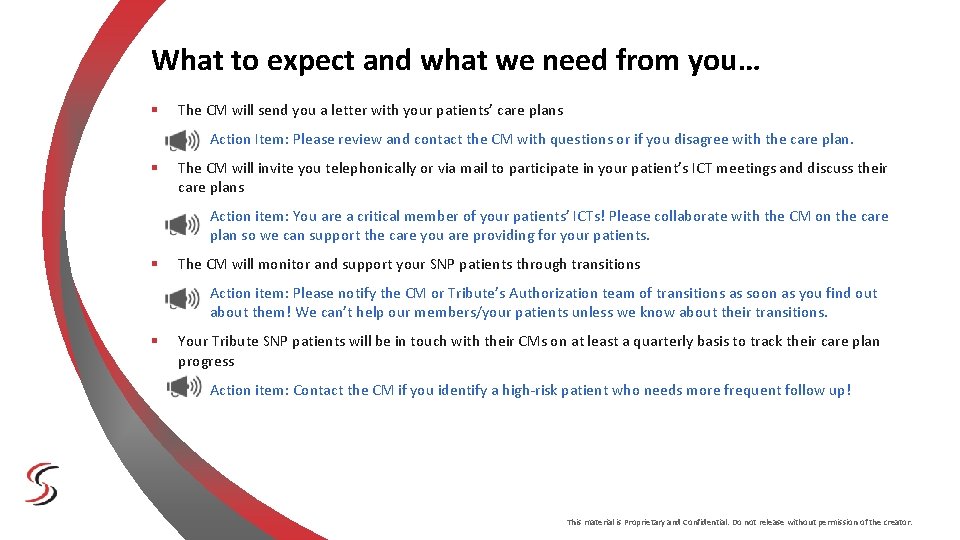
What to expect and what we need from you… § The CM will send you a letter with your patients’ care plans – Action Item: Please review and contact the CM with questions or if you disagree with the care plan. § The CM will invite you telephonically or via mail to participate in your patient’s ICT meetings and discuss their care plans – Action item: You are a critical member of your patients’ ICTs! Please collaborate with the CM on the care plan so we can support the care you are providing for your patients. § The CM will monitor and support your SNP patients through transitions – Action item: Please notify the CM or Tribute’s Authorization team of transitions as soon as you find out about them! We can’t help our members/your patients unless we know about their transitions. § Your Tribute SNP patients will be in touch with their CMs on at least a quarterly basis to track their care plan progress – Action item: Contact the CM if you identify a high-risk patient who needs more frequent follow up! This material is Proprietary and Confidential. Do not release without permission of the creator.
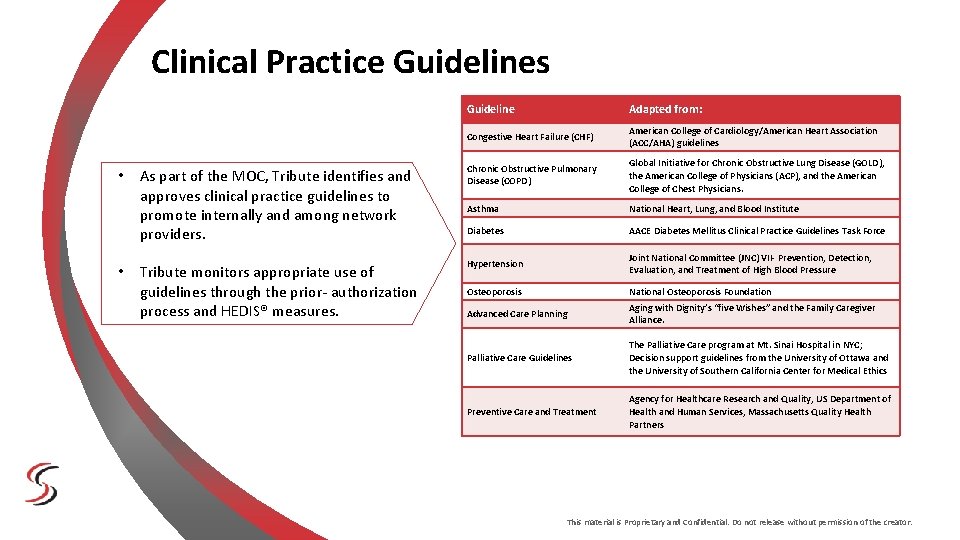
Clinical Practice Guidelines • • Guideline Adapted from: Congestive Heart Failure (CHF) American College of Cardiology/American Heart Association (ACC/AHA) guidelines As part of the MOC, Tribute identifies and approves clinical practice guidelines to promote internally and among network providers. Chronic Obstructive Pulmonary Disease (COPD) Global Initiative for Chronic Obstructive Lung Disease (GOLD), the American College of Physicians (ACP), and the American College of Chest Physicians. Asthma National Heart, Lung, and Blood Institute Diabetes AACE Diabetes Mellitus Clinical Practice Guidelines Task Force Tribute monitors appropriate use of guidelines through the prior- authorization process and HEDIS® measures. Hypertension Joint National Committee (JNC) VII- Prevention, Detection, Evaluation, and Treatment of High Blood Pressure Osteoporosis National Osteoporosis Foundation Advanced Care Planning Aging with Dignity’s “five Wishes” and the Family Caregiver Alliance. Palliative Care Guidelines The Palliative Care program at Mt. Sinai Hospital in NYC; Decision support guidelines from the University of Ottawa and the University of Southern California Center for Medical Ethics Preventive Care and Treatment Agency for Healthcare Research and Quality, US Department of Health and Human Services, Massachusetts Quality Health Partners This material is Proprietary and Confidential. Do not release without permission of the creator.
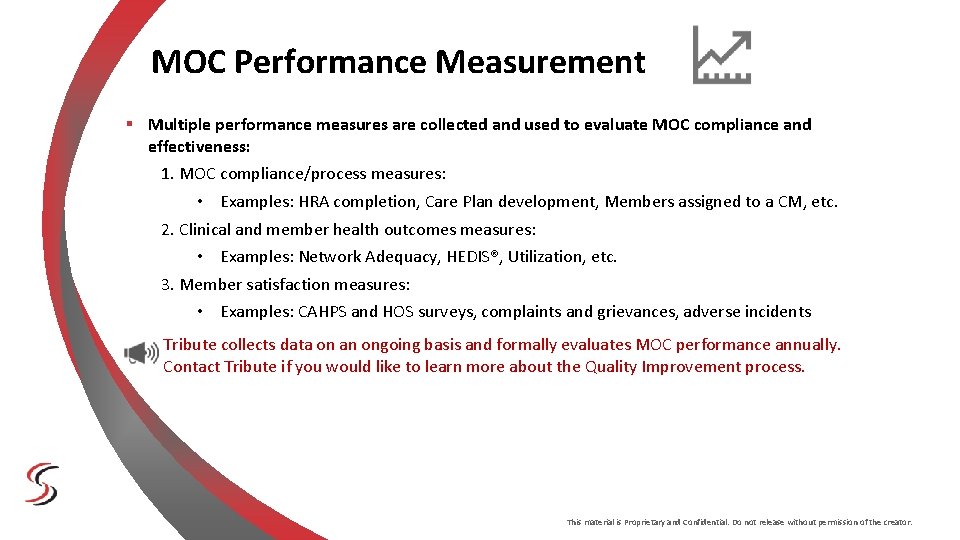
MOC Performance Measurement § Multiple performance measures are collected and used to evaluate MOC compliance and effectiveness: 1. MOC compliance/process measures: • Examples: HRA completion, Care Plan development, Members assigned to a CM, etc. 2. Clinical and member health outcomes measures: • Examples: Network Adequacy, HEDIS®, Utilization, etc. 3. Member satisfaction measures: • Examples: CAHPS and HOS surveys, complaints and grievances, adverse incidents Tribute collects data on an ongoing basis and formally evaluates MOC performance annually. Contact Tribute if you would like to learn more about the Quality Improvement process. This material is Proprietary and Confidential. Do not release without permission of the creator.
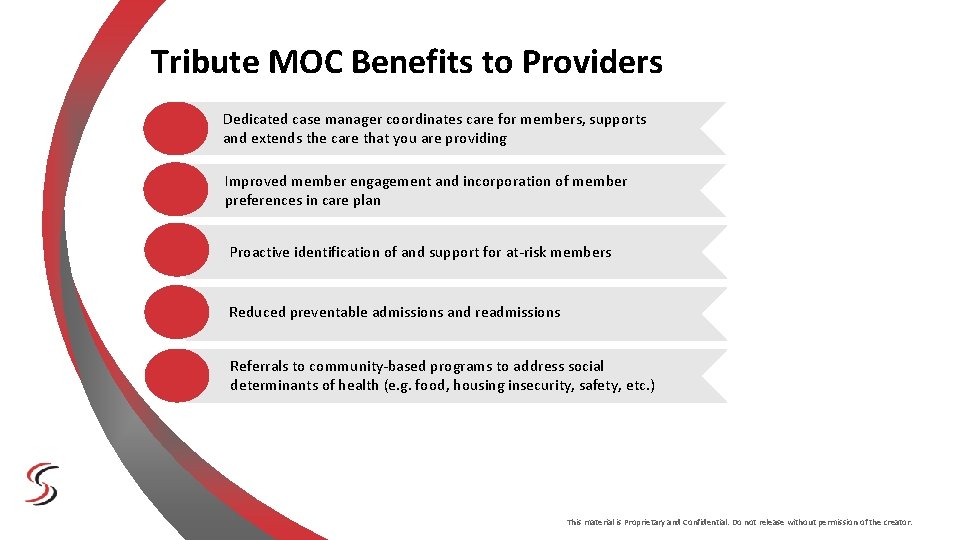
Tribute MOC Benefits to Providers Dedicated case manager coordinates care for members, supports and extends the care that you are providing Improved member engagement and incorporation of member preferences in care plan Proactive identification of and support for at-risk members Reduced preventable admissions and readmissions Referrals to community-based programs to address social determinants of health (e. g. food, housing insecurity, safety, etc. ) This material is Proprietary and Confidential. Do not release without permission of the creator.
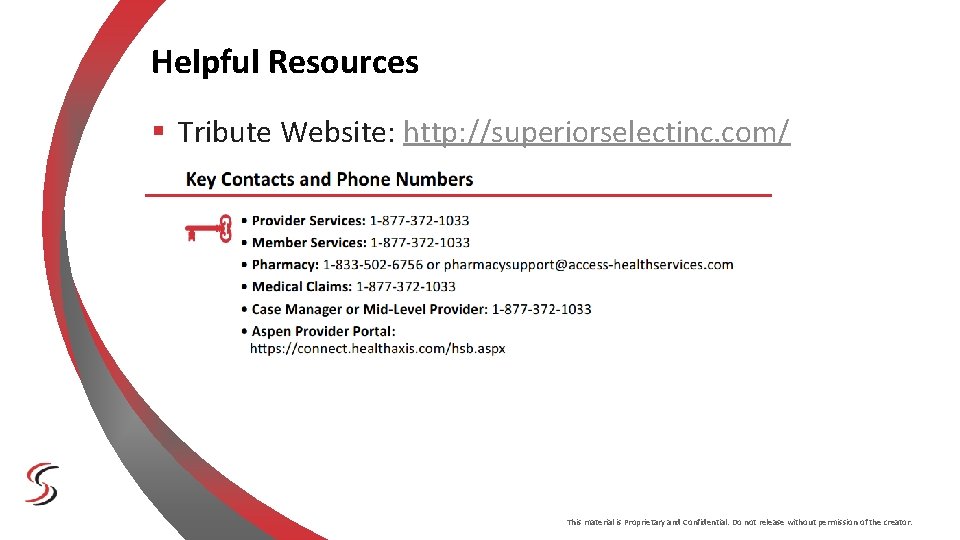
Helpful Resources § Tribute Website: http: //superiorselectinc. com/ This material is Proprietary and Confidential. Do not release without permission of the creator.
Quick Contact Guide Main Office (501) 255 -0109 networkops@accesshealth. services Tracy Hester - Client Executive Director thester@accesshealth. services (501) 410 -4832 This material is Proprietary and Confidential. Do not release without permission of the creator.
Quality Initiatives Division Contact us Shana Stone, RN Director of Quality and Utilization Management sstone@superiorselectinc. com This material is Proprietary and Confidential. Do not release without permission of the creator.
Arkansas Superior Select, Inc. and Access Health Services, LLC. thanks you for your time and welcomes any questions! This material is Proprietary and Confidential. Do not release without permission of the creator.