
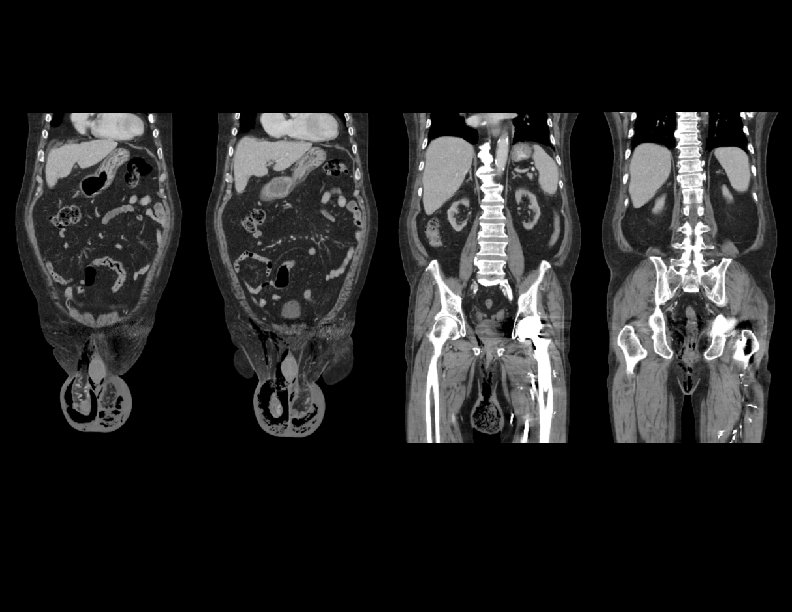
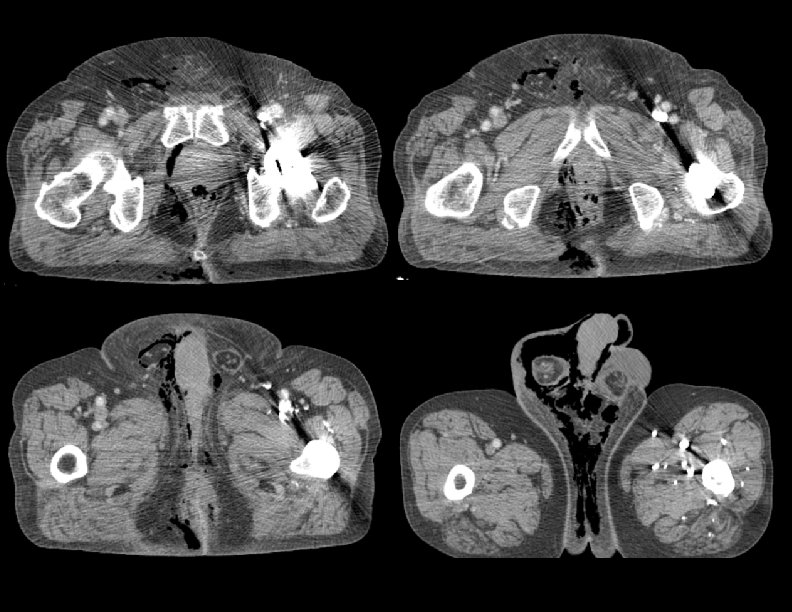
2021 1 Quiz 69M Scrotal swelling and pain
- Slides: 8
2021년 1월 Quiz 69/M Scrotal swelling and pain
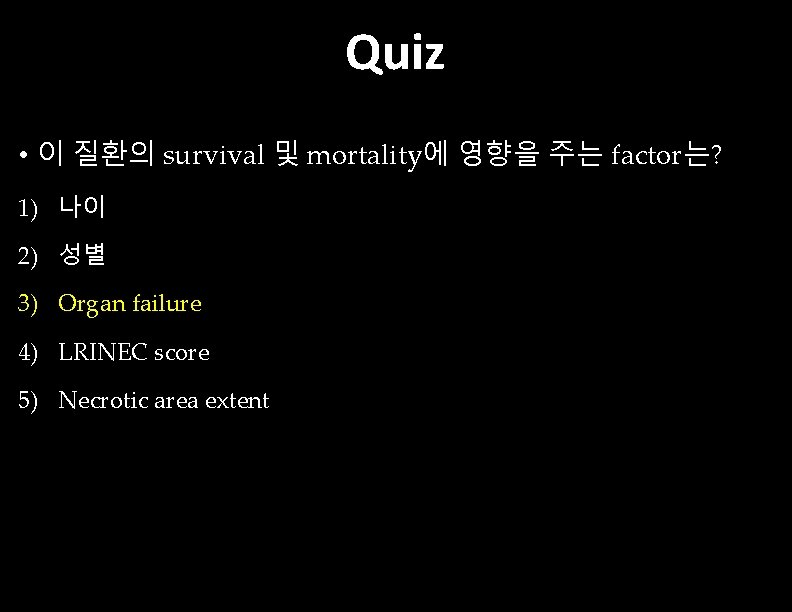
Quiz • 이 질환의 survival 및 mortality에 영향을 주는 factor는? 1) 나이 2) 성별 3) Organ failure 4) LRINEC score 5) Necrotic area extent
Quiz • 이 질환의 survival 및 mortality에 영향을 주는 factor는? 1) 나이 2) 성별 3) Organ failure 4) LRINEC score 5) Necrotic area extent
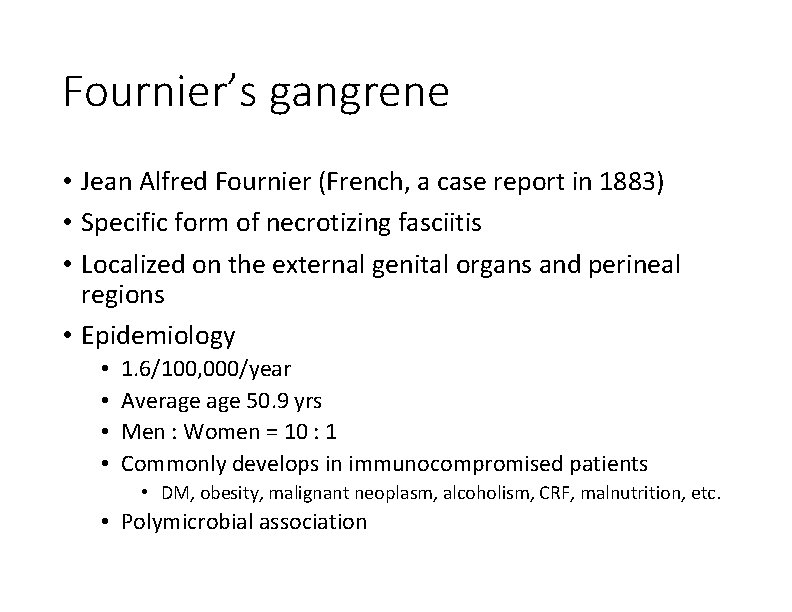
Fournier’s gangrene • Jean Alfred Fournier (French, a case report in 1883) • Specific form of necrotizing fasciitis • Localized on the external genital organs and perineal regions • Epidemiology • • 1. 6/100, 000/year Average 50. 9 yrs Men : Women = 10 : 1 Commonly develops in immunocompromised patients • DM, obesity, malignant neoplasm, alcoholism, CRF, malnutrition, etc. • Polymicrobial association
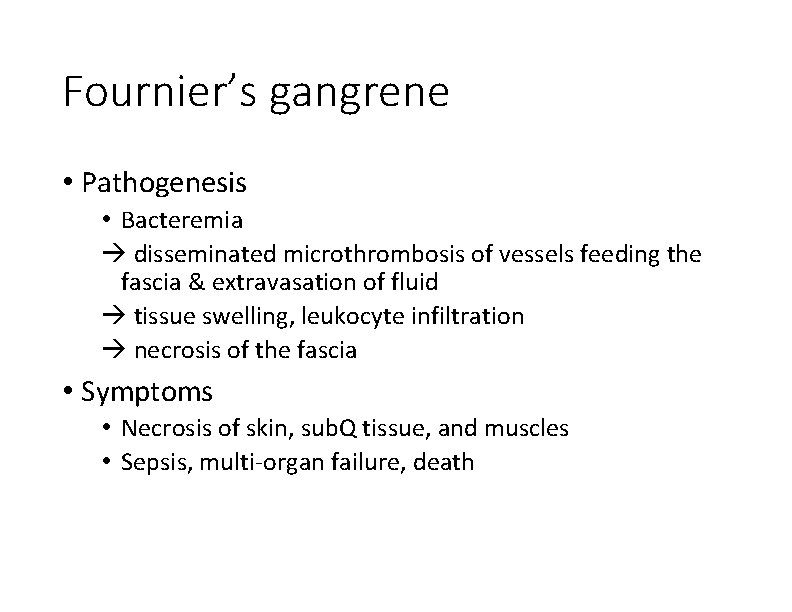
Fournier’s gangrene • Pathogenesis • Bacteremia à disseminated microthrombosis of vessels feeding the fascia & extravasation of fluid à tissue swelling, leukocyte infiltration à necrosis of the fascia • Symptoms • Necrosis of skin, sub. Q tissue, and muscles • Sepsis, multi-organ failure, death
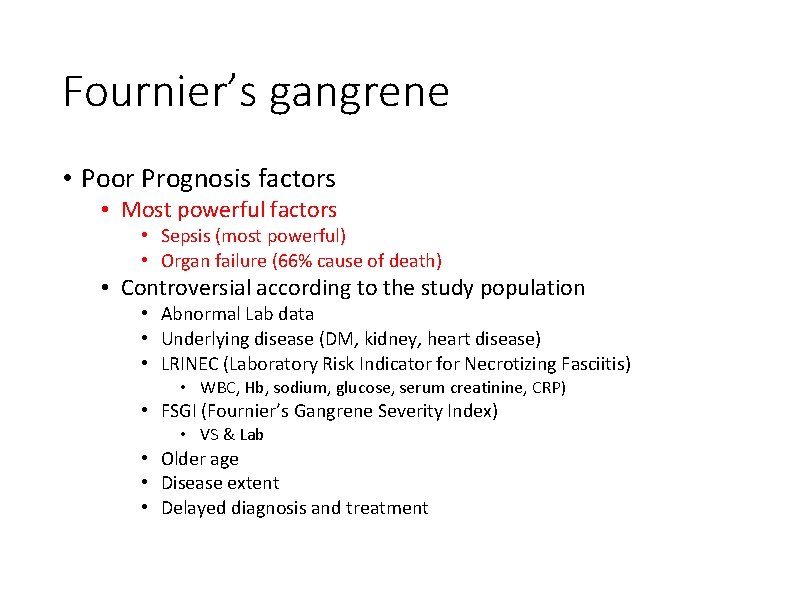
Fournier’s gangrene • Poor Prognosis factors • Most powerful factors • Sepsis (most powerful) • Organ failure (66% cause of death) • Controversial according to the study population • Abnormal Lab data • Underlying disease (DM, kidney, heart disease) • LRINEC (Laboratory Risk Indicator for Necrotizing Fasciitis) • WBC, Hb, sodium, glucose, serum creatinine, CRP) • FSGI (Fournier’s Gangrene Severity Index) • VS & Lab • Older age • Disease extent • Delayed diagnosis and treatment