
2020 CASHA Workshop Cleft Palate and VPI Overview
- Slides: 21
2020 CASHA Workshop Cleft Palate and VPI: Overview, Assessment and Treatment October 26, 2020 Jackie Klein, MA, CCC-SLP, MBA
Part 2 ASSESSMENT OF VPI AND RELATED DISORDERS
Case History • Typical case history with emphasis on: • • • Previous services Medical history Surgical procedures and any complications Medications Family and child’s priorities
Other Professionals • Office notes with permission • Is family account accurate • Any information that was not relayed to family
Assessment • What is our main goal of assessment? • Need to answer the questions of structure or function?
Oral Mech Eval? (Screening) • Structures • • • Face Nose Lips Teeth (presence and malocclusion) Tongue Uvula Hard Palate Soft Palate Uvula Tonsils • What about strength and ROM?
Speech Assessment • Formal articulation assessment • • • GFTA - 3 Arizona – 4 Bzoch Error Pattern Diagnostic Articulation Test (also a screener) Iowa Pressure Test Templin Darley Tests of Articulation Phonological analysis (if applicable) Intelligibility Rating Syllable, sentence and word repetitions Speech Samples Pressure Consonants Compensatory Strategies
Speech Assessment • Obligatory errors - physically based • Compensatory errors – learned behaviors • Developmental errors – may not be impacted by diagnosis
Compensatory Strategies • Glottal Stop • Sudden and quick adduction and release of folds - Usually for stopped consonants but may be seen in others • • Nasalized Plosives Pharyngeal Fricatives Nasal Fricatives
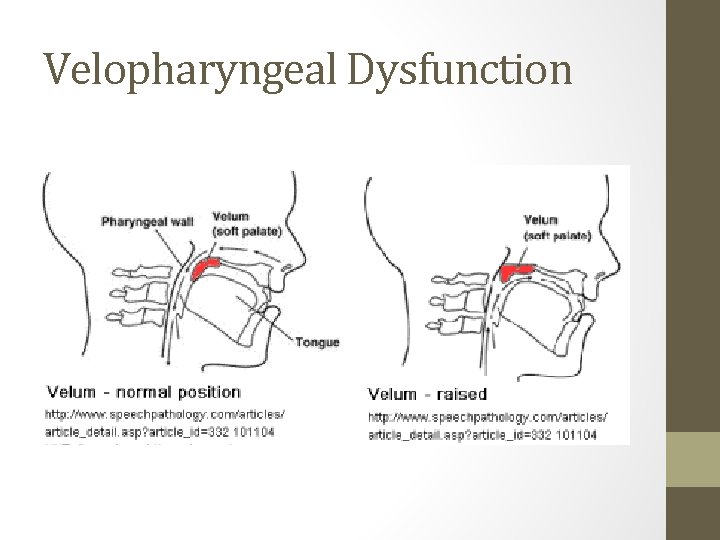
Velopharyngeal Dysfunction
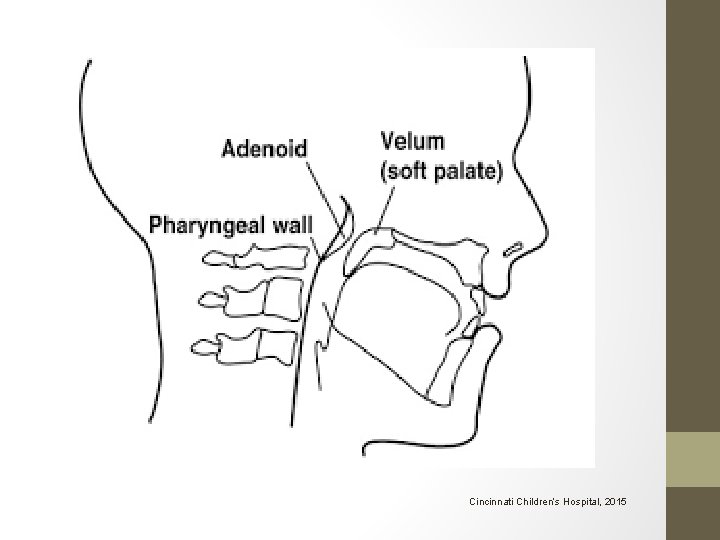
Cincinnati Children’s Hospital, 2015
VPI • Insufficiency – can not change • Incompetence – can change
Resonance • • Hypernasal Hyponasal Mixed Cul de sac • Nasal Airflow • Audible • Grimacing • Weak pressure ASHA. Org, 2013
VPI-Assessment Instrumentation • Always nice to have instrumentation, not always necessary • Instrumentation: • Nasometery • Nasopharyngoscope • Radiographic studies/Videofluoroscopy ***Pros and cons to medical/instrumental assessments***
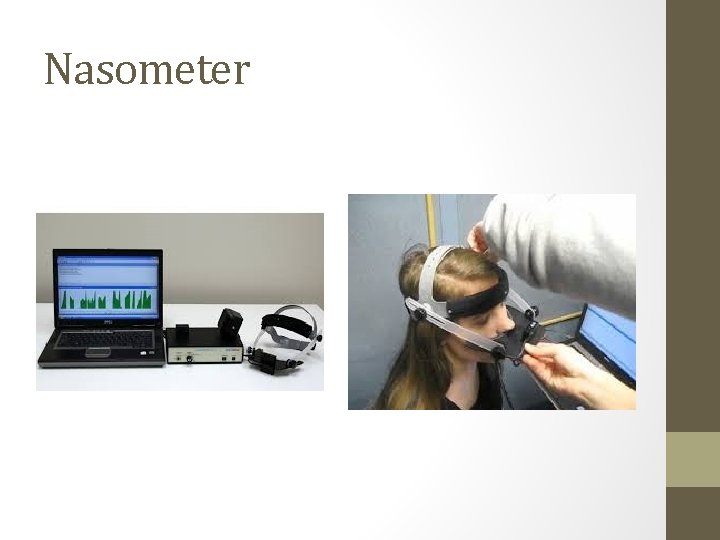
Nasometry • Non invasive (ish) • Measure nasalance • Visual representation of resonance
Nasometer
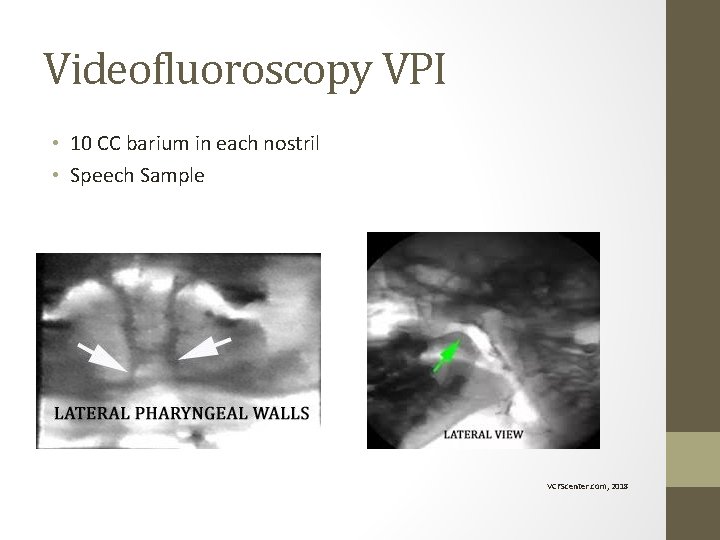
Videofluoroscopy VPI • 10 CC barium in each nostril • Speech Sample VCFScenter. com, 2018
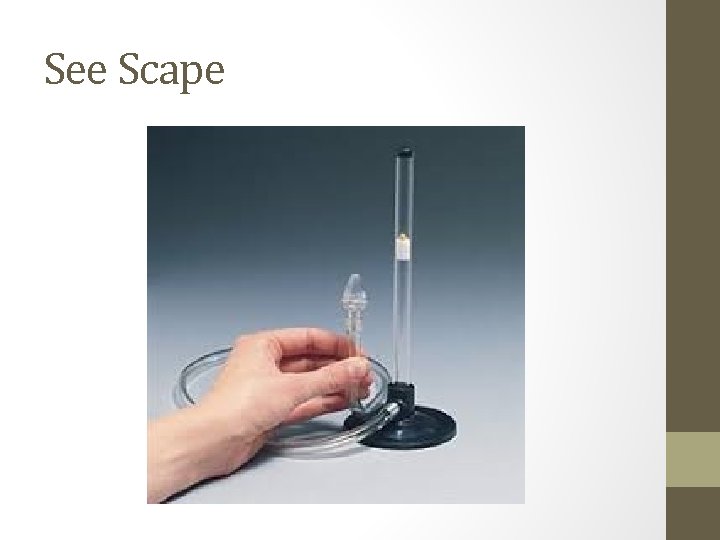
Low Tech • • Fingers Tubes Mirrors See Scape
See Scape
Hearing • A large component of information for the evaluation and potential therapeutic process. • Dhillon, 1988 presents findings in children under 2 years of age a 97% incidence of otitis media with effusion in children with cleft palate. • What does this mean? • Increased risk of conductive lost in children without a syndrome • Can not rule out sensory or sensory neural loss with associated syndrome.
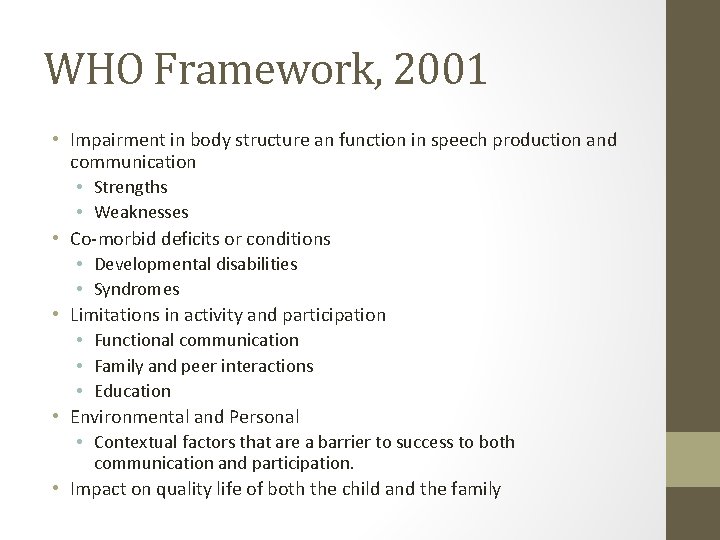
WHO Framework, 2001 • Impairment in body structure an function in speech production and communication • Strengths • Weaknesses • Co-morbid deficits or conditions • Developmental disabilities • Syndromes • Limitations in activity and participation • Functional communication • Family and peer interactions • Education • Environmental and Personal • Contextual factors that are a barrier to success to both communication and participation. • Impact on quality life of both the child and the family