
2020 AHAACC Guideline for the Diagnosis and Treatment




- Slides: 117
2020 AHA/ACC Guideline for the Diagnosis and Treatment of Patients With Hypertrophic Cardiomyopathy Developed in collaboration with and endorsed by the American Society of Echocardiography, American Academy for Thoracic Surgery, Heart Failure Society of America, Heart Rhythm Society, Society for Cardiovascular Angiography and Interventions, and Society for Cardiovascular Magnetic Resonance
Citation This slide set is adapted from the 2020 AHA/ACC Guideline for the Diagnosis and Treatment of Patients with Hypertrophic Cardiomyopathy. Published online ahead of print November 20, 2020, available at: Circulation. https: //www. ahajournals. org/doi/10. 1161/CIR. 0000000937 and Journal of the American College of Cardiology published online ahead of print Nov. 20, 2020. J Am Coll Cardiol. http: //www. jacc. org/doi/10. 1016/j. jacc. 2020. 08. 045
2020 Writing Committee Members* Steve R. Ommen, MD, FACC, FAHA, Chair† Seema Mital, MD, FACC, FAHA, FRCPC, Vice Chair† Michael A. Burke, MD† Michelle Kittleson, MD, Ph. D, FACC† Sharlene M. Day, MD† Mark S. Link, MD, FACC¶ Anita Deswal, MD, MPH, FACC, FAHA‡§ Martin S. Maron, MD# Perry Elliott, MD, FRCP, FACC† Matthew W. Martinez, MD, FACC† Lauren L. Evanovich, Ph. D† Christina Y. Miyake, MD, MS† Judy Hung, MD, FACC║ Hartzell V. Schaff, MD, FACC** José A. Joglar, MD, FACC, FAHA† Christopher Semsarian, MBBS, Ph. D, MPH, FAHA† Paul Kantor, MBBCh, MSc, FRCPC† Paul Sorajja, MD, FACC, FAHA, FSCAI†† Carey Kimmelstiel, MD, FACC, FSCAI† *Writing committee members are required to recuse themselves from voting on sections to which their specific relationships with industry may apply; see Appendix 1 for detailed information. †ACC/AHA Representative. ‡ACC/AHA Joint Committee on Clinical Practice Guidelines Liaison. §HFSA Representative. ║ASE Representative. ¶ HRS Representative. # SCMR Representative. **AATS Representative. ††SCAI Representative. ‡‡Former Joint Committee on Clinical Practice Guidelines member; current member during the writing effort. 3
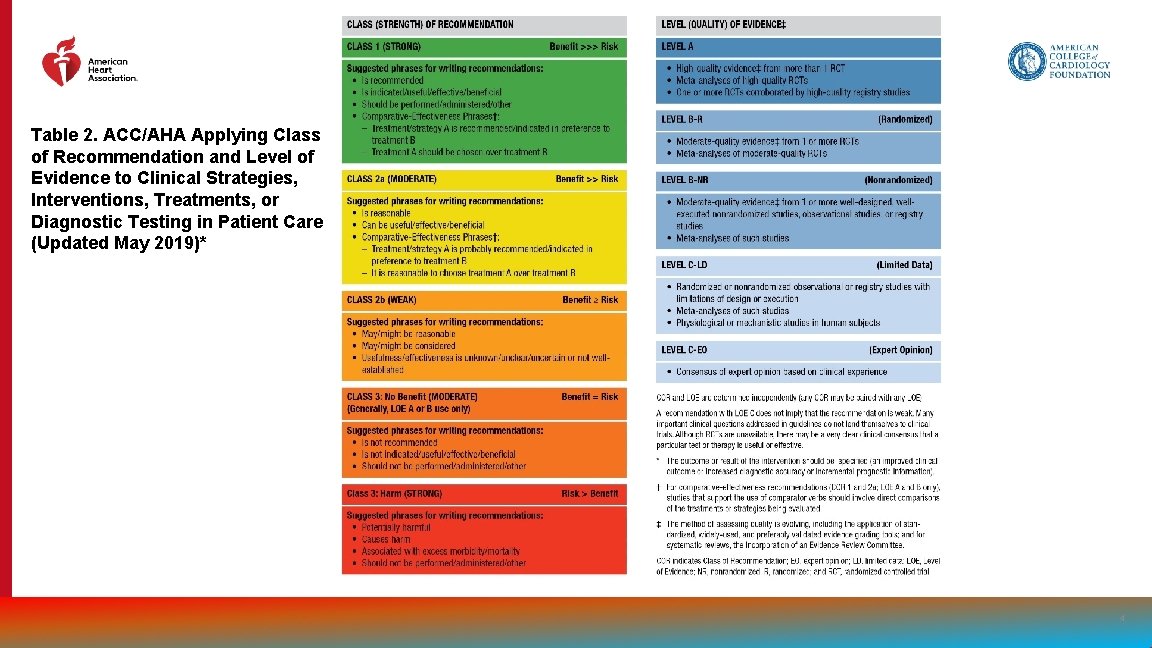
Table 2. ACC/AHA Applying Class of Recommendation and Level of Evidence to Clinical Strategies, Interventions, Treatments, or Diagnostic Testing in Patient Care (Updated May 2019)* 4
Top 10 Take-Home Messages 2020 Hypertrophic Cardiomyopathy Guidelines 5
Top 10 Take Home Messages 1. Shared decision-making, a dialogue between patients and their care team that includes full disclosure of all testing and treatment options, discussion of the risks and benefits of those options and, importantly, engagement of the patient to express their own goals, is particularly relevant in the management of conditions such as hypertrophic cardiomyopathy (HCM). 6
Top 10 Take Home Messages 2. Although the primary cardiology team can initiate evaluation, treatment, and longitudinal care, referral to multidisciplinary HCM centers with graduated levels of expertise can be important to optimizing care for patients with HCM. Challenging treatment decisions—where reasonable alternatives exist, where the strength of recommendation is weak (e. g. , any Class 2 b decision) or is particularly nuanced, and for invasive procedures that are specific to patients with HCM—represent crucial opportunities to refer patients to these HCM centers. 7
Top 10 Take Home Messages 3. Counseling patients with HCM regarding the potential for genetic transmission of HCM is one of the cornerstones of care. Screening firstdegree family members of patients with HCM, using either genetic testing or an imaging/electrocardiographic surveillance protocol, can begin at any age and can be influenced by specifics of the patient/family history and family preference. As screening recommendations for family members hinge on the pathogenicity of any detected variants, the reported pathogenicity should be reconfirmed every 2 to 3 years. 8
Top 10 Take Home Messages 4. Optimal care for patients with HCM requires cardiac imaging to confirm the diagnosis, characterize the pathophysiology for the individual, and identify risk markers that may inform decisions regarding interventions for left ventricular outflow tract obstruction and SCD prevention. Echocardiography continues to be the foundational imaging modality for patients with HCM. Cardiovascular magnetic resonance imaging will also be helpful in many patients, especially those in whom there is diagnostic uncertainty, poor echocardiographic imaging windows, or where uncertainty persists regarding decisions around ICD placement. 9
Top 10 Take Home Messages 5. Assessment of an individual patient’s risk for SCD continues to evolve as new markers emerge (e. g. , apical aneurysm, decreased left ventricular systolic function, and extensive gadolinium enhancement). In addition to a full accounting of an individual’s risk markers, communication with patients regarding not just the presence of risk markers but also the magnitude of their individualized risk is key. This enables the informed patient to fully participate in the decision-making regarding ICD placement, which incorporates their own level of risk tolerance and treatment goals. 10
Top 10 Take Home Messages 6. The risk factors for SCD in children with HCM carry different weights than those observed in adult patients; they vary with age and must account for different body sizes. Coupled with the complexity of placing ICDs in young patients with anticipated growth and a higher risk of device complications, the threshold for ICD implantation in children often differs from adults. These differences are best addressed at primary or comprehensive HCM centers with expertise in children with HCM. 11
Top 10 Take Home Messages 7. Septal reduction therapies (surgical septal myectomy and alcohol septal ablation), when performed by experienced HCM teams at dedicated centers, continue to improve in safety and efficacy such that earlier intervention may be possible in select patients with drugrefractory or severe outflow tract obstruction causing signs of cardiac decompensation. Given the data on the significantly improved outcomes at comprehensive HCM centers, these decisions represent an optimal referral opportunity. 12
Top 10 Take Home Messages 8. Patients with HCM and persistent or paroxysmal atrial fibrillation have a sufficiently increased risk of stroke such that oral anticoagulation with direct oral anticoagulants (or alternatively warfarin) should be considered the default treatment option independent of the CHA 2 DS 2 VASc score. As rapid atrial fibrillation is often poorly tolerated in patients with HCM, maintenance of sinus rhythm and rate control are key pursuits in successful treatment. 13
Top 10 Take Home Messages 9. Heart failure symptoms in patients with HCM, in the absence of left ventricular outflow tract obstruction, should be treated similarly to other patients with heart failure symptoms, including consideration of advanced treatment options (e. g. , cardiac resynchronization therapy, left ventricular assist device transplantation). In patients with HCM, an ejection fraction <50% connotes significantly impaired systolic function and identifies individuals with poor prognosis and who are at increased risk for SCD. 14
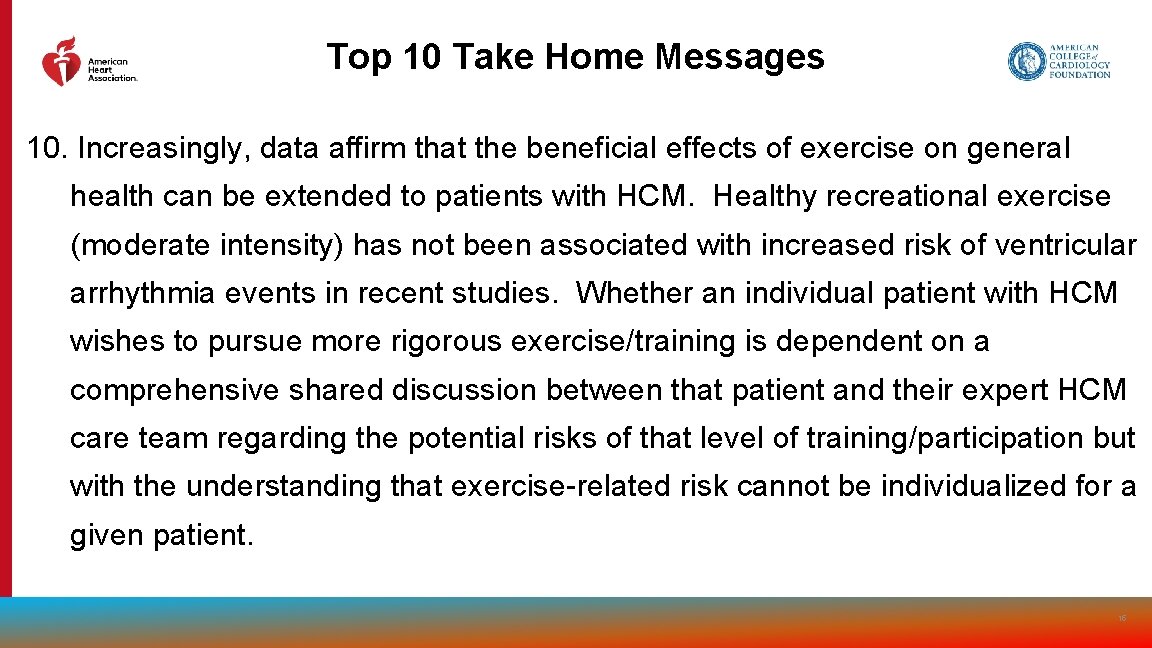
Top 10 Take Home Messages 10. Increasingly, data affirm that the beneficial effects of exercise on general health can be extended to patients with HCM. Healthy recreational exercise (moderate intensity) has not been associated with increased risk of ventricular arrhythmia events in recent studies. Whether an individual patient with HCM wishes to pursue more rigorous exercise/training is dependent on a comprehensive shared discussion between that patient and their expert HCM care team regarding the potential risks of that level of training/participation but with the understanding that exercise-related risk cannot be individualized for a given patient. 15
Shared Decision Making 16
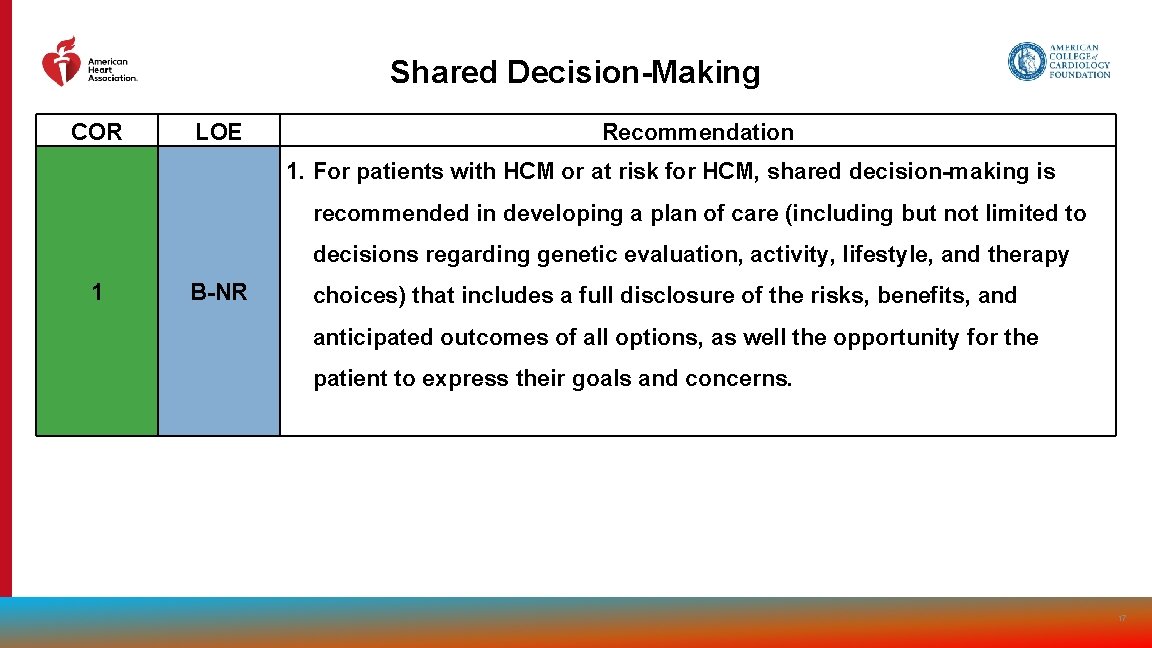
Shared Decision-Making COR LOE Recommendation 1. For patients with HCM or at risk for HCM, shared decision-making is recommended in developing a plan of care (including but not limited to decisions regarding genetic evaluation, activity, lifestyle, and therapy 1 B-NR choices) that includes a full disclosure of the risks, benefits, and anticipated outcomes of all options, as well the opportunity for the patient to express their goals and concerns. 17
Multidisciplinary Hypertrophic Cardiomyopathy Centers 18
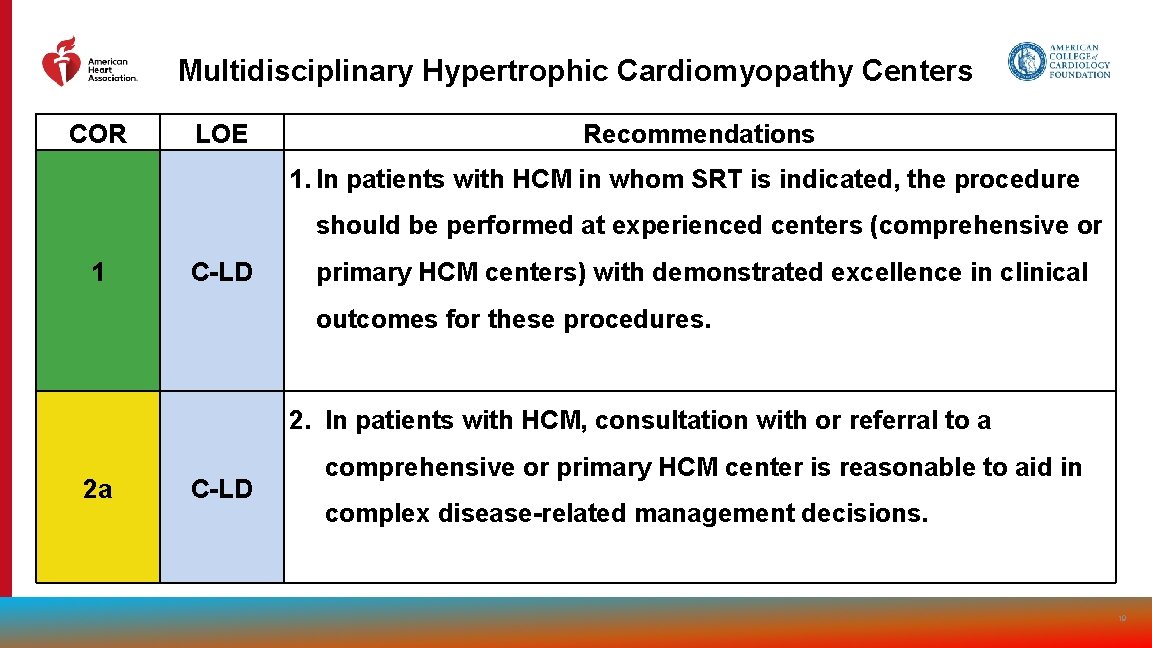
Multidisciplinary Hypertrophic Cardiomyopathy Centers COR LOE Recommendations 1. In patients with HCM in whom SRT is indicated, the procedure should be performed at experienced centers (comprehensive or 1 C-LD primary HCM centers) with demonstrated excellence in clinical outcomes for these procedures. 2. In patients with HCM, consultation with or referral to a 2 a C-LD comprehensive or primary HCM center is reasonable to aid in complex disease-related management decisions. 19
Diagnosis, Initial Evaluation, and Follow-up 20
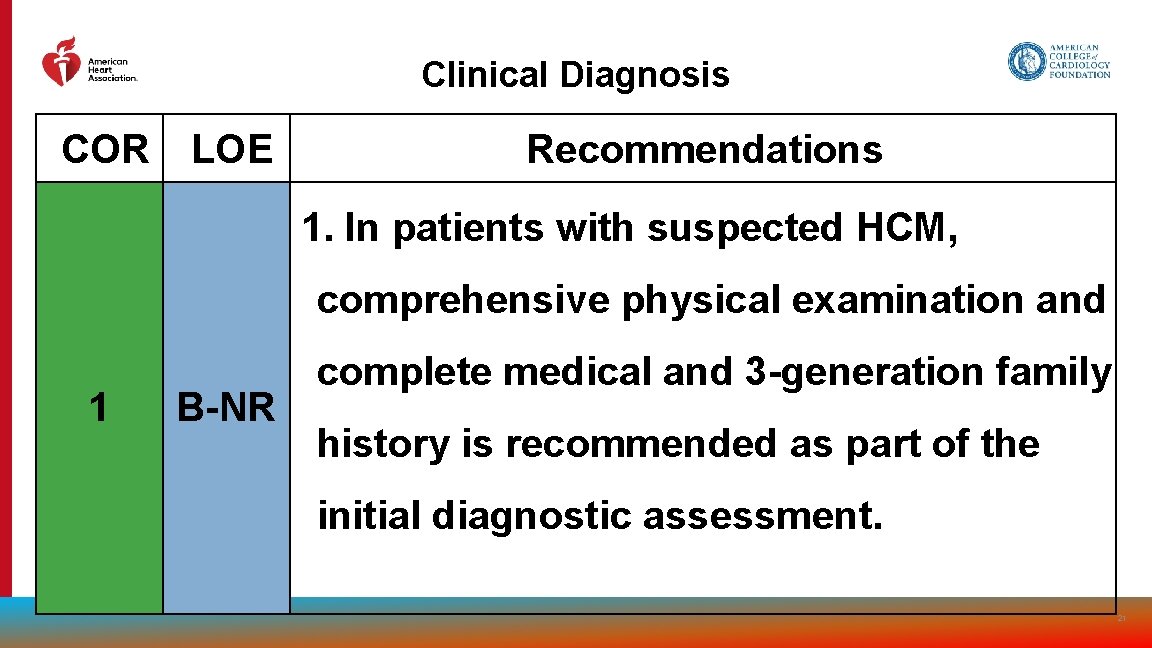
Clinical Diagnosis COR LOE Recommendations 1. In patients with suspected HCM, comprehensive physical examination and 1 B-NR complete medical and 3 -generation family history is recommended as part of the initial diagnostic assessment. 21
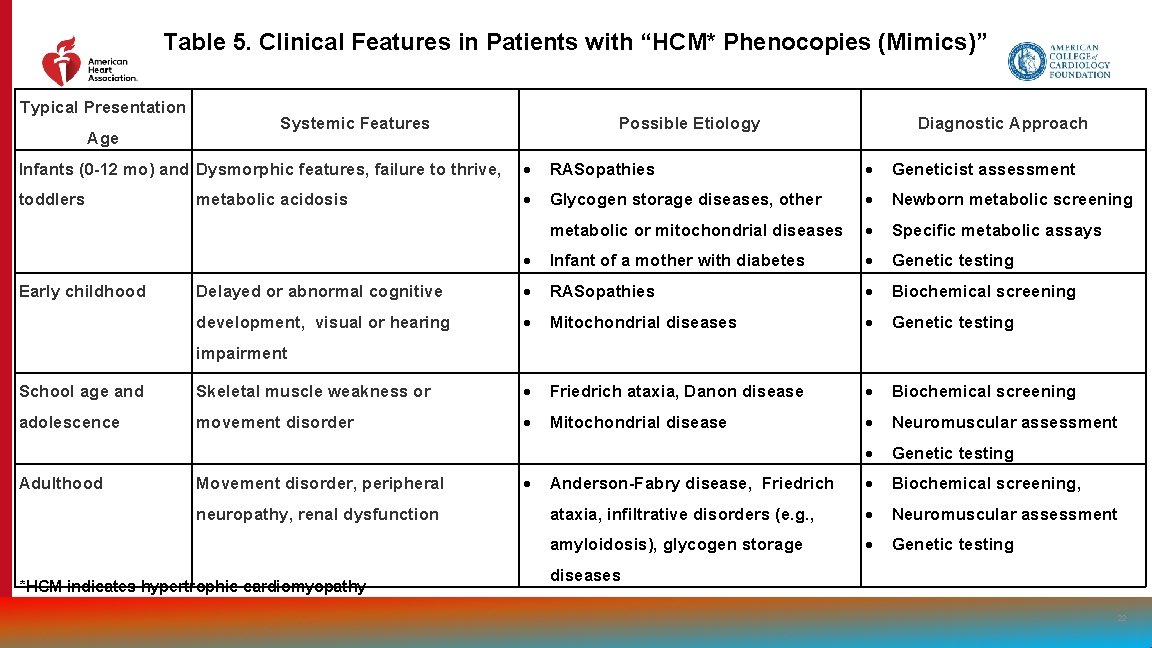
Table 5. Clinical Features in Patients with “HCM* Phenocopies (Mimics)” Typical Presentation Age Systemic Features Possible Etiology Diagnostic Approach Infants (0 -12 mo) and Dysmorphic features, failure to thrive, RASopathies Geneticist assessment toddlers Glycogen storage diseases, other Newborn metabolic screening metabolic or mitochondrial diseases Specific metabolic assays Infant of a mother with diabetes Genetic testing Delayed or abnormal cognitive RASopathies Biochemical screening development, visual or hearing Mitochondrial diseases Genetic testing Early childhood metabolic acidosis impairment School age and Skeletal muscle weakness or Friedrich ataxia, Danon disease Biochemical screening adolescence movement disorder Mitochondrial disease Neuromuscular assessment Genetic testing Anderson-Fabry disease, Friedrich Biochemical screening, ataxia, infiltrative disorders (e. g. , Neuromuscular assessment amyloidosis), glycogen storage Genetic testing Adulthood Movement disorder, peripheral neuropathy, renal dysfunction *HCM indicates hypertrophic cardiomyopathy diseases 22
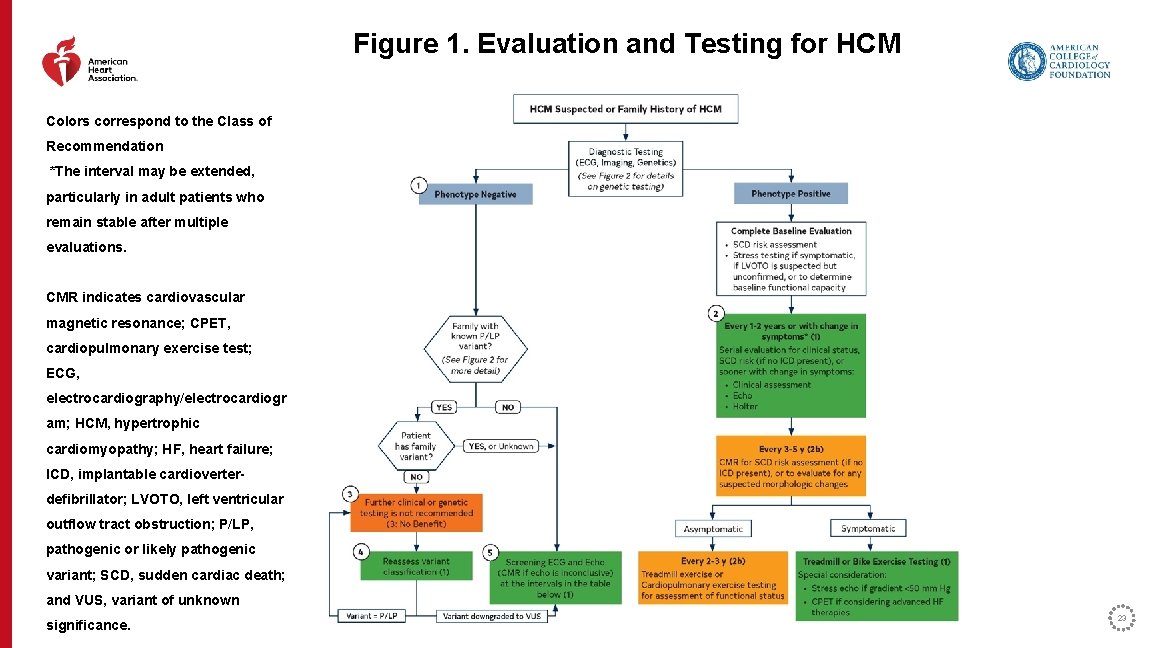
Figure 1. Evaluation and Testing for HCM Colors correspond to the Class of Recommendation *The interval may be extended, particularly in adult patients who remain stable after multiple evaluations. CMR indicates cardiovascular magnetic resonance; CPET, cardiopulmonary exercise test; ECG, electrocardiography/electrocardiogr am; HCM, hypertrophic cardiomyopathy; HF, heart failure; ICD, implantable cardioverterdefibrillator; LVOTO, left ventricular outflow tract obstruction; P/LP, pathogenic or likely pathogenic variant; SCD, sudden cardiac death; and VUS, variant of unknown significance. 23
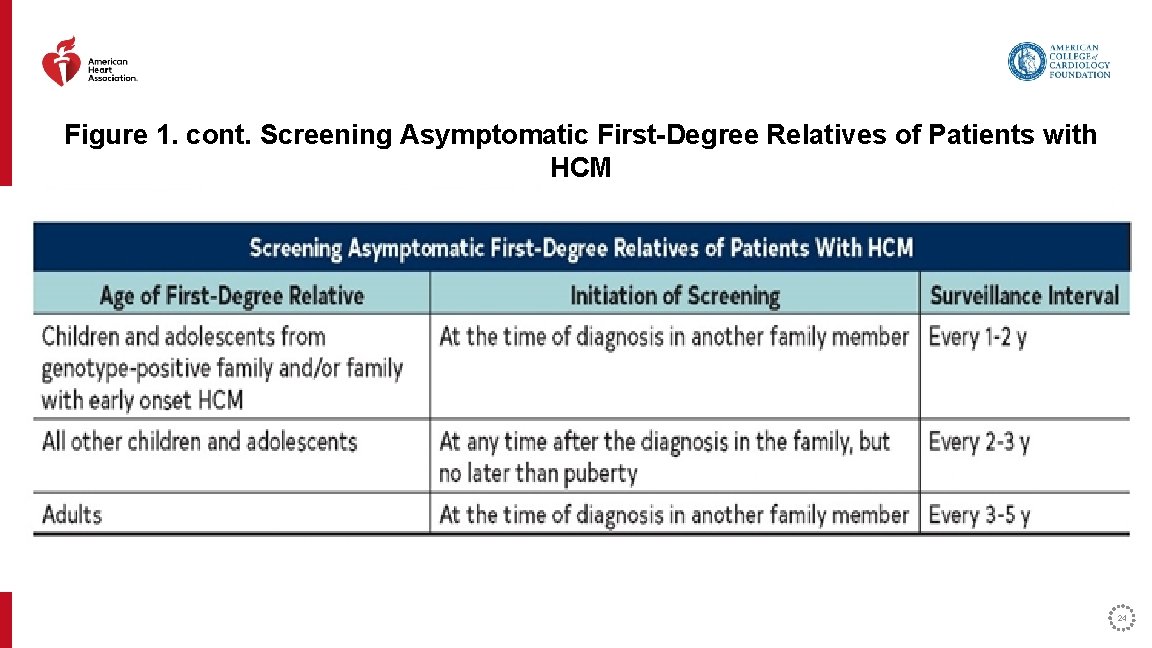
Figure 1. cont. Screening Asymptomatic First-Degree Relatives of Patients with HCM 24
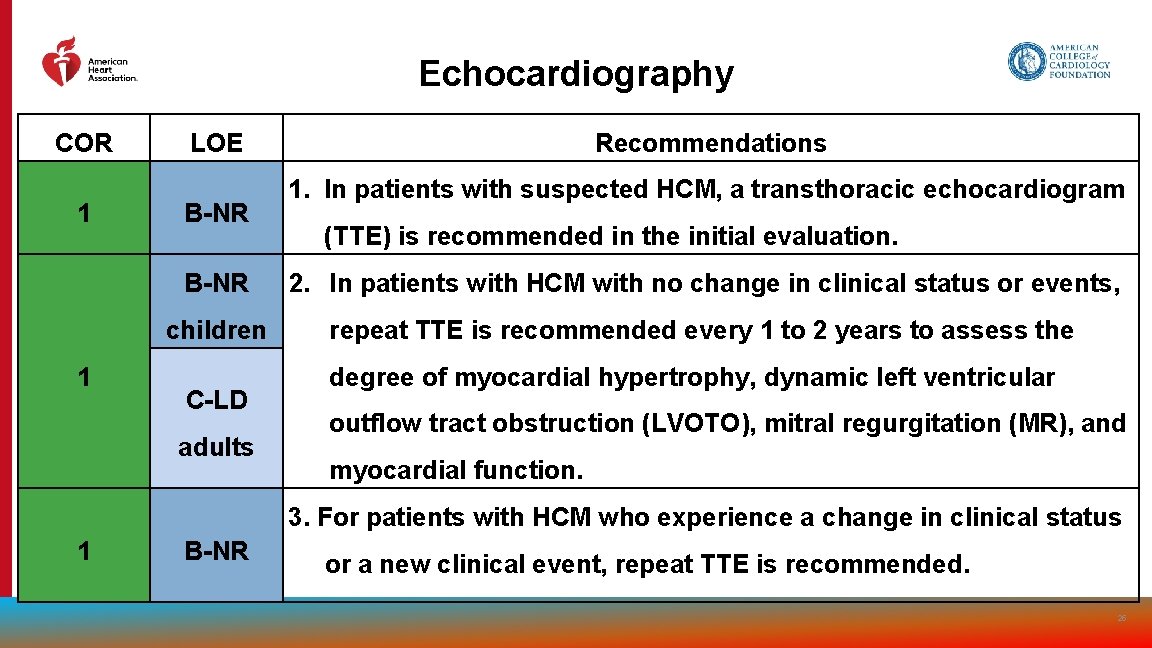
Echocardiography COR 1 1 LOE B-NR Recommendations 1. In patients with suspected HCM, a transthoracic echocardiogram (TTE) is recommended in the initial evaluation. B-NR 2. In patients with HCM with no change in clinical status or events, children repeat TTE is recommended every 1 to 2 years to assess the C-LD adults degree of myocardial hypertrophy, dynamic left ventricular outflow tract obstruction (LVOTO), mitral regurgitation (MR), and myocardial function. 3. For patients with HCM who experience a change in clinical status 1 B-NR or a new clinical event, repeat TTE is recommended. 25
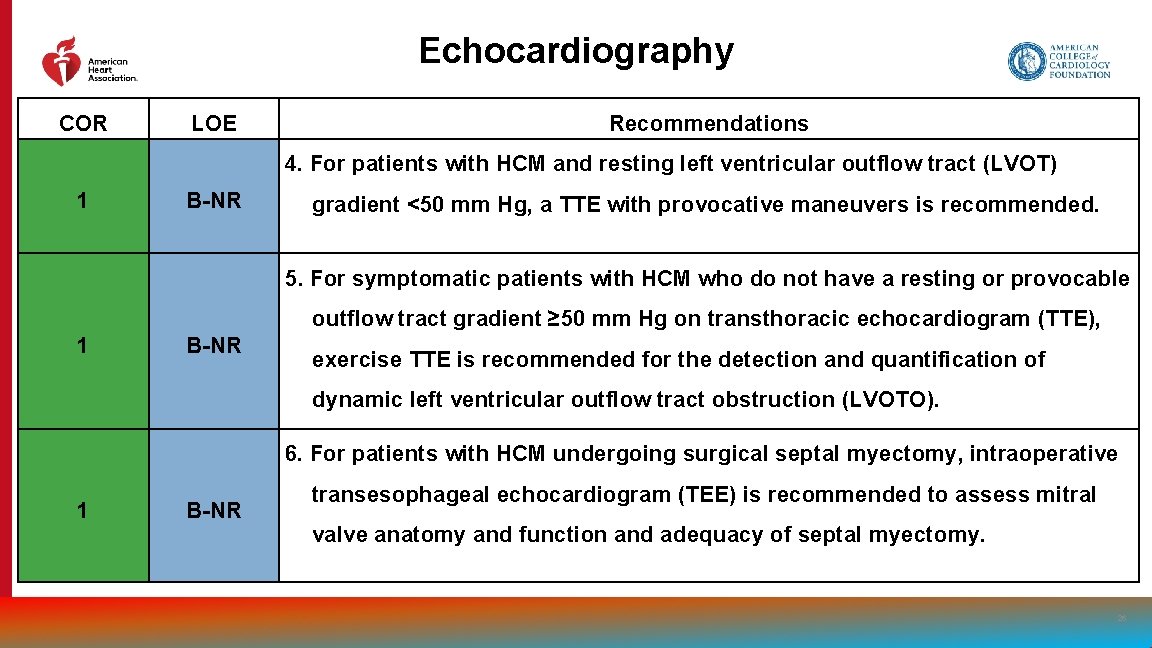
Echocardiography COR LOE Recommendations 4. For patients with HCM and resting left ventricular outflow tract (LVOT) 1 B-NR gradient <50 mm Hg, a TTE with provocative maneuvers is recommended. 5. For symptomatic patients with HCM who do not have a resting or provocable outflow tract gradient ≥ 50 mm Hg on transthoracic echocardiogram (TTE), 1 B-NR exercise TTE is recommended for the detection and quantification of dynamic left ventricular outflow tract obstruction (LVOTO). 6. For patients with HCM undergoing surgical septal myectomy, intraoperative 1 B-NR transesophageal echocardiogram (TEE) is recommended to assess mitral valve anatomy and function and adequacy of septal myectomy. 26
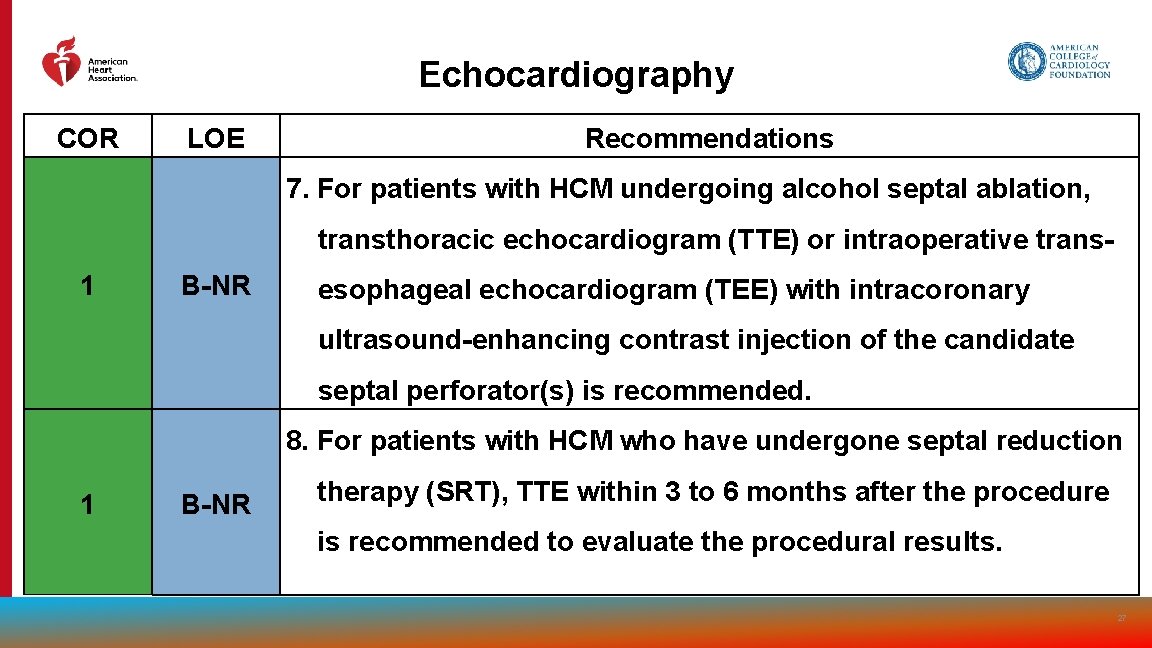
Echocardiography COR LOE Recommendations 7. For patients with HCM undergoing alcohol septal ablation, transthoracic echocardiogram (TTE) or intraoperative trans- 1 B-NR esophageal echocardiogram (TEE) with intracoronary ultrasound-enhancing contrast injection of the candidate septal perforator(s) is recommended. 8. For patients with HCM who have undergone septal reduction 1 B-NR therapy (SRT), TTE within 3 to 6 months after the procedure is recommended to evaluate the procedural results. 27
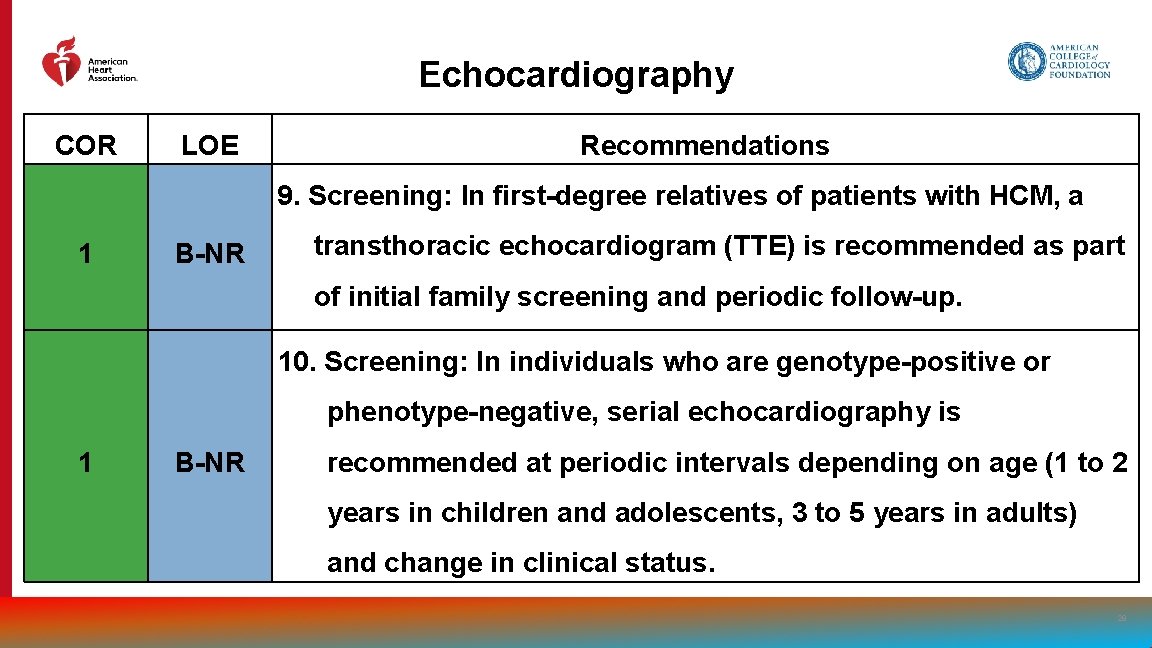
Echocardiography COR LOE Recommendations 9. Screening: In first-degree relatives of patients with HCM, a 1 B-NR transthoracic echocardiogram (TTE) is recommended as part of initial family screening and periodic follow-up. 10. Screening: In individuals who are genotype-positive or phenotype-negative, serial echocardiography is 1 B-NR recommended at periodic intervals depending on age (1 to 2 years in children and adolescents, 3 to 5 years in adults) and change in clinical status. 28
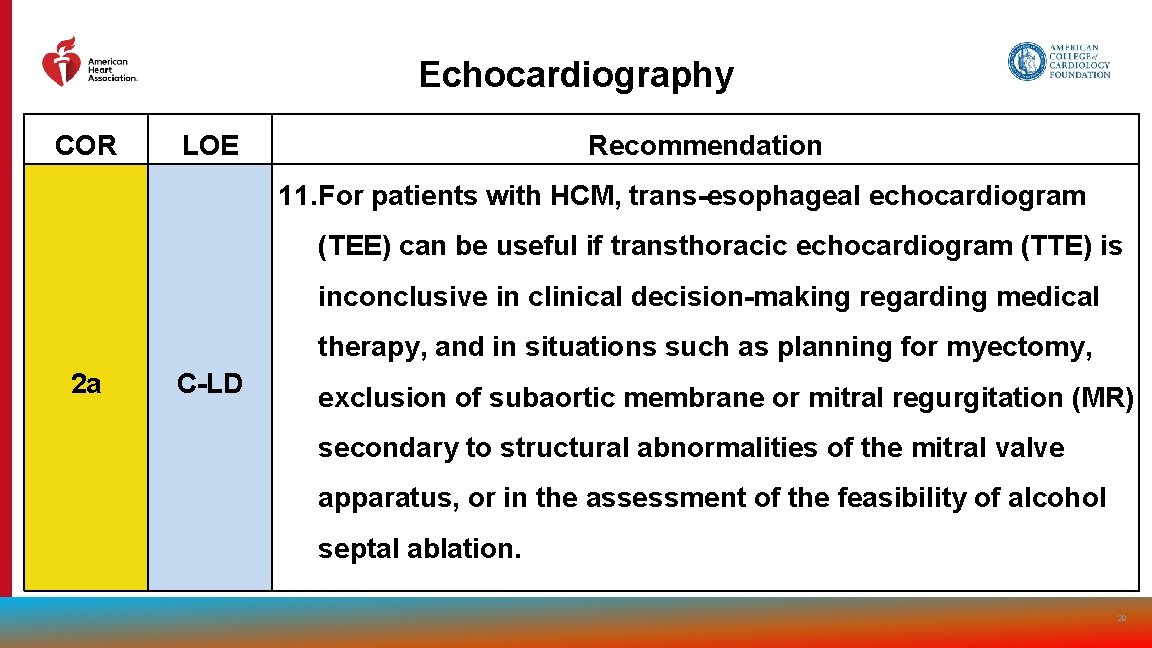
Echocardiography COR LOE Recommendation 11. For patients with HCM, trans-esophageal echocardiogram (TEE) can be useful if transthoracic echocardiogram (TTE) is inconclusive in clinical decision-making regarding medical therapy, and in situations such as planning for myectomy, 2 a C-LD exclusion of subaortic membrane or mitral regurgitation (MR) secondary to structural abnormalities of the mitral valve apparatus, or in the assessment of the feasibility of alcohol septal ablation. 29
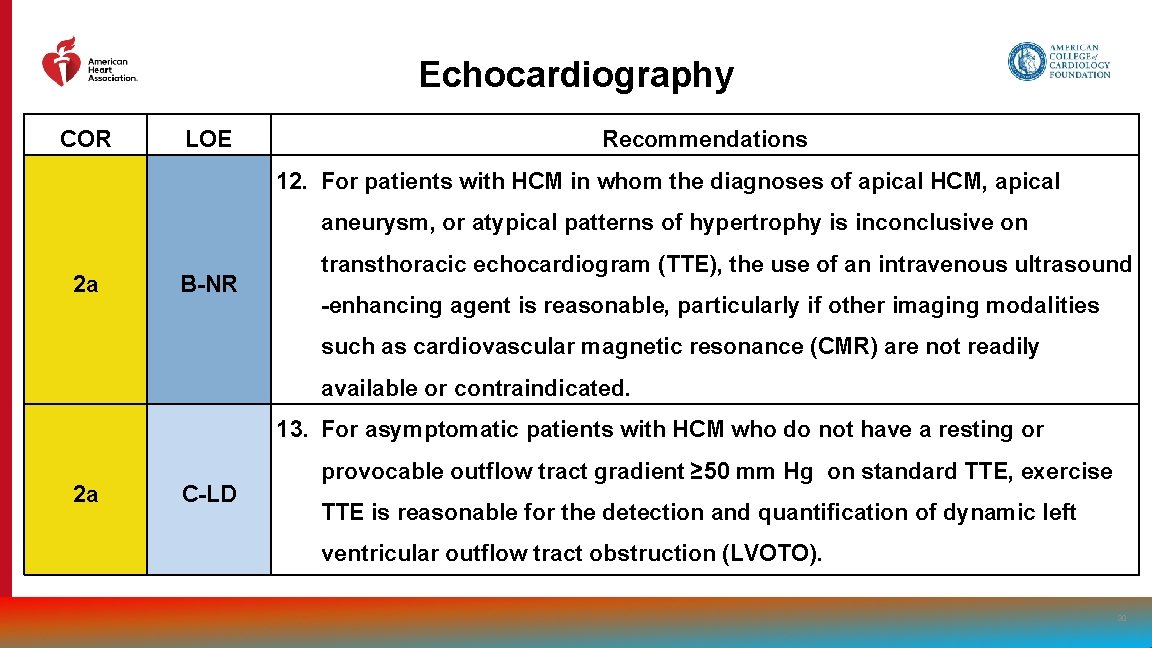
Echocardiography COR LOE Recommendations 12. For patients with HCM in whom the diagnoses of apical HCM, apical aneurysm, or atypical patterns of hypertrophy is inconclusive on 2 a B-NR transthoracic echocardiogram (TTE), the use of an intravenous ultrasound -enhancing agent is reasonable, particularly if other imaging modalities such as cardiovascular magnetic resonance (CMR) are not readily available or contraindicated. 13. For asymptomatic patients with HCM who do not have a resting or 2 a C-LD provocable outflow tract gradient ≥ 50 mm Hg on standard TTE, exercise TTE is reasonable for the detection and quantification of dynamic left ventricular outflow tract obstruction (LVOTO). 30
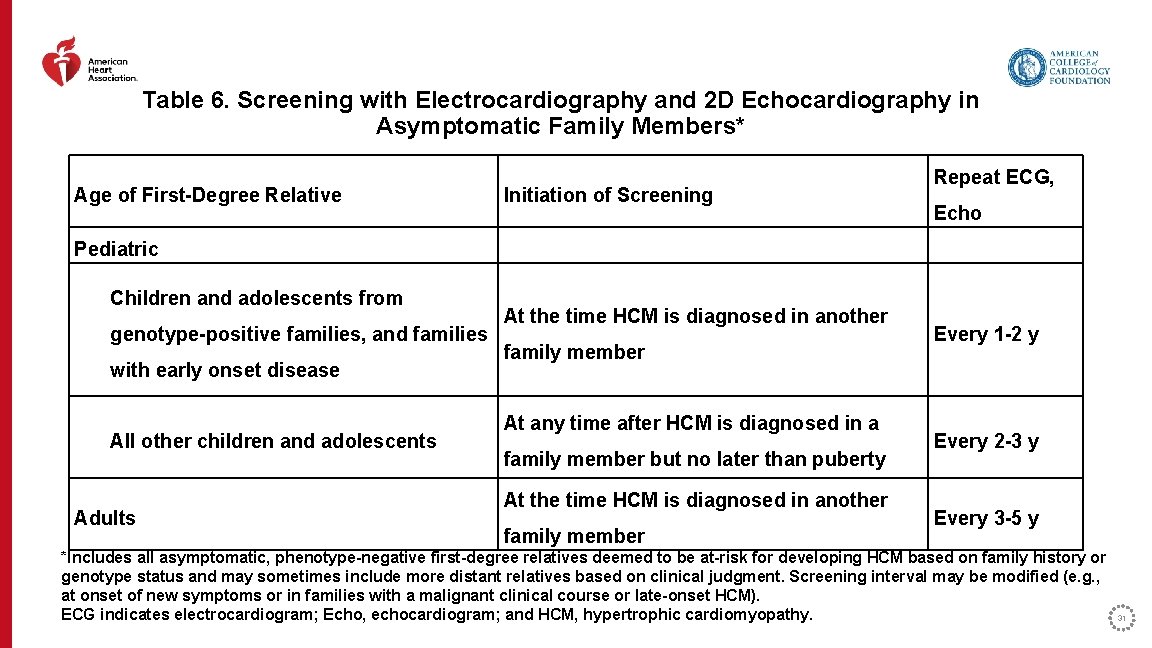
Table 6. Screening with Electrocardiography and 2 D Echocardiography in Asymptomatic Family Members* Age of First-Degree Relative Initiation of Screening Repeat ECG, Echo Pediatric Children and adolescents from genotype-positive families, and families with early onset disease All other children and adolescents Adults At the time HCM is diagnosed in another family member At any time after HCM is diagnosed in a family member but no later than puberty At the time HCM is diagnosed in another family member Every 1 -2 y Every 2 -3 y Every 3 -5 y *Includes all asymptomatic, phenotype-negative first-degree relatives deemed to be at-risk for developing HCM based on family history or genotype status and may sometimes include more distant relatives based on clinical judgment. Screening interval may be modified (e. g. , at onset of new symptoms or in families with a malignant clinical course or late-onset HCM). ECG indicates electrocardiogram; Echo, echocardiogram; and HCM, hypertrophic cardiomyopathy. 31
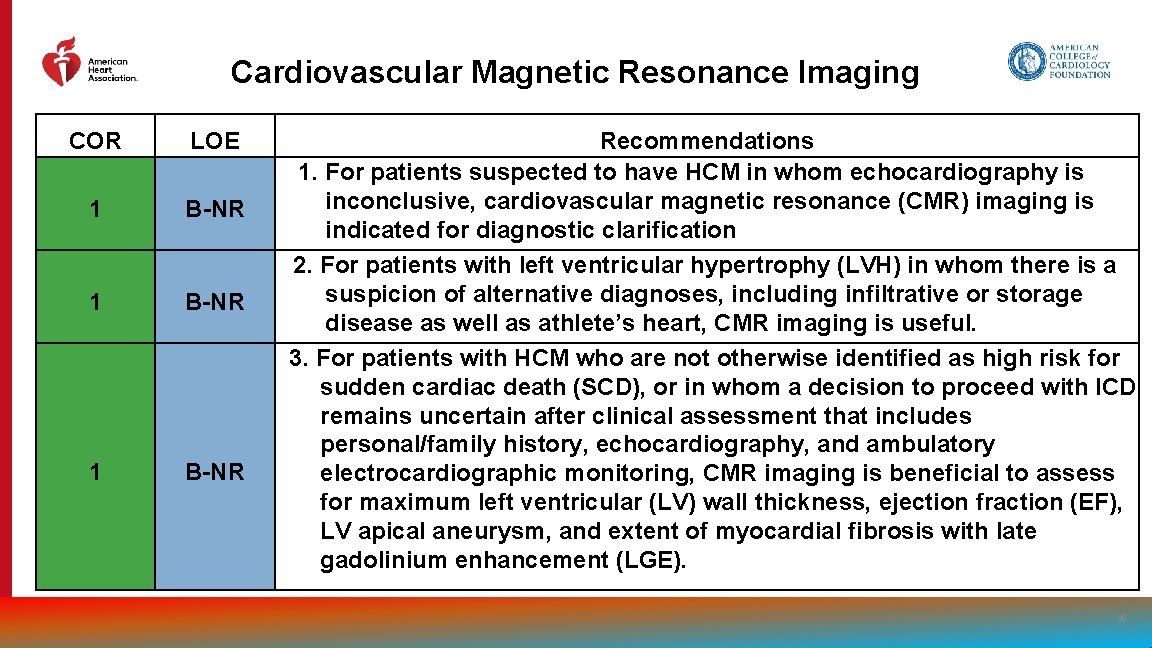
Cardiovascular Magnetic Resonance Imaging COR LOE 1 B-NR Recommendations 1. For patients suspected to have HCM in whom echocardiography is inconclusive, cardiovascular magnetic resonance (CMR) imaging is indicated for diagnostic clarification 2. For patients with left ventricular hypertrophy (LVH) in whom there is a suspicion of alternative diagnoses, including infiltrative or storage disease as well as athlete’s heart, CMR imaging is useful. 3. For patients with HCM who are not otherwise identified as high risk for sudden cardiac death (SCD), or in whom a decision to proceed with ICD remains uncertain after clinical assessment that includes personal/family history, echocardiography, and ambulatory electrocardiographic monitoring, CMR imaging is beneficial to assess for maximum left ventricular (LV) wall thickness, ejection fraction (EF), LV apical aneurysm, and extent of myocardial fibrosis with late gadolinium enhancement (LGE). 32
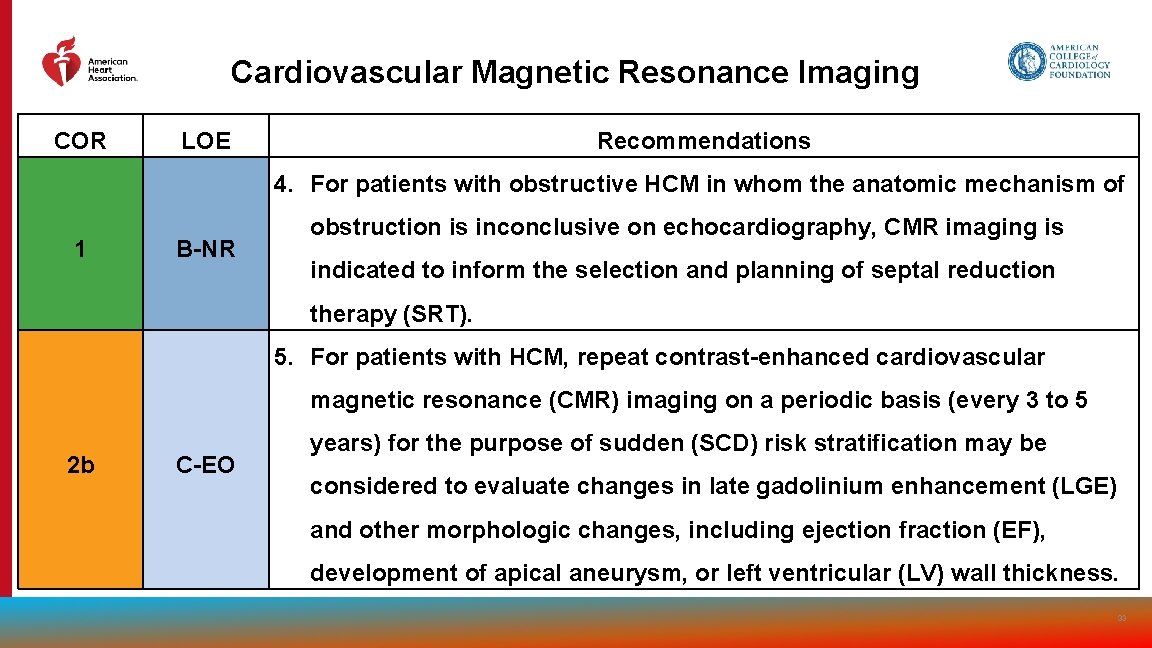
Cardiovascular Magnetic Resonance Imaging COR LOE Recommendations 4. For patients with obstructive HCM in whom the anatomic mechanism of 1 B-NR obstruction is inconclusive on echocardiography, CMR imaging is indicated to inform the selection and planning of septal reduction therapy (SRT). 5. For patients with HCM, repeat contrast-enhanced cardiovascular magnetic resonance (CMR) imaging on a periodic basis (every 3 to 5 2 b C-EO years) for the purpose of sudden (SCD) risk stratification may be considered to evaluate changes in late gadolinium enhancement (LGE) and other morphologic changes, including ejection fraction (EF), development of apical aneurysm, or left ventricular (LV) wall thickness. 33
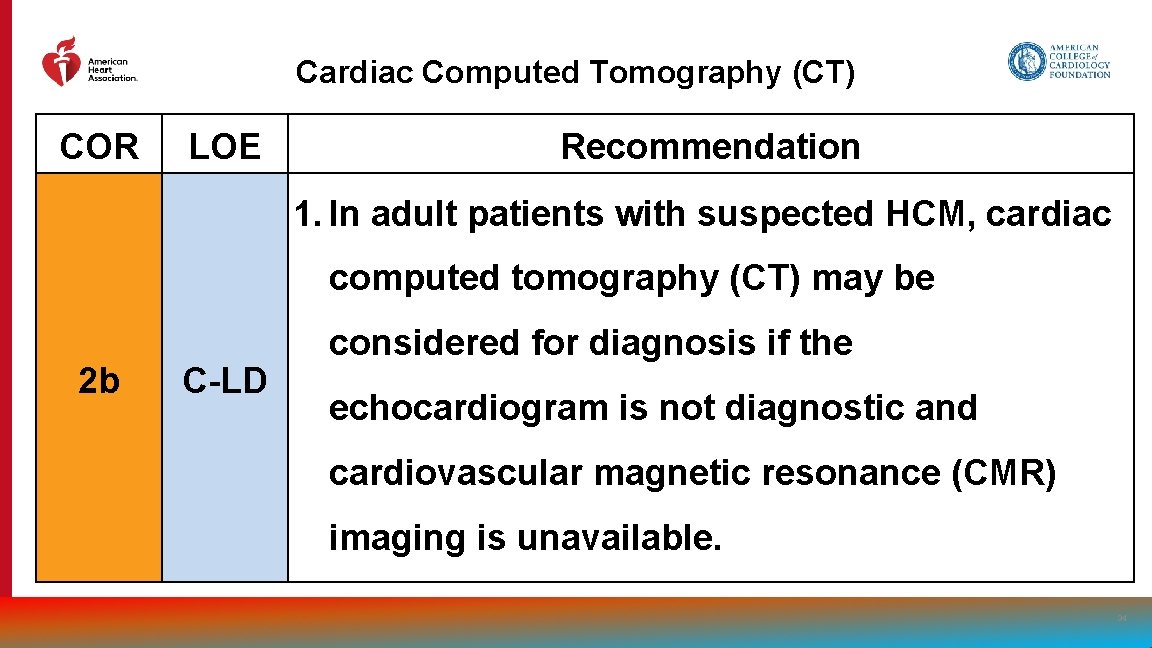
Cardiac Computed Tomography (CT) COR LOE Recommendation 1. In adult patients with suspected HCM, cardiac computed tomography (CT) may be 2 b C-LD considered for diagnosis if the echocardiogram is not diagnostic and cardiovascular magnetic resonance (CMR) imaging is unavailable. 34
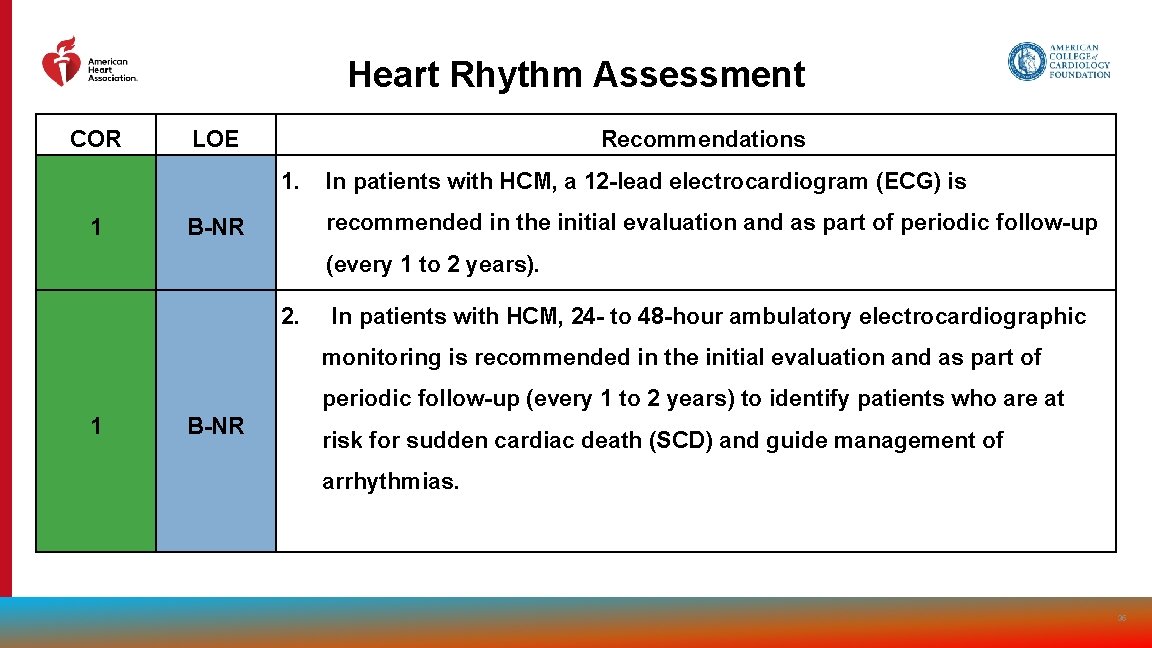
Heart Rhythm Assessment COR LOE Recommendations 1. 1 In patients with HCM, a 12 -lead electrocardiogram (ECG) is recommended in the initial evaluation and as part of periodic follow-up B-NR (every 1 to 2 years). 2. In patients with HCM, 24 - to 48 -hour ambulatory electrocardiographic monitoring is recommended in the initial evaluation and as part of periodic follow-up (every 1 to 2 years) to identify patients who are at 1 B-NR risk for sudden cardiac death (SCD) and guide management of arrhythmias. 35
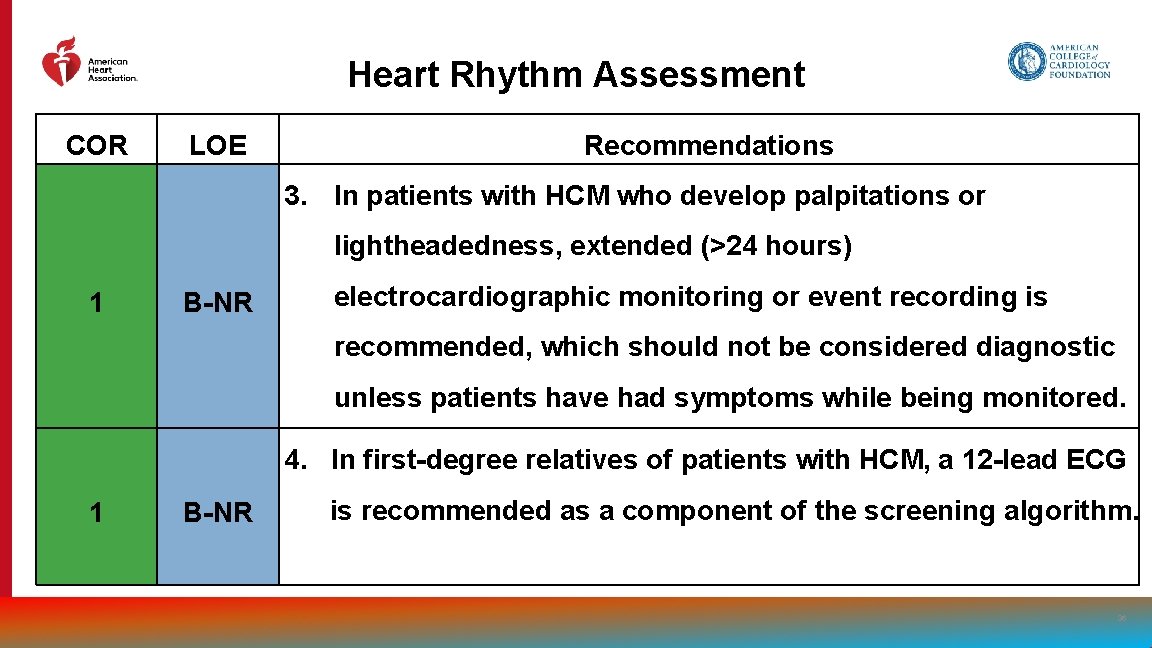
Heart Rhythm Assessment COR LOE Recommendations 3. In patients with HCM who develop palpitations or lightheadedness, extended (>24 hours) 1 B-NR electrocardiographic monitoring or event recording is recommended, which should not be considered diagnostic unless patients have had symptoms while being monitored. 4. In first-degree relatives of patients with HCM, a 12 -lead ECG 1 B-NR is recommended as a component of the screening algorithm. 36
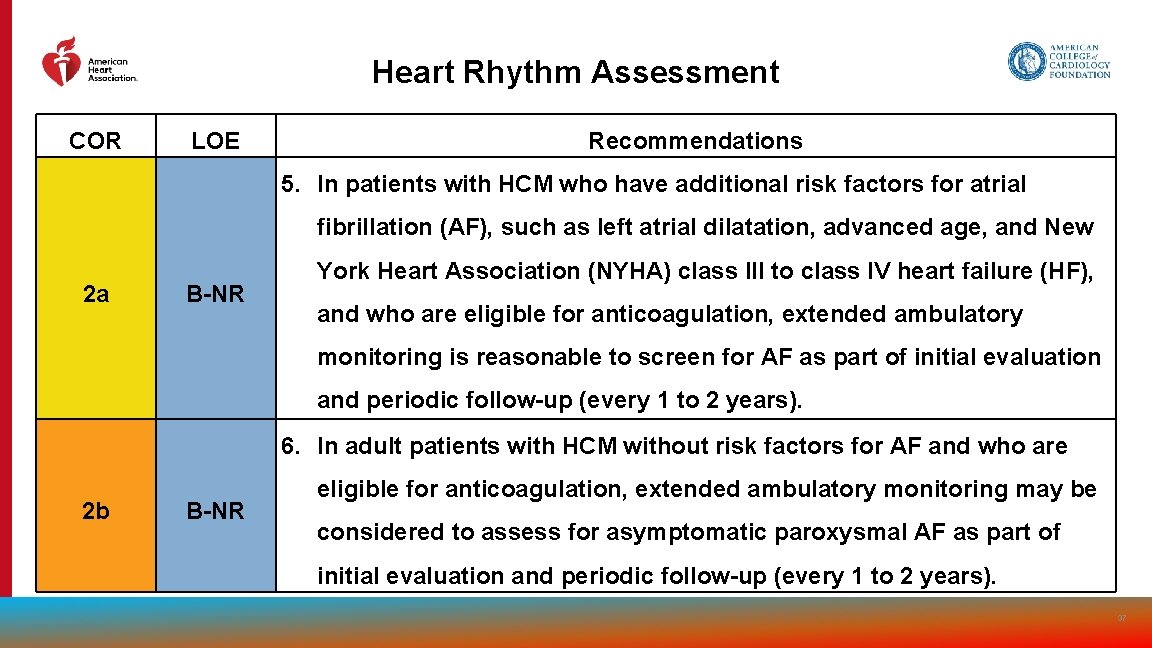
Heart Rhythm Assessment COR LOE Recommendations 5. In patients with HCM who have additional risk factors for atrial fibrillation (AF), such as left atrial dilatation, advanced age, and New 2 a B-NR York Heart Association (NYHA) class III to class IV heart failure (HF), and who are eligible for anticoagulation, extended ambulatory monitoring is reasonable to screen for AF as part of initial evaluation and periodic follow-up (every 1 to 2 years). 6. In adult patients with HCM without risk factors for AF and who are 2 b B-NR eligible for anticoagulation, extended ambulatory monitoring may be considered to assess for asymptomatic paroxysmal AF as part of initial evaluation and periodic follow-up (every 1 to 2 years). 37
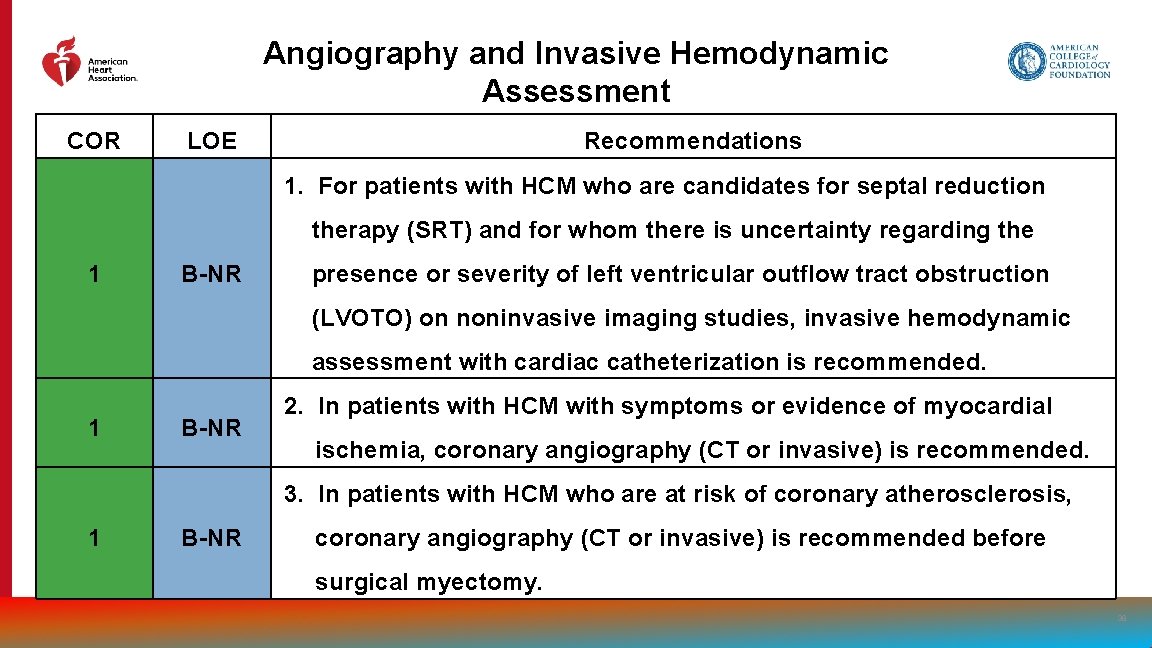
Angiography and Invasive Hemodynamic Assessment COR LOE Recommendations 1. For patients with HCM who are candidates for septal reduction therapy (SRT) and for whom there is uncertainty regarding the 1 B-NR presence or severity of left ventricular outflow tract obstruction (LVOTO) on noninvasive imaging studies, invasive hemodynamic assessment with cardiac catheterization is recommended. 1 B-NR 2. In patients with HCM with symptoms or evidence of myocardial ischemia, coronary angiography (CT or invasive) is recommended. 3. In patients with HCM who are at risk of coronary atherosclerosis, 1 B-NR coronary angiography (CT or invasive) is recommended before surgical myectomy. 38
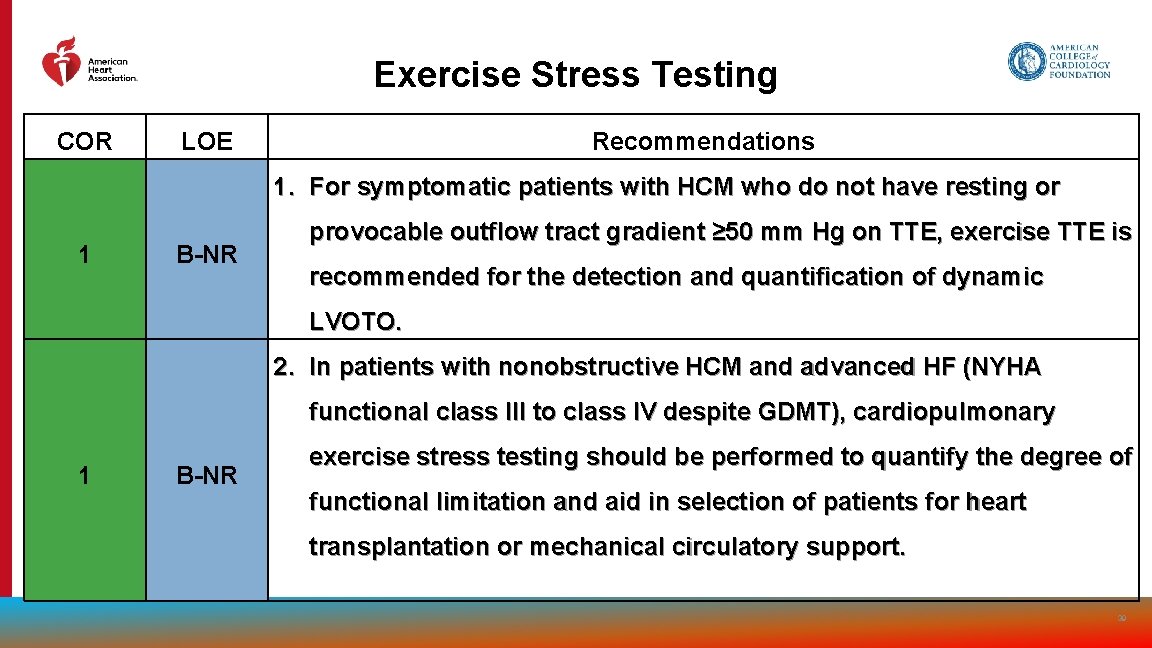
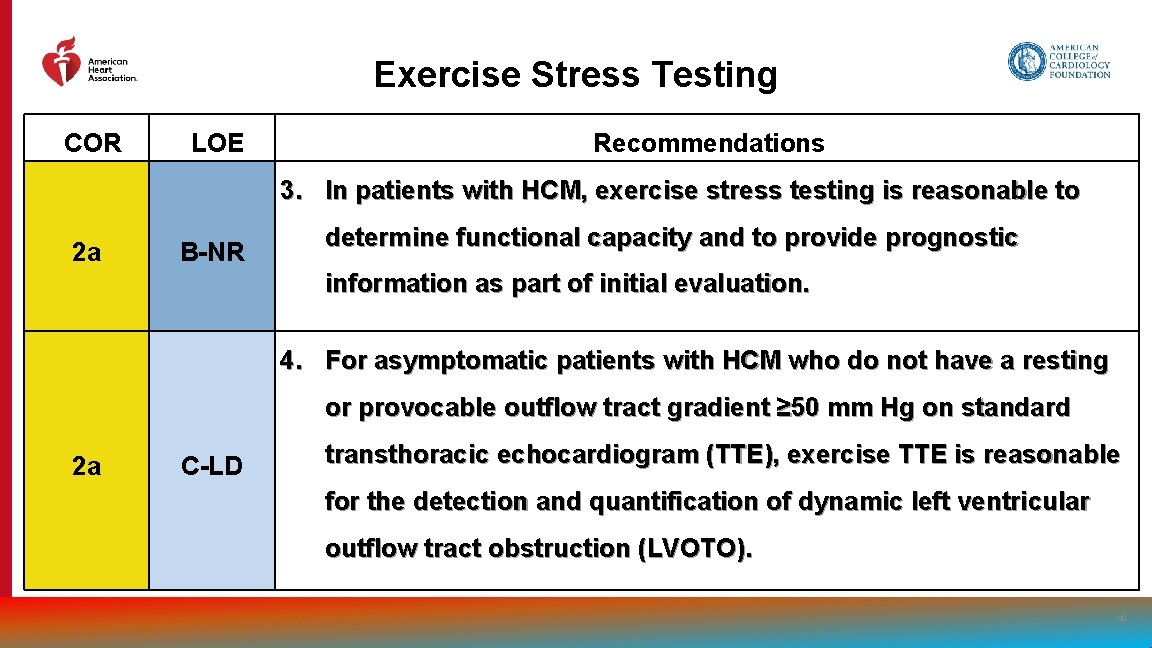
Exercise Stress Testing COR LOE Recommendations 1. For symptomatic patients with HCM who do not have resting or 1 B-NR provocable outflow tract gradient ≥ 50 mm Hg on TTE, exercise TTE is recommended for the detection and quantification of dynamic LVOTO. 2. In patients with nonobstructive HCM and advanced HF (NYHA functional class III to class IV despite GDMT), cardiopulmonary 1 B-NR exercise stress testing should be performed to quantify the degree of functional limitation and aid in selection of patients for heart transplantation or mechanical circulatory support. 39
Exercise Stress Testing COR LOE Recommendations 3. In patients with HCM, exercise stress testing is reasonable to 2 a B-NR determine functional capacity and to provide prognostic information as part of initial evaluation. 4. For asymptomatic patients with HCM who do not have a resting or provocable outflow tract gradient ≥ 50 mm Hg on standard 2 a C-LD transthoracic echocardiogram (TTE), exercise TTE is reasonable for the detection and quantification of dynamic left ventricular outflow tract obstruction (LVOTO). 40
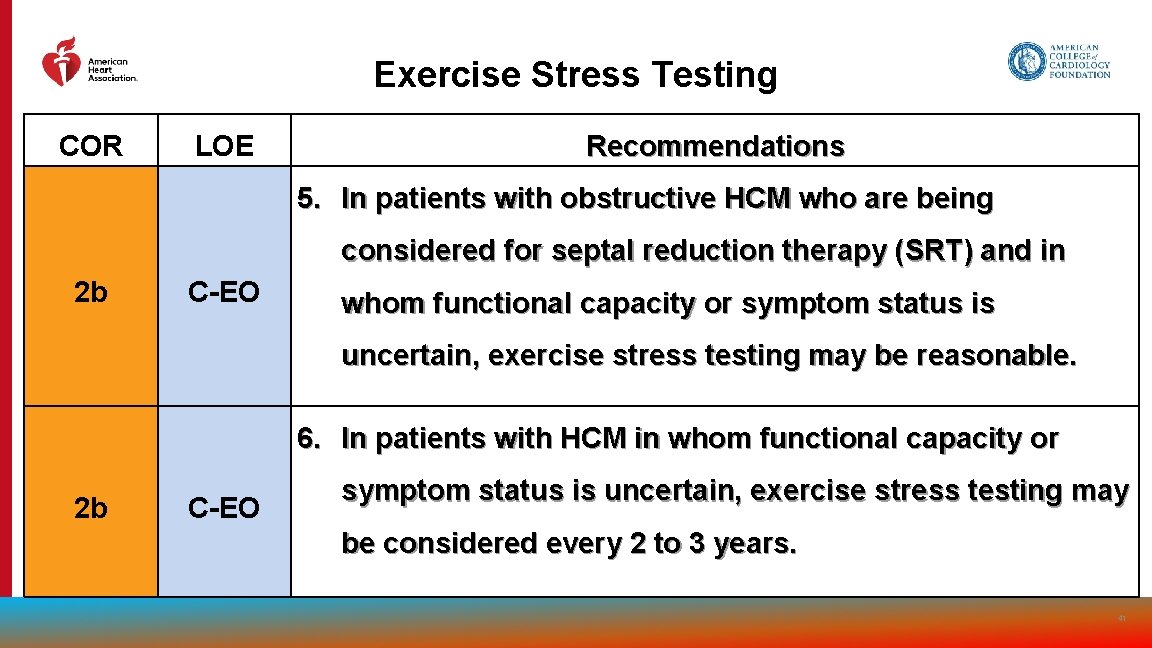
Exercise Stress Testing COR LOE Recommendations 5. In patients with obstructive HCM who are being considered for septal reduction therapy (SRT) and in 2 b C-EO whom functional capacity or symptom status is uncertain, exercise stress testing may be reasonable. 6. In patients with HCM in whom functional capacity or 2 b C-EO symptom status is uncertain, exercise stress testing may be considered every 2 to 3 years. 41
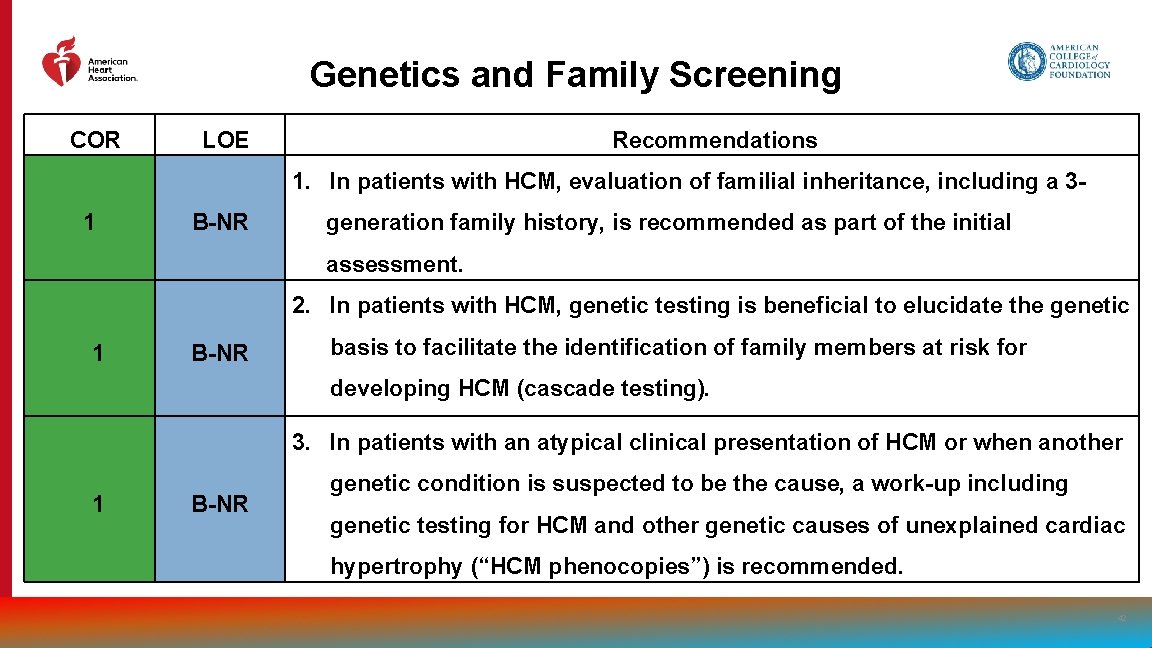
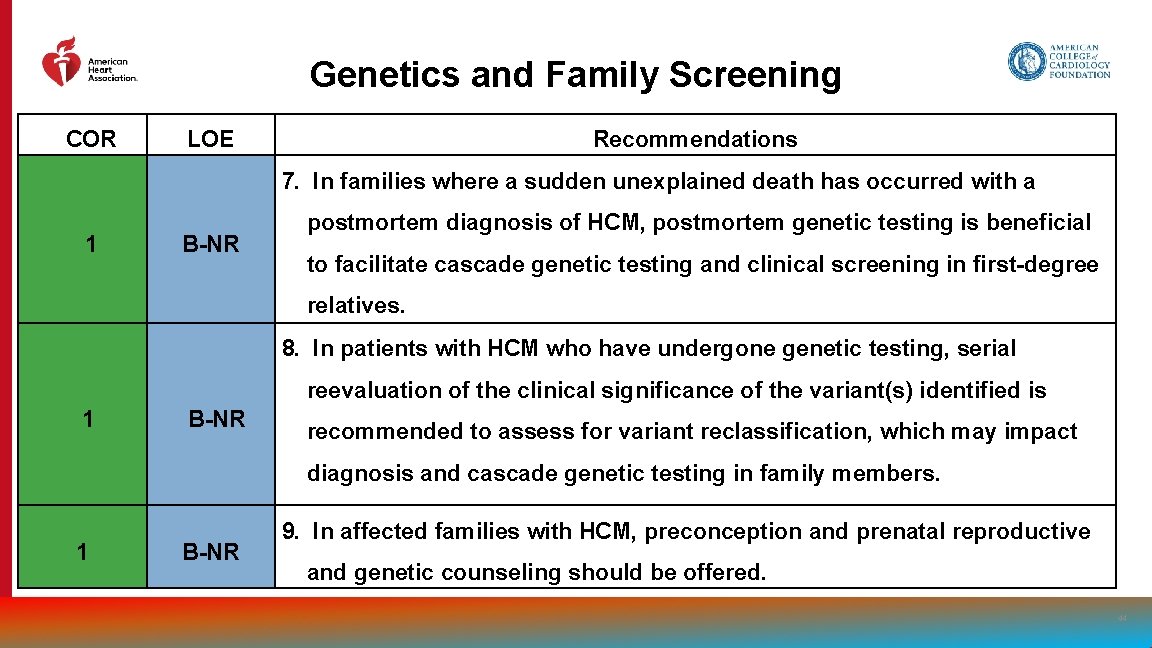
Genetics and Family Screening COR LOE Recommendations 1. In patients with HCM, evaluation of familial inheritance, including a 3 - 1 B-NR generation family history, is recommended as part of the initial assessment. 2. In patients with HCM, genetic testing is beneficial to elucidate the genetic 1 B-NR basis to facilitate the identification of family members at risk for developing HCM (cascade testing). 3. In patients with an atypical clinical presentation of HCM or when another 1 B-NR genetic condition is suspected to be the cause, a work-up including genetic testing for HCM and other genetic causes of unexplained cardiac hypertrophy (“HCM phenocopies”) is recommended. 42
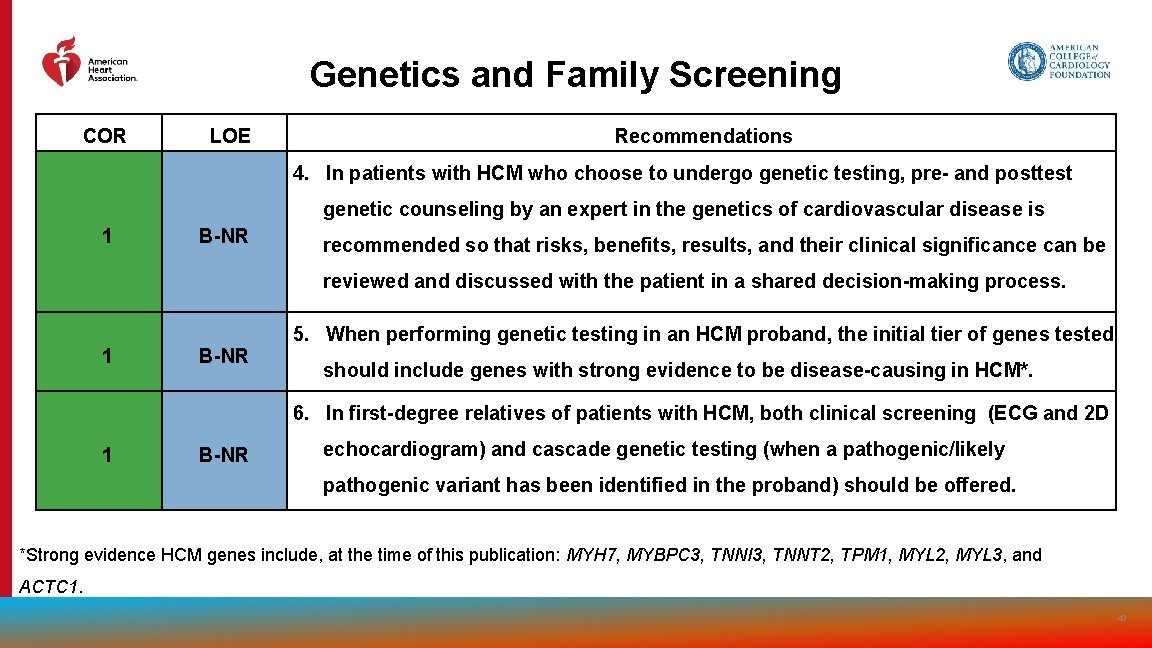
Genetics and Family Screening COR LOE Recommendations 4. In patients with HCM who choose to undergo genetic testing, pre- and posttest genetic counseling by an expert in the genetics of cardiovascular disease is 1 B-NR recommended so that risks, benefits, results, and their clinical significance can be reviewed and discussed with the patient in a shared decision-making process. 1 B-NR 5. When performing genetic testing in an HCM proband, the initial tier of genes tested should include genes with strong evidence to be disease-causing in HCM*. 6. In first-degree relatives of patients with HCM, both clinical screening (ECG and 2 D 1 B-NR echocardiogram) and cascade genetic testing (when a pathogenic/likely pathogenic variant has been identified in the proband) should be offered. *Strong evidence HCM genes include, at the time of this publication: MYH 7, MYBPC 3, TNNI 3, TNNT 2, TPM 1, MYL 2, MYL 3, and ACTC 1. 43
Genetics and Family Screening COR LOE Recommendations 7. In families where a sudden unexplained death has occurred with a 1 B-NR postmortem diagnosis of HCM, postmortem genetic testing is beneficial to facilitate cascade genetic testing and clinical screening in first-degree relatives. 8. In patients with HCM who have undergone genetic testing, serial reevaluation of the clinical significance of the variant(s) identified is 1 B-NR recommended to assess for variant reclassification, which may impact diagnosis and cascade genetic testing in family members. 1 B-NR 9. In affected families with HCM, preconception and prenatal reproductive and genetic counseling should be offered. 44
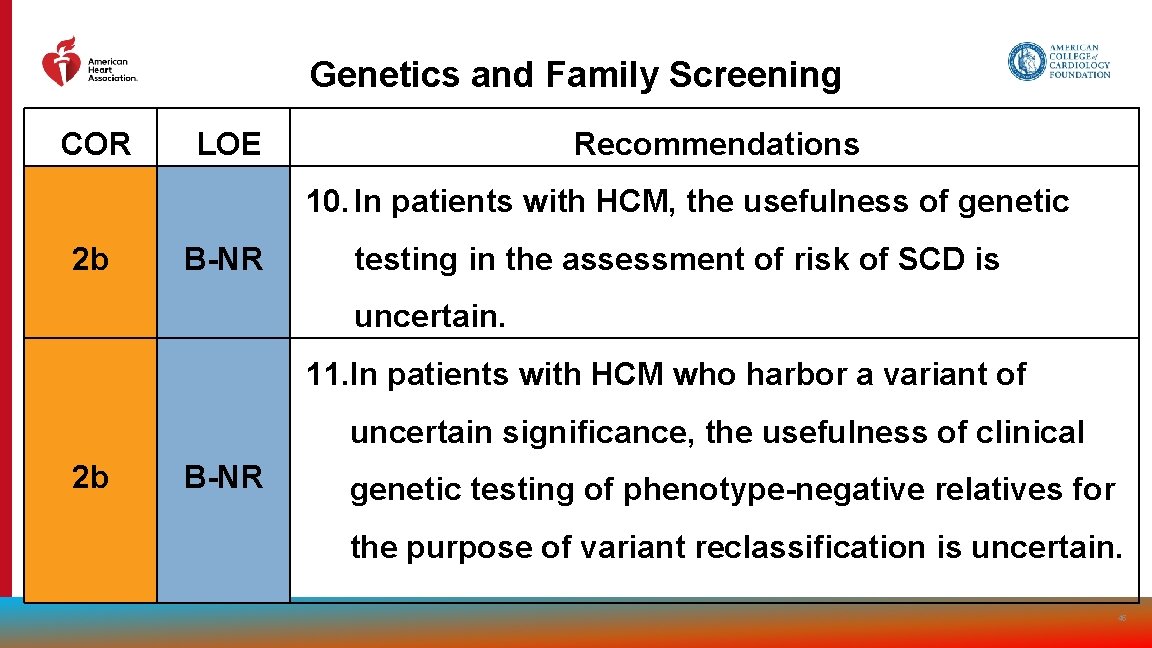
Genetics and Family Screening COR LOE Recommendations 10. In patients with HCM, the usefulness of genetic 2 b B-NR testing in the assessment of risk of SCD is uncertain. 11. In patients with HCM who harbor a variant of uncertain significance, the usefulness of clinical 2 b B-NR genetic testing of phenotype-negative relatives for the purpose of variant reclassification is uncertain. 45
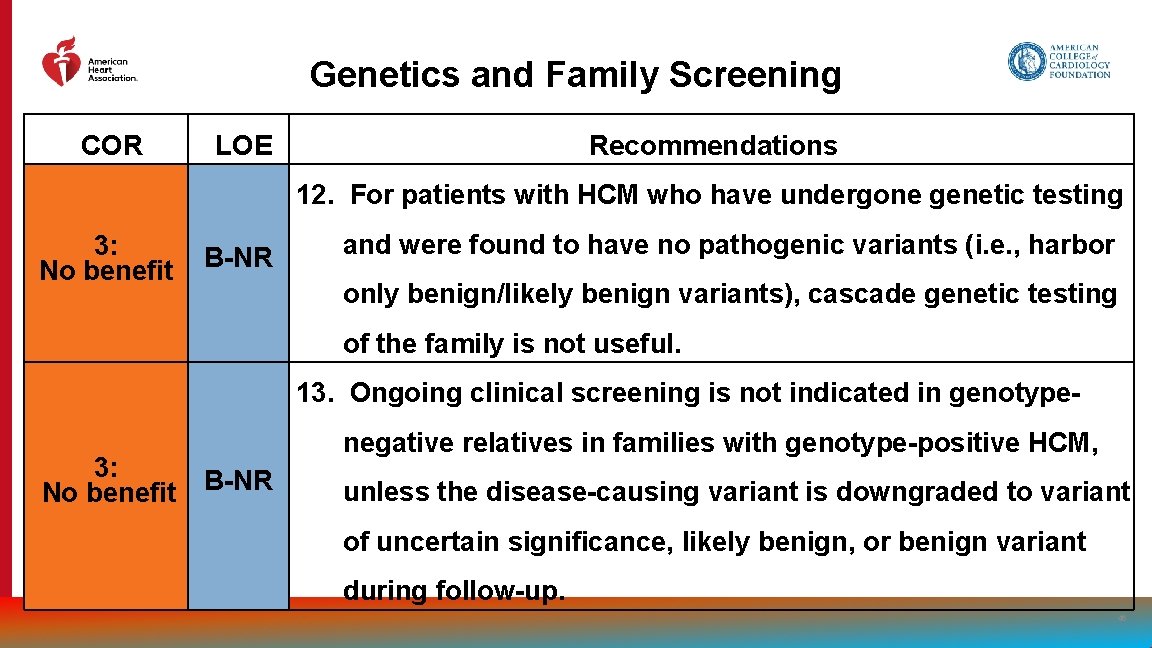
Genetics and Family Screening COR LOE Recommendations 12. For patients with HCM who have undergone genetic testing 3: No benefit B-NR and were found to have no pathogenic variants (i. e. , harbor only benign/likely benign variants), cascade genetic testing of the family is not useful. 13. Ongoing clinical screening is not indicated in genotype- 3: No benefit negative relatives in families with genotype-positive HCM, B-NR unless the disease-causing variant is downgraded to variant of uncertain significance, likely benign, or benign variant during follow-up. 46
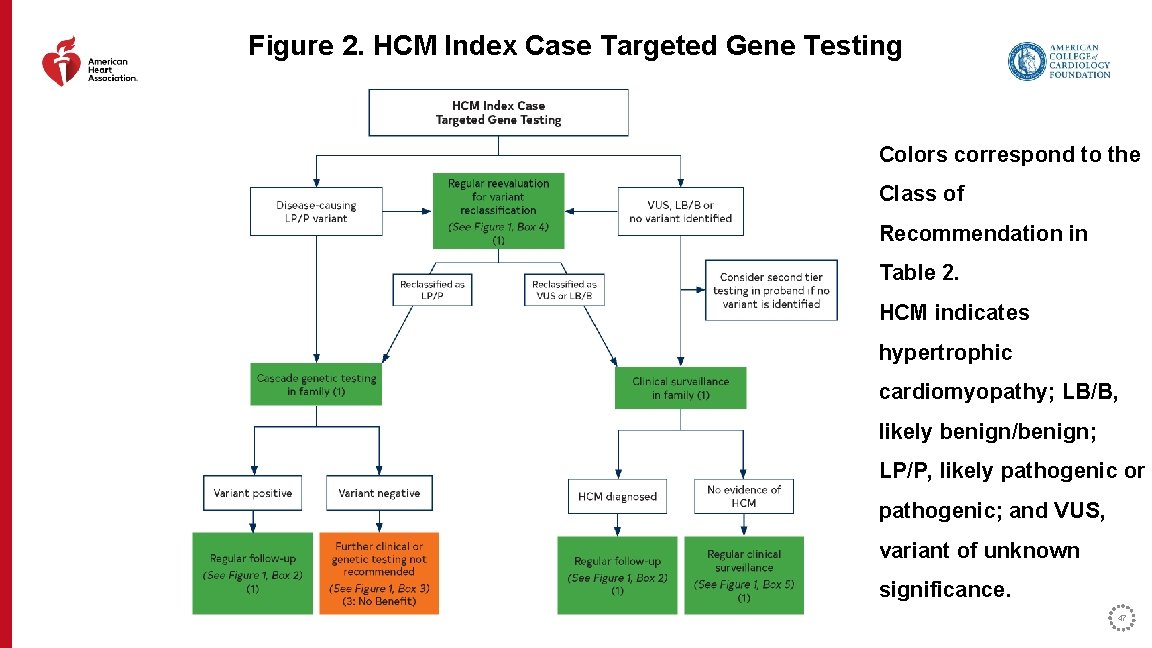
Figure 2. HCM Index Case Targeted Gene Testing Colors correspond to the Class of Recommendation in Table 2. HCM indicates hypertrophic cardiomyopathy; LB/B, likely benign/benign; LP/P, likely pathogenic or pathogenic; and VUS, variant of unknown significance. 47
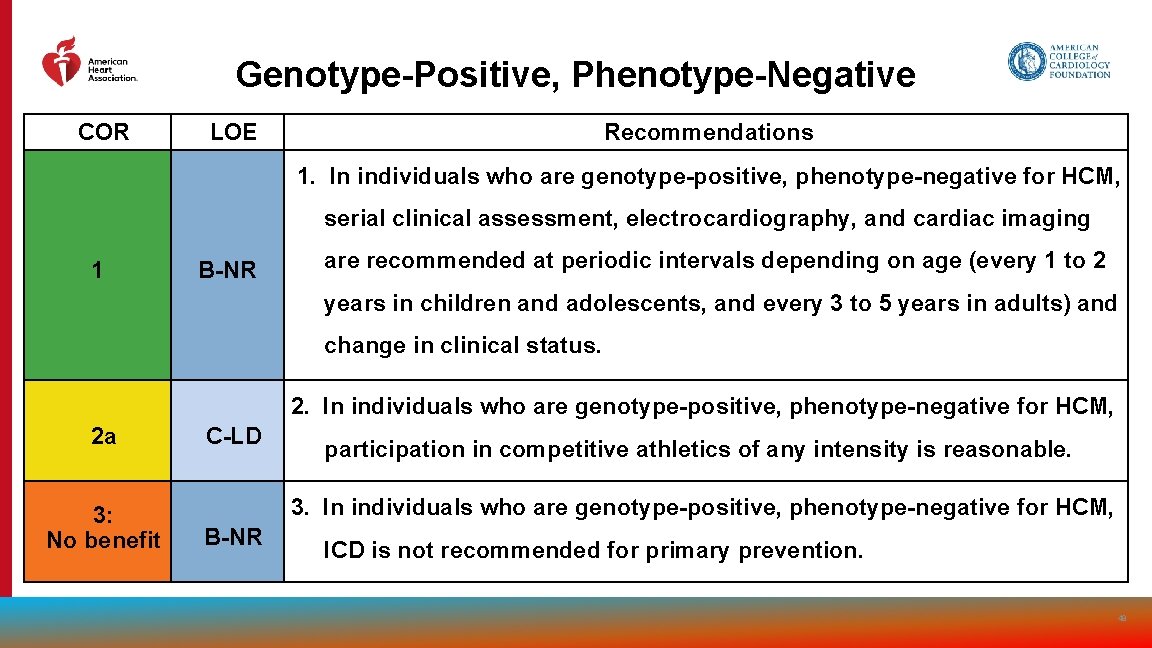
Genotype-Positive, Phenotype-Negative COR LOE Recommendations 1. In individuals who are genotype-positive, phenotype-negative for HCM, serial clinical assessment, electrocardiography, and cardiac imaging 1 B-NR are recommended at periodic intervals depending on age (every 1 to 2 years in children and adolescents, and every 3 to 5 years in adults) and change in clinical status. 2. In individuals who are genotype-positive, phenotype-negative for HCM, 2 a 3: No benefit C-LD participation in competitive athletics of any intensity is reasonable. 3. In individuals who are genotype-positive, phenotype-negative for HCM, B-NR ICD is not recommended for primary prevention. 48
Sudden Cardiac Risk (SCD) Assessment and Prevention 49
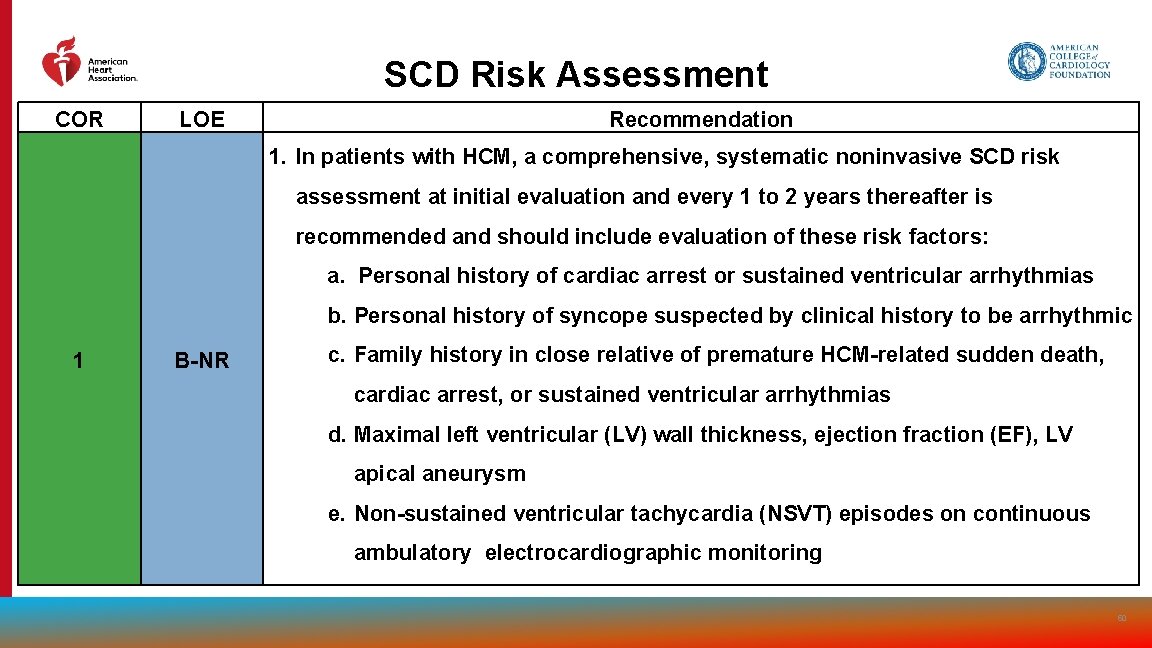
SCD Risk Assessment COR LOE Recommendation 1. In patients with HCM, a comprehensive, systematic noninvasive SCD risk assessment at initial evaluation and every 1 to 2 years thereafter is recommended and should include evaluation of these risk factors: a. Personal history of cardiac arrest or sustained ventricular arrhythmias b. Personal history of syncope suspected by clinical history to be arrhythmic 1 B-NR c. Family history in close relative of premature HCM-related sudden death, cardiac arrest, or sustained ventricular arrhythmias d. Maximal left ventricular (LV) wall thickness, ejection fraction (EF), LV apical aneurysm e. Non-sustained ventricular tachycardia (NSVT) episodes on continuous ambulatory electrocardiographic monitoring 50
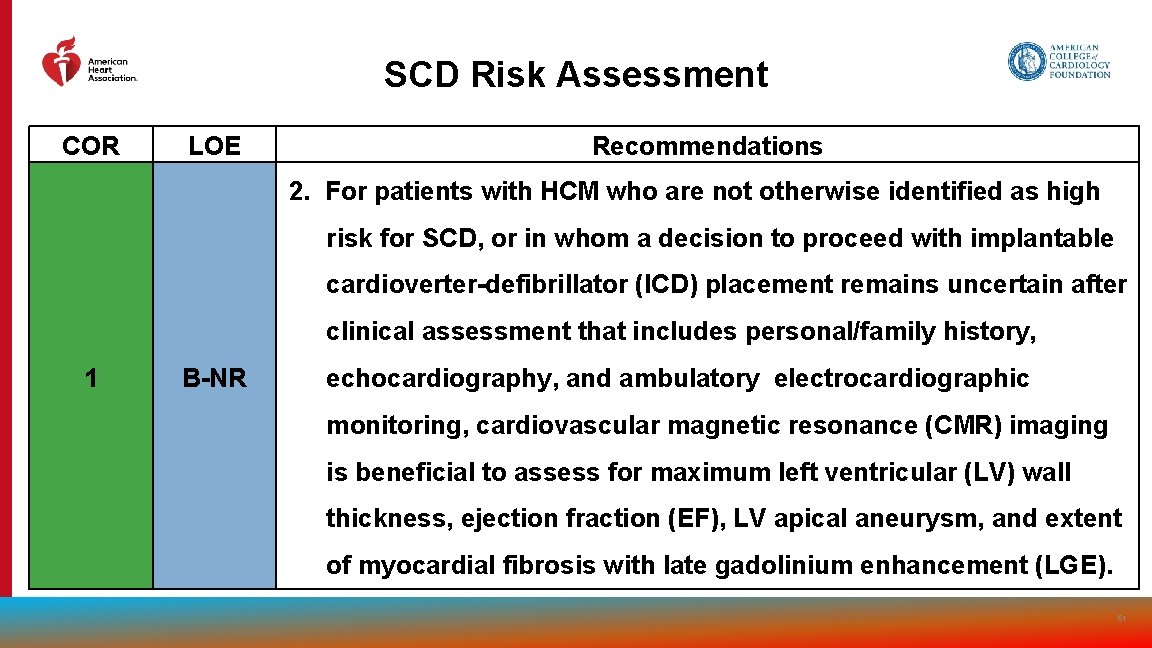
SCD Risk Assessment COR LOE Recommendations 2. For patients with HCM who are not otherwise identified as high risk for SCD, or in whom a decision to proceed with implantable cardioverter-defibrillator (ICD) placement remains uncertain after clinical assessment that includes personal/family history, 1 B-NR echocardiography, and ambulatory electrocardiographic monitoring, cardiovascular magnetic resonance (CMR) imaging is beneficial to assess for maximum left ventricular (LV) wall thickness, ejection fraction (EF), LV apical aneurysm, and extent of myocardial fibrosis with late gadolinium enhancement (LGE). 51
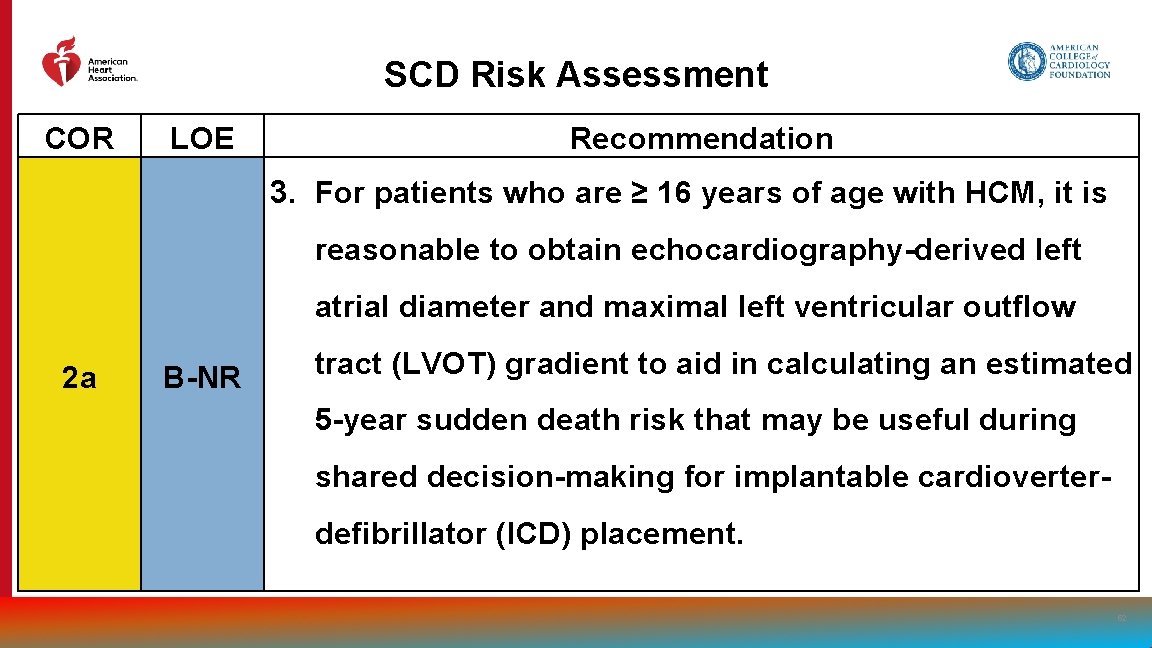
SCD Risk Assessment COR LOE Recommendation 3. For patients who are ≥ 16 years of age with HCM, it is reasonable to obtain echocardiography-derived left atrial diameter and maximal left ventricular outflow 2 a B-NR tract (LVOT) gradient to aid in calculating an estimated 5 -year sudden death risk that may be useful during shared decision-making for implantable cardioverterdefibrillator (ICD) placement. 52
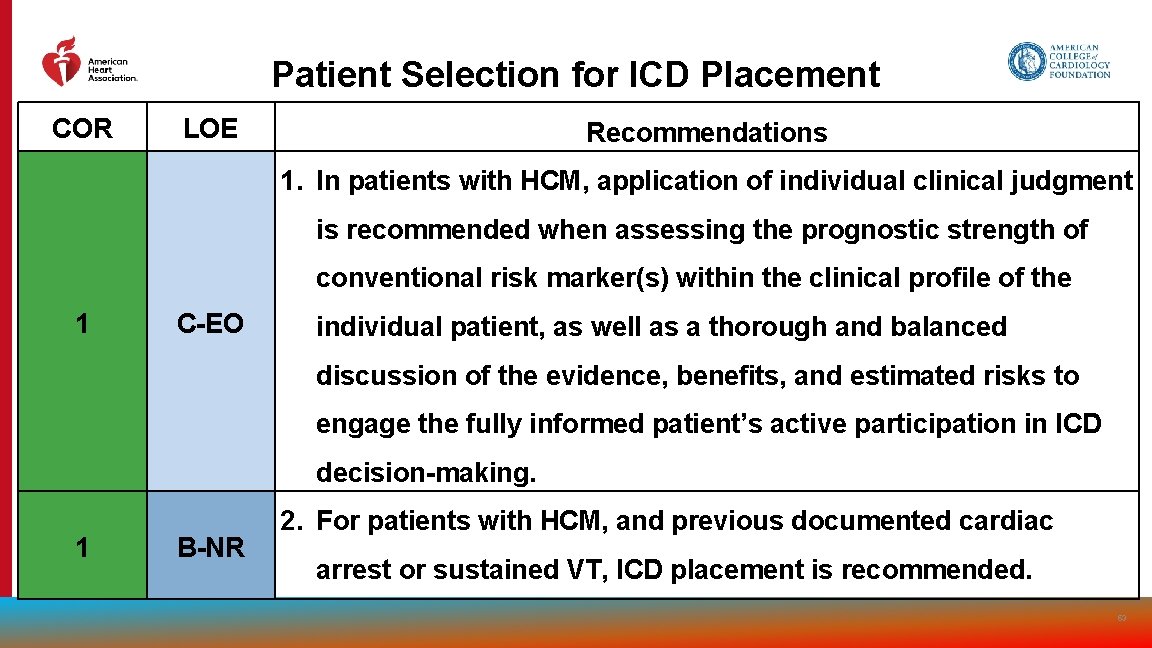
Patient Selection for ICD Placement COR LOE Recommendations 1. In patients with HCM, application of individual clinical judgment is recommended when assessing the prognostic strength of conventional risk marker(s) within the clinical profile of the 1 C-EO individual patient, as well as a thorough and balanced discussion of the evidence, benefits, and estimated risks to engage the fully informed patient’s active participation in ICD decision-making. 1 B-NR 2. For patients with HCM, and previous documented cardiac arrest or sustained VT, ICD placement is recommended. 53
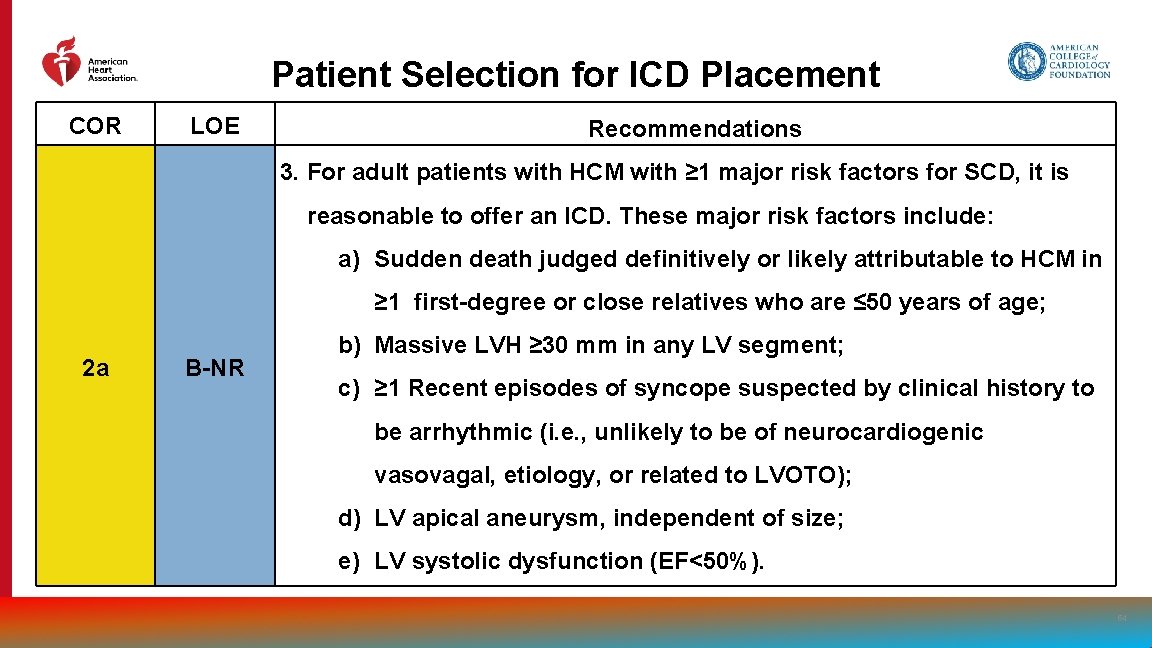
Patient Selection for ICD Placement COR LOE Recommendations 3. For adult patients with HCM with ≥ 1 major risk factors for SCD, it is reasonable to offer an ICD. These major risk factors include: a) Sudden death judged definitively or likely attributable to HCM in ≥ 1 first-degree or close relatives who are ≤ 50 years of age; 2 a B-NR b) Massive LVH ≥ 30 mm in any LV segment; c) ≥ 1 Recent episodes of syncope suspected by clinical history to be arrhythmic (i. e. , unlikely to be of neurocardiogenic vasovagal, etiology, or related to LVOTO); d) LV apical aneurysm, independent of size; e) LV systolic dysfunction (EF<50%). 54
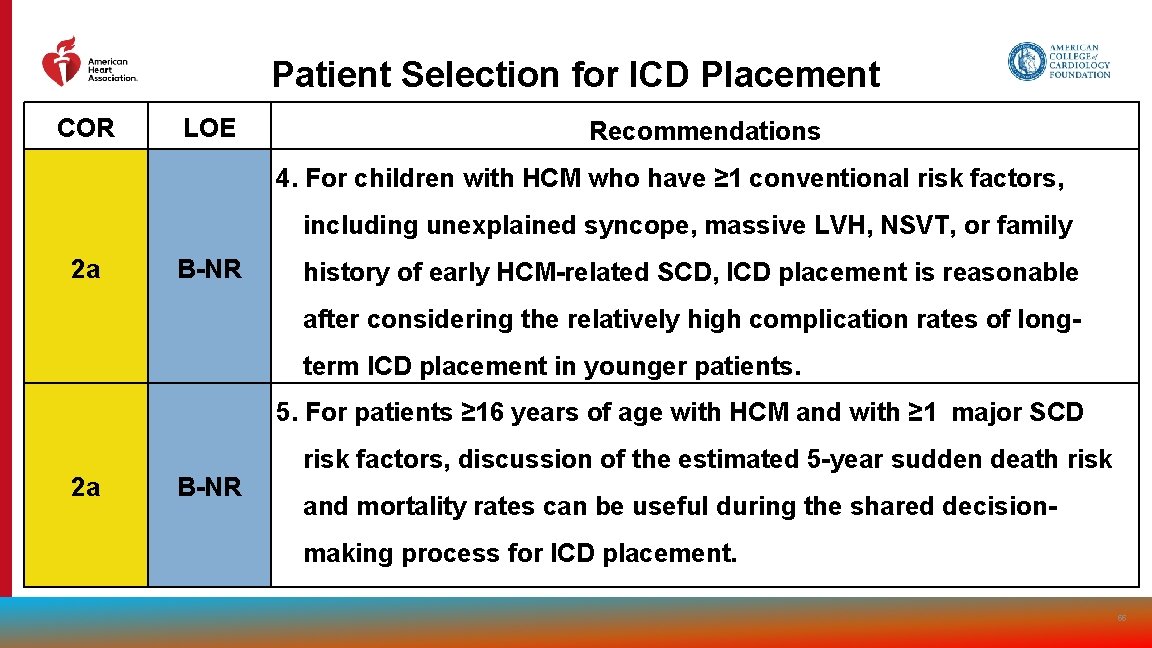
Patient Selection for ICD Placement COR LOE Recommendations 4. For children with HCM who have ≥ 1 conventional risk factors, including unexplained syncope, massive LVH, NSVT, or family 2 a B-NR history of early HCM-related SCD, ICD placement is reasonable after considering the relatively high complication rates of longterm ICD placement in younger patients. 5. For patients ≥ 16 years of age with HCM and with ≥ 1 major SCD 2 a B-NR risk factors, discussion of the estimated 5 -year sudden death risk and mortality rates can be useful during the shared decisionmaking process for ICD placement. 55
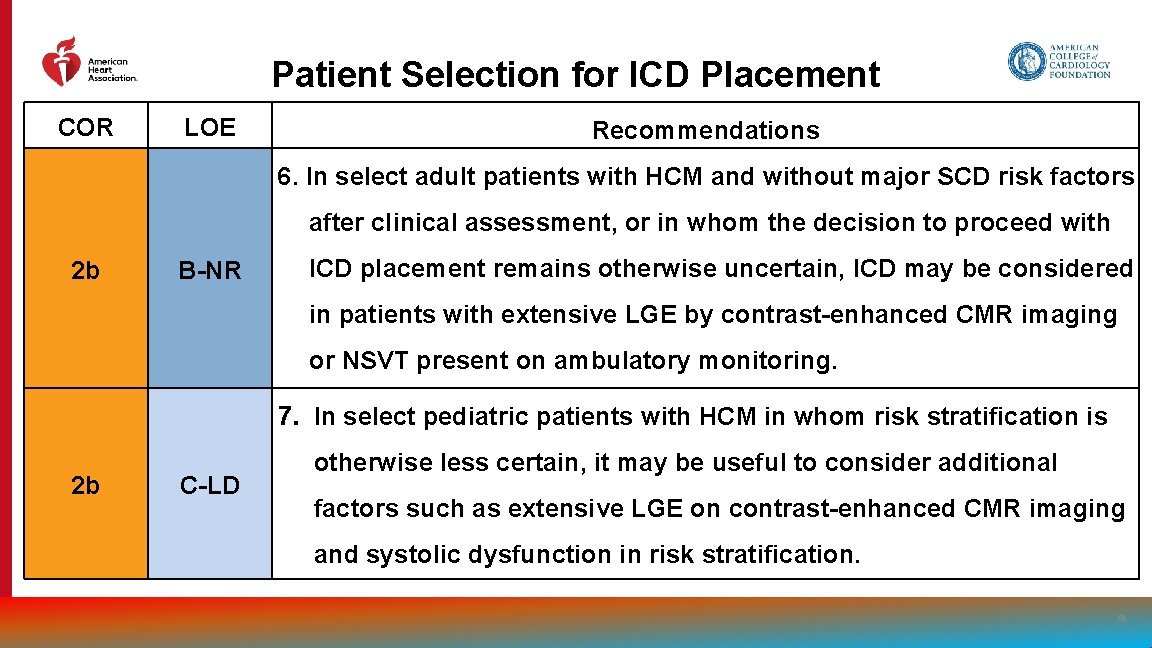
Patient Selection for ICD Placement COR LOE Recommendations 6. In select adult patients with HCM and without major SCD risk factors after clinical assessment, or in whom the decision to proceed with 2 b B-NR ICD placement remains otherwise uncertain, ICD may be considered in patients with extensive LGE by contrast-enhanced CMR imaging or NSVT present on ambulatory monitoring. 7. In select pediatric patients with HCM in whom risk stratification is 2 b C-LD otherwise less certain, it may be useful to consider additional factors such as extensive LGE on contrast-enhanced CMR imaging and systolic dysfunction in risk stratification. 56
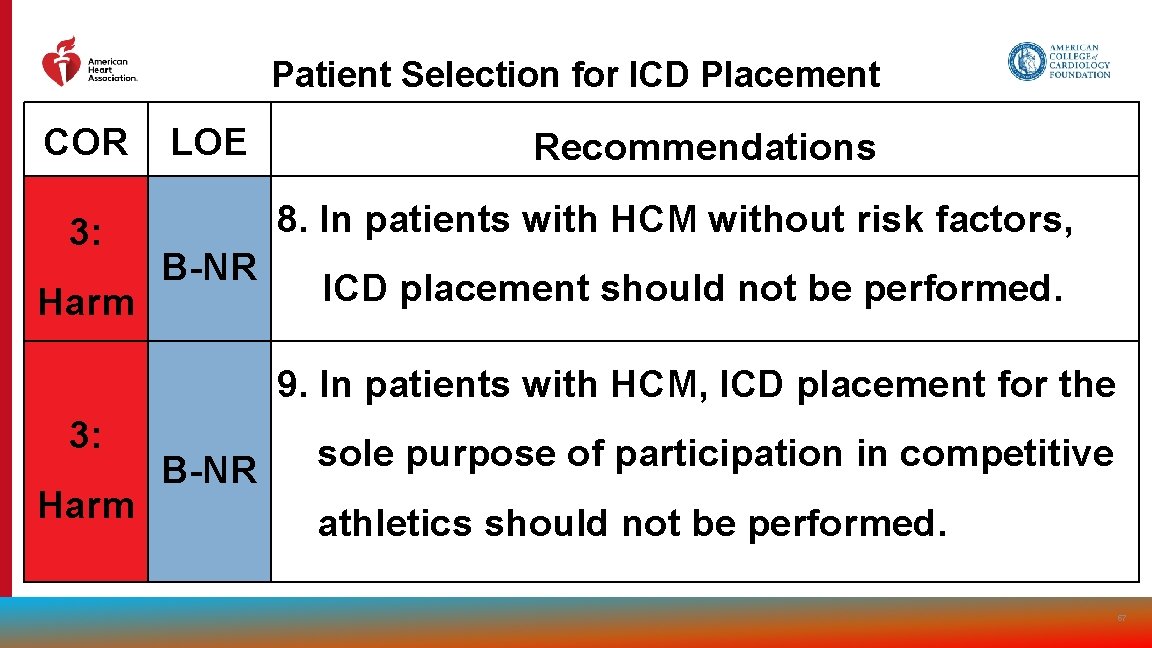
Patient Selection for ICD Placement COR 3: Harm LOE Recommendations 8. In patients with HCM without risk factors, B-NR ICD placement should not be performed. 9. In patients with HCM, ICD placement for the 3: Harm B-NR sole purpose of participation in competitive athletics should not be performed. 57
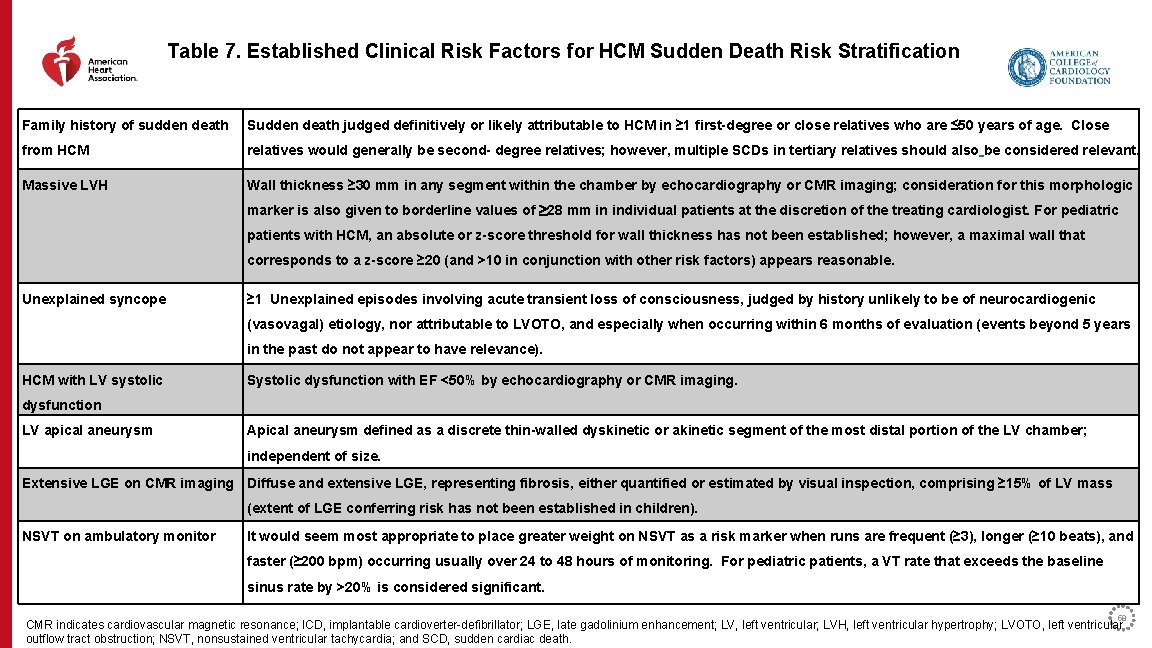
Table 7. Established Clinical Risk Factors for HCM Sudden Death Risk Stratification Family history of sudden death Sudden death judged definitively or likely attributable to HCM in ≥ 1 first-degree or close relatives who are ≤ 50 years of age. Close from HCM relatives would generally be second- degree relatives; however, multiple SCDs in tertiary relatives should also be considered relevant. Massive LVH Wall thickness ≥ 30 mm in any segment within the chamber by echocardiography or CMR imaging; consideration for this morphologic marker is also given to borderline values of 28 mm in individual patients at the discretion of the treating cardiologist. For pediatric patients with HCM, an absolute or z-score threshold for wall thickness has not been established; however, a maximal wall that corresponds to a z-score ≥ 20 (and >10 in conjunction with other risk factors) appears reasonable. Unexplained syncope ≥ 1 Unexplained episodes involving acute transient loss of consciousness, judged by history unlikely to be of neurocardiogenic (vasovagal) etiology, nor attributable to LVOTO, and especially when occurring within 6 months of evaluation (events beyond 5 years in the past do not appear to have relevance). HCM with LV systolic Systolic dysfunction with EF <50% by echocardiography or CMR imaging. dysfunction LV apical aneurysm Apical aneurysm defined as a discrete thin-walled dyskinetic or akinetic segment of the most distal portion of the LV chamber; independent of size. Extensive LGE on CMR imaging Diffuse and extensive LGE, representing fibrosis, either quantified or estimated by visual inspection, comprising ≥ 15% of LV mass (extent of LGE conferring risk has not been established in children). NSVT on ambulatory monitor It would seem most appropriate to place greater weight on NSVT as a risk marker when runs are frequent (≥ 3), longer (≥ 10 beats), and faster (≥ 200 bpm) occurring usually over 24 to 48 hours of monitoring. For pediatric patients, a VT rate that exceeds the baseline sinus rate by >20% is considered significant. 58 CMR indicates cardiovascular magnetic resonance; ICD, implantable cardioverter-defibrillator; LGE, late gadolinium enhancement; LV, left ventricular; LVH, left ventricular hypertrophy; LVOTO, left ventricular outflow tract obstruction; NSVT, nonsustained ventricular tachycardia; and SCD, sudden cardiac death.
Device Selection Considerations 59
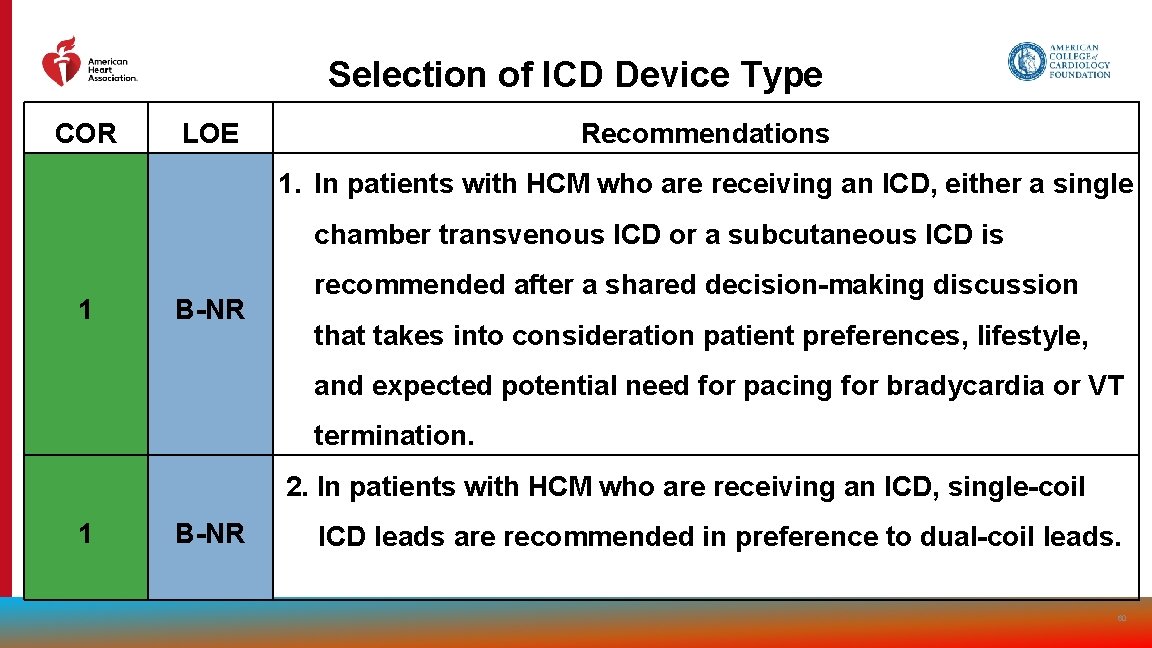
Selection of ICD Device Type COR LOE Recommendations 1. In patients with HCM who are receiving an ICD, either a single chamber transvenous ICD or a subcutaneous ICD is 1 B-NR recommended after a shared decision-making discussion that takes into consideration patient preferences, lifestyle, and expected potential need for pacing for bradycardia or VT termination. 2. In patients with HCM who are receiving an ICD, single-coil 1 B-NR ICD leads are recommended in preference to dual-coil leads. 60
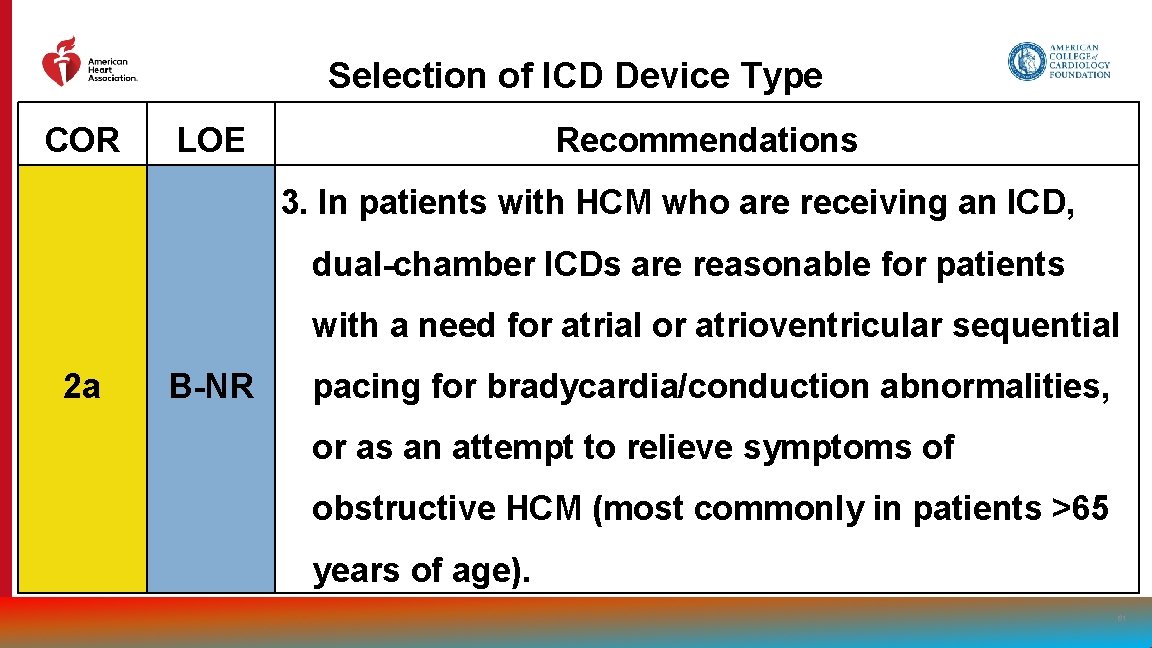
Selection of ICD Device Type COR LOE Recommendations 3. In patients with HCM who are receiving an ICD, dual-chamber ICDs are reasonable for patients with a need for atrial or atrioventricular sequential 2 a B-NR pacing for bradycardia/conduction abnormalities, or as an attempt to relieve symptoms of obstructive HCM (most commonly in patients >65 years of age). 61
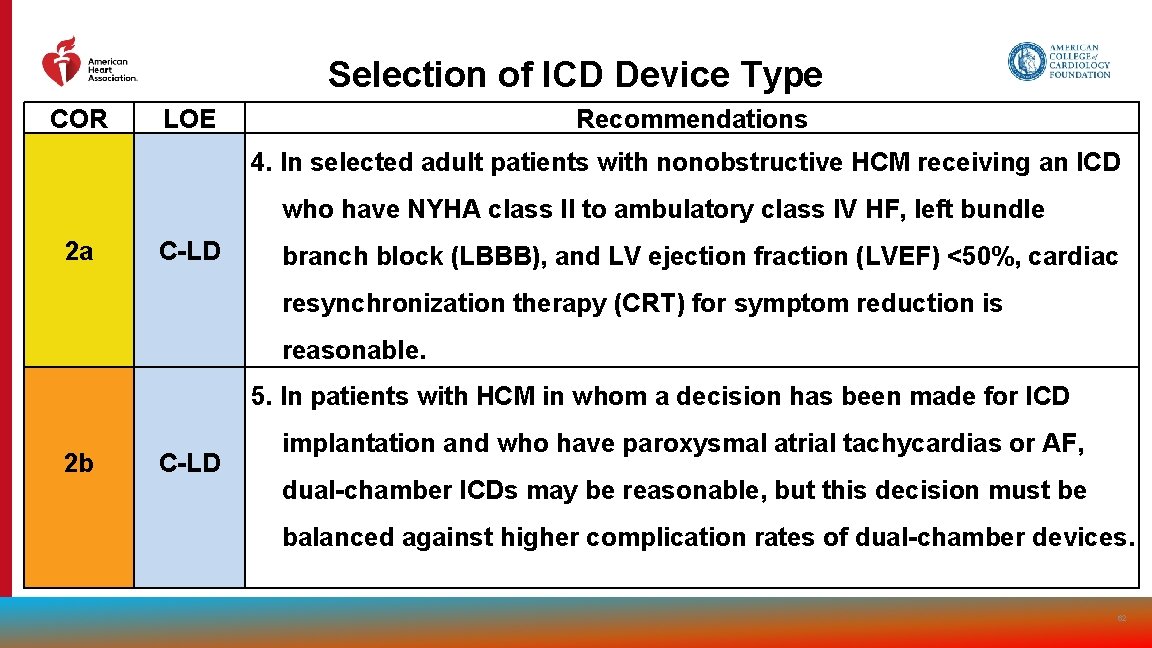
Selection of ICD Device Type COR LOE Recommendations 4. In selected adult patients with nonobstructive HCM receiving an ICD who have NYHA class II to ambulatory class IV HF, left bundle 2 a C-LD branch block (LBBB), and LV ejection fraction (LVEF) <50%, cardiac resynchronization therapy (CRT) for symptom reduction is reasonable. 5. In patients with HCM in whom a decision has been made for ICD 2 b C-LD implantation and who have paroxysmal atrial tachycardias or AF, dual-chamber ICDs may be reasonable, but this decision must be balanced against higher complication rates of dual-chamber devices. 62
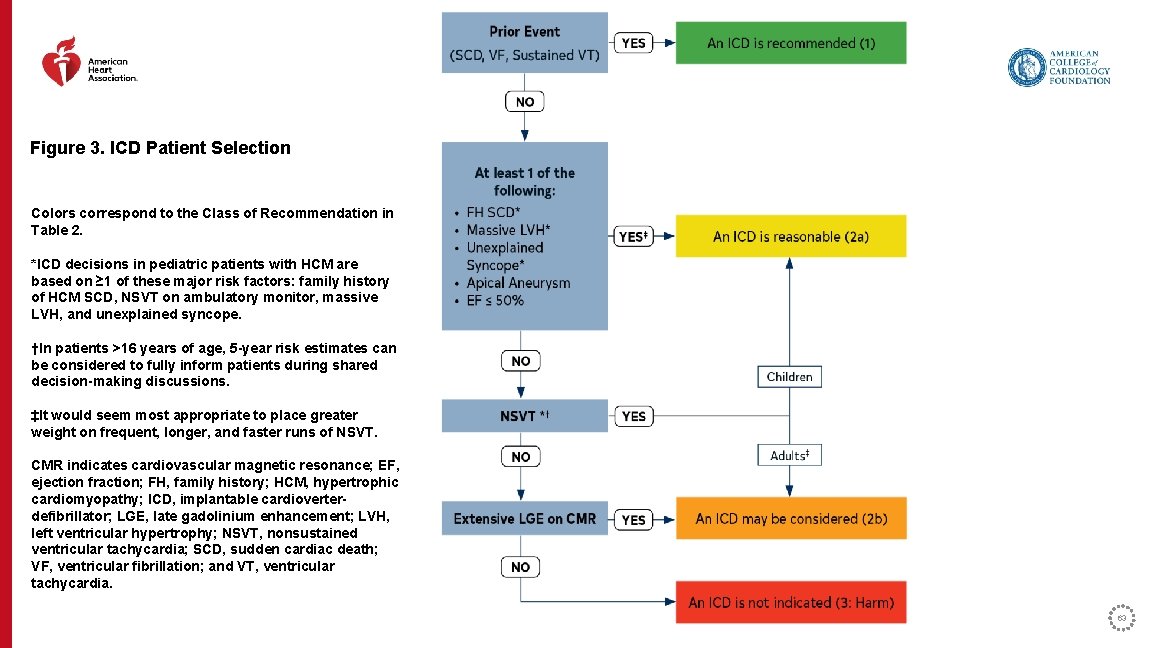
Figure 3. ICD Patient Selection Colors correspond to the Class of Recommendation in Table 2. *ICD decisions in pediatric patients with HCM are based on ≥ 1 of these major risk factors: family history of HCM SCD, NSVT on ambulatory monitor, massive LVH, and unexplained syncope. †In patients >16 years of age, 5 -year risk estimates can be considered to fully inform patients during shared decision-making discussions. ‡It would seem most appropriate to place greater weight on frequent, longer, and faster runs of NSVT. CMR indicates cardiovascular magnetic resonance; EF, ejection fraction; FH, family history; HCM, hypertrophic cardiomyopathy; ICD, implantable cardioverterdefibrillator; LGE, late gadolinium enhancement; LVH, left ventricular hypertrophy; NSVT, nonsustained ventricular tachycardia; SCD, sudden cardiac death; VF, ventricular fibrillation; and VT, ventricular tachycardia. 63
Management of Symptomatic Patients with Obstructive Hypertrophic Cardiomyopathy 64
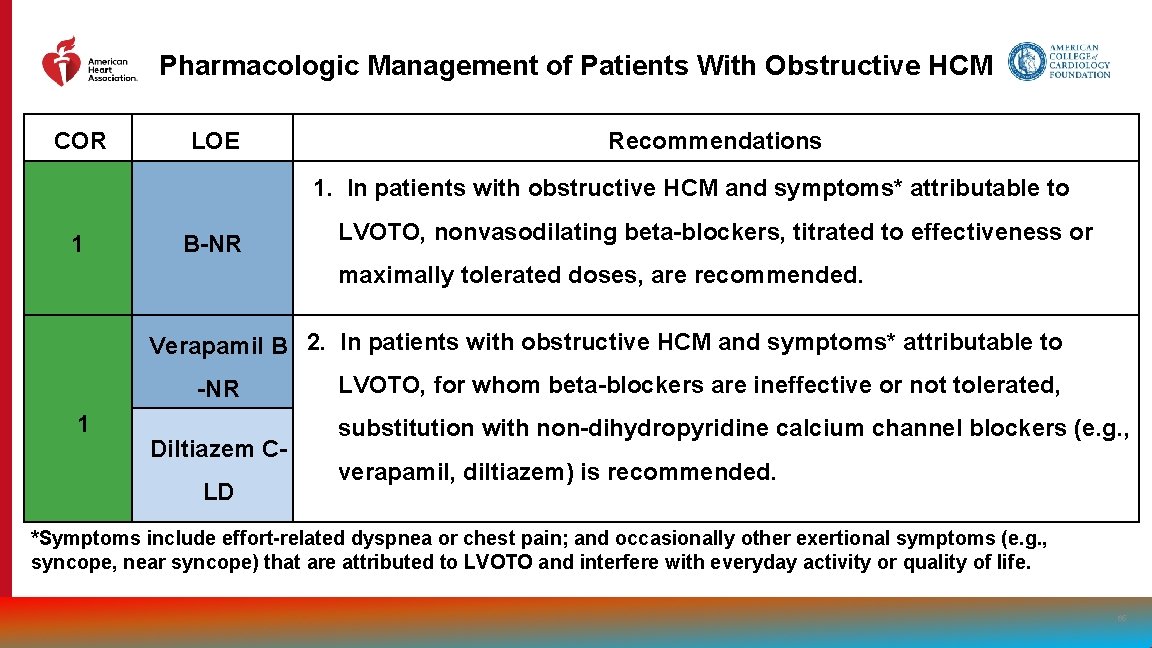
Pharmacologic Management of Patients With Obstructive HCM COR LOE Recommendations 1. In patients with obstructive HCM and symptoms* attributable to 1 B-NR LVOTO, nonvasodilating beta-blockers, titrated to effectiveness or maximally tolerated doses, are recommended. Verapamil B 2. In patients with obstructive HCM and symptoms* attributable to -NR 1 Diltiazem CLD LVOTO, for whom beta-blockers are ineffective or not tolerated, substitution with non-dihydropyridine calcium channel blockers (e. g. , verapamil, diltiazem) is recommended. *Symptoms include effort-related dyspnea or chest pain; and occasionally other exertional symptoms (e. g. , syncope, near syncope) that are attributed to LVOTO and interfere with everyday activity or quality of life. 65
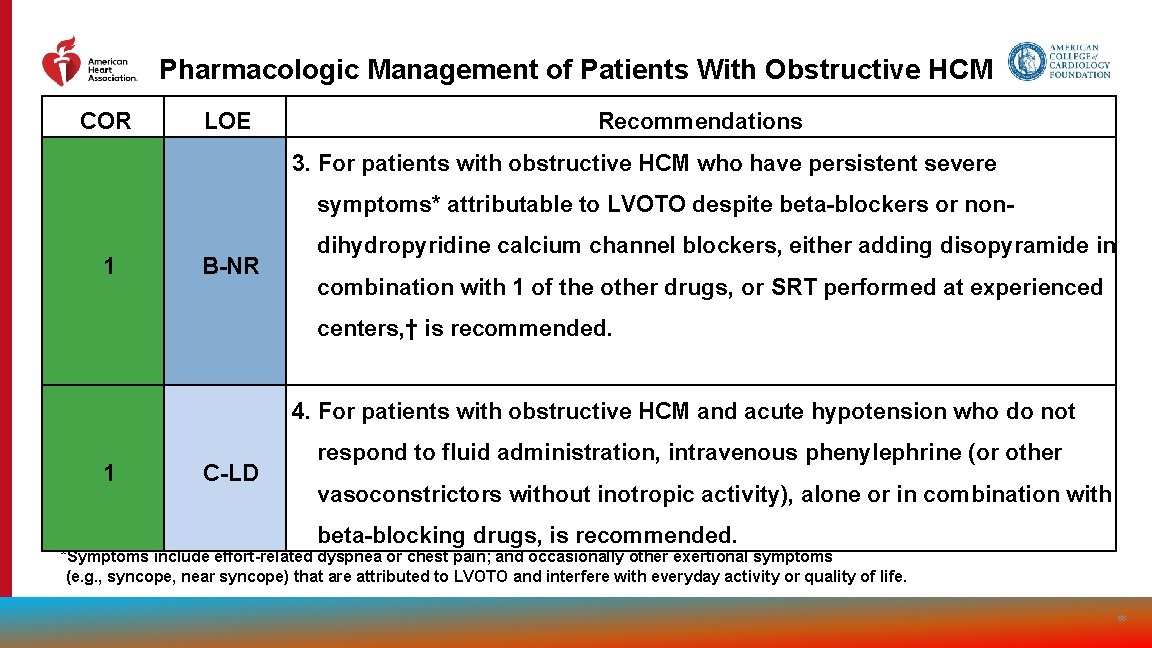
Pharmacologic Management of Patients With Obstructive HCM COR LOE Recommendations 3. For patients with obstructive HCM who have persistent severe symptoms* attributable to LVOTO despite beta-blockers or non- 1 B-NR dihydropyridine calcium channel blockers, either adding disopyramide in combination with 1 of the other drugs, or SRT performed at experienced centers, † is recommended. 4. For patients with obstructive HCM and acute hypotension who do not 1 C-LD respond to fluid administration, intravenous phenylephrine (or other vasoconstrictors without inotropic activity), alone or in combination with beta-blocking drugs, is recommended. *Symptoms include effort-related dyspnea or chest pain; and occasionally other exertional symptoms (e. g. , syncope, near syncope) that are attributed to LVOTO and interfere with everyday activity or quality of life. 66
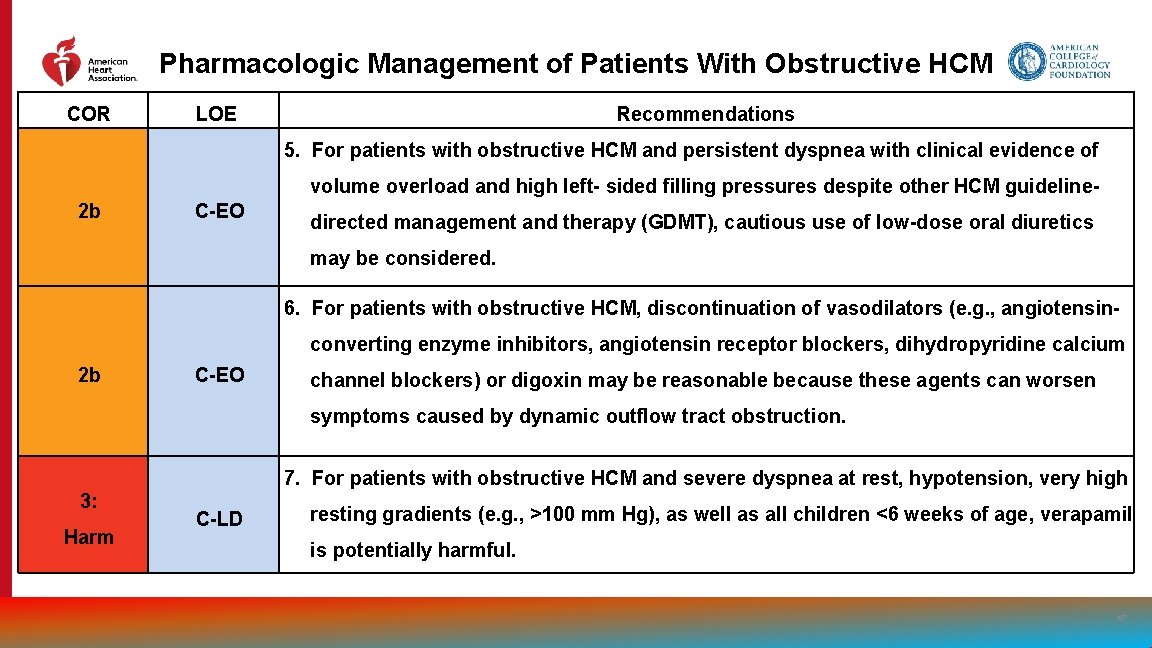
Pharmacologic Management of Patients With Obstructive HCM COR LOE Recommendations 5. For patients with obstructive HCM and persistent dyspnea with clinical evidence of volume overload and high left- sided filling pressures despite other HCM guideline- 2 b C-EO directed management and therapy (GDMT), cautious use of low-dose oral diuretics may be considered. 6. For patients with obstructive HCM, discontinuation of vasodilators (e. g. , angiotensinconverting enzyme inhibitors, angiotensin receptor blockers, dihydropyridine calcium 2 b C-EO channel blockers) or digoxin may be reasonable because these agents can worsen symptoms caused by dynamic outflow tract obstruction. 7. For patients with obstructive HCM and severe dyspnea at rest, hypotension, very high 3: Harm C-LD resting gradients (e. g. , >100 mm Hg), as well as all children <6 weeks of age, verapamil is potentially harmful. 67
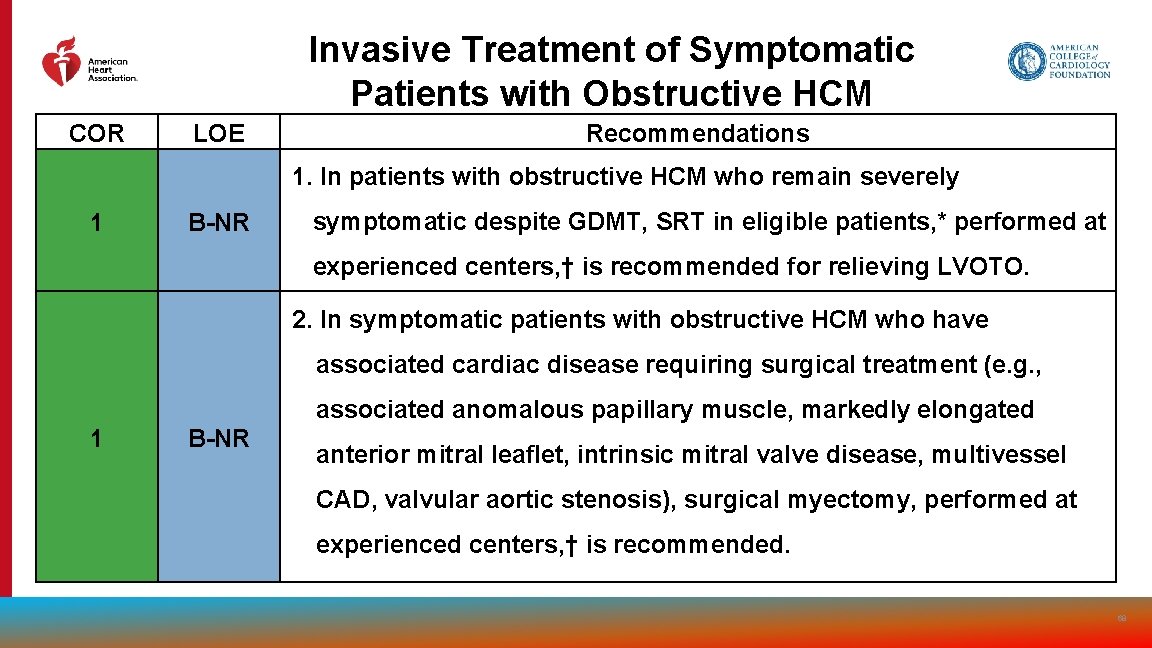
Invasive Treatment of Symptomatic Patients with Obstructive HCM COR LOE Recommendations 1. In patients with obstructive HCM who remain severely 1 B-NR symptomatic despite GDMT, SRT in eligible patients, * performed at experienced centers, † is recommended for relieving LVOTO. 2. In symptomatic patients with obstructive HCM who have associated cardiac disease requiring surgical treatment (e. g. , associated anomalous papillary muscle, markedly elongated 1 B-NR anterior mitral leaflet, intrinsic mitral valve disease, multivessel CAD, valvular aortic stenosis), surgical myectomy, performed at experienced centers, † is recommended. 68
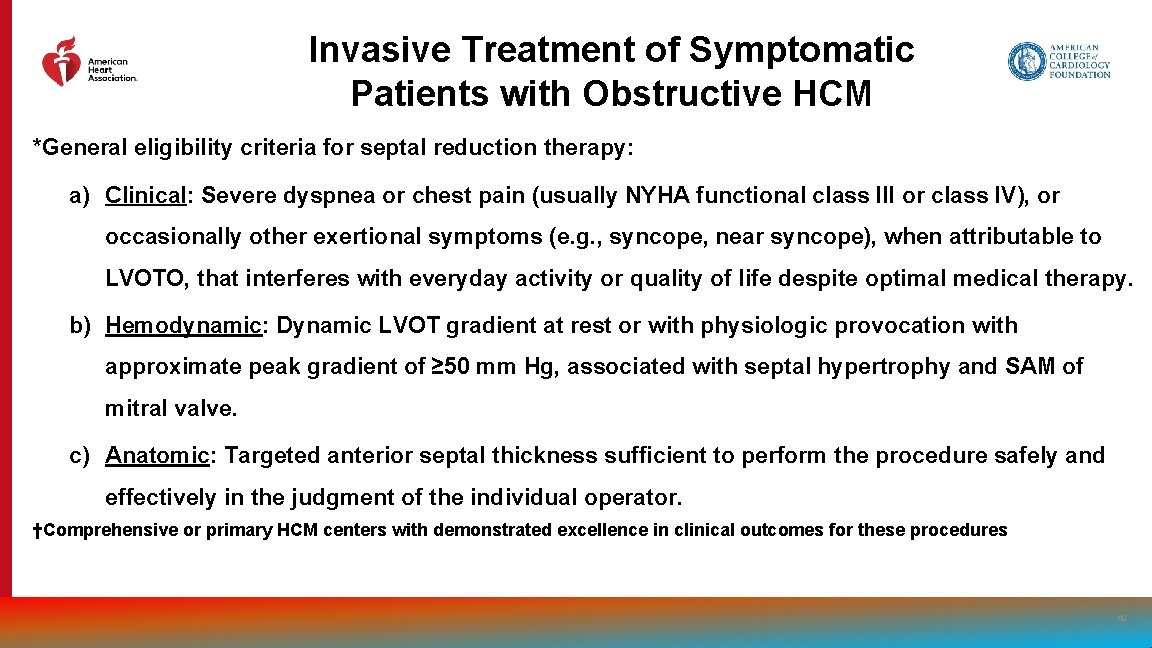
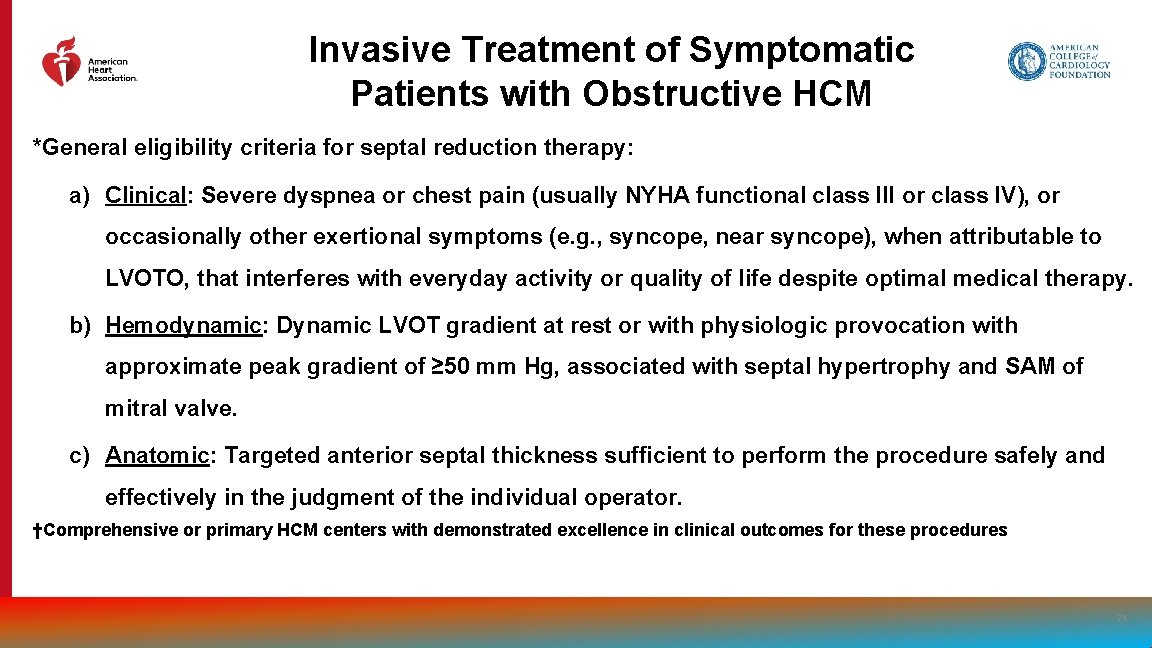
Invasive Treatment of Symptomatic Patients with Obstructive HCM *General eligibility criteria for septal reduction therapy: a) Clinical: Severe dyspnea or chest pain (usually NYHA functional class III or class IV), or occasionally other exertional symptoms (e. g. , syncope, near syncope), when attributable to LVOTO, that interferes with everyday activity or quality of life despite optimal medical therapy. b) Hemodynamic: Dynamic LVOT gradient at rest or with physiologic provocation with approximate peak gradient of ≥ 50 mm Hg, associated with septal hypertrophy and SAM of mitral valve. c) Anatomic: Targeted anterior septal thickness sufficient to perform the procedure safely and effectively in the judgment of the individual operator. †Comprehensive or primary HCM centers with demonstrated excellence in clinical outcomes for these procedures 69
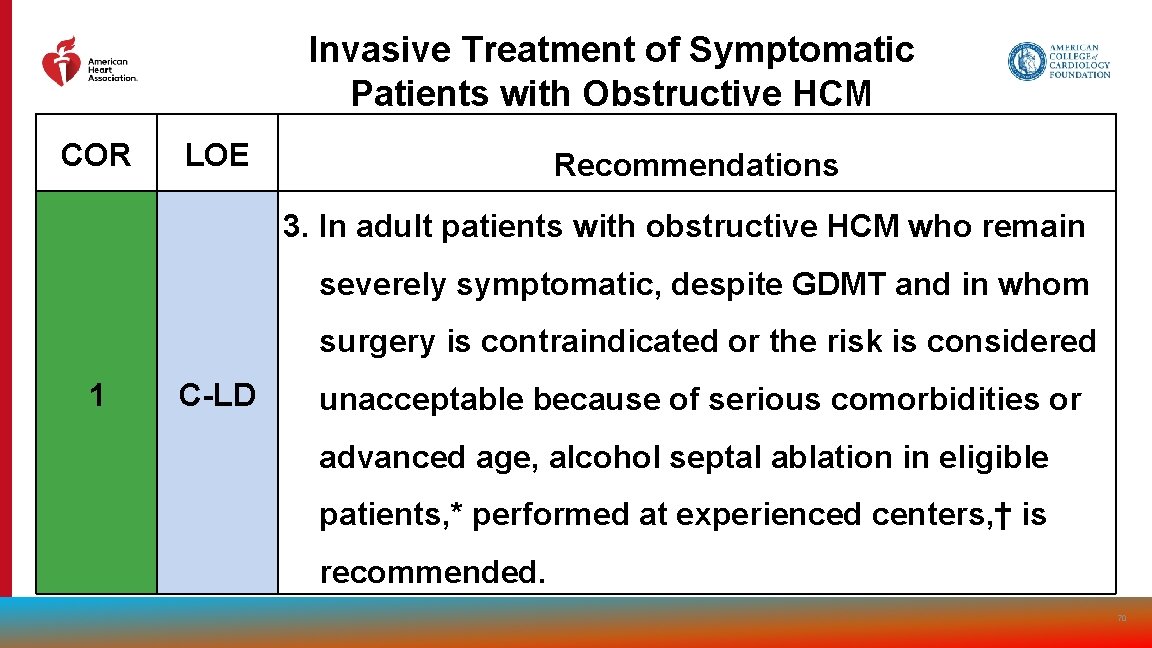
Invasive Treatment of Symptomatic Patients with Obstructive HCM COR LOE Recommendations 3. In adult patients with obstructive HCM who remain severely symptomatic, despite GDMT and in whom surgery is contraindicated or the risk is considered 1 C-LD unacceptable because of serious comorbidities or advanced age, alcohol septal ablation in eligible patients, * performed at experienced centers, † is recommended. 70
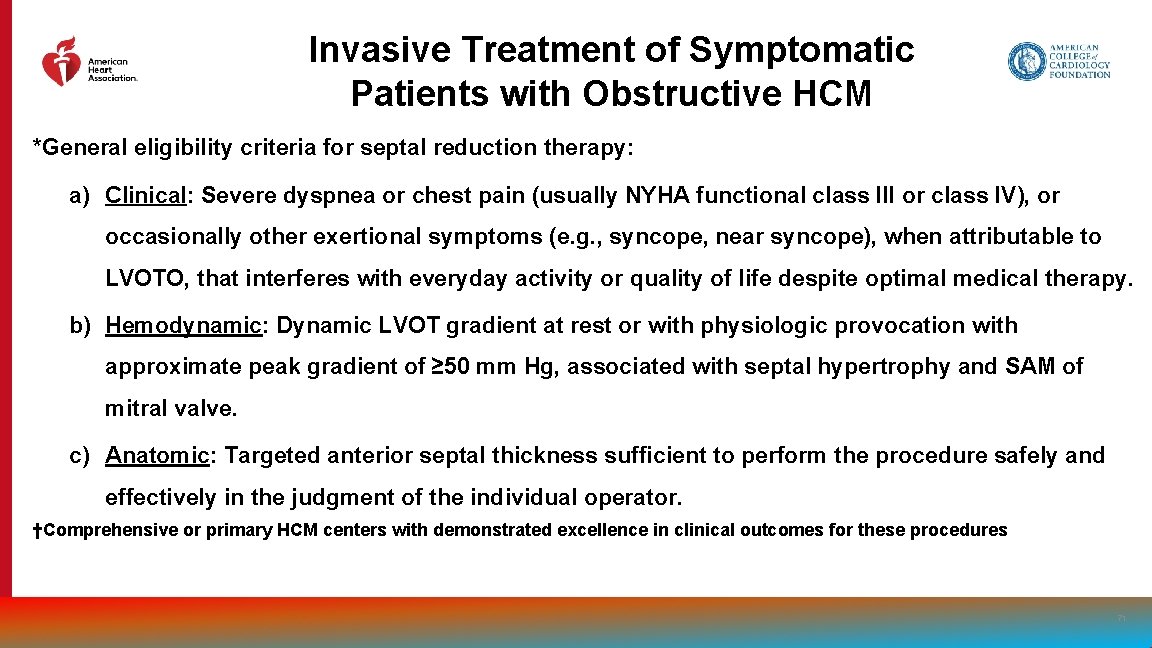
Invasive Treatment of Symptomatic Patients with Obstructive HCM *General eligibility criteria for septal reduction therapy: a) Clinical: Severe dyspnea or chest pain (usually NYHA functional class III or class IV), or occasionally other exertional symptoms (e. g. , syncope, near syncope), when attributable to LVOTO, that interferes with everyday activity or quality of life despite optimal medical therapy. b) Hemodynamic: Dynamic LVOT gradient at rest or with physiologic provocation with approximate peak gradient of ≥ 50 mm Hg, associated with septal hypertrophy and SAM of mitral valve. c) Anatomic: Targeted anterior septal thickness sufficient to perform the procedure safely and effectively in the judgment of the individual operator. †Comprehensive or primary HCM centers with demonstrated excellence in clinical outcomes for these procedures 71
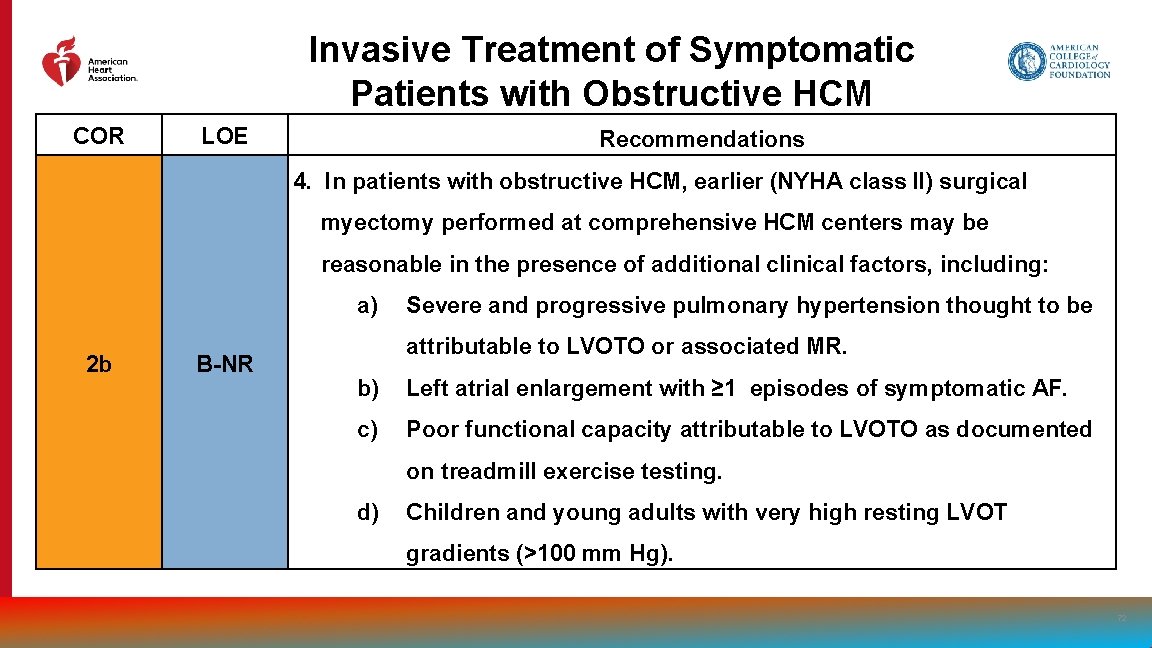
Invasive Treatment of Symptomatic Patients with Obstructive HCM COR LOE Recommendations 4. In patients with obstructive HCM, earlier (NYHA class II) surgical myectomy performed at comprehensive HCM centers may be reasonable in the presence of additional clinical factors, including: a) 2 b B-NR Severe and progressive pulmonary hypertension thought to be attributable to LVOTO or associated MR. b) Left atrial enlargement with ≥ 1 episodes of symptomatic AF. c) Poor functional capacity attributable to LVOTO as documented on treadmill exercise testing. d) Children and young adults with very high resting LVOT gradients (>100 mm Hg). 72
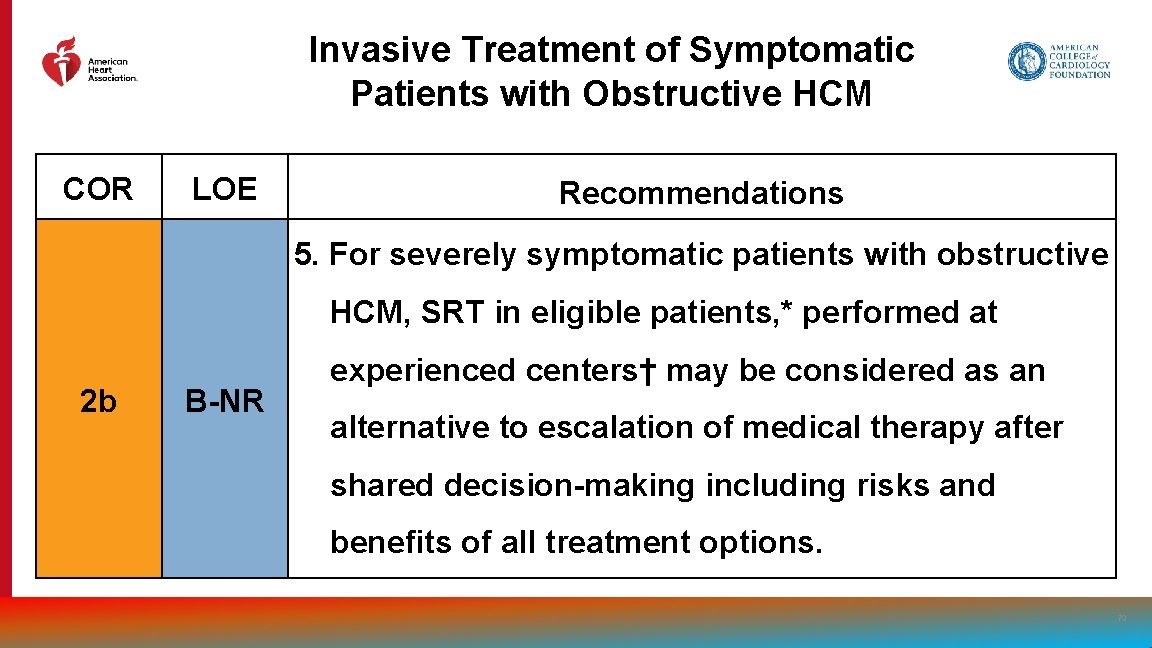
Invasive Treatment of Symptomatic Patients with Obstructive HCM COR LOE Recommendations 5. For severely symptomatic patients with obstructive HCM, SRT in eligible patients, * performed at 2 b B-NR experienced centers† may be considered as an alternative to escalation of medical therapy after shared decision-making including risks and benefits of all treatment options. 73
Invasive Treatment of Symptomatic Patients with Obstructive HCM *General eligibility criteria for septal reduction therapy: a) Clinical: Severe dyspnea or chest pain (usually NYHA functional class III or class IV), or occasionally other exertional symptoms (e. g. , syncope, near syncope), when attributable to LVOTO, that interferes with everyday activity or quality of life despite optimal medical therapy. b) Hemodynamic: Dynamic LVOT gradient at rest or with physiologic provocation with approximate peak gradient of ≥ 50 mm Hg, associated with septal hypertrophy and SAM of mitral valve. c) Anatomic: Targeted anterior septal thickness sufficient to perform the procedure safely and effectively in the judgment of the individual operator. †Comprehensive or primary HCM centers with demonstrated excellence in clinical outcomes for these procedures 74
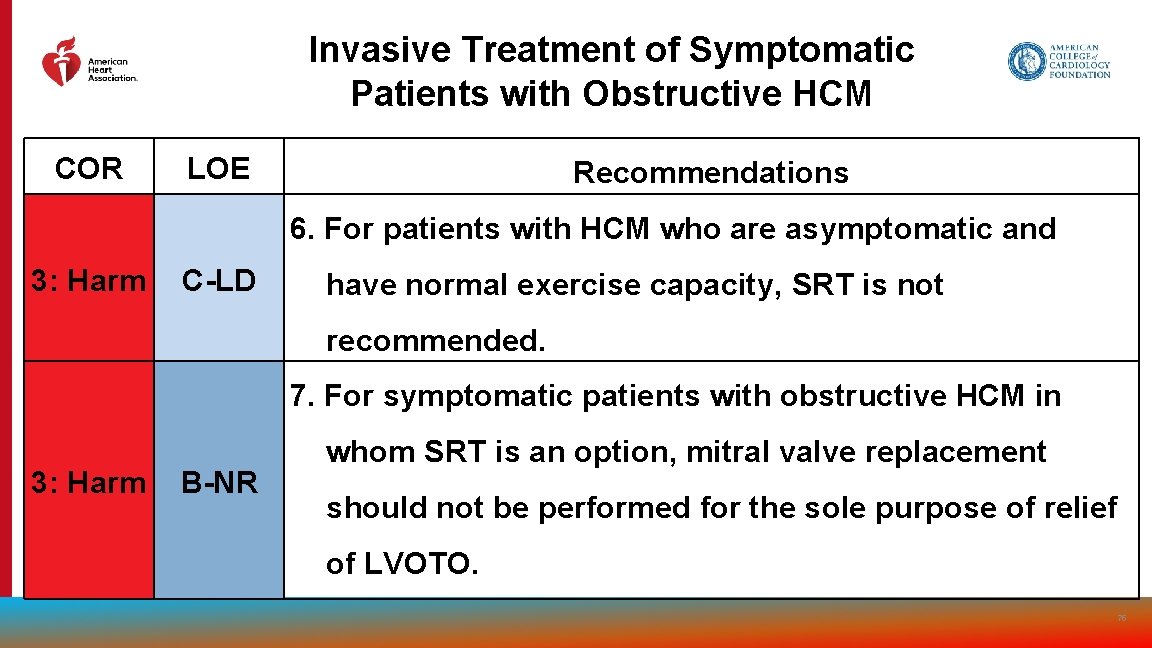
Invasive Treatment of Symptomatic Patients with Obstructive HCM COR LOE Recommendations 6. For patients with HCM who are asymptomatic and 3: Harm C-LD have normal exercise capacity, SRT is not recommended. 7. For symptomatic patients with obstructive HCM in 3: Harm B-NR whom SRT is an option, mitral valve replacement should not be performed for the sole purpose of relief of LVOTO. 75
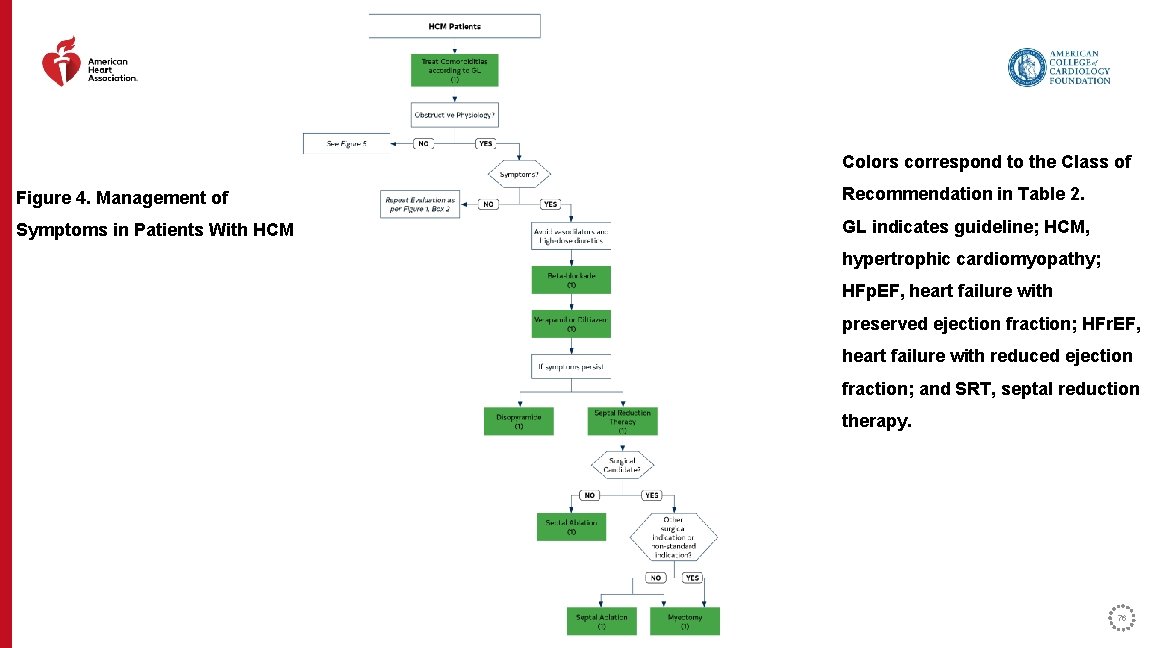
Colors correspond to the Class of Figure 4. Management of Recommendation in Table 2. Symptoms in Patients With HCM GL indicates guideline; HCM, hypertrophic cardiomyopathy; HFp. EF, heart failure with preserved ejection fraction; HFr. EF, heart failure with reduced ejection fraction; and SRT, septal reduction therapy. 76
Management of Patients with Nonobstructive Hypertrophic Cardiomyopathy with Preserved Ejection Fraction (EF) 77
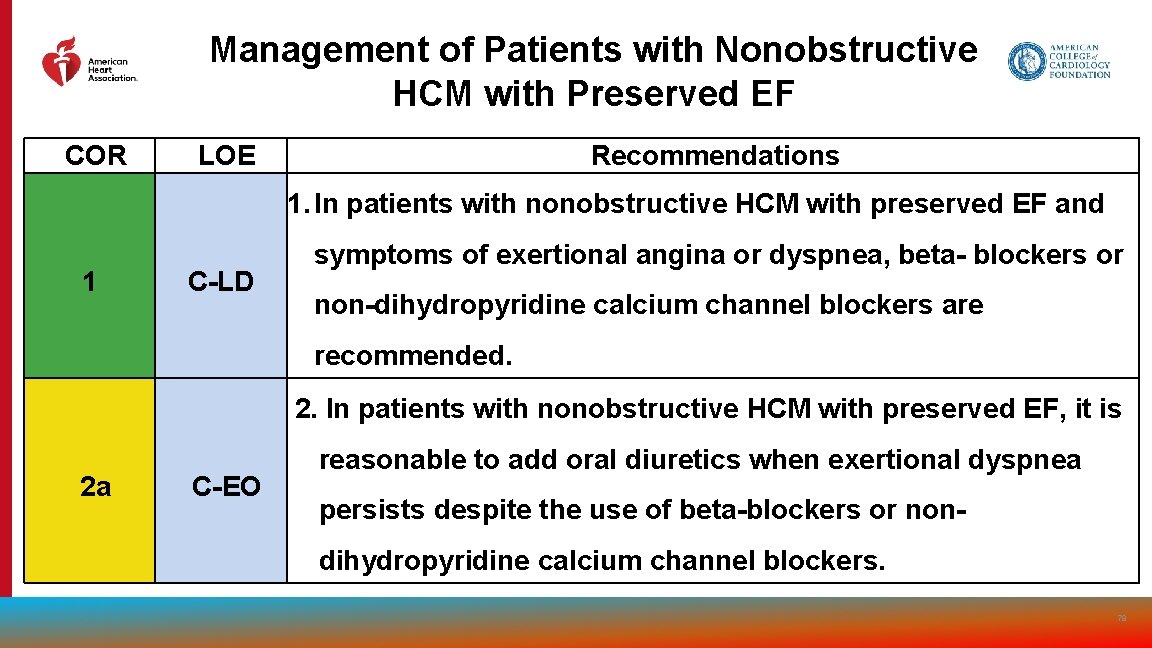
Management of Patients with Nonobstructive HCM with Preserved EF COR LOE Recommendations 1. In patients with nonobstructive HCM with preserved EF and 1 C-LD symptoms of exertional angina or dyspnea, beta- blockers or non-dihydropyridine calcium channel blockers are recommended. 2. In patients with nonobstructive HCM with preserved EF, it is 2 a C-EO reasonable to add oral diuretics when exertional dyspnea persists despite the use of beta-blockers or nondihydropyridine calcium channel blockers. 78
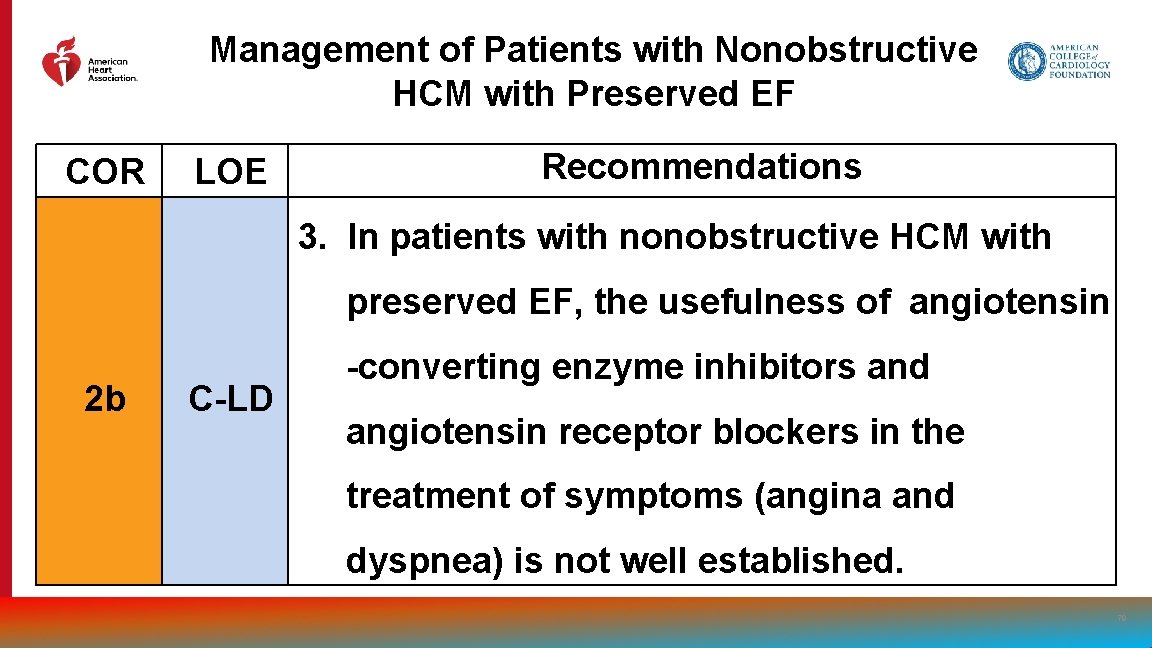
Management of Patients with Nonobstructive HCM with Preserved EF COR LOE Recommendations 3. In patients with nonobstructive HCM with preserved EF, the usefulness of angiotensin 2 b C-LD -converting enzyme inhibitors and angiotensin receptor blockers in the treatment of symptoms (angina and dyspnea) is not well established. 79
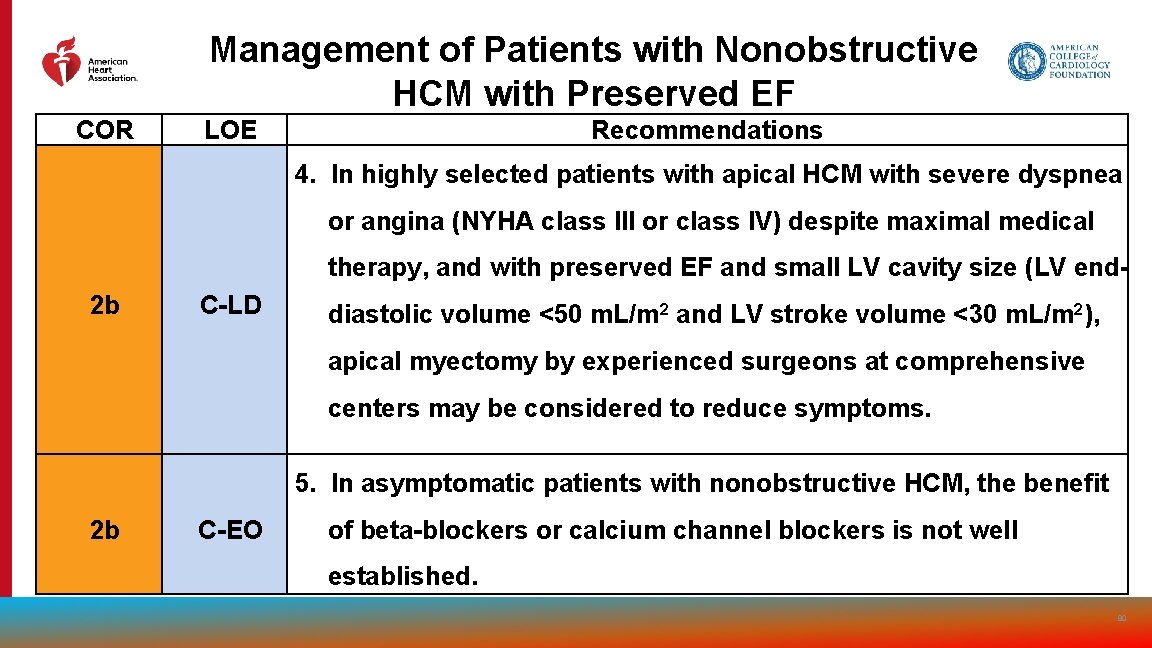
Management of Patients with Nonobstructive HCM with Preserved EF COR LOE Recommendations 4. In highly selected patients with apical HCM with severe dyspnea or angina (NYHA class III or class IV) despite maximal medical therapy, and with preserved EF and small LV cavity size (LV end- 2 b C-LD diastolic volume <50 m. L/m 2 and LV stroke volume <30 m. L/m 2), apical myectomy by experienced surgeons at comprehensive centers may be considered to reduce symptoms. 5. In asymptomatic patients with nonobstructive HCM, the benefit 2 b C-EO of beta-blockers or calcium channel blockers is not well established. 80
Management of Patients with Hypertrophic Cardiomyopathy and Atrial Fibrillation (AF). 81
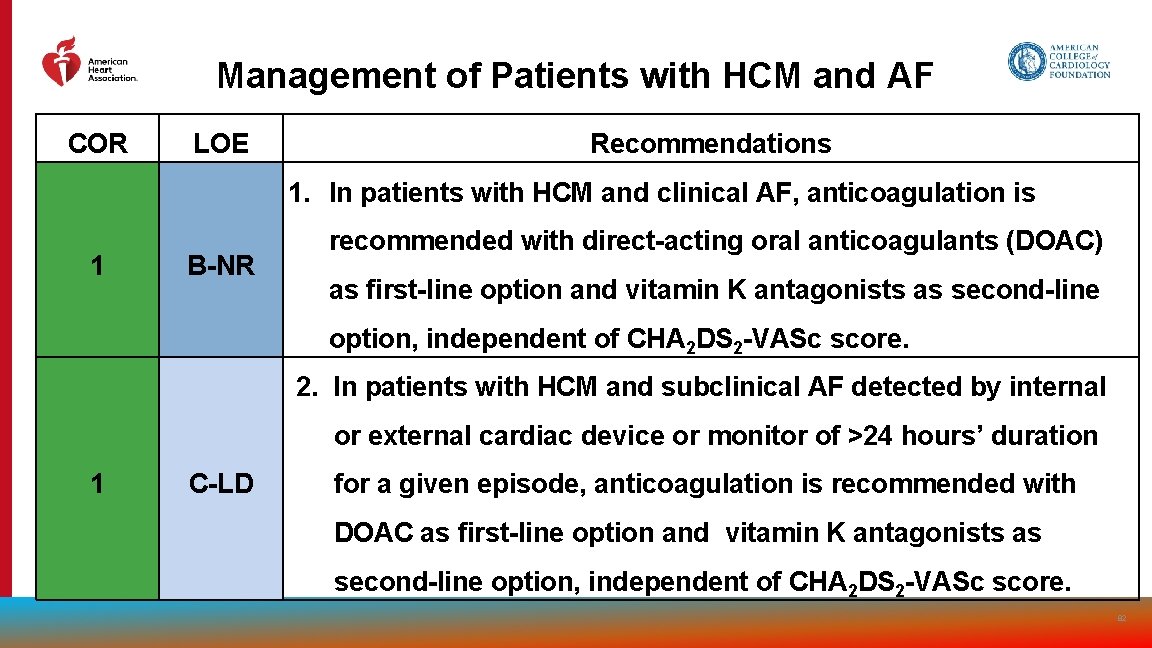
Management of Patients with HCM and AF COR LOE Recommendations 1. In patients with HCM and clinical AF, anticoagulation is 1 B-NR recommended with direct-acting oral anticoagulants (DOAC) as first-line option and vitamin K antagonists as second-line option, independent of CHA 2 DS 2 -VASc score. 2. In patients with HCM and subclinical AF detected by internal or external cardiac device or monitor of >24 hours’ duration 1 C-LD for a given episode, anticoagulation is recommended with DOAC as first-line option and vitamin K antagonists as second-line option, independent of CHA 2 DS 2 -VASc score. 82
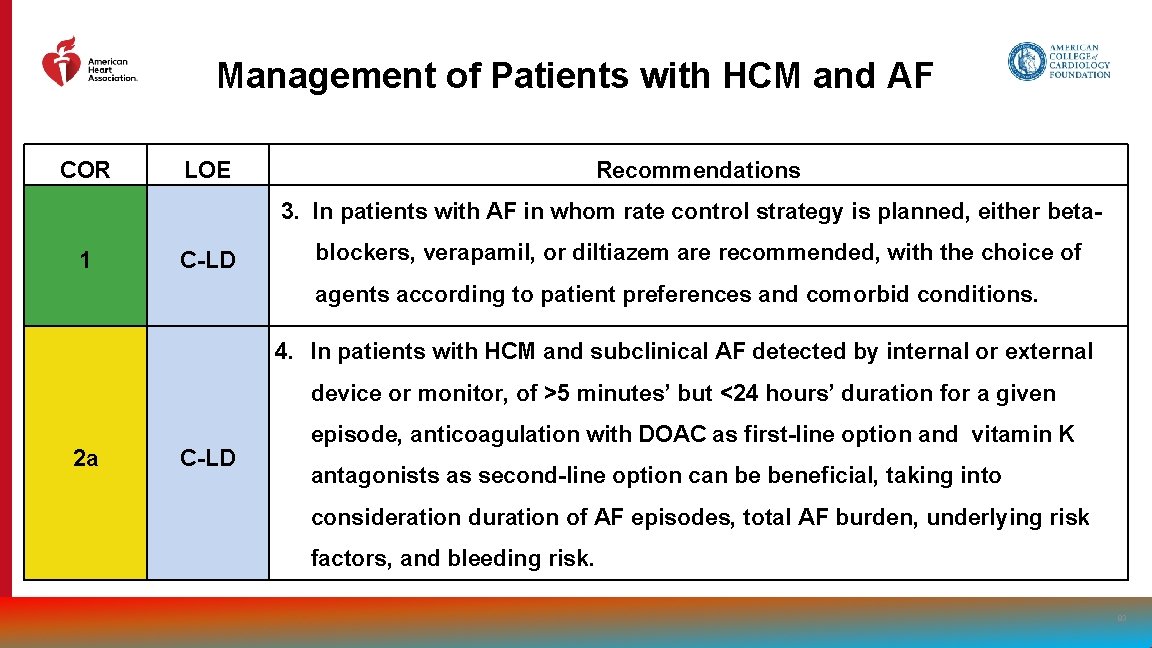
Management of Patients with HCM and AF COR LOE Recommendations 3. In patients with AF in whom rate control strategy is planned, either beta- 1 C-LD blockers, verapamil, or diltiazem are recommended, with the choice of agents according to patient preferences and comorbid conditions. 4. In patients with HCM and subclinical AF detected by internal or external device or monitor, of >5 minutes’ but <24 hours’ duration for a given 2 a C-LD episode, anticoagulation with DOAC as first-line option and vitamin K antagonists as second-line option can be beneficial, taking into consideration duration of AF episodes, total AF burden, underlying risk factors, and bleeding risk. 83
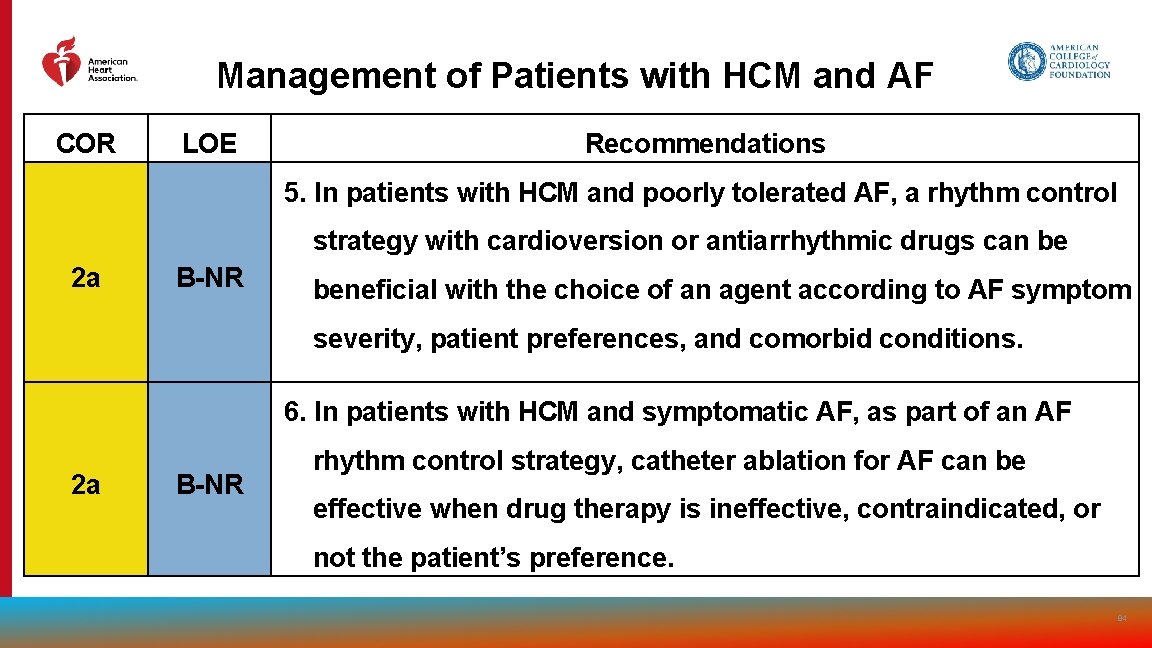
Management of Patients with HCM and AF COR LOE Recommendations 5. In patients with HCM and poorly tolerated AF, a rhythm control strategy with cardioversion or antiarrhythmic drugs can be 2 a B-NR beneficial with the choice of an agent according to AF symptom severity, patient preferences, and comorbid conditions. 6. In patients with HCM and symptomatic AF, as part of an AF 2 a B-NR rhythm control strategy, catheter ablation for AF can be effective when drug therapy is ineffective, contraindicated, or not the patient’s preference. 84
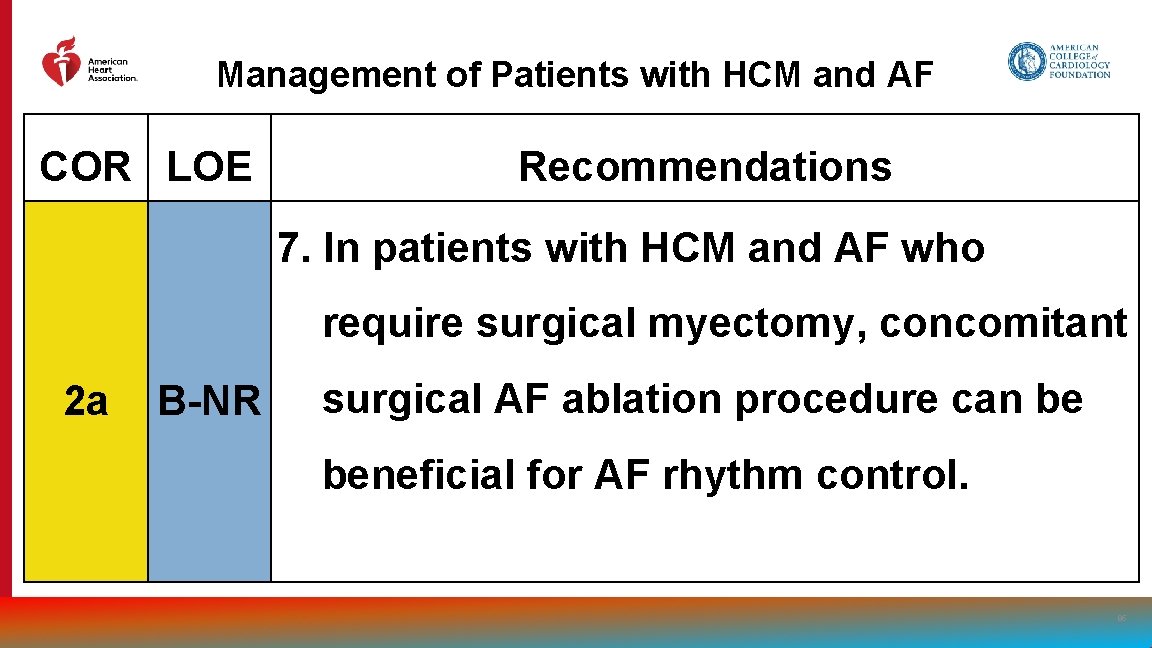
Management of Patients with HCM and AF COR LOE Recommendations 7. In patients with HCM and AF who require surgical myectomy, concomitant 2 a B-NR surgical AF ablation procedure can be beneficial for AF rhythm control. 85
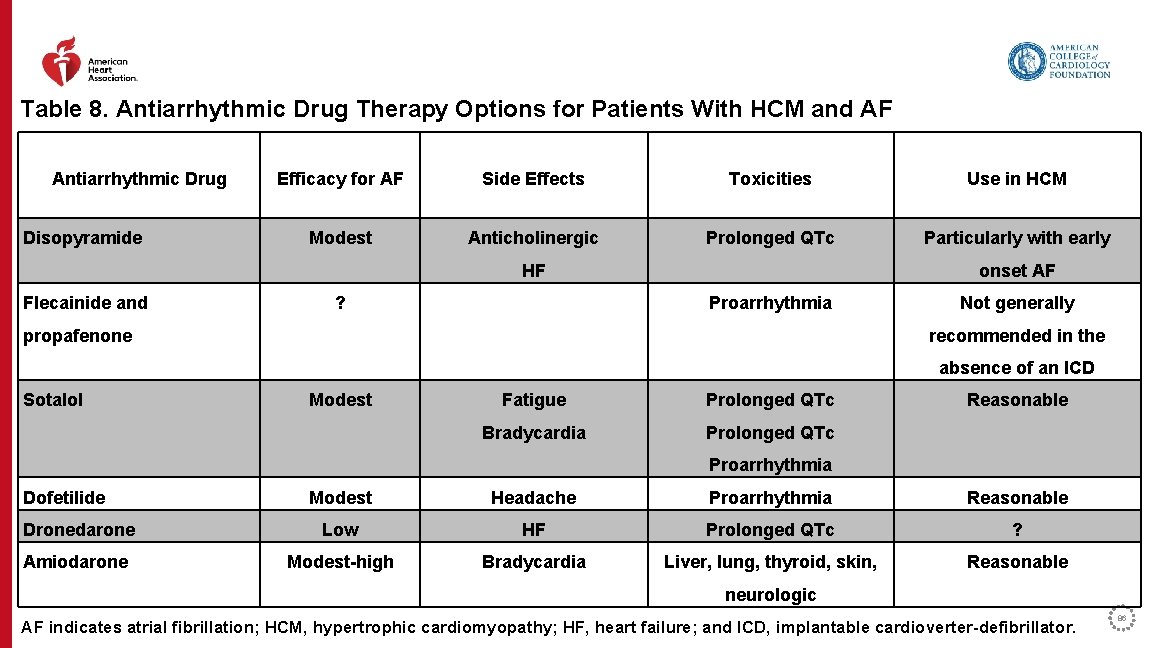
Table 8. Antiarrhythmic Drug Therapy Options for Patients With HCM and AF Antiarrhythmic Drug Disopyramide Efficacy for AF Side Effects Toxicities Use in HCM Modest Anticholinergic Prolonged QTc Particularly with early HF Flecainide and ? onset AF Proarrhythmia propafenone Not generally recommended in the absence of an ICD Sotalol Modest Fatigue Prolonged QTc Bradycardia Prolonged QTc Reasonable Proarrhythmia Dofetilide Modest Headache Proarrhythmia Reasonable Dronedarone Low HF Prolonged QTc ? Amiodarone Modest-high Bradycardia Liver, lung, thyroid, skin, Reasonable neurologic AF indicates atrial fibrillation; HCM, hypertrophic cardiomyopathy; HF, heart failure; and ICD, implantable cardioverter-defibrillator. 86
Management of Patients with Hypertrophic Cardiopathy (HCM) and Ventricular Arrhythmias (VA) 87
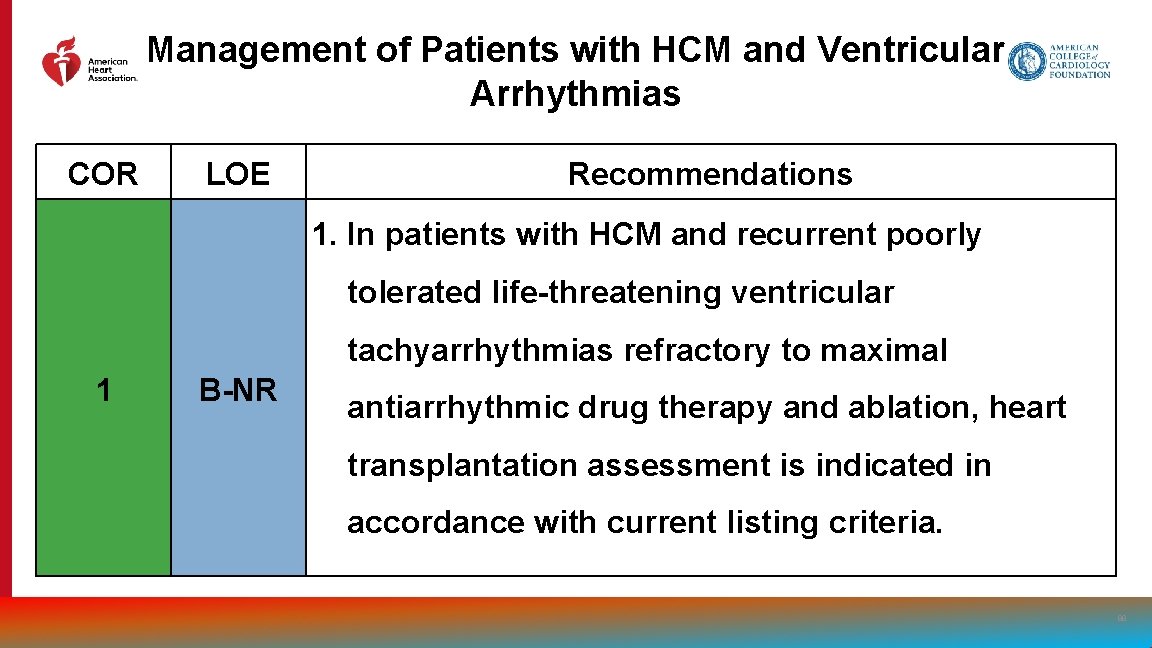
Management of Patients with HCM and Ventricular Arrhythmias COR LOE Recommendations 1. In patients with HCM and recurrent poorly tolerated life-threatening ventricular tachyarrhythmias refractory to maximal 1 B-NR antiarrhythmic drug therapy and ablation, heart transplantation assessment is indicated in accordance with current listing criteria. 88
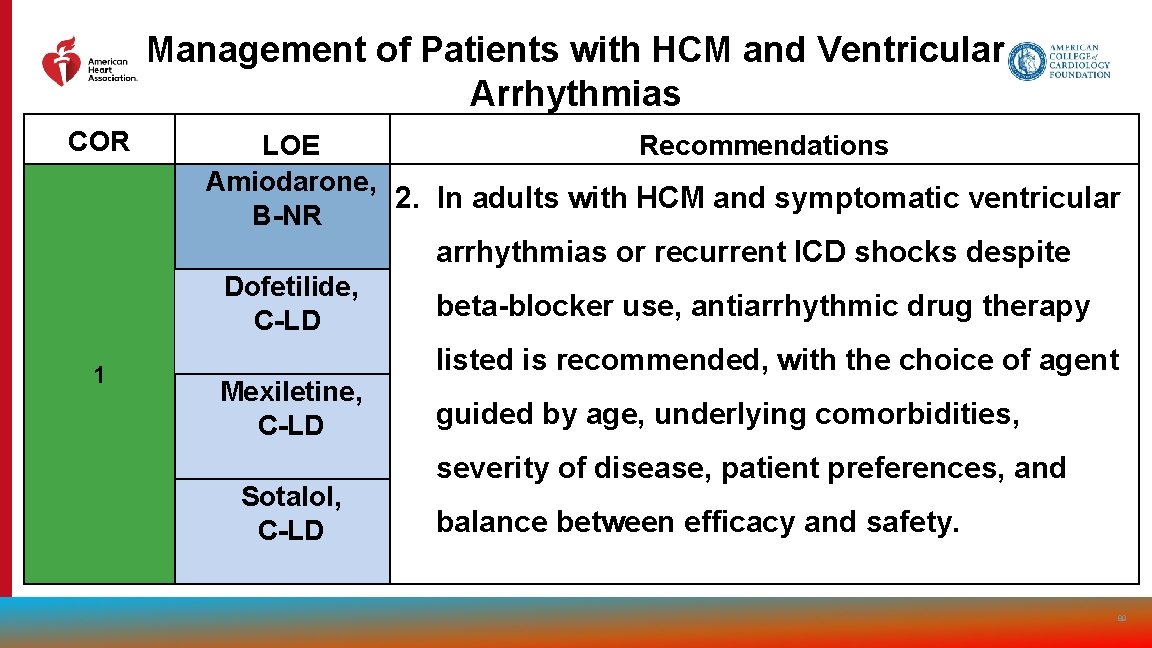
Management of Patients with HCM and Ventricular Arrhythmias COR LOE Recommendations Amiodarone, 2. In adults with HCM and symptomatic ventricular B-NR arrhythmias or recurrent ICD shocks despite Dofetilide, C-LD 1 Mexiletine, C-LD Sotalol, C-LD beta-blocker use, antiarrhythmic drug therapy listed is recommended, with the choice of agent guided by age, underlying comorbidities, severity of disease, patient preferences, and balance between efficacy and safety. 89
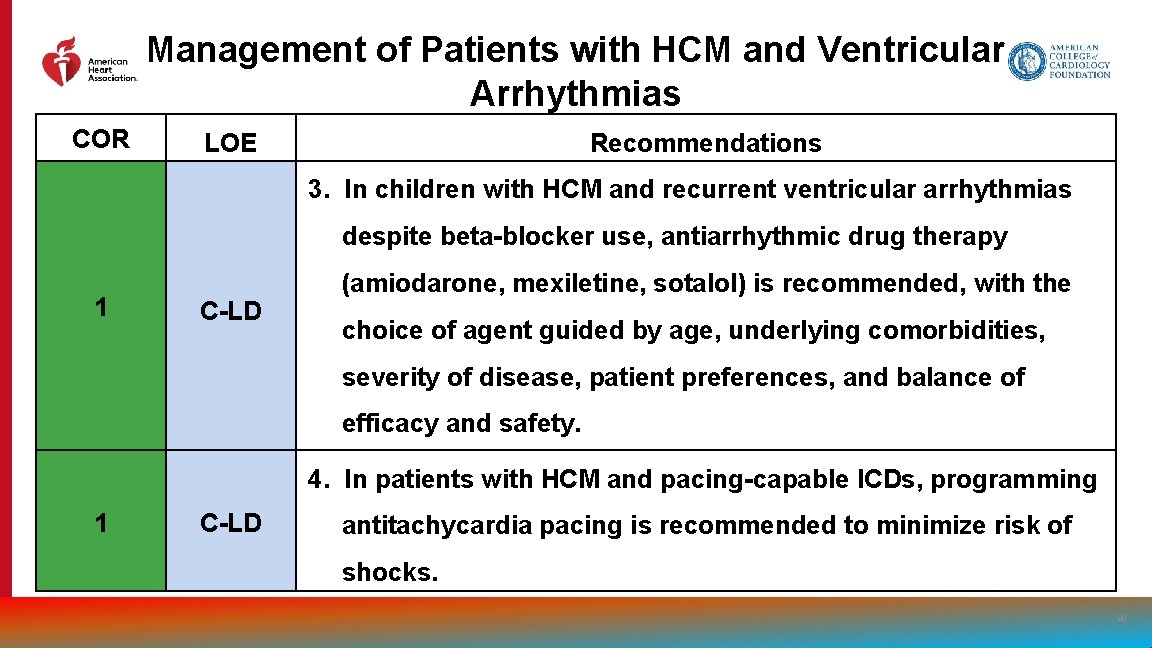
Management of Patients with HCM and Ventricular Arrhythmias COR LOE Recommendations 3. In children with HCM and recurrent ventricular arrhythmias despite beta-blocker use, antiarrhythmic drug therapy 1 C-LD (amiodarone, mexiletine, sotalol) is recommended, with the choice of agent guided by age, underlying comorbidities, severity of disease, patient preferences, and balance of efficacy and safety. 4. In patients with HCM and pacing-capable ICDs, programming 1 C-LD antitachycardia pacing is recommended to minimize risk of shocks. 90
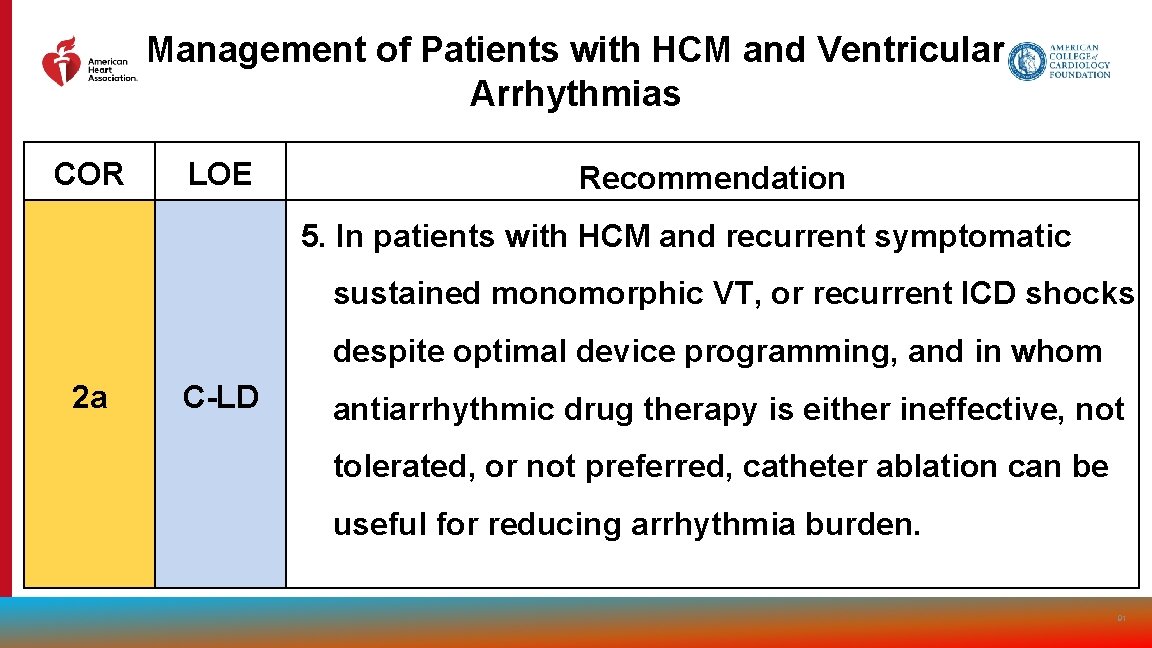
Management of Patients with HCM and Ventricular Arrhythmias COR LOE Recommendation 5. In patients with HCM and recurrent symptomatic sustained monomorphic VT, or recurrent ICD shocks despite optimal device programming, and in whom 2 a C-LD antiarrhythmic drug therapy is either ineffective, not tolerated, or not preferred, catheter ablation can be useful for reducing arrhythmia burden. 91
Management of Patients with Hypertrophic Cardiomyopathy and Advanced Heart Failure 92
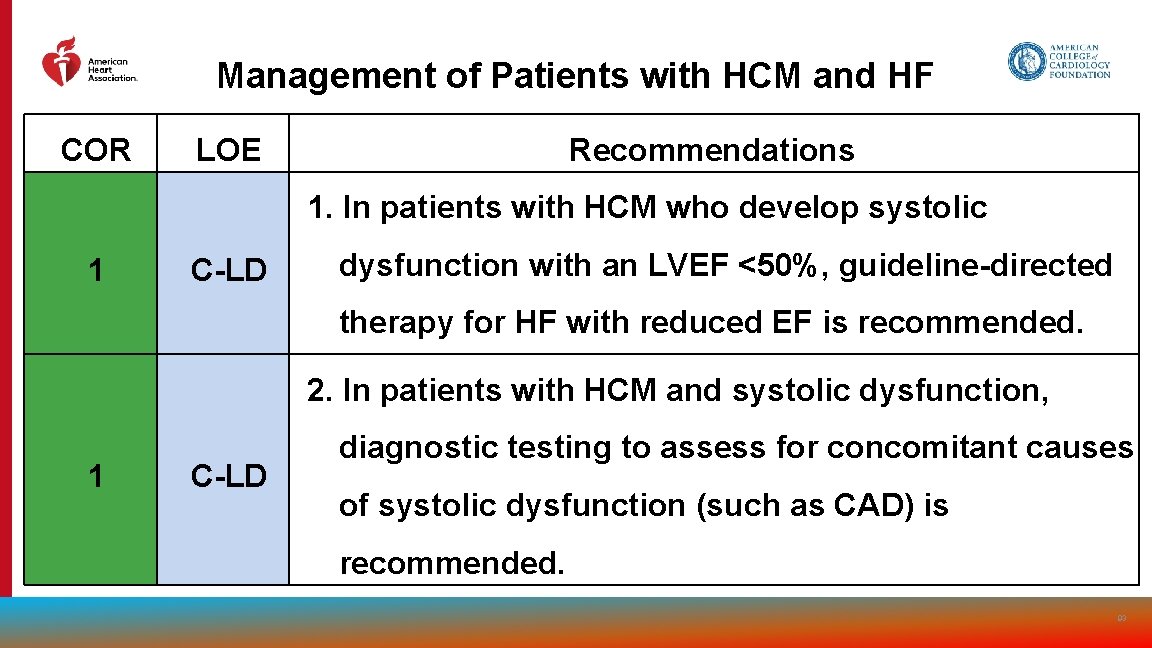
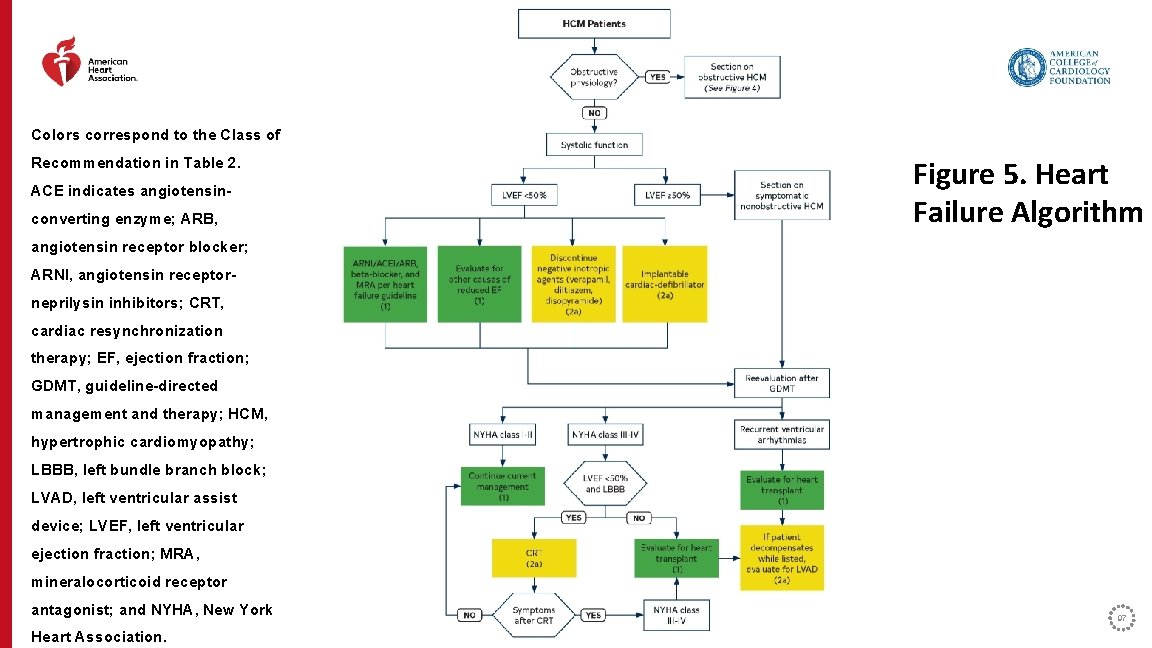
Management of Patients with HCM and HF COR LOE Recommendations 1. In patients with HCM who develop systolic 1 C-LD dysfunction with an LVEF <50%, guideline-directed therapy for HF with reduced EF is recommended. 2. In patients with HCM and systolic dysfunction, 1 C-LD diagnostic testing to assess for concomitant causes of systolic dysfunction (such as CAD) is recommended. 93
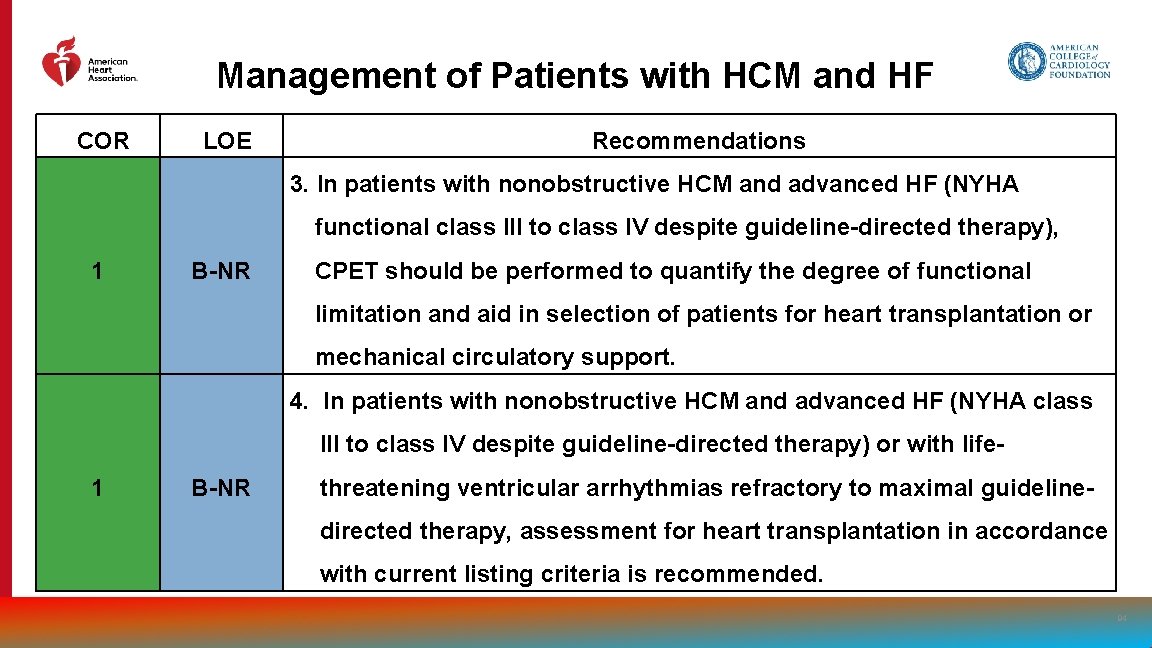
Management of Patients with HCM and HF COR LOE Recommendations 3. In patients with nonobstructive HCM and advanced HF (NYHA functional class III to class IV despite guideline-directed therapy), 1 B-NR CPET should be performed to quantify the degree of functional limitation and aid in selection of patients for heart transplantation or mechanical circulatory support. 4. In patients with nonobstructive HCM and advanced HF (NYHA class III to class IV despite guideline-directed therapy) or with life- 1 B-NR threatening ventricular arrhythmias refractory to maximal guidelinedirected therapy, assessment for heart transplantation in accordance with current listing criteria is recommended. 94
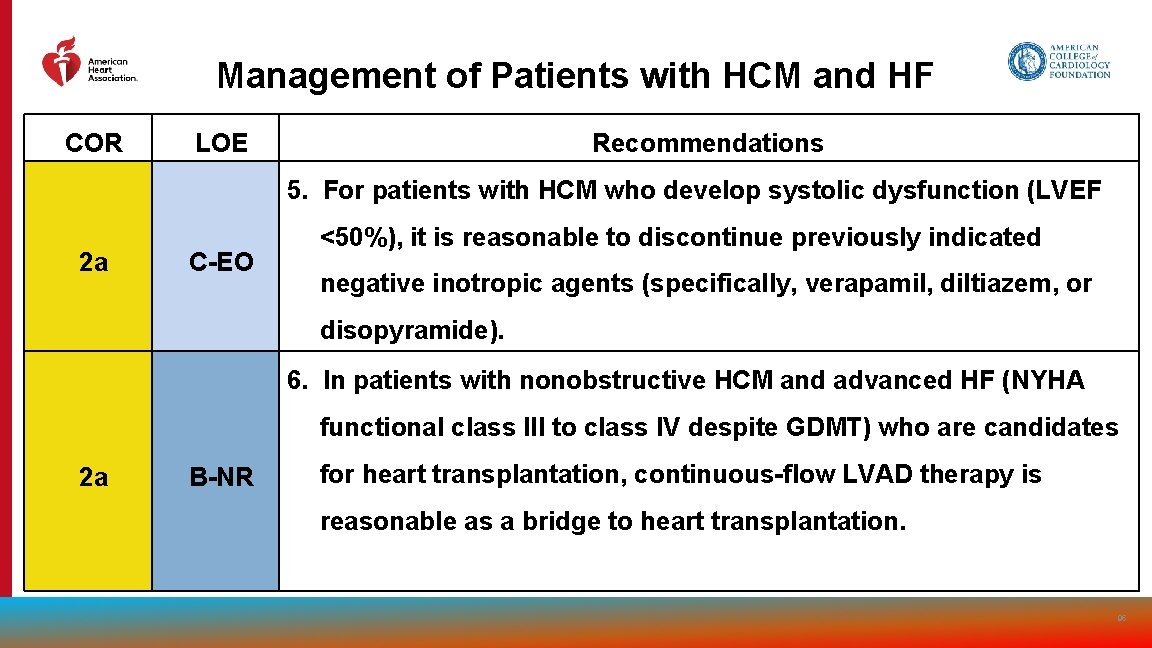
Management of Patients with HCM and HF COR LOE Recommendations 5. For patients with HCM who develop systolic dysfunction (LVEF 2 a C-EO <50%), it is reasonable to discontinue previously indicated negative inotropic agents (specifically, verapamil, diltiazem, or disopyramide). 6. In patients with nonobstructive HCM and advanced HF (NYHA functional class III to class IV despite GDMT) who are candidates 2 a B-NR for heart transplantation, continuous-flow LVAD therapy is reasonable as a bridge to heart transplantation. 95
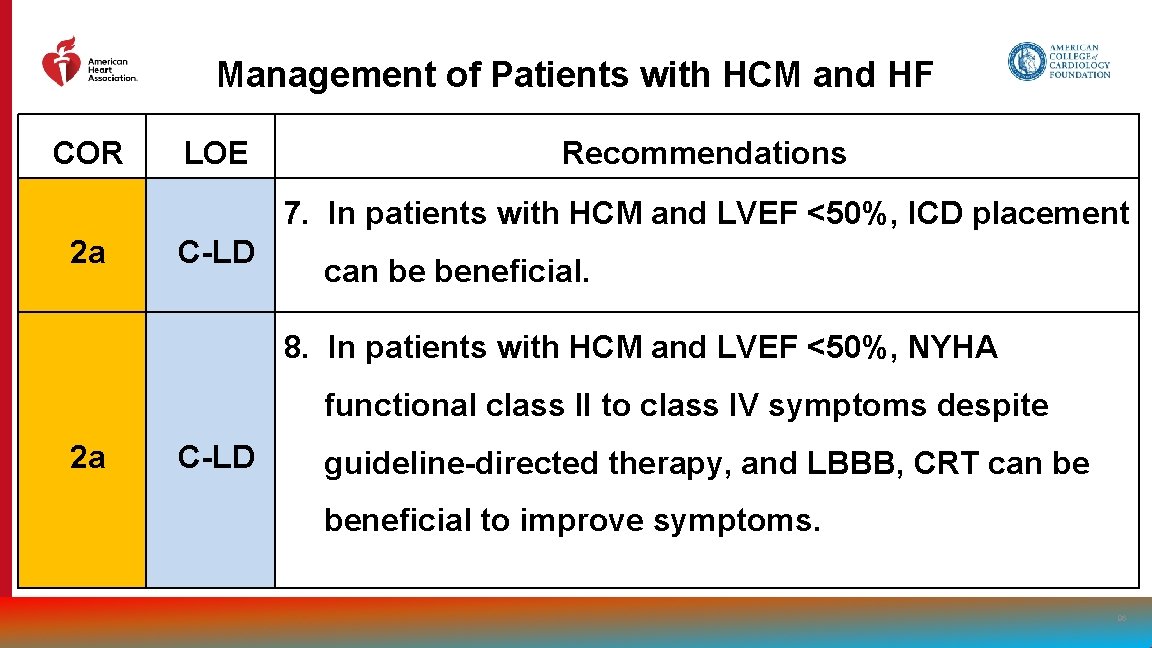
Management of Patients with HCM and HF COR LOE Recommendations 7. In patients with HCM and LVEF <50%, ICD placement 2 a C-LD can be beneficial. 8. In patients with HCM and LVEF <50%, NYHA functional class II to class IV symptoms despite 2 a C-LD guideline-directed therapy, and LBBB, CRT can be beneficial to improve symptoms. 96
Colors correspond to the Class of Recommendation in Table 2. ACE indicates angiotensinconverting enzyme; ARB, Figure 5. Heart Failure Algorithm angiotensin receptor blocker; ARNI, angiotensin receptorneprilysin inhibitors; CRT, cardiac resynchronization therapy; EF, ejection fraction; GDMT, guideline-directed management and therapy; HCM, hypertrophic cardiomyopathy; LBBB, left bundle branch block; LVAD, left ventricular assist device; LVEF, left ventricular ejection fraction; MRA, mineralocorticoid receptor antagonist; and NYHA, New York Heart Association. 97
Lifestyle Considerations for Patients with Hypertrophic Cardiomyopathy 98
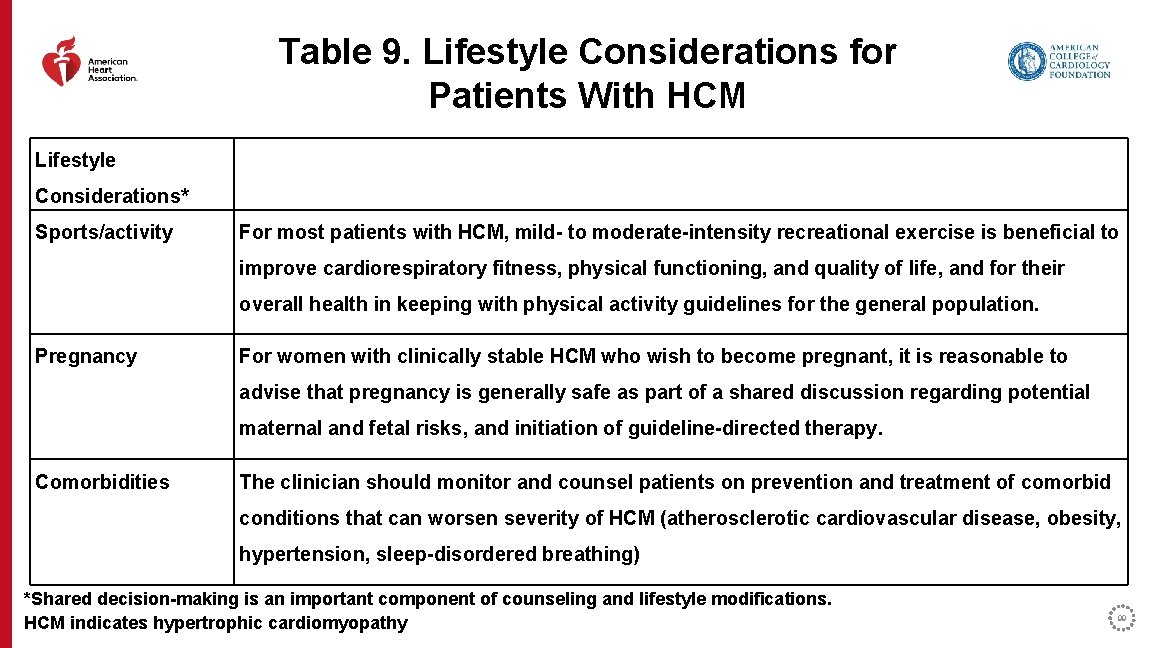
Table 9. Lifestyle Considerations for Patients With HCM Lifestyle Considerations* Sports/activity For most patients with HCM, mild- to moderate-intensity recreational exercise is beneficial to improve cardiorespiratory fitness, physical functioning, and quality of life, and for their overall health in keeping with physical activity guidelines for the general population. Pregnancy For women with clinically stable HCM who wish to become pregnant, it is reasonable to advise that pregnancy is generally safe as part of a shared discussion regarding potential maternal and fetal risks, and initiation of guideline-directed therapy. Comorbidities The clinician should monitor and counsel patients on prevention and treatment of comorbid conditions that can worsen severity of HCM (atherosclerotic cardiovascular disease, obesity, hypertension, sleep-disordered breathing) *Shared decision-making is an important component of counseling and lifestyle modifications. HCM indicates hypertrophic cardiomyopathy 99
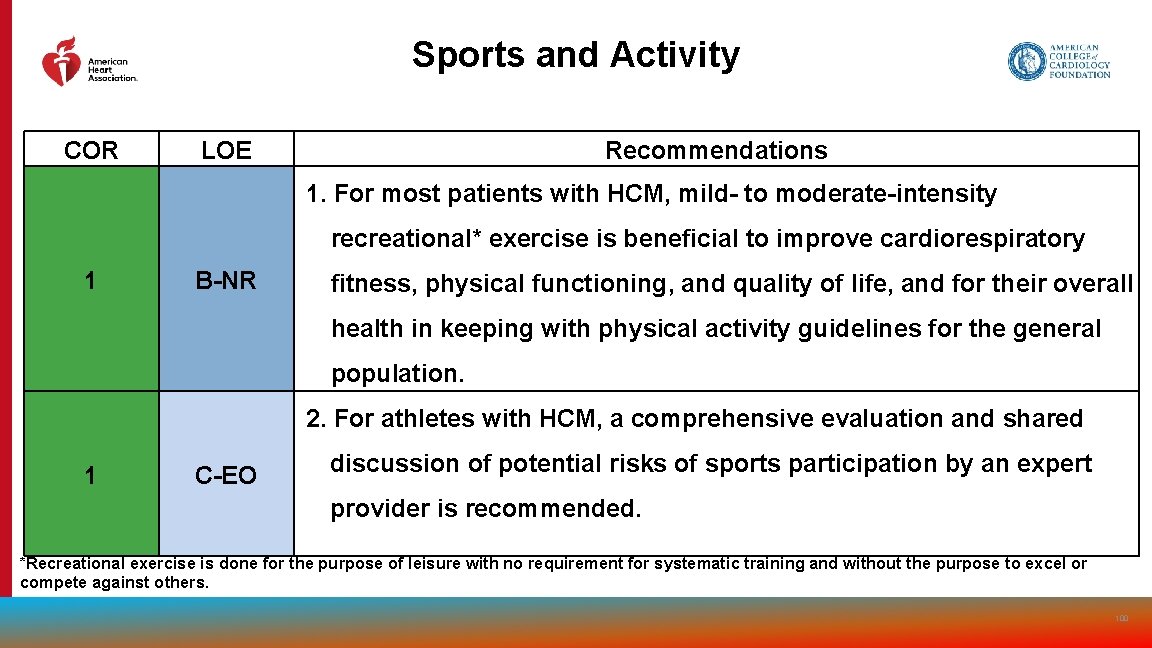
Sports and Activity COR LOE Recommendations 1. For most patients with HCM, mild- to moderate-intensity recreational* exercise is beneficial to improve cardiorespiratory 1 B-NR fitness, physical functioning, and quality of life, and for their overall health in keeping with physical activity guidelines for the general population. 2. For athletes with HCM, a comprehensive evaluation and shared 1 C-EO discussion of potential risks of sports participation by an expert provider is recommended. *Recreational exercise is done for the purpose of leisure with no requirement for systematic training and without the purpose to excel or compete against others. 100
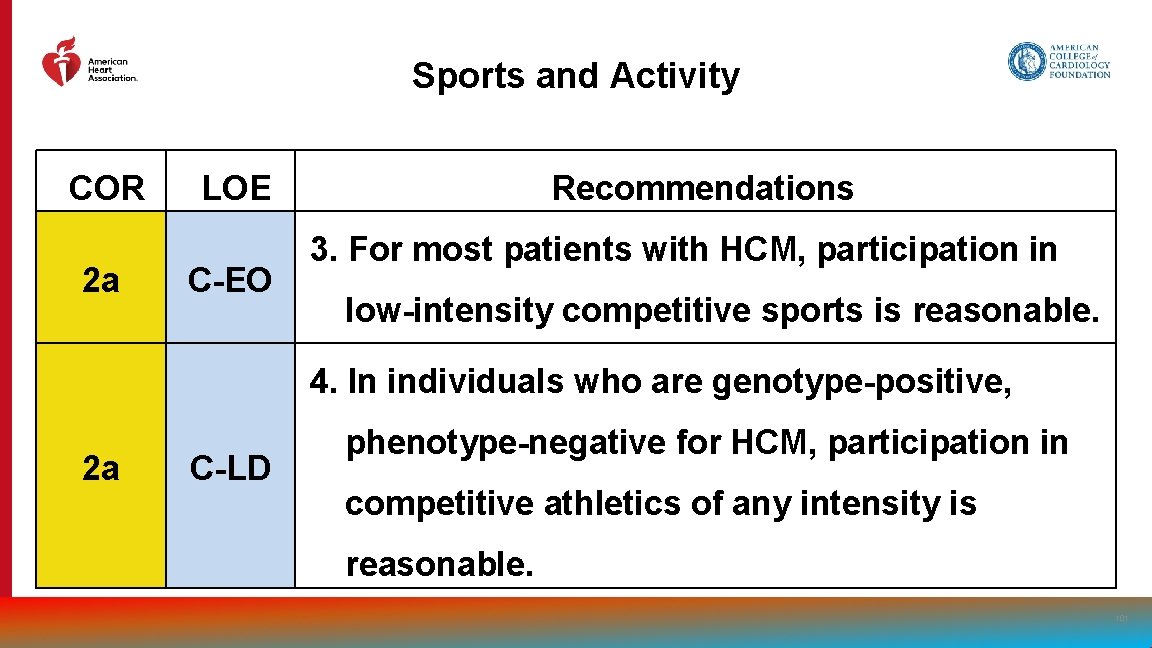
Sports and Activity COR 2 a LOE C-EO Recommendations 3. For most patients with HCM, participation in low-intensity competitive sports is reasonable. 4. In individuals who are genotype-positive, 2 a C-LD phenotype-negative for HCM, participation in competitive athletics of any intensity is reasonable. 101
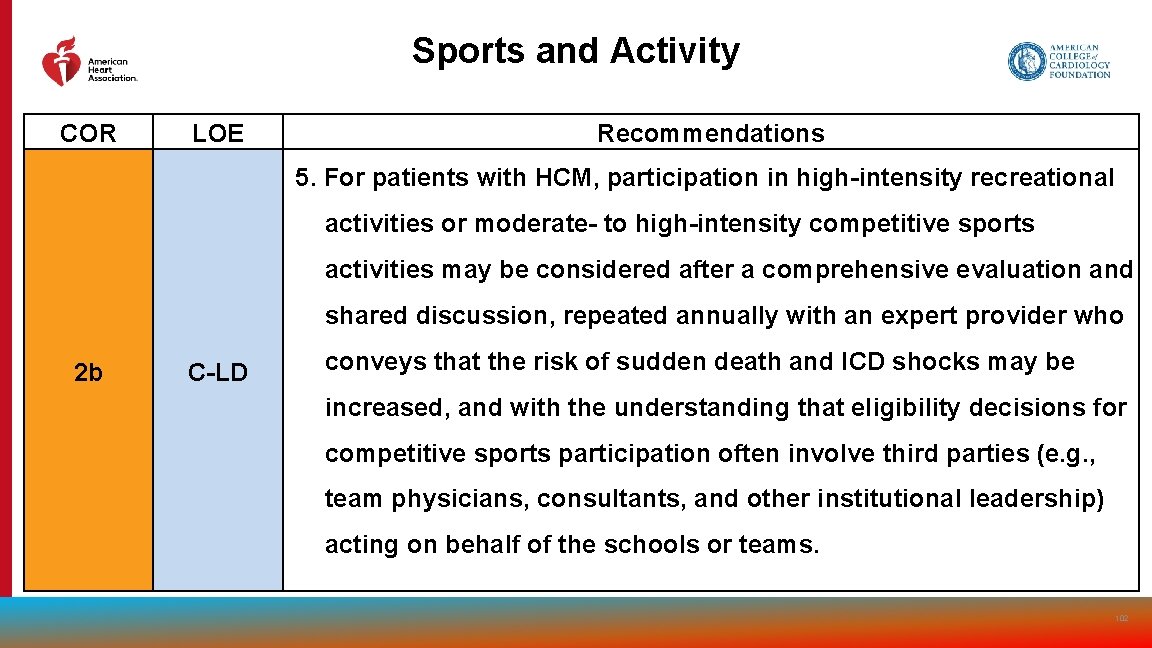
Sports and Activity COR LOE Recommendations 5. For patients with HCM, participation in high-intensity recreational activities or moderate- to high-intensity competitive sports activities may be considered after a comprehensive evaluation and shared discussion, repeated annually with an expert provider who 2 b C-LD conveys that the risk of sudden death and ICD shocks may be increased, and with the understanding that eligibility decisions for competitive sports participation often involve third parties (e. g. , team physicians, consultants, and other institutional leadership) acting on behalf of the schools or teams. 102
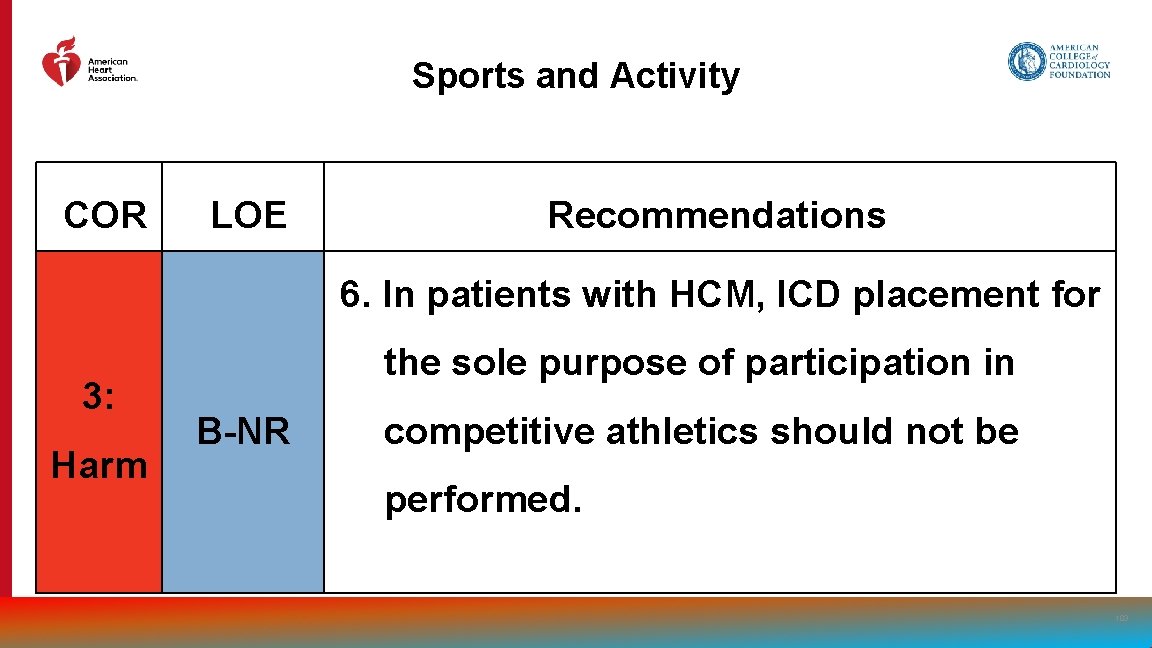
Sports and Activity COR LOE Recommendations 6. In patients with HCM, ICD placement for 3: Harm the sole purpose of participation in B-NR competitive athletics should not be performed. 103
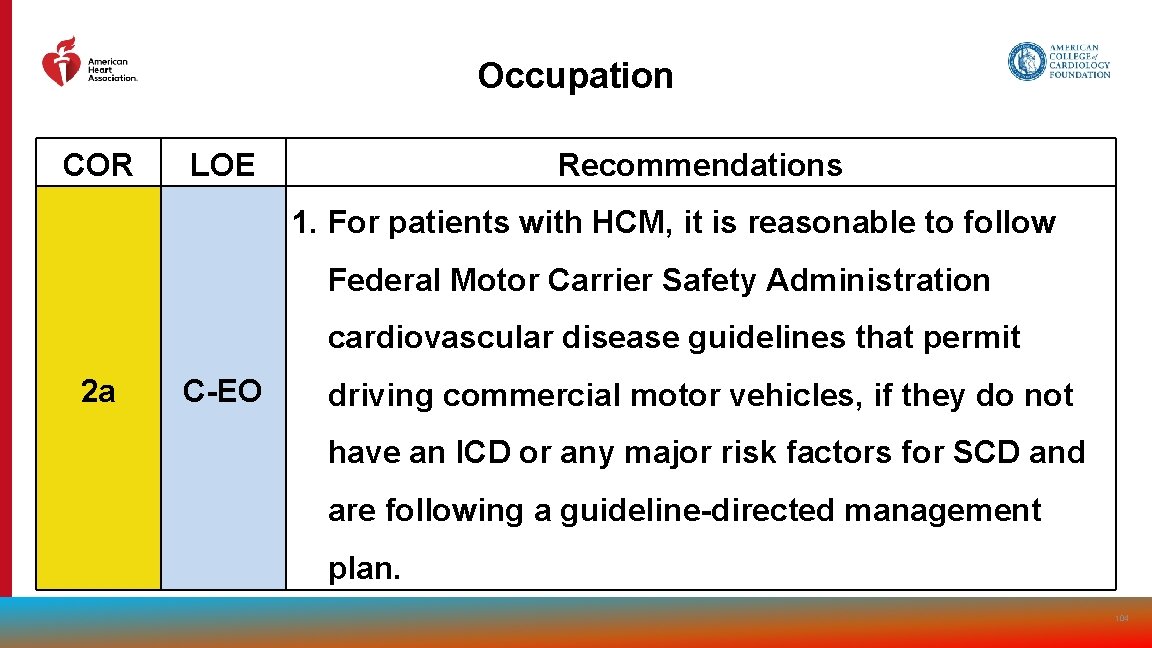
Occupation COR LOE Recommendations 1. For patients with HCM, it is reasonable to follow Federal Motor Carrier Safety Administration cardiovascular disease guidelines that permit 2 a C-EO driving commercial motor vehicles, if they do not have an ICD or any major risk factors for SCD and are following a guideline-directed management plan. 104
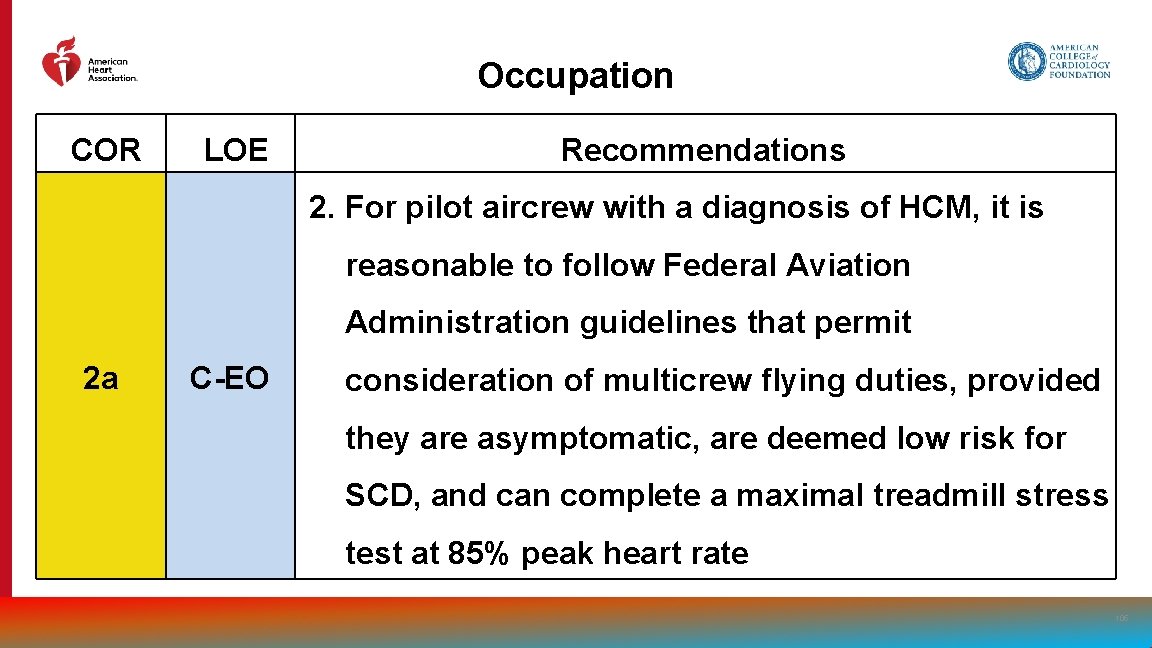
Occupation COR LOE Recommendations 2. For pilot aircrew with a diagnosis of HCM, it is reasonable to follow Federal Aviation Administration guidelines that permit 2 a C-EO consideration of multicrew flying duties, provided they are asymptomatic, are deemed low risk for SCD, and can complete a maximal treadmill stress test at 85% peak heart rate 105
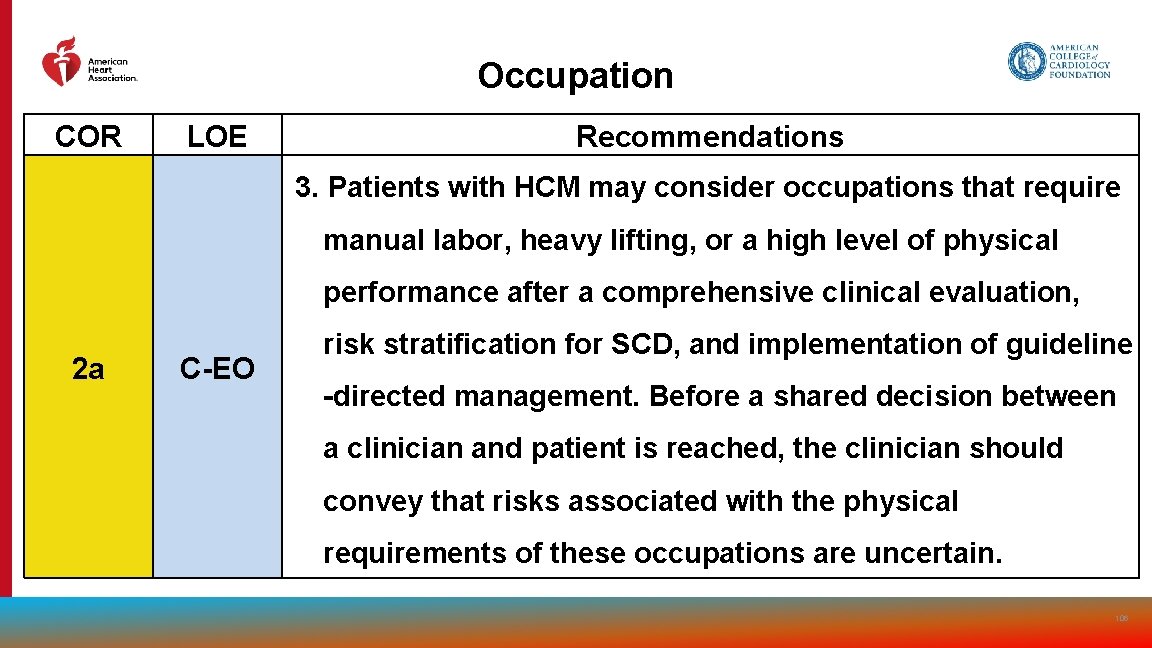
Occupation COR LOE Recommendations 3. Patients with HCM may consider occupations that require manual labor, heavy lifting, or a high level of physical performance after a comprehensive clinical evaluation, 2 a C-EO risk stratification for SCD, and implementation of guideline -directed management. Before a shared decision between a clinician and patient is reached, the clinician should convey that risks associated with the physical requirements of these occupations are uncertain. 106
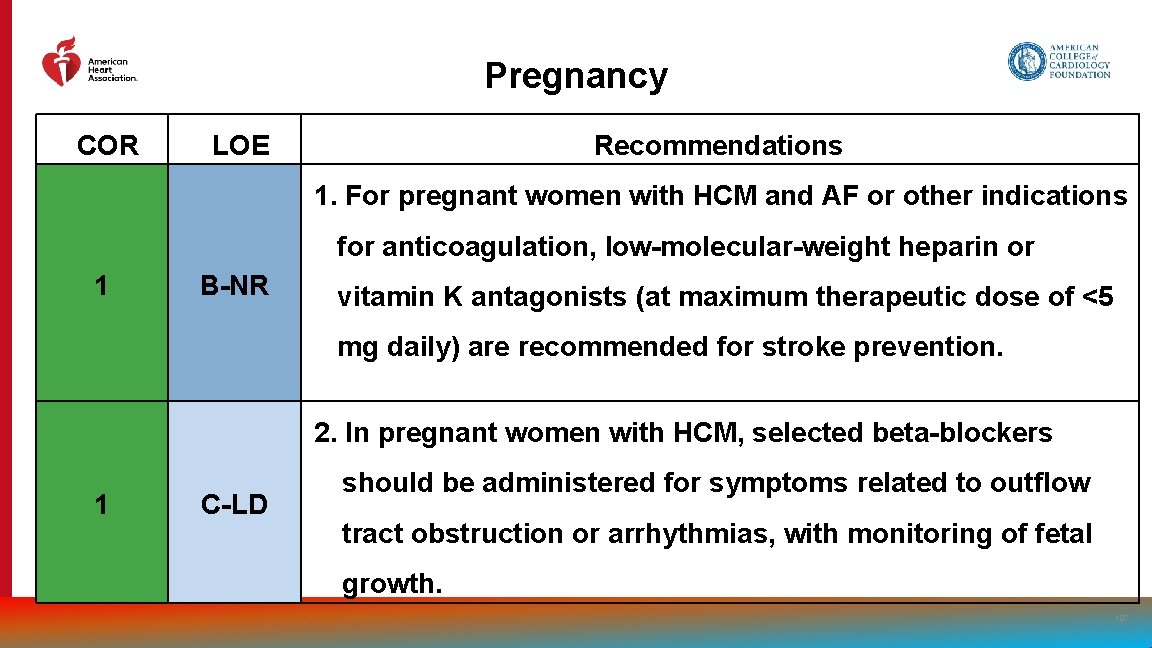
Pregnancy COR LOE Recommendations 1. For pregnant women with HCM and AF or other indications for anticoagulation, low-molecular-weight heparin or 1 B-NR vitamin K antagonists (at maximum therapeutic dose of <5 mg daily) are recommended for stroke prevention. 2. In pregnant women with HCM, selected beta-blockers 1 C-LD should be administered for symptoms related to outflow tract obstruction or arrhythmias, with monitoring of fetal growth. 107
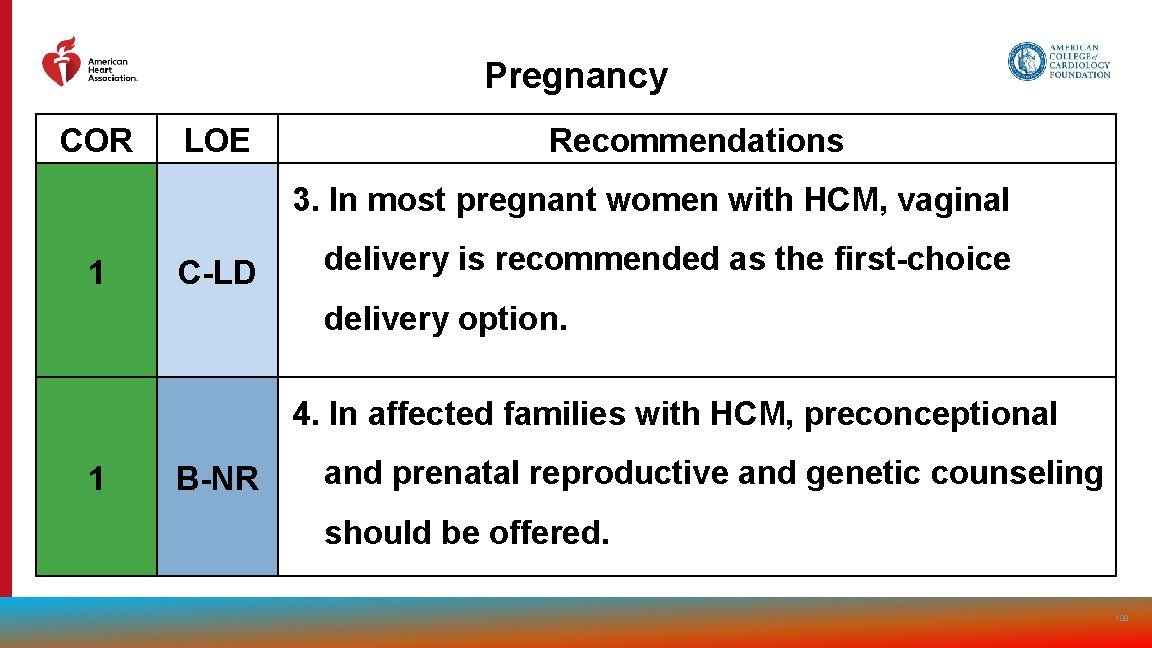
Pregnancy COR LOE Recommendations 3. In most pregnant women with HCM, vaginal 1 C-LD delivery is recommended as the first-choice delivery option. 4. In affected families with HCM, preconceptional 1 B-NR and prenatal reproductive and genetic counseling should be offered. 108
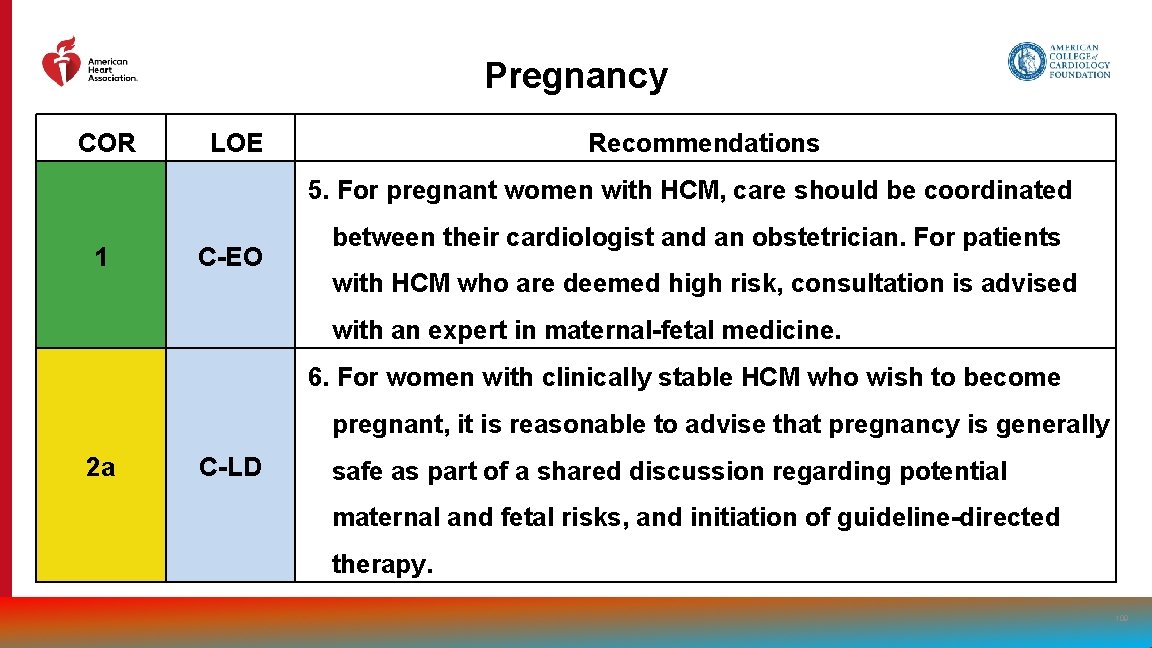
Pregnancy COR LOE Recommendations 5. For pregnant women with HCM, care should be coordinated 1 C-EO between their cardiologist and an obstetrician. For patients with HCM who are deemed high risk, consultation is advised with an expert in maternal-fetal medicine. 6. For women with clinically stable HCM who wish to become pregnant, it is reasonable to advise that pregnancy is generally 2 a C-LD safe as part of a shared discussion regarding potential maternal and fetal risks, and initiation of guideline-directed therapy. 109
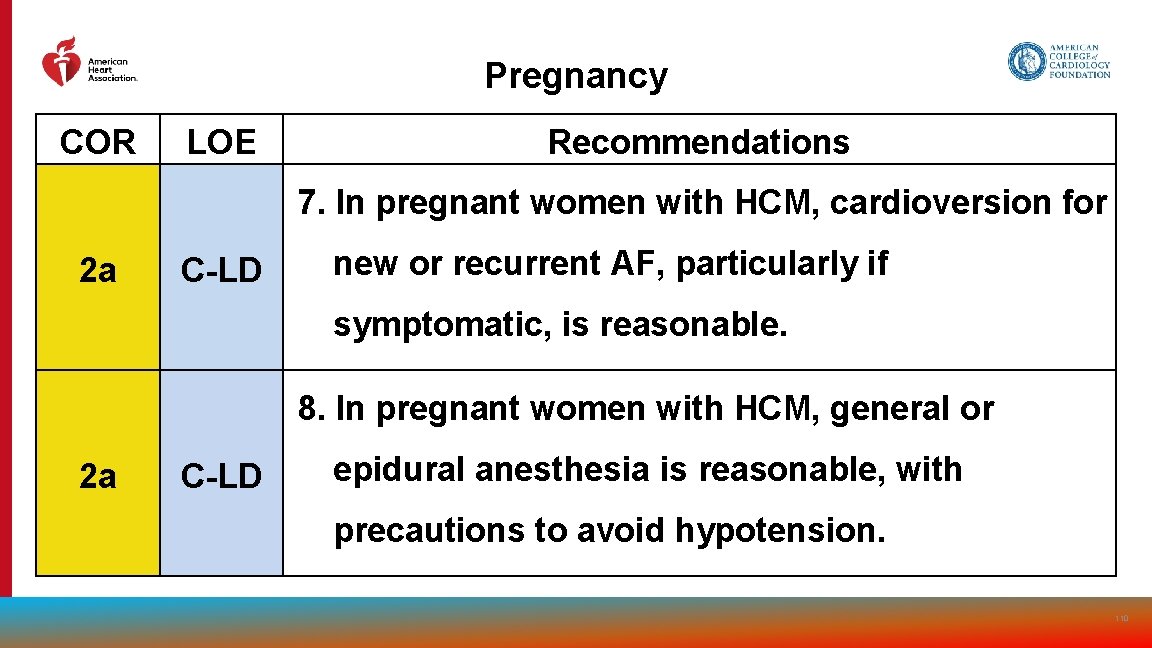
Pregnancy COR LOE Recommendations 7. In pregnant women with HCM, cardioversion for 2 a C-LD new or recurrent AF, particularly if symptomatic, is reasonable. 8. In pregnant women with HCM, general or 2 a C-LD epidural anesthesia is reasonable, with precautions to avoid hypotension. 110
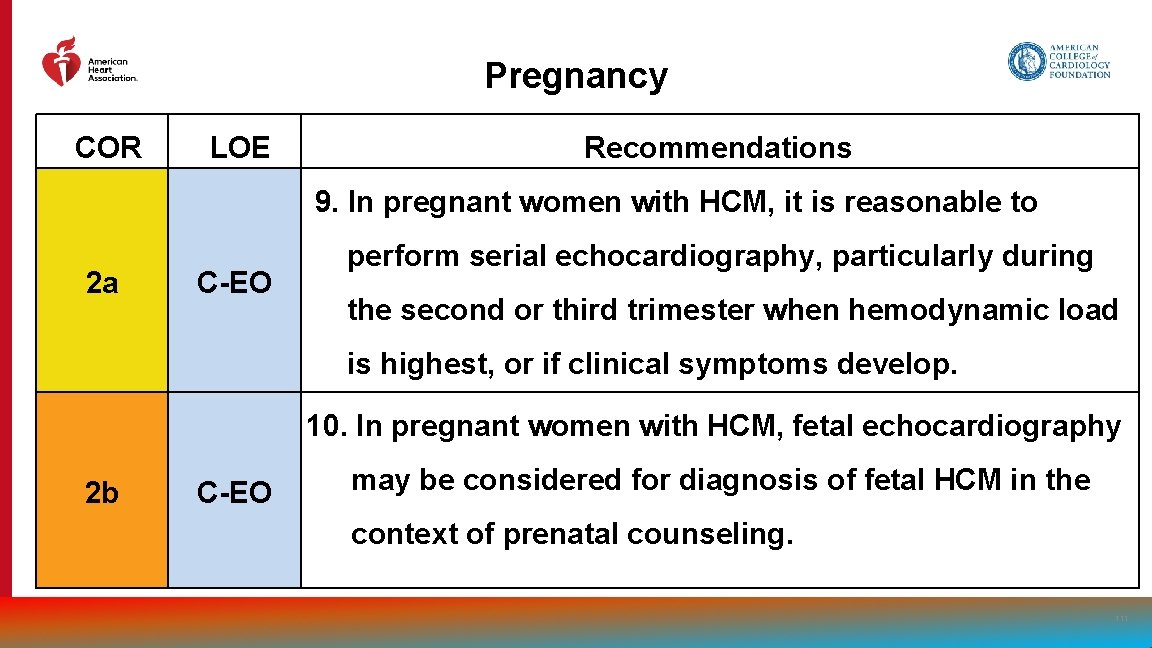
Pregnancy COR LOE Recommendations 9. In pregnant women with HCM, it is reasonable to 2 a C-EO perform serial echocardiography, particularly during the second or third trimester when hemodynamic load is highest, or if clinical symptoms develop. 10. In pregnant women with HCM, fetal echocardiography 2 b C-EO may be considered for diagnosis of fetal HCM in the context of prenatal counseling. 111
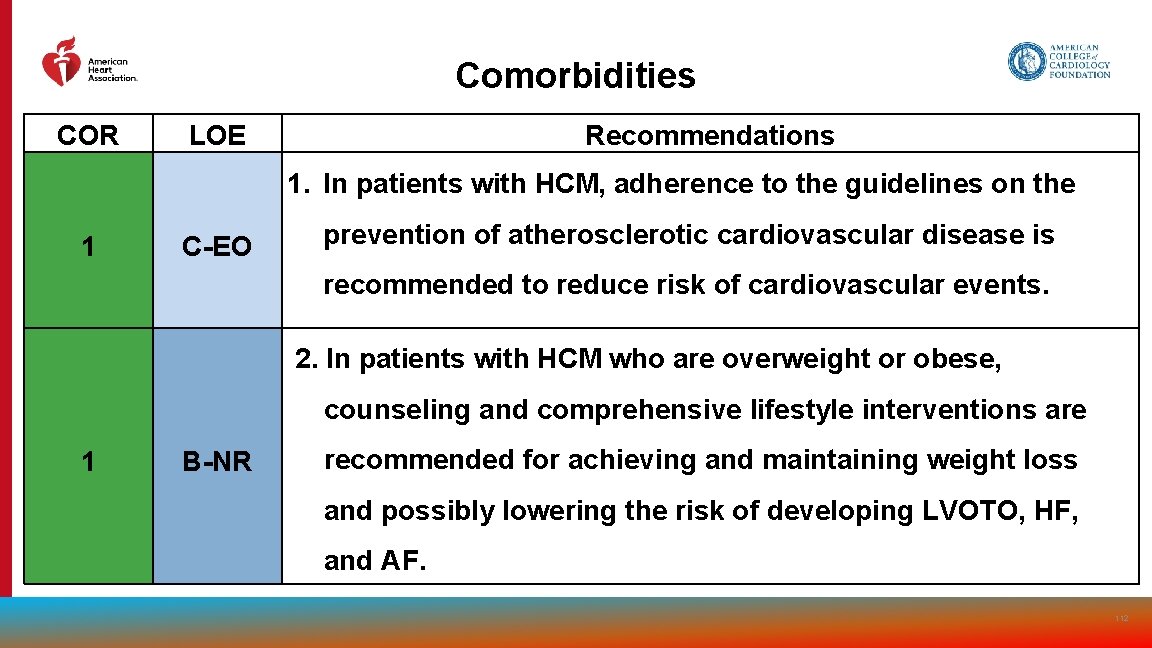
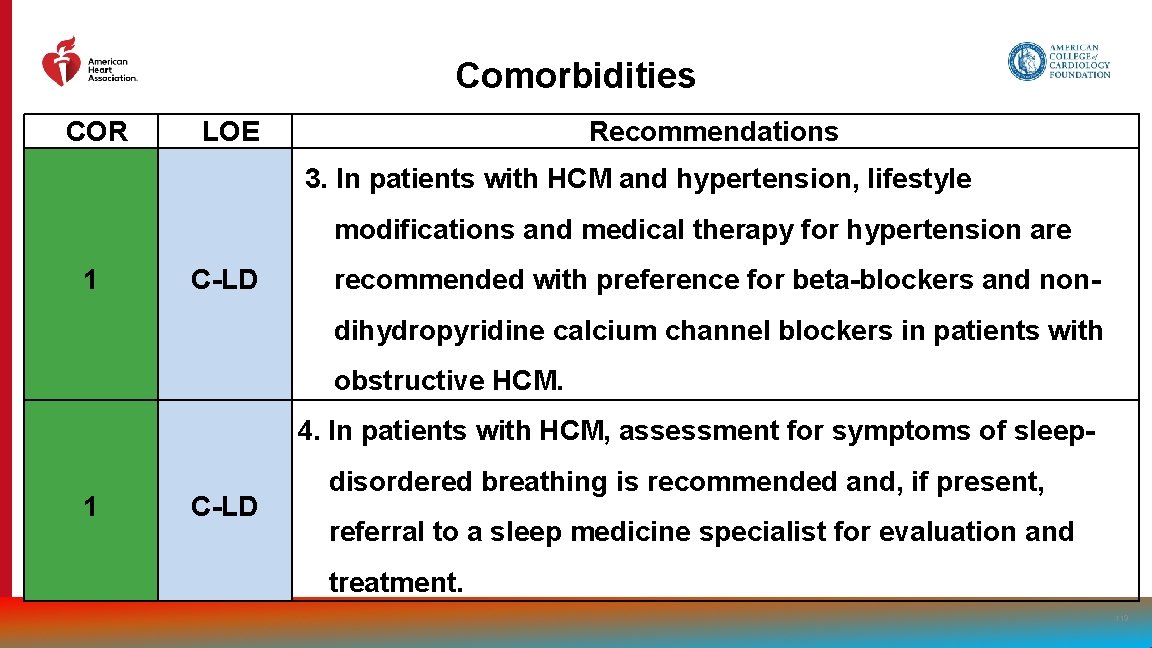
Comorbidities COR LOE Recommendations 1. In patients with HCM, adherence to the guidelines on the 1 C-EO prevention of atherosclerotic cardiovascular disease is recommended to reduce risk of cardiovascular events. 2. In patients with HCM who are overweight or obese, counseling and comprehensive lifestyle interventions are 1 B-NR recommended for achieving and maintaining weight loss and possibly lowering the risk of developing LVOTO, HF, and AF. 112
Comorbidities COR LOE Recommendations 3. In patients with HCM and hypertension, lifestyle modifications and medical therapy for hypertension are 1 C-LD recommended with preference for beta-blockers and nondihydropyridine calcium channel blockers in patients with obstructive HCM. 4. In patients with HCM, assessment for symptoms of sleep- 1 C-LD disordered breathing is recommended and, if present, referral to a sleep medicine specialist for evaluation and treatment. 113
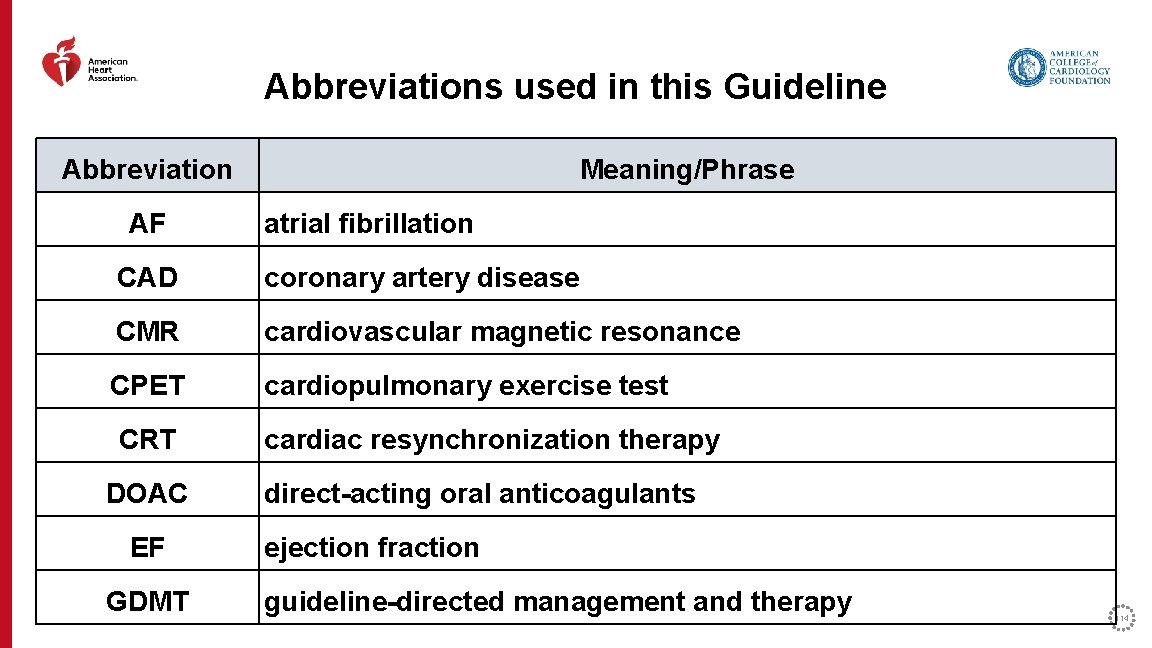
Abbreviations used in this Guideline Abbreviation AF Meaning/Phrase atrial fibrillation CAD coronary artery disease CMR cardiovascular magnetic resonance CPET cardiopulmonary exercise test CRT DOAC EF GDMT cardiac resynchronization therapy direct-acting oral anticoagulants ejection fraction guideline-directed management and therapy 114
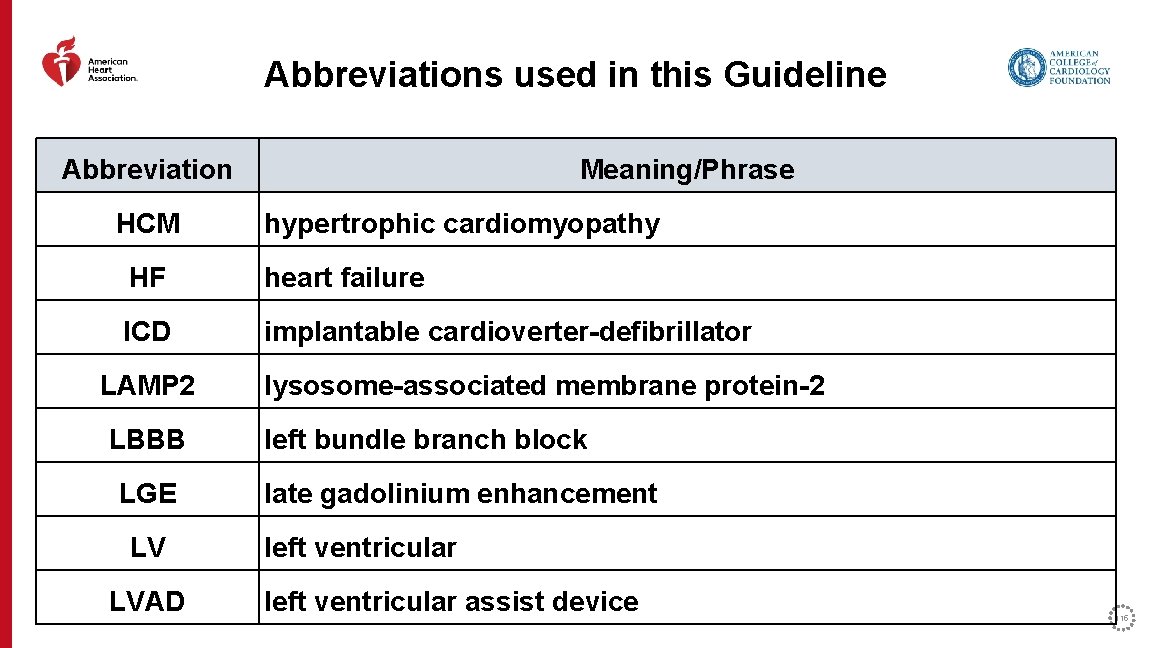
Abbreviations used in this Guideline Abbreviation HCM Meaning/Phrase hypertrophic cardiomyopathy HF heart failure ICD implantable cardioverter-defibrillator LAMP 2 LBBB LGE LV LVAD lysosome-associated membrane protein-2 left bundle branch block late gadolinium enhancement left ventricular assist device 115
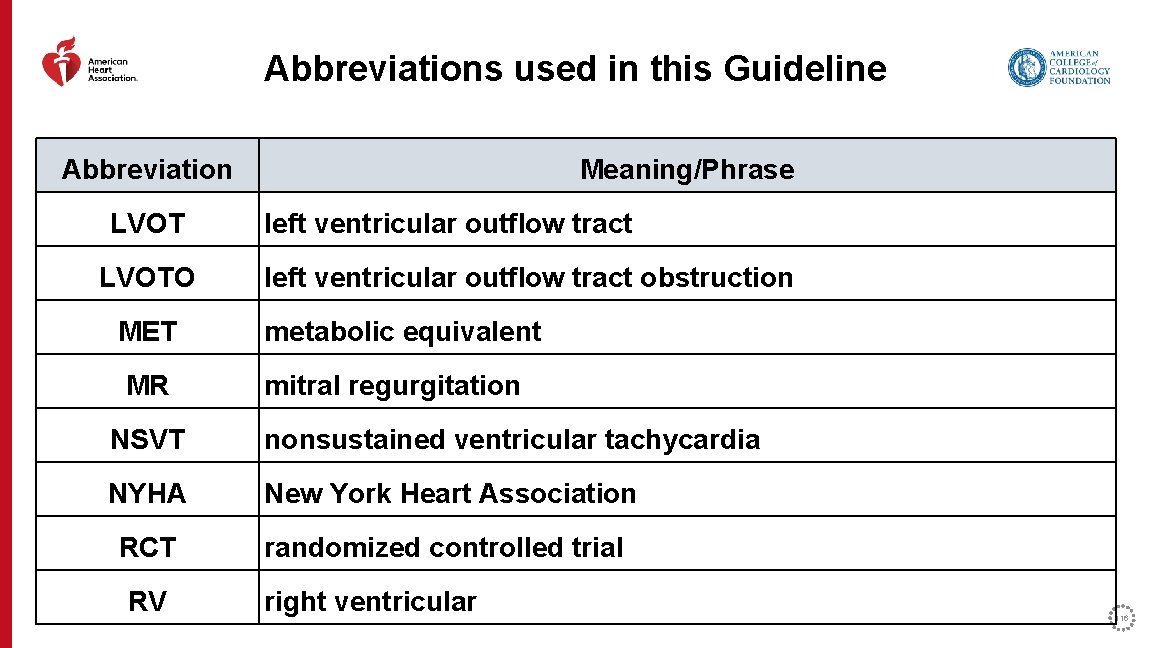
Abbreviations used in this Guideline Abbreviation LVOTO Meaning/Phrase left ventricular outflow tract obstruction MET metabolic equivalent MR mitral regurgitation NSVT nonsustained ventricular tachycardia NYHA New York Heart Association RCT randomized controlled trial RV right ventricular 116
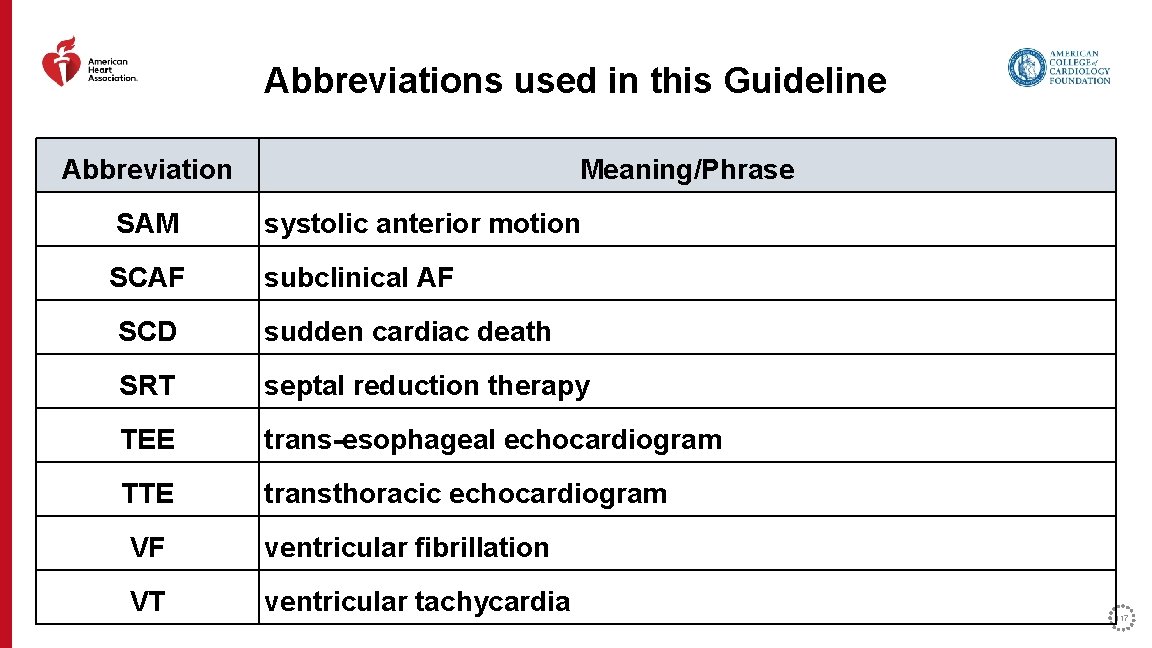
Abbreviations used in this Guideline Abbreviation Meaning/Phrase SAM systolic anterior motion SCAF subclinical AF SCD sudden cardiac death SRT septal reduction therapy TEE trans-esophageal echocardiogram TTE transthoracic echocardiogram VF ventricular fibrillation VT ventricular tachycardia 117