
202 BCE CE 220 China is unified under
202 BCE – CE 220
� China is unified under Shi Huangdi � He died in 210 BCE � Son = weak ruler � Government fell apart
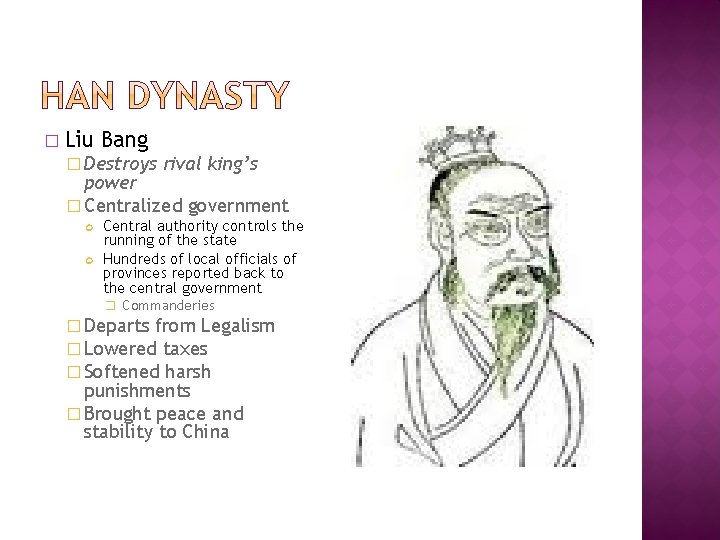
� Liu Bang � Destroys rival king’s power � Centralized government Central authority controls the running of the state Hundreds of local officials of provinces reported back to the central government � Commanderies � Departs from Legalism � Lowered taxes � Softened harsh punishments � Brought peace and stability to China
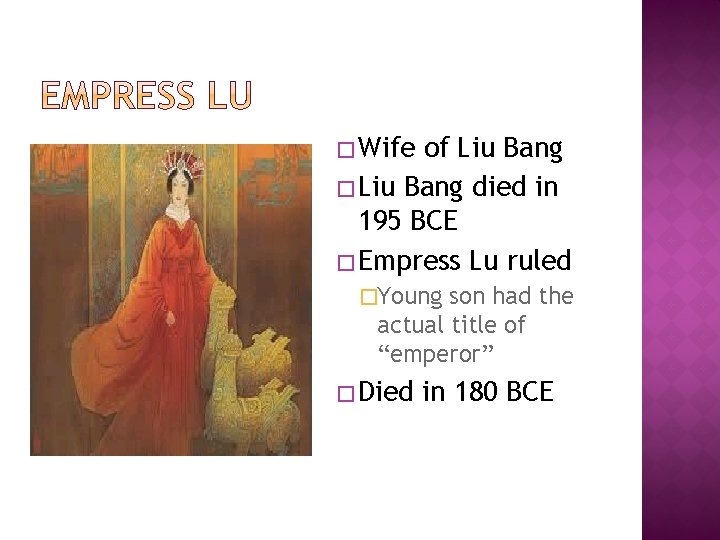
� Wife of Liu Bang � Liu Bang died in 195 BCE � Empress Lu ruled �Young son had the actual title of “emperor” � Died in 180 BCE
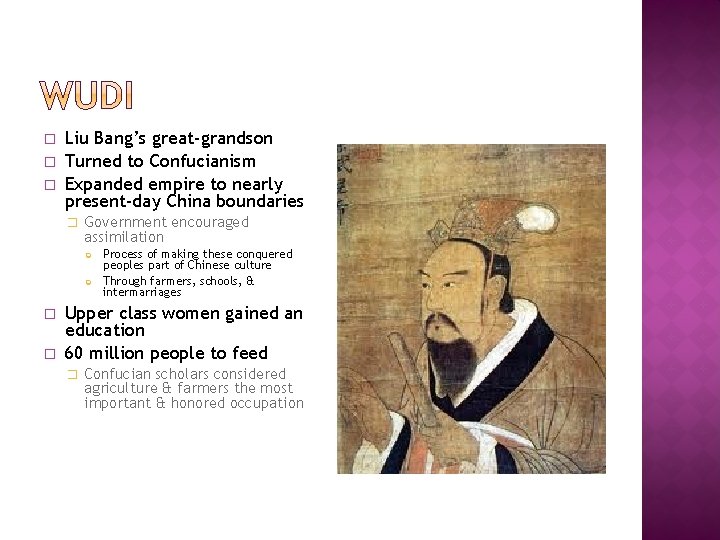
� � � Liu Bang’s great-grandson Turned to Confucianism Expanded empire to nearly present-day China boundaries � Government encouraged assimilation � � Process of making these conquered peoples part of Chinese culture Through farmers, schools, & intermarriages Upper class women gained an education 60 million people to feed � Confucian scholars considered agriculture & farmers the most important & honored occupation
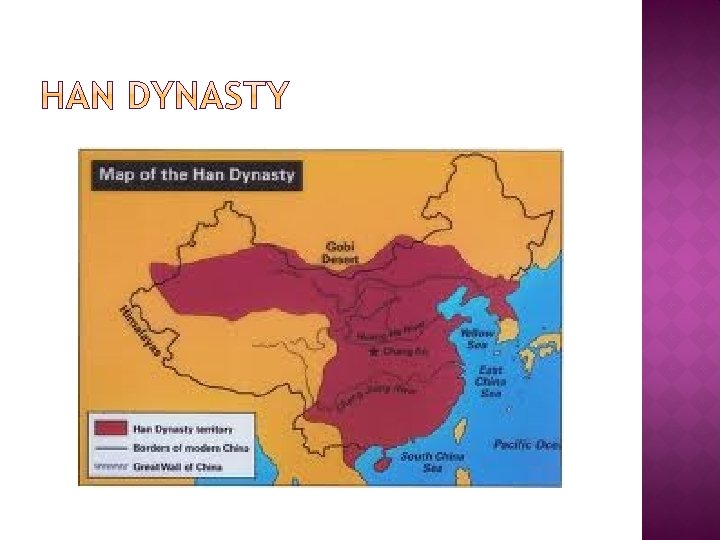
Complex Bureaucracy � � Bureaucracy = strong administrative organization Farmers owed part of their yearly crops to the government Merchants paid taxes Owed government a month’s worth of labor/military service every year � Built roads, canals, & irrigation � Expanded the Great Wall � Civil service jobs � Government � ditches jobs that civilians obtained by taking exams Set up schools & colleges to study Confucianism � Learn reverence, generosity, truthfulness, diligence, & kindness � Took exams in history, law, literature, & Confucianism � Any male could take these exams & attend school Wealthy landowners could afford to send their sons
� Paper �Could print books cheaper Spreads education �Bureaucracy � Collar expands harness �Horses could pull heavy loads � Two bladed plow � Wheelbarrow � Watermills �Grinds grain
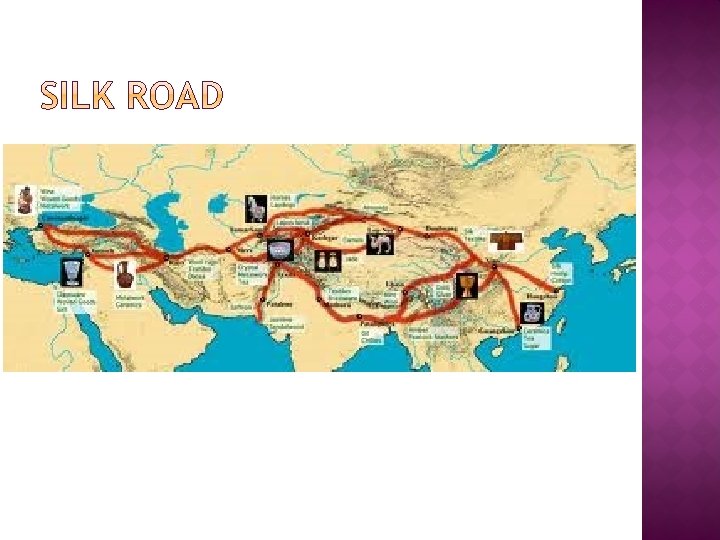
� China to Rome � Silk �Leading export of China �so valuable that China kept it a secret on how to make silk Monopoly � Exclusive control over the production and distribution of certain goods
� Gap increased between rich & poor �Only lower classes had to pay taxes � Political & economic instability grew
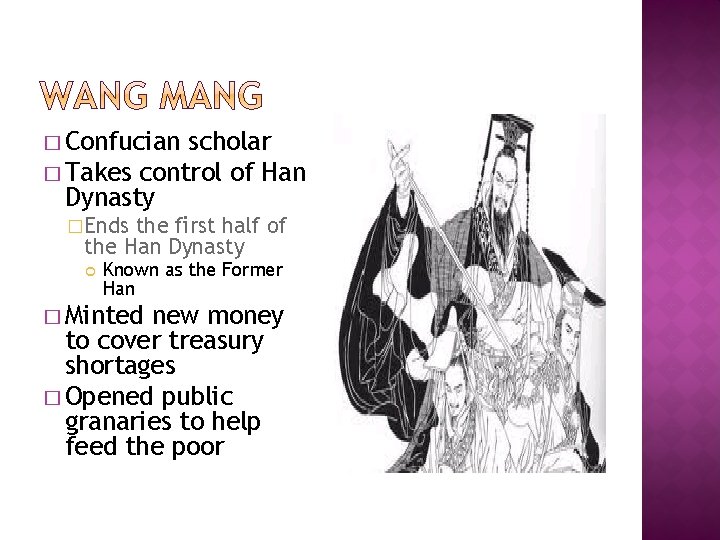
� Confucian scholar � Takes control of Han Dynasty �Ends the first half of the Han Dynasty Known as the Former Han � Minted new money to cover treasury shortages � Opened public granaries to help feed the poor
� CE 11 � Thousands dead � Millions homeless � Not enough food in the granaries to feed millions � Led to rebellions
� Han Dynasty is re-established � Sent soldiers & merchants to regain control of posts along the Silk Road
- Slides: 14