
2019 National Safety Council NSC Mission The National



- Slides: 28
© 2019 National Safety Council
NSC Mission The National Safety Council eliminates preventable deaths at work, in homes and communities, and on the road through leadership, research, education and advocacy © 2019 National Safety Council
Background © 2019 National Safety Council
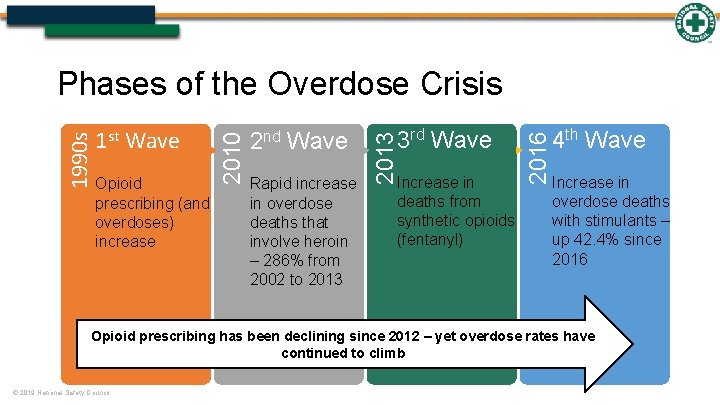
Rapid increase in overdose deaths that involve heroin – 286% from 2002 to 2013 3 rd Wave Increase in deaths from synthetic opioids (fentanyl) 2016 Opioid prescribing (and overdoses) increase 2 nd Wave 2013 1 st Wave 2010 1990 s Phases of the Overdose Crisis 4 th Wave Increase in overdose deaths with stimulants – up 42. 4% since 2016 Opioid prescribing has been declining since 2012 – yet overdose rates have continued to climb © 2019 National Safety Council
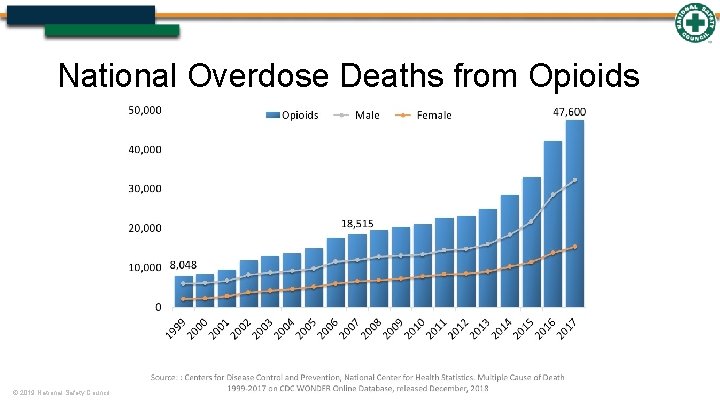
National Overdose Deaths from Opioids © 2019 National Safety Council
© 2019 National Safety Council
About Opioids © 2019 National Safety Council
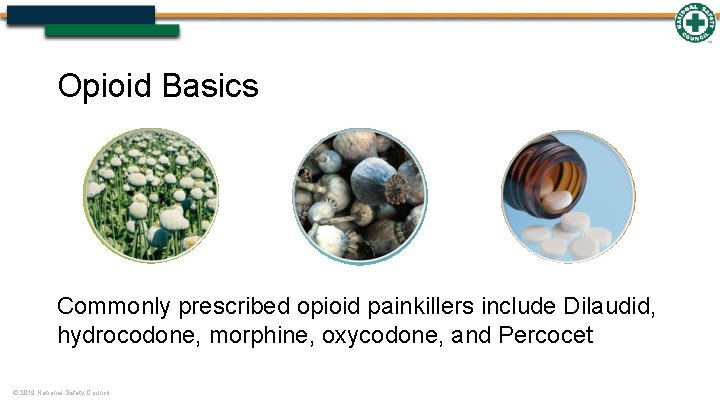
Opioid Basics Commonly prescribed opioid painkillers include Dilaudid, hydrocodone, morphine, oxycodone, and Percocet © 2019 National Safety Council
Substance Use Disorders • The National Institute on Drug Abuse (NIDA) defines SUD as a long term, relapsing brain disease that is characterized by compulsive drug-seeking and use despite harmful consequences • 20. 8 million people in the US are living with a substance use disorder • Illinois – 12. 74 million people (2018) © 2019 National Safety Council
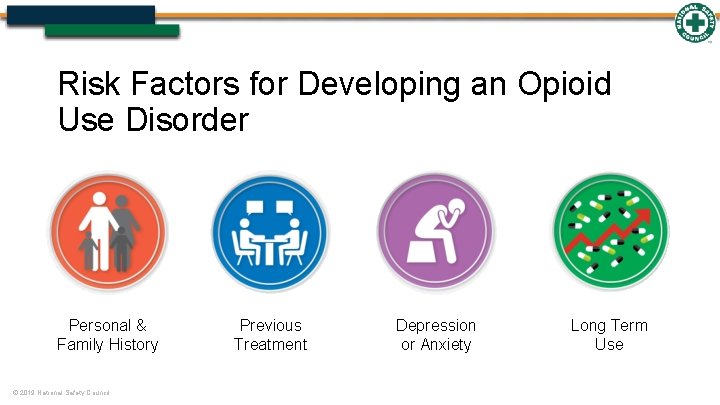
Risk Factors for Developing an Opioid Use Disorder Personal & Family History © 2019 National Safety Council Previous Treatment Depression or Anxiety Long Term Use
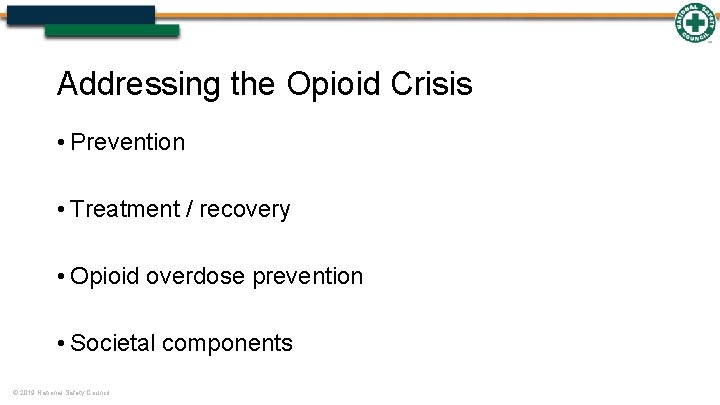
Addressing the Opioid Crisis • Prevention • Treatment / recovery • Opioid overdose prevention • Societal components © 2019 National Safety Council
Opioids + the Workplace © 2019 National Safety Council
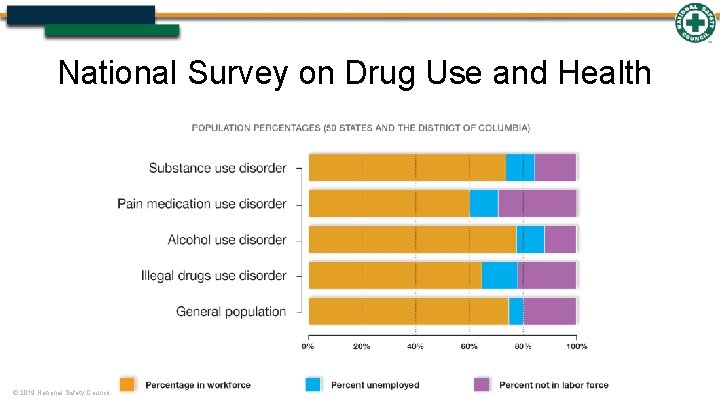
National Survey on Drug Use and Health © 2019 National Safety Council
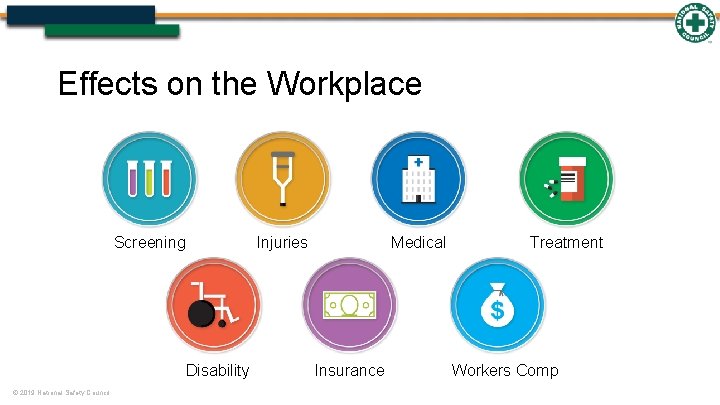
Effects on the Workplace Screening Disability © 2019 National Safety Council Injuries Medical Insurance Treatment Workers Comp
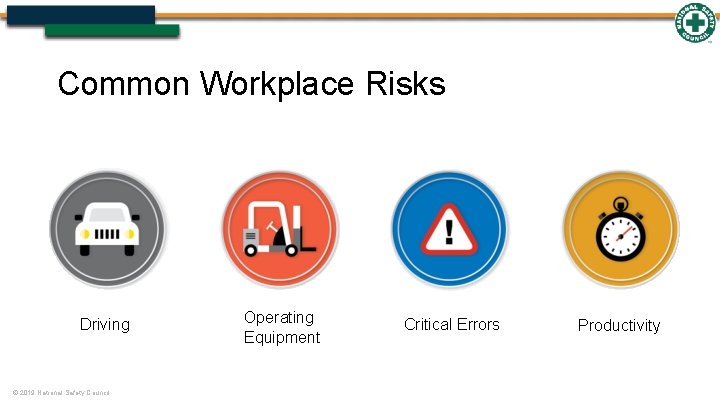
Common Workplace Risks Driving © 2019 National Safety Council Operating Equipment Critical Errors Productivity
Prevention in the Workplace • Employee education • Workplace policy • Workplace culture • Benefits and healthcare plans © 2019 National Safety Council
Treatment and Recovery in the Workplace • Addiction can be treated and patients do recover • More than 10% of Americans live in recovery • The most effective treatment for OUD is a combination of medicine, behavioral health services, and recovery support © 2019 National Safety Council
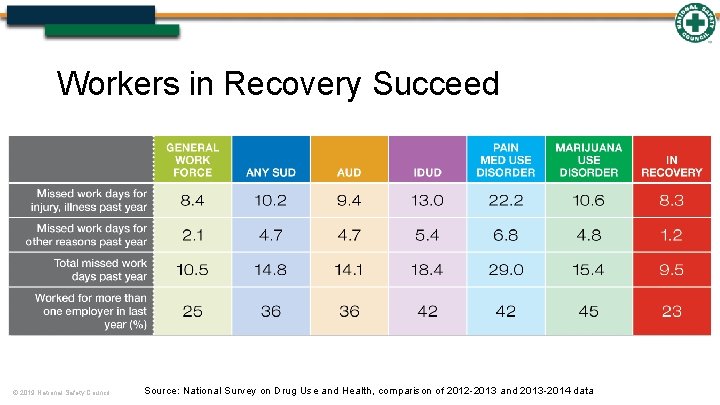
Workers in Recovery Succeed © 2019 National Safety Council Source: National Survey on Drug Use and Health, comparison of 2012 -2013 and 2013 -2014 data
Recovery Friendly Workplaces • Recognize recovery as a strength, and intentionally embracing and hiring people in recovery • Openly discuss addiction and connects employees to local resources • Safe, healthy, and supportive space for employers and employees in recovery, and employers and employees who aren’t in recovery. © 2019 National Safety Council
NSC Workplace Efforts © 2019 National Safety Council
Opioids At Work: Employer Survey Completed in January 2019, with 526 survey responses across a geographically representative sample of US employers – included a variety of industry types and organization sizes • HR Decision Makers • Safety Professionals • Managers Goal: assess impact of the overdose crisis and attitudes towards the opioid crisis in a diverse group of employers © 2019 National Safety Council
Take Aways • Need a team approach • Employers are interested in prevention, approaches differ • Employers are uncertain how to address treatment and recovery in the workplace – barriers exist © 2019 National Safety Council
© 2019 National Safety Council What Can We Do?
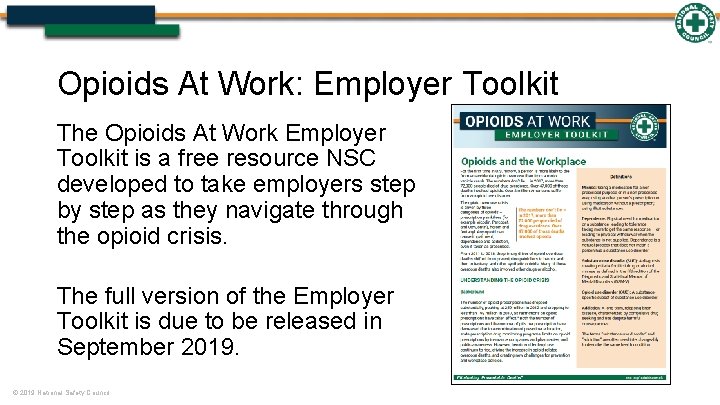
Opioids At Work: Employer Toolkit The Opioids At Work Employer Toolkit is a free resource NSC developed to take employers step by step as they navigate through the opioid crisis. The full version of the Employer Toolkit is due to be released in September 2019. © 2019 National Safety Council
Employers can play a unique role in the opioid crisis by taking these actions © 2019 National Safety Council • Obtaining senior leadership engagement and support • Engaging and educating employees • Training managers and supervisors on the role they can play • Encouraging Human Resources to create compassionate, comprehensive policies
Employers can play a unique role in the opioid crisis by taking these actions © 2019 National Safety Council • Avoiding generic policies – learn about and address unique workplace needs • Updating employer health care plans and pharmacy benefit programs • Creating a safe, hazard free workplace • Developing a workplace culture of health and wellness to reduces stigma and support recovery
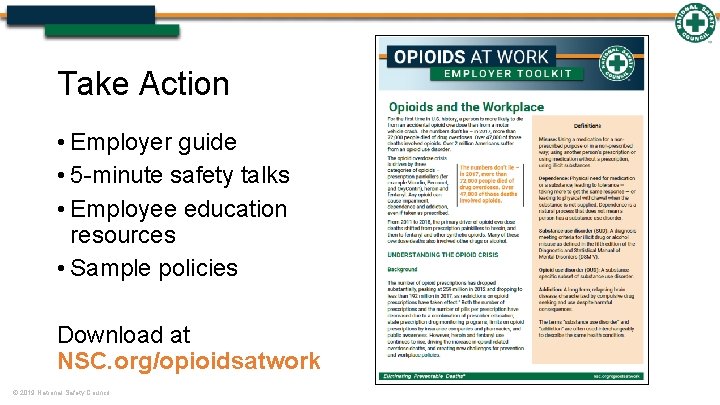
Take Action • Employer guide • 5 -minute safety talks • Employee education resources • Sample policies Download at NSC. org/opioidsatwork © 2019 National Safety Council
Rachael Cooper rachael. cooper@nsc. org 630. 373. 7981 NSC. org/opioidsatwork © 2019 National Safety Council