
2019 ASMBS Guidelines Objectives Understand the name ASMBS
2019 ASMBS Guidelines
Objectives • Understand the name ASMBS and what it does as an organization • What are the main components of the guidelines • Learn about each nutrient in the guidelines • Learn about the appropriate range of supplementation of each nutrient • Learn about different deficiency symptoms that can occur from too low of supplementation
What are the ASMBS Guidelines? • American Society of Metabolic Bariatric Surgery • Founded in 1983 • The Goal: to improve the health and wellbeing of people effected by obesity or related conditions • Instituted vitamin and mineral guidelines for each procedure type to prevent harmful deficiencies of key nutrients • Broken into 3 main groups: • Multivitamin • Iron • Calcium
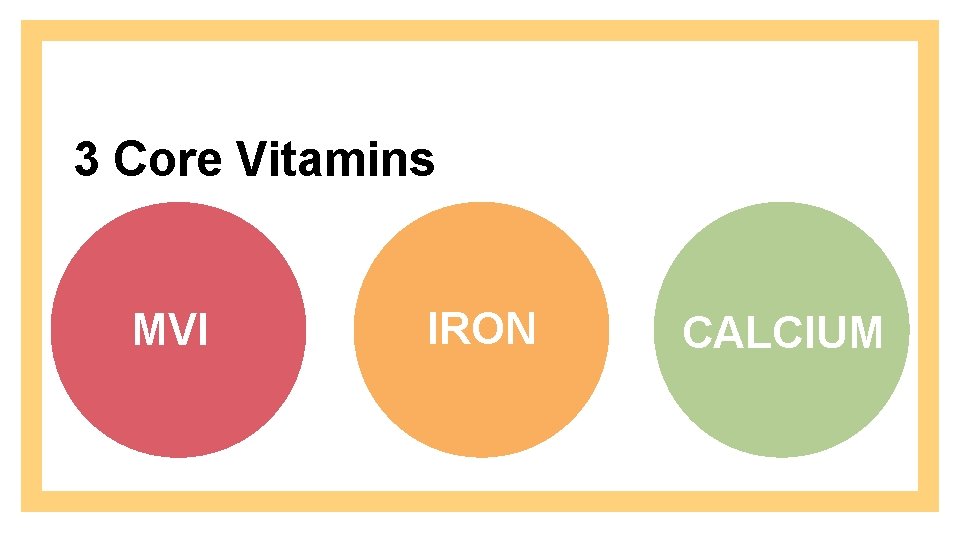
3 Core Vitamins MVI IRON CALCIUM
Multivitamin • Vitamin of choice • Divided doses • Your insurance policy MVI
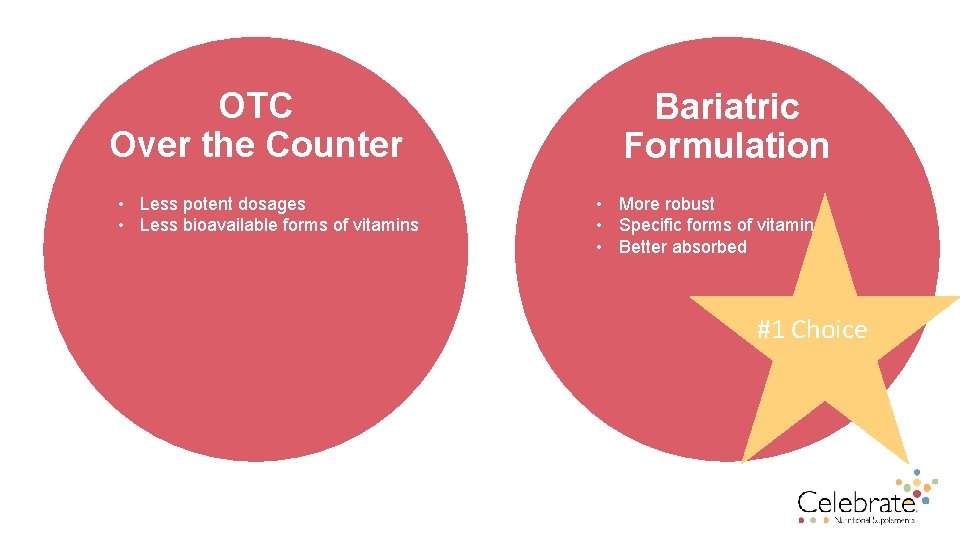
OTC Over the Counter • Less potent dosages • Less bioavailable forms of vitamins Bariatric Formulation • More robust • Specific forms of vitamins • Better absorbed #1 Choice
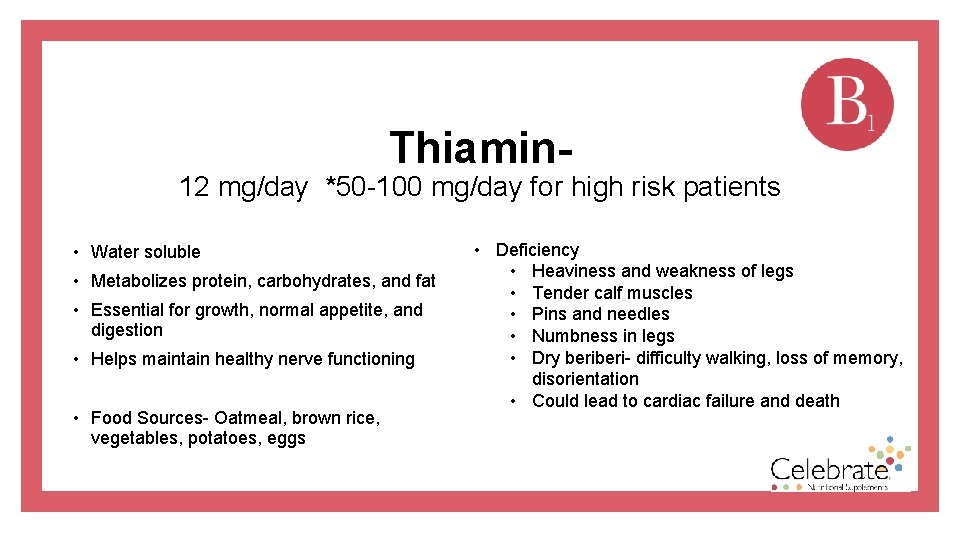
Thiamin- 12 mg/day *50 -100 mg/day for high risk patients • Water soluble • Metabolizes protein, carbohydrates, and fat • Essential for growth, normal appetite, and digestion • Helps maintain healthy nerve functioning • Food Sources- Oatmeal, brown rice, vegetables, potatoes, eggs • Deficiency • Heaviness and weakness of legs • Tender calf muscles • Pins and needles • Numbness in legs • Dry beri- difficulty walking, loss of memory, disorientation • Could lead to cardiac failure and death
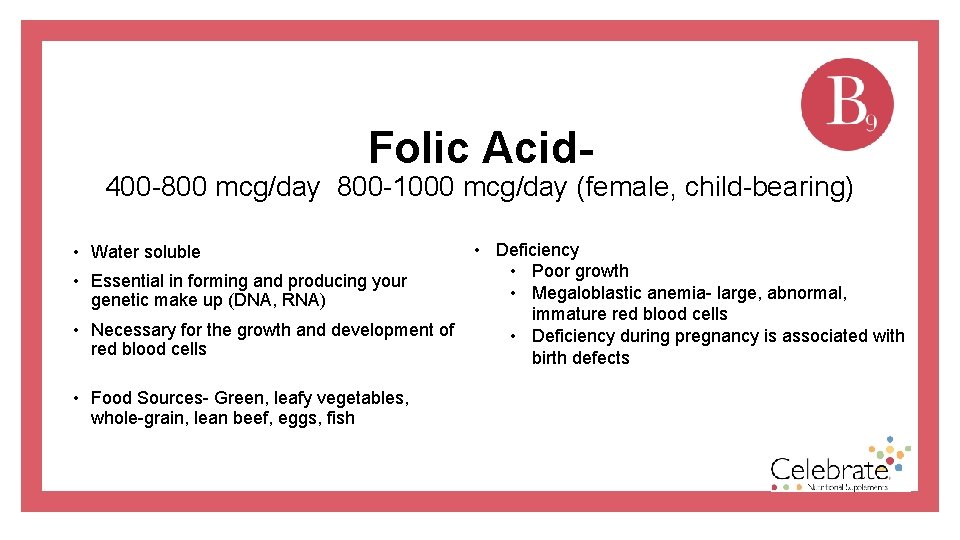
Folic Acid- 400 -800 mcg/day 800 -1000 mcg/day (female, child-bearing) • Water soluble • Essential in forming and producing your genetic make up (DNA, RNA) • Necessary for the growth and development of red blood cells • Food Sources- Green, leafy vegetables, whole-grain, lean beef, eggs, fish • Deficiency • Poor growth • Megaloblastic anemia- large, abnormal, immature red blood cells • Deficiency during pregnancy is associated with birth defects
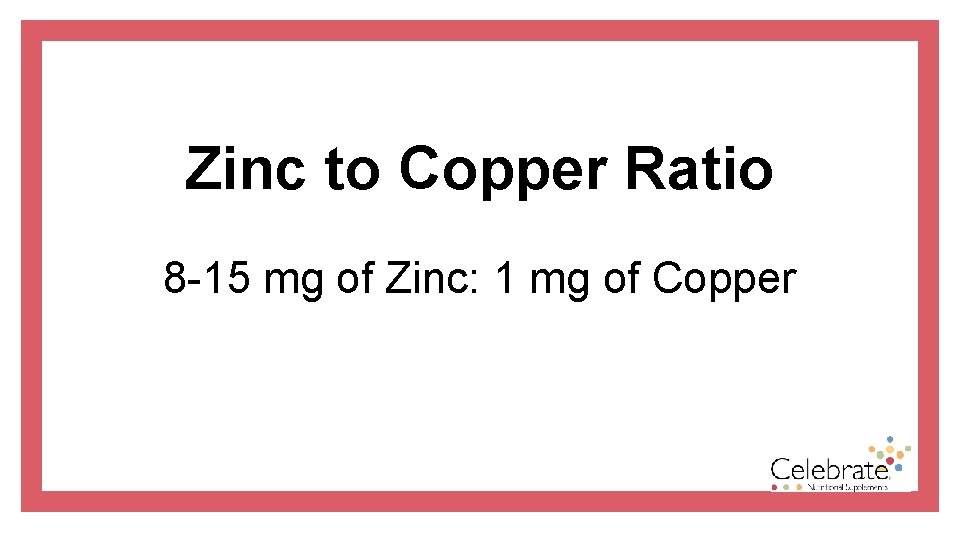
Zinc to Copper Ratio 8 -15 mg of Zinc: 1 mg of Copper
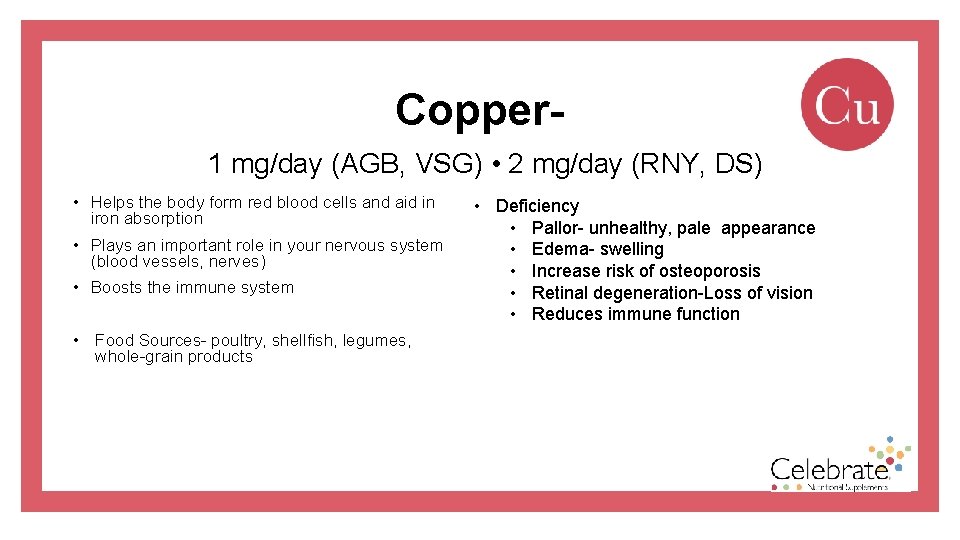
Copper 1 mg/day (AGB, VSG) • 2 mg/day (RNY, DS) • Helps the body form red blood cells and aid in iron absorption • Plays an important role in your nervous system (blood vessels, nerves) • Boosts the immune system • Food Sources- poultry, shellfish, legumes, whole-grain products • Deficiency • Pallor- unhealthy, pale appearance • Edema- swelling • Increase risk of osteoporosis • Retinal degeneration-Loss of vision • Reduces immune function
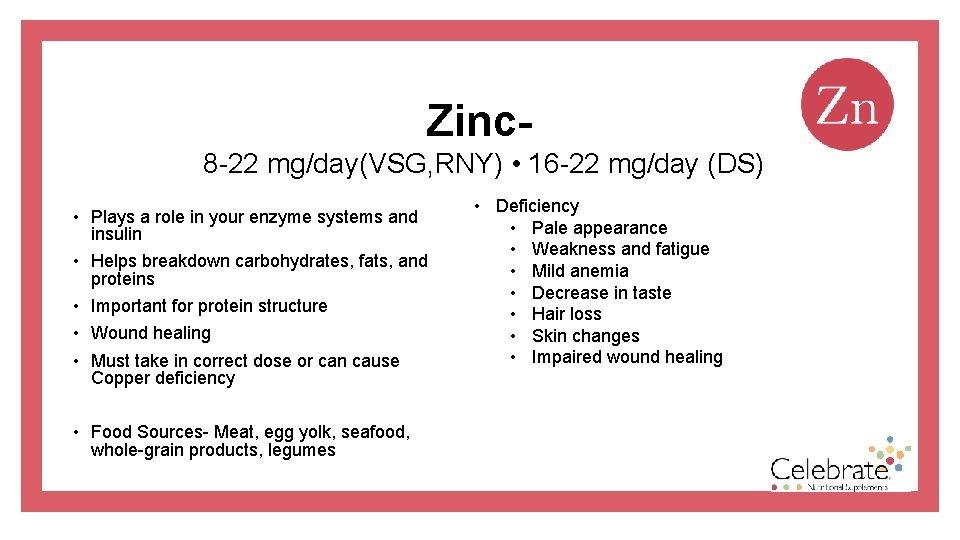
Zinc 8 -22 mg/day(VSG, RNY) • 16 -22 mg/day (DS) • Plays a role in your enzyme systems and insulin • Helps breakdown carbohydrates, fats, and proteins • Important for protein structure • Wound healing • Must take in correct dose or can cause Copper deficiency • Food Sources- Meat, egg yolk, seafood, whole-grain products, legumes • Deficiency • Pale appearance • Weakness and fatigue • Mild anemia • Decrease in taste • Hair loss • Skin changes • Impaired wound healing
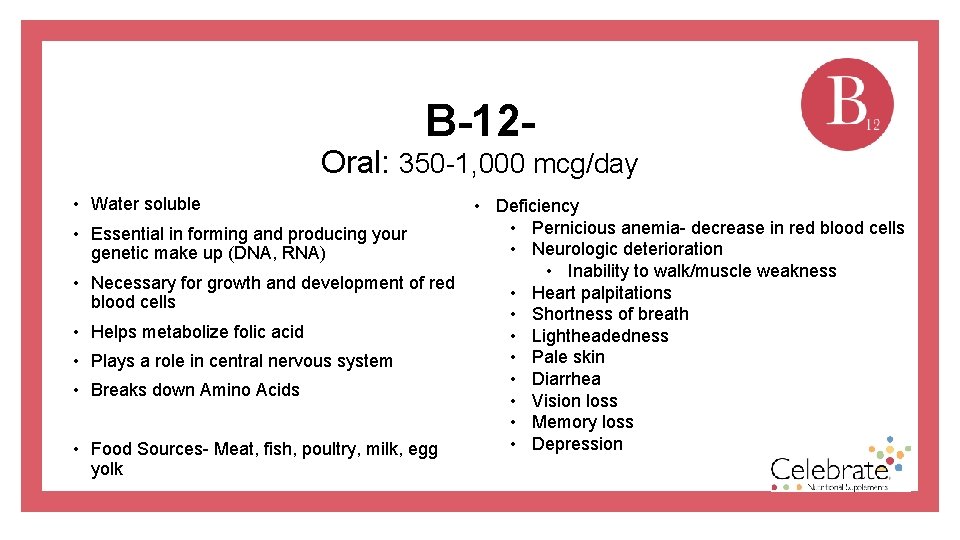
B-12 - Oral: 350 -1, 000 mcg/day • Water soluble • Essential in forming and producing your genetic make up (DNA, RNA) • Necessary for growth and development of red blood cells • Helps metabolize folic acid • Plays a role in central nervous system • Breaks down Amino Acids • Food Sources- Meat, fish, poultry, milk, egg yolk • Deficiency • Pernicious anemia- decrease in red blood cells • Neurologic deterioration • Inability to walk/muscle weakness • Heart palpitations • Shortness of breath • Lightheadedness • Pale skin • Diarrhea • Vision loss • Memory loss • Depression
Vitamin D- 3, 000 IU/day to maintain • Fat soluble • Necessary for the formation of normal bone and teeth • Promotes the absorption of calcium • Food Sources- Egg yolk, fatty fish (such as salmon and tuna), Vitamin D-fortified milks and cheese • Deficiency • Rickets- softening and weakening of bones in children • Osteomalacia- softening of the bones that may lead to bowing and/or fractures
Vitamin A- 5, 000 -10, 000 IU/day • 10, 000 IU/day (DS) • Fat soluble • Required for normal vision, gene expression, reproduction, and immune function • Essential for normal growth, development, and maintenance of tissue • Helps promote normal bone development and influences normal tooth formation (enamel development) • Functions as an antioxidant • Necessary for wound healing • Food Sources- Meat, egg yolk, seafood, wholegrain products, legumes • Deficiency • Night blindness, hyperkeratosis- thickening of outer layer of the skin • Keratomalacia- drying and clouding of the cornea • Dry eyes • Poor bone growth • More susceptible to infection
Vitamin E 15 mg/day • Fat soluble • Functions as an antioxidant in the tissues • Helps enzymes function properly • Neuromuscular function • Helps protect red blood cells • Food Sources-Vegetables, nuts, seeds, Vegetable oils, egg yolk, whole grain, wheat germ • Deficiency • Very rare • Retinal degeneration-Loss of vision • Inability to use other fat-soluble vitamins • Impaired balance • Muscular weakness
Vitamin K- 90 -120 mcg/day • 300 mcg/day (DS) • Fat soluble • Required for blood clotting • Involved in bone metabolism • Assists in calcium metabolism • Food Sources-Leafy green vegetables, egg yolk, vegetable oils, pork, wheat bran • Deficiency • Prolonged bleeding/Hemorrhaging • Increased risk of fractures and osteoporosis
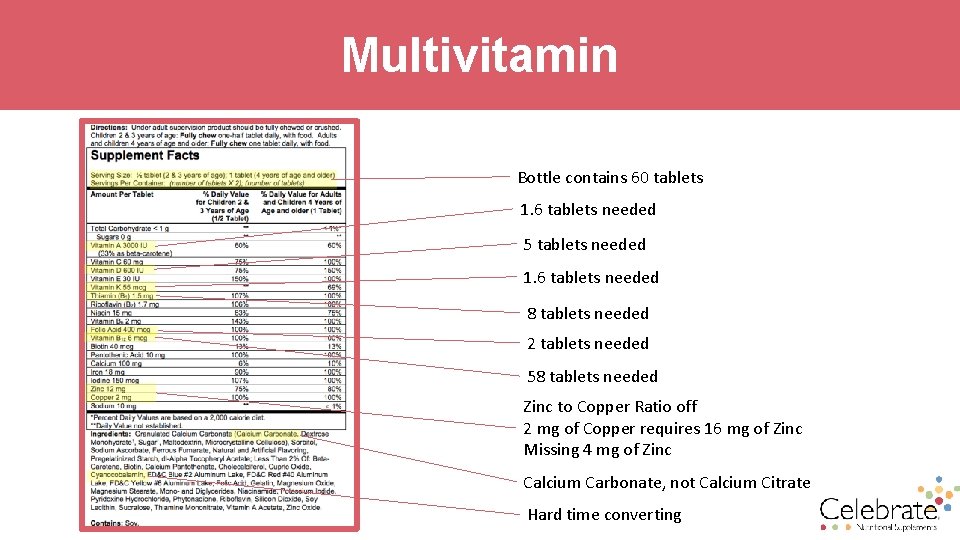
Multivitamin Bottle contains 60 tablets 1. 6 tablets needed 5 tablets needed 1. 6 tablets needed 8 tablets needed 2 tablets needed 58 tablets needed Zinc to Copper Ratio off 2 mg of Copper requires 16 mg of Zinc Missing 4 mg of Zinc Calcium Carbonate, not Calcium Citrate Hard time converting
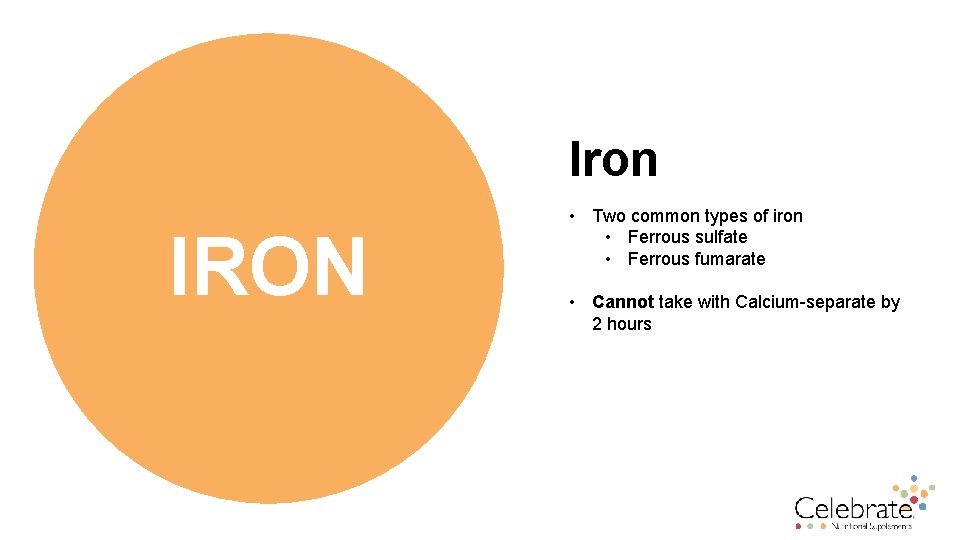
Iron IRON • Two common types of iron • Ferrous sulfate • Ferrous fumarate • Cannot take with Calcium-separate by 2 hours
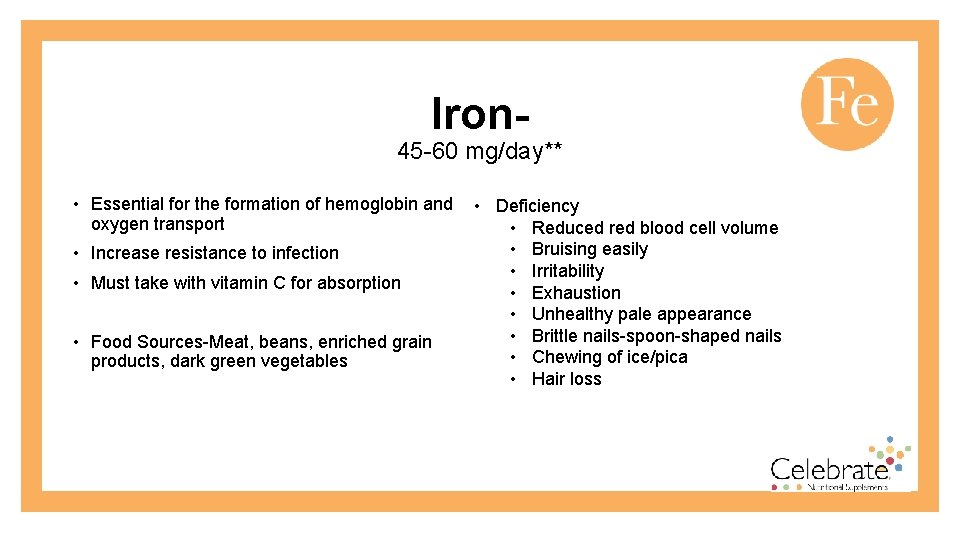
Iron- 45 -60 mg/day** • Essential for the formation of hemoglobin and oxygen transport • Increase resistance to infection • Must take with vitamin C for absorption • Food Sources-Meat, beans, enriched grain products, dark green vegetables • Deficiency • Reduced red blood cell volume • Bruising easily • Irritability • Exhaustion • Unhealthy pale appearance • Brittle nails-spoon-shaped nails • Chewing of ice/pica • Hair loss
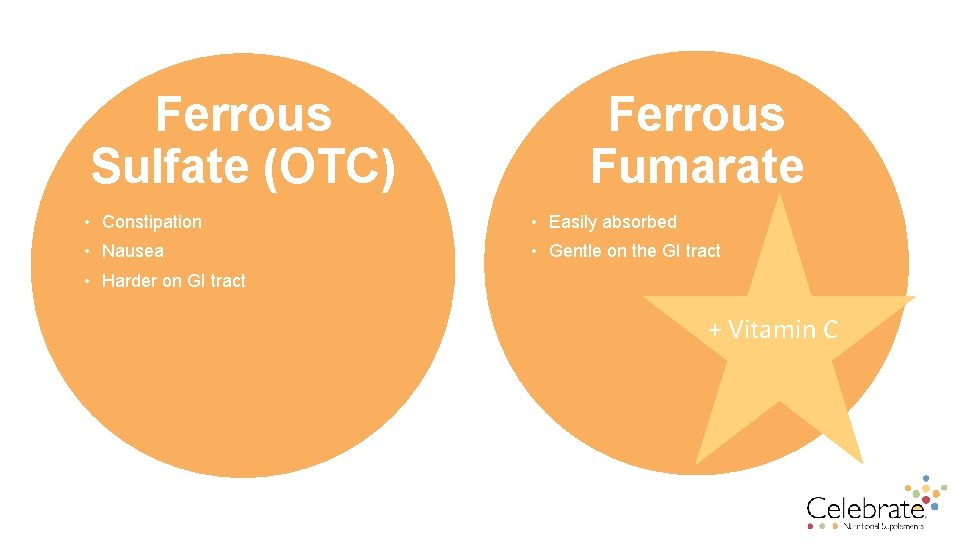
Ferrous Sulfate (OTC) Ferrous Fumarate • Constipation • Easily absorbed • Nausea • Gentle on the GI tract • Harder on GI tract + Vitamin C
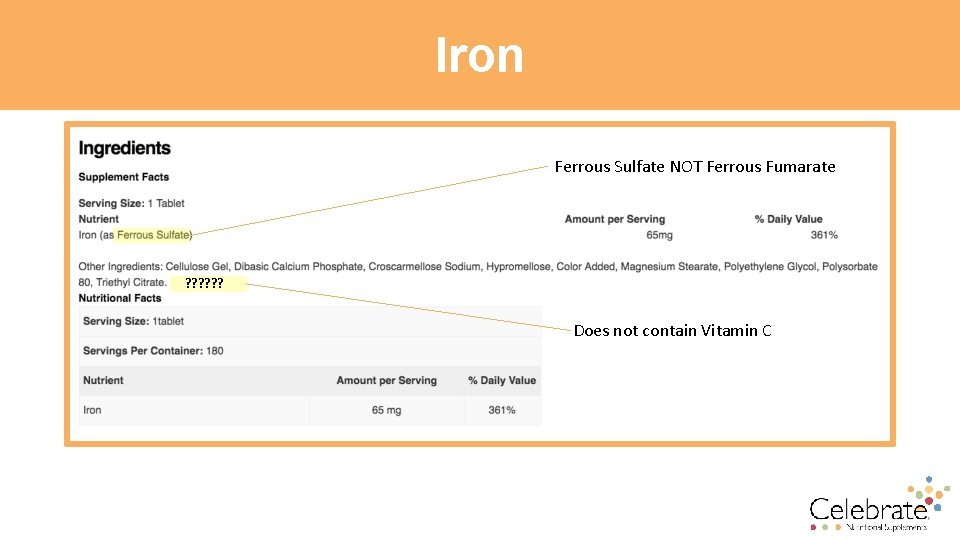
Iron Ferrous Sulfate NOT Ferrous Fumarate ? ? ? Does not contain Vitamin C
Calcium • Two common types of calcium • Calcium Citrate • Calcium Carbonate • Take in divided doses • No more than 500 mg per serving • Do not combine with Iron – separate by 2 hours Calcium
Calcium- 1200 -1500 mg/day • Builds and maintains bones and teeth • Helps muscles contract • Must take with vitamin D to promote absorption • Food Sources-Dairy products, dairy alternatives, some leafy green vegetables • Deficiency • Increased risk of osteomalacia- softening and weakening of the bones • May be an important factor in colon cancer and high blood pressure • Risk of osteoporosis- decrease in bone density • Dental issues • Muscle cramps
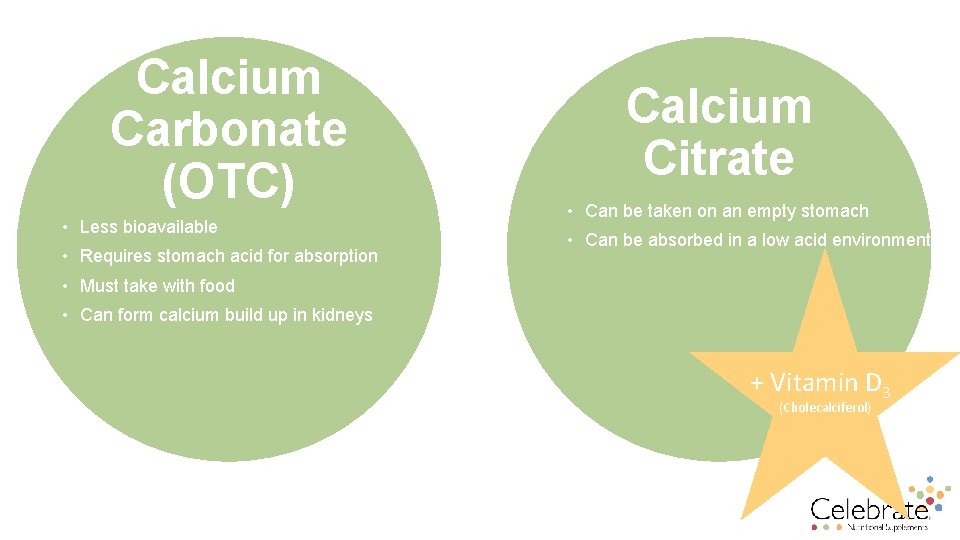
Calcium Carbonate (OTC) • Less bioavailable • Requires stomach acid for absorption Calcium Citrate • Can be taken on an empty stomach • Can be absorbed in a low acid environment • Must take with food • Can form calcium build up in kidneys + Vitamin D 3 (Cholecalciferol)
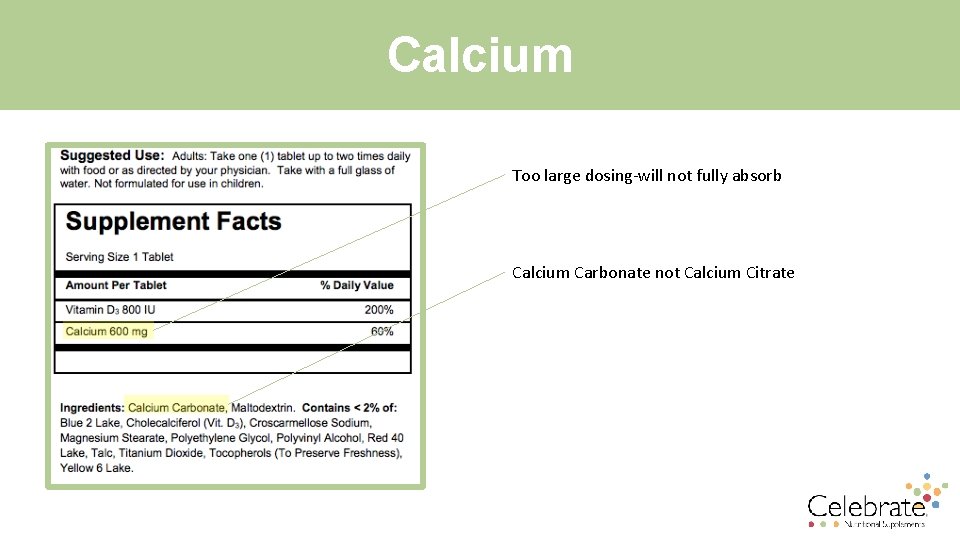
Calcium Too large dosing-will not fully absorb Calcium Carbonate not Calcium Citrate
Protein • Types of Protein • Whey • Casein • Egg • Soy • Pea • Collagen
Protein 60 g/day • Found in muscle, bone, skin, and hair • Deficiency • Hair loss • Body uses it to build and repair • Brittle nails • The building block of bones, muscle, cartilage, • Loss of muscle skin, and blood • Slower weight loss • Body uses it to make enzymes and hormones • Impairs your immune system • Food Sources- Eggs, Meat, Fish, Chicken, Turkey, Beans, Dairy, Nuts
Whey Concentrate Whey Protein Isolate • Contains lactose and milk fat • Lactose free • Protein percentage may vary • High Protein percentage • Protein Content: 20 -80% • Protein Content: almost 100% • Contains all 9 essential amino acids
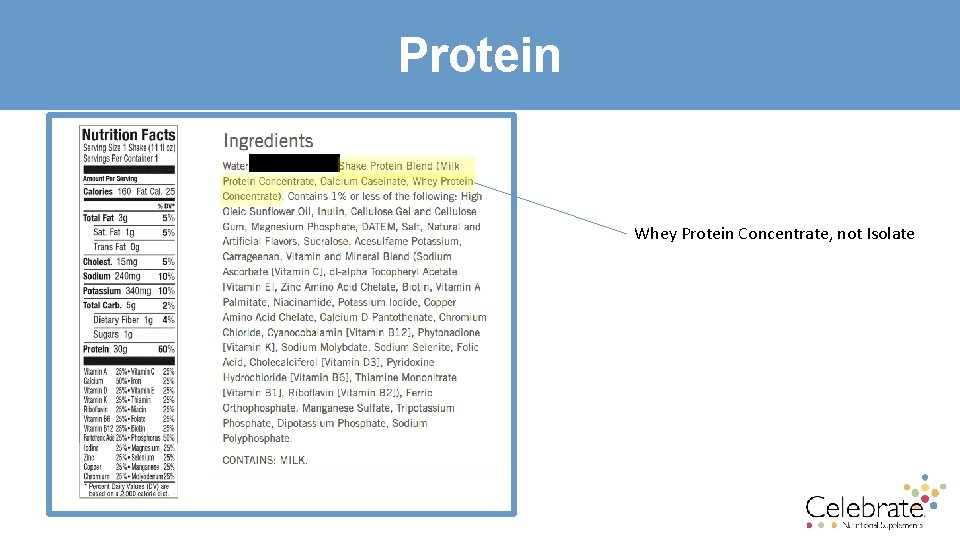
Protein Whey Protein Concentrate, not Isolate
Water- Minimum 50 oz/day

Questions?
- Slides: 31