
2019 2020 Academic Program Assessment Reports The Office


- Slides: 12
2019 -2020 Academic Program Assessment Reports The Office of Institutional Effectiveness & Evaluation August 2020
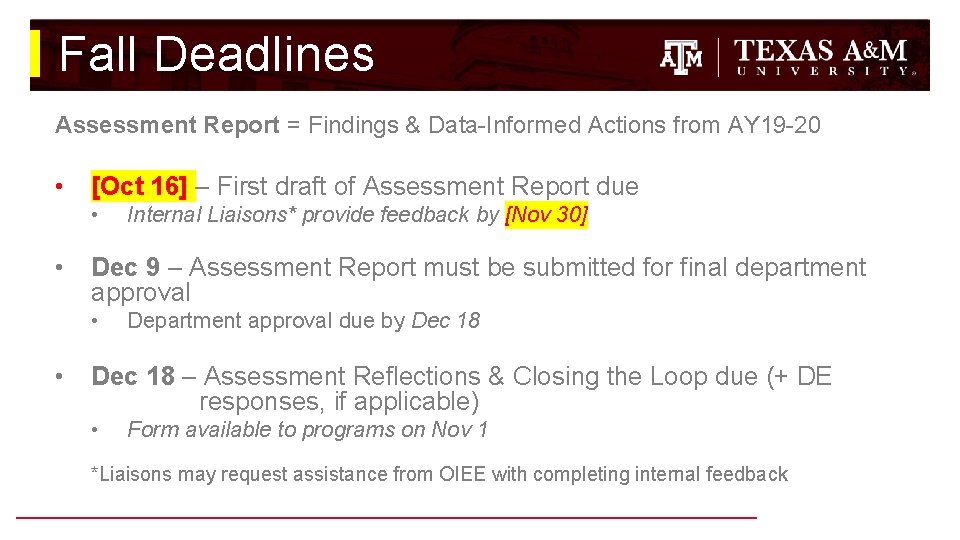
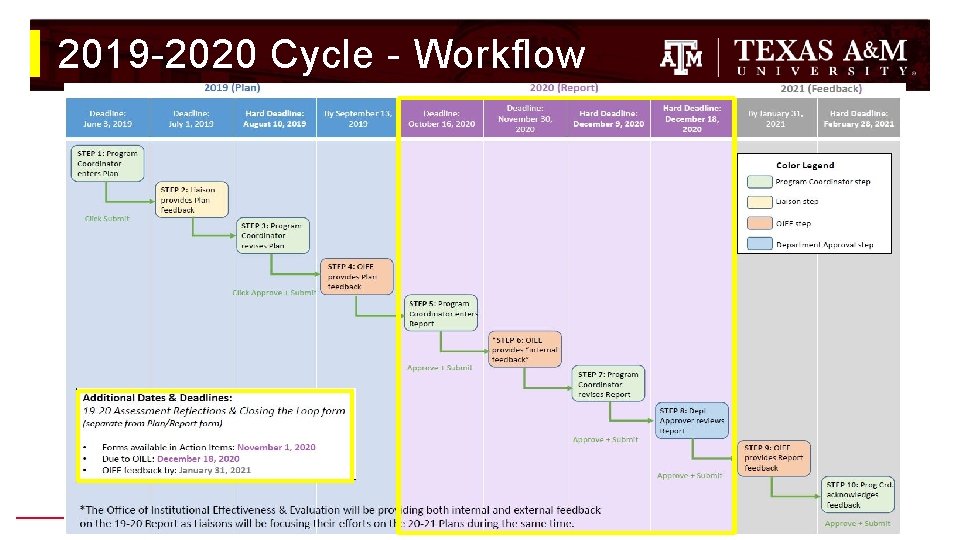
Fall Deadlines Assessment Report = Findings & Data-Informed Actions from AY 19 -20 • [Oct 16] – First draft of Assessment Report due • • Dec 9 – Assessment Report must be submitted for final department approval • • Internal Liaisons* provide feedback by [Nov 30] Department approval due by Dec 18 – Assessment Reflections & Closing the Loop due (+ DE responses, if applicable) • Form available to programs on Nov 1 *Liaisons may request assistance from OIEE with completing internal feedback
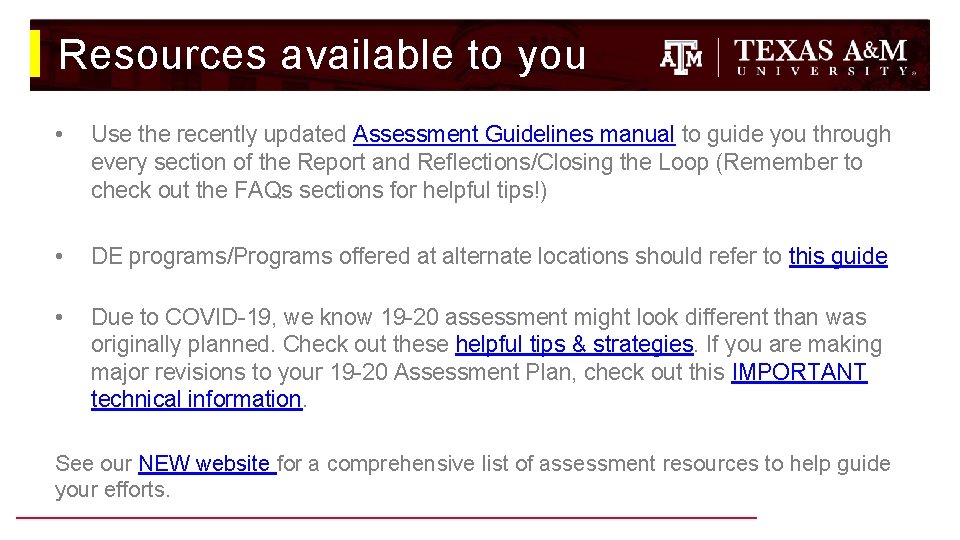
Resources available to you • Use the recently updated Assessment Guidelines manual to guide you through every section of the Report and Reflections/Closing the Loop (Remember to check out the FAQs sections for helpful tips!) • DE programs/Programs offered at alternate locations should refer to this guide • Due to COVID-19, we know 19 -20 assessment might look different than was originally planned. Check out these helpful tips & strategies. If you are making major revisions to your 19 -20 Assessment Plan, check out this IMPORTANT technical information. See our NEW website for a comprehensive list of assessment resources to help guide your efforts.
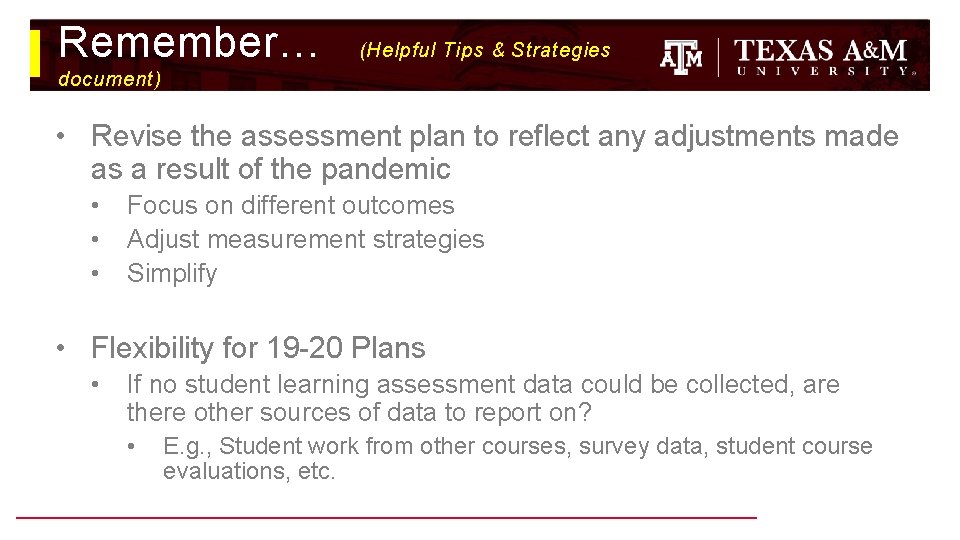
Remember… (Helpful Tips & Strategies document) • Revise the assessment plan to reflect any adjustments made as a result of the pandemic • • • Focus on different outcomes Adjust measurement strategies Simplify • Flexibility for 19 -20 Plans • If no student learning assessment data could be collected, are there other sources of data to report on? • E. g. , Student work from other courses, survey data, student course evaluations, etc.
Findings • Remember to disaggregate results! • • Data for fewer than 5 students • • • Combined assessment plans (multiple programs in one) Modes of delivery (FTF and DE) Offered in two different geographic locations Programs with consistently low enrollment: “Roll up” data from the previous 3 -5 years (e. g. , rolling averages) Programs with uncharacteristically small number of data points may simply report that the sample size was too small to base continuous improvement efforts on Contextualize results in your finding statements – what does it mean?
Data-Informed Actions • Extremely important that all programs meet expectations for this section of the report! • At least one (1) action must be a curricular change; changes to assessment strategies do not fit this criterion • Something must be entered in every action text box • See Guidelines manual for more information/suggestions
COVID-19 Considerations • This is an additional question added to Assessment Reflections & Closing the Loop report • Opportunity for programs to explain how the transition to remote delivery mid-spring semester affected their planned assessment strategy, if at all • Questions to consider: What did you change? What worked? What didn’t? What did you learn? What changes are you going to continue with or implement permanently?
Assessment Reflections • Program leadership AND program faculty involvement in the assessment process • Be sure to address both • Changes to assessment practices • Is it the right data? • Is the data specific enough to guide changes?
Closing the Loop • After a curricular change has been made and the targeted outcome re-assessed…what have you learned? • Does NOT need to refer to an action plan previously submitted in AEFIS or Weave; Can be any curricular change related to one of the PLOs in the plan • Please still include specific information, such as what data or observation led to the change and what the follow-up data/observation showed about outcome achievement
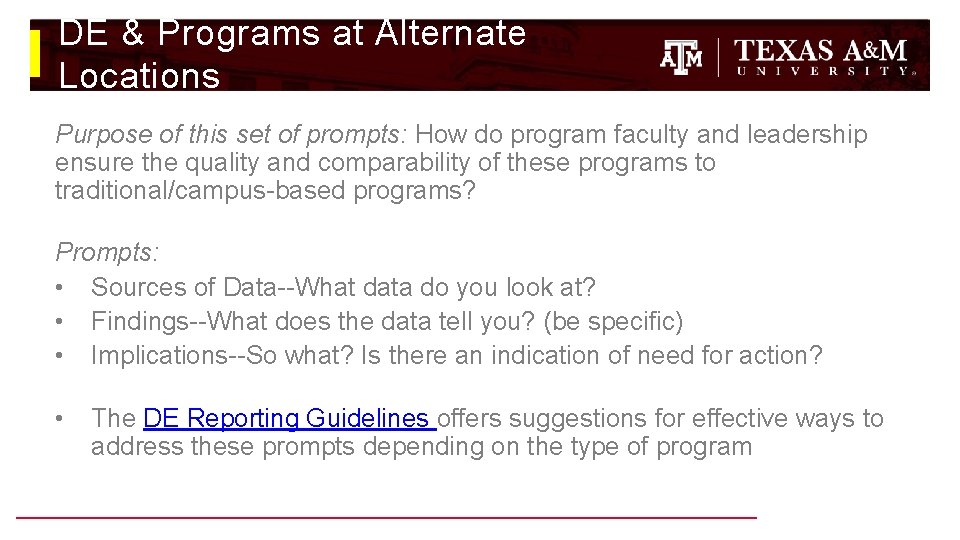
DE & Programs at Alternate Locations Purpose of this set of prompts: How do program faculty and leadership ensure the quality and comparability of these programs to traditional/campus-based programs? Prompts: • Sources of Data--What data do you look at? • Findings--What does the data tell you? (be specific) • Implications--So what? Is there an indication of need for action? • The DE Reporting Guidelines offers suggestions for effective ways to address these prompts depending on the type of program
2019 -2020 Cycle - Workflow
Please contact your Assessment Liaison or OIEE consultant with any questions! assessment@tamu. edu assessment. tamu. edu