
2018 19 The ethos of Eduqas Geology questions
- Slides: 12
2018 -19 The ethos of Eduqas Geology questions Dave Turner Presenter
Clarity of expression • Precise wording of questions • Only relevant data given • Candidates should be assessed on their knowledge of geology and their ability to use their geological training to think on their feet • Candidates should not have to: o work hard to understand what the question is trying to get at because of issues with wording o guess what the examiner had in mind as the answer, when the question was set
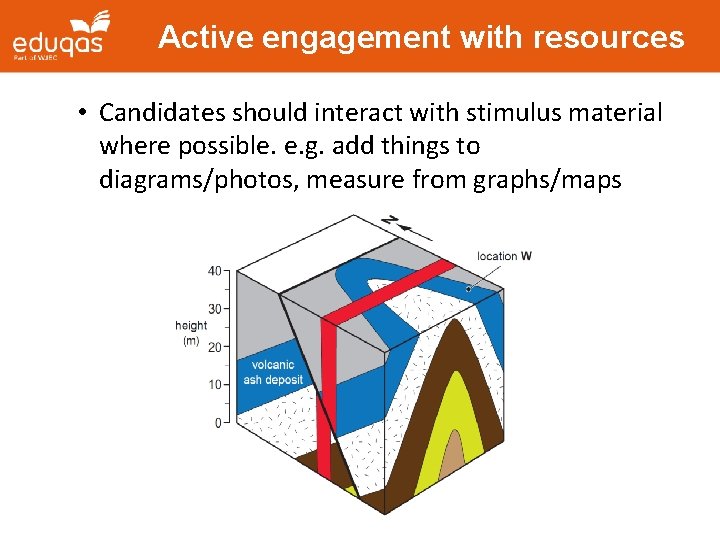
Active engagement with resources • Candidates should interact with stimulus material where possible. e. g. add things to diagrams/photos, measure from graphs/maps
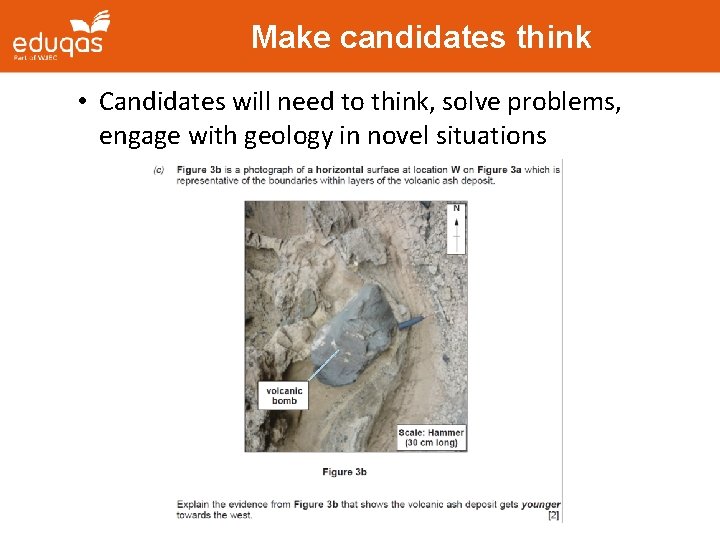
Make candidates think • Candidates will need to think, solve problems, engage with geology in novel situations
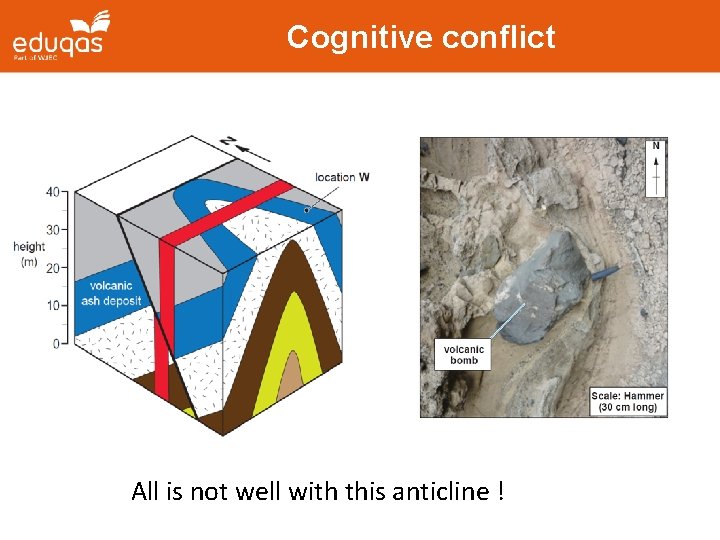
Cognitive conflict • Examiners will occasionally set questions that should trigger in candidates some form of cognitive conflict • Cognitive conflict is the term educationalists use for the idea of cognitive dissonance and can be broadly defined as “the mental discomfort produced when someone is confronted with new information that contradicts their prior beliefs and ideas” • An example of this was developed in GL 4 2018 Q 3
Cognitive conflict All is not well with this anticline !
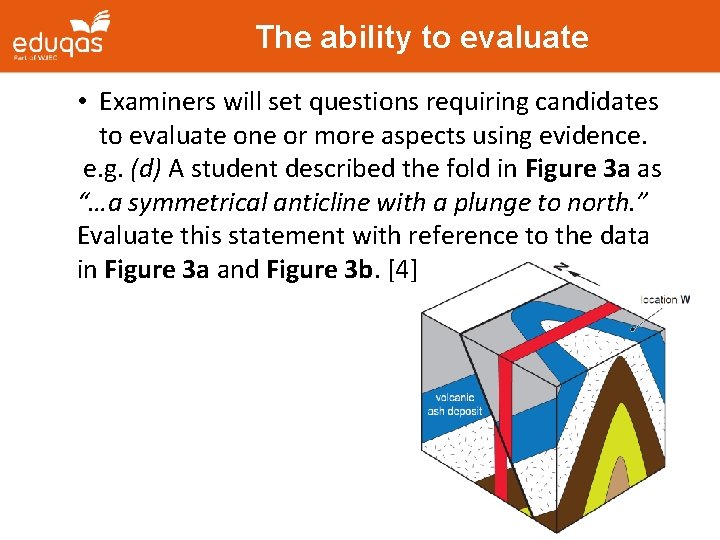
The ability to evaluate • Examiners will set questions requiring candidates to evaluate one or more aspects using evidence. e. g. (d) A student described the fold in Figure 3 a as “…a symmetrical anticline with a plunge to north. ” Evaluate this statement with reference to the data in Figure 3 a and Figure 3 b. [4]
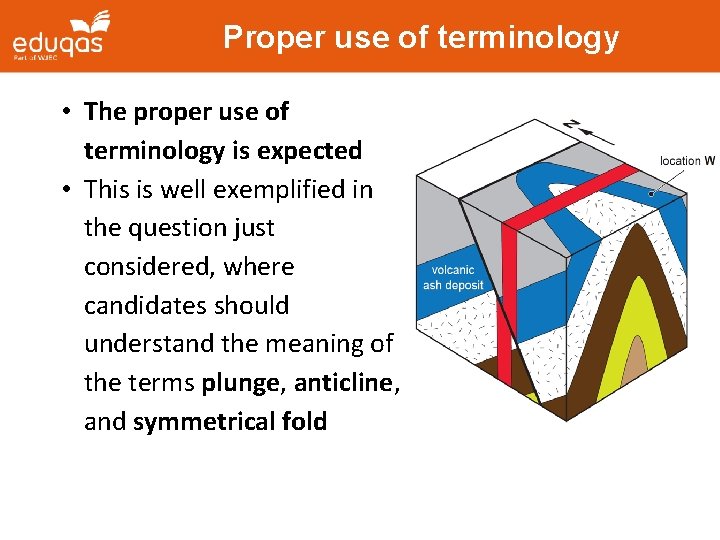
Proper use of terminology • The proper use of terminology is expected • This is well exemplified in the question just considered, where candidates should understand the meaning of the terms plunge, anticline, and symmetrical fold
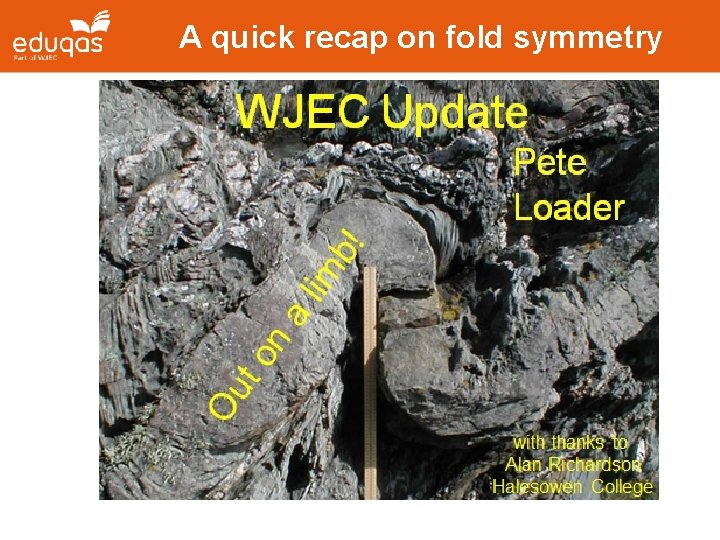
A quick recap on fold symmetry
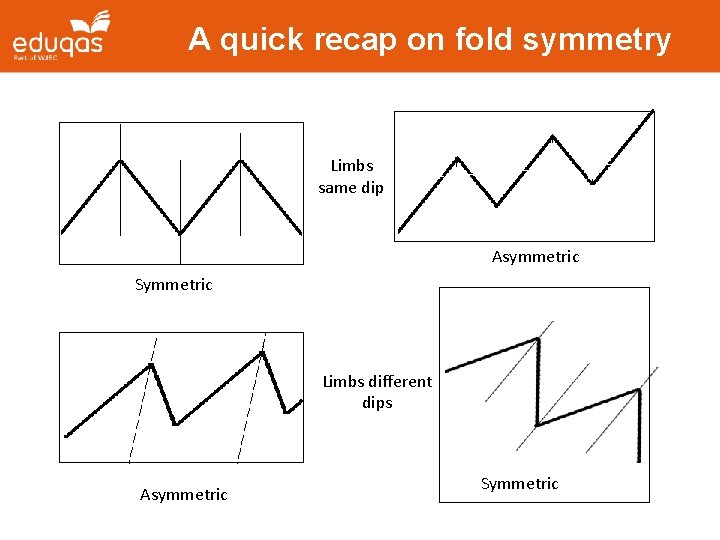
A quick recap on fold symmetry Limbs same dip Asymmetric Symmetric Limbs different dips Asymmetric Symmetric
A quick recap on fold symmetry • There exists a common misconception that the dips of limbs of a symmetrical fold must have equal dips in opposite directions. This need not be the case, but the lengths of the limbs must be equal • Symmetrical folds have limbs of equal length • Asymmetrical folds have limbs of different lengths
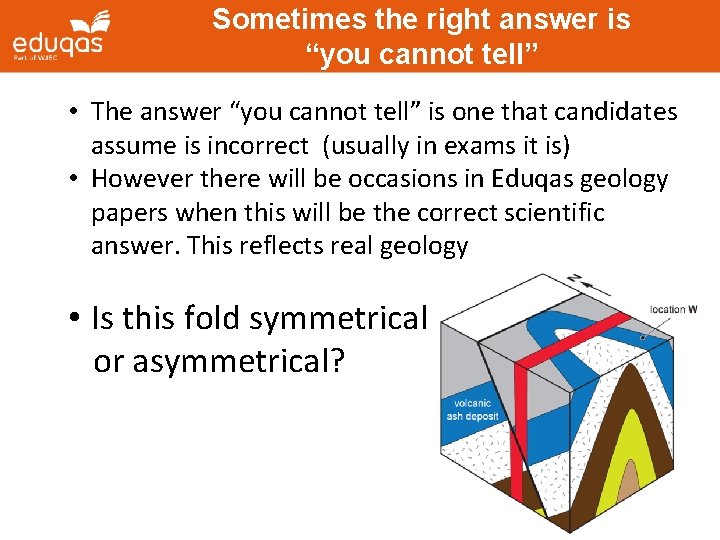
Sometimes the right answer is “you cannot tell” • The answer “you cannot tell” is one that candidates assume is incorrect (usually in exams it is) • However there will be occasions in Eduqas geology papers when this will be the correct scientific answer. This reflects real geology • Is this fold symmetrical or asymmetrical?