
2017 th 8 Grade Science FCAT Review Nature
- Slides: 60
2017 th 8 Grade Science FCAT Review
Nature of Science
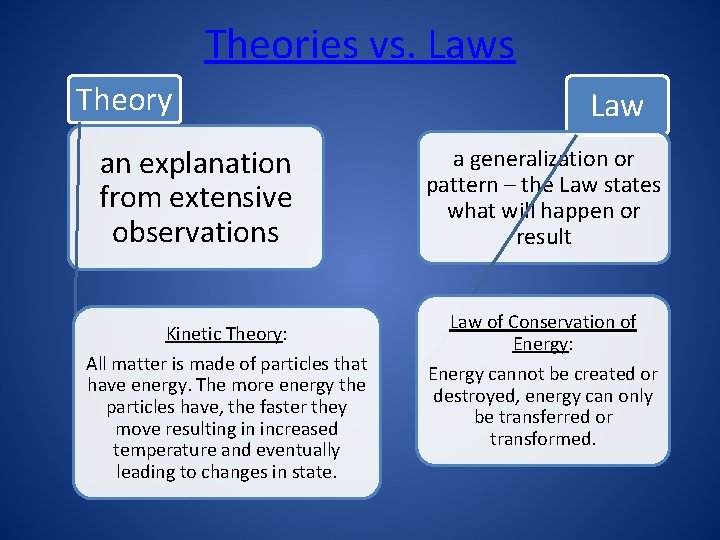
Theories vs. Laws Theory an explanation from extensive observations Kinetic Theory: All matter is made of particles that have energy. The more energy the particles have, the faster they move resulting in increased temperature and eventually leading to changes in state. Law a generalization or pattern – the Law states what will happen or result Law of Conservation of Energy: Energy cannot be created or destroyed, energy can only be transferred or transformed.
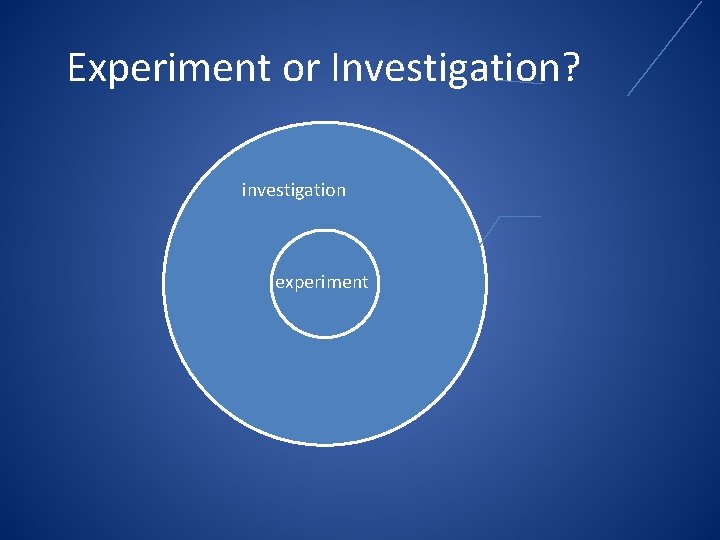
Experiment or Investigation? investigation experiment
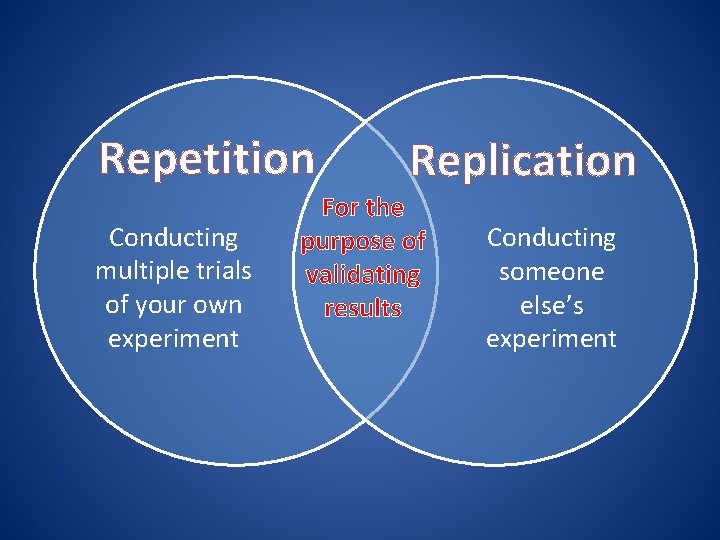
Repetition Conducting multiple trials of your own experiment Replication For the purpose of validating results Conducting someone else’s experiment
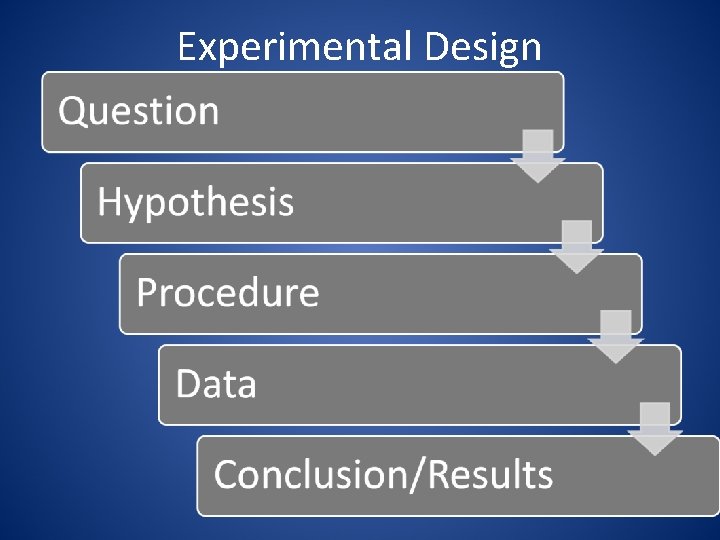
Experimental Design
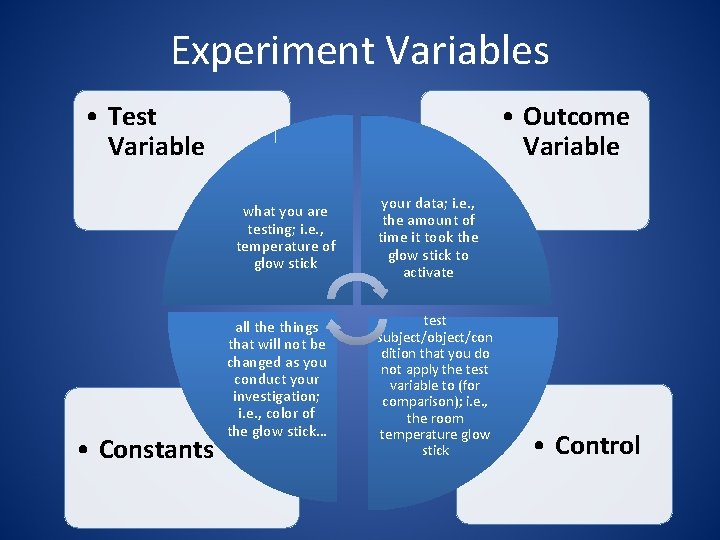
Experiment Variables • Test Variable • Outcome Variable what you are testing; i. e. , temperature of glow stick • Constants all the things that will not be changed as you conduct your investigation; i. e. , color of the glow stick… your data; i. e. , the amount of time it took the glow stick to activate test subject/object/con dition that you do not apply the test variable to (for comparison); i. e. , the room temperature glow stick • Control
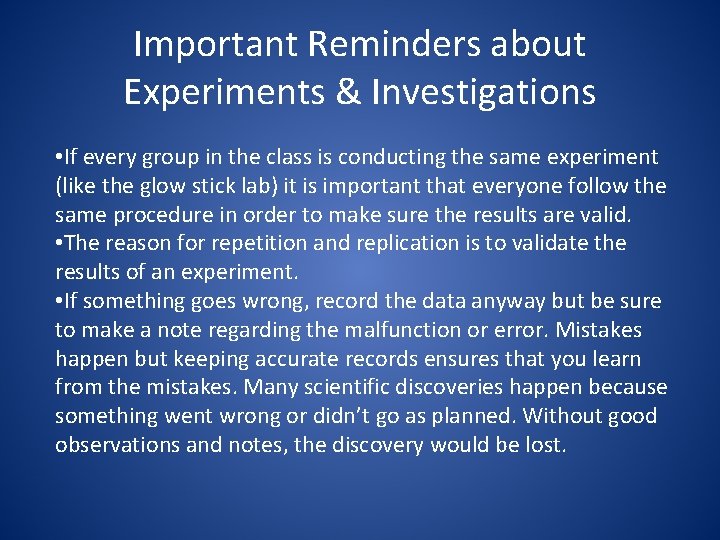
Important Reminders about Experiments & Investigations • If every group in the class is conducting the same experiment (like the glow stick lab) it is important that everyone follow the same procedure in order to make sure the results are valid. • The reason for repetition and replication is to validate the results of an experiment. • If something goes wrong, record the data anyway but be sure to make a note regarding the malfunction or error. Mistakes happen but keeping accurate records ensures that you learn from the mistakes. Many scientific discoveries happen because something went wrong or didn’t go as planned. Without good observations and notes, the discovery would be lost.
Earth and Space Sciences
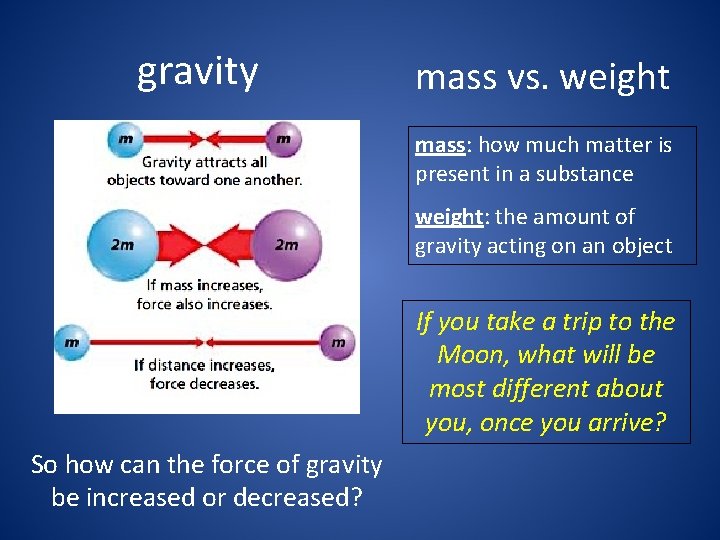
gravity mass vs. weight mass: how much matter is present in a substance weight: the amount of gravity acting on an object If you take a trip to the Moon, what will be most different about you, once you arrive? So how can the force of gravity be increased or decreased?
Stars • There is only one star in our solar system: the Sun • The are billions of stars in our galaxy: the Milky Way Galaxy. • Stars are visible in clumps that are unevenly distributed in space. • The Sun is an average-sized, average temperature star that happens to be much closer to Earth than any other star.
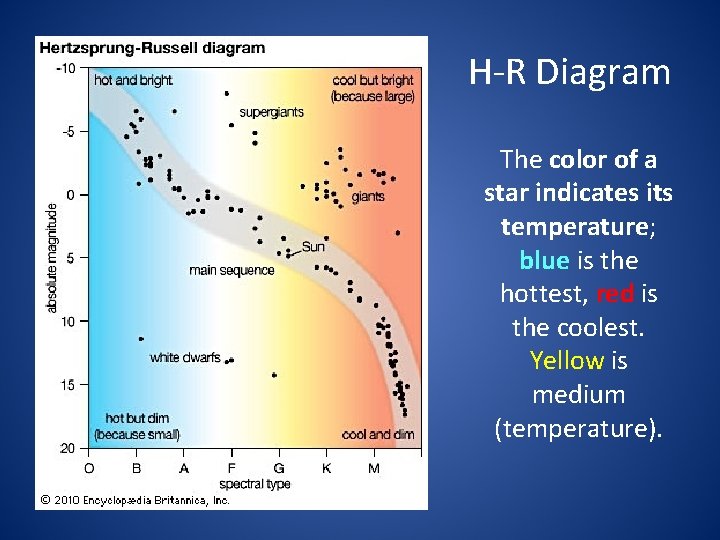
H-R Diagram The color of a star indicates its temperature; blue is the hottest, red is the coolest. Yellow is medium (temperature).
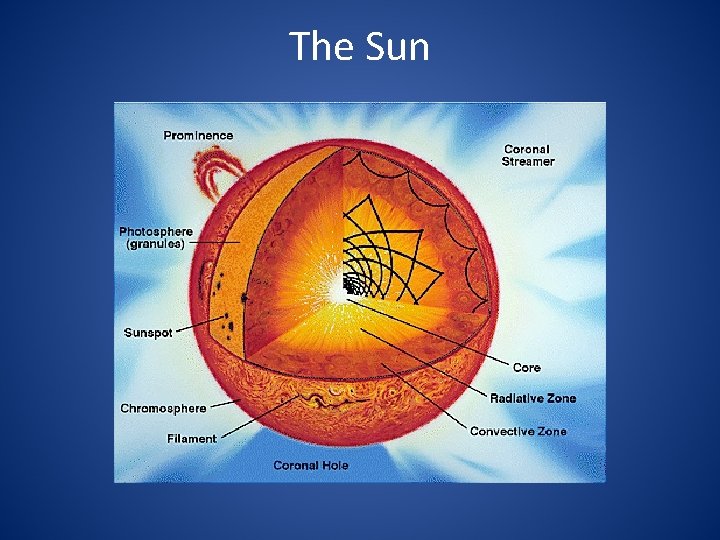
The Sun
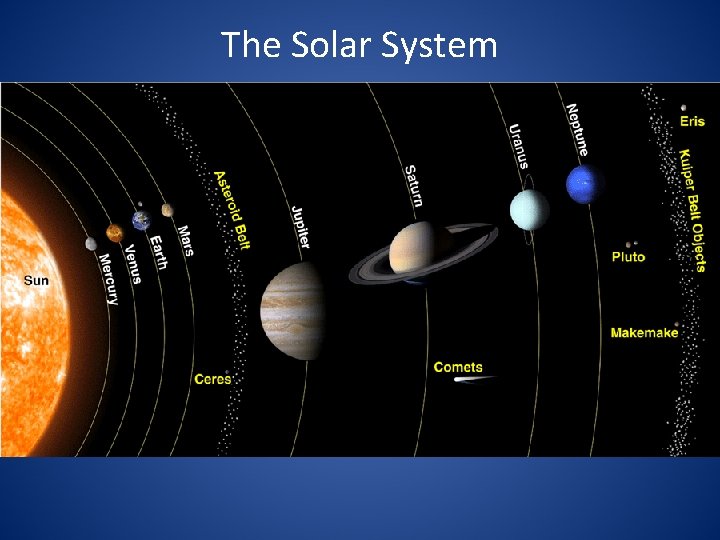
The Solar System
The Solar System 1. What is the difference between the first four and the last four planets from the Sun? 2. What unit is used to measure distances in the Solar System?
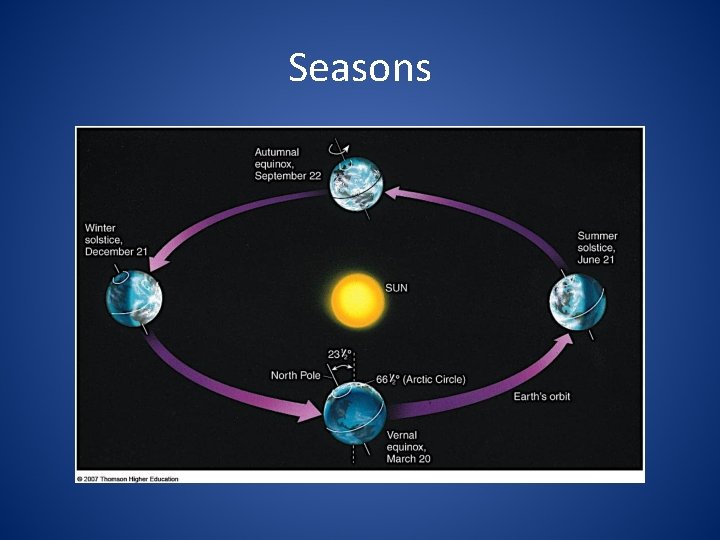
Seasons
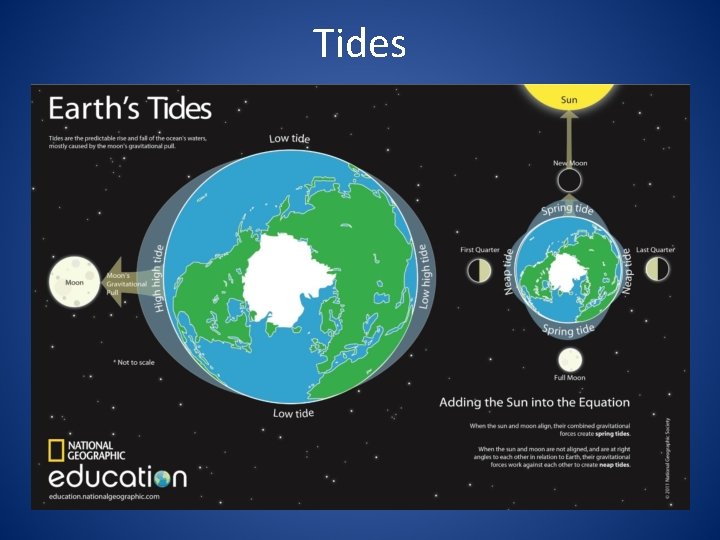
Tides
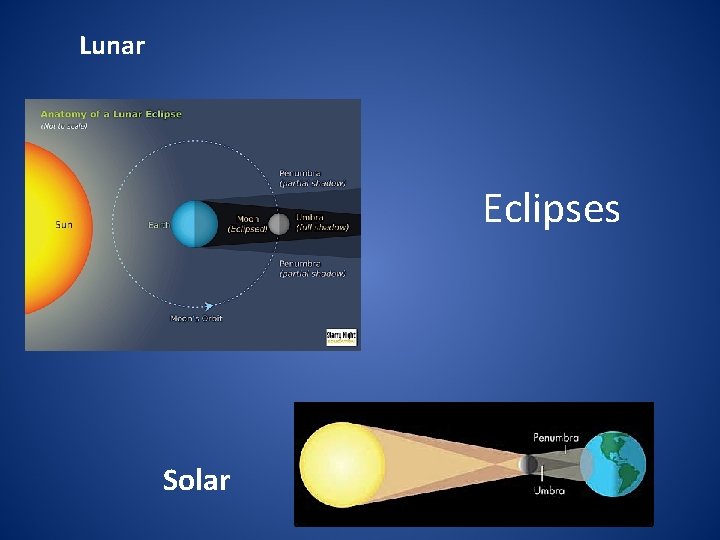
Lunar Eclipses Solar
Earth
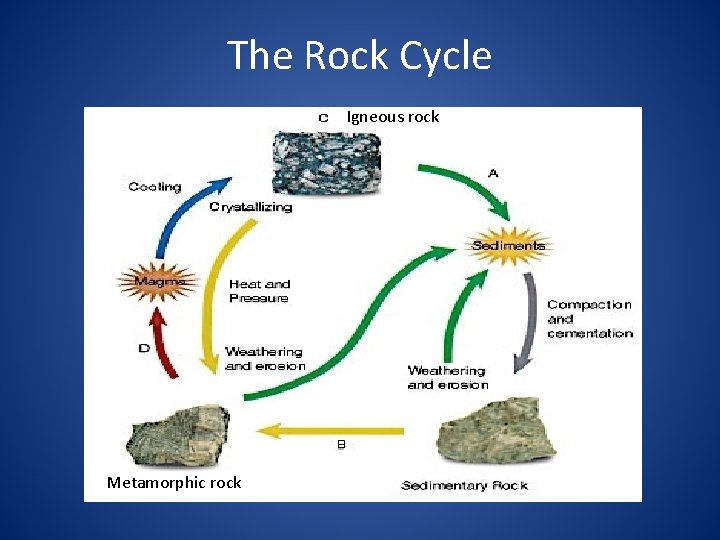
The Rock Cycle Igneous rock Metamorphic rock
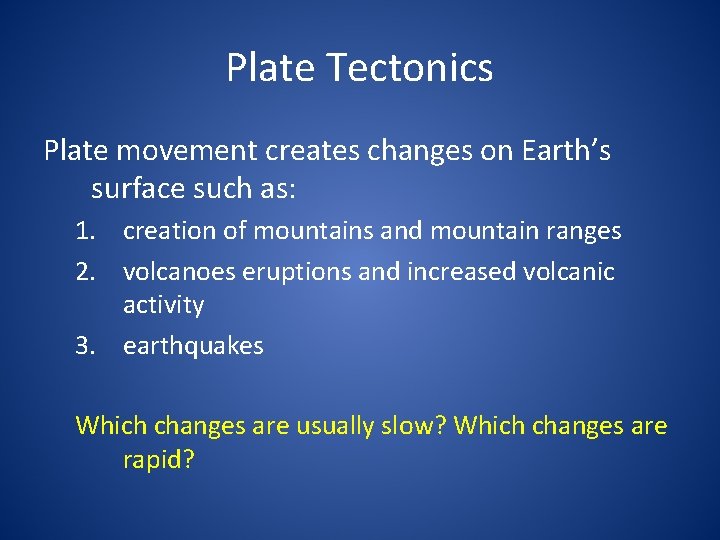
Plate Tectonics Plate movement creates changes on Earth’s surface such as: 1. creation of mountains and mountain ranges 2. volcanoes eruptions and increased volcanic activity 3. earthquakes Which changes are usually slow? Which changes are rapid?
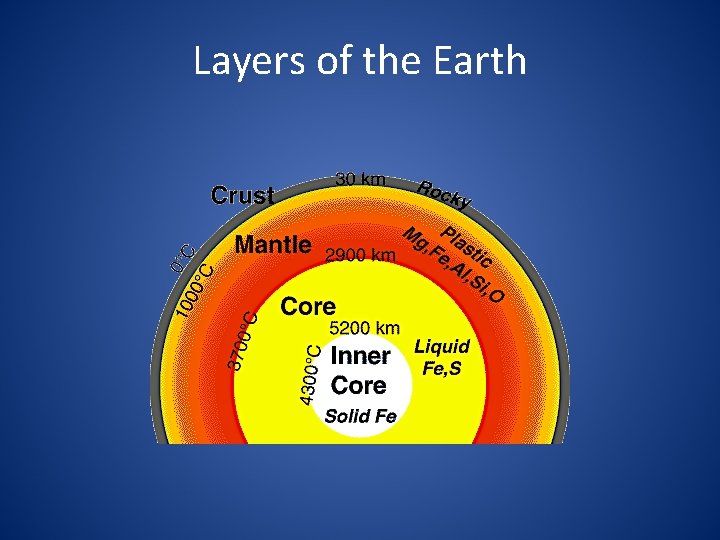
Layers of the Earth
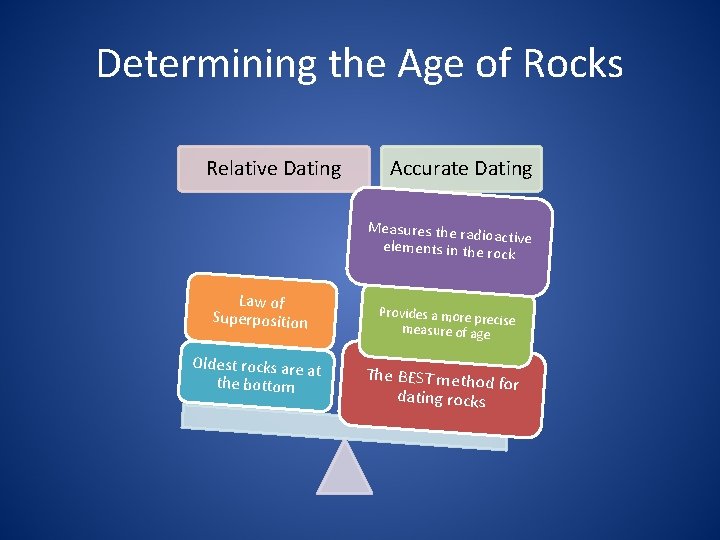
Determining the Age of Rocks Relative Dating Accurate Dating Measures the radio activ elements in the ro e ck Law of Superposition Oldest rocks are a t the bottom Provides a more p recise measure of age The BEST method for dating rocks
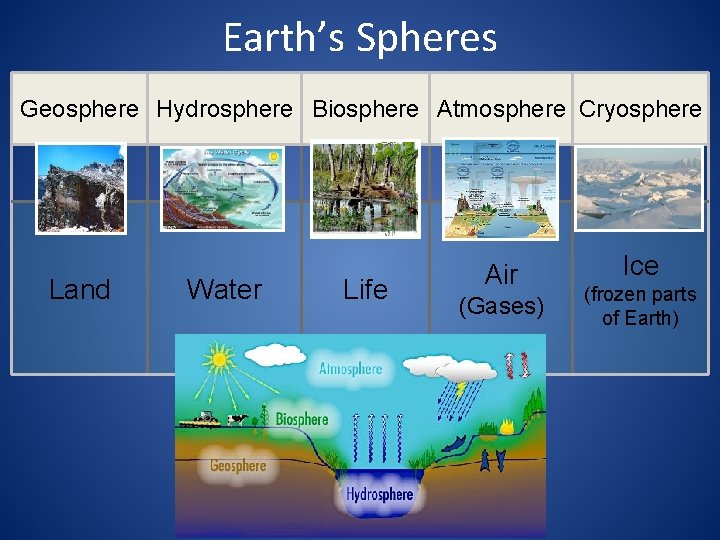
Earth’s Spheres Geosphere Hydrosphere Biosphere Atmosphere Cryosphere Land Water Life Air (Gases) Ice (frozen parts of Earth)
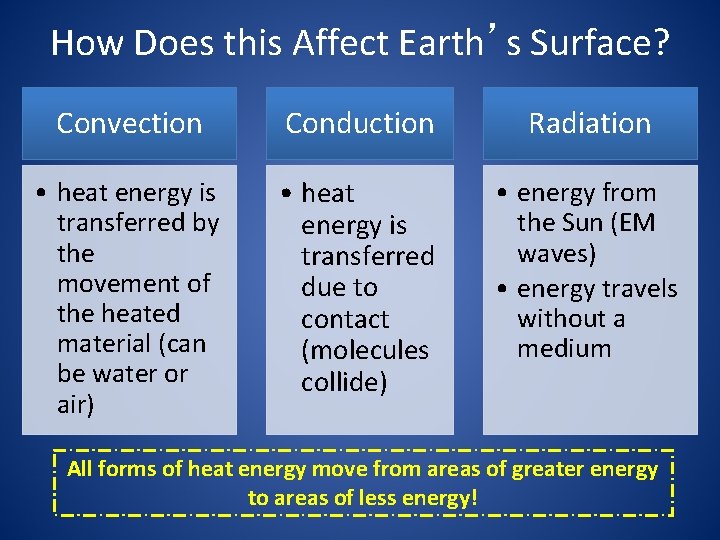
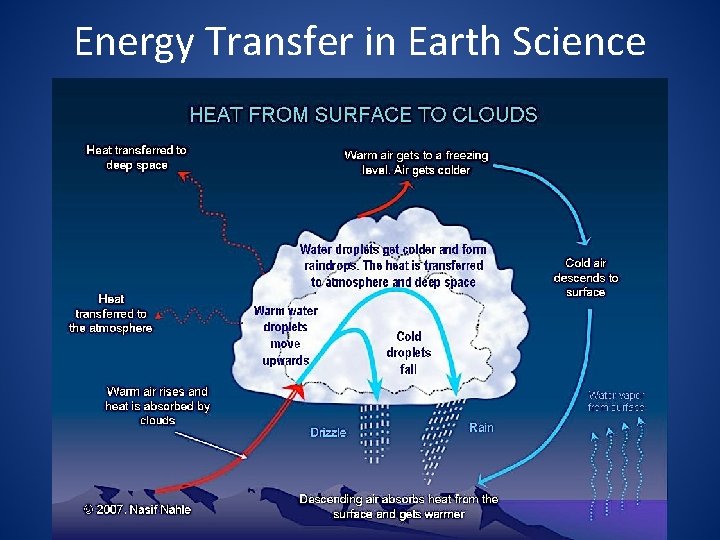
How Does this Affect Earth’s Surface? Convection Conduction Radiation • heat energy is transferred by the movement of the heated material (can be water or air) • heat energy is transferred due to contact (molecules collide) • energy from the Sun (EM waves) • energy travels without a medium All forms of heat energy move from areas of greater energy to areas of less energy!
Energy Transfer in Earth Science
Life Science
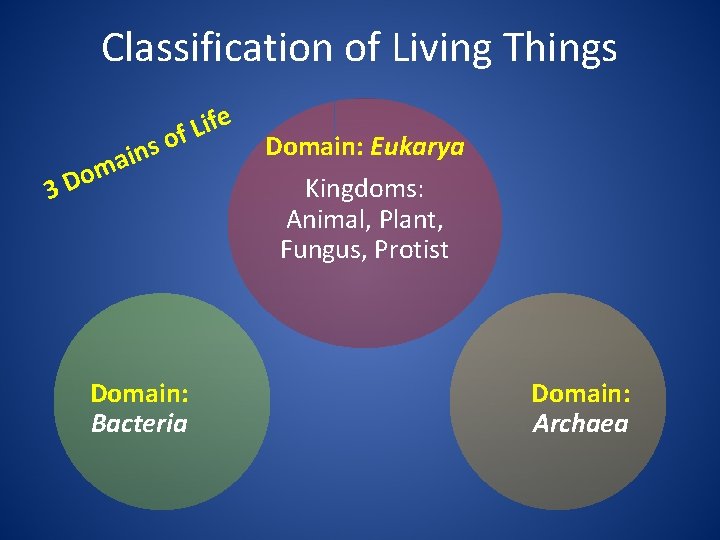
Classification of Living Things 3 m o D s ain e f i L of Domain: Bacteria Domain: Eukarya Kingdoms: Animal, Plant, Fungus, Protist Domain: Archaea
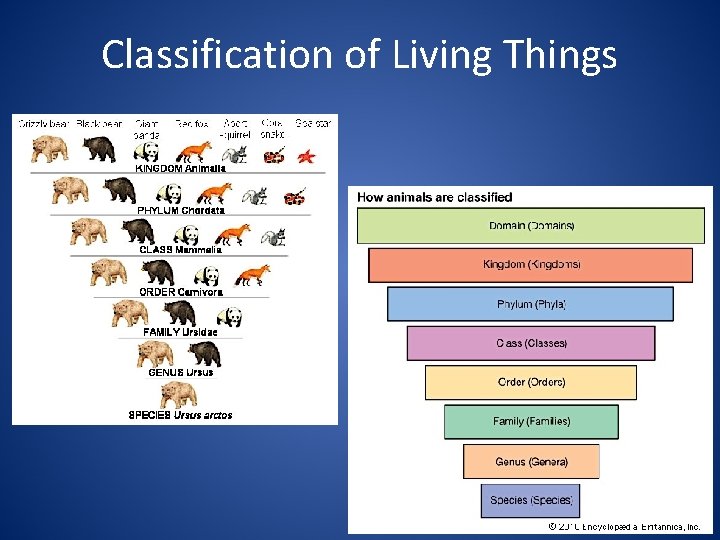
Classification of Living Things
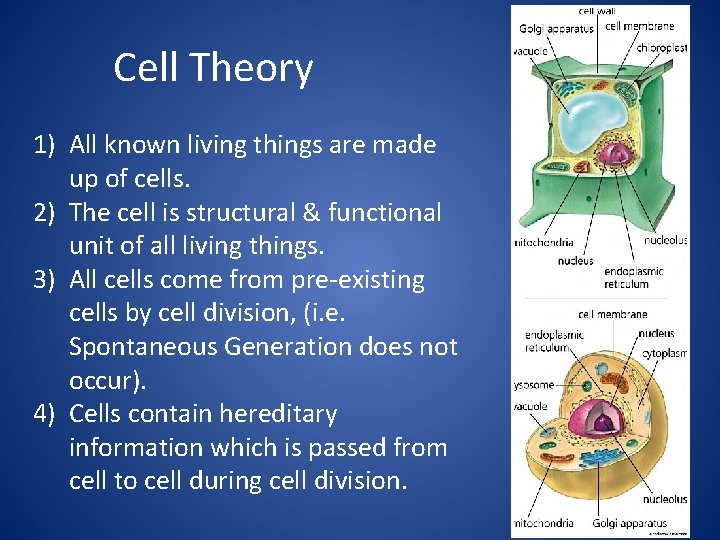
Cell Theory 1) All known living things are made up of cells. 2) The cell is structural & functional unit of all living things. 3) All cells come from pre-existing cells by cell division, (i. e. Spontaneous Generation does not occur). 4) Cells contain hereditary information which is passed from cell to cell during cell division.
Think about it Q: Is there any relationship between the size of an organism and the size of that organism’s cells? For example, would an elephant have really large cells? Would a kitten have tiny cells? A: No, cells are all very similar in size. Larger organisms just have more cells than smaller organisms.
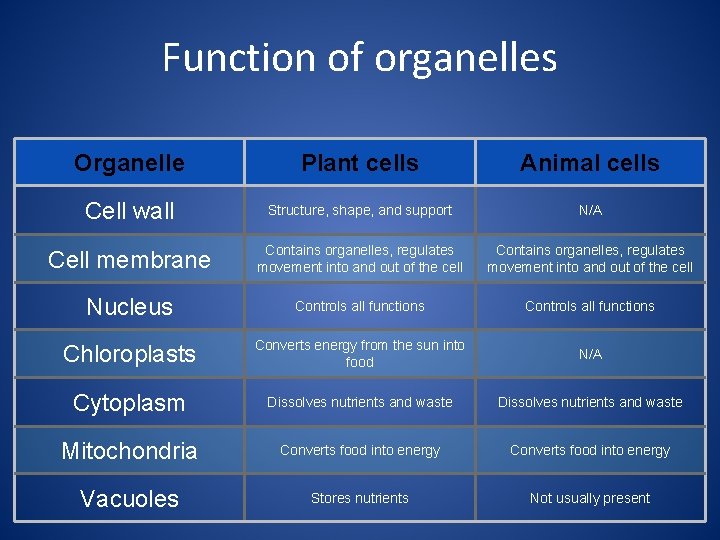
Function of organelles Organelle Plant cells Animal cells Cell wall Structure, shape, and support N/A Cell membrane Contains organelles, regulates movement into and out of the cell Nucleus Controls all functions Chloroplasts Converts energy from the sun into food N/A Cytoplasm Dissolves nutrients and waste Mitochondria Converts food into energy Vacuoles Stores nutrients Not usually present
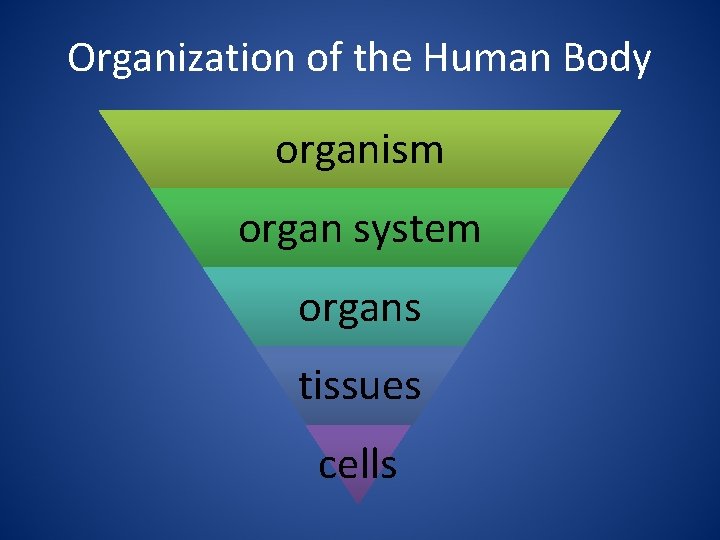
Organization of the Human Body organism organ system organs tissues cells
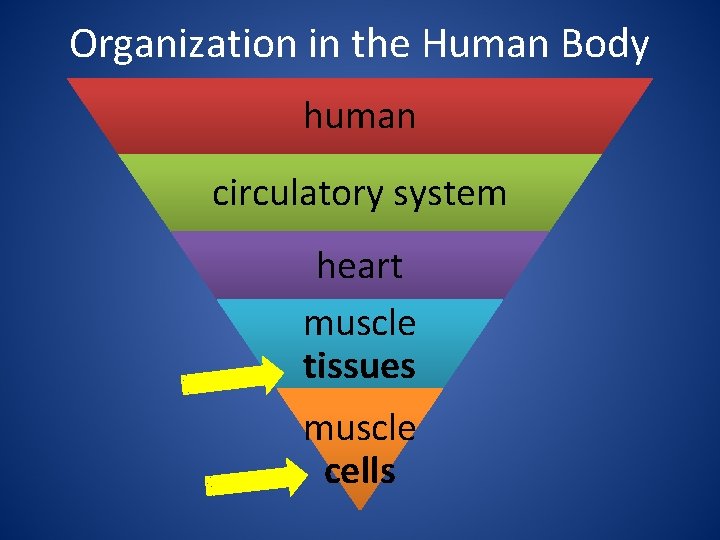
Organization in the Human Body human circulatory system heart muscle tissues muscle cells
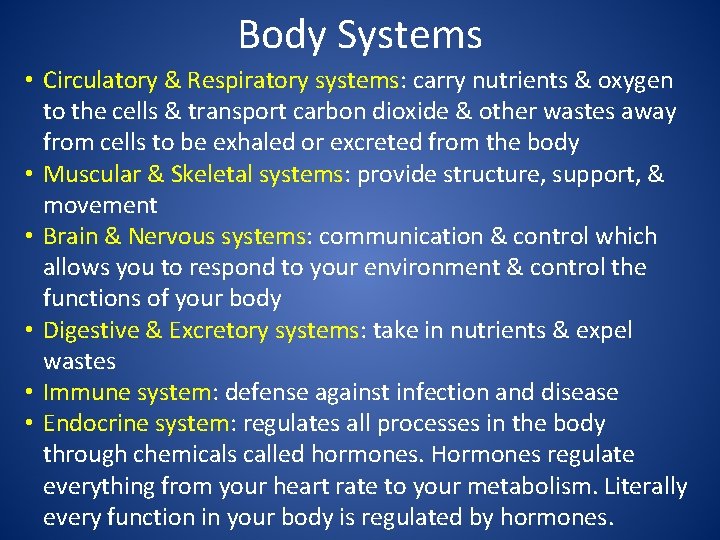
Body Systems • Circulatory & Respiratory systems: carry nutrients & oxygen to the cells & transport carbon dioxide & other wastes away from cells to be exhaled or excreted from the body • Muscular & Skeletal systems: provide structure, support, & movement • Brain & Nervous systems: communication & control which allows you to respond to your environment & control the functions of your body • Digestive & Excretory systems: take in nutrients & expel wastes • Immune system: defense against infection and disease • Endocrine system: regulates all processes in the body through chemicals called hormones. Hormones regulate everything from your heart rate to your metabolism. Literally every function in your body is regulated by hormones.
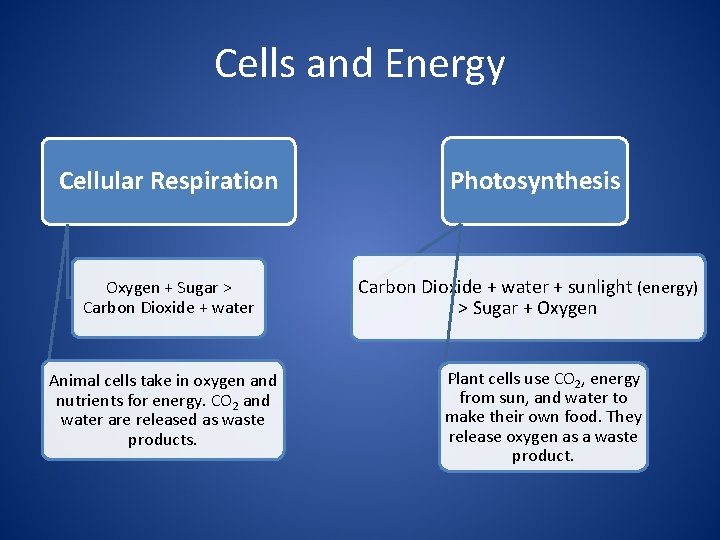
Cells and Energy Cellular Respiration Oxygen + Sugar > Carbon Dioxide + water Animal cells take in oxygen and nutrients for energy. CO 2 and water are released as waste products. Photosynthesis Carbon Dioxide + water + sunlight (energy) > Sugar + Oxygen Plant cells use CO 2, energy from sun, and water to make their own food. They release oxygen as a waste product.
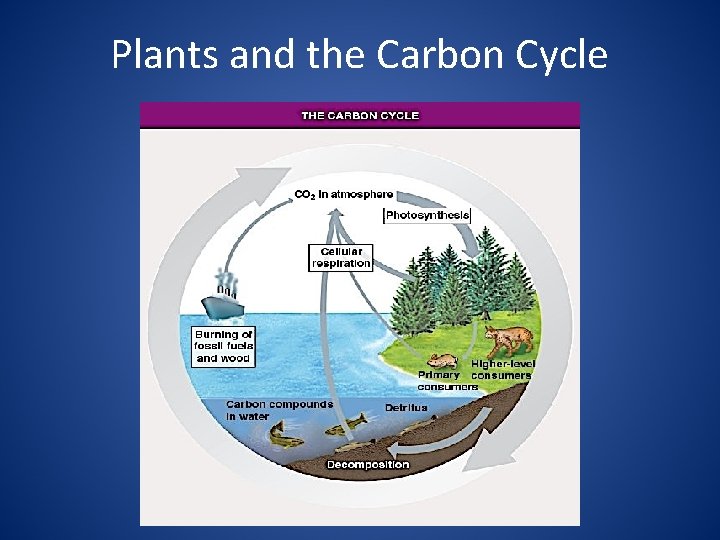
Plants and the Carbon Cycle
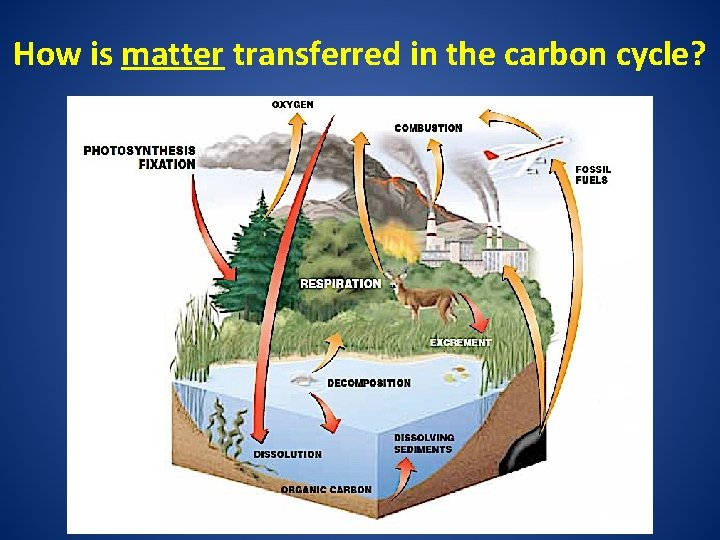
How is matter transferred in the carbon cycle?
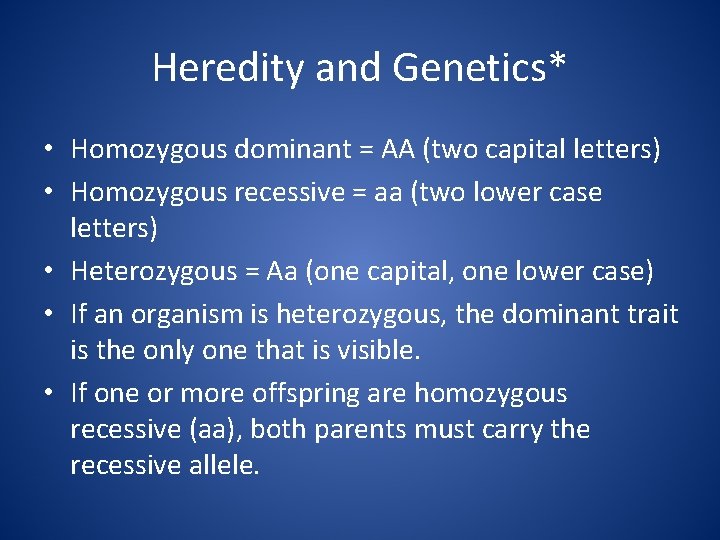
Heredity and Genetics* • Homozygous dominant = AA (two capital letters) • Homozygous recessive = aa (two lower case letters) • Heterozygous = Aa (one capital, one lower case) • If an organism is heterozygous, the dominant trait is the only one that is visible. • If one or more offspring are homozygous recessive (aa), both parents must carry the recessive allele.
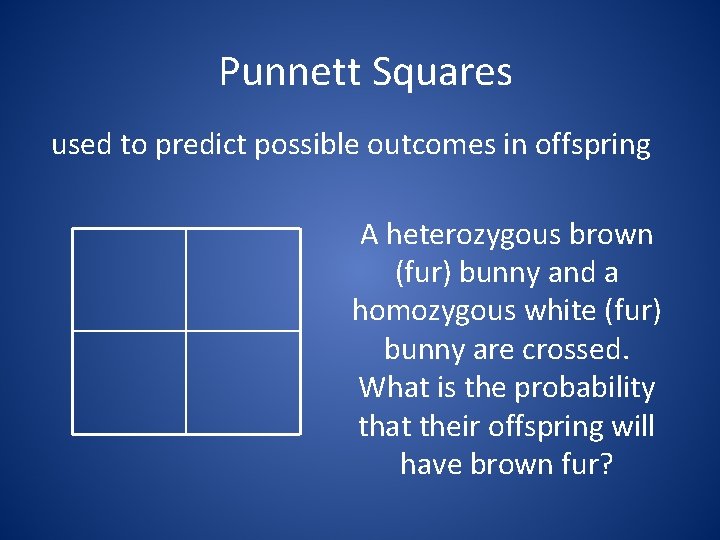
Punnett Squares used to predict possible outcomes in offspring A heterozygous brown (fur) bunny and a homozygous white (fur) bunny are crossed. What is the probability that their offspring will have brown fur?
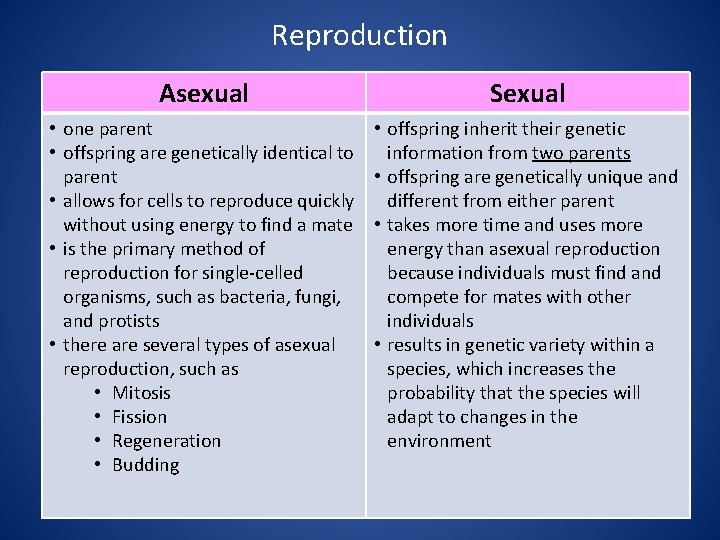
Reproduction Asexual Sexual • one parent • offspring are genetically identical to parent • allows for cells to reproduce quickly without using energy to find a mate • is the primary method of reproduction for single-celled organisms, such as bacteria, fungi, and protists • there are several types of asexual reproduction, such as • Mitosis • Fission • Regeneration • Budding • offspring inherit their genetic information from two parents • offspring are genetically unique and different from either parent • takes more time and uses more energy than asexual reproduction because individuals must find and compete for mates with other individuals • results in genetic variety within a species, which increases the probability that the species will adapt to changes in the environment
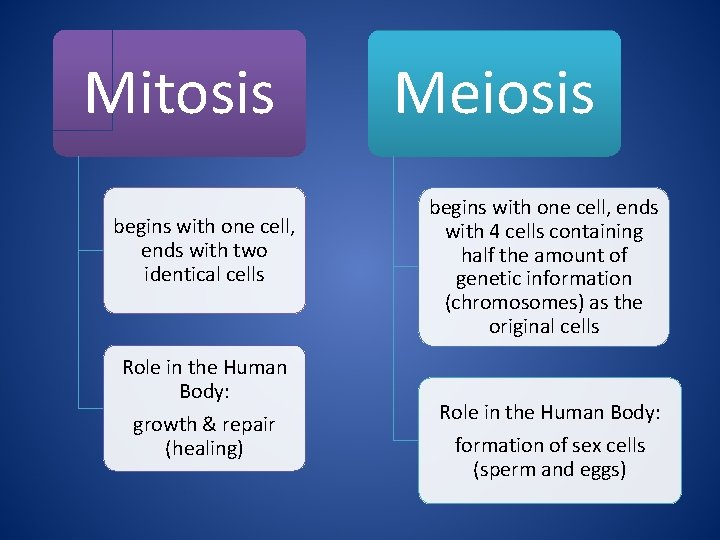
Mitosis begins with one cell, ends with two identical cells Role in the Human Body: growth & repair (healing) Meiosis begins with one cell, ends with 4 cells containing half the amount of genetic information (chromosomes) as the original cells Role in the Human Body: formation of sex cells (sperm and eggs)
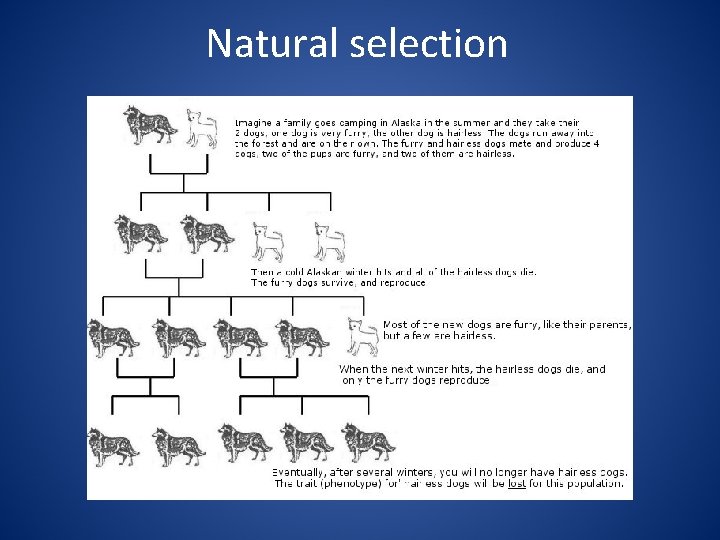
Natural selection
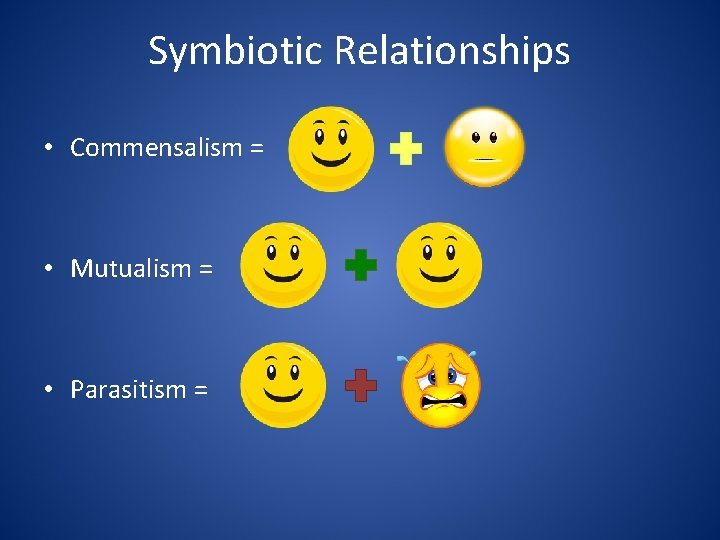
Symbiotic Relationships • Commensalism = • Mutualism = • Parasitism =
Other relationships in ecosystems • Competition: competing with other individuals of the same or different species for food, mates, shelter, or other needs in order to survive. • Predator-prey: one individual consumes (eats) another food. • Neutralism: two species live in the same area and neither has a positive or negative effect on the other
Physical Science
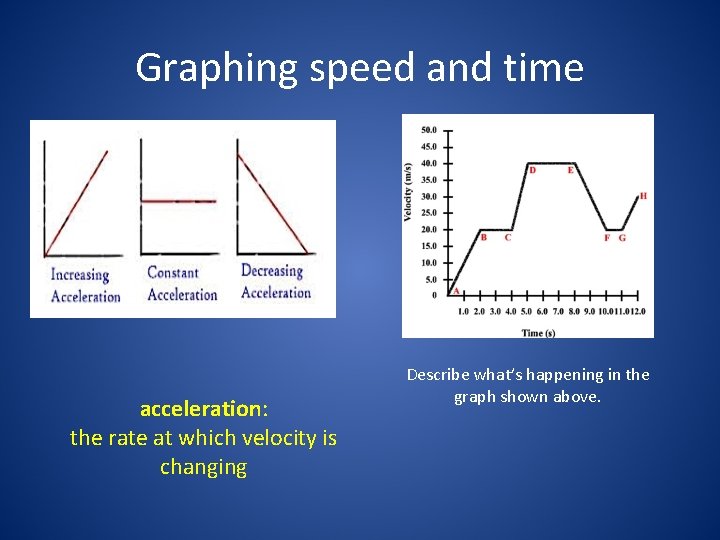
Graphing speed and time acceleration: the rate at which velocity is changing Describe what’s happening in the graph shown above.
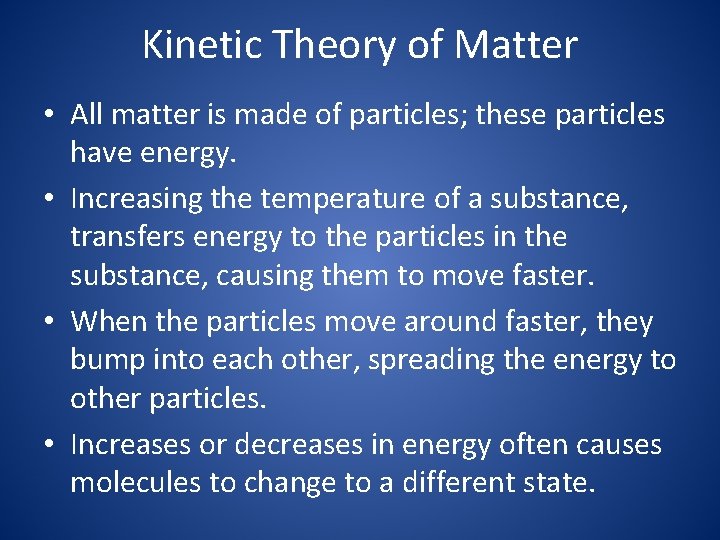
Kinetic Theory of Matter • All matter is made of particles; these particles have energy. • Increasing the temperature of a substance, transfers energy to the particles in the substance, causing them to move faster. • When the particles move around faster, they bump into each other, spreading the energy to other particles. • Increases or decreases in energy often causes molecules to change to a different state.
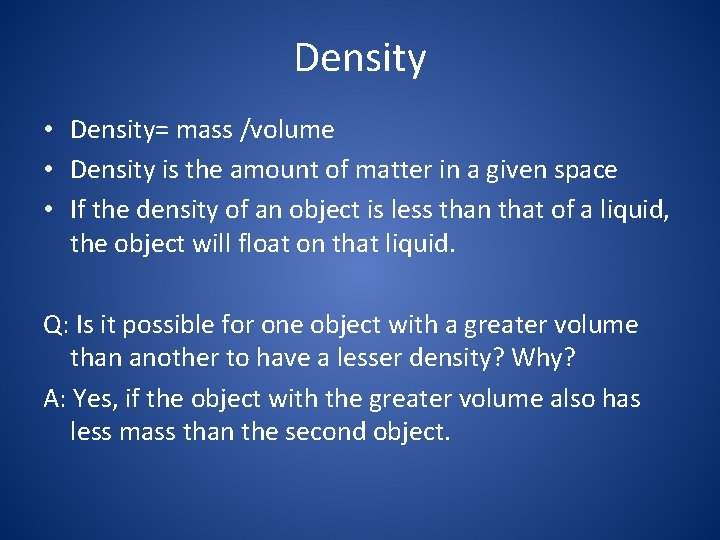
Density • Density= mass /volume • Density is the amount of matter in a given space • If the density of an object is less than that of a liquid, the object will float on that liquid. Q: Is it possible for one object with a greater volume than another to have a lesser density? Why? A: Yes, if the object with the greater volume also has less mass than the second object.
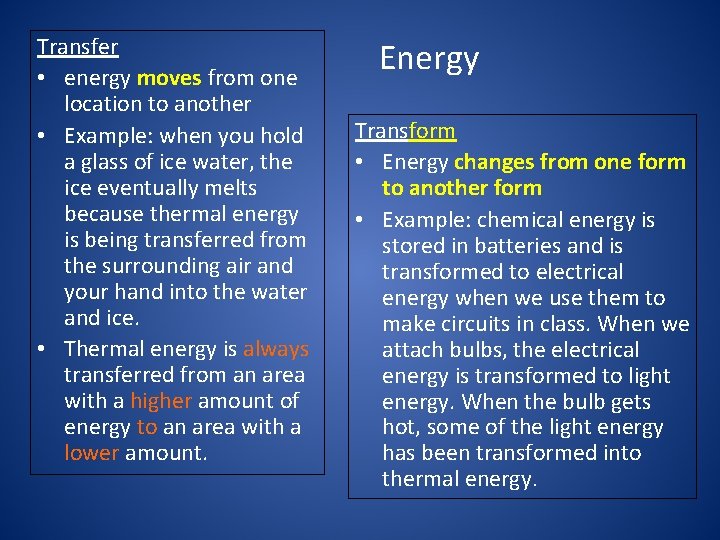
Transfer • energy moves from one location to another • Example: when you hold a glass of ice water, the ice eventually melts because thermal energy is being transferred from the surrounding air and your hand into the water and ice. • Thermal energy is always transferred from an area with a higher amount of energy to an area with a lower amount. Energy Transform • Energy changes from one form to another form • Example: chemical energy is stored in batteries and is transformed to electrical energy when we use them to make circuits in class. When we attach bulbs, the electrical energy is transformed to light energy. When the bulb gets hot, some of the light energy has been transformed into thermal energy.
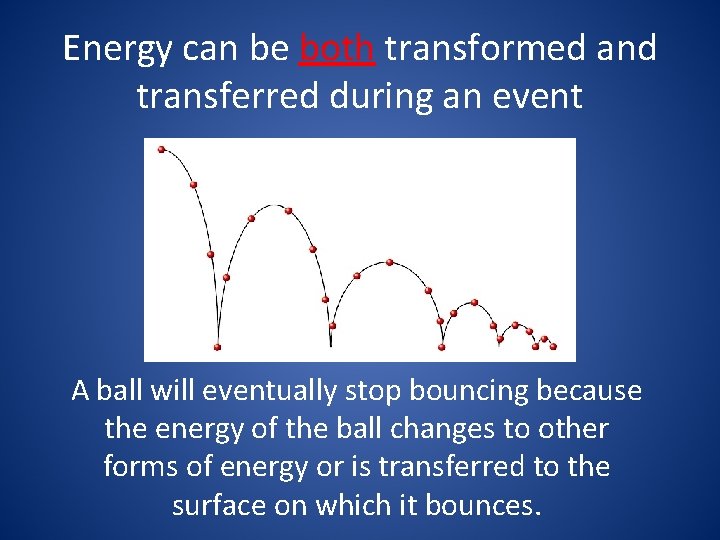
Energy can be both transformed and transferred during an event A ball will eventually stop bouncing because the energy of the ball changes to other forms of energy or is transferred to the surface on which it bounces.
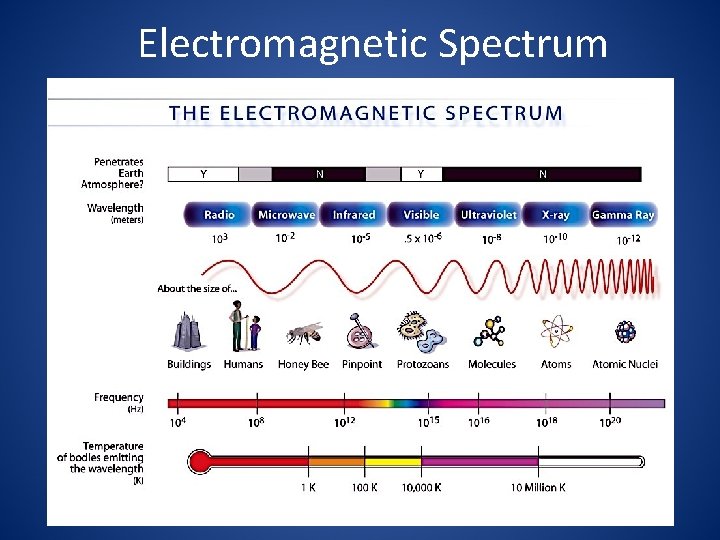
Electromagnetic Spectrum
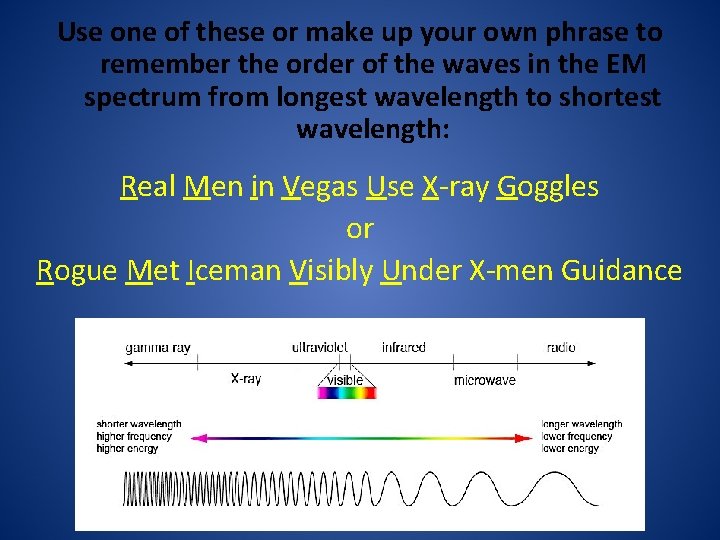
Use one of these or make up your own phrase to remember the order of the waves in the EM spectrum from longest wavelength to shortest wavelength: Real Men in Vegas Use X-ray Goggles or Rogue Met Iceman Visibly Under X-men Guidance
Visible Light: • is a very small section of the EM spectrum • does not require a medium • slows down as it travels through matter, even if the matter is transparent • The less transparent the medium, the more visible light will slow as it passes through; opaque objects/substances are more dense than transparent objects.
Elements Physical and chemical properties
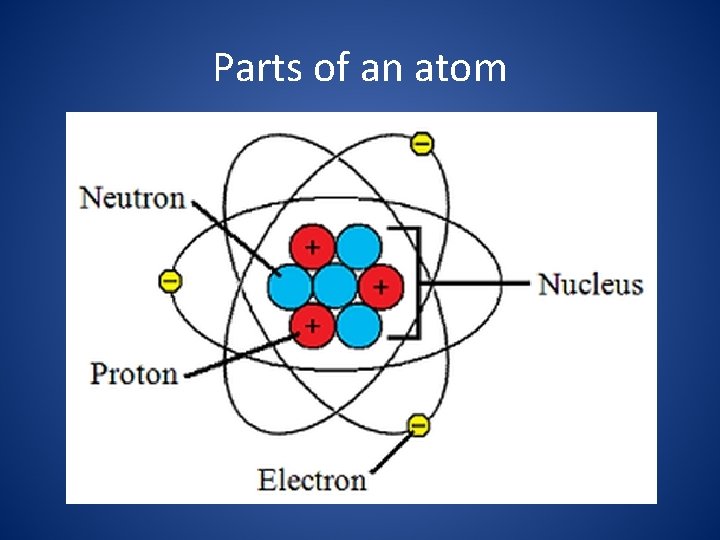
Parts of an atom
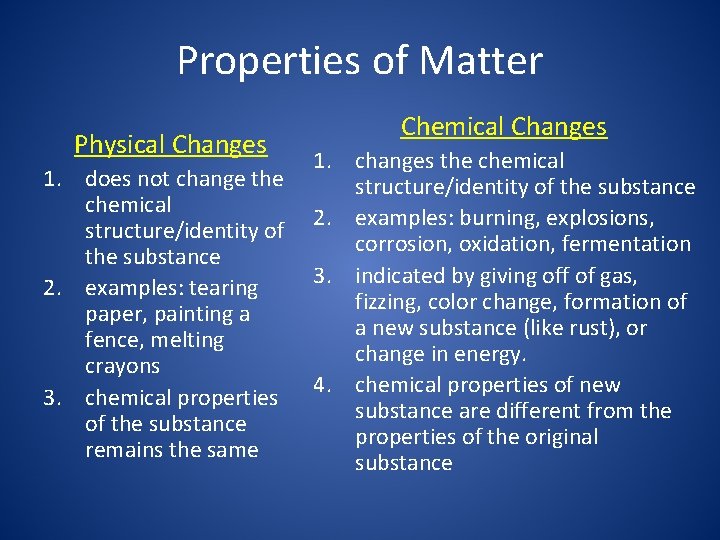
Properties of Matter Physical Changes 1. does not change the chemical structure/identity of the substance 2. examples: tearing paper, painting a fence, melting crayons 3. chemical properties of the substance remains the same Chemical Changes 1. changes the chemical structure/identity of the substance 2. examples: burning, explosions, corrosion, oxidation, fermentation 3. indicated by giving off of gas, fizzing, color change, formation of a new substance (like rust), or change in energy. 4. chemical properties of new substance are different from the properties of the original substance