
2017 Pearson Education Inc Tissues Groups of Cells
- Slides: 41
© 2017 Pearson Education, Inc.
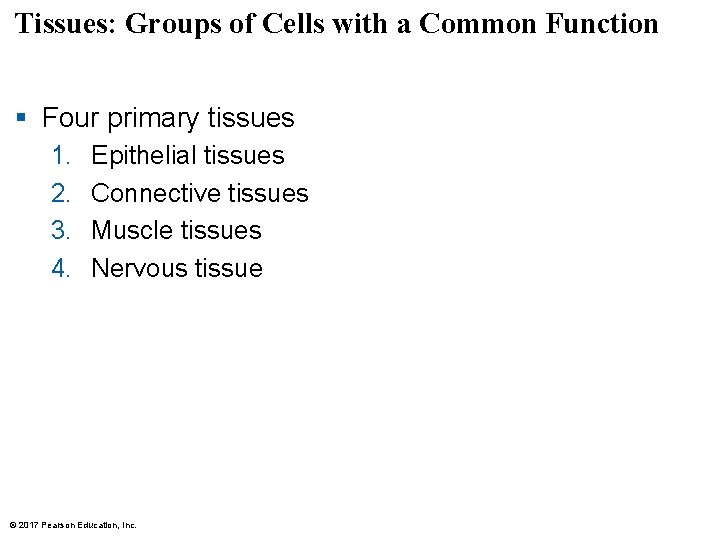
Tissues: Groups of Cells with a Common Function § Four primary tissues 1. 2. 3. 4. Epithelial tissues Connective tissues Muscle tissues Nervous tissue © 2017 Pearson Education, Inc.
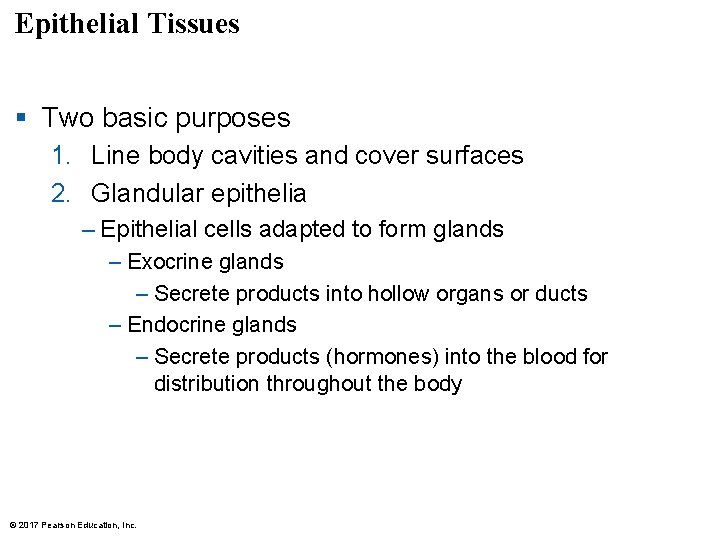
Epithelial Tissues § Two basic purposes 1. Line body cavities and cover surfaces 2. Glandular epithelia – Epithelial cells adapted to form glands – Exocrine glands – Secrete products into hollow organs or ducts – Endocrine glands – Secrete products (hormones) into the blood for distribution throughout the body © 2017 Pearson Education, Inc.
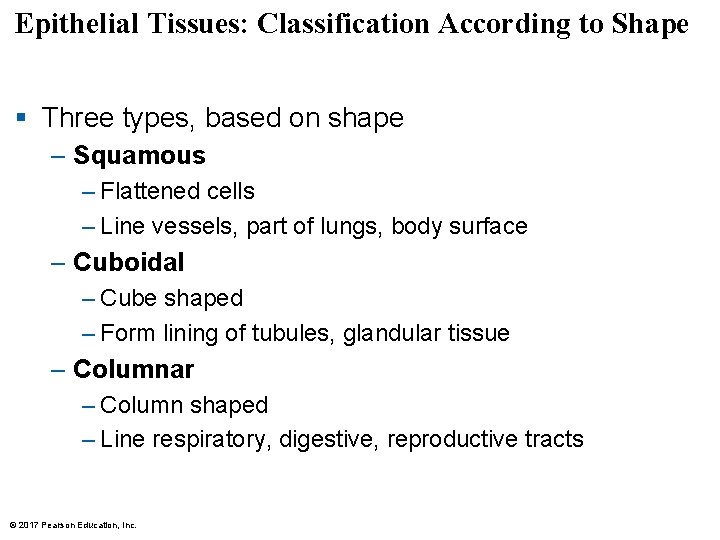
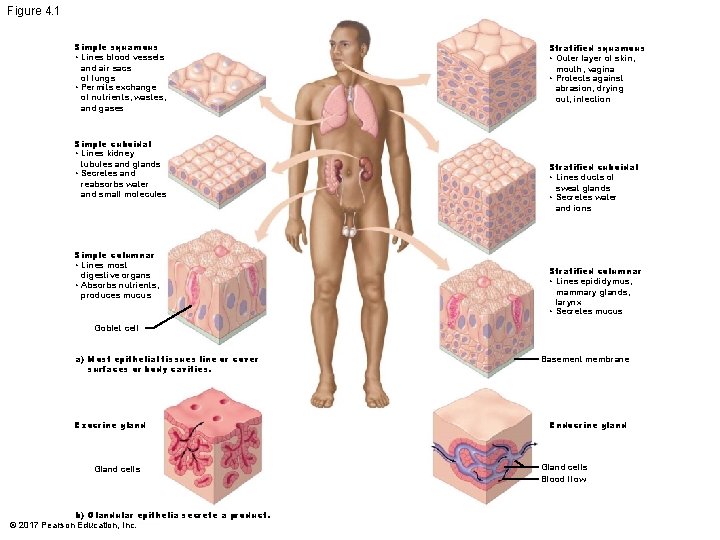
Epithelial Tissues: Classification According to Shape § Three types, based on shape – Squamous – Flattened cells – Line vessels, part of lungs, body surface – Cuboidal – Cube shaped – Form lining of tubules, glandular tissue – Columnar – Column shaped – Line respiratory, digestive, reproductive tracts © 2017 Pearson Education, Inc.
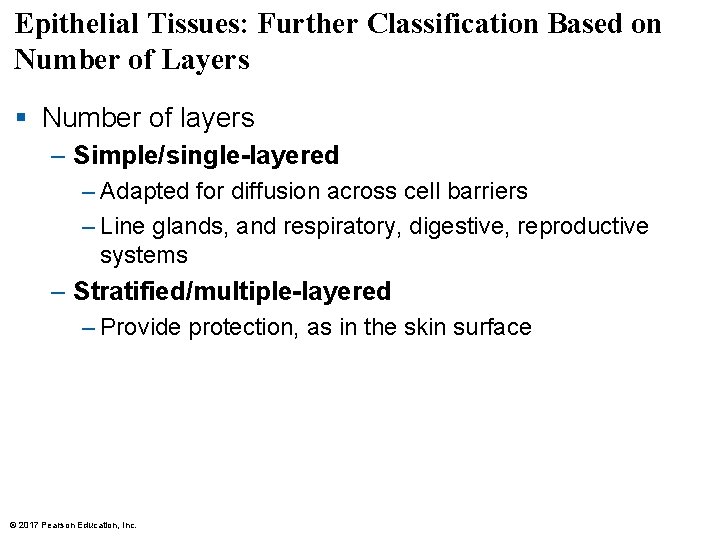
Epithelial Tissues: Further Classification Based on Number of Layers § Number of layers – Simple/single-layered – Adapted for diffusion across cell barriers – Line glands, and respiratory, digestive, reproductive systems – Stratified/multiple-layered – Provide protection, as in the skin surface © 2017 Pearson Education, Inc.
Figure 4. 1 Simple squamous • Lines blood vessels and air sacs of lungs • Permits exchange of nutrients, wastes, and gases Simple cuboidal • Lines kidney tubules and glands • Secretes and reabsorbs water and small molecules Simple columnar • Lines most digestive organs • Absorbs nutrients, produces mucus Stratified squamous • Outer layer of skin, mouth, vagina • Protects against abrasion, drying out, infection Stratified cuboidal • Lines ducts of sweat glands • Secretes water and ions Stratified columnar • Lines epididymus, mammary glands, larynx • Secretes mucus Goblet cell a) Most epithelial tissues line or cover surfaces or body cavities. Exocrine gland Gland cells b) Glandular epithelia secrete a product. © 2017 Pearson Education, Inc. Basement membrane Endocrine gland Gland cells Blood flow
The Basement Membrane Provides Structural Support § Basement membrane – Noncellular layer directly beneath epithelial tissue – Composed of proteins secreted by epithelial cells and connective tissue – Provides structural support to overlying cells – Attaches epithelial layer to underlying tissues © 2017 Pearson Education, Inc.
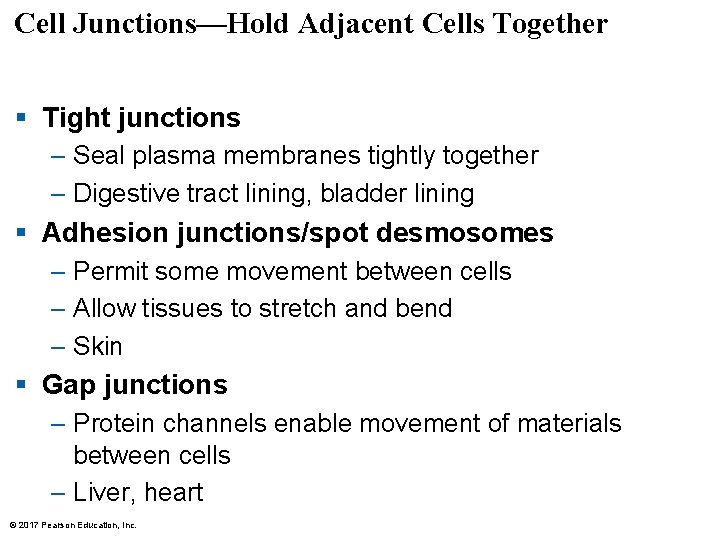
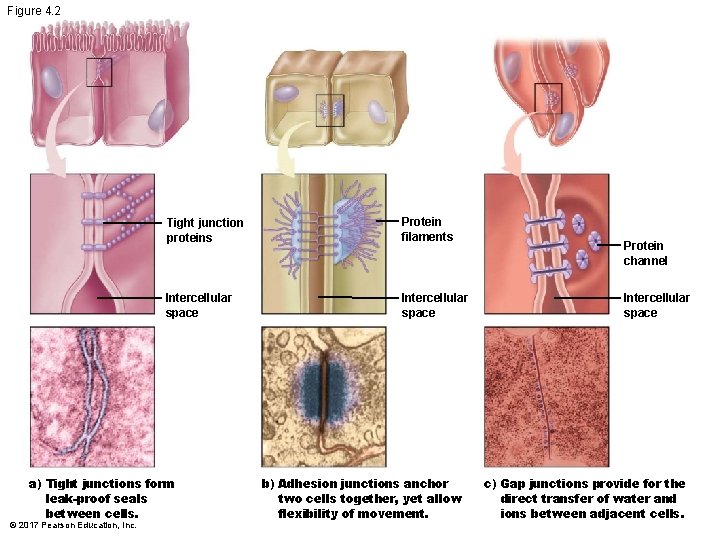
Cell Junctions—Hold Adjacent Cells Together § Tight junctions – Seal plasma membranes tightly together – Digestive tract lining, bladder lining § Adhesion junctions/spot desmosomes – Permit some movement between cells – Allow tissues to stretch and bend – Skin § Gap junctions – Protein channels enable movement of materials between cells – Liver, heart © 2017 Pearson Education, Inc.
Figure 4. 2 Tight junction proteins Protein filaments Intercellular space a) Tight junctions form leak-proof seals between cells. © 2017 Pearson Education, Inc. b) Adhesion junctions anchor two cells together, yet allow flexibility of movement. Protein channel Intercellular space c) Gap junctions provide for the direct transfer of water and ions between adjacent cells.
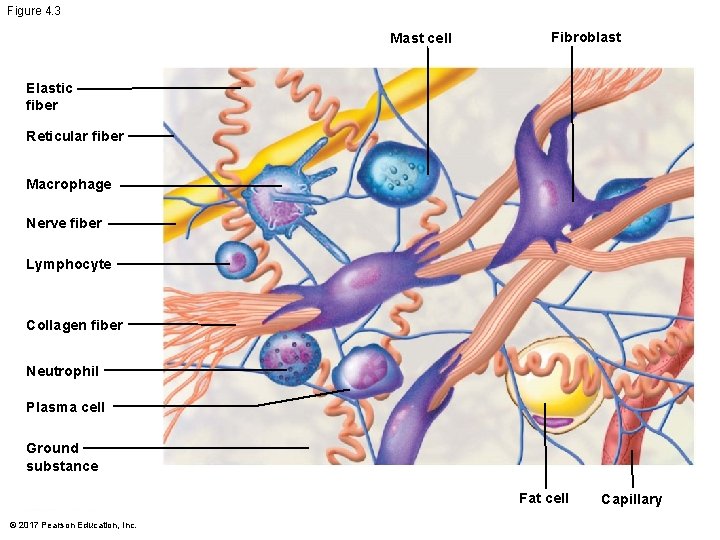
Connective Tissues § General functions – Support softer organs of body – Connect parts of body – Store fat – Produce blood cells § Contain cells embedded in nonliving extracellular matrix § Matrix provides the strength § Two general types – Fibrous and specialized © 2017 Pearson Education, Inc.
Figure 4. 3 Mast cell Fibroblast Elastic fiber Reticular fiber Macrophage Nerve fiber Lymphocyte Collagen fiber Neutrophil Plasma cell Ground substance Fat cell © 2017 Pearson Education, Inc. Capillary
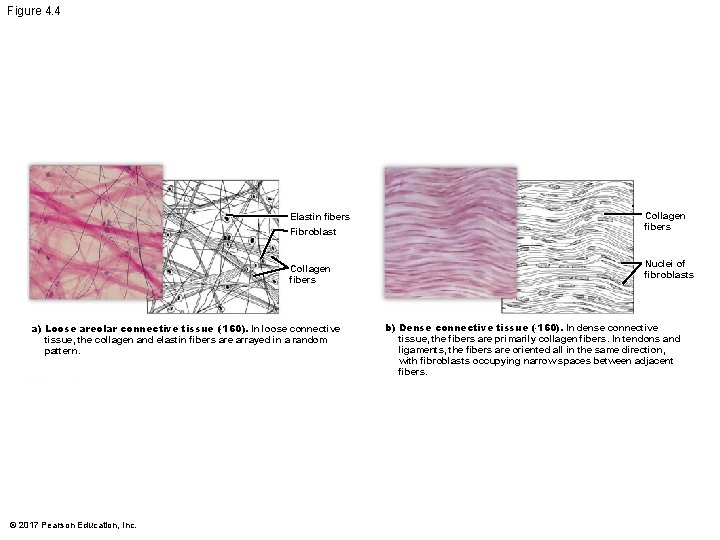
Fibrous Connective Tissue § Four general types – Loose: surrounds internal organs, muscles, and blood vessels – Dense: forms tendons, ligaments, deeper layers of skin – Elastic: surrounds hollow organs (stomach and bladder) that change shape or size regularly – Reticular: makes up internal framework of soft organs (liver) and the lymphatic system © 2017 Pearson Education, Inc.
Figure 4. 4 Elastin fibers Fibroblast Collagen fibers a) Loose areolar connective tissue (× 160). In loose connective tissue, the collagen and elastin fibers are arrayed in a random pattern. © 2017 Pearson Education, Inc. Collagen fibers Nuclei of fibroblasts b) Dense connective tissue (× 160). In dense connective tissue, the fibers are primarily collagen fibers. In tendons and ligaments, the fibers are oriented all in the same direction, with fibroblasts occupying narrow spaces between adjacent fibers.
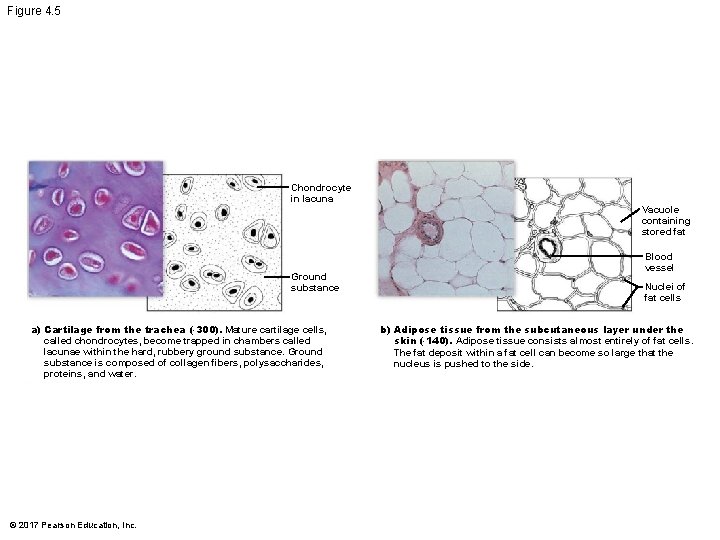
Specialized Connective Tissues Serve Special Functions § Cartilage: transitional tissue from which bone develops; maintains shape of certain body parts (nose, ears), cushions vertebrae (vertebral disks), lines joint cavities § Bone: forms the skeleton § Blood: fluid matrix of plasma, red blood cells, white blood cells, and platelets; transports materials § Adipose tissue: fat cells; functions in insulation, protection, and energy storage © 2017 Pearson Education, Inc.
Figure 4. 5 Chondrocyte in lacuna Vacuole containing stored fat Ground substance a) Cartilage from the trachea (× 300). Mature cartilage cells, called chondrocytes, become trapped in chambers called lacunae within the hard, rubbery ground substance. Ground substance is composed of collagen fibers, polysaccharides, proteins, and water. © 2017 Pearson Education, Inc. Blood vessel Nuclei of fat cells b) Adipose tissue from the subcutaneous layer under the skin (× 140). Adipose tissue consists almost entirely of fat cells. The fat deposit within a fat cell can become so large that the nucleus is pushed to the side.
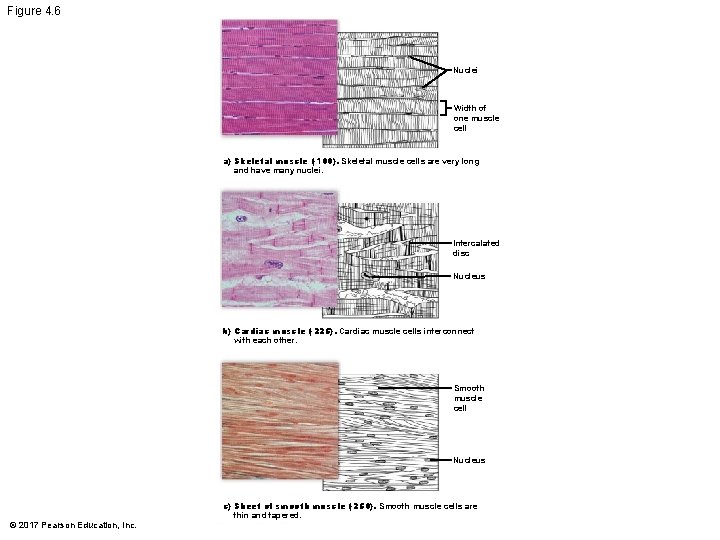
Muscle Tissue Contracts to Produce Movement § Skeletal muscle – Moves body parts – Voluntary, multinucleated § Cardiac muscle – Functions in the heart – Involuntary, single nucleus § Smooth muscle – Surrounds hollow structures – Involuntary, single nucleus © 2017 Pearson Education, Inc.
Figure 4. 6 Nuclei Width of one muscle cell a) Skeletal muscle (× 100). Skeletal muscle cells are very long and have many nuclei. Intercalated disc Nucleus b) Cardiac muscle (× 225). Cardiac muscle cells interconnect with each other. Smooth muscle cell Nucleus c) Sheet of smooth muscle (× 250). Smooth muscle cells are thin and tapered. © 2017 Pearson Education, Inc.
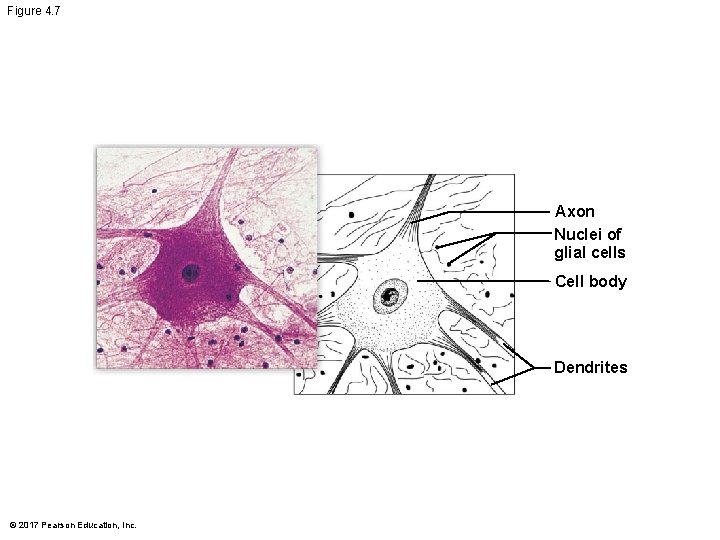
Nervous Tissues Transmit Impulses § Neuron: specialized nervous system cell – Function: generate and transmit electrical impulses – Structural components: cell body, dendrites, axon § Glial cells – Function – Surround and protect neurons – Provide nutrients to neurons © 2017 Pearson Education, Inc.
Figure 4. 7 Axon Nuclei of glial cells Cell body Dendrites © 2017 Pearson Education, Inc.
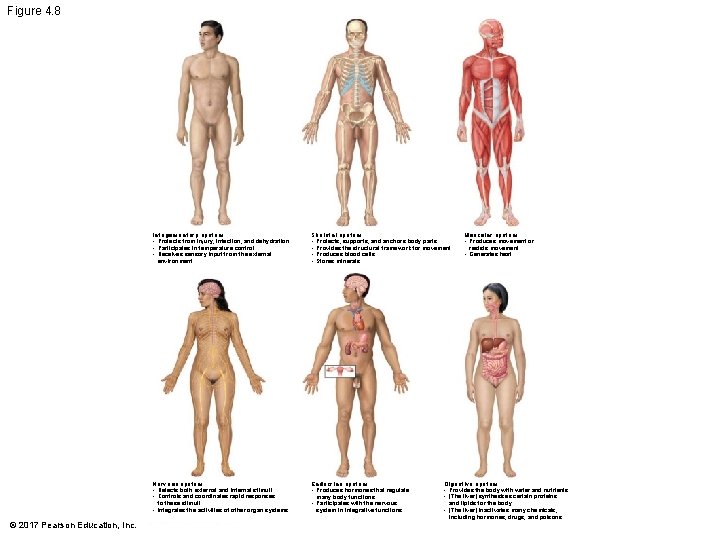
Organs and Organ Systems Perform Complex Functions § Organs – Contain two or more tissue types joined together; perform specific functions § Organ systems – Groups of organs that perform a common function – 11 organ systems make up the human body – Examples – Digestive system: mouth, throat, stomach, intestines, and liver – Lymphatic system: lymph nodes, tonsils, and spleen © 2017 Pearson Education, Inc.
Figure 4. 8 Integumentary system • Protects from injury, infection, and dehydration • Participates in temperature control • Receives sensory input from the external environment Nervous system • Detects both external and internal stimuli • Controls and coordinates rapid responses to these stimuli • Integrates the activities of other organ systems Skeletal system • Protects, supports, and anchors body parts • Provides the structural framework for movement • Produces blood cells • Stores minerals Endocrine system • Produces hormones that regulate many body functions • Participates with the nervous system in integrative functions Muscular system • Produces movement or resists movement • Generates heat Digestive system • Provides the body with water and nutrients • (The liver) synthesizes certain proteins and lipids for the body • (The liver) inactivates many chemicals, including hormones, drugs, and poisons © 2017 Pearson Education, Inc.
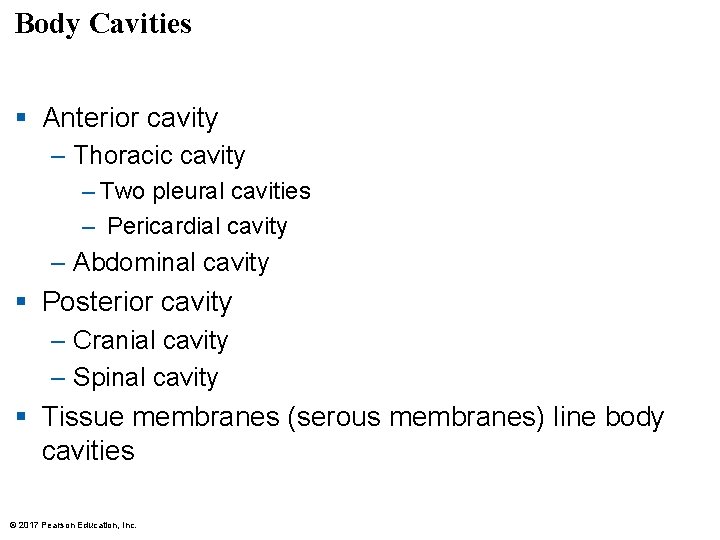
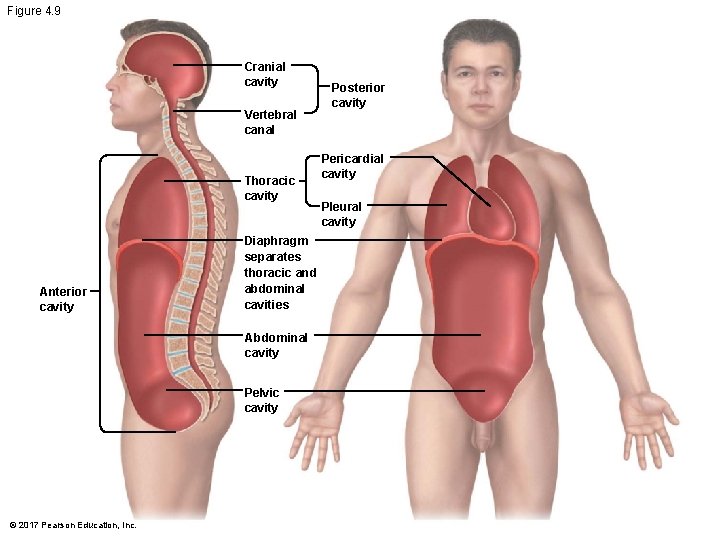
Body Cavities § Anterior cavity – Thoracic cavity – Two pleural cavities – Pericardial cavity – Abdominal cavity § Posterior cavity – Cranial cavity – Spinal cavity § Tissue membranes (serous membranes) line body cavities © 2017 Pearson Education, Inc.
Figure 4. 9 Cranial cavity Vertebral canal Thoracic cavity Anterior cavity Diaphragm separates thoracic and abdominal cavities Abdominal cavity Pelvic cavity © 2017 Pearson Education, Inc. Posterior cavity Pericardial cavity Pleural cavity
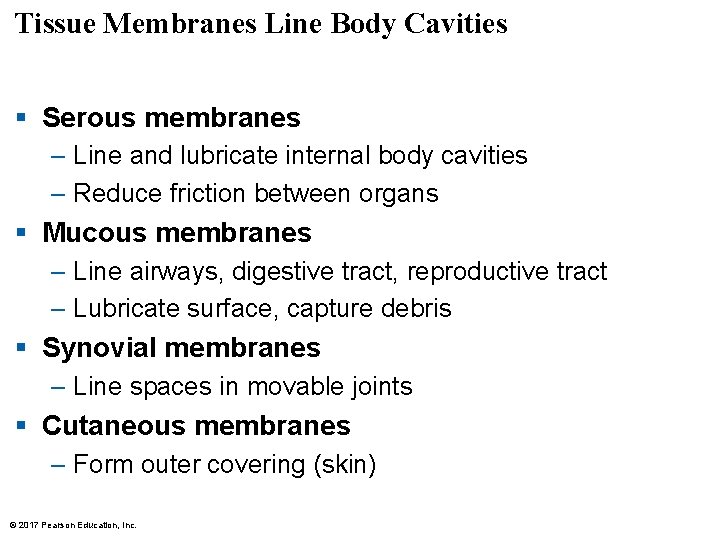
Tissue Membranes Line Body Cavities § Serous membranes – Line and lubricate internal body cavities – Reduce friction between organs § Mucous membranes – Line airways, digestive tract, reproductive tract – Lubricate surface, capture debris § Synovial membranes – Line spaces in movable joints § Cutaneous membranes – Form outer covering (skin) © 2017 Pearson Education, Inc.
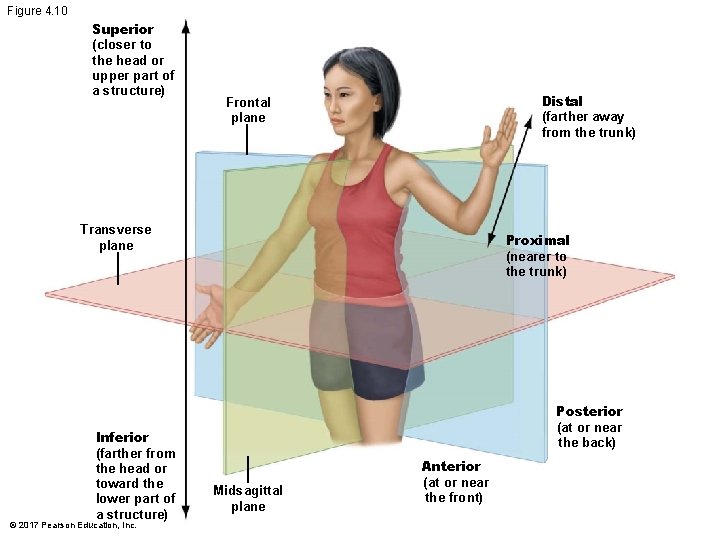
Describing Body Position or Direction § Three body planes – Midsagittal – Divides body into left and right sides – Frontal – Divides body into front and back – Transverse – Divides body into top and bottom © 2017 Pearson Education, Inc.
Describing Body Position or Direction § Terms to describe relative position – Anterior: at or near the front – Posterior: at or near the back – Proximal: nearer to the body trunk – Distal: farther away from the body trunk – Superior: situated above or directed upward – Inferior: situated below or directed downward © 2017 Pearson Education, Inc.
Figure 4. 10 Superior (closer to the head or upper part of a structure) Distal (farther away from the trunk) Frontal plane Transverse plane Inferior (farther from the head or toward the lower part of a structure) © 2017 Pearson Education, Inc. Proximal (nearer to the trunk) Posterior (at or near the back) Midsagittal plane Anterior (at or near the front)
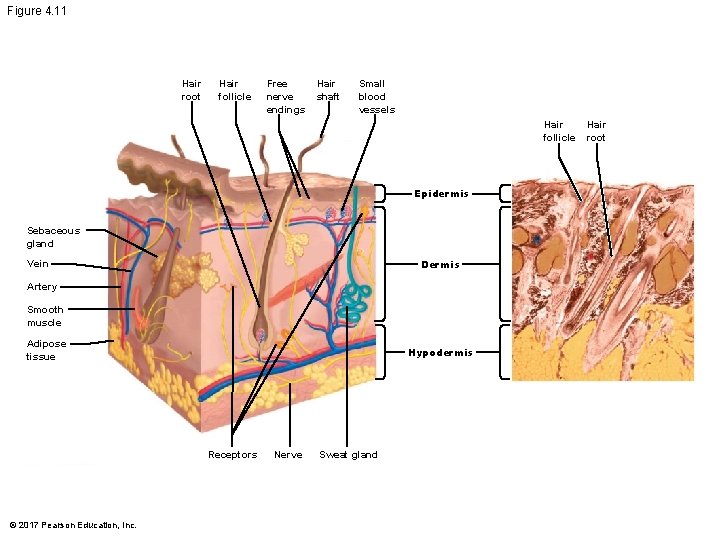
The Skin As an Organ System § The proper name is integumentary system § Includes skin, hair, nails, glands § Functions – Protects from dehydration – Protects from injury – Serves as defense against microorganisms – Regulates body temperature – Makes vitamin D – Provides sensation © 2017 Pearson Education, Inc.
Figure 4. 11 Hair root Hair follicle Free nerve endings Hair shaft Small blood vessels Hair follicle Epidermis Sebaceous gland Dermis Vein Artery Smooth muscle Adipose tissue Hypodermis Receptors © 2017 Pearson Education, Inc. Nerve Sweat gland Hair root
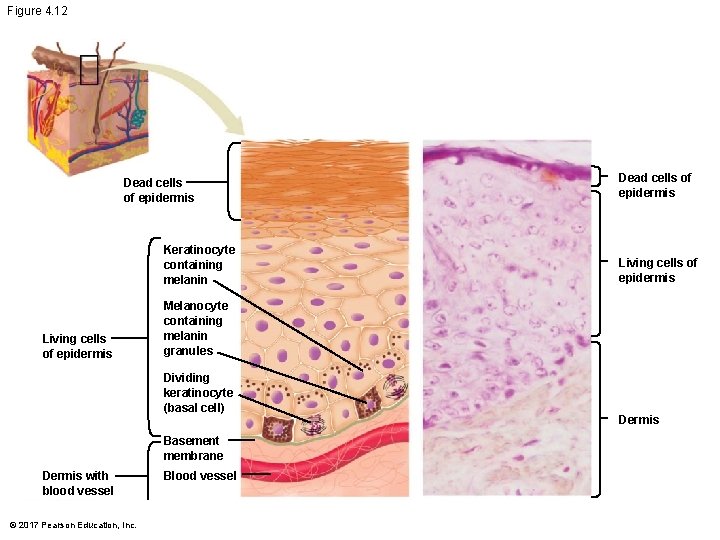
Skin Consists of Epidermis and Dermis § Epidermis – Outer layer – Stratified squamous epithelial cells – No blood vessels – Two major cell types – Keratinocytes: provide a tough waterproof protein (keratin) – Melanocytes: provide dark pigment (melanin) © 2017 Pearson Education, Inc.
Figure 4. 12 Dead cells of epidermis Keratinocyte containing melanin Living cells of epidermis Basement membrane © 2017 Pearson Education, Inc. Living cells of epidermis Melanocyte containing melanin granules Dividing keratinocyte (basal cell) Dermis with blood vessel Dead cells of epidermis Blood vessel Dermis
Skin Consists of Epidermis and Dermis § Dermis – – Primarily dense connective tissue Lies underneath the epidermis Supports tissues Fibers: provide strength and elasticity – Collagen – Elastic – Cells – Fibroblasts (most abundant) – Mast cells – White blood cells – Fat cells © 2017 Pearson Education, Inc.
Accessory Structures of Dermis § Hair – Shaft above the skin surface – Follicle § Smooth muscle – Attached to hair follicle, raises hair to upright position § Sebaceous (oil) glands – Secrete sebum, which moistens and softens skin © 2017 Pearson Education, Inc.
Accessory Structures of Dermis (cont. ) § Sweat glands – Secrete sweat to help in temperature regulation § Sebaceous glands – Secrete oil to moisten and soften hair and skin § Blood vessels – Supply nutrients, remove waste, assist in temperature regulation § Sensory nerve endings – Detect heat, cold, touch, deep pressure, vibration © 2017 Pearson Education, Inc.
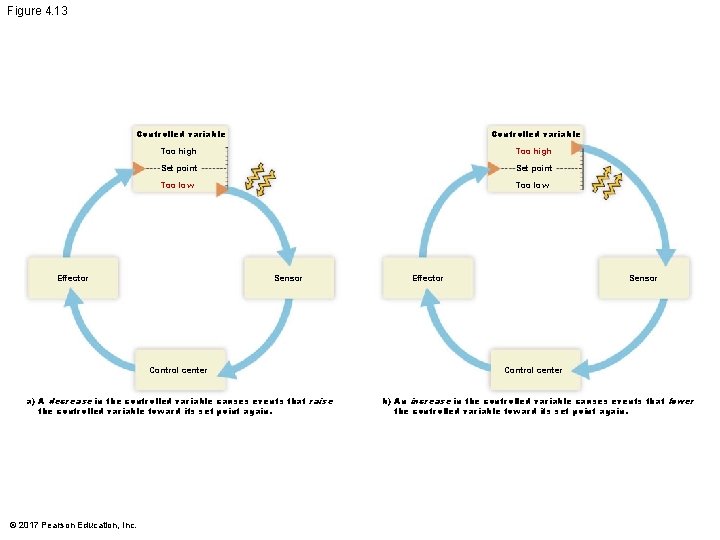
Multicellular Organisms Must Maintain Homeostasis § Maintenance of relative constancy of the conditions of the internal environment § Negative feedback control system: deviations from normal are detected and counteracted § Components of a negative feedback control system – Controlled variable – Sensor – Control center – Effector © 2017 Pearson Education, Inc.
Components of a Negative Feedback Control System § Controlled variable: any physical or chemical property that might vary and must be controlled to maintain homeostasis § Sensor (receptor): monitors current value for controlled variable and sends information to control center § Control center: receives input from sensor, compares value to set point, signals the effector if necessary § Effector: takes action to correct the imbalance, based on information from the control center © 2017 Pearson Education, Inc.
Figure 4. 13 Controlled variable Too high Set point Too low Sensor Effector Control center a) A decrease in the controlled variable causes events that raise the controlled variable toward its set point again. © 2017 Pearson Education, Inc. Sensor Effector Control center b) An increase in the controlled variable causes events that lower the controlled variable toward its set point again.
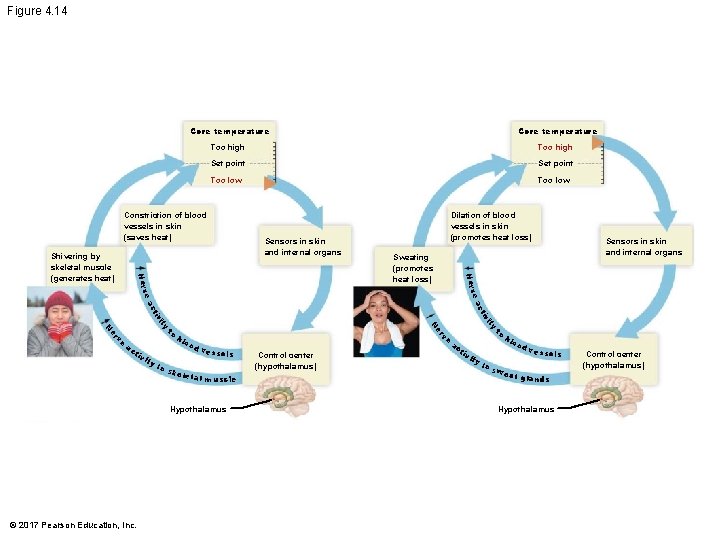
Negative Feedback Helps Maintain Core Body Temperature § Controlled variable: body temperature § Sensors: temperature sensors in skin and internal organs § Control center: hypothalamus § Effectors – Blood vessels – Sweat glands – Skeletal muscles © 2017 Pearson Education, Inc.
Figure 4. 14 Core temperature Too high Set point Too low Constriction of blood vessels in skin (saves heat) Sensors in skin and internal organs Sweating (promotes heat loss) t iv ac ve ity to ske le dv e sse ls ta l m usc le Hypothalamus © 2017 Pearson Education, Inc. it y t iv e v ac bl oo to er er to N it y N ve Sensors in skin and internal organs Ne r Shivering by skeletal muscle (generates heat) Dilation of blood vessels in skin (promotes heat loss) Control center (hypothalamus) ac t iv ity to bl oo sw e dv e sse ls at gla nd s Hypothalamus Control center (hypothalamus)
Animation: Homeostasis © 2017 Pearson Education, Inc.
Positive Feedback Amplifies Events § A change in a controlled variable causes a series of events that amplifies the original change § Example: process of childbirth § Positive feedback is NOT a mechanism for maintaining homeostasis © 2017 Pearson Education, Inc.