
2017 ACAAA Annual Conference ROMA Next Gen Update

- Slides: 30
2017 ACAAA Annual Conference ROMA Next Gen Update Terry Bearden, Programs and Development Director Arkansas Community Action Agencies Association, Inc.
What is ROMA Next Generation? NASCSP: Just as ROMA has served Community Action well for over twenty years, ROMA Next Generation represents a new level that will move CSBG forward and strengthen Community Action over the next 5 -10 years.
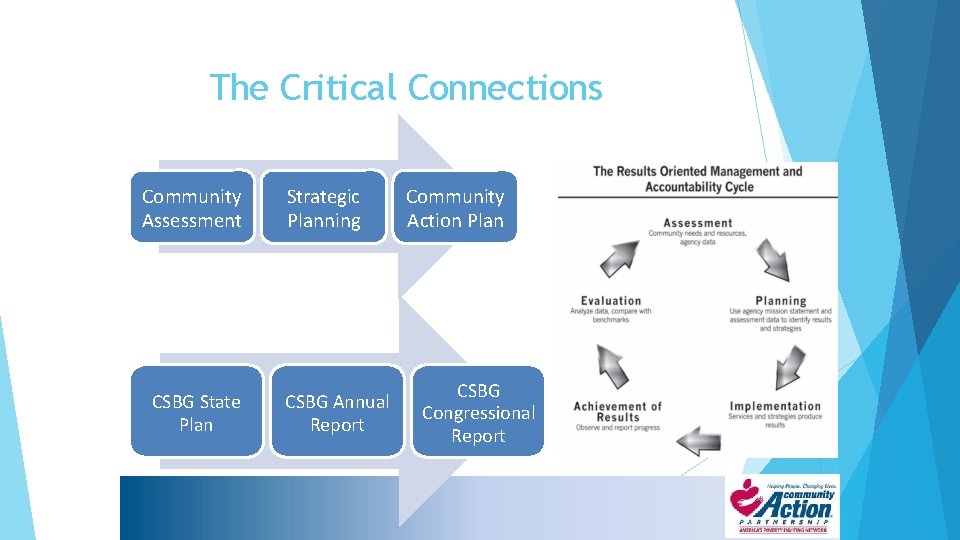
The Critical Connections Community Assessment CSBG State Plan Strategic Planning CSBG Annual Report Community Action Plan CSBG Congressional Report
Other ROMA Next Gen Workshops Integrating ROMA Next Gen: Strategies That Will Work 10: 45 a. m. – 12: 00 p. m. Belle Starr Room Focus: Community Action Plan
Other ROMA Next Gen Workshops Strategic Planning: A Focus on the ROMA Cycle 2: 00 p. m. – 3: 15 p. m. Belle Starr Room Focus: Strategic Planning
Other ROMA Next Gen Workshops Conducting Community Assessments and Using the Results for Planning 3: 45 p. m. – 5: 00 p. m. Belle Starr Room Focus: Community Assessment
Other ROMA Next Gen Workshops Ensuring Financial Accountability and Compliance 3: 45 p. m. – 5: 00 p. m. Memphis Focus: CSBG Annual Report
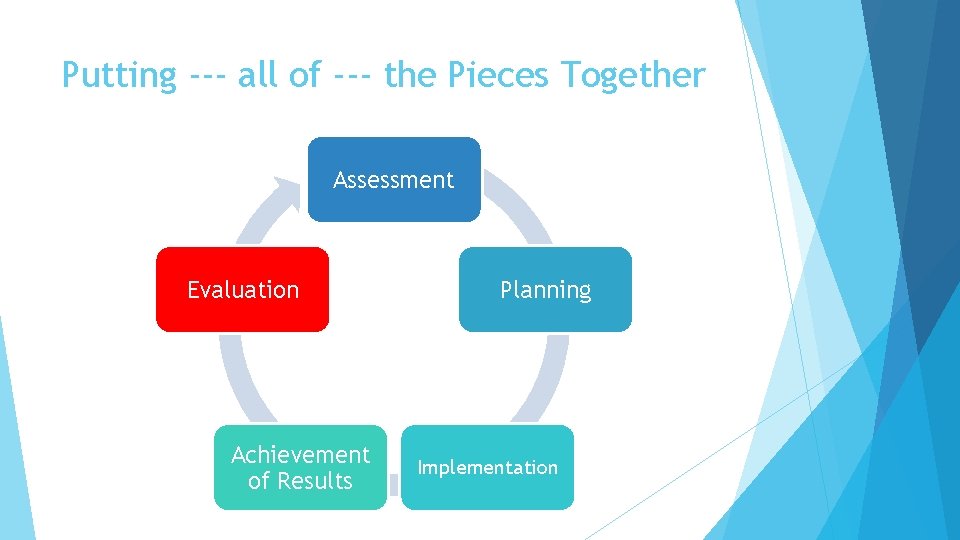
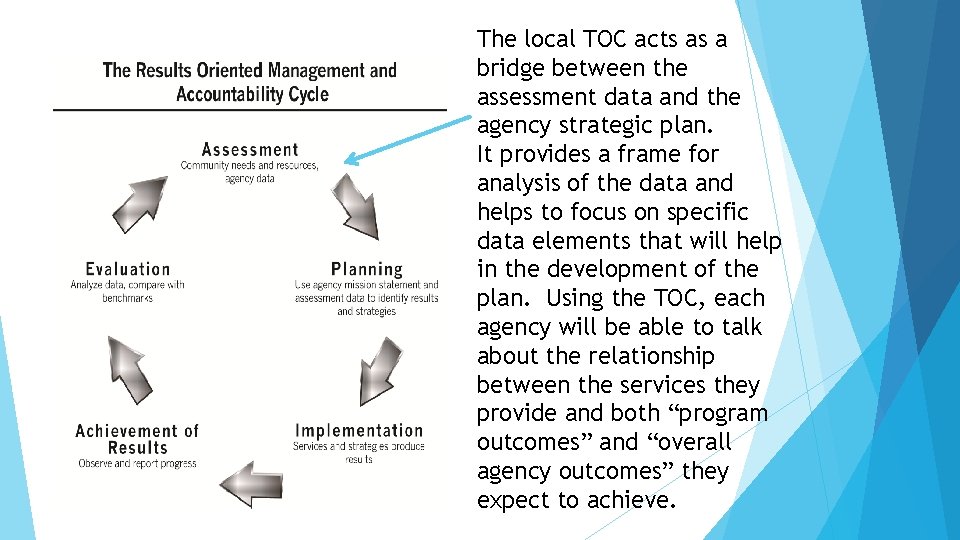
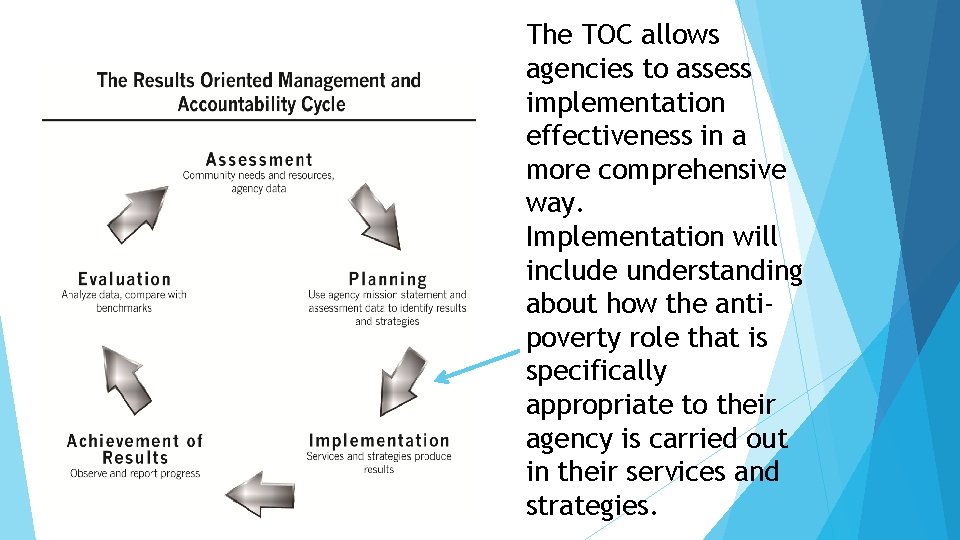
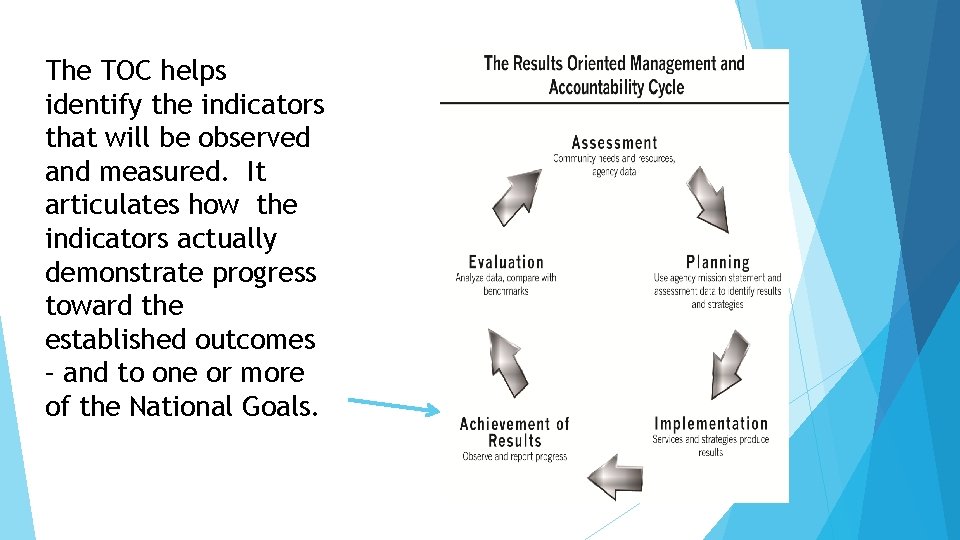
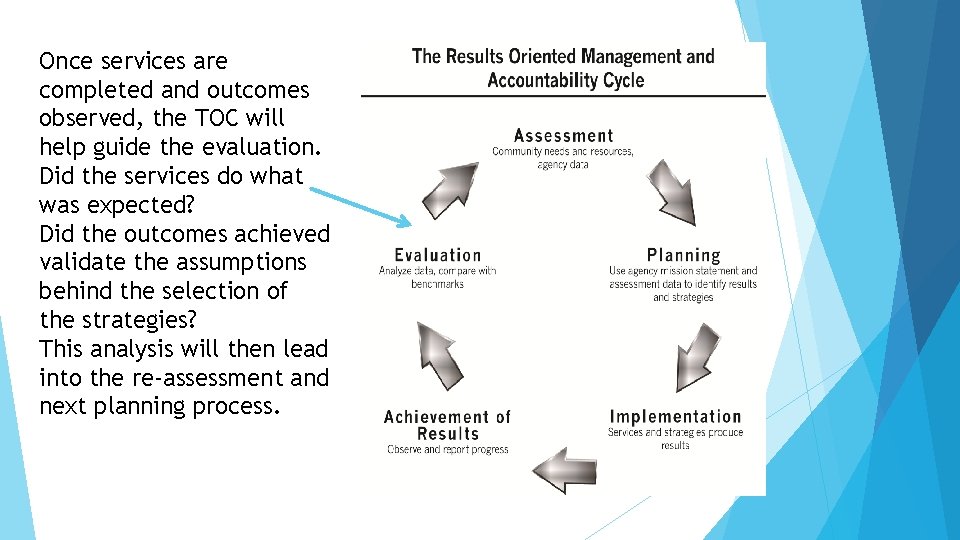
Putting --- all of --- the Pieces Together Assessment Evaluation Achievement of Results Planning Implementation
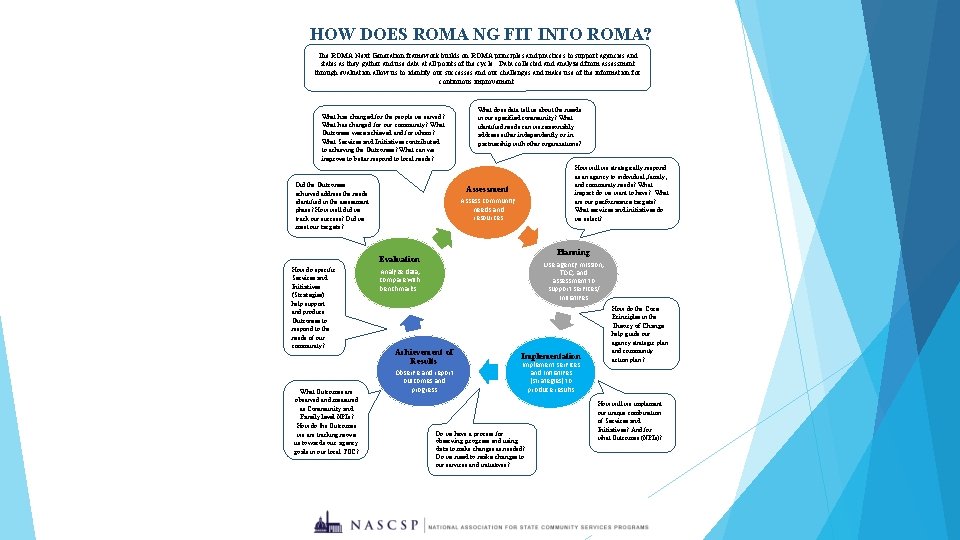
HOW DOES ROMA NG FIT INTO ROMA? The ROMA Next Generation framework builds on ROMA principles and practices to support agencies and states as they gather and use data at all points of the cycle. Data collected analyzed from assessment through evaluation allow us to identify our successes and our challenges and make use of the information for continuous improvement. What has changed for the people we served? What has changed for our community? What Outcomes were achieved and for whom? What Services and Initiatives contributed to achieving the Outcomes? What can we improve to better respond to local needs? Did the Outcomes achieved address the needs identified in the assessment phase? How well did we track our success? Did we meet our targets? What does data tell us about the needs in our specified community? What identified needs can we reasonably address either independently or in partnership with other organizations? How will we strategically respond as an agency to individual, family, and community needs? What impact do we want to have? What are our performance targets? What services and initiatives do we select? Assessment Assess community needs and resources Planning Evaluation How do specific Services and Initiatives (Strategies) help support and produce Outcomes to respond to the needs of our community? What Outcomes are observed and measured as Community and Family level NPIs? How do the Outcomes we are tracking move us towards our agency goals in our local TOC? Use agency mission, TOC, and assessment to support services/ initiatives Analyze data, compare with benchmarks Achievement of Results Observe and report outcomes and progress Implementation Implement services and initiatives (strategies) to produce results Do we have a process for observing progress and using data to make changes as needed? Do we need to make changes to our services and initiatives? How do the Core Principles in the Theory of Change help guide our agency strategic plan and community action plan? How will we implement our unique combination of Services and Initiatives? And for what Outcomes (NPIs)?
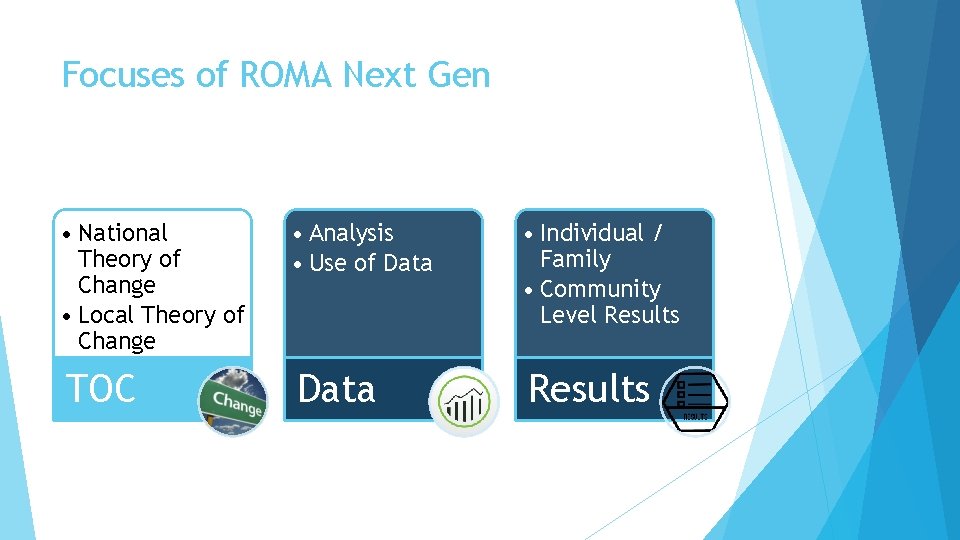
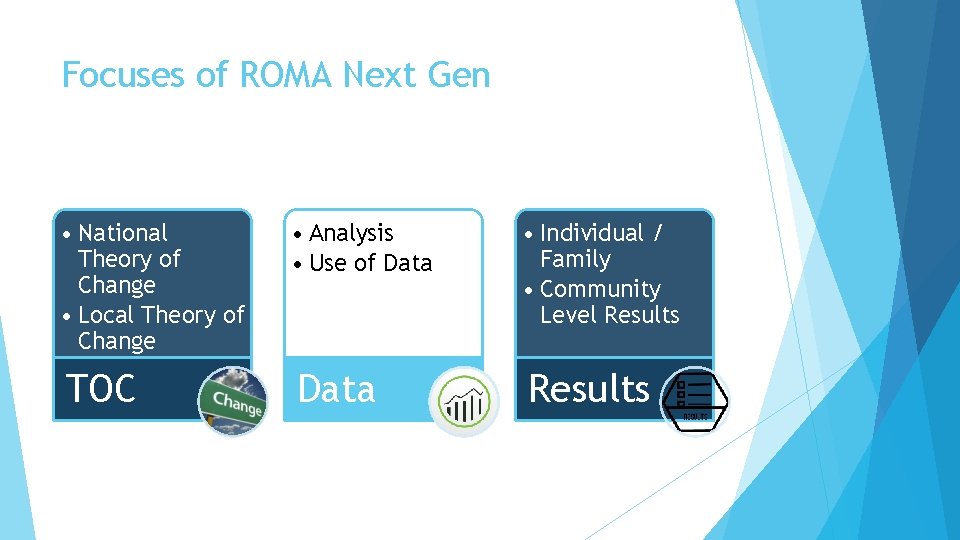
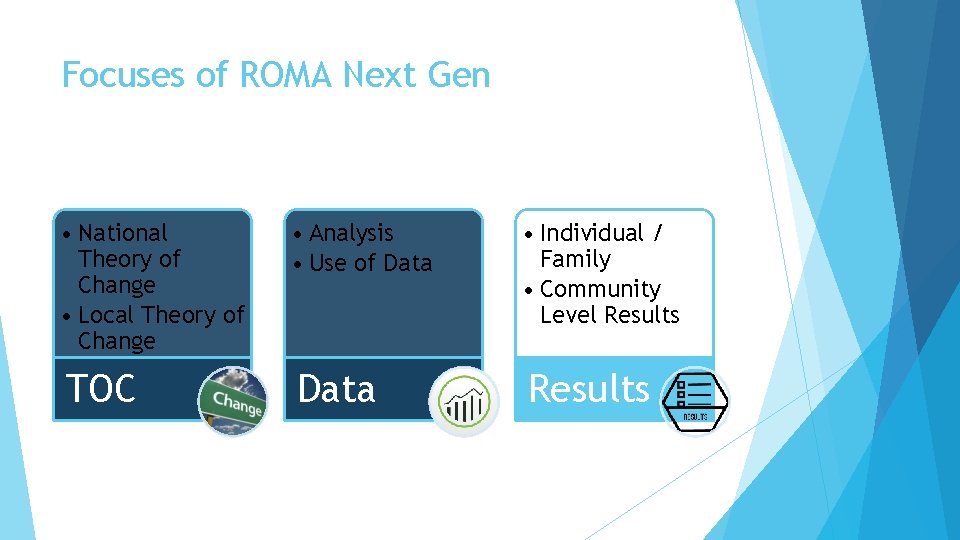
Focuses of ROMA Next Gen • National Theory of Change • Local Theory of Change • Analysis • Use of Data • Individual / Family • Community Level Results TOC Data Results
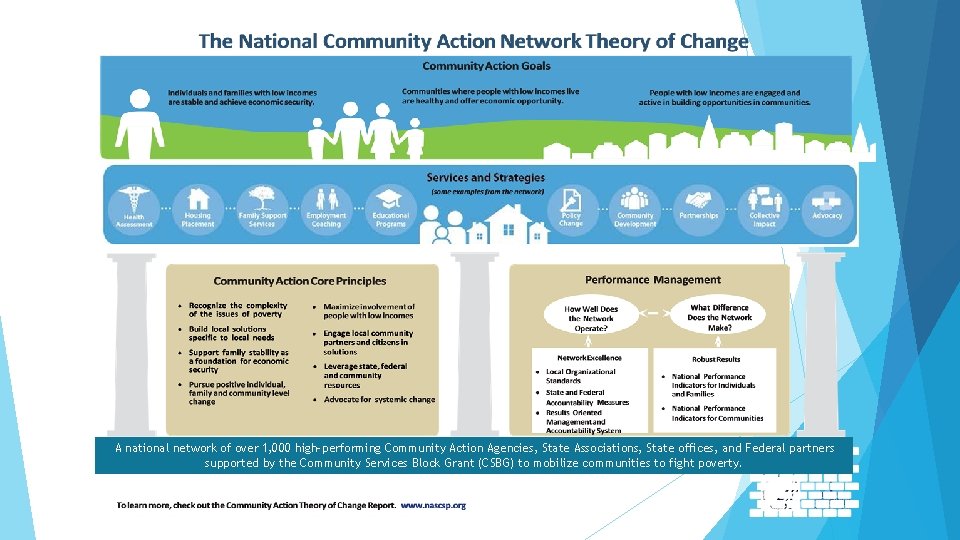
A national network of over 1, 000 high-performing Community Action Agencies, State Associations, State offices, and Federal partners supported by the Community Services Block Grant (CSBG) to mobilize communities to fight poverty.
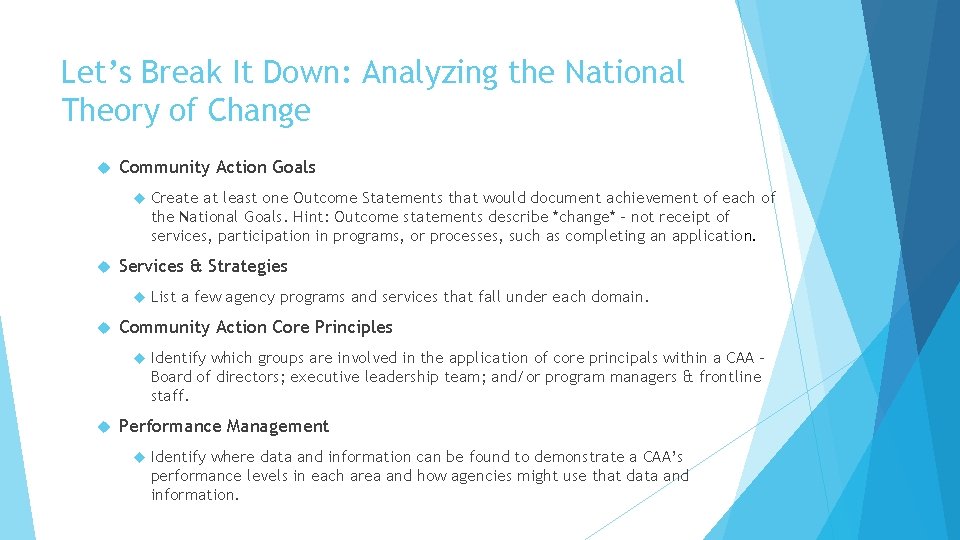
Let’s Break It Down: Analyzing the National Theory of Change Community Action Goals Services & Strategies List a few agency programs and services that fall under each domain. Community Action Core Principles Create at least one Outcome Statements that would document achievement of each of the National Goals. Hint: Outcome statements describe *change* - not receipt of services, participation in programs, or processes, such as completing an application. Identify which groups are involved in the application of core principals within a CAA – Board of directors; executive leadership team; and/or program managers & frontline staff. Performance Management Identify where data and information can be found to demonstrate a CAA’s performance levels in each area and how agencies might use that data and information.
The local TOC acts as a bridge between the assessment data and the agency strategic plan. It provides a frame for analysis of the data and helps to focus on specific data elements that will help in the development of the plan. Using the TOC, each agency will be able to talk about the relationship between the services they provide and both “program outcomes” and “overall agency outcomes” they expect to achieve.
The TOC allows agencies to assess implementation effectiveness in a more comprehensive way. Implementation will include understanding about how the antipoverty role that is specifically appropriate to their agency is carried out in their services and strategies.
The TOC helps identify the indicators that will be observed and measured. It articulates how the indicators actually demonstrate progress toward the established outcomes – and to one or more of the National Goals.
Once services are completed and outcomes observed, the TOC will help guide the evaluation. Did the services do what was expected? Did the outcomes achieved validate the assumptions behind the selection of the strategies? This analysis will then lead into the re-assessment and next planning process.
Focuses of ROMA Next Gen • National Theory of Change • Local Theory of Change • Analysis • Use of Data • Individual / Family • Community Level Results TOC Data Results
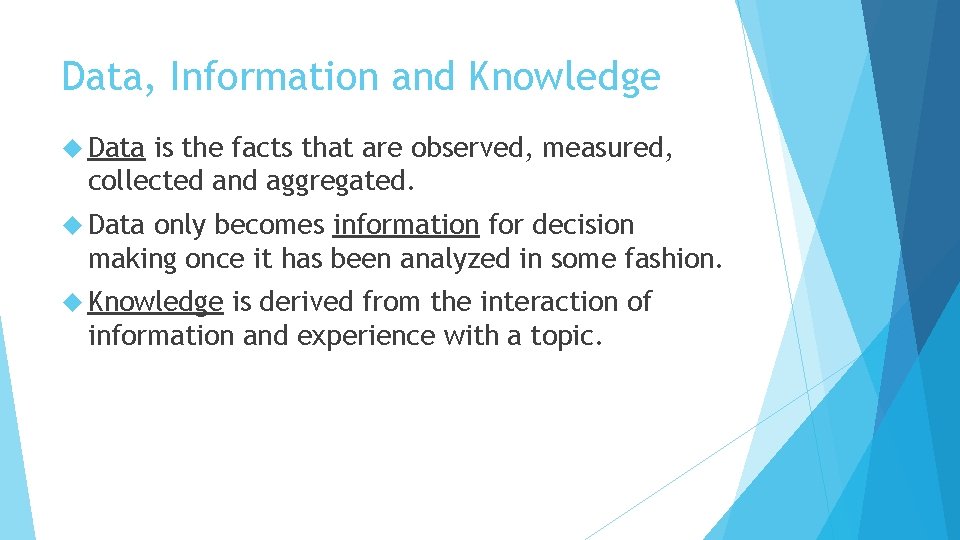
Data, Information and Knowledge Data is the facts that are observed, measured, collected and aggregated. Data only becomes information for decision making once it has been analyzed in some fashion. Knowledge is derived from the interaction of information and experience with a topic.
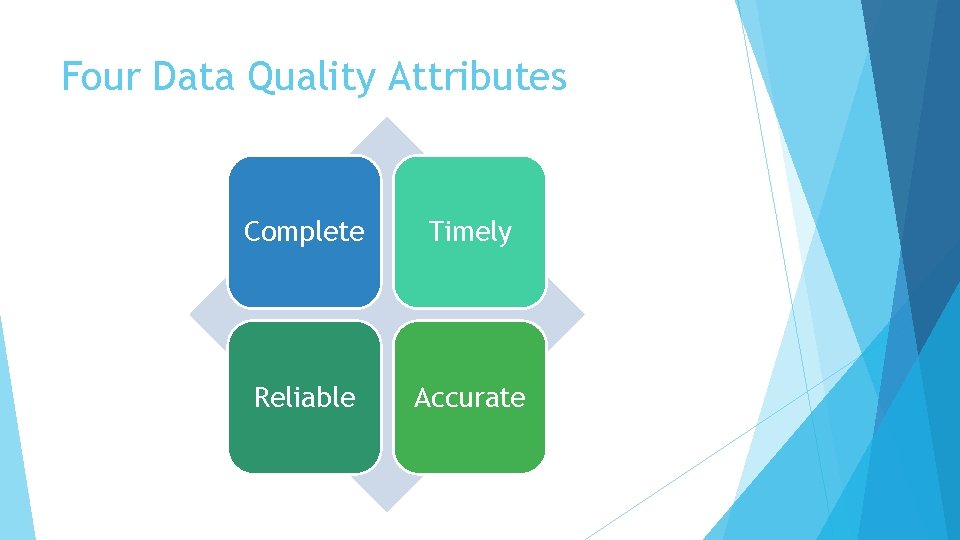
Four Data Quality Attributes Complete Timely Reliable Accurate
In Analysis of Data You Must Know What You Want to Know Establish what you want to know Is this driven by internal or external reporting requirements? Is this driven by Local Theory of Change validation? Identify who has the data and where the data is located, necessary to tell you what you want to know. Agency programs? Input from customers? Community statistics? Input from the general public? Consider what “buckets” or different data classifications we need to examine.
Data Analysis Techniques – 1. 0 Comparative analysis Compares data over time Compares local data to regional or national data Compares planned outcomes to actual outcomes Examines differences among groups Possibly internal (different targeted populations) Possibly external (vs. other service providers)
Data Analysis Techniques – 1. 0 Trend Analysis Collecting information and attempting to spot a pattern, or trend, in the information Although trend analysis is often used to predict or forecast future events, it is also used to explain and understand events in the past. • Trend analysis provides evidence to inform decisionmaking. • Trend analysis together with annual or point-in-time data provides both a short- and long-term perspective. •
Data Analysis Techniques Mapping Identifying the path and flow of information A map: is a graphical representation. is a documented procedure, process, or system. depicts relationships among its different components. can show the flow of information, materials, money, personnel, etc.
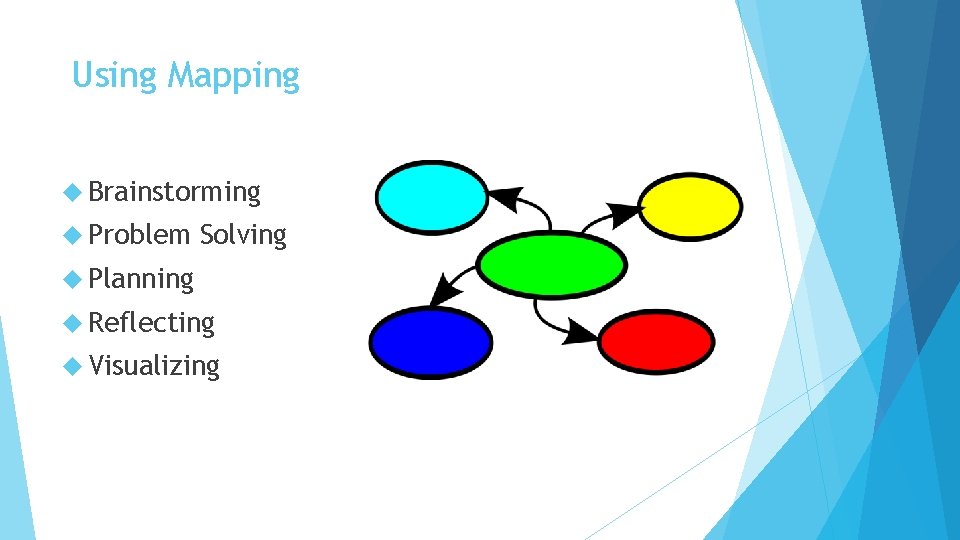
Using Mapping Brainstorming Problem Solving Planning Reflecting Visualizing
Examples of Data Maps Logic Model Flow Chart Program Mapping Graphic (Program processes, flow of customers through agency programs, etc. ) Outcome scales Outcome Matrices
Let’s Crunch Some Data In your groups, take a few minutes to consider the data sets in the handouts. Determine what type of analysis was used. Be prepared to present your conclusions.
Data Analysis 2. 0 Technique Factor Analysis A useful tool for investigating relationships for complex concepts. It enables examination of a number of elements to observe how (or if) they are related. In factor analysis, multiple observed “variables” are tracked to see if they have similar patterns of responses because they are all associated with a complex concept which cannot easily be measured directly. For example, people respond to questions about income, education, and occupation (the different variables), which are all associated with “socioeconomic status. ”
Focuses of ROMA Next Gen • National Theory of Change • Local Theory of Change • Analysis • Use of Data • Individual / Family • Community Level Results TOC Data Results
Individual/Family and Community-Level Outcomes The National Goals are the “Big Pictures” that are created by targeting agency programs and initiatives to meet local needs which support or create positive changes both in the lives of people and in communities. ROMA Next Gen tracks services delivered, whether emergency/supportive to foster stability or “bundled” as part of family development programs, and Individual & Family National Performance Indicators (NPIs). ROMA Next Gen allows us to track community initiatives as the long-term, widely-varied efforts they are. ROMA Next Gen also establishes links between ROMA and the Organizational Standards by which agencies are evaluated at state- and national-levels.
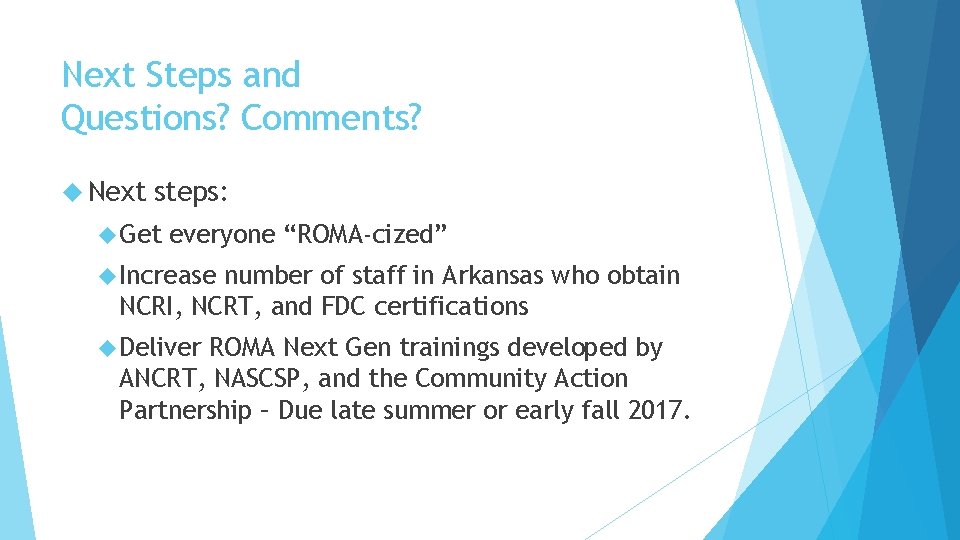
Next Steps and Questions? Comments? Next steps: Get everyone “ROMA-cized” Increase number of staff in Arkansas who obtain NCRI, NCRT, and FDC certifications Deliver ROMA Next Gen trainings developed by ANCRT, NASCSP, and the Community Action Partnership – Due late summer or early fall 2017.