
2016 Integrated Resource Plan Imperial Irrigation District April
- Slides: 12
2016 Integrated Resource Plan: Imperial Irrigation District April 18 th, 2016 www. iid. com
Integrated Recourse Plan Overview • Objectives of the Integrated Resource Plan (IRP) • IRP Development Process • Key Drivers Status • Accurate Load Forecast • Adjusting to SB 350 Requirements • RPS Position www. iid. com
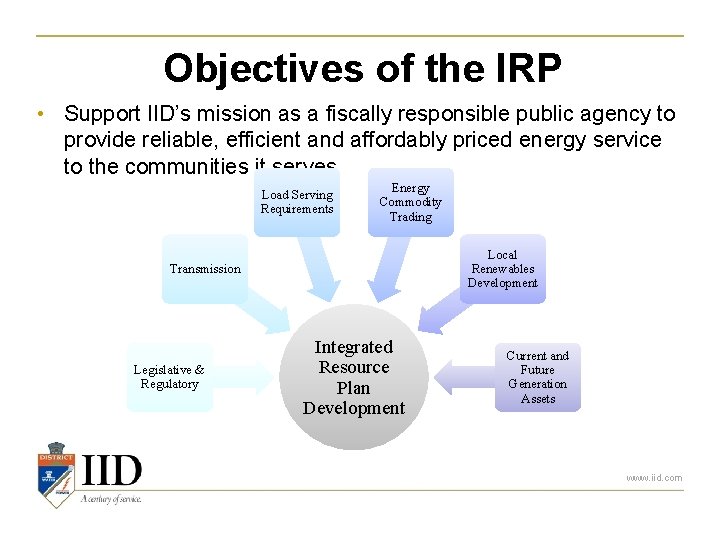
Objectives of the IRP • Support IID’s mission as a fiscally responsible public agency to provide reliable, efficient and affordably priced energy service to the communities it serves Load Serving Requirements Energy Commodity Trading Local Renewables Development Transmission Legislative & Regulatory Integrated Resource Plan Development Current and Future Generation Assets www. iid. com
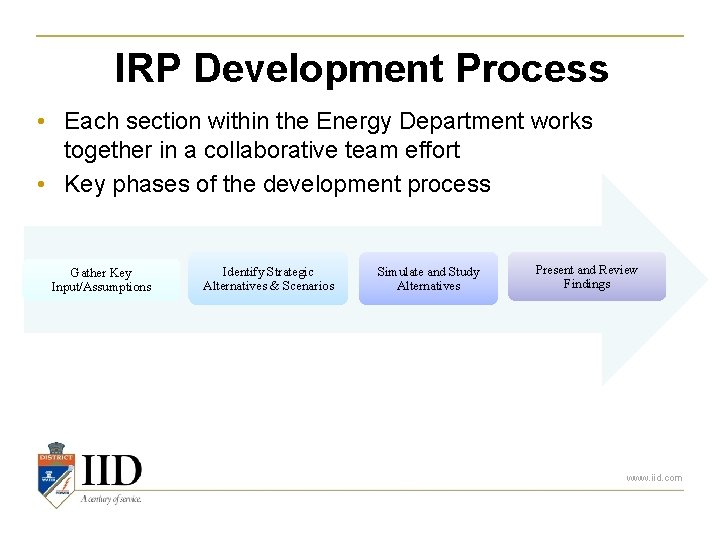
IRP Development Process • Each section within the Energy Department works together in a collaborative team effort • Key phases of the development process Gather Key Input/Assumptions Identify Strategic Alternatives & Scenarios Simulate and Study Alternatives Present and Review Findings www. iid. com
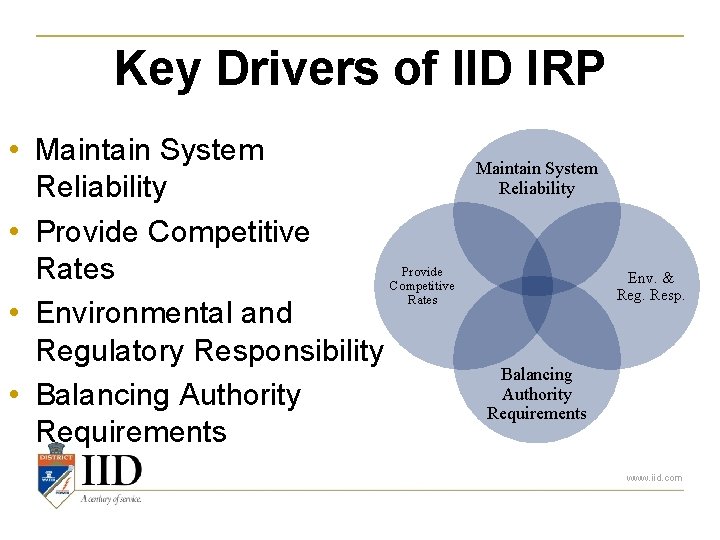
Key Drivers of IID IRP • Maintain System Reliability • Provide Competitive Provide Rates Competitive Rates • Environmental and Regulatory Responsibility • Balancing Authority Requirements Maintain System Reliability Env. & Reg. Resp. Balancing Authority Requirements www. iid. com
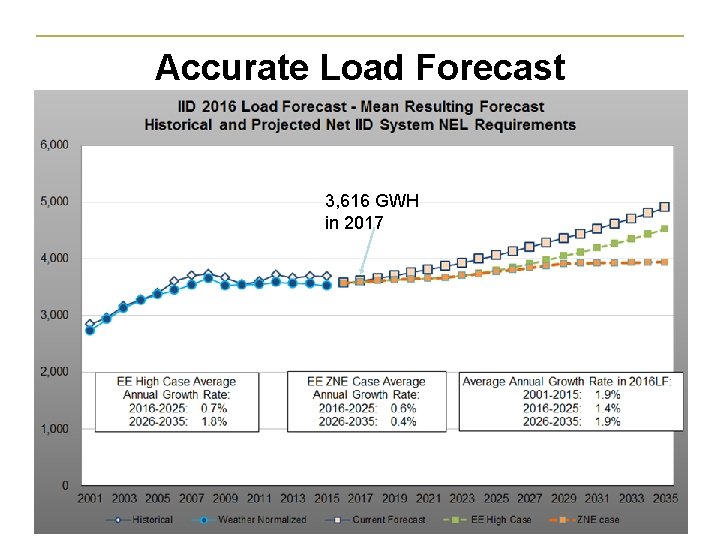
Accurate Load Forecast 3, 616 GWH in 2017 www. iid. com
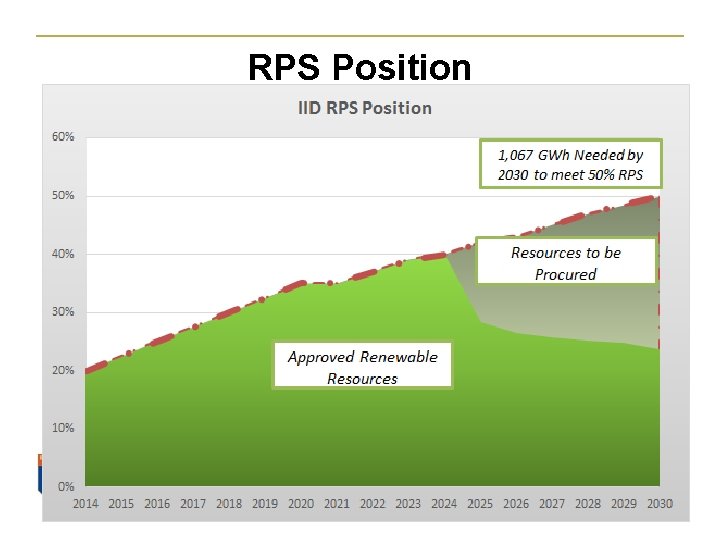
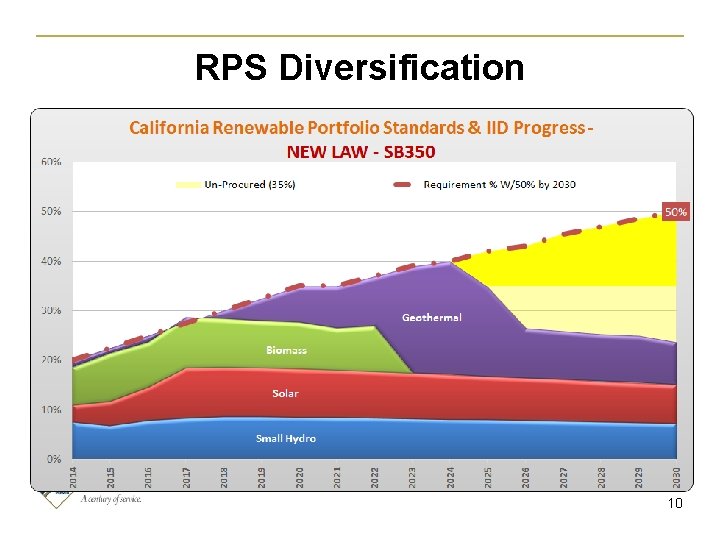
Adjusting to SB 350 Requirements • GHG reduction requirements - 40% below 1990 levels by 2030 § Exit of coal agreements § Renewable procurement (localized goal) § Meet EE targets § Acquisition of more emission efficient resources; or, the repowering of existing facilities • RPS targets – 50% by 2030 § Acquisition of cost effective renewable energy § On target to meet 2020 internal goal of 35% and through 2025 (straight line approach) § Sensitivity analysis within load forecast to ensure compliance within range of potential outcomes in load and renewable production www. iid. com 7
Adjusting to SB 350 Requirements (Cont. ) • Vehicle Electrification/TOU rates/EE • Study and recommend programs • Impacts on Demand/Energy Forecasts • Integration of other considerations that are affected by Vehicle Electrification • Ensure that an ongoing process is developed to determine best approach www. iid. com 8
RPS Position www. iid. com 9
RPS Diversification www. iid. com 10
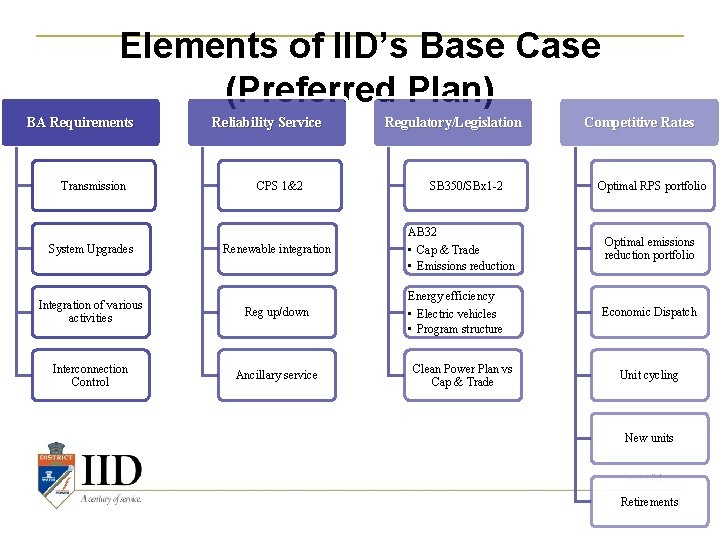
Elements of IID’s Base Case (Preferred Plan) BA Requirements Transmission Reliability Service CPS 1&2 Regulatory/Legislation SB 350/SBx 1 -2 AB 32 System Upgrades Renewable integration • Cap & Trade • Emissions reduction Competitive Rates Optimal RPS portfolio Optimal emissions reduction portfolio Energy efficiency Integration of various activities Reg up/down Interconnection Control Ancillary service • Electric vehicles • Program structure Clean Power Plan vs Cap & Trade Economic Dispatch Unit cycling New units www. iid. com Retirements 11
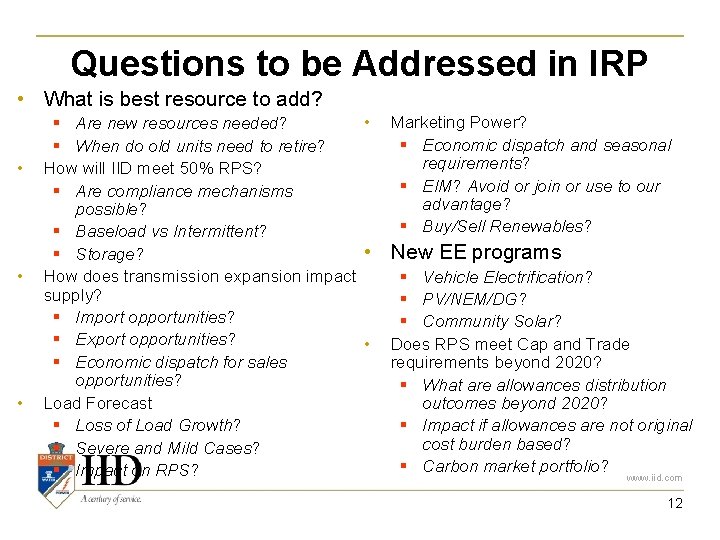
Questions to be Addressed in IRP • What is best resource to add? • • § Are new resources needed? § When do old units need to retire? How will IID meet 50% RPS? § Are compliance mechanisms possible? § Baseload vs Intermittent? • § Storage? How does transmission expansion impact supply? § Import opportunities? § Export opportunities? • § Economic dispatch for sales opportunities? Load Forecast § Loss of Load Growth? § Severe and Mild Cases? § Impact on RPS? Marketing Power? § Economic dispatch and seasonal requirements? § EIM? Avoid or join or use to our advantage? § Buy/Sell Renewables? New EE programs § Vehicle Electrification? § PV/NEM/DG? § Community Solar? Does RPS meet Cap and Trade requirements beyond 2020? § What are allowances distribution outcomes beyond 2020? § Impact if allowances are not original cost burden based? § Carbon market portfolio? www. iid. com 12