
2015 VDOE HEALTH STANDARDS OF LEARNING Essential Health
- Slides: 14
2015 VDOE HEALTH STANDARDS OF LEARNING
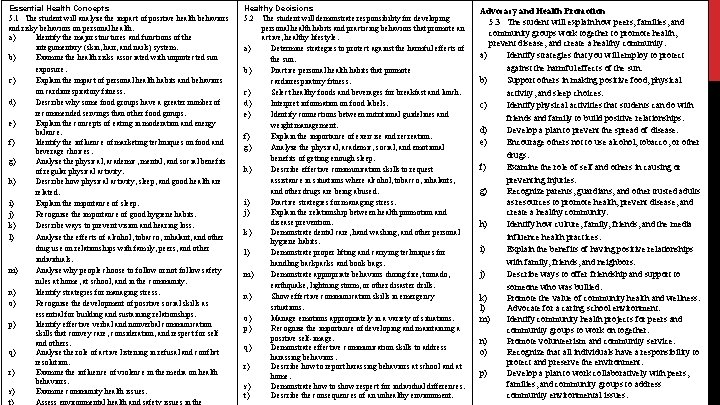
Essential Health Concepts 5. 1 The student will analyze the impact of positive health behaviors and risky behaviors on personal health. a) Identify the major structures and functions of the integumentary (skin, hair, and nails) system. b) Examine the health risks associated with unprotected sun exposure. c) Explain the impact of personal health habits and behaviors on cardiorespiratory fitness. d) Describe why some food groups have a greater number of recommended servings than other food groups. e) Explain the concepts of eating in moderation and energy balance. f) Identify the influence of marketing techniques on food and beverage choices. g) Analyze the physical, academic, mental, and social benefits of regular physical activity. h) Describe how physical activity, sleep, and good health are related. i) Explain the importance of sleep. j) Recognize the importance of good hygiene habits. k) Describe ways to prevent vision and hearing loss. l) Analyze the effects of alcohol, tobacco, inhalant, and other drug use on relationships with family, peers, and other individuals. m) Analyze why people choose to follow or not follow safety rules at home, at school, and in the community. n) Identify strategies for managing stress. o) Recognize the development of positive social skills as essential for building and sustaining relationships. p) Identify effective verbal and nonverbal communication skills that convey care, consideration, and respect for self and others. q) Analyze the role of active listening in refusal and conflict resolution. r) Examine the influence of violence in the media on health behaviors. s) Examine community health issues. t) Assess environmental health and safety issues in the Healthy Decisions 5. 2 The student will demonstrate responsibility for developing personal health habits and practicing behaviors that promote an active, healthy lifestyle. a) Determine strategies to protect against the harmful effects of the sun. b) Practice personal health habits that promote cardiorespiratory fitness. c) Select healthy foods and beverages for breakfast and lunch. d) Interpret information on food labels. e) Identify connections between nutritional guidelines and weight management. f) Explain the importance of exercise and recreation. g) Analyze the physical, academic, social, and emotional benefits of getting enough sleep. h) Describe effective communication skills to request assistance in situations where alcohol, tobacco, inhalants, and other drugs are being abused. i) Practice strategies for managing stress. j) Explain the relationship between health promotion and disease prevention. k) Demonstrate dental care, hand washing, and other personal hygiene habits. l) Demonstrate proper lifting and carrying techniques for handling backpacks and book bags. m) Demonstrate appropriate behaviors during fire, tornado, earthquake, lightning storm, or other disaster drills. n) Show effective communication skills in emergency situations. o) Manage emotions appropriately in a variety of situations. p) Recognize the importance of developing and maintaining a positive self-image. q) Demonstrate effective communication skills to address harassing behaviors. r) Describe how to report harassing behaviors at school and at home. s) Demonstrate how to show respect for individual differences. t) Describe the consequences of an unhealthy environment. Advocacy and Health Promotion 5. 3 The student will explain how peers, families, and community groups work together to promote health, prevent disease, and create a healthy community. a) Identify strategies that you will employ to protect against the harmful effects of the sun. b) Support others in making positive food, physical activity, and sleep choices. c) Identify physical activities that students can do with friends and family to build positive relationships. d) Develop a plan to prevent the spread of disease. e) Encourage others not to use alcohol, tobacco, or other drugs. f) Examine the role of self and others in causing or preventing injuries. g) Recognize parents, guardians, and other trusted adults as resources to promote health, prevent disease, and create a healthy community. h) Identify how culture, family, friends, and the media influence health practices. i) Explain the benefits of having positive relationships with family, friends, and neighbors. j) Describe ways to offer friendship and support to someone who was bullied. k) Promote the value of community health and wellness. l) Advocate for a caring school environment. m) Identify community health projects for peers and community groups to work on together. n) Promote volunteerism and community service. o) Recognize that all individuals have a responsibility to protect and preserve the environment. p) Develop a plan to work collaboratively with peers, families, and community groups to address community environmental issues.
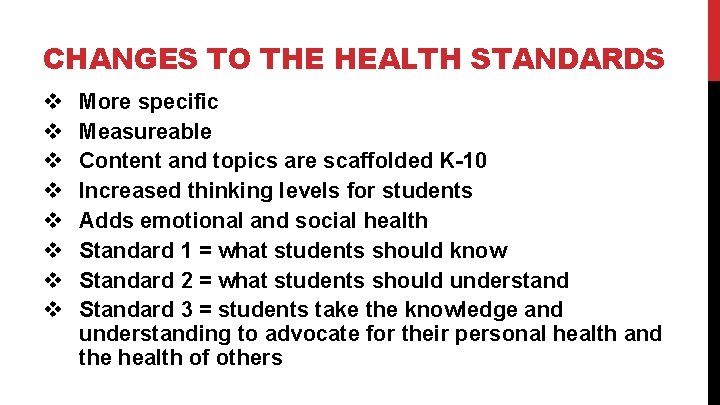
CHANGES TO THE HEALTH STANDARDS v v v v More specific Measureable Content and topics are scaffolded K-10 Increased thinking levels for students Adds emotional and social health Standard 1 = what students should know Standard 2 = what students should understand Standard 3 = students take the knowledge and understanding to advocate for their personal health and the health of others
_ GRADE HEALTH SOLS: FORMING UNITS OF INSTRUCTION
USING THE NEW SOLS TO CREATE EFFECTIVE AND MEANINGFUL LESSONS IS A 3 STEP PROCESS Step 1: Determine Unit Step 2: Identify The Objectives Within The Strands That Apply Step 3: Build Your Daily Lesson
STEP 1 REVIEW THE STANDARDS FOR TOPICAL AREAS TO DESIGN A UNIT FROM WHICH YOU WILL TEACH.
TOPICS § § § § § Body Systems Nutrition, Physical Activity, Sleep Disease Prevention Substance abuse prevention and safe use of medication Injury and violence prevention Emotional and Mental Health Social Health and Relationships Communication and Problem Solving Environmental Health Safety and Emergency Preparedness
STEP 2 IDENTIFY STANDARDS/LEARNING OBJECTIVES WITHIN YOUR GRADE LEVEL THAT APPLY TO THAT TOPIC AREA ENVIRONMENTAL HEALTH
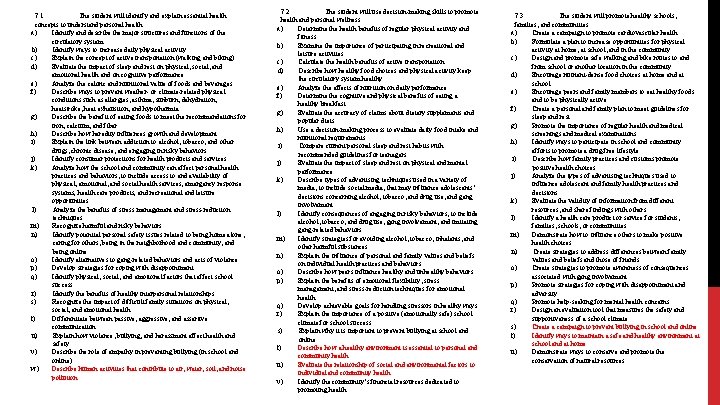
7. 1 The student will identify and explain essential health concepts to understand personal health. a) Identify and describe the major structures and functions of the circulatory system. b) Identify ways to increase daily physical activity. c) Explain the concept of active transportation (walking and biking). d) Evaluate the impact of sleep and rest on physical, social, and emotional health and on cognitive performance. e) Analyze the caloric and nutritional value of foods and beverages. f) Describe ways to prevent weather- or climate-related physical conditions such as allergies, asthma, sunburn, dehydration, heatstroke, heat exhaustion, and hypothermia. g) Describe the benefit of eating foods to meet the recommendations for iron, calcium, and fiber. h) Describe how heredity influences growth and development. i) Explain the link between addiction to alcohol, tobacco, and other drugs, chronic disease, and engaging in risky behaviors. j) Identify consumer protections for health products and services. k) Analyze how the school and community can affect personal health practices and behaviors, to include access to and availability of physical, emotional, and social health services; emergency response systems; health care products; and recreational and leisure opportunities. l) Analyze the benefits of stress management and stress-reduction techniques. m) Recognize harmful and risky behaviors. n) Identify potential personal safety issues related to being home alone, caring for others, being in the neighborhood and community, and being online. o) Identify alternatives to gang-related behaviors and acts of violence. p) Develop strategies for coping with disappointment. q) Identify physical, social, and emotional factors that affect school success. r) Identify the benefits of healthy interpersonal relationships. s) Recognize the impact of difficult family situations on physical, social, and emotional health. t) Differentiate between passive, aggressive, and assertive communication. u) Explain how violence, bullying, and harassment affect health and safety. v) Describe the role of empathy in preventing bullying (in school and online). w) Describe human activities that contribute to air, water, soil, and noise pollution. 7. 2 The student will use decision-making skills to promote health and personal wellness. a) Determine the health benefits of regular physical activity and fitness. b) Examine the importance of participating in recreational and leisure activities. c) Calculate the health benefits of active transportation. d) Describe how healthy food choices and physical activity keep the circulatory system healthy. e) Analyze the effects of nutrition on daily performance. f) Determine the cognitive and physical benefits of eating a healthy breakfast. g) Evaluate the accuracy of claims about dietary supplements and popular diets. h) Use a decision-making process to evaluate daily food intake and nutritional requirements. i) Compare current personal sleep and rest habits with recommended guidelines for teenagers. j) Evaluate the impact of sleep and rest on physical and mental performance. k) Describe types of advertising techniques used in a variety of media, to include social media, that may influence adolescents’ decisions concerning alcohol, tobacco, and drug use, and gang involvement. l) Identify consequences of engaging in risky behaviors, to include alcohol, tobacco, and drug use, gang involvement, and imitating gang-related behaviors. m) Identify strategies for avoiding alcohol, tobacco, inhalants, and other harmful substances. n) Explain the influence of personal and family values and beliefs on individual health practices and behaviors. o) Describe how peers influence healthy and unhealthy behaviors. p) Explain the benefits of emotional flexibility, stress management, and stress-reduction techniques for emotional health. q) Develop achievable goals for handling stressors in healthy ways. r) Explain the importance of a positive (emotionally safe) school climate for school success. s) Explain why it is important to prevent bullying at school and online. t) Describe how a healthy environment is essential to personal and community health. u) Evaluate the relationship of social and environmental factors to individual and community health. v) Identify the community’s financial resources dedicated to promoting health. 7. 3 The student will promote healthy schools, families, and communities. a) Create a campaign to promote cardiovascular health. b) Formulate a plan to increase opportunities for physical activity at home, at school, and in the community. c) Design and promote safe walking and bike routes to and from school or another location in the community. d) Encourage nutrient-dense food choices at home and at school. e) Encourage peers and family members to eat healthy foods and to be physically active. f) Create a personal and family plan to meet guidelines for sleep and rest. g) Promote the importance of regular health and medical screenings and medical examinations. h) Identify ways to participate in school and community efforts to promote a drug-free lifestyle. i) Describe how family practices and customs promote positive health choices. j) Analyze the types of advertising techniques used to influence adolescent and family health practices and decisions. k) Evaluate the validity of information from different resources, and share findings with others. l) Identify a health care product or service for students, families, schools, or communities. m) Demonstrate how to influence others to make positive health choices. n) Create strategies to address differences between family values and beliefs and those of friends. o) Create strategies to promote awareness of consequences associated with gang involvement. p) Promote strategies for coping with disappointment and adversity. q) Promote help-seeking for mental health concerns. r) Design an evaluation tool that measures the safety and supportiveness of a school climate. s) Create a campaign to prevent bullying in school and online. t) Identify ways to maintain a safe and healthy environment at school and at home. u) Demonstrate ways to conserve and promote the conservation of natural resources.
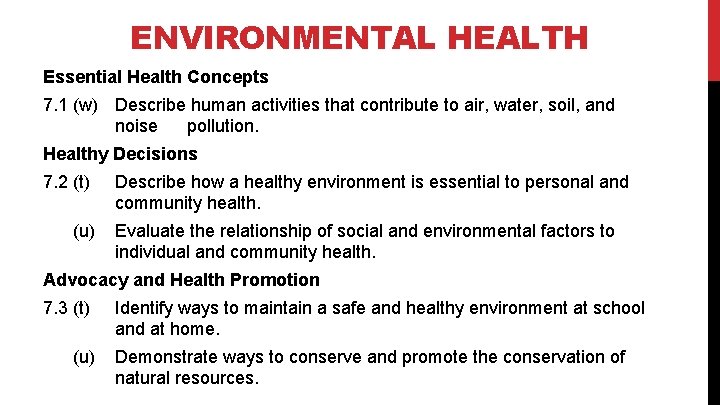
ENVIRONMENTAL HEALTH Essential Health Concepts 7. 1 (w) Describe human activities that contribute to air, water, soil, and noise pollution. Healthy Decisions 7. 2 (t) (u) Describe how a healthy environment is essential to personal and community health. Evaluate the relationship of social and environmental factors to individual and community health. Advocacy and Health Promotion 7. 3 (t) (u) Identify ways to maintain a safe and healthy environment at school and at home. Demonstrate ways to conserve and promote the conservation of natural resources.
STEP 3 BUILD YOUR DAILY LESSON PLANS USING THE CHOSEN STANDARDS FOR THE TOPIC/UNIT.
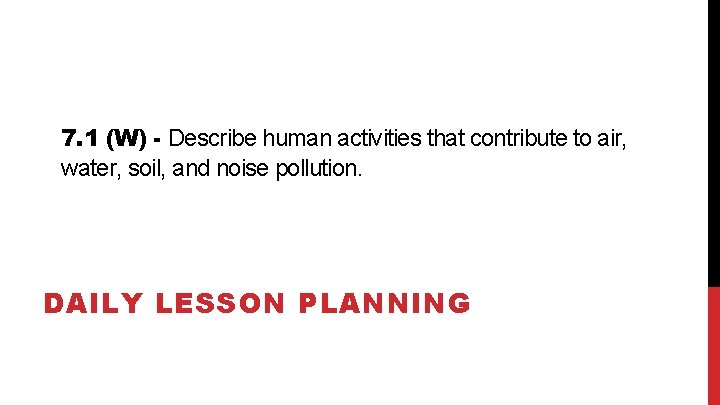
7. 1 (W) - Describe human activities that contribute to air, water, soil, and noise pollution. DAILY LESSON PLANNING
SHARE LESSON TEMPLATE
RESOURCES We will communicate where they can access resources and your presentation online.