
2015 Certification Status Report Certified Controls Engineer CCE

- Slides: 15
2015 Certification Status Report Certified Controls Engineer (CCE) Certified Senior Controls Engineer (CSCE) 2015 EECT Division Membership Meeting Dr. John R. Wright, Jr. , CSTM Millersville University
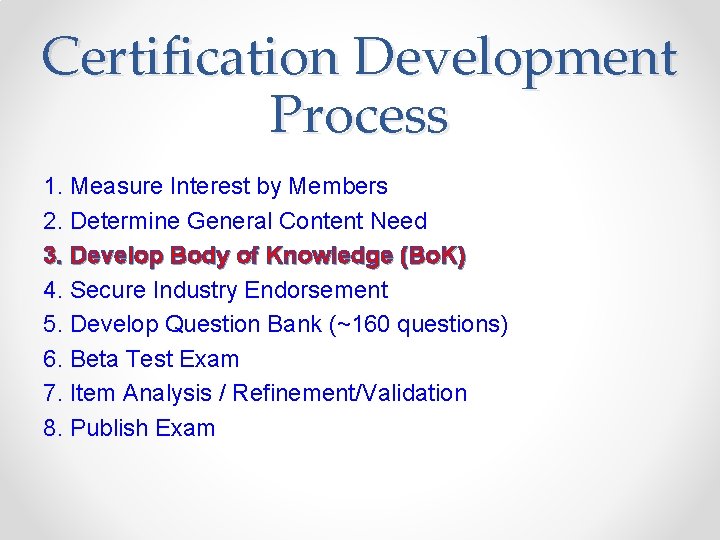
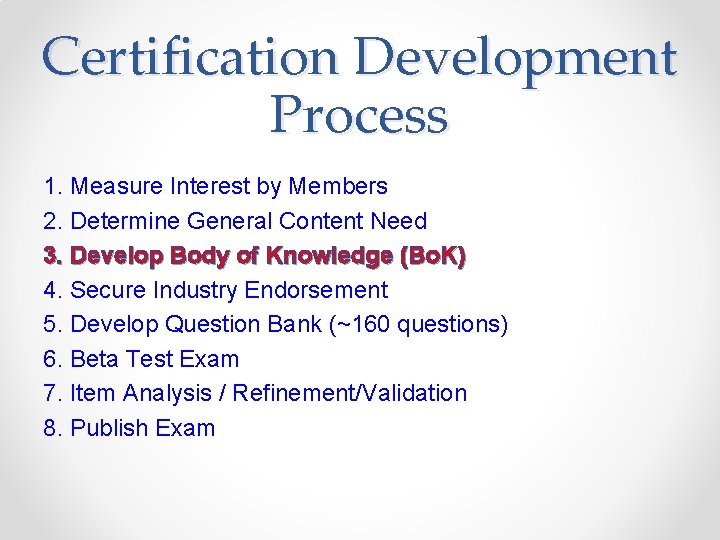
Certification Development Process 1. Measure Interest by Members 2. Determine General Content Need 3. Develop Body of Knowledge (Bo. K) 4. Secure Industry Endorsement 5. Develop Question Bank (~160 questions) 6. Beta Test Exam 7. Item Analysis / Refinement/Validation 8. Publish Exam
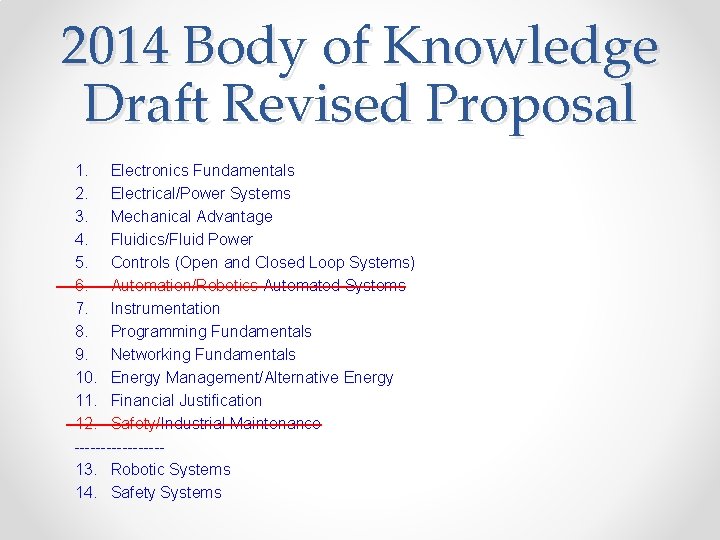
2014 Body of Knowledge Draft Revised Proposal 1. Electronics Fundamentals 2. Electrical/Power Systems 3. Mechanical Advantage 4. Fluidics/Fluid Power 5. Controls (Open and Closed Loop Systems) 6. Automation/Robotics Automated Systems 7. Instrumentation 8. Programming Fundamentals 9. Networking Fundamentals 10. Energy Management/Alternative Energy 11. Financial Justification 12. Safety/Industrial Maintenance --------13. Robotic Systems 14. Safety Systems
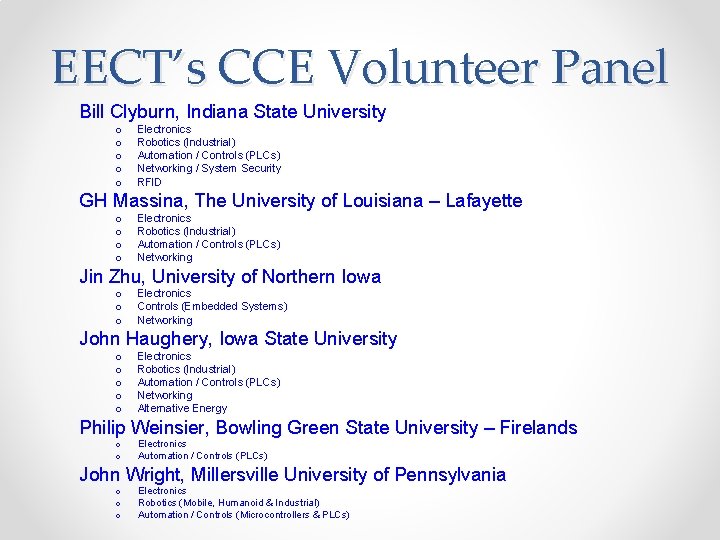
EECT’s CCE Volunteer Panel Bill Clyburn, Indiana State University o o o Electronics Robotics (Industrial) Automation / Controls (PLCs) Networking / System Security RFID GH Massina, The University of Louisiana – Lafayette o o Electronics Robotics (Industrial) Automation / Controls (PLCs) Networking Jin Zhu, University of Northern Iowa o o o Electronics Controls (Embedded Systems) Networking John Haughery, Iowa State University o o o Electronics Robotics (Industrial) Automation / Controls (PLCs) Networking Alternative Energy Philip Weinsier, Bowling Green State University – Firelands o o Electronics Automation / Controls (PLCs) John Wright, Millersville University of Pennsylvania o o o Electronics Robotics (Mobile, Humanoid & Industrial) Automation / Controls (Microcontrollers & PLCs)
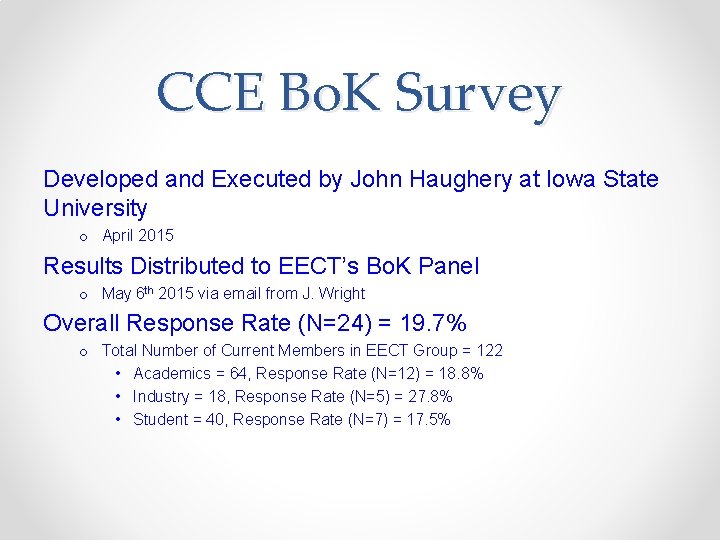
CCE Bo. K Survey Developed and Executed by John Haughery at Iowa State University o April 2015 Results Distributed to EECT’s Bo. K Panel o May 6 th 2015 via email from J. Wright Overall Response Rate (N=24) = 19. 7% o Total Number of Current Members in EECT Group = 122 • Academics = 64, Response Rate (N=12) = 18. 8% • Industry = 18, Response Rate (N=5) = 27. 8% • Student = 40, Response Rate (N=7) = 17. 5%
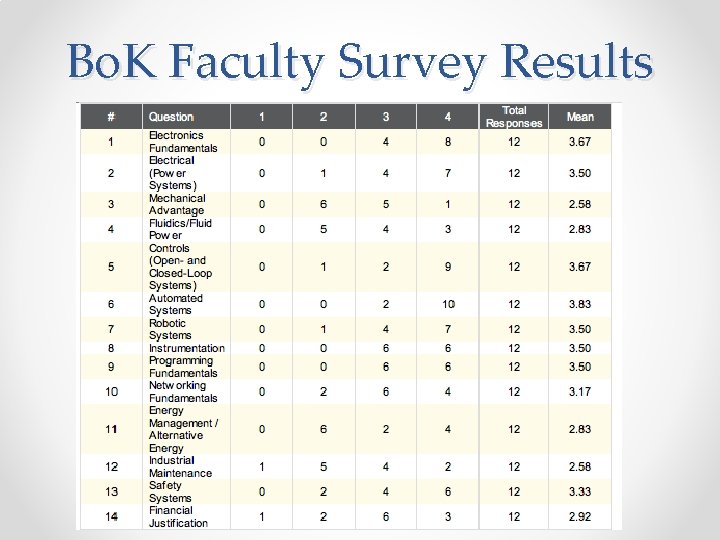
Bo. K Faculty Survey Results
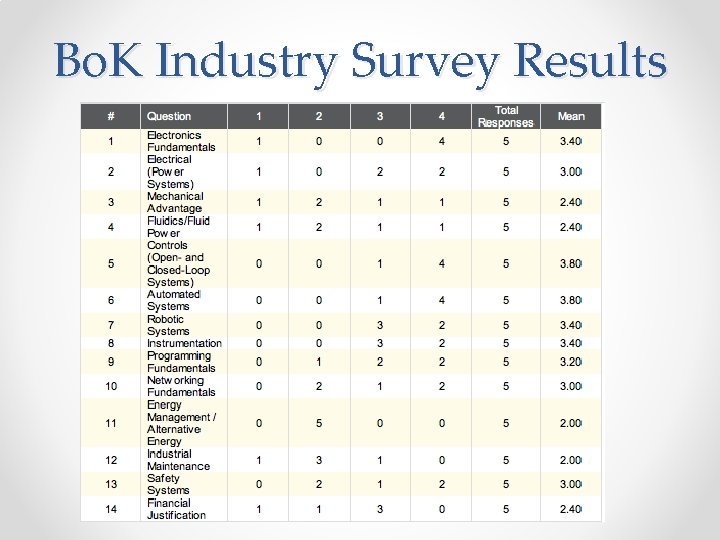
Bo. K Industry Survey Results
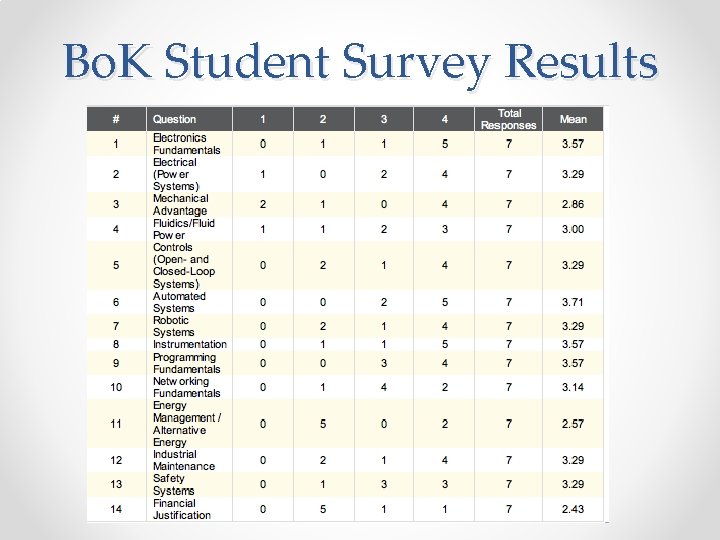
Bo. K Student Survey Results
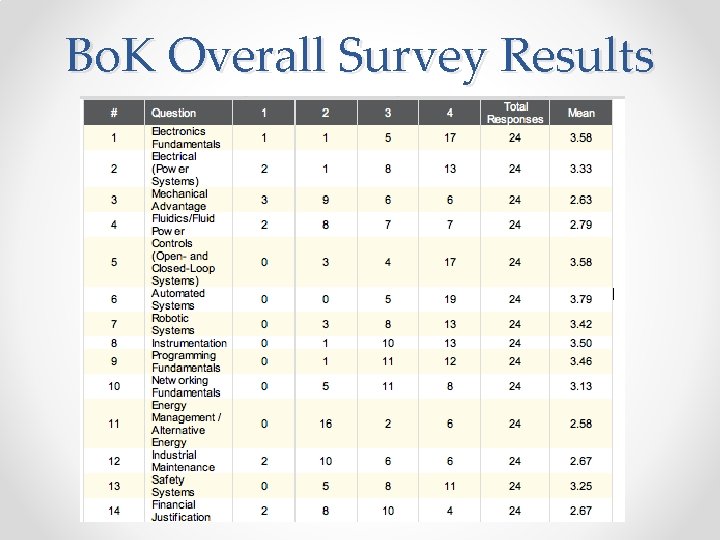
Bo. K Overall Survey Results
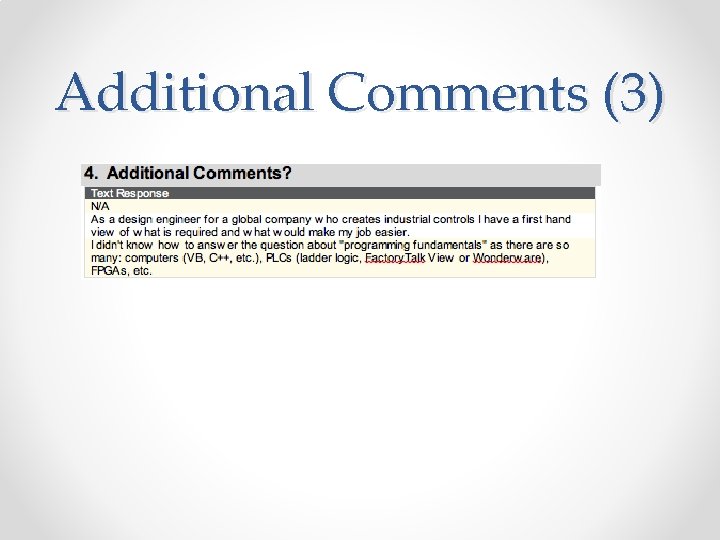
Additional Comments (3)
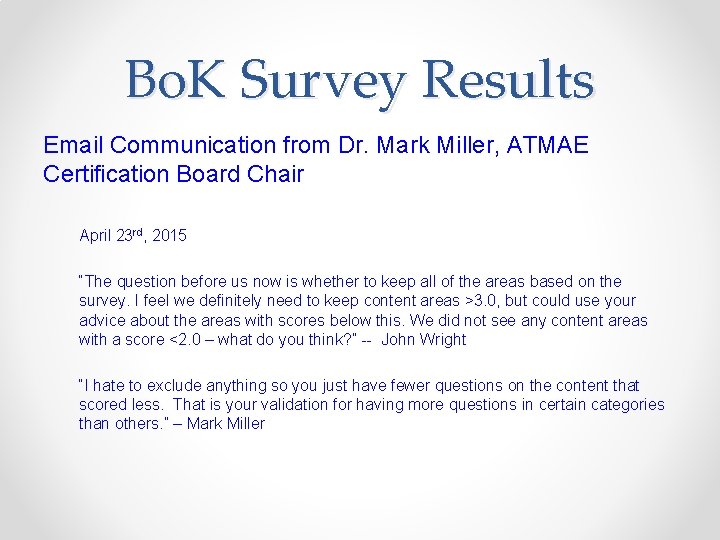
Bo. K Survey Results Email Communication from Dr. Mark Miller, ATMAE Certification Board Chair April 23 rd, 2015 “The question before us now is whether to keep all of the areas based on the survey. I feel we definitely need to keep content areas >3. 0, but could use your advice about the areas with scores below this. We did not see any content areas with a score <2. 0 – what do you think? ” -- John Wright “I hate to exclude anything so you just have fewer questions on the content that scored less. That is your validation for having more questions in certain categories than others. ” – Mark Miller
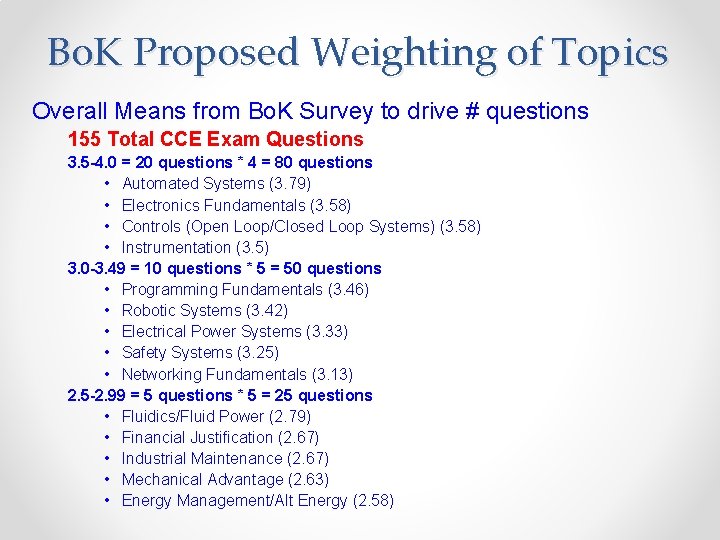
Bo. K Proposed Weighting of Topics Overall Means from Bo. K Survey to drive # questions 155 Total CCE Exam Questions 3. 5 -4. 0 = 20 questions * 4 = 80 questions • Automated Systems (3. 79) • Electronics Fundamentals (3. 58) • Controls (Open Loop/Closed Loop Systems) (3. 58) • Instrumentation (3. 5) 3. 0 -3. 49 = 10 questions * 5 = 50 questions • Programming Fundamentals (3. 46) • Robotic Systems (3. 42) • Electrical Power Systems (3. 33) • Safety Systems (3. 25) • Networking Fundamentals (3. 13) 2. 5 -2. 99 = 5 questions * 5 = 25 questions • Fluidics/Fluid Power (2. 79) • Financial Justification (2. 67) • Industrial Maintenance (2. 67) • Mechanical Advantage (2. 63) • Energy Management/Alt Energy (2. 58)
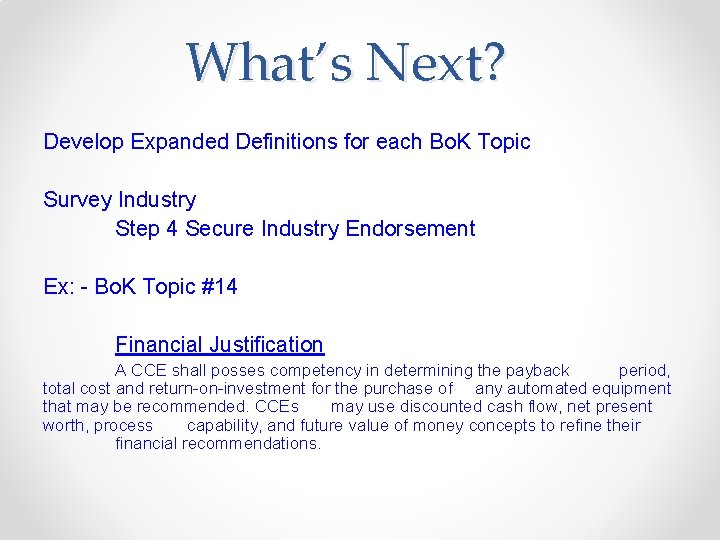
What’s Next? Develop Expanded Definitions for each Bo. K Topic Survey Industry Step 4 Secure Industry Endorsement Ex: - Bo. K Topic #14 Financial Justification A CCE shall posses competency in determining the payback period, total cost and return-on-investment for the purchase of any automated equipment that may be recommended. CCEs may use discounted cash flow, net present worth, process capability, and future value of money concepts to refine their financial recommendations.
Certification Development Process 1. Measure Interest by Members 2. Determine General Content Need 3. Develop Body of Knowledge (Bo. K) 4. Secure Industry Endorsement 5. Develop Question Bank (~160 questions) 6. Beta Test Exam 7. Item Analysis / Refinement/Validation 8. Publish Exam
Thank You!